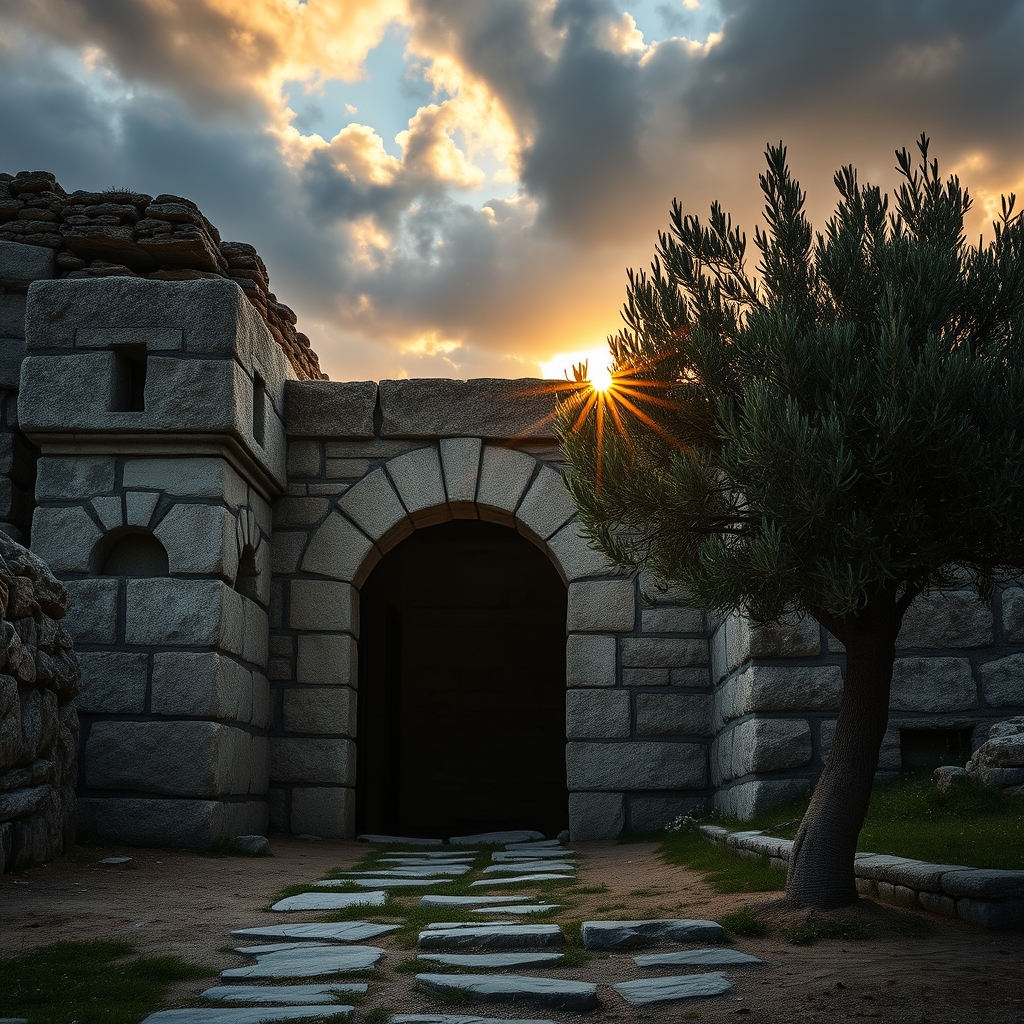
Joseph of Arimathea was a wealthy member of the Jewish council who became a secret disciple of Jesus. After the crucifixion, he boldly asked Pontius Pilate for Jesus’ body and provided his own new tomb for the burial, fulfilling the prophecy of Isaiah 53:9 that the Messiah would be buried with a rich man.
Amidst the familiar names woven into the story of Jesus’ crucifixion and resurrection, there is one faithful follower whose quiet courage speaks volumes: Joseph of Arimathea. While the world looked away and even the closest disciples had fled, this wealthy, respected member of the Sanhedrin stepped forward in the most critical moment in human history. His story may be brief in Scripture, yet it carries a profound weight—one that still encourages believers today to step out in bold, living faith.
Who was Joseph of Arimathea, and why did he dare to publicly identify with a condemned Teacher from Galilee? What moved him to request the body of Jesus from Pontius Pilate, risking his reputation and position in the religious establishment? As we explore the truth found in God’s Word, we will discover how Joseph’s courageous act of love not only honored Jesus in death but also fulfilled ancient prophecy, pointing unerringly to the Lordship and glory of Christ our Savior.
Who Was Joseph of Arimathea?
What the Bible Says About Joseph of Arimathea
The Bible introduces us to Joseph of Arimathea in all four Gospels. Each Gospel writer records his actions, giving us a rich and detailed portrait. According to Matthew 27:57, Joseph was a rich man from Arimathea. Mark 15:43 describes him as a prominent member of the Jewish council who was himself waiting for the kingdom of God. Luke 23:50–51 adds that Joseph had not agreed to the council’s decision to put Jesus to death. Finally, John 19:38 reveals that Joseph had been a secret disciple of Jesus, due to his fear of the Jewish leaders.
Altogether, Scripture paints a clear picture of a man who held a position of influence. Yet despite his wealth and status, Joseph carried a quiet faith in Jesus Christ.
- He was a wealthy man (Matthew 27:57)
- He was a respected member of the Sanhedrin (Mark 15:43)
- He disagreed with the council’s condemnation of Jesus (Luke 23:50–51)
- He had secretly followed Jesus as a disciple (John 19:38)
Joseph of Arimathea in the Gospels
Matthew, Mark, Luke, and John each mention Joseph of Arimathea, and their accounts complement one another. Matthew 27:57–60 tells us that Joseph went to Pilate and asked for Jesus’ body. He then placed the body in his own new tomb.
Mark 15:43–46 echoes this, emphasizing Joseph’s boldness. He did not hesitate to approach Pilate even as the other councilors stayed silent. Luke 23:50–53 confirms Joseph’s good character, noting that he was a good and upright man who had not consented to the council’s actions.
John 19:38–42 adds the important detail that Joseph came publicly at last, partnering with Nicodemus to prepare and bury Jesus. This was a turning point for him, a moment when faith stepped out in courage even at personal risk.
What Is Joseph of Arimathea Known For?
His Bold Request to Pilate
Joseph of Arimathea is most famously known for one extraordinary act of courage. After Jesus was crucified, Joseph went directly to Pontius Pilate and asked for the body of Christ (Matthew 27:57–58). This was a bold and dangerous move. At that time, Roman law typically left criminals on their crosses as a public warning. By requesting the body, Joseph risked his reputation, his position, and possibly his life.
However, this request was far more than a political or social gesture. It was a profound declaration of faith. Joseph publicly identified himself with a man the authorities had just condemned to death. In doing so, he aligned Himself with Jesus at the most vulnerable moment possible.
Joseph’s request also fulfilled prophecy. Isaiah 53:9 foretold that the Messiah would be buried with the rich. By stepping forward, Joseph played an essential role in God’s redemptive plan. His faithfulness ensured that the body of our Lord received an honorable burial.
Providing a Tomb for Jesus
Not only did Joseph ask for Jesus’ body, but he also provided his own tomb. The Gospels tell us it was a new tomb, hewn out of rock, where no one had ever been laid (Luke 23:53). This detail is deeply significant. It confirms the uniqueness and holiness of the resurrection. There could be no confusion with another body.
- The tomb belonged to Joseph personally, showing his wealth and willingness to give.
- It was located in a garden near the place of crucifixion, as recorded in John 19:41–42.
- Nicodemus also came to assist, bringing burial spices for proper preparation (John 19:39–40).
Providing a royal burial for Jesus carried powerful symbolic meaning. Kings were laid in their own tombs. In Jesus’ case, a wealthy man from Arimathea gave his resting place for the King of Kings. This act of devotion foreshadowed the glory that would follow on the third day.
As a result, the tomb became the most important site in all of human history. the empty tomb is the foundation of our faith. Because Joseph gave his tomb, we can declare with confidence: “He is not here; He has risen!” (Luke 24:6). the burial Jesus received testified to both His real death and the promise of His resurrection.
What Was the Relationship Between Jesus and Joseph of Arimathea?
A Secret Disciple
The relationship between Jesus and Joseph of Arimathea is one of the most fascinating dynamics in the Gospels. At first glance, Joseph appears to be a surprising figure. He was a wealthy, respected member of the Jewish ruling council, the Sanhedrin. Yet behind the scenes, he had quietly placed his faith in Jesus.
John’s Gospel tells us plainly, “Joseph of Arimathea, a disciple of Jesus, but secretly for fear of the Jews, asked Pilate that he might take away the body of Jesus” (John 19:38). This one verse reveals so much about Joseph’s heart and his journey of faith.
Joseph was a secret disciple. He believed in Jesus, but fear kept him from being open about it. Fear of losing his position. Fear of social rejection. Fear of the religious authorities. His story is deeply relatable. Many believers today know what it feels like to hide their faith from coworkers, neighbors, or even family.
It is also important to note that this did not mean Joseph was dishonest. It means the Holy Spirit was working in his heart long before his courage caught up with his convictions. God was preparing Joseph for a moment that would require everything he had.
Furthermore, Scripture hints that Joseph had already taken a stand on behalf of Jesus. Luke 23:51 records that Joseph “had not consented to their decision and action” when the Sanhedrin condemned Jesus. Even before the crucifixion, a quiet resistance was stirring within him.
A Courageous Public Act of Faith
Everything changed after Jesus died on the cross. Joseph’s secret devotion broke through into bold, public action. Matthew 27:57 describes him as “a rich man from Arimathea, named Joseph, who also himself was a disciple of Jesus.” At this moment, secrecy was over.
Joseph did something remarkably courageous. He went directly to Pontius Pilate and asked for the body of Jesus (Mark 15:43). This request carried enormous risk:
- Political Risk: Associating with a crucified man could have ruined Joseph’s reputation and standing.
- Religious Risk: The Sanhedrin would have seen this as defiance and betrayal of their authority.
- Personal Risk: Handling a dead body would have made Joseph ceremonially unclean during Passover, one of the most sacred observances in Jewish life (Numbers 19:11).
Despite all of this risk, Joseph stepped forward. His relationship with Jesus transformed from private belief to public declaration. In the darkest hour of human history, one of Jesus’ followers finally found the courage to act.
Joseph’s bold request also carried profound prophetic significance. His personal tomb fulfilled Isaiah 53:9, which said of the Messiah, “They made his grave with the wicked and with a rich man in his death.” God used an unlikely disciple to confirm that Jesus truly died and was truly buried, just as Scripture had foretold.
In a similar way to Joseph, Nicodemus also emerged at this moment, bringing a mixture of myrrh and aloes for the burial (John 19:39). Together, these two secret disciples performed the final acts of love for their Messiah. Their courage reminds us that faith, no matter how long it has been hidden, can still produce powerful fruit when the moment demands it.
The relationship between Jesus and Joseph of Arimathea teaches us a vital lesson. God does not require perfect confidence before He calls us to act. He meets us in our fear and our hesitation. Then, through the power of the Holy Spirit, He gives us the courage to step forward when it matters most. Joseph began as a man of quiet faith. By the end of the crucifixion story, he became a public witness to the death and burial of Jesus Christ, the Son of God.
Was Joseph of Arimathea Related to Mary?
What the Bible Reveals About Joseph and Mary’s Connection
Many people search for Bible connections between Joseph of Arimathea and the various women named Mary in Scripture. This is a fair and logical question. After all, we want to piece together the human side of the Crucifixion story. Nevertheless, the Bible is remarkably clear on this point: Joseph of Arimathea was not a biological relative of Mary, the mother of Jesus, or any other Mary in the Gospels. The Scriptures draw a line between these characters. We must respect that boundary.
Furthermore, early Christian traditions do not attempt to fuse these figures together simply to create a more dramatic or mystical family tree. This is crucial because Christian faith does not depend on hidden bloodlines or secret family trees. Instead, our faith rests entirely on the finished work of Jesus Christ (Ephesians 2:8-9). Let us explore what is revealed.
Joseph of Arimathea: His Family and Background
Joseph of Arimathea was a wealthy man. He was a respected member of the Jewish ruling council, the Sanhedrin (Luke 23:50). His name itself points to his origin: He is called Joseph “of Arimathea” to distinguish him from many other men named Joseph (like Jesus’ earthly step-father). This title identifies him as a man from a specific Judean city, which serves as his geographical and cultural identifier. He is defined by his hometown and his courageous choice to honor Jesus.
Therefore, Scripture gives us no genealogy linking him to the family of King David or to the tribe of Judah. This silence allows us to see him simply as a man responding to God’s call. His lineage, or lack of a special Arimathea lineage, simply fades away.
The Various Marys in the Bible
To avoid confusion, we must distinguish the several women named Mary. The most prominent is Mary, the mother of Jesus. She was from Nazareth in Galilee (Luke 1:26-27). Her story is central to the Incarnation. Furthermore, she is Jesus’ earthly mother and is honored among believers for her faith and obedience (Luke 1:38).
As a result, other women named Mary also played vital roles:
- Mary Magdalene: She was a faithful disciple of Jesus from whom seven demons were cast out (Luke 8:2). She witnessed the crucifixion, burial, and Resurrection (John 20:16).
- Mary the wife of Clopas: Some scholars believe she was the mother of James and Joseph/Joses (Mark 15:40).
- Mary of Bethany: Known for sitting at Jesus’ feet to learn, she is also the sister of Martha and Lazarus (Luke 10:39). Their home was in Bethany.
Joseph of Arimathea’s story intersects with these women only at the cross and the tomb. He appears only at the moment of Christ’s death to provide a proper burial, nothing else.
The Practical Reason Joseph Had a Ready Tomb
A question often arises: Why would Joseph of Arimathea have a tomb so readily available in Jerusalem? The answer lies in his status and location. As a wealthy and devoted follower of Jesus, it is entirely logical that he would have prepared such a place. In short, his wealth and status explain his resources, not a hidden bloodline.
Jesus’ birth was in Bethlehem, in the South, during the census. His upbringing was in Nazareth, in the North. His ministry covered a wide geographical area. Finally, His death, burial, and Resurrection took place in Jerusalem. Jerusalem was the center of Jewish life and worship. Wealthy Jews from outside Jerusalem, like Joseph of Arimathea, often maintained tombs in the holy city (Matthew 27:57-60). This facilitated proper burial practices. Religious custom played a key role.
Ultimately, this was a practical matter, showing divine providence. A wealthy disciple owned a tomb in the very city where Jesus was crucified. The stone was rolled away on Easter Sunday morning, proving the Resurrection. God’s plan uses ordinary means to accomplish extraordinary ends.
The True Family of Jesus
Finally, the New Testament clarifies the true family of Jesus. In Matthew 13:55-56, the people of Nazareth ask, “Is not this the carpenter’s son? Is not his mother called Mary?” This challenges the thought Jesus had a different biological family. The crowd identifies Jesus through His earthly family, the family of Joseph and Mary. Joseph of Arimathea is never included in this family circle. The Bible’s genealogies also omit him from the Davidic line.
Jesus also redefined true spiritual family in Mark 3:31-35. When told His mother and brothers were seeking Him, Jesus said, “Whoever does the will of God, he is my brother and sister and mother.” This elevates spiritual kinship. Biological descent alone does not define relationship with Christ.
Unity in Christ, Not Bloodlines
Ultimately, our unity with each other and with Christ is not through bloodlines or hidden genealogies. Ephesians 2:14 states, “For he himself is our peace, who has made us both one.” We are united by the blood of Christ, not by human ancestry. The story of Joseph of Arimathea is a powerful testament to this truth. He was a man who stepped out of the shadows. He risked everything to honor the Lord he secretly followed. His courage is a model for all believers.
We do not need to invent secret family ties to make the Gospel more compelling. The Gospel is compelling enough. It is the power of God for salvation to everyone who believes (Romans 1:16). The story of Joseph of Arimathea reminds us that faith in Jesus Christ is what truly matters. It is a faith that transcends all earthly connections and unites us as one body in Him.
Is Arimathea a Real Place?
Arimathea in Scripture
When we read about Joseph of Arimathea in the Bible, we immediately encounter a place called Arimathea. Matthew 27:57 tells us, “When it was evening, there came a rich man from Arimathea, named Joseph, who also was a disciple of Jesus.” This is our first clue. Arimathea was clearly significant enough to identify who this man was.
Luke 23:51 adds another detail. It confirms Arimathea was “a city of the Jews.” This tells us it was recognized as a Jewish settlement. Joseph was not from a random location. He came from a real place within the land of Israel.
Historical Arimathea was likely the same place as Ramathaim-Zophim in the Old Testament. [1] This connection strengthens the case for its existence. Here are the key biblical references:
- Matthew 27:57 calls Joseph a man from Arimathea
- Mark 15:43 identifies him the same way
- Luke 23:51 describes it as a city of the Jews
- John 19:38 confirms Joseph came from Arimathea
Each Gospel writer anchors Joseph to his hometown. This was a common practice. People were often identified by where they came from. Therefore, Arimathea was not a fictional creation. It was a real place known to the original readers of Scripture.
Why does this matter for our faith? Scripture is historically reliable. The Gospel writers were careful. They recorded real locations with real people. This confirms that Jesus’ burial happened in an actual place. Joseph of Arimathea performed a genuine act of love for his Savior. Jesus emerged from their grasp, just as He conquered sin and death on the cross.
Arimathea on Historical Maps
The Bible is our primary source. However, external evidence also supports Arimathea as a real place. Ancient historians and geographers reference similar locations. Furthermore, archaeological work in Israel has consistently supported biblical geography.
Arimathea is widely identified with the modern area near Ramla in central Israel. Some scholars connect it to Mount Ephraim. Others link it to the region around modern-day Rantis. Exact identification remains debated among scholars. However, the consensus is clear. Arimathea was indeed a real location.
Consider these points about ancient Jewish cities:
- Ramathaim-Zophim was home to the prophet Samuel (1 Samuel 1:1)
- The region of Ephraim was densely populated during biblical times
- Roman-era records mention settlements in this area
- Archaeological surveys have found remains consistent with ancient Jewish towns
We do not need to know the exact GPS coordinates. The Bible gives us what we need. Joseph of Arimathea was a real man from a real place. He stepped forward at the most critical moment in history. He honored the body of Jesus Christ, the Son of the living God.
This truth strengthens our confidence. The Gospel accounts are rooted in history. They are not myths or legends. Jesus really died. He was really buried. And on the third day, He really rose again. Joseph of Arimathea played his part in God’s perfect plan. As a result, we can trust every word of Scripture.
What Race Was Joseph of Arimathea?
The Bible does not explicitly state the race or ethnicity of Joseph of Arimathea. However, based on the biblical and historical context, Joseph was almost certainly a Jewish man living in first-century Judea. Understanding his background helps us appreciate the depth of his faith and the courage he showed in stepping forward at the most critical moment in human history.
Joseph Was a Jewish Leader
The Gospels identify Joseph as a member of the Sanhedrin, the ruling council of Jewish leaders in Jerusalem. Matthew 27:57 describes him as “a rich man from Arimathea, named Joseph, who also himself had become a disciple of Jesus.” His position on the council confirms he was a devout Jew, deeply embedded in the religious life of Israel.
Furthermore, Luke 23:50–51 tells us that Joseph “had not consented to their decision and deed” regarding Jesus’ condemnation. This reveals that he was a man of conscience, standing apart from the majority of the council. His Jewish identity was central to his understanding of who Jesus was — the promised Messiah of Israel.
What His Name and Location Tell Us
Several details in Scripture point to Joseph’s Jewish heritage:
- His name: “Joseph” (Hebrew: Yosef) is one of the most common and significant names in the Old Testament, tracing back to the son of Jacob in Genesis.
- His hometown: Arimathea was a Jewish town, likely identified with Ramathaim-Zophim or Ramah, the hometown of the prophet Samuel (1 Samuel 1:1).
- His faith: Luke 23:51 says Joseph “was looking for the kingdom of God,” a phrase that describes a devout Jew awaiting God’s promised redemption.
Why His Ethnicity Matters for Our Faith
Joseph’s Jewish identity is theologically significant. God chose to bring salvation through the Jewish people, just as He promised Abraham in Genesis 12:3: “In you all the families of the earth shall be blessed.” Jesus Himself said, “Salvation is from the Jews” (John 4:22).
Joseph of Arimathea fulfilled a beautiful role in God’s plan. As a Jewish man of wealth and influence, he honored the Jewish Messiah by providing a royal burial. In doing so, he unknowingly fulfilled Isaiah 53:9: “They made His grave with the wicked — but with the rich at His death.” This prophecy, written centuries before Jesus was born, was fulfilled through Joseph’s courageous act of love.
Ultimately, Joseph’s story reminds us that Jesus came first to His own people (John 1:11), and that the Gospel is for all nations, tribes, and tongues (Revelation 7:9). Every believer, regardless of background, is invited to come to Christ in faith — just as Joseph of Arimathea did.
What Happened to Joseph of Arimathea After Jesus Died?
Biblical Silence and Early Traditions
One of the most honest things we can say about Joseph of Arimathea is this: the Bible does not tell us what happened to him after Jesus was buried. The four Gospels record his courageous act of faith. Then Scripture goes silent. However, that silence does not diminish his story. Instead, it reminds us that God is the ultimate author of our lives.
After Joseph placed Jesus in his own tomb, the biblical record shifts its focus. The resurrection of Jesus Christ becomes the central event of all history. The Gospel writers did not feel the need to track Joseph’s later years. Their mission was to proclaim the risen Savior, Joseph’s Lord and ours.
Nevertheless, early Christian traditions developed around Joseph of Arimathea. These stories come from sources outside the Bible. They are not Scripture. Yet they are worth understanding so we can separate fact from legend. Many of these traditions emerged in the centuries following Jesus’ resurrection and ascension into heaven.
Some early Christian writers claimed Joseph traveled to distant regions to share the Gospel of Jesus Christ. One well-known tradition suggests he journeyed to Britain. According to this account, Joseph established one of the earliest Christian communities there. However, this tradition is primarily based on later medieval writings. It cannot be verified by historical or biblical evidence. [2]
Other traditions hold that Joseph of Arimathea faced persecution for his faith in Christ. This is entirely plausible. The early Church suffered greatly. The book of Acts records that many followers of Jesus were imprisoned, beaten, and even killed. Hebrews 10:34 also speaks of believers who joyfully accepted the confiscation of their property. If Joseph continued following Jesus boldly, he certainly would have faced hardship.
The Apostles’ Creed, an early statement of Christian faith, mentions that Jesus “was buried” and that He “descended into hell” before rising on the third day. Joseph’s role in providing the tomb makes him part of this creedal narrative. His act of love helped fulfill prophecy. Isaiah 53:9 says the Messiah would be assigned a grave with the wicked, yet He was buried with a rich man. That rich man was Joseph.
One important principle to remember is this: Scripture is our final authority. We must never elevate tradition above the Word of God. If a claim about Joseph of Arimathea does not come from the Bible, we should hold it loosely. The Holy Spirit inspired the biblical writers to give us everything we need for life and godliness, as stated in 2 Peter 1:3.
What we do know about Joseph is powerful enough. Here is the biblical testimony:
- He was a wealthy man and a member of the Jewish ruling council (Matthew 27:57).
- He was a secret disciple of Jesus, waiting for the kingdom of God (John 19:38).
- He had not consented to the council’s decision to kill Jesus (Luke 23:51).
- He courageously requested Jesus’ body from Pontius Pilate (Mark 15:43).
- He provided his own new tomb for the burial of Jesus (Matthew 27:59-60).
- He worked alongside Nicodemus to prepare the body according to Jewish custom (John 19:39-40).
These facts are extraordinary. Joseph did not remain a secret disciple at the moment that mattered most. He stepped forward. He risked his reputation, his position, and possibly his life. As a result, he became an enduring example of what it means to follow Jesus completely.
We may never know the full story of what happened to Joseph after that Sabbath evening. But we do know this: Jesus Christ is risen from the dead. And because He lives, everyone who trusts in Him will live forever (John 11:25-26). Joseph’s greatest legacy is not where he traveled or how he died. His greatest legacy is that he honored the Lord with his possessions, his courage, and his faith.
Brothers and sisters, we may never know the full story of what happened to Joseph after that holy burial. But we can trust that the same Jesus who received Joseph’s devotion is the same Jesus who holds Joseph’s eternity. And He holds ours as well.
How Did Joseph of Arimathea Die?
The Bible does not tell us how Joseph of Arimathea died. Scripture is completely silent on what happened to him after he buried Jesus. This silence invites us to think carefully about faith and legacy.
Why the Bible Doesn’t Record His Death
The Gospels focus on one central truth: the death and resurrection of Jesus Joseph of Arimathea matters because of what he did for Christ, not what happened to him afterward. The biblical writers had a clear purpose. They wanted to point every reader to Jesus, not to the supporting characters in His story.
Furthermore, the absence of details about Joseph’s death is not unusual. The Bible does not record the deaths of many key figures. We do not know how most of the apostles died. We do not know what happened to many who walked with Jesus daily. This silence reminds us that our faith is built on Christ alone.
What Early Christian Tradition Says
Outside the Bible, early Christian writers did share stories about Joseph of Arimathea. Some traditions say he traveled to Britain and established the first church at Glastonbury. Other accounts suggest he carried the Holy Grail to the British Isles. However, these stories come from later centuries. They are not found in Scripture.
Some traditions claim Joseph was martyred for his faith. Others say he died peacefully as an old man. These accounts vary widely. None of them can be verified. Therefore, we should hold them loosely and turn to the Word of God for our certainty.
The Real Lesson From Joseph’s Silence
The silence of Scripture about Joseph’s death actually teaches us something profound. It tells us what matters most. Joseph’s eternal significance rests on one moment of courage. He stepped forward when others stayed hidden. He gave his own tomb for the body of Jesus. That single act of faith is what God chose to remember.
As a result, Joseph’s story encourages every believer. Your legacy is not how you die. Your legacy is how you respond to Jesus. Joseph shows us that one bold decision can echo through eternity.
- Scripture does not record how Joseph of Arimathea died.
- Early traditions offer unverified accounts of his later life.
- The Bible highlights his courageous act of faith, not his death.
- Our focus should remain on Christ, not on human speculation.
Joseph of Arimathea’s life points us to Jesus. The same is true for every believer. As Acts 11:26 declares, the followers of Jesus were first called “Christians” in Antioch. Our identity is found in Him alone. Therefore, let Joseph’s courage inspire you. Step out of the shadows. Honor boldly and publicly the Lord Jesus Christ, who gave everything for you.
Joseph of Arimathea and Nicodemus

Two Secret Disciples Who Stepped Into the Light
When we study the story of Joseph of Arimathea, we cannot tell it without also telling the story of Nicodemus. These two men shared a remarkable journey. Both were members of the Jewish ruling council. Both had come to believe in Jesus quietly, behind closed doors. And both found the courage to step forward at the most critical moment in human history.
Their story is one of the most powerful examples of faith in all of Scripture. It reminds us that God can use anyone, no matter how hidden their belief may have been. Furthermore, it shows us that true faith will eventually find a way to be seen.
Who Was Nicodemus?
Nicodemus was a Pharisee and a member of the Sanhedrin, the Jewish ruling body. He first appears in the Gospel of John, where he came to Jesus at night for a private conversation. This detail is significant. Meeting at night suggests caution. It suggests fear of what others might think.
During that nighttime visit, Jesus told Nicodemus one of the most important truths in the entire Bible. He said, “Very truly I tell you, no one can see the kingdom of God unless they are born again” (John 3:3, NIV). Nicodemus was confused at first. However, Jesus continued to explain the way of salvation through faith in Him. This conversation became the setting for the most famous verse in all of Scripture:
“For God so loved the world that he gave his one and only Son, that whoever believes in him shall not perish but have eternal life” (John 3:16, NIV).
That promise was spoken directly to Nicodemus. It was spoken to a man who was still figuring out what it meant to follow Jesus. And it is spoken to us today as well.
Two Men, One Courageous Act
After Jesus was crucified, both Joseph and Nicodemus stepped out of the shadows. The Gospel of John records their joint effort to care for the body of Jesus:
“Later, Joseph of Arimathea asked Pilate for the body of Jesus. Now Joseph was a disciple of Jesus, but secretly because he feared the Jewish leaders. With Pilate’s permission, he came and took the body away. He was accompanied by Nicodemus, the man who earlier had visited Jesus at night. Nicodemus brought a mixture of myrrh and aloes, about seventy-five pounds” (John 19:38–39, NIV).
Consider what this moment required of both men. They had to:
- Approach Pilate publicly, identifying themselves with a man the Roman government had just executed
- Handle the body of a crucified criminal, which was considered deeply unclean under Jewish law
- Bring an extravagant amount of burial spices, about seventy-five pounds, showing deep honor and devotion to Jesus
- Risk their reputations, their positions on the Sanhedrin, and possibly their lives
This was no small gesture. In addition, the amount of spices Nicodemus brought was extraordinary. It was a quantity fit for a king. In doing this, these two men were making a bold declaration. They were saying, in their own way, that Jesus was who He claimed to be.
From Secret Belief to Public Faith
The journey of Joseph and Nicodemus teaches us something essential about the nature of faith. Both men believed in Jesus before the crucifixion. However, their belief was hidden. They were afraid of what others would think. They were afraid of losing their status and their place in the community.
Then something changed. When Jesus died on the cross, these two men could no longer stay silent. The death of Jesus moved them from private belief to public action. They could not let the body of their Lord be treated without dignity. They could not remain hidden any longer.
This is a pattern we see throughout Scripture. God often calls His people to step out in faith at the very moment when it feels most dangerous. Consider these examples:
- The woman with the issue of blood pushed through a crowd to touch Jesus’ garment, even though her condition made her ceremonially unclean (Mark 5:25–34)
- Peter stepped out of a boat to walk on water toward Jesus, even though every instinct told him it was impossible (Matthew 14:28–29)
- The apostles declared before the Sanhedrin, “We must obey God rather than human beings” (Acts 5:29, NIV)
Joseph and Nicodemus belong in this same category. They were ordinary men in positions of influence. Yet when the moment came, they chose faithfulness over fear.
What Their Story Means for Us Today
The story of Joseph of Arimathea and Nicodemus is not just history. It is an invitation. It asks each of us an important question: Are we willing to be identified with Jesus, even when it costs us something?
Jesus Himself spoke directly to this challenge. He said:
“Whoever acknowledges me before others, I also will acknowledge before my Father in heaven. But whoever disowns me before others, I will disown before my Father in heaven” (Matthew 10:32–33, NIV).
Joseph and Nicodemus acknowledged Jesus. They did so at great personal risk. As a result, their names are recorded in Scripture for all time. Every person who reads the Gospels will know that these two men had the courage to step forward.
You may feel like a secret disciple today. You may believe in Jesus but be unsure how to express that faith publicly. If so, take heart. God sees your heart. He knows your faith even when others do not. Furthermore, He is patient with you as He was patient with Joseph and Nicodemus.
However, do not stay hidden forever. There will come a moment when God calls you to step into the light. When that moment comes, trust Him. He will give you the courage you need, just as He gave courage to Joseph of Arimathea and Nicodemus on the day they buried the risen King.
Joseph of Arimathea and the Holy Grail: What Does the Bible Say?
One of the most fascinating topics connected to the story of Joseph of Arimathea is the legendary Holy Grail. Many people have heard of the Grail through books, movies, and folklore. Often, Joseph of Arimathea is named as its guardian. But what does the Bible actually say about this? Let’s explore the truth with reverence and clarity.
Where Does the Holy Grail Legend Come From?
The idea that Joseph of Arimathea collected the blood of Jesus in a cup — the so-called “Holy Grail” — is not found anywhere in Scripture. This legend developed centuries after the events of the Gospels, primarily in medieval European literature. One of the most influential sources was the 12th-century French poem Percival by Chrétien de Troyes. [3]
Later writers expanded the story, connecting Joseph of Arimathea to Britain and claiming he brought the Grail there. These stories captured the imagination of many. However, they remain works of fiction and creative tradition, not biblical truth.
What the Bible Actually Says About Joseph of Arimathea
Scripture tells us very clearly what Joseph of Arimathea did:
- He was a rich man and a member of the Jewish ruling council (Matthew 27:57).
- He was a disciple of Jesus, though initially a secret one (John 19:38).
- He boldly asked Pilate for the body of Jesus (Mark 15:43).
- He provided his own new tomb for the burial of Christ (Matthew 27:59–60).
- He was aided by Nicodemus in preparing the body for burial (John 19:39–40).
Nowhere does Scripture mention a cup, a chalice, any vessel that caught Jesus’ blood, or any sacred relic that Joseph was entrusted with. The focus of the biblical record is not on objects — it is on the finished work of Jesus Christ on the cross and His glorious resurrection.
Why Does the Grail Legend Persist?
There is a natural human desire to find tangible connections to the events of salvation history. People want something they can touch or see. However, as Christians, our faith does not rest in relics or legends. Our faith rests in the risen Lord Jesus Christ Himself.
Jesus made clear that He is “the way, the truth, and the life” (John 14:6). The Apostle Paul wrote, “For I determined not to know anything among you except Jesus Christ and Him crucified” (1 Corinthians 2:2). The power of the Gospel is not in objects — it is in the Person of Christ and His redemptive sacrifice.
Legends about Joseph of Arimathea and the Holy Grail, while intriguing, can distract from the central message of the Bible: that Jesus died for our sins, was buried, and rose again on the third day (1 Corinthians 15:3–4).
What Should We Take Away?
Joseph of Arimathea’s true legacy is far more powerful than any legend. He was a man who risked everything to honor Jesus in His most vulnerable moment. He stepped out of secrecy and publicly identified himself with Christ at the cross.
That act of courage and devotion points us to the real treasure — not a cup or a relic, but the living Savior who conquered death and offers eternal life to all who believe.
As we appreciate the story of Joseph of Arimathea, let us keep our eyes fixed on Jesus, “the author and finisher of our faith” (Hebrews 12:2). The Bible’s message to us today is the same it has always been: Believe on the Lord Jesus Christ, and you will be saved (Acts 16:31).
Joseph of Arimathea in The Chosen
The popular television series The Chosen has brought the story of Jesus’ ministry to life for millions of viewers worldwide. One of its distinctive strengths is how it incorporates figures briefly mentioned in Scripture, including Joseph of Arimathea. The show gives viewers a rich, imaginative look at who this member of the Sanhedrin might have been.
The Chosen’s Portrayal of Joseph
In The Chosen, Joseph of Arimathea is depicted as a respected member of the Jewish ruling council. Like his biblical portrayal, he is shown as a man of means and influence. However, the series adds depth to his character by exploring his internal conflict. He is a man caught between loyalty to the religious establishment and a growing conviction that Jesus of Nazareth is the Messiah.
The show presents Joseph as a thoughtful, cautious believer. He is not open about his leanings toward Jesus at first. This mirrors the Gospel of John’s description of Joseph as a “secret disciple” for fear of the Jewish leaders (John 19:38).
What Get’s Right and Where the Show Expands
The biblical account of Joseph of Arimathea appears in all four Gospels (Matthew 27:57-60, Mark 15:43-46, Luke 23:50-53, and John 18:38-42; 19:38-42). Each confirms that after Jesus’ crucifixion, Joseph boldly approached Pontius Pilate to request the body of Jesus. He then laid the body of the Lord in his own new tomb.
The Chosen takes artistic liberty in developing Joseph’s backstory and interactions with other characters. This is where viewers should exercise discernment. The show’s creative expansions are designed to build narrative tension and explore biblical themes. They should not be taken as historical or scriptural fact.
When enjoying The Chosen, it helps to distinguish between what Scripture directly records and what the show creatively imagines:
| What Scripture Confirms | What The Chosen Expands Creatively |
|---|---|
| Joseph was a rich man and a member of the council (Matthew 27:57) | Specific conversations and personal backstories not found in the Bible |
| He was “waiting for the kingdom of God” (Mark 15:43) | The timing and nature of his personal journey of faith |
| He had not consented to the Sanhedrin’s decision about Jesus (Luke 23:51) | Relationships with other Sanhedrin members shown in detail |
| He asked Pilate for Jesus’ body and buried Him in his own tomb (John 19:38-40) | Scenes depicting his preparation of the tomb before the crucifixion |
A Reminder to Ground Our Faith in Scripture
The Chosen has been a powerful tool for engaging audiences with the story of Jesus. Many people have found that the series helps them visualize the Gospel narratives in new and compelling ways. It has even led viewers to open their Bibles for the first time.
However, it is essential to remember that our faith is built on God’s Word, not on any television series or dramatization. As 2 Timothy 3:16-17 reminds us, “All Scripture is God-breathed and is useful for teaching, rebuking, correcting and training in righteousness, so that the servant of God may be thoroughly equipped for every good work” (NIV).
Joseph of Arimathea’s brief but significant role in Scripture teaches us something profound. It shows that even those in positions of religious power could recognize Jesus as Lord. His courageous act of claiming the body of Jesus publicly declared his allegiance to the Savior. No elaboration or creative retelling is needed to appreciate the weight of that moment.
As you watch The Chosen or engage with any biblical adaptation, let it draw you back to the pages of Scripture. Let it deepen your hunger for the unchanging truth of God’s Word. The Gospels give us everything we need to know about Jesus of Nazareth—the Son of God, the risen Savior, and the hope of all who believe.
Joseph of Arimathea and Mary Magdalene: Is There a Connection?
Within the Bible, there is no direct mention of a special relationship between Joseph of Arimathea and Mary Magdalene. While some modern stories, novels, and movies have popularized the idea that Joseph brought Mary Magdalene to Europe following Jesus’ death and resurrection, the Bible remains silent on such a link. For today’s believers, it is important to stay focused on what scripture does reveal about each devoted follower of Jesus.
Joseph of Arimathea was a wealthy council member who secretly followed Jesus before the crucifixion. However, after the death of Jesus, he stepped forward publicly to ask Pontius Pilate for the body of Jesus. As a result, Joseph prepared the body of Lord Jesus and provided his own tomb for burial as written in scripture (Matt 27:57–60, Mark 15:43–46, Luke 23:50–53, John 19:38–42).
In contrast, Mary Magdalene was a faithful disciple of Jesus. Jesus had previously freed her from seven demons (Luke 8:2, Mark 16:9). Furthermore, she stood with other women near the cross during the crucifixion of Jesus (John 19:25). Early on the first day after the Sabbath, she came to the tomb and discovered it empty (John 20:1). Then Jesus appeared to her, and she became the first witness of the risen Savior (Mark 16:9, John 20:14–18). For this reason, scripture honors her as “the apostle to the apostles” in early Christian tradition. [4]
In summary, both Joseph of Arimathea and Mary Magdalene followed Jesus with unwavering faith—Joseph through his courageous provision of the burial chamber, and Mary Magdalene through her faithful presence at the cross and her witness to the risen Savior. Their stories remind all believers that discipleship calls for boldness at every step, for the message is always Jesus.
Joseph of Arimathea Pronunciation and Key Terms
Arimathea Pronunciation
If you’ve come across the word “Arimathea” in your Bible reading and paused unsure of how to say it, you are not alone. It is a name that appears only briefly in Scripture, yet it carries tremendous weight in the Christian story. After all, it identifies the hometown of Joseph of Arimathea, the man who gave his own tomb for the burial of our Lord Jesus Christ.
Here is how to pronounce it:
- Phonetic spelling: air-uh-muh-THEE-uh
- Syllable breakdown: Ar · i · ma · the · a (four syllables, with the accent on the fourth)
- Think of it as starting with “air” and ending with “THEE-uh”
Because this name comes from Greek transliteration of a Hebrew or Aramaic place name, you may occasionally hear slight variations. Some speakers place the emphasis on the third syllable (ar-ih-MATH-ee-uh). However, most English Bibles and study resources use the pronunciation above. Either way, the important thing is not perfect pronunciation — it is understanding who came from this place and what he did for our Savior.
Arimathea Meaning
The exact meaning of “Arimathea” is debated among scholars, which is common with ancient place names that pass through multiple languages. Nevertheless, several leading theories exist.
| Proposed Meaning | Origin / Notes |
|---|---|
| “Heights” or “Place of Heights” | Likely derived from the Hebrew root ramah, meaning “high” or “elevated”. This fits the geography of the region. |
| “Place of the Best” | Some scholars connect it to an Aramaic term suggesting excellence or superiority. |
| “Lamb of the People” | A less common theory linking the name to the Hebrew ari (lamb) and am (people). |
The most widely accepted understanding among biblical scholars is that Arimathea means something close to “the heights” or “the high place.” [5] This aligns with the fact that the town was located in the hill country of Samaria or the neighboring region of Ephraim.
Regardless of which translation is most accurate, the spiritual significance far outweighs the linguistic detail. Joseph came from this town. According to all four Gospels, he loved Jesus enough to risk everything at the moment it mattered most.
Scripture says, “And Joseph of Arimathea, a prominent council member, who was himself waiting for the kingdom of God, coming and taking courage, went in to Pilate and asked for the body of Jesus” (Mark 15:43, NKJV). That single sentence tells us everything we need to know. Joseph was a man of position and influence. Yet he humbled himself before a Roman governor, a man known for cruelty, all because Jesus was worth it.
So the next time you read about “Arimathea” — even if you stumble over the pronunciation — let it remind you of a man whose courage declared to the world that Jesus is Lord, worthy even of the finest tomb. And let it remind you that you, too, are called to honor Him with everything you have.
Why Joseph of Arimathea’s Story Matters for Your Faith

Joseph of Arimathea’s story is more than an ancient account. It is a living testimony that still speaks to your faith today. His example shows how God uses ordinary people to fulfill His extraordinary purposes.
First, Joseph reminds us that faith often begins in secret. He was a secret disciple of Jesus (John 19:38). Yet when the moment came, he stepped forward. In the same way, your quiet trust in Christ matters. God sees your heart, even when others do not.
Second, Joseph’s boldness encourages you to take a stand for Jesus. He went to Pilate and asked for the body of Christ (Mark 15:43). This was risky. It could have cost him his reputation or position. Still, he chose obedience over fear. Likewise, you are called to confess Christ before others (Matthew 10:32–33).
Third, Joseph’s actions fulfilled Scripture. He provided a rich man’s tomb for Jesus (Matthew 27:57–60). This fulfilled the prophecy of Isaiah 53:9, which says the Messiah would be buried with a rich man. Therefore, Joseph’s role confirms that Jesus is the promised Savior.
Fourth, Joseph’s story highlights the power of God’s timing. He and Nicodemus came forward after Jesus’ death (John 19:39–40). Their public act of love showed that it is never too late to serve Christ. If you have delayed following Jesus fully, today is the day to step out in faith.
Finally, Joseph’s example points you to the hope of the resurrection. He prepared the body of Jesus for burial. Yet that same tomb would soon be empty. Christ rose from the dead (1 Corinthians 15:3–4). Because He lives, you too will live (John 11:25–26).
In summary, Joseph of Arimathea’s story matters because it:
- Shows that secret faith can become public courage
- Encourages boldness in following Jesus
- Fulfills prophecy about the Messiah
- Reveals God’s perfect timing
- Points to the resurrection and eternal life
As you reflect on Joseph’s life, remember that your faith is not in vain. Jesus is Lord. He sees your heart, He honors your obedience, and He offers you everlasting life (Romans 10:9–10).
Frequently Asked Questions
Joseph of Arimathea remains one of the most intriguing figures in the Gospels. His brief but powerful appearance in Scripture leaves many believers with sincere, important questions. Below, we address the most frequently asked questions about this faithful man who stepped forward at the most critical moment in human history.
What was the relationship between Jesus and Joseph of Arimathea?
The Bible tells us that Joseph of Arimathea was a disciple of Jesus. Yet he was a secret disciple. The Gospel of John gives us the clearest picture of their relationship.
- John 19:38 says, “Joseph of Arimathea was a disciple of Jesus, but secretly, for fear of the Jews.”
- Mark 15:43 calls him “a prominent member of the Council, who was himself looking for the kingdom of God.”
- Luke 23:51 adds that he “had not consented to their decision and action” regarding Jesus’ condemnation.
Joseph held an influential position on the Sanhedrin, the Jewish ruling council. This made his belief in Jesus incredibly risky. Publicly aligning with Jesus could have cost him his status, his reputation, and his position.
However, when Jesus died on the cross, something changed in Joseph’s heart. The fear he once carried gave way to extraordinary courage. He went directly to Pontius Pilate and asked for the body of Jesus. This single act revealed that Joseph’s relationship with Jesus was far deeper than secrecy could contain.
In truth, Joseph’s journey reflects a struggle many believers face. The question is not whether we believe, but whether our belief will move us to action when it matters most. Joseph’s story reminds us that Jesus calls us out of the shadows and into bold, living faith.
What is Joseph of Arimathea known for?
Joseph of Arimathea is known for two extraordinary acts that fulfilled Scripture and honored the body of Jesus Christ. Each Gospel writer highlights his role in the burial of Jesus, and each account reveals something vital about his faith.
First, his bold request to Pilate.
After Jesus died, Joseph “went in boldly to Pilate and asked for the body of Jesus” (Mark 15:43). This was no small act. Approaching Pilate was dangerous. Pilate had already yielded to pressure from the Jewish leaders. Joseph risked everything by stepping forward as someone publicly connected to a man executed as a criminal.
Furthermore, Matthew 27:58 tells us Joseph went to Pilate in person. He did not send a servant. He did not ask quietly through intermediaries. He went himself, in broad daylight, making his faith undeniable.
Second, providing a tomb for Jesus.
Joseph did not simply request the body. He provided his own new tomb for the burial. The Gospels describe this act in beautiful detail:
- John 19:39–41 says Joseph, with Nicodemus, wrapped the body in linen with spices and laid it in a “new tomb in which no one had ever been laid.”
- Luke 23:53 notes that the tomb was hewn out of rock, fulfilling the humble yet dignified burial described in Isaiah 53:9.
This fulfilled the ancient prophecy of Isaiah 53:9, which said of the Messiah: “And they made his grave with the wicked and with a rich man in his death, although he had done no violence, and there was no deceit in his mouth.” Joseph, a wealthy man, unwittingly or providentially played a role in confirming that Jesus truly was the promised Messiah [source: https://www.biblegateway.com/resources/commentaries/BC Edmund-Hebr/I/Isaiah-Prophet-Chapter-53].
Joseph also provided his own wealth to honor Jesus. He supplied fine linen for wrapping the body. He offered the security and solemnity of a fresh, unused tomb. Everything about this act proclaimed dignity, love, and reverence for the Son of God.
The entirety of what Joseph is known for points to one reality: when the moment arrives, God prepares the hearts of His people to act with courage. Joseph’s legacy is one of sacrificial love and public faith in Jesus Christ.
What happened to Joseph of Arimathea after Jesus died?
This is one of the most asked questions about Joseph, and the honest answer is simple: the Bible does not tell us. Scripture is completely silent about Joseph’s life after the burial of Jesus.
This silence is meaningful. The Gospel writers had no need to record his later life because their focus was entirely on the person and work of Jesus Christ and the events of His death, resurrection, and the spread of the early Church.
Several early Christian traditions suggest Joseph may have been involved in missionary work. Some later writings claim he traveled to Britain and was associated with the spread of the Gospel there. These traditions appear in non-biblical sources and early church histories [2].
However, we must be very careful here. The Bible gives us everything we need to know for faith and life (2 Timothy 3:16–17). While traditions about Joseph are interesting, they are not Scripture, and we should not treat them as such.
What we can know with confidence is this:
- Joseph’s bold act of faith happened at a moment when almost every other disciple had fled.
- His willingness to bury Jesus was an act of worship that honored the Savior in His death.
- He served as a testimony that even in the darkest hour, God’s hand was moving.
Despite the silence of Scripture concerning his later life, Joseph remains a shining example of the courage Christ can produce in a willing heart. His story teaches us that God does not forget the faithful acts of those who love His Son.
Was Joseph of Arimathea related to Mary?
No, the Bible does not teach or support any familial relationship between Joseph of Arimathea and Mary, the mother of Jesus. Some modern books and fictional works have attempted to create such a connection, but these claims have no basis whatsoever in Scripture.
In fact, associating Joseph of Arimathea with Mary in a romantic or deeply personal familial role often comes from extra-biblical legends or sensationalized fiction. These stories can undermine the clear teachings of God’s Word. At Just Jesus Time, we believe it is essential to test everything against Scripture (1 Thessalonians 5:21).
Scripture presents these important truths about Joseph and Mary separately:
- Joseph of Arimathea was a wealthy member of the Sanhedrin and a secret disciple of Jesus (Matthew 27:57, Mark 15:43).
- Mary, the mother of Jesus, was the virgin chosen by God to bear His Son through the Holy Spirit (Luke 1:26–38).
- Mary’s husband Joseph of Nazareth (a completely different Joseph) was a carpenter who served as the earthly guardian of Jesus (Matthew 1:18–25).
There is no scriptural identification or link between Joseph of Arimathea and Mary. Any suggestion otherwise should be received with caution and measured against the authority of God’s Word. We encourage you to read the Gospels for yourself and hold fast to what Scripture clearly reveals.
What truly matters is that both Joseph of Arimathea and the virgin Mary honored Jesus faithfully in their own God-given roles. They cherished Him, and their examples inspire believers to do the same.
Is Arimathea a real place?
Yes, Arimathea is a real historical place mentioned in Scripture. Luke 23:51 identifies it as “a Jewish town” from which Joseph came. The Gospels consistently connect Joseph to this location, making it an important detail in the biblical narrative.
Historically, Arimathea is commonly identified with the ancient city of Ramathaim-Zophim (also called Ramah) in the hill country of Ephraim. This identification is supported by several lines of evidence from both Scripture and historical geography [6].
Consider the following details:
- Biblical connection: Ramathaim-Zophim was the hometown of the prophet Samuel (1 Samuel 1:1). It held a prominent place in Israel’s history.
- Location: The site is approximately 20 miles northwest of Jerusalem, situated in the central hill country of ancient Israel.
- Name similarity: The Greek rendering “Arimathea” closely aligns with the Hebrew place-name Ramathaim.
- Archaeological support: Excavations at modern-day Rentis (identified with ancient Ramathaim) have revealed remains from the appropriate biblical period [7].
Arimathea matters because it reminds us that God’s plan is rooted in real history. The burial of Jesus by a man from a real town, in a real tomb, under real Roman authority, assures us that the Gospel is not myth or legend. It is the true account of God’s saving work in human history.
Holding this truth strengthens our faith. We do not follow a fabricated story. We follow the risen Jesus Christ, who was laid in a real tomb prepared by a real man from a real place — and who conquered death for all who believe. As Paul writes in 1 Corinthians 15:17, “If Christ has not been raised, your faith is futile.” But Christ has been raised, and Joseph’s faithful role in that story stands as a timeless testament to living faith.
Sources
- https://www.bibleodyssey.org/places/main-articles/arimathea/
- https://www.britannica.com/biography/Saint-Joseph-of-Arimathea
- https://www.britannica.com/topic/Grail
- https://www.britannica.com/biography/Mary-Magdalene
- https://www.bibleodyssey.org/places/related-entries/arimathea
- https://www.bibleplaces.com/arimathea/
- https://www.bibleplaces.com/abouthotel/rentis/