Luke 22:14-20 describes the Last Supper, where Jesus institutes the Lord’s Supper. He breaks bread and shares the cup, commanding His disciples to ‘do this in remembrance of me,’ establishing a new covenant through His body and blood given for the forgiveness of sins.
There are moments in Scripture that stop us in our tracks — moments where the weight of eternity presses into the ordinary and everything changes forever. Luke 22:14-20 is one of those sacred moments. In this brief but powerful passage, we sit with Jesus at the table during His final supper before the cross, and we hear words that would echo through every generation of believers who followed Him. When Jesus took the bread, broke it, and said, “This is My body which is given for you; do this in remembrance of me,” He was not merely sharing a meal with His disciples — He was establishing something eternal.
In this article, we will explore the deep and life-changing meaning of Luke 22:14-20, walk through the Upper Room setting where Jesus shared His final words with His closest friends, unpack what He meant when He said “do this in remembrance of me,” and connect this passage to the broader story of God’s redemptive plan — including the new covenant Jesus came to establish through His blood. Whether you are a new believer just beginning to walk with Christ or a mature Christian seeking to go deeper, these verses hold truths that will strengthen your faith and remind you of the immeasurable love of a Savior who gave everything for you.
What does Luke 22:14-20 mean?

The Setting: The Upper Room
Luke 22:14-20 records one of the most sacred moments in all of Scripture. It is the night before Jesus was crucified. He gathered with His twelve disciples in an upper room in Jerusalem to share the Passover meal. This was not an ordinary dinner. Jesus knew exactly what was about to happen. He was about to lay down His life as the ultimate sacrifice for the sins of the world.
The Passover meal itself was rich with meaning. For centuries, the Jewish people had celebrated it to remember how God delivered them from slavery in Egypt. A lamb was sacrificed, and its blood was placed on the doorposts so that the angel of death would pass over their homes. Now, in this upper room, Jesus was about to reveal that He Himself was the true Passover Lamb. His blood would bring deliverance, not just from physical slavery, but from the power of sin and death forever.
Jesus’ Words Over the Bread
During the meal, Jesus took bread. He gave thanks to God, broke it, and gave it to His disciples. Then He said something that would change everything. He said, “This is my body given for you; do this in remembrance of me” (Luke 22:19).
What did Jesus mean? He was not speaking symbolically in a shallow sense. He was pointing directly to what would happen the very next day. His body would be broken on the cross. He would bear the punishment that we deserved. As the apostle Peter later wrote, “He himself bore our sins in his body on the cross, so that we might die to sins and live for righteousness“ (1 Peter 2:24).
When we take the bread today, we are proclaiming a powerful truth. We are declaring that Jesus Christ, the Son of God, gave Himself willingly for us. His sacrifice was complete. It was sufficient. And it was done out of a love so deep that no words can fully capture it.
Jesus’ Words Over the Cup
After supper, Jesus took the cup. He said, “This cup is the new covenant in my blood, which is poured out for you” (Luke 22:20). These words carry enormous weight. Jesus was announcing the establishment of a new covenant, a new agreement between God and humanity.
The old covenant, given through Moses, required repeated animal sacrifices. They could never fully take away sin. But the new covenant, sealed with the blood of Jesus, does what no animal sacrifice ever could. It provides complete and permanent forgiveness. As the writer of Hebrews explains, “How much more, then, will the blood of Christ, who through the eternal Spirit offered himself unblemished to God, cleanse our consciences from acts that lead to death” (Hebrews 9:14).
Jesus’ blood was not spilled by accident. It was poured out on purpose. It was the price of our redemption. Through His death and resurrection, we are made new. We are reconciled to God. We receive the gift of eternal life.
Luke 22:14-20 is not just a historical account. It is an invitation. Jesus calls every person to remember His sacrifice, to trust in His finished work, and to receive the new covenant He established through His blood. He is the Lamb of God who takes away the sin of the world (John 1:29). And He is alive today, offering salvation to all who believe.
What did Jesus mean when he said ‘do this in remembrance of me’?
A Command to Remember
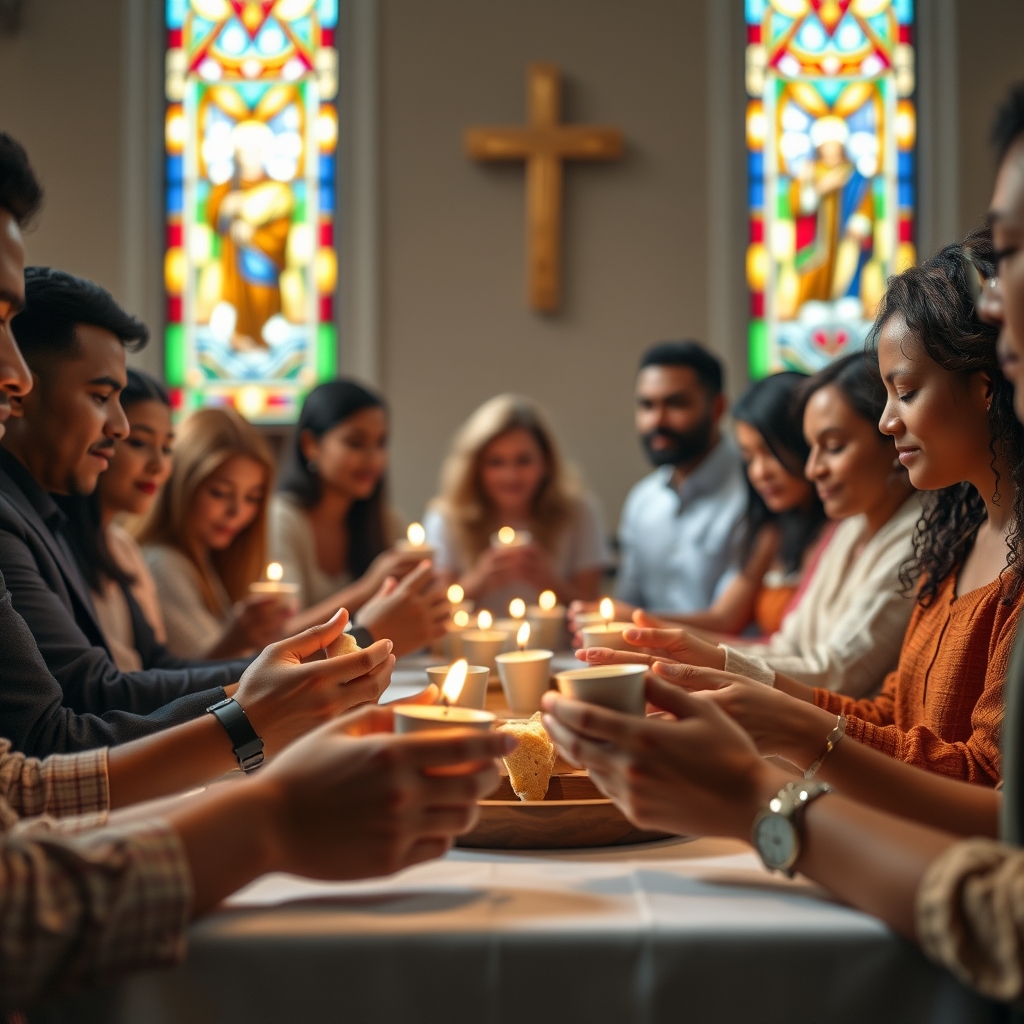
When Jesus said, “Do this in remembrance of me,” He was giving His followers a clear and loving command. This was not a suggestion. It was an invitation to actively remember what He was about to do for all of humanity. In Luke 22:19, Jesus took bread, gave thanks, broke it, and said, “This is my body given for you; do this in remembrance of me.” He wanted His disciples, and every believer after them, to never forget the sacrifice He was about to make on the cross.
Furthermore, this command was not just for those in the Upper Room. It was for every person who would come to faith in Christ. Jesus knew that as time passed, it would be easy to lose sight of the cross. Therefore, He established a simple yet powerful practice. By sharing bread and cup together, believers would continually return to the heart of the Gospel. They would remember that Jesus died, rose again, and offers eternal life to all who believe in Him.
In addition, this act of remembrance is deeply personal. It is not merely a ritual. It is a moment to reflect on the love of Jesus. It is a time to thank Him for His sacrifice. It is also a time to examine our own hearts and recommit our lives to Him. As Paul wrote in 1 Corinthians 11:26, “For whenever you eat this bread and drink this cup, you proclaim the Lord’s death until he comes.” Every time we remember, we declare the power of the cross and the hope of His return.
Remembering His Sacrifice
When Jesus said “do this in remembrance of me,” He was pointing directly to His sacrifice on the cross. The bread represented His body, broken for us. The cup represented His blood, poured out for the forgiveness of sins. In Luke 22:20, Jesus said, “This cup is the new covenant in my blood, which is poured out for you.” These words are rich with meaning. They remind us that Jesus willingly gave His life so that we could be made right with God.
The sacrifice of Jesus was not an accident. It was the fulfillment of God’s plan of redemption. Throughout the Old Testament, God promised to send a Savior. Isaiah 53:5 prophesied, “He was pierced for our transgressions, he was crushed for our iniquities; the punishment that brought us peace was on him, and by his wounds we are healed.” Jesus is that Savior. He took upon Himself the punishment that we deserved. As a result, all who place their faith in Him receive forgiveness and eternal life.
Remembering His sacrifice also means understanding the depth of His love. Romans 5:8 tells us, “But God demonstrates his own love for us in this: While we were still sinners, Christ died for us.” Jesus did not wait for us to be perfect. He died for us while we were still lost in sin. This is the greatest love the world has ever known. When we remember His sacrifice, we are reminded that we are deeply loved by the Creator of the universe.
Moreover, remembering His sacrifice calls us to respond. It is not enough to simply know the facts of the Gospel. Jesus invites us to live in light of His sacrifice. This means:
- Living with gratitude: Every day is a gift made possible by His death and resurrection.
- Walking in forgiveness: Because Jesus forgave us, we are called to forgive others.
- Sharing the Good News: The sacrifice of Jesus is for everyone. We are called to tell others about His love.
- Trusting Him completely: If Jesus gave everything for us, we can trust Him with every area of our lives.
In conclusion, when Jesus said “do this in remembrance of me,” He was calling us to never forget the cross. He was inviting us into a living relationship with Him. Through His body broken and His blood poured out, we receive new life. Jesus Christ is Lord and Savior. His sacrifice is the foundation of our faith. Let us remember Him with thankful hearts and live each day for His glory.
What is the meaning of Luke 14:20?
Luke 14:20 is a verse found within one of Jesus’ most powerful parables. It reveals a sobering truth about how people respond to God’s invitation. Understanding this verse helps us examine our own hearts and our willingness to follow Christ.
The Parable of the Great Banquet
In Luke 14:15-24, Jesus tells the Parable of the Great Banquet. A man prepares a great feast and sends his servant to invite many guests. This parable illustrates God’s invitation to all people to enter into His kingdom. The banquet represents the fullness of salvation and eternal life offered through Jesus Christ.
Jesus spoke this parable in response to a guest at a Pharisee’s table who said, “Blessed is the one who will feast in the kingdom of God” (Luke 14:15). The man assumed he was automatically included. Jesus used this story to challenge that assumption. He wanted everyone to understand that God’s invitation requires a response.
The parable unfolds in three invitations:
- The first invitation: Many were invited ahead of time, but when the banquet was ready, they all began to make excuses.
- The second invitation: The servant was sent to bring in the poor, the crippled, the blind, and the lame from the streets.
- The third invitation: The master sent the servant to the roads and country lanes to compel others to come in.
Each wave of invitation shows the boundless grace of God. He does not limit His call to one group. He pursues all people with relentless love.
Excuses and Rejection
Luke 14:20 records the final excuse: “But another said, ‘I have just married a woman, and therefore I cannot come.'” This excuse may seem reasonable on the surface. Marriage is a gift from God. Yet this guest placed a good thing above the greatest thing. He chose the comfort of his new life over the call of the master.
The three excuses in this parable follow a pattern:
- “I have bought a field, and I must go and see it” — the lure of possessions and wealth
- “I have bought five yoke of oxen, and I am going to try them out” — the pull of work and productivity
- “I have just married a woman” — the comfort of relationships and personal life
None of these things are sinful in themselves. However, they became barriers when they took priority over God’s invitation. This is a warning that even good things can become idols if they keep us from answering Christ’s call.
The master’s response is striking. He became angry and said, “I tell you, none of those who were invited will taste my banquet” (Luke 14:24). This reveals a serious truth. Rejecting God’s invitation has eternal consequences. God’s grace is abundant, but it is not without urgency.
This parable connects directly to the message of Luke 22:14-20, where Jesus shared the Last Supper with His disciples. At that meal, Jesus established the New Covenant through His body and blood. He invited all who would come to remember and receive His sacrifice. The same invitation stands today. Jesus calls every person to come to His table, to receive His grace, and to say yes without excuse.
The question for each of us is simple: How are we responding to God’s invitation? Are we making excuses, or are we coming to the banquet with grateful, open hearts? Jesus Christ, the Son of God, has prepared a place for you. He invites you to come. The only right answer is to come.
What does it mean when God says he is doing a new thing?

The New Covenant in Jeremiah 31:31
When God declares through the prophet Jeremiah, “Behold, the days are coming…when I will make a new covenant” (Jeremiah 31:31), He was making a profound promise. The old covenant, given through Moses, had served its purpose. However, it could not permanently deal with humanity’s sin problem. God was announcing something entirely new was coming.
This new covenant would differ from the old covenant in several key ways:
- It would be internalized — God’s law would be written on hearts rather than on stone tablets (Jeremiah 31:33)
- It would be universal — all people would know God personally, from the least to the greatest (Jeremiah 31:34)
- It would provide complete forgiveness — God would forgive sins and remember them no more (Jeremiah 31:34)
- It would be permanent — unlike the old covenant which was repeatedly broken, this covenant would be everlasting
The Hebrew word berit means covenant or binding agreement. Essentially, God was promising a new relationship with His people. This relationship would not be based on external rules and sacrifices, but on an internal transformation of the heart. [1]
This prophecy, spoken around 600 years before Christ’s birth, pointed directly to the work of Jesus. The timing of its announcement is significant. God revealed this promise to Israel during a period of judgment and exile. In their darkest hour, God gave His people a future hope.
Fulfillment in Christ
Jesus boldly announced the fulfillment of Jeremiah’s prophecy during the Last Supper. As recorded in Luke 22:14-20, this “final meal” carries extraordinary significance in understanding the “new thing” God was doing. When Jesus took the cup and said, “This cup is the new covenant in my blood” (Luke 22:20), He was declaring Himself as the very fulfillment of what Jeremiah had prophesied centuries earlier.
The connection between the prophecy in Jeremiah 31 and Jesus’ words in Luke 22:14-20 is unmistakable:
| Jeremiah 31:31-34 | Luke 22:14-20 |
|---|---|
| A new covenant will be made | “This cup is the new covenant” |
| Law written on hearts | Established through Christ’s teaching and the Holy Spirit |
| Complete forgiveness of sins | “Poured out for you” for the forgiveness of sins |
| Personal knowledge of God | “Do this in remembrance of me” — intimate fellowship with Christ |
This was not merely a symbolic gesture. Through His death on the cross, Jesus became the mediator of a new and better covenant. As the writer of Hebrews affirms, “He is the mediator of a new covenant, that those who are called may receive the promised eternal inheritance” (Hebrews 9:15). His blood, shed on the cross, sealed this covenant forever.
The implications of this message are powerful. The new covenant means:
- Direct access to God — believers no longer need an earthly priest to approach God on their behalf (Hebrews 4:16)
- Internal transformation — the Holy Spirit indwells believers and enables them to live according to God’s will (Ezekiel 36:26-27)
- Eternal security — salvation is grounded in Christ’s finished work, not human effort (Romans 8:1)
- Forgiveness that endures — sins are completely paid for, never to be remembered against believers again (Psalm 103:12)
The institution of communion in Luke 22:20 serves as a living memorial of this new covenant. Every time believers partake of the bread and the cup, they are proclaiming the Lord’s death until He comes (1 Corinthians 11:26). His sacrifice on the cross was not an accident or misfortune. It was the planned, purposeful, and precious act of God’s love for a world that could never save itself.
The “new thing” God declared through Jeremiah 31 was not an afterthought or a backup plan. It was the climax of His eternal redemptive purpose. From the garden of Eden to the upper room, every chapter of the Bible points toward this one moment — toward Jesus Christ, lifted up on a cross, crying out “It Is Finished” (John 19:30), and sealing the new covenant in His own blood.
This promise was meant not only for Israel, but for all who would believe. As Jesus declared in Luke 22:19, His body was given for “you.” The new covenant is offered freely to everyone. It does not depend on ancestry, morality, or religious performance. It depends solely on faith in Jesus Christ as Lord and Savior.
What does it mean when God says He is doing a new thing? It means the old way of earning righteousness through the law has ended. Furthermore, the new way of receiving righteousness through faith in Christ has begun. The “new thing” is both a person and a covenant. That person is Jesus Christ, the Son of God. That covenant is written in His precious blood, and it stands forever.
Frequently Asked Questions
What does Luke 22:14-20 mean?
Luke 22:14-20 records one of the most sacred moments in Scripture: Jesus sharing the Last Supper with His disciples. He declared the bread to represent His body and the cup to represent His blood, establishing the New Covenant. This passage foreshadows His crucifixion and calls every believer to remember His sacrifice with a heart full of faith and gratitude.
What did Jesus mean when He said “do this in remembrance of me”?
Jesus gave a loving command to remember Him, not merely a suggestion. When we partake of the bread and cup, we proclaim His death until He returns, as Paul later wrote in 1 Corinthians 11:26. Remembering means:
- Reflecting on the cross where He bore our sins
- examining our hearts in repentance and faith
- thanking Him for the forgiveness He freely offers
- proclaiming His sacrifice to all who will listen
What is the meaning of Luke 14:20?
Luke 14:20 comes from the Parable of the Great Banquet. A guest made an excuse, “I have married a wife, and therefore I cannot come.” This excuses reveal how everyday priorities can steal our hearts away from God. Jesus warns against letting comfort or relationships replace our obedience to Christ. When God calls, we must follow Him first.
What does it mean when God says He is doing a new thing?
God promised through Jeremiah: “Behold, the days are coming when I will make a new covenant” (Jeremiah 31:31). Jesus fulfilled that promise at the Last Supper. The “new thing” is:
- Forgiveness fully completed on the cross, not by animal sacrifices
- The Holy Spirit writing God’s law on our hearts
- Direct access to God through Jesus for all who believe
- New life in Christ, for Jews and Gentiles alike
Jesus Christ is Lord and Savior, who died, rose again, and offers eternal life to everyone who trusts in Him. His invitation is personal: “Come to me, all who are weary” (Matthew 11:28). Will you respond to Him today?