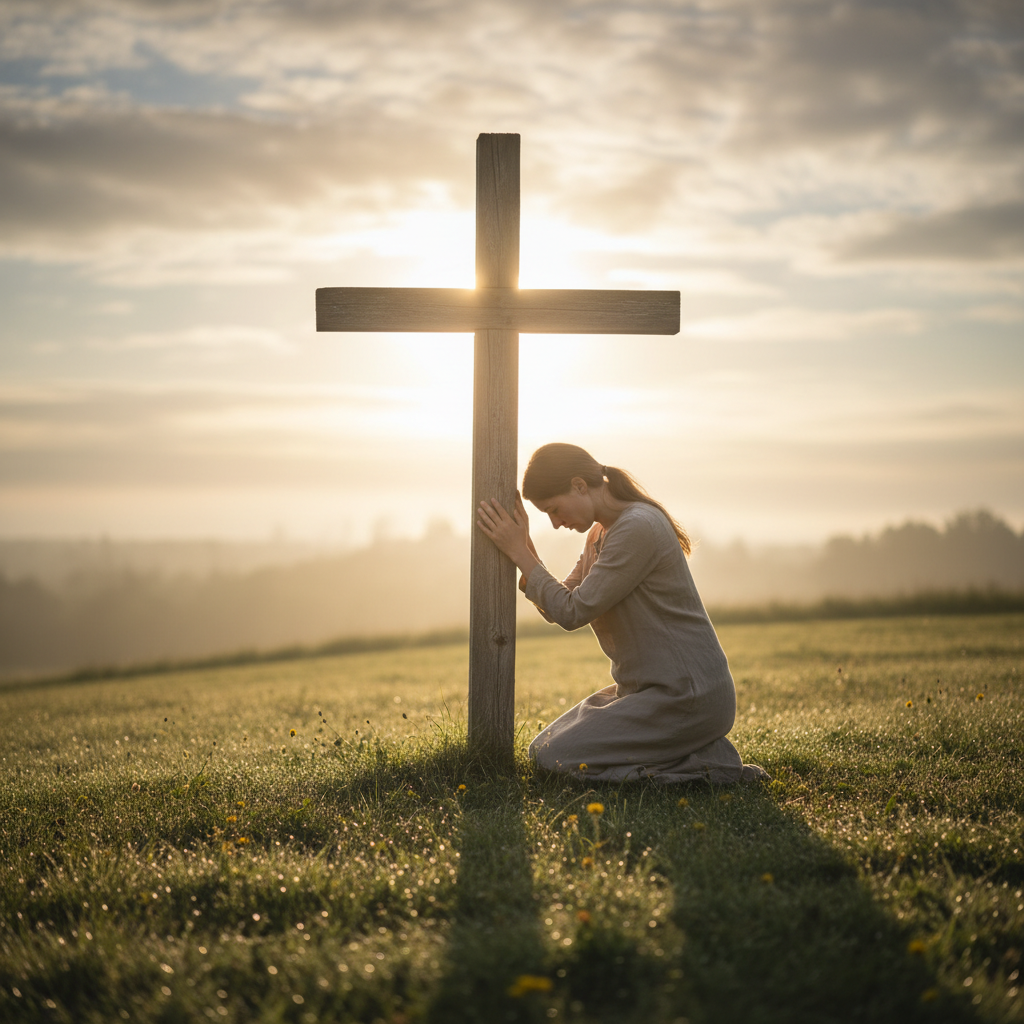
“Beneath the Cross of Jesus” is a beloved Christian hymn written by Elizabeth Clephane in 1868 that expresses the believer’s desire to find refuge, humility, and salvation at the foot of Christ’s cross. The hymn draws on Scripture—particularly 1 Corinthians 1:18—to remind us that the cross is the place where we encounter the saving power and grace of Jesus Christ, the Son of God.
There is a place where the weight of the world lifts, where sin’s burden grows light, and where the weary soul finds its rest. That place is beneath the cross of Jesus—a sacred ground where mercy meets justice, and grace flows freely to all who come in faith. For generations, believers have gathered at the foot of the cross, finding not only salvation but a refuge, a home, and a source of unshakable hope. the beloved hymn “Beneath the Cross of Jesus” captures this truth in words that have echoed through churches, choirs, and quiet moments of personal devotion, drawing countless hearts closer to the Savior.
In this article, we will explore the rich meaning behind “Beneath the Cross of Jesus”—from its powerful lyrics and biblical significance to its history, musical arrangements, and the enduring message that continues to transform lives today. Whether you are a lifelong believer seeking to deepen your understanding or someone curious about the core truths of the Gospel, this guide will walk you through the hymn’s origins, its place in worship across denominations, and how it points us to the saving power of Christ. As Scripture reminds us, “But God demonstrates his own love for us in this: While we were still sinners, Christ died for us” (Romans 5:8, NIV). Let us journey together to the foot of the cross and discover why this hymn remains a timeless declaration of faith.
What Does It Mean to Stand Beneath the Cross of Jesus?

The Biblical Significance of the Cross
The cross stands as the most powerful symbol in all of human history. For Christians, it represents far more than a piece of wood. It is the place where God’s love and justice met perfectly in the person of Jesus Christ. The cross is the heart of the Gospel message. It is where Jesus bore the full weight of humanity’s sin and offered salvation to all who believe.
Scripture tells us, “For God so loved the world that He gave His only begotten Son, that whoever believes in Him should not perish but have everlasting life” (John 3:16, NKJV). The cross is the ultimate demonstration of God’s love. It is not a symbol of defeat. It is the greatest victory over sin, death, and the grave.
At the cross, several profound truths are revealed:
- God’s justice is satisfied. The cross shows that sin has real consequences. Jesus paid the penalty that we could never pay ourselves.
- God’s love is displayed. Christ willingly went to the cross out of love for humanity. He chose suffering so that we could be forgiven.
- Salvation is made possible. Through the cross, anyone can be made right with God. No amount of good works can achieve what the cross accomplished.
- Death is defeated. the resurrection proves that the cross was not the end. Jesus conquered death and offers eternal life to all who trust in Him.
The apostle Paul wrote, “For I determined not to know anything among you except Jesus Christ and Him crucified” (1 Corinthians 2:2, NKJV). The cross is not one truth among many. It is the central truth of our faith. Everything in Christianity flows from what happened at Calvary.
Finding Refuge and Salvation at the Foot of the Cross
To stand beneath the cross of Jesus is to find shelter from the storm of sin and judgment. It is a place of safety, grace, and transformation. The hymn “Beneath the Cross of Jesus” by Elizabeth Clephane beautifully captures this idea. The cross is not merely a historical event. It is a living reality that believers experience daily.
When we come to the foot of the cross, we find:
- Forgiveness of sin. “In Him we have redemption through His blood, the forgiveness of sins, according to the riches of His grace” (Ephesians 1:7, NKJV).
- Peace with God. “Therefore, having been justified by faith, we have peace with God through our Lord Jesus Christ” (Romans 5:1, NKJV).
- A new identity. We are no longer defined by our past. We are children of God, washed clean by the blood of Christ.
- Daily strength. The cross is not just where we begin the Christian life. It is where we return each day for grace and power to live for Him.
The cross is the only place where a holy God and a sinful person can meet. There is no other mediator between God and humanity except Jesus Christ. “For there is one God and one Mediator between God and men, the Man Christ Jesus” (1 Timothy 2:5, NKJV). No saint, no ritual, and no religious system can replace the finished work of Christ on the cross.
Standing beneath the cross means we bring our burdens there. We bring our shame, our guilt, our fear, and our doubt. And we leave with freedom. The cross does not minimize our sin. It maximizes God’s grace. As the hymn reminds us, it is a place of “shadow” and “rest.” Under the cross, we are protected from the full weight of God’s wrath because Jesus absorbed it for us.
This is the beauty of the Gospel. We do not earn our way to God. We come to the cross empty-handed. We come as we are. And we find everything we need in Jesus. The cross is not a symbol of religion. It is the power of God unto salvation for everyone who believes (Romans 1:16).
To stand beneath the cross of Jesus is to stand in the only place where true life is found. It is where the old self dies and the new self in Christ is born. It is the beginning and the center of everything we believe, everything we sing, and everything we live for.
What Is the Hymn ‘Beneath the Cross of Jesus’?
History and Origin of the Hymn
The beloved hymn “Beneath the Cross of Jesus” has been a cornerstone of Christian worship for well over a century. Its enduring message continues to resonate with believers around the world. The hymn is a powerful meditation on the sacrifice of Jesus Christ and the refuge found at the foot of the cross.
Originally published in 1868, the hymn first appeared in the collection Hymns of Consecration and Faith. Its words were penned by Elizabeth Clephane, a Scottish poet. The hymn quickly gained popularity across many Christian denominations. Today, it remains a staple in hymnals worldwide.
Who Wrote ‘Beneath the Cross of Jesus’?
The lyrics were written by Elizabeth Cecilia Clephane (1830–1869), a devout Scottish hymn writer. She was known for her deep faith and poetic gift. Despite her short life, she left a lasting legacy through her hymns.
Elizabeth Clephane was born into a wealthy family in Edinburgh, Scotland. She struggled with poor health throughout her life. Yet her suffering drew her closer to Christ. Her hymns reflect a profound understanding of the cross.
The music for the hymn was composed by Frederick C. Maker (1844–1900). He was an English organist and hymn writer. His melody beautifully complements the reflective and reverent tone of the lyrics.
The Story Behind the Lyrics
Elizabeth Clephane wrote the poem in 1868, near the end of her life. She was only 38 years old when she passed away. Her words reflect a deep longing for Christ and a desire to find shelter beneath the cross.
The hymn draws heavily from Scripture. The opening line, “Beneath the cross of Jesus,” sets the tone. It speaks of finding refuge, hope, and healing in the shadow of Calvary. Each verse builds on this central theme.
Clephane’s own suffering shaped her writing. She knew physical pain and weakness. As a result, her words carry genuine emotion and deep faith. She understood what it means to rest in Christ alone.
The hymn’s message is simple yet profound. It calls believers to find peace beneath the cross. It reminds us that Jesus bore our sins and offers us grace. This truth has made the hymn timeless.
Today, “Beneath the Cross of Jesus” remains a treasured part of Christian worship. Its origins remind us that God often uses suffering to produce beauty. Elizabeth Clephane’s legacy lives on every time this hymn is sung.
Beneath the Cross of Jesus Lyrics
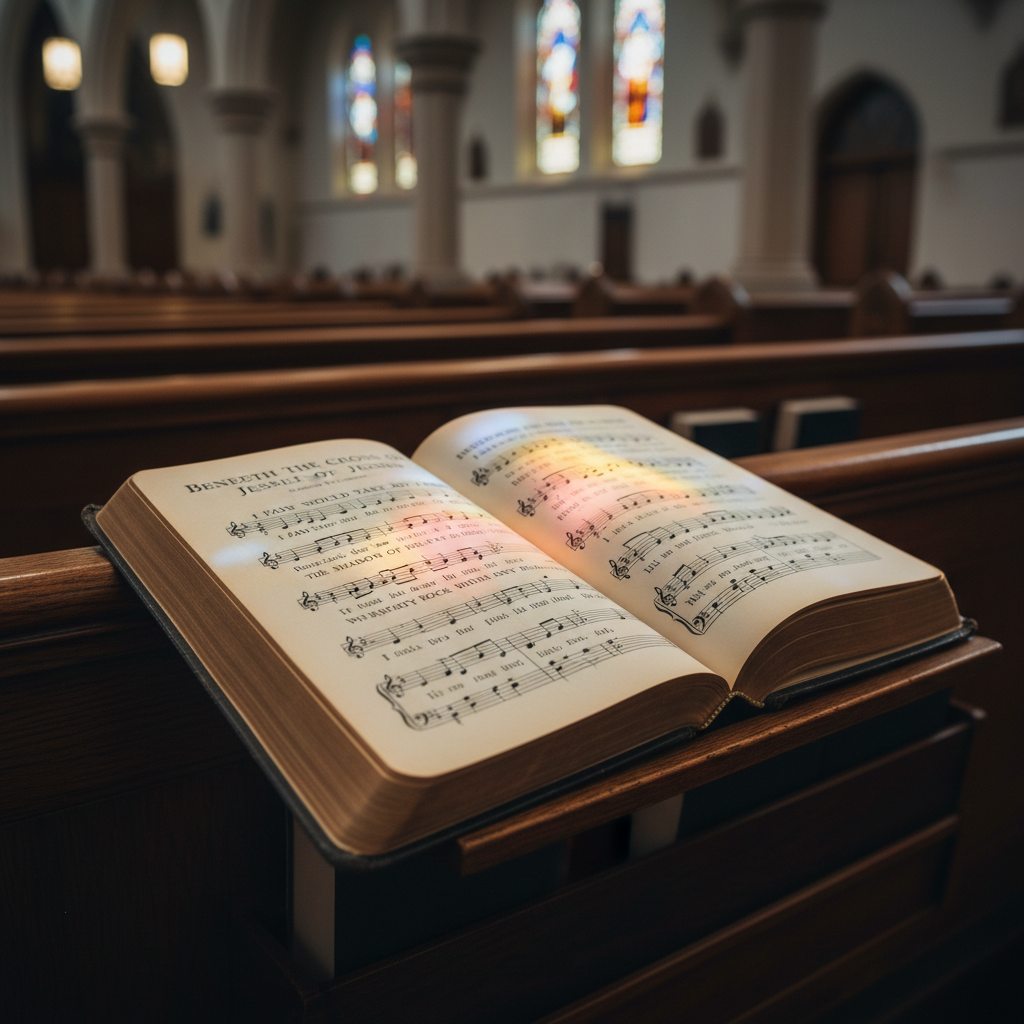
Full Lyrics and Verse-by-Verse Meaning
The hymn “Beneath the Cross of Jesus” was written by Elizabeth Cecilia Clephane in 1868. It remains one of the most beloved hymns in Christian worship. Each verse draws us deeper into the meaning of the cross. Let us walk through the lyrics and discover the rich truth within each line.
| Verse | Key Theme | Scripture Connection |
|---|---|---|
| Verse 1 | Finding refuge at the cross | Matthew 11:28 |
| Verse 2 | the cross as a place of healing | Isaiah 53:5 |
| Verse 3 | the cross as a place of peace | Colossians 1:20 |
| Verse 4 | Total surrender to Christ | Galatians 2:20 |
Verse 1: A Place of Refuge
“Beneath the cross of Jesus
I fain would take my stand,
The shadow of a mighty rock
Within a weary land;
A home within the wilderness,
A rest upon the way,
From the burning of the noontide heat,
And the burden of the day.”
This opening verse paints a vivid picture. The world is described as a “weary land.” Life is filled with burdens and heat. However, beneath the cross of Jesus, we find shade and rest. Furthermore, the image of a “mighty rock” points to Christ Himself. Scripture tells us that Jesus is our refuge and strength (Psalm 46:1). In addition, He invites all who are weary to come to Him for rest (Matthew 11:28). Therefore, this verse reminds us that no matter how difficult life becomes, we can always find shelter in Jesus.
Verse 2: A Place of Healing
“Upon that cross of Jesus
Mine eye at times can see
The very dying form of One
Who suffered there for me;
And from my stricken heart with tears
Two wonders I confess:
The wonders of His glorious love
And my unworthiness.”
Here, the hymn writer looks upon the cross with deep emotion. She sees Jesus dying for her sins. As a result, two responses flow from her heart. First, she marvels at His glorious love. Second, she confesses her own unworthiness. This is the true Gospel experience. When we truly see what Jesus did on the cross, we understand two things clearly:
- His love is beyond measure. He died for us while we were still sinners (Romans 5:8).
- We cannot save ourselves. Our righteousness is not enough. We need a Savior.
Moreover, this verse echoes Isaiah 53:5, which says, “He was pierced for our transgressions, He was crushed for our iniquities; the punishment that brought us peace was on Him, and by His wounds we are healed.”
Verse 3: A Place of Peace
“I take, O cross, my shadow
For my abiding place;
I ask no other sunshine than
The sunshine of His face;
Content to let the world go by,
To know no gain nor loss,
My sinful self my only shame,
My glory all the cross.”
In this verse, the believer makes a profound declaration. The cross becomes an “abiding place.” This means a permanent home. The writer no longer seeks the approval of the world. Instead, she finds everything she needs in Jesus. Additionally, she says, “My glory all the cross.” This is a powerful statement. The world sees the cross as shame (1 Corinthians 1:18). However, for the believer, the cross is our greatest glory. It is where we were forgiven. It is where we were made new. Paul said it best: “May I never boast except in the cross of our Lord Jesus Christ” (Galatians 6:14).
Verse 4: A Place of Surrender
“Beneath the cross of Jesus
I fain would take my stand,
The shadow of a mighty rock
Within a weary land;
A home within the wilderness,
A rest upon the way,
From the burning of the noontide heat,
And the burden of the day.”
Some versions of the hymn include a final verse of surrender. The hymn concludes with a total giving of oneself to Christ. This is the ultimate response to the cross. We no longer live for ourselves. We live for Him who died for us and rose again (2 Corinthians 5:15). In the same way, Paul declared, “I have been crucified with Christ and I no longer live, but Christ lives in me” (Galatians 2:20).
How the Lyrics Point to the Gospel
Every verse of “Beneath the Cross of Jesus” tells the story of the Gospel. The hymn moves through a beautiful progression. It begins with our need. It shows us Christ’s sacrifice. Then it leads us to surrender. Let us trace the Gospel message through the lyrics.
We Are Lost and Weary
The hymn begins by acknowledging our condition. We live in a “weary land.” We carry burdens. We face the “burning of the noontide heat.” This is the human condition apart from Christ. Scripture confirms this truth. All have sinned and fall short of the glory of God (Romans 3:23). Furthermore, without Christ, we are spiritually lost and without hope (Ephesians 2:12).
Christ Died in Our Place
The hymn then turns our eyes to the cross. We see “the very dying form of One who suffered there for me.” This is the heart of the Gospel. Jesus Christ, the sinless Son of God, died for sinners. He took our punishment upon Himself. As a result, we can be forgiven. God demonstrates His own love for us in this: While we were still sinners, Christ died for us (Romans 5:8).
We Respond with Faith and Surrender
Finally, the hymn calls us to respond. We take our stand beneath the cross. We find our home there. We glory in nothing else. This is the response of faith. We cannot earn salvation. We simply receive it as a gift. For it is by grace you have been saved, through faith—and this is not from yourselves, it is the gift of God (Ephesians 2:8).
In conclusion, “Beneath the Cross of Jesus” is more than a hymn. It is a Gospel presentation in poetic form. It speaks to the weary soul. It points to the Savior. And it calls every listener to find refuge, healing, peace, and new life beneath the cross of Jesus Christ our Lord.
Beneath the Cross of Jesus Chords and Musical Arrangement
Common Chord Progressions for Worship
The hymn “Beneath the Cross of Jesus” has been a source of comfort and worship for generations of believers. Understanding the chords and musical arrangement can help you bring this beautiful hymn to life in your church or personal devotion. The song’s gentle, reflective melody pairs perfectly with simple, heartfelt chord progressions that draw the listener’s focus to the cross of Jesus Christ.
Most commonly, this hymn is played in the key of D major or G major. These keys work well for congregational singing because they fall within a comfortable vocal range for most people. Furthermore, the chord progressions are straightforward, making the hymn accessible to musicians of varying skill levels.
Here are the most common chord progressions used for “Beneath the Cross of Jesus”:
| Key | Primary Chords | Common Progression Pattern |
|---|---|---|
| Key of D | D, G, A, Bm, Em | D – G – D – A – D – Bm – G – A – D |
| Key of G | G, C, D, Em, Am | G – C – G – D – G – Em – C – D – G |
| Key of C | C, F, G, Am, Dm | C – F – C – G – C – Am – F – G – C |
Each verse of the hymn typically follows a similar progression, which creates a sense of unity and familiarity. As a result, the congregation can focus on the meaning of the lyrics rather than being distracted by complex musical changes. The bridge or final verse may introduce a slight variation, such as moving to the minor chord (Bm or Em) to add emotional depth before resolving back to the major key.
For a more contemplative feel, many worship leaders choose to play the hymn in a slower tempo, around 60 to 70 beats per minute. This allows each word to breathe and gives the congregation time to meditate on the truth of the cross. In addition, using fingerpicking patterns on an acoustic guitar or gentle arpeggios on the piano can enhance the reflective nature of the song.
Scripture reminds us to “sing psalms and hymns and spiritual songs with thankfulness in your hearts to God” (Colossians 3:16, ESV). The simplicity of these chord progressions serves that purpose beautifully. They keep the focus on worshiping Jesus rather than showcasing musical complexity.
Tips for Leading This Hymn in Church
Leading “Beneath the Cross of Jesus” in a worship setting requires both musical preparation and spiritual sensitivity. The goal is always to point hearts toward the cross of Jesus Christ. Here are practical tips to help you lead this hymn with confidence and reverence.
Prepare the Congregation Before You Sing
Before introducing the hymn, take a moment to share a brief word about its meaning. You might read the Scripture that inspired the lyrics or share a short testimony about what the cross means to you. This helps the congregation connect emotionally and spiritually before the first note is played.
Choose the Right Tempo and Key
- Start with a slower tempo to set a reflective, worshipful mood. You can increase the tempo slightly for the final verse if desired.
- Select a key that fits your congregation’s vocal range. If the key of D feels too high, try G or C. The most important thing is that people can sing comfortably.
- Use a capo on guitar if you need to adjust the key without relearning chord shapes.
Keep the Arrangement Simple
Resist the urge to over-arrange this hymn. Its power lies in its simplicity and the weight of its message. A single acoustic guitar, a piano, or even an a cappella congregation can be profoundly moving. However, if your worship team includes additional instruments, consider the following:
- Add a cello or violin for a warm, mournful tone that echoes the sacrifice of Jesus.
- Use light percussion such as a soft brush on a snare drum to maintain rhythm without overpowering the vocals.
- Introduce harmonies on the final chorus to build emotional intensity and direct attention to the glory of the cross.
Encourage Congregational Participation
One of the greatest joys of leading worship is hearing the body of Christ sing together. To encourage full participation:
- Display the lyrics clearly on a screen or in a printed bulletin so everyone can follow along.
- Sing the first line yourself to set the pitch and tempo, then step back and let the congregation carry the song.
- Make eye contact and use open, inviting body language. Your posture as a worship leader sets the tone for the room.
- Remind the congregation that worship is not a performance. It is a response to the love of Jesus, who gave everything for us on the cross.
Close with Prayer and Reflection
After the final verse, allow a moment of silence. Let the truth of the hymn settle into hearts. Then offer a brief prayer, thanking Jesus for His sacrifice and asking Him to help each person live daily beneath the cross. This practice transforms a song into a genuine encounter with the living God.
As Psalm 96:1–2 declares, “Oh sing to the Lord a new song; sing to the Lord, all the earth! Sing to the Lord, bless His name; tell of His salvation from day to day.” When we lead hymns like “Beneath the Cross of Jesus,” we are doing exactly that. We are telling the story of Jesus, the Savior who died and rose again so that we might have eternal life.
Whether you are a seasoned worship leader or someone stepping into ministry for the first time, trust that the Holy Spirit will work through your efforts. The cross of Jesus Christ is the most powerful message in the world. And when we sing about it with sincerity and faith, lives are changed.
Beneath the Cross of Jesus in the SDA Hymnal
Its Place in Adventist Worship
The hymn “Beneath the Cross of Jesus” holds a cherished place in the Seventh-day Adventist (SDA) tradition. It appears in the official SDA Hymnal as a beloved congregational song. Adventists have long valued hymn singing as a vital part of worship. This particular hymn resonates deeply with the Adventist understanding of the cross.
Seventh-day Adventists emphasize the gospel message that Jesus Christ is the center of their faith. The hymn’s themes of finding shelter and peace at the cross align perfectly with Adventist beliefs. It is often sung during Sabbath worship services. Furthermore, it is a staple in many Adventist hymnals and songbooks. The lyrics remind believers of the refuge found only in Jesus.
Why This Hymn Resonates Across Denominations
“Beneath the Cross of Jesus” is not limited to one church. It has found a home in many Christian traditions. Its simple yet profound message speaks to all believers. The hymn’s focus on the cross makes it universally appealing.
Here are a few reasons for its widespread popularity:
- Universal Theme: The need for salvation is a core Christian belief. This hymn addresses that need directly.
- Scriptural Foundation: The lyrics are rich with biblical imagery. They draw from passages like Colossians 1:20.
- Emotional Depth: The melody and words create a sense of peace. This touches the hearts of many.
- Timeless Message: The cross remains the center of the faith. This hymn keeps it there.
Whether in a small chapel or a large cathedral, this hymn connects worshippers. It unites them in a shared experience. The cross of Jesus is the common ground. As a result, it continues to inspire generations of believers.
Beneath the Cross of Jesus Getty Version
How Modern Artists Have Reimagined the Hymn
The hymn “Beneath the Cross of Jesus” has found new life through contemporary worship artists who have reimagined its timeless message for today’s church. Among these, the Getty Music tradition, led by Keith and Kristyn Getty, has been instrumental in reviving classic hymns with fresh, modern arrangements. Their approach blends rich theological depth with accessible melodies that resonate with both young and old believers alike.
Furthermore, the Getty version of “Beneath the Cross of Jesus” retains the original hymn’s core Gospel-centered message while introducing updated musical elements. These include:
- Modern instrumentation featuring acoustic guitars, piano, and orchestral arrangements
- Congregational-friendly tempos that work well in both small gatherings and large worship services
- Harmonically rich choruses that invite wholehearted participation
- Scripture-saturated lyrics that keep Christ at the center of every verse
In addition, artists like the Gettys have emphasized the importance of doctrinal accuracy in worship music. As Ephesians 5:19 instructs, believers are to address “one another in psalms and hymns and spiritual songs, singing and making melody to the Lord with your heart.” This principle guides every reimagined arrangement. [1]
Comparing the Original and Contemporary Arrangements
Understanding the differences between the original hymn and its modern adaptations helps believers appreciate both traditions. The original composition by Elizabeth Clephane in 1868 was written in a Victorian hymn style. However, contemporary versions have adapted the music to fit today’s worship contexts without losing the hymn’s theological richness.
| Feature | Original Arrangement | Getty/Contemporary Arrangement |
|---|---|---|
| Musical Style | Traditional Victorian hymn with organ accompaniment | Modern worship with piano, strings, and acoustic instruments |
| Tempo | Slower, reflective pace | Moderate, congregational-friendly tempo |
| Vocal Arrangement | Four-part choir harmony | Lead vocal with choir and congregational singing |
| Theological Focus | Personal refuge beneath the cross | Personal refuge and corporate worship of Christ |
| Accessibility | Primarily choir-led performance | Designed for entire congregation participation |
Despite these musical differences, both arrangements share the same foundational truth. They point believers to the cross of Jesus Christ as the only source of salvation and refuge. As the apostle Paul declared in Galatians 6:14, “But far be it from me to boast except in the cross of our Lord Jesus Christ.” [2]
Ultimately, whether sung in its original form or through a modern arrangement, “Beneath the Cross of Jesus” continues to draw hearts to the foot of the cross. The hymn reminds every believer that our hope, our peace, and our salvation rest solely in the finished work of Jesus Christ. Standing beneath His cross, we find the grace we need for every moment of life.
Beneath the Cross of Jesus Choir Performances
Notable Choir Recordings on YouTube
One of the most beautiful ways to experience the hymn “Beneath the Cross of Jesus” is through the powerful sound of a choir. Across YouTube, numerous churches and choral groups have shared moving renditions of this beloved hymn. These performances bring the hymn to life in a way that touches hearts and draws listeners closer to the foot of the cross.
Here are some notable choir recordings you can find on YouTube:
- St. Paul’s Anglican Church Choir — A reverent, traditional arrangement that stays true to the original melody and highlights the hymn’s deep theological weight.
- London Philharmonic Choir — A grand, orchestral version that adds rich harmonies while keeping the focus on the cross of Christ.
- Various SDA Church Choirs — Several Seventh-day Adventist congregations have uploaded performances that reflect the hymn’s special place in Adventist worship.
- Keith & Kristyn Getty (with choir) — A modern choral arrangement that blends traditional lyrics with fresh, accessible harmonies.
Each of these recordings offers a unique interpretation. Yet they all share one thing in common: they point believers back to the saving work of Jesus Christ. The cross remains central in every arrangement.
How Choirs Bring the Hymn to Life
There is something deeply moving about hearing “Beneath the Cross of Jesus” sung by a choir. The layered voices create a richness that mirrors the depth of the Gospel itself. Here is how choirs bring this hymn to life:
- Harmony and unity — When many voices sing together, it reflects the unity of the body of Christ. As Paul wrote, “For we, though many, are one body in Christ” (Romans 12:5).
- Emotional depth — A choir can express the sorrow of the cross and the joy of salvation in a way that a single voice cannot.
- Congregational connection — Hearing a choir perform this hymn often invites listeners to reflect on their own need for the cross.
- Scriptural proclamation — The lyrics are rooted in Scripture. When a choir sings them, the Word of God is proclaimed through music.
Furthermore, choir performances of this hymn serve as a form of worship. They are not merely artistic displays. Instead, they are acts of devotion. Every note and every word directs attention to Jesus and His sacrifice on the cross.
In addition, these recordings are a wonderful resource for personal devotion. Whether you are a new believer or a mature Christian, listening to choir performances can deepen your understanding of the cross. They can also provide comfort during times of struggle. The hymn reminds us that beneath the cross of Jesus, we find refuge, hope, and eternal life.
Ultimately, no matter the arrangement or the choir, the message never changes. The cross of Jesus is the center of our faith. As the Scripture declares, “For I determined not to know anything among you except Jesus Christ and Him crucified” (1 Corinthians 2:2). Every choir performance of “Beneath the Cross of Jesus” is an invitation to stand at the foot of the cross and encounter the living Savior.
Why the Cross of Jesus Matters for Every Believer
`html
The Cross as the Center of Our Faith
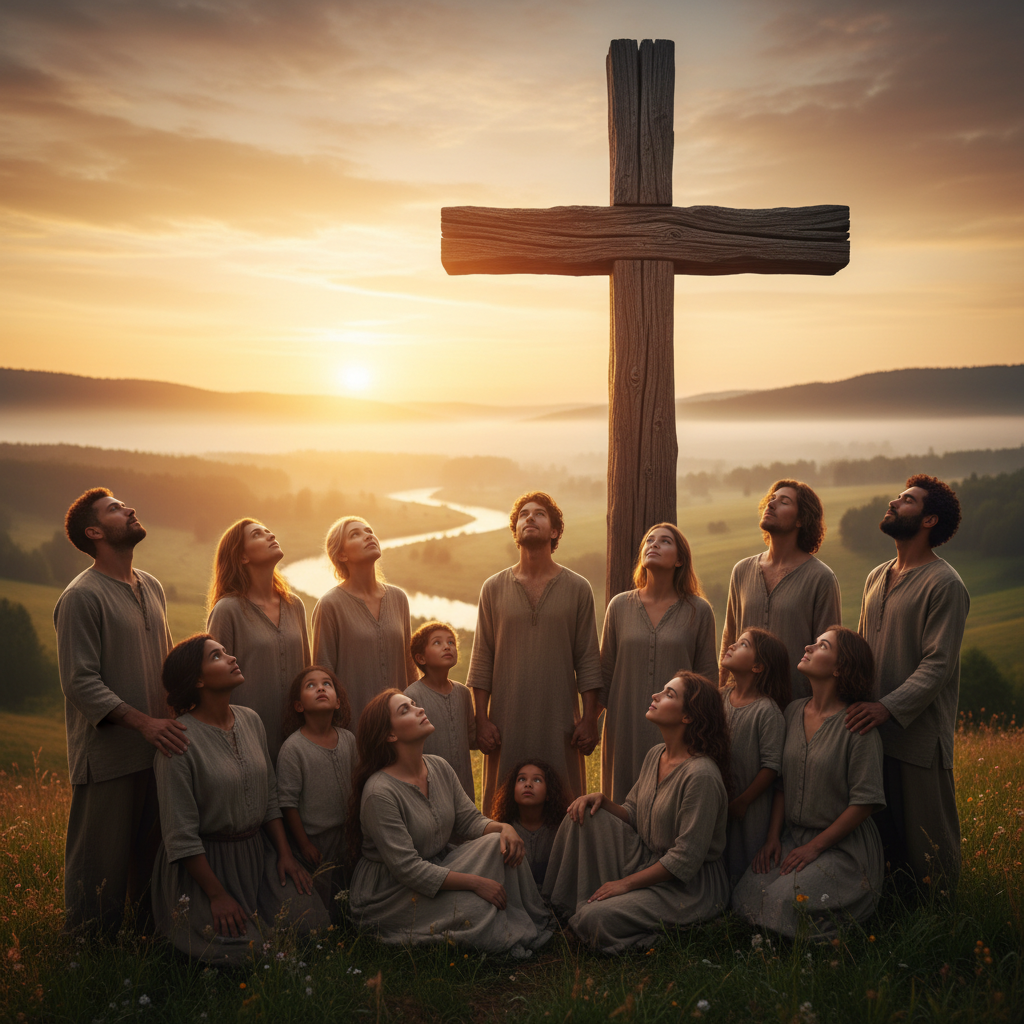
The cross of Jesus is not merely a symbol. It is the very heart of the Christian faith. Everything we believe, everything we hope for, and everything we live for flows from that wooden cross on a hill called Calvary. The apostle Paul wrote, “For I determined not to know anything among you except Jesus Christ and Him crucified” (1 Corinthians 2:2). The cross stands at the center of our faith because it is where God’s love and justice met perfectly in one moment.
Without the cross, there is no forgiveness. Without the cross, there is no salvation. Jesus Himself declared, “For God so loved the world that He gave His only begotten Son, that whoever believes in Him should not perish but have everlasting life” (John 3:16). The cross is where Jesus bore the full weight of our sin. He took what we deserved so that we could receive what we could never earn — righteousness before God.
Furthermore, the cross is the ultimate proof of God’s love. Romans 5:8 tells us, “But God demonstrates His own love toward us, in that while we were still sinners, Christ died for us.” We did not deserve it. We could not save ourselves. Yet Jesus went to the cross willingly, out of pure love for each one of us.
Consider what the cross represents for every believer:
- Forgiveness: Every sin — past, present, and future — was nailed to the cross (Colossians 2:14).
- Reconciliation: The cross broke the barrier between a holy God and sinful humanity (Ephesians 2:13-14).
- Victory: Through the cross, Jesus defeated sin, death, and the devil once for all (Colossians 2:15).
- Identity: We are no longer defined by our past but by what Christ accomplished for us (Galatians 2:20).
- Hope: The cross guarantees our future resurrection and eternal life with Jesus (1 Thessalonians 4:14).
Some may ask, “Why does the cross still matter today?” The answer is simple. The cross is not just a historical event. It is a present reality. Every day, believers live in the power of the cross. Every temptation overcome, every act of love shown, every moment of faith — all flow from what Jesus did beneath the cross of Jesus.
Living Daily Beneath the Cross
To live beneath the cross of Jesus is to live each day in light of what He accomplished there. It is not a one-time decision but a daily surrender. Jesus Himself taught, “If anyone desires to come after Me, let him deny himself, and take up his cross daily, and follow Me” (Luke 9:23). This is the call of every believer — to live in the shadow of the cross.
Living beneath the cross means:
- Daily repentance: We confess our sins and receive His forgiveness (1 John 1:9).
- Daily surrender: We lay down our own desires and follow His will (Romans 12:1-2).
- Daily gratitude: We remember the price He paid and live with thankful hearts (Psalm 107:1).
- Daily witness: We share the hope of the cross with those around us (Matthew 28:19-20).
In addition, living beneath the cross transforms how we face trials. When suffering comes, we remember that Jesus suffered first. When we feel weak, we remember that His strength is made perfect in our weakness (2 Corinthians 12:9). The cross is not just about the past — it is our daily source of strength.
As the hymn “Beneath the Cross of Jesus” reminds us, there is shelter, peace, and rest found at the foot of the cross. Elizabeth Clephane wrote those words from a place of personal suffering. Yet she found hope — not in her circumstances, but in her Savior. That is the power of the cross. It meets us in our lowest moments and lifts us up.
Finally, living beneath the cross means pointing others to it. The cross is the only answer to the brokenness of this world. Every person needs to hear that Jesus died and rose again. Every soul needs the hope that is found in Him alone. As believers, we carry the message of the cross into our homes, our workplaces, and our communities.
The cross of Jesus matters because it is the center of everything. It is where love triumphed. It is where grace was poured out. And it is where every believer finds their beginning, their purpose, and their eternal home. Let us never move beyond the cross. Let us live there — today and always.
`
Frequently Asked Questions
What is the original version of ‘Beneath the Cross of Jesus’?
The original version of “Beneath the Cross of Jesus” was written in 1868. The lyrics were penned by Elizabeth Clephane, a Scottish poet. She wrote the hymn while reflecting on her own suffering and her deep faith in Jesus Christ. The original version contains three stanzas. Each verse paints a vivid picture of finding shelter and peace at the foot of the cross. The hymn was first published in 1872, four years after her death. It has since become a beloved classic in Christian worship.
Who composed the music for ‘Beneath the Cross of Jesus’?
The most common musical setting for this hymn is called “St. Christopher.” The tune was composed by Frederick C. Maker in 1881. Maker was a well-known English hymn composer. His melody perfectly complements the reflective and reverent tone of Clephane’s lyrics. However, other musical arrangements have been created over the years. Modern artists like Keith and Kristyn Getty have also produced contemporary versions.
Is ‘Beneath the Cross of Jesus’ in the SDA Hymnal?
Yes, “Beneath the Cross of Jesus” is included in the Seventh-day Adventist (SDA) Hymnal. It holds a special place in Adventist worship services. The hymn’s themes of refuge and salvation align closely with core Adventist beliefs. It is often sung during communion services and times of reflection. Its inclusion shows how the hymn resonates across many Christian denominations.
Where can I find ‘Beneath the Cross of Jesus’ lyrics and chords?
You can find the lyrics and chords in several places. Here are some reliable sources:
- Hymnals: Check your church hymnal, such as the SDA Hymnal or other standard Christian hymn books.
- Online Hymn Sites: Websites like Hymnary.org provide lyrics and musical notation for many hymns. [3]
- Worship Leader Resources: Sites like PraiseCharts or CCLI offer chord charts for leading worship. [4]
- YouTube: Many artists have posted chord tutorials and performances of the hymn.
Always ensure the version you use is doctrinally sound and Christ-centered.
What is the message behind ‘Beneath the Cross of Jesus’?
The central message of this hymn is finding refuge and salvation through Jesus Christ. It speaks of the cross as a place of safety and peace. The lyrics remind believers that beneath the cross, we find forgiveness and cleansing from sin. As Romans 5:8 states, “But God demonstrates his own love for us in this: While we were still sinners, Christ died for us.” The hymn calls us to live daily under the shadow of the cross. It is a powerful reminder that our hope and strength come from Jesus alone.