
John 20:19-31 records the resurrected Jesus appearing to His disciples behind locked doors, greeting them with peace, breathing the Holy Spirit upon them, and commissioning them for ministry. The passage culminates in Jesus appearing to the doubting Thomas, who then confesses Jesus as ‘My Lord and my God,’ and Jesus declares that those who believe without seeing are blessed.
the resurrection of Jesus Christ is not merely a historical footnote—it is the very foundation upon which the entire Christian faith stands. In the Gospel of John, chapters 20:19 through 31, we are invited into one of the most remarkable moments in all of Scripture: the risen Lord appearing to His frightened, uncertain disciples gathered behind locked doors. What happens in this passage is nothing short of world-changing—Jesus brings peace, breathes the Holy Spirit into His followers, sends them on a mission, and confronts the honest doubt of one apostle with an invitation that still speaks across the centuries.
In this article, we will walk carefully and reverently through the meaning of John 20:19-31, unpacking what each moment reveals about who Jesus is and what He came to accomplish. Whether you are a long-time believer looking to deepen your understanding of the resurrection or someone earnestly seeking answers about the heart of the Gospel, these verses offer profound and deeply personal truths. Let us open God’s Word together and discover the peace, the power, and the purpose that only the risen Christ can give.
What Happens in John 20:19-31?
Historical Context
John 20:19-31 takes place during one of the most critical forty days in human history. Jesus had been crucified on Friday. His body was buried before sunset. Saturday passed quietly under the weight of death. Then, early Sunday morning, something changed forever. the tomb was empty. Jesus had risen from the dead, just as He promised in John 2:19: “Destroy this temple, and in three days I will raise it up.”
Mary Magdalene was the first to see the risen Jesus. She ran to tell Peter and the beloved disciple. they saw the empty tomb. The disciples were gathered behind closed doors that Sunday evening. They were gripped by deep fear. the Jewish authorities had crucified their Lord. His followers could be next. Into this scene of terror and uncertainty, Jesus came. He entered the room though the doors were locked. He stood among His own. He spoke peace. he showed them His wounds. He breathed the Holy Spirit upon them. And eight days later, He reached a skeptical Thomas. His living presence changed everything.
The Setting: A Locked Room in Jerusalem
John 20:19 gives the setting in clear terms. “On the evening of that first day of the week, the disciples were together with the doors locked because they feared the Jewish leaders.” The room was locked for protection. Yet the risen Jesus simply appeared among them. No locked door could contain the risen Christ.
This detail matters for two important reasons. First, it shows the disciples were truly gathered. They were not scattered or in hiding alone. They were together, waiting in fear. Second, it proves Jesus’ resurrection body was real but glorified. He was not a ghost. He was not a hallucination. He passed through locked doors. He then showed His hands and side. This was the same Jesus who had been nailed to the cross and pierced with a spear.
But these disciples were about to change. The fearful men behind locked doors would become bold witnesses. They would turn the world upside down with the message of the risen Christ. Jesus was about to give them peace, the Holy Spirit, and a mission that extends to this very day.
Why Does Jesus Say Peace Be With You Three Times?
The Jewish Greeting of Shalom
In John 20:19-31, Jesus appears to His disciples and says, “Peace be with you” not once, but three times. To understand the weight of this greeting, we must first understand the Jewish word behind it. The word is Shalom.
Shalom is far more than a simple hello or goodbye in the Jewish tradition. It carries a rich meaning that includes:
- Wholeness — being complete and undamaged
- Well-being — flourishing in body, soul, and spirit
- Harmony — right relationships with God and others
- Prosperity — not just material, but spiritual abundance
In the Old Testament, Shalom was a blessing. God’s people longed for it. They prayed for it. the prophets even promised a coming Messiah who would establish everlasting peace (Isaiah 9:6-7). So when Jesus spoke this word to His disciples, He was not offering a casual greeting. He was declaring that He Himself was the fulfillment of that ancient promise.
The disciples were hiding behind locked doors. They were afraid. They had just witnessed the crucifixion of the One they had followed for three years. Their hearts were broken. Their hope was seemingly gone. Into that room of fear and grief, Jesus entered with a message: Shalom. Peace be with you.
Threefold Declaration for Emphasis
Jesus says “Peace be with you” three times in this passage. First in John 20:19, then again in John 20:21, and once more in John 20:26. In the Bible, repetition is not careless. It carries deep significance.
In the Hebrew tradition, saying something three times was a way to emphasize its absolute certainty and importance. Consider these examples:
- Isaiah cried out “Holy, holy, holy” to declare the supreme holiness of God (Isaiah 6:3).
- Peter denied Jesus three times, and Jesus later restored him with a threefold commission: “Feed my sheep” (John 21:15-17).
So why three times with peace?
First declaration (John 20:19): Jesus appears and says, “Peace be with you.” This is the initial announcement. He is revealing Himself as the risen Lord and offering peace to troubled hearts.
Second declaration (John 20:21): Jesus says again, “Peace be with you!” This time, He follows it with a commission: “As the Father has sent me, I am sending you.” The peace He offers is not passive. It is the kind of peace that empowers mission.
Third declaration (John 20:26): Eight days later, Jesus appears again — this time with Thomas present. Once more He says, “Peace be with you.” This repetition shows that Jesus does not give up on those who doubt. He returns. He reassures. He offers peace even to the skeptical heart.
Peace Through the Cross
The peace Jesus offers is not the peace the world gives. As Jesus Himself said in John 14:27, “Peace I leave with you; my peace I give you. I do not give to you as the world gives. Do not let your hearts be troubled and do not be afraid.”
So where does this peace come from? It comes through the cross and the resurrection. The disciples were afraid because they did not yet fully understand that Jesus had conquered death. He showed them His hands and His side (John 20:20). These wounds were proof. They were evidence that the price had been paid. The work was finished.
This is what the Bible teaches:
- Peace with God comes through the blood of Jesus (Romans 5:1). Because of the cross, the barrier between sinful humanity and a holy God has been removed.
- peace of God guards our hearts and minds in Christ Jesus (Philippians 4:7). Even when circumstances are uncertain, we can rest in His finished work.
- Jesus is our peace. Ephesians 2:14 says, “For he himself is our peace, who has made the two groups one and has destroyed the barrier, the dividing wall of hostility.”
Every time Jesus said “Peace be with you,” He was pointing His disciples — and pointing us — back to the cross. His resurrection proved that the sacrifice was accepted. Death was defeated. And now,true and lasting peace is available to everyone who believes.
In John 20:19-31, the risen Christ does not appear to scold His disciples for their fear or failure. Instead, He fills the room with peace. He fills their hearts with assurance. And He calls each of them into a mission of sharing that same peace with the world.
Today, Jesus speaks those same words to you: “Peace be with you.” Not because your circumstances have changed, but because He is alive. The tomb is empty. The victory is won. And the Prince of Peace is standing with you, right where you are.
What is the Meaning of John 20:19?

Understanding the meaning of John 20:19 requires us to pause and reflect on the extraordinary moment it describes. This verse captures one of the most important events in all of Scripture — the risen Jesus appearing to His disciples after His crucifixion. The events of John 20:19 are not merely historical details. They are living truths that speak directly to our faith, our hope, and our relationship with Christ today.
Jesus Appears Though the Doors Were Locked
The Gospel of John tells us exactly what happened that evening. The disciples were gathered together behind locked doors. They were afraid of the Jewish leaders (John 20:19). Their hope had been shattered just days earlier when Jesus was crucified and buried. Now they hid in fear, unsure of what would happen to them next.
Yet right in the middle of their fear, something miraculous occurred. Jesus came and stood among them. He passed through the locked doors. This is not a small detail. It is a profound truth about the nature of the risen Christ.
Consider what this tells us:
- Jesus is not bound by physical limitations. The resurrected body of Christ transcends the natural world. He is Lord over all creation, including matter and space.
- He comes to us in our fear. The disciples did not have to calm down first. Jesus entered their locked room of anxiety and stood right in their midst.
- He initiates the encounter. The disciples did not find Jesus. He found them. This is the heart of the Gospel — God comes to us before we come to Him (Romans 5:8).
The locked doors represent more than just physical barriers. They symbolize the walls we build around our hearts — fear, doubt, grief, guilt. Yet none of these can keep Jesus out. He who conquered death can certainly pass through any door we try to shut.
This moment also confirms the bodily resurrection of Jesus Christ. He did not appear as a ghost or a spirit. He had a real, physical body — one that could pass through walls yet could also be seen and recognized. The resurrection of Jesus is not a metaphor. It is a historical reality upon which our entire faith rests (1 Corinthians 15:14).
Jesus Shows His Wounds
When Jesus appeared to the disciples, He did not simply say hello. He showed them His hands and His side (John 20:20). This was deeply intentional. The wounds He displayed were the very marks of His crucifixion — the nails in His hands and the spear wound in His side (John 19:34).
Why is this so significant? There are several powerful truths embedded in this moment.
First, the wounds prove His identity. The disciples could see that this was truly Jesus — the same Jesus who had been crucified, buried, and now stood alive among them. They were not seeing an imposter. They were not dreaming. The risen Christ bore the marks of His sacrifice as everlasting proof.
Second, the wounds reveal a Savior who was not ashamed of what He endured. Even in His glorified body, Jesus carried the scars of the cross. Hebrews 12:2 tells us that Jesus endured the cross “for the joy that was set before Him.” His wounds were not signs of defeat. They were trophies of victory over sin and death.
Finally, His wounds bring healing to us. Isaiah 53:5 declares, “By His stripes we are Jesus Christ still bear the nail prints in His hands for every person who ever lived. Your pain is not wasted in His sight.” The wounds of
He Repeats: ‘Peace Be With You’
Standing before His frightened followers, Jesus spoke words that have echoed through the centuries: “Peace be with you” (John 20:19). These were not mere pleasantries. In the Bible, peace is not simply the absence of trouble. It is the presence of wholeness, well-being, and right relationship with God.
Jesus offered this peace as His first act after rising from the dead. Consider the beautiful order of this moment:
- He overcame death — proving He had power over all things.
- He overcame locked doors — proving He could come to us anywhere.
- He showed His wounds — proving it was truly Him.
- And then He offered peace — proving that His resurrection was for our benefit.
This peace was not dependent on changing the disciples’ circumstances. They were still behind locked doors. They were still in danger. Yet in that very room, with every reason for fear, Jesus gave them supernatural calm. As He said in John 14:27, “Peace I leave with you, My peace I give to you; not as the world gives do I give to you. Let not your heart be troubled, neither let it be afraid.”
For us today, the meaning of John 20:19 is deeply personal. The same Jesus who appeared to the disciples in that locked room is alive right now. He offers you peace — not because your problems disappear, but because He has overcome the world (John 16:33). Whether you are walking through grief, fear, uncertainty, or doubt, the risen Christ stands before you and speaks: “Peace be with you.”
This is the heart of the resurrection message. Jesus did not rise from the dead merely to prove a theological point. He rose to bring you into a living, breathing relationship with God — one marked by the unshakeable peace of knowing that your Savior lives, and He is with you always, even until the end of the age (Matthew 28:20).
What Did Jesus Mean When He Said ‘As the Father Has Sent Me, I Am Sending You’?
The Mission of the Disciples
After appearing to His disciples, Jesus gave them a profound mission. “As the Father has sent me, I am sending you.” This statement in John 20:21 reshapes everything about who they were and what they were called to do.
First, let us understand what this means. Jesus was not simply giving a new assignment. He was connecting their mission directly to His own. Everything Jesus did on earth flowed from the Father’s love. He healed the sick. He forgave sinners. He proclaimed the Kingdom of God. Now He was extending that same work through His followers.
Here is what this mission included:
- Proclaiming the Gospel of salvation through Jesus Christ alone
- Forgiving sins in His name, as Jesus gave them spiritual authority
- Extending God’s love to every person, just as Jesus had done
- Representing Christ to the world, because they were His witnesses
- Demonstrating the power of the Holy Spirit in their daily lives
Furthermore, notice the depth of this commission. Jesus said He was sending them just as the Father sent Him. This means they were not acting on their own power. They carried the full weight of heaven’s mission. As Paul later wrote, “We are therefore Christ’s ambassadors, as though God were making His appeal through us” (2 Corinthians 5:20).
Additionally, this mission was inclusive. It was not limited to the disciples in that room. Yes, the eleven were the first to hear these words. Yet Jesus intended this mission to continue through every believer for all generations.
A Continuing Mission for All Believers
The words of Jesus still speak to us today. “As the Father has sent me, I am sending you” is not merely a historical statement. It is a living call to every follower of Jesus Christ.
In the same way that Jesus carried out His Father’s purpose, we are called to carry out His. Of course, we do not replace the work of Christ. Only Jesus died on the cross. Only He rose again. However, we continue His mission by sharing His love with a world that desperately needs Him.
Consider what this means for how we live each day:
- When we speak words of truth, we represent Jesus.
- When we forgive those who hurt us, we reflect His heart.
- When we show compassion to the broken, we carry His presence.
- When we share the good news, we fulfill His command.
Moreover, this mission is sustained by the Holy Spirit. Remember, Jesus breathed on His disciples and said, “Receive the Holy Spirit” (John 20:22). Without the Spirit, this mission is impossible. With the Spirit, ordinary believers can carry the extraordinary love of Jesus to everyone they encounter.
Finally, this call is rooted in peace. Before commissioning them, Jesus said “Peace be with you” three times. He gives us peace so we can take that peace into a troubled world. Our mission flows from the peace that comes from knowing our risen Savior.
Beloved, as you read the words of John 20:19-31, know this. The same Jesus who appeared to His disciples in that locked room appears to you and me through His Word and Spirit today. He has not stopped sending His people. He is still sending you into your home, your workplace, your neighborhood. You carry the mission of heaven because the risen Christ has given it to you.
Why Did Jesus Breathe on the Disciples and Say ‘Receive the Holy Spirit’?
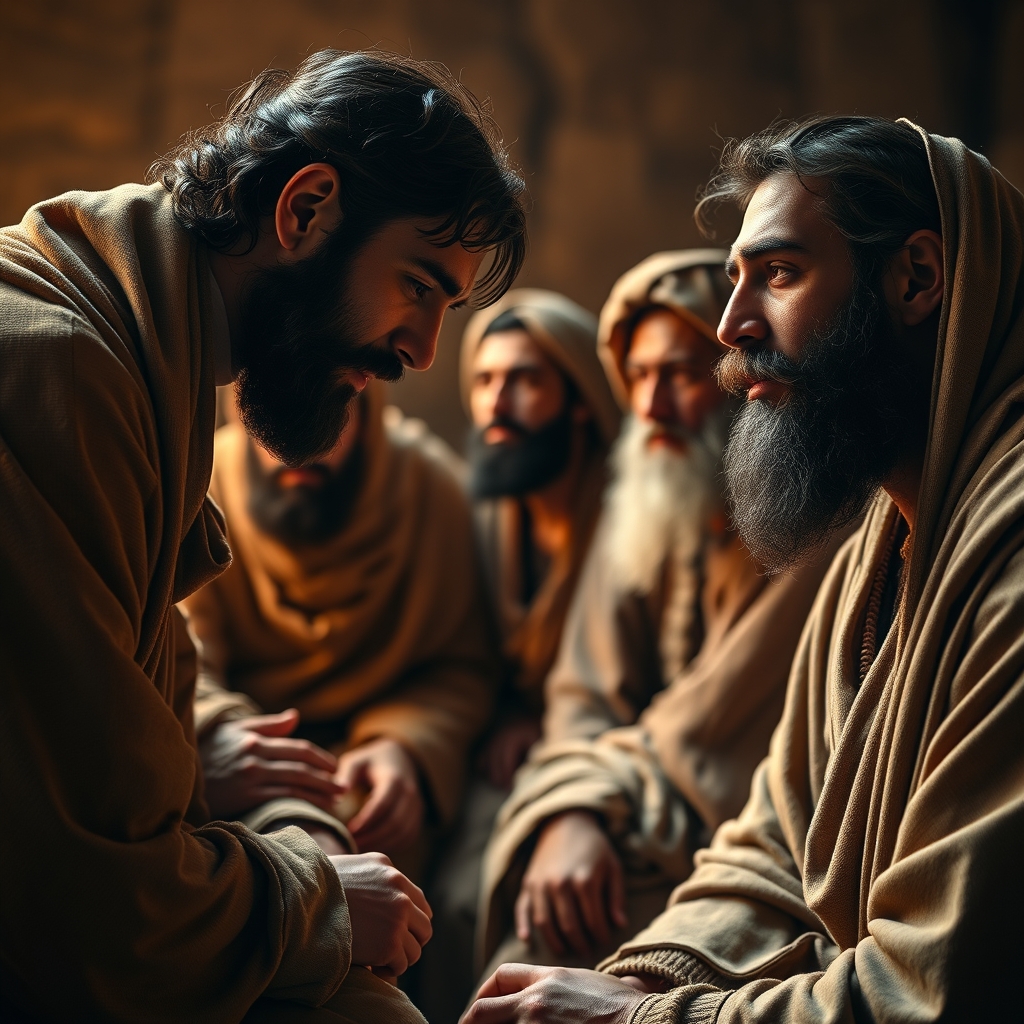
The Symbolism of Breathing
When Jesus breathed on His disciples, He was doing something deeply symbolic and powerful. In fact, the original Greek word for “spirit” (pneuma) literally means “breath” or “wind.” This connection is not accidental. In the very beginning, God breathed life into Adam, making him a living being (Genesis 2:7). Now, on this evening after the resurrection, Jesus breathes new life into His followers — not just physical life, but spiritual, eternal life.
Furthermore, this act was a personal and intimate moment. Jesus did not simply speak about the Holy Spirit from a distance. He came close to them. He breathed on them. As a result, the disciples understood that this gift was not an abstract concept. It was a real and direct encounter with the risen Christ.
In John 20:22, we see this profound moment unfold:
“And when he had said this, he breathed on them, and said to them, ‘Receive the Holy Spirit.’ “
What a breathtaking picture of grace! The Creator of the universe leaned in and breathed His very presence into those He called His own.
Authority to Forgive Sins
The very next verse reveals why this moment was so important. In John 20:23, Jesus said:
“If you forgive the sins of any, they are forgiven them; if you retain the sins of any, they are retained.”
As a result, this breathing was not only about comfort or a symbolic gesture. Jesus was giving His disciples real spiritual authority — the authority to declare the forgiveness of sins through the power of the Holy Spirit. This was a turning point. The disciples were now empowered to carry the message of the Gospel to the world.
In other words, the breath of Jesus on that evening was the beginning of a new covenant relationship between God and His people through Christ alone.
Consider what this meant for the disciples:
- They received direct empowerment from the risen Lord.
- They were authorized to share the message of forgiveness in Jesus’ name.
- They understood that their mission was rooted in what Jesus had already accomplished through the cross.
However, it is important to clarify: this authority does not mean that the disciples themselves forgave sins. Only God forgives sins. The disciples were given the privilege of proclaiming the message of salvation — that forgiveness comes through faith in Jesus Christ alone. Their words carried weight because they spoke on behalf of the risen Lord.
Connection to Pentecost
Many wonder if this moment in John 20 was the same as Pentecost in Acts 2. The answer requires careful attention to Scripture. The breathing in John 20 does not appear to be the same as the outpouring at Pentecost. At Pentecost, about fifty days after the resurrection, the Holy Spirit descended with power, accompanied by wind and flames of fire, and the disciples began to speak in other tongues (Acts 2:1-4). [1]
So what was the breath in John 20? Most scholars see it as an initial, preparatory impartation of the Spirit — a foretaste and promise of what was to come. It was as if Jesus was saying, “The Spirit’s power is coming. I am already beginning that work in you.”
This table helps us compare the two events:
| Event | John 20:22 | Acts 2:1-4 |
|---|---|---|
| Timing | Evening of the resurrection | 50 days later (Pentecost) |
| What happened | Jesus breathed on the disciples | Holy Spirit came with wind and fire |
| Result | Authority to declare forgiveness | Power to speak in tongues and boldly proclaim the Gospel |
| Purpose | Preparatory impartation of the Spirit | Full empowering for worldwide witness |
Both events, however, point to one glorious truth: the Holy Spirit is given by Jesus Christ, and He is essential for every believer’s life and mission. Without the Spirit, we cannot truly know Jesus, cannot understand Scripture, and cannot effectively share the Gospel.
In addition, this connection reminds us that God’s plan unfolds step by step. Jesus did not leave His followers unprepared. From the locked room in Jerusalem to the upper room at Pentecost, the risen Christ was faithfully equipping His people for the work ahead.
Today, as believers, we are not left without God’s presence. Just as Jesus breathed life into His disciples, He sends the Holy Spirit to live within every person who trusts in Him (John 14:16-17). The Spirit guides us, empowers us, and reminds us of all that Jesus taught (John 14:26). This is our unshakable hope — not a distant God, but a Savior who comes near and breathes His life into us.
How Did Thomas Respond to Jesus, and What Can We Learn from Doubt?

Thomas’s Refusal to Believe
The disciple Thomas is often remembered as “doubting Thomas.” However, there is much more to his story than skepticism. When the other disciples came to him declaring, “We have seen the Lord!” Thomas responded with something stronger than mere curiosity. He outright refused to believe.
Thomas said, “Unless I see the nail marks in His hands and put my finger where the nails were, and put my hand into His side, I will not believe” (John 20:25, NIV). This was not a request for evidence. It was a declaration of unbelief. Thomas drew a line and declared he would not cross it, no matter what anyone else told him.
This is the same Thomas who, just days earlier, had said, “Let us also go, that we may die with Him” (John 11:16). He was a man of deep devotion and deep emotion. His doubt was not born out of indifference. It came from a broken heart and shattered expectations. He had given up everything to follow Jesus. Then he watched Jesus die on a cross. The grief and confusion made the reports of resurrection feel impossible.
Thomas’s refusal may seem shocking. Yet it is deeply honest. He did not pretend to believe what he did not feel. He brought his doubts into the open rather than hiding behind the enthusiasm of others. And this honesty is something God can work with.
Jesus Appears to Thomas Eight Days Later
Eight days passed. The disciples gathered again. This time, Thomas was with them. And Jesus came. Despite the locked doors, He stood among them and spoke the same words: “Peace be with you!” (John 20:26).
What happened next is one of the most tender moments in all of Scripture. Jesus did not scold Thomas. He did not shame him. Instead, He turned directly to Thomas and addressed his exact words of doubt: “Put your finger here; see My hands. Reach out your hand and put it into My side. Stop doubting and believe” (John 20:27).
This reveals something extraordinary about the heart of the risen Jesus. He already knew what Thomas had said eight days earlier. He came back not merely to appear to the group, but to meet Thomas right where his doubts were. Jesus did not require Thomas to come to Him on His terms. He came to Thomas on his.
Consider several important truths from this encounter:
- Jesus is patient with our doubts. He did not rebuke Thomas. He invited him to examine the evidence for himself.
- Jesus meets us personally. The resurrection is not an abstract doctrine. It is a living encounter with a risen Savior who knows our struggles by name.
- Jesus does not despise honest questions. Thomas’s wound was real. His grief was real. Jesus spoke to that reality rather than dismissing it.
- Doorways and barriers cannot keep Jesus away. The doors were locked, yet Jesus stood in their midst (John 20:26). No wall, physical or emotional, prevents Him from reaching us.
The same Jesus who appeared flesh and bone, who ate fish and allowed His wounds to be handled, stooped low to reach one struggling, grieving disciple. That is the character of our Lord. He is not distant. He is tender. And for those sitting in doubt today, His invitation remains open: “Stop doubting and believe.”
Thomas’s Confession of Faith
The moment Thomas saw Jesus, he did not put a finger in the nail prints. He did not touch His wounds. His doubt crumbled in an instant. Instead, Thomas made the greatest declaration of faith in the entire Gospel of John. He fell before Jesus and cried, “My Lord and my God!” (John 20:28).
This confession is staggering in its theological weight. Thomas, a Jewish monotheist, addressed a man standing in front of him as God Himself. This is not an expression of surprise like we might say today. It is a full worship and surrender. The risen Jesus accepted this declaration without correction. He was not offended by Thomas calling Him God. He received it as right and true.
Throughout the Gospel of John, this has been the central theme. The book opened by declaring, “The Word was God” (John 1:1). Jesus claimed oneness with the Father (John 10:30). He accepted worship (John 9:38). And now, in the upper room, Thomas sealed the testimony of the entire Gospel with one sentence: Jesus is Lord. Jesus is God. Jesus is risen.
Thomas moved from stubborn unbelief to wholehearted worship. His doubt did not disqualify him. In fact, his honest struggle became the occasion for one of the most powerful confessions of faith Scripture has ever recorded. When doubts are brought into the presence of the risen Christ, they do not destroy faith. They deepen it.
Consider the pattern Thomas followed and how it can guide believers today:
- He was honest about where he was spiritually.
- He stayed in the community of believers despite his doubts.
- He encountered the risen Jesus personally.
- He responded with full surrender and worship.
Blessed Are Those Who Believe Without Seeing
After Thomas fell in worship, Jesus said to him, “Because you have seen Me, you have believed; blessed are those who have not seen and yet have believed” (John 20:29). This statement was not directed at Thomas alone. It was directed at every person who would come to faith in Christ through the testimony of Scripture and the Holy Spirit, across every generation since.
This includes us. None of us has physically touched the hands of the risen Jesus. None of us stood in that upper room. And yet, Jesus calls us blessed. Our faith is not weaker because it is unseen. It is, in fact, the very kind of faith Jesus highlighted and honored.
This does not mean that doubt is a sin or that questions are forbidden. Thomas had doubts, and Jesus met him with grace. But it does mean that the ultimate goal is not sight. The ultimate goal is trusting in the person of Jesus Christ, who died for our sins and rose again, just as the Scriptures proclaimed.
The Apostle Peter, who was also in that upper room, later wrote, “Though you have not seen Him, you love Him; and even though you do not see Him now, you believe in Him and are filled with an inexpressible and glorious joy” (1 Peter 1:8). This is the blessed life: a life anchored not in what we can touch, but in who Jesus is and what He has done.
In closing, the story of Thomas teaches us several enduring truths.
- Doubt does not disqualify you. God does not cast away those who struggle with belief. He draws near to them.
- Jesus is greater than our questions. He has answers for every objection and compassion for every wound.
- The resurrection changes everything. It turned the most stubborn doubter in the upper room into the loudest worshipper.
- Jesus desires a personal response. He did not offer Thomas a philosophical argument. He offered Himself. And that is still His offer to every person today.
The risen Christ is alive. He is not bound by locked doors or locked hearts. He still stands among His people and speaks, “Peace be with you.” Whether you come to Him with confident faith or with trembling doubt, He receives all who call upon His name. As He promised in John 6:37, “Whoever comes to Me I will never drive away.”
Why Did Jesus Perform Many Other Signs Not Written in This Book?
The Purpose of John’s Gospel
The Gospel of John makes its purpose clear. John himself tells us why he wrote. In John 20:30-31, he explains that Jesus performed many other signs not recorded in this book. In addition, John states he selected certain events so that readers “may believe that Jesus is the Christ, the Son of God.” Furthermore, he wanted believers to “have life in His name.”
John did not write a biography covering every detail of Jesus’ life. Instead, he carefully chose specific miracles and teachings. His goal was simple yet powerful: strengthen faith in Jesus Christ. As a result, even the signs not recorded matter deeply. They all point to the same truth.
Consider what John 20:31 declares so clearly:
“But these are written that you may believe that Jesus is the Christ, the Son of God, and that by believing you may have life in His name.”
John’s Gospel contains only seven major signs, or miracles. However, the other three Gospels record many more events. For example, Jesus healed countless people. He cast out demons. He fed thousands. He walked on water. He calmed storms. He raised the dead. Furthermore, the book of Acts confirms that even more signs followed after the resurrection.[2]
So why did John leave so many out?
- Faith does not require every detail. God invites us to trust Him with what has been revealed.
- The Holy Spirit guided John’s writing. What we have in Scripture is exactly what God intended for us to know and believe.
- The power of Jesus is infinite. If every sign were recorded, the whole world could not contain the books, as John himself notes in John 21:25.
This truth also speaks to us today. In addition, there are many works of Jesus in our own lives that no book has ever captured. Furthermore, His mercy extends beyond what history records. Therefore, the signs we do have in Scripture are sufficient. They reveal who Jesus is. He is the risen Lord. He is the Son of God. He is the source of eternal life. Rather than wondering about the signs left out, we are invited to respond to the signs given. Jesus calls us to believe, trust, and receive the life He offers through His death and resurrection.
As we reflect on John 20:19-31, let us remember that every recorded sign, every miracle, and every word of Scripture leads to one conclusion. Jesus is exactly who He claimed to be. In addition, His mission on the cross was real. His resurrection was physical and victorious. As a result, we can face every doubt with confidence. The written Word of God is enough. The witness of the Holy Spirit is sufficient. Jesus Christ, crucified and risen, is our foundation. Therefore, let us hold fast to Him and live fully in His name.
Key Themes from John 20:19-31
`html
The Physical Resurrection of Jesus Christ
The cornerstone of John 20:19–31 is the bodily resurrection of Jesus Christ. He did not appear as a ghost or a spirit. He stood in a locked room with real flesh and real wounds. Furthermore, He invited Thomas to touch His pierced side.
This passage demolishes any theory that the resurrection was merely symbolic or emotional. Jesus was physically alive. The tomb was empty. His body was glorified yet tangible.
The apostle Paul later wrote, “If Christ has not been raised, your faith is futile” (1 Corinthians 15:17). Therefore, the physical resurrection is not optional theology. It is the foundation of everything we believe.
Jesus’ scars were not signs of defeat. They were proof of victory. He carried the marks of the cross into His resurrection life. As a result, we know our Savior fully understands human suffering.
Peace That Only Jesus Gives
Three times in John 20:19–26, Jesus says, “Peace be with you.” He was not giving a casual greeting. He was declaring a supernatural reality.
The world offers temporary relief. However, Jesus offers lasting peace. His peace is not the absence of trouble. It is the presence of God in the midst of trouble.
Jesus earned this peace through His death and resurrection. He conquered sin, death, and every power of darkness. Consequently, believers can face any circumstance with courage.
Isaiah prophesied this truth centuries earlier: “You will keep in perfect peace those whose minds are steadfast, because they trust in you” (Isaiah 26:3). Jesus is that peace. He does not simply give peace. He is our peace.
The Gift of the Holy Spirit
After declaring peace, Jesus breathed on His disciples and said, “Receive the Holy Spirit” (John 20:22). This moment is profoundly significant for every believer.
The act of breathing recalled Genesis 2:7, where God breathed life into Adam. Here, Jesus breathed new spiritual life into His followers. The Holy Spirit would empower them for the mission ahead.
This Spirit-giving also carried authority. Jesus immediately linked the Holy Spirit to the forgiveness of sins. He said, “If you forgive anyone’s sins, their sins are forgiven” (John 20:23).
The Holy Spirit works in several vital ways:
- Conviction: The Spirit reveals our need for a Savior.
- Regeneration: The Spirit gives new life to those who believe.
- Indwelling: The Spirit lives inside every true believer today.
- Empowerment: The Spirit equips believers for witness and service.
Jesus later fulfilled this promise fully at Pentecost (Acts 2). The Spirit was poured out on all believers. As a result, the Church was born and the Gospel spread to every nation.
Jesus Commissioning His Followers
Jesus did not rise from the dead simply to prove a point. He rose with a mission. He told His disciples, “As the Father has sent me, I am sending you” (John 20:21).
This commission was not limited to the eleven disciples in that room. It extends to every generation of believers. We are sent into the world just as Jesus was sent.
What does this sending look like in practice?
- Sharing the Gospel: Telling others about the death and resurrection of Christ.
- Living as witnesses: Demonstrating the transforming power of Jesus in daily life.
- Extending forgiveness: Offering others the same grace we have received.
- Serving in love: Meeting the needs of the broken, the hurting, and the lost.
The risen Jesus is not a distant ruler. He is a present Lord who sends His people into the world. Every believer has a purpose and a mission because of what Jesus accomplished.
Believing Without Seeing
The story of Thomas is one of the most beloved in all of Scripture. Thomas would not believe unless he saw and touched Jesus for himself. Eight days later, Jesus appeared and invited him to do exactly that.
Thomas responded with the greatest confession in John’s Gospel: “My Lord and my God!” (John 20:28). This was not doubt winning over faith. This was doubt surrendering to the living Christ.
Jesus then spoke words that speak directly to every believer who has ever questioned or struggled: “Because you have seen me, you have believed; blessed are those who have not seen and yet have believed” (John 20:29).
We are those people. Nearly two thousand years later, billions of people have placed their faith in Jesus without seeing Him physically. This is not blind faith. It is faith grounded in reliable testimony and the witness of the Holy Spirit.
We may have seasons of doubt. That is understandable. However, the risen Jesus meets us in our doubt just as He met Thomas. He did not condemn Thomas. He invited him closer.
Faith in the resurrected Christ is both reasonable and transformative. The eyewitness accounts recorded in Scripture stand as trustworthy testimony. Moreover, the changed lives of millions confirm that Jesus is alive.
`
Frequently Asked Questions
Why does Jesus say peace be with you three times?
In John chapter 20, Jesus greets His disciples with “Peace be with you” not once, but three times. Each time He spoke these words, He had a specific and powerful purpose. Let us look at each moment.
- Verse 19: Jesus appeared and said it to calm their fears. The disciples were terrified. Yet the risen Lord’s very first word was “Peace.”
- Verse 21: Jesus said it again to launch into their mission. By adding, “As the Father has sent Me, I am sending you,” He tied peace to purpose.
- Verse 26: A week later, Jesus still said “Peace be with you.” This time Thomas needed it most. In every case, true peace comes only from the living Christ.
Why repeat it? First, God often highlights truths through repetition. Second, the disciples’ fears ran deep. Third, their peace was rooted in something deep. It was rooted in nothing less than the death and resurrection of Jesus. As Paul writes, “He Himself is our peace” (Ephesians 2:14). Jesus was not offering a calm emotion. He was giving the fruit of His completed work on the cross.
What is the meaning of John 20:19?
John 20:19 tells us the evening of the resurrection day. On that day, the disciples were huddled behind locked doors. They were afraid of the Jewish authorities. Yet Jesus suddenly stood among them and said, “Peace be with you.” This verse is rich with meaning.
- Jesus appears. He proved He had truly risen in bodily form.
- Doors could not stop Him. No barrier can keep Jesus from reaching His people (Revelation 3:20).
- He showed His wounds. His hands and side declared He was crucified. At the same time, He lives.
- He spoke peace. He transformed fear into joy. John records the result: “The disciples were glad when they saw the Lord” (v. 20).
In short, this verse shows that the risen Jesus still comes to anxious and afraid people. In addition, He still brings the gift of true peace.
Why did Jesus say “behold your mother”?
This question takes us to the cross in John chapter 19, verse 26. There Jesus looked down at His mother Mary and the apostle John. Then He said to Mary, “Woman, behold your son!” And to John He said, “Behold your mother!” At that moment, Jesus entrusted John to care for Mary as a son would. It was an act of love that honored His mother in her hour of need.
Instead of promoting devotion to Mary, Jesus highlighted her humanity. Mary was a godly woman. Yet on the cross, Jesus focused on His saving mission. He calls all people to come to Him. As Jesus said, “Whoever does the will of My Father in heaven is My mother” (Matthew 12:50). True honor from Jesus is not worship. It is trust in Him alone as Lord and Savior.
Why didn’t Jesus let Mary touch him?
In John 20:17, after the risen Jesus appeared to Mary Magdalene, He said, “Do not cling to Me, for I have not yet ascended to the Father.” Some wonder why He tells her this. First, He did not forbid all contact forever. In addition, a few verses later, He invites Thomas to touch His wounds (v. 27). So the point is the reason.
Jesus was not rejecting Mary. Instead, He was redirecting her. He asked her to tell the other disciples about His ascension. Jesus was moving from His earthly ministry to His heavenly reign. He sent Mary on a mission. In the same way, Jesus calls every believer. He invites us to trust Him and then to share the good news. Our hope rests not in holding on to Him for ourselves. It rests in following Him and serving His purposes.
What is the main message of John 20:19-31?
This passage holds together around one central truth: Jesus is alive and still transforming lives. Several themes underscore that message.
- The physical resurrection. Jesus invited His disciples to see and feel His wounds. He was not a ghost! He rose bodily, defeated death for all who trust in Him (1 Corinthians 15:3-4).
- Peace from the cross. Each time He said, “Peace be with you,” He pointed to the price He paid on Calvary’s cross. True peace comes only through His sacrifice.
- The gift of the Holy Spirit. Jesus breathed on them and said, “Receive the Holy Spirit” (v. 22). He promises His Spirit to every believer to guide, comfort, and empower them.
- A commissioning. “As the Father has sent Me, I am sending you” (v. 21). The resurrection was not just a miracle to admire. It was a mission to embrace.
- Belief without seeing. Jesus blessed all who, like us, believe though we have not seen Him: “Blessed are those who have not seen and yet have believed” (v. 29).
Ultimately, this passage calls every reader to place personal faith in Jesus Christ. The risen Lord offers peace, purpose, and His own Spirit to all who call on His name.
Conclusion: Believing in the Risen Jesus Christ
A Personal Response to the Resurrection
The passage of John 20:19-31 is not merely a historical account. It is a living invitation—one that reaches across two thousand years and speaks directly to your heart today. Every detail of this chapter draws us into a deeply personal encounter with the risen Jesus Christ.
Consider what the disciples experienced in that locked room. They were afraid. They were hiding. Then Jesus stood among them and said, “Peace be with you.” He spoke peace to troubled hearts. Meanwhile, His hands and side still bore the wounds of the cross. He did not come as a spirit or a ghost. He came bodily—the same Jesus who died, now gloriously alive.
Furthermore, Thomas’s story reminds us that doubt is not the end of faith. It can be the beginning. Thomas refused to believe unless he saw Jesus with his own eyes. Yet Jesus did not reject him. Instead, He appeared again, this time for Thomas. As a result, Thomas made the greatest confession in all of Scripture:
“My Lord and my God!” — John 20:28 (NKJV)
This confession is the heart of the Christian faith. Jesus Christ is Lord. Jesus Christ is God. He is not simply a good teacher or a moral example. He is the risen Savior who transforms every life He touches.
Jesus closed this passage with words that speak directly to you and me:
“Blessed are those who have not seen and yet have believed.” — John 20:29 (NKJV)
You may never see Jesus physically, as the disciples did. Yet you can know Him. You can experience His peace. You can receive His Spirit. His resurrection changes everything—and it changes you.
Next Steps in Faith
If you have never placed your faith in Jesus Christ, today can be the day everything changes. The risen Jesus offers you real peace, real forgiveness, and real life. Here are steps you can take right now:
- Confess your sin and need for a Savior. Romans 3:23 tells us that “all have sinned and fall short of the glory of God.” Honest humility before God is where faith begins.
- Believe in your heart that Jesus died for you and rose again. Romans 10:9 says, “If you confess with your mouth the Lord Jesus and believe in your heart that God has raised Him from the dead, you will be saved.”
- Repent and turn to Him in prayer. Ask Jesus to forgive you and to be Lord of your life. He promised that “whoever comes to Me I will by no means cast out” (John 6:37).
- Read God’s Word daily. The Bible is alive and active (Hebrews 4:12). Start with the Gospel of John to grow in knowing Jesus more deeply [3].
- Find a Bible-believing church. Fellowship with other believers is essential. We are not meant to follow Jesus alone (Hebrews 10:25).
- Be baptized in obedience. Baptism is a public declaration that you belong to Jesus. It follows faith and marks a new beginning (Acts 2:38).
Do not put it off. There is no better time than now to respond to the risen Christ. As 2 Corinthians 6:2 declares, “Now is the accepted time; now is the day of salvation.”
Jesus Christ is alive. He is real. And He is waiting for you. May you join Thomas today in falling at His feet and declaring with all your heart—”My Lord and my God.”