John 2:13-22 records the moment Jesus drove out the merchants and money changers from the temple in Jerusalem during Passover. This act revealed His zeal for true worship and His divine authority as the Son of God, declaring that His Father’s house must not be turned into a marketplace. Jesus also prophesied His own death and resurrection, saying, ‘Destroy this temple, and in three days I will raise it up,’ referring to His body.
When Jesus walked into the temple courts in Jerusalem, He was not greeted with quiet reverence. Instead, He found a marketplace—animals bleating, coins clinking, merchants haggling over exchange rates, and the sacred space of His Father’s house transformed into a den of commerce and exploitation. In one of the most striking moments recorded in Scripture, the Son of God responded not with silence, but with righteous action. The account of John 2:13-22 pulls back the curtain on this powerful encounter, revealing a moment that should stop every reader in their tracks and ask a probing question: How seriously do I take the holiness of God and the meaning of true worship?
Far from being a mere historical footnote, the cleansing of the temple stands as a defining declaration of who Jesus Christ is—Lord over all creation, zealous for the glory of His Father, and uncompromising in His demand that worship be pure, reverent, and set apart from selfish gain. As we walk through John 2:13-22 verse by verse, we will uncover the deep lessons embedded in this passage: what it means that God’s house is holy, why Jesus exercises authority over every domain, and how true worship is meant to flow from a transformed heart. This is not simply a lesson for first-century Israel—it is a mirror for every believer today. Let us open our Bibles together and discover what happened when Jesus cleansed the temple, and what it means for our walk with Christ.
What is the meaning of John 2:13-22?

The Setting: Passover in Jerusalem
The Gospel of John opens with a profound scene set during one of the most significant times in the Jewish calendar: the Passover. John 2:13 tells us, “And the Jews’ passover was at hand, and Jesus went up to Jerusalem.” This was not a random trip. Passover was a sacred festival commemorating God’s deliverance of the Israelites from slavery in Egypt. Every year, faithful Jews from all over the known world would travel to Jerusalem to worship at the Temple.
The city would have been overflowing with pilgrims. The Temple courtyard, known as the Court of the Gentiles, was meant to be a place where both Jews and non-Jews could come to pray and seek God. It should have been a sanctuary of reverence and devotion. However, as Jesus approached, He found something deeply troubling.
This setting is important for us to understand. Jesus did not act impulsively. He came to Jerusalem at the appointed time, in obedience to the Law. Furthermore, He arrived with purpose and awareness. He saw what others had perhaps grown numb to. The Passover was meant to point forward to the ultimate Lamb of God, and Jesus was that Lamb.
“The next day he saw Jesus coming to him and said, ‘Behold, the Lamb of God who takes away the sin of the world!'” — John 1:29
Jesus Enters the Temple
When Jesus entered the Temple, He was entering the very house of God. To the Jewish people, the Temple represented God’s presence among them. It was the center of their spiritual life, the place where sacrifices were made and sins were atoned for. For Jesus to enter this space was nothing unusual. After all, He Himself declared it to be “My Father’s house” (John 2:16).
However, what distinguished Jesus’ entrance on this occasion was His awareness. He did not come merely as one more Passover pilgrim offering animal sacrifices. Instead, He came with a holy clarity about what the Temple was for and what it had become. Upon entering, Jesus saw something that grieved Him deeply. The courts that were meant for prayer had been transformed into a marketplace.
Specifically, Jesus observed three main abuses:
- Sellers of oxen, sheep, and doves: Animals approved for sacrifice were being sold at inflated prices, exploiting the pilgrims who had traveled long distances.
- Money changers: Roman currency had to be exchanged for Temple shekels to pay the half-shekel tax. These changers often charged unfair exchange rates, profiting from worship.
- Merchandising in the Court of the Gentiles: The only place where non-Jews could worship God had been turned into a noisy, corrupt bazaar.
As a result, worship was being suppressed. The Gentiles, who were called to seek God, were robbed of a place of prayer. The focus had shifted from God’s glory to human greed.
The Cleansing of the Temple
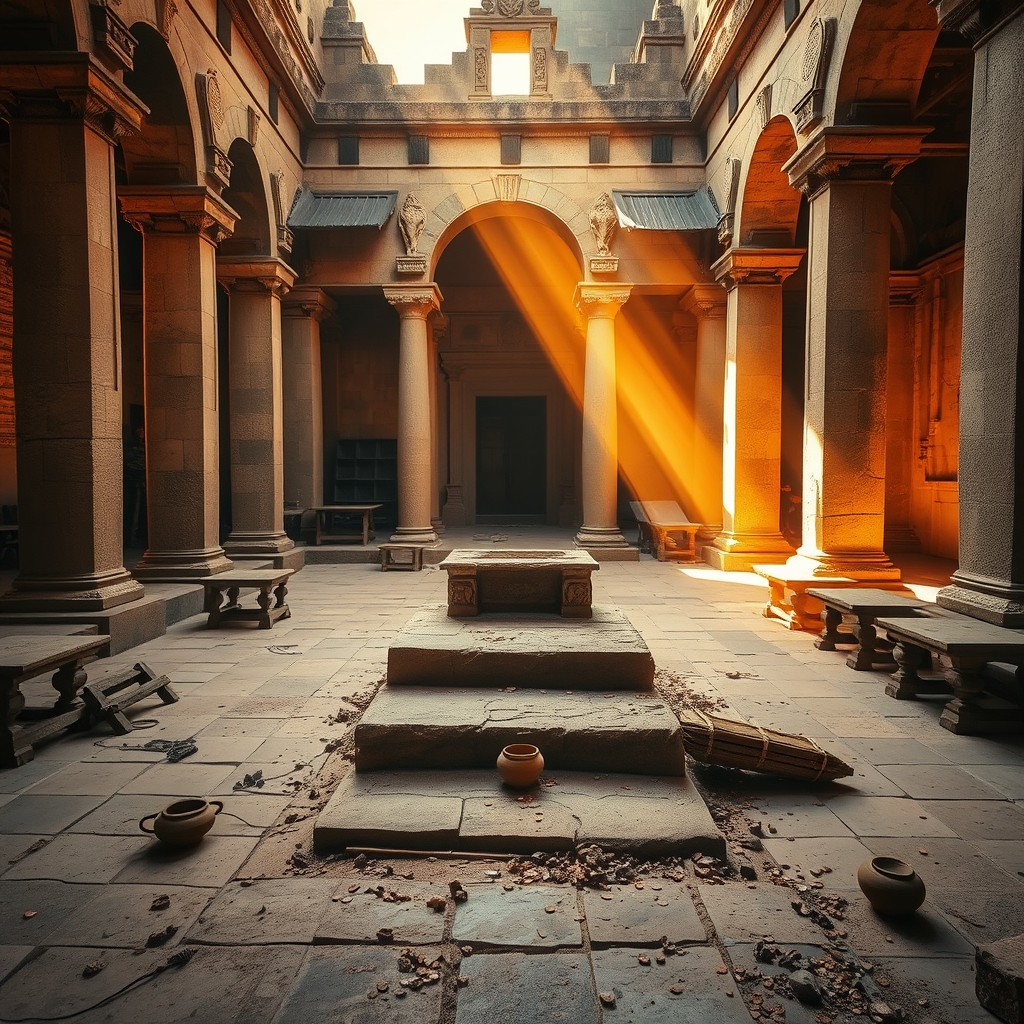
What happened next shocked everyone present. John records that Jesus “made a scourge of small cords, and drove them all out of the temple, and the sheep, and the oxen; and poured out the changers’ money, and overthrew the tables” (John 2:15). He also said to those selling doves, “Take these things hence; make not my Father’s house an house of merchandise” (John 2:16).
This was not an act of uncontrolled anger. Rather, it was a deliberate, righteous act of zeal for His Father’s house. Jesus fashioned a whip and drove out those who had corrupted sacred worship. In doing so, He was exercising divine authority — an authority that belongs to God alone. Only the true Owner of the Temple had the right to cleanse it.
When challenged, Jesus gave a stunning statement: “Destroy this temple, and in three days I will raise it up” (John 2:19). The listeners misunderstood. They thought He meant the physical building, which had taken 46 years to construct. However, John makes clear that Jesus was speaking of “the temple of his body” (John 2:21). This was a prophetic declaration of His death and resurrection.
In this moment, Jesus was revealing two profound truths:
- He had authority over the Temple — proving His deity and His role as Lord over all creation.
- He was the true Temple — meaning that through His coming, death, and resurrection, He would replace the old system with a new covenant.
The Disciples Remember Scripture
Following this powerful event, the disciples’ hearts were stirred. Scripture tells us that “his disciples remembered that it was written, The zeal of thine house hath eaten me up” (John 2:17, citing Psalm 69:9). In that moment, they connected what Jesus had done with the Old Testament prophecy.
This reflection is significant. The disciples did not fully understand everything at the time. However, the Holy Spirit later brought remembrance and clarity. As John explains in John 2:22, “When therefore he was risen from the dead, his disciples remembered that he had said this unto them; and they believed the scripture, and the word which Jesus had said.”
There is an important pattern here for every believer. At times, we may not fully grasp what God is doing in a given moment. However, as we walk with Christ and study His Word, understanding grows over time. The disciples’ journey of faith deepened through remembrance, and ours can too.
Psalm 69, which the disciples recalled, is a messianic psalm. It prophesied the suffering and zeal of the coming Savior. Jesus fulfilled every detail of it. The zeal He displayed in the Temple was not a momentary outburst of emotion. It was the passionate heart of God, burning with love for true worship and hatred of all corruption.
As we reflect on the meaning of John 2:13-22, several truths stand out clearly:
- Jesus is Lord of all, including His Father’s house. He has authority to cleanse, correct, and restore.
- God desires worship that is pure, sincere, and set apart from corruption. There is no room for greed or exploitation in the things of God.
- Jesus Himself is the fulfillment of the Temple. Through His body — His life, death, and resurrection — He has opened the way for every person to come directly to God in prayer (Hebrews 10:19-22).
Above all, this passage reveals that Jesus Christ is not merely a historical figure or a moral teacher. He is the Son of God, filled with righteous zeal for His Father’s glory. As John declares throughout His Gospel, Jesus is “the Word made flesh” who came to dwell among us (John 1:14). When we read of Him overturning the tables, we are witnessing God Himself in action — holy, just, and full of love.
May this account stir in every reader a desire to honor the Lord with sincerity. May it remind us that our bodies are now the temple of the Holy Spirit (1 Corinthians 6:19). And may it lead us to the One who has made the ultimate sacrifice — not an animal on a table, but His own precious blood on the cross of Calvary.
What is the lesson learned from John 2:13-22?

God’s House Is Set Apart for Worship
One of the most powerful lessons from John 2:13-22 is that God’s house is set apart for worship. When Jesus entered the temple, He found a marketplace. The holy place had become a place of commerce. This deeply grieved Him.
God designed the temple as a house of prayer. It was meant to be a sacred space where people could draw near to Him. However, the merchants had turned it into something else entirely. They were more interested in profit than in prayer.
Jesus made it clear that this was unacceptable. He drove out the merchants and overturned their tables. His actions remind us that worship is not casual. It is holy. It requires reverence and intentionality.
Today, we must ask ourselves: Are we treating God’s presence with the honor it deserves? Whether we gather in a church building or worship in our homes, the principle remains the same. God’s house, in every sense, is set apart for His glory.
Jesus Has Authority Over All Things
Another vital lesson from this passage is that Jesus has authority over all things. He walked into the temple and took control of the situation. No one could stop Him. The merchants left. The animals were driven out. The coins scattered across the floor.
This was not the act of an ordinary man. This was the Son of God exercising His divine authority. The temple belonged to His Father, and He had every right to cleanse it. As Scripture declares, “All authority in heaven and on earth has been given to me” (Matthew 28:18).
Furthermore, when the religious leaders demanded a sign, Jesus pointed to His own body. He said, “Destroy this temple, and in three days I will raise it up” (John 2:19). He was speaking of His death and resurrection. Only God has authority over life and death.
This truth should fill every believer with confidence. The Jesus we serve is not weak or uncertain. He is the risen Lord who holds all power. We can trust Him completely with every area of our lives.
True Worship Comes from the Heart
John 2:13-22 also teaches us that true worship comes from the heart. The people in the temple were going through religious motions. They were buying and selling. They were performing rituals. But their hearts were far from God.
Jesus saw through the outward activity. He knew that genuine worship is not about location or ceremony alone. It is about the condition of the heart. As Jesus later told the Samaritan woman, “True worshipers will worship the Father in spirit and in truth” (John 4:23).
This is a lesson every believer must take to heart. We can attend church every Sunday and still miss God entirely. We can sing songs and pray prayers without truly connecting with Him. God desires sincerity, not performance.
Therefore, we should examine our hearts regularly. Are we worshiping God because we love Him? Or are we simply following a routine? True worship flows from a heart that has been transformed by the grace of Jesus Christ.
Zeal for God’s Glory Should Burn in Every Believer
Finally, this passage shows us that zeal for God’s glory should burn in every believer. The disciples remembered the words of Psalm 69:9: “Zeal for your house will consume me” (John 2:17). This zeal was fulfilled perfectly in Jesus.
Jesus was consumed with passion for His Father’s honor. He could not stand by while the temple was being dishonored. His righteous anger was not selfish. It was holy. It was driven by love for God and for the people who had been led astray.
As followers of Christ, we should carry that same passion. We should be grieved when God’s name is dishonored. We should be moved to action when His truth is compromised. Our zeal should not be lukewarm. It should burn brightly.
However, our zeal must always be guided by love and truth. Jesus was firm, but He was never cruel. He was passionate, but He was always purposeful. We are called to reflect that same balance in our own lives.
In conclusion, John 2:13-22 calls us to honor God’s house, submit to Jesus’ authority, worship from the heart, and burn with zeal for God’s glory. These lessons are not just historical observations. They are living truths that should shape how we follow Christ every single day.
What did Jesus mean by cleansing the temple?
A Rebuke of Corruption and Exploitation
When Jesus entered the temple courts, He found something deeply troubling. Merchants had turned the Court of the Gentiles into a marketplace. They sold oxen, sheep, and doves for sacrifice. Money changers sat at tables, exchanging Roman coins for temple currency. This was not innocent commerce. It was exploitation of the very people who had come to seek God.
Many of these merchants charged unfair prices. Traveling pilgrims had no choice but to buy animals approved by the priests. The money changers added steep exchange fees. The poor bore the heaviest burden. What should have been a place of prayer had become a place of profit. Jesus saw this injustice, and His heart burned with righteous anger.
He made a whip of cords and drove them all out. He overturned the tables of the money changers. He scattered the coins across the floor. To those selling doves, He said, “Get these out of here! Stop turning my Father’s house into a market!” (John 2:16, NIV). This was not a moment of uncontrolled rage. It was a deliberate, holy act of judgment against those who exploited God’s people.
Jesus was making a clear statement. God’s house was never meant to be a place of greed. Worship should never be turned into a business. Those who use faith to take advantage of others will one day answer to the Lord. As Scripture warns, “It is mine to avenge; I will repay” (Deuteronomy 32:35, NIV). Jesus demonstrated that God takes the purity of worship seriously.
A Call to Reverent Worship
Beyond rebuking corruption, Jesus was calling His people back to true worship. The temple was the dwelling place of God’s presence among His people. It was meant to be a sacred space where hearts could meet with the living God. But the noise of commerce had drowned out the sound of prayer. The focus had shifted from God to money.
Jesus quoted the prophet Isaiah when He declared, “Zeal for your house will consume me” (John 2:17, NIV, referencing Psalm 69:9). His passion was not about buildings or rituals. It was about the heart behind worship. God desires worship that is sincere, humble, and focused entirely on Him.
This call to reverent worship still speaks to us today. We must ask ourselves some honest questions:
- Are we approaching God with genuine reverence and awe?
- Have we allowed distractions to replace true devotion in our lives?
- Are we more concerned with outward appearance than inward transformation?
- Do we treat the gathering of believers as holy and set apart?
Jesus was not against the temple itself. He was against anything that hindered people from encountering God. True worship is not about location or tradition. It is about the posture of the heart. As Jesus later told the Samaritan woman, “Yet a time is coming and has now come when the true worshipers will worship the Father in the Spirit and in truth, for they are the kind of worshipers the Father seeks” (John 4:23, NIV).
Every believer is called to examine their own heart. Worship is not a performance. It is a response to the greatness and holiness of God. When we gather in His name, we should come with clean hands and pure motives. Anything less falls short of what our Savior deserves.
A Prophetic Act Pointing to His Mission
The cleansing of the temple was far more than a correction of bad behavior. It was a prophetic sign pointing directly to the mission of Jesus Christ. When the religious leaders demanded a sign to prove His authority, Jesus gave them a remarkable answer. He said, “Destroy this temple, and I will raise it again in three days” (John 2:19, NIV).
At first, the Jews misunderstood Him completely. They looked at the massive stone structure around them. Herod’s temple had been under construction for forty-six years. They thought Jesus was speaking about a building. But John makes the meaning clear. “But the temple he had spoken of was his body” (John 2:21, NIV). Jesus was pointing to His own death and resurrection.
This is the deepest meaning of the cleansing. The old temple system was passing away. Animal sacrifices could never truly take away sin. They were shadows pointing to a greater reality. Jesus Himself would become the final and perfect sacrifice. His body would be broken on the cross. He would die for the sins of the world. And on the third day, He would rise again, just as He promised.
The cleansing of the temple was a living prophecy. It declared that a new era of worship was beginning. No longer would God dwell only in a building made of stone. Through His death and resurrection, Jesus would open the way for every believer to have direct access to God. As the apostle Paul later wrote, “Do you not know that your bodies are temples of the Holy Spirit, who is in you, whom you have received from God?” (1 Corinthians 6:19, NIV).
Jesus was not merely cleaning a building. He was announcing the arrival of something far greater. He Himself would become the meeting place between God and humanity. Through faith in His name, every person can now come boldly before the throne of grace. The cleansing of the temple was a powerful declaration that Jesus Christ is Lord. He is the fulfillment of every promise, every sacrifice, and every hope found in Scripture.
When we read John 2:13-22, we see the heart of our Savior on full display. He is holy and will not tolerate corruption. He is passionate for true worship. And He is the promised Messiah whose death and resurrection would change everything. Let us respond to His zeal with hearts fully devoted to Him, the One who gave everything so that we could know the Father.
John 2:13-22 in Different Bible Translations
John 2:13-22 KJV
The King James Version (KJV) is one of the most widely read English translations of the Bible. First published in 1611, its majestic language has shaped the faith of countless believers for over four centuries. [1] Here is John 2:13-22 in the KJV:
13 And the Jews’ passover was at hand, and Jesus went up to Jerusalem,
14 And found in the temple those that sold oxen and sheep and doves, and the changers of money sitting:
15 And when he had made a scourge of small cords, he drove them all out of the temple, and the sheep, and the oxen; and poured out the changers’ money, and overthrew the tables;
16 And said unto them that sold doves, Take these things hence; make not my Father’s house an house of merchandise.
17 And his disciples remembered that it was written, The zeal of thine house hath eaten me up.
18 Then answered the Jews and said unto him, What sign shewest thou unto us, seeing that thou doest these things?
19 Jesus answered and said unto them, Destroy this temple, and in three days I will raise it up.
20 Then said the Jews, Forty and six years was this temple in building, and wilt thou rear it up in three days?
21 But he spake of the temple of his body.
22 When therefore he was risen from the dead, his disciples remembered that he had said this unto them; and they believed the scripture, and the word which Jesus had said.
The KJV uses the word “scourge” in verse 15, which refers to a whip made of cords. This vivid language captures the intensity of Jesus’ righteous anger. Furthermore, the phrase “house of merchandise” in verse 16 powerfully conveys how the temple had been turned into a marketplace rather than a place of prayer and worship.
John 2:13-22 NKJV
The New King James Version (NKJV) was published in 1982. It updates the language of the original KJV while preserving its traditional style and beauty. [2] Here is John 2:13-22 in the NKJV:
13 Now the Passover of the Jews was at hand, and Jesus went up to Jerusalem.
14 And He found in the temple those who sold oxen and sheep and doves, and the money changers doing business.
15 When He had made a whip of cords, He drove them all out of the temple, with the sheep and the oxen, and poured out the changers’ money and overturned the tables.
16 And He said to those who sold doves, “Take these things away! Do not make My Father’s house a house of merchandise!”
17 Then His disciples remembered that it was written, “Zeal for Your house has eaten Me up.”
18 So the Jews answered and said to Him, “What sign do You show to us, since You do these things?”
19 Jesus answered and said to them, “Destroy this temple, and in three days I will raise it up.”
20 Then the Jews said, “It has taken forty-six years to build this temple, and will You raise it up in three days?”
21 But He was speaking of the temple of His body.
22 Therefore, when He had risen from the dead, His disciples remembered that He had said this to them; and they believed the Scripture and the word which Jesus had said.
The NKJV modernizes certain words for clarity. For example, “scourge” becomes “whip,” and “house of merchandise” becomes “house of merchandise” with slightly updated phrasing. In addition, the NKJV uses “money changers doing business” instead of “changers of money sitting,” which gives a clearer picture of the commercial activity taking place in God’s holy temple.
John 2:13-22 ESV
The English Standard Version (ESV) was published in 2001. It follows a formal equivalence approach, aiming for word-for-word accuracy while maintaining readability. [3] Here is John 2:13-22 in the ESV:
13 The Passover of the Jews was at hand, and Jesus went up to Jerusalem.
14 In the temple he found those who were selling oxen and sheep and pigeons, and the money-changers sitting there.
15 And making a whip of cords, he drove them all out of the temple, with the sheep and oxen. And he poured out the coins of the money-changers and overturned their tables.
16 And he told those who sold the pigeons, “Take these things away; do not make my Father’s house a house of trade.”
17 His disciples remembered that it was written, “Zeal for your house will consume me.”
18 So the Jews said to him, “What sign do you show us for doing these things?”
19 Jesus answered them, “Destroy this temple, and in three days I will raise it up.”
20 The Jews then said, “It has taken forty-six years to build this temple, and will you raise it up in three days?”
21 But he was speaking about the temple of his body.
22 When therefore he was raised from the dead, his disciples remembered that he had said this, and they believed the Scripture and the word that Jesus had spoken.
The ESV uses the word “pigeons” instead of “doves” and “house of trade” instead of “house of merchandise.” These are subtle differences, but they help modern readers understand the scene more clearly. Furthermore, the ESV’s phrase “zeal for your house will consume me” draws directly from Psalm 69:9, connecting Jesus’ actions to Old Testament prophecy.
John 2:13-22 NIV
The New International Version (NIV) is one of the most popular modern English translations. First published in 1978, it uses dynamic equivalence to communicate the meaning of the original texts in contemporary language. [4] Here is John 2:13-22 in the NIV:
13 When it was almost time for the Jewish Passover, Jesus went up to Jerusalem.
14 In the temple courts he found people selling cattle, sheep and doves, and others sitting at tables exchanging money.
15 So he made a whip out of cords, and drove all from the temple courts, both sheep and cattle; he scattered the coins of the money changers and overturned their tables.
16 To those who sold doves he said, “Get these out of here! How dare you turn my Father’s house into a market!”
17 His disciples remembered that it is written: “Zeal for your house will consume me.”
18 The Jews then responded to him, “What sign can you show us to prove your authority to do all this?”
19 Jesus answered them, “Destroy this temple, and I will raise it again in three days.”
20 They replied, “It has taken forty-six years to build this temple, and you are going to raise it in three days?”
21 But the temple he had spoken of was his body.
22 After he was raised from the dead, his disciples recalled what he had said. Then they believed the scripture and the words that Jesus had spoken.
The NIV uses very accessible language. For example, “temple courts” gives readers a clearer picture of the specific area where this took place. In addition, the phrase “How dare you turn my Father’s house into a market!” captures the righteous indignation of Jesus in a way that resonates with modern readers. The NIV also adds “to prove your authority to do all this” in verse 18, which clarifies the Jews’ challenge to Jesus.
Comparing the Translations
While each translation uses slightly different wording, the core message of John 2:13-22 remains the same across all versions. Here are the key similarities and differences:
- Jesus’ authority: All four translations show Jesus acting with bold authority. He does not ask permission. He takes action to restore the holiness of His Father’s house.
- The whip of cords: Every translation mentions Jesus making a whip or scourge from cords. This detail emphasizes that His actions were deliberate and purposeful, not a momentary outburst.
- “Zeal for your house”: All versions quote Psalm 69:9, connecting Jesus’ actions to the fulfillment of Old Testament Scripture.
- The temple of His body: Each translation makes it clear that Jesus was speaking about His own body, not the physical building. This points directly to His death and resurrection.
- The disciples’ belief: All four versions end with the same powerful truth. After Jesus rose from the dead, His disciples finally understood and believed.
Reading multiple translations can deepen your understanding of Scripture. Each version shines a slightly different light on the same eternal truth. Jesus Christ is Lord. He is holy. He is zealous for the glory of God. And His body, destroyed on the cross and raised on the third day, is now the true temple where God dwells and where we meet Him through faith.
As Paul wrote in 1 Corinthians 6:19, “Do you not know that your bodies are temples of the Holy Spirit, who is in you, whom you have received from God?” Because of what Jesus did at the temple and through His resurrection, every believer now carries the presence of God within them. What an incredible privilege and responsibility that is!
John 2:13-22 Sermon Outline
Introduction: The Zeal of Christ
John 2:13-22 presents one of the most powerful scenes in all of Scripture. Jesus, full of righteous zeal, enters the temple and drives out those who had turned His Father’s house into a marketplace. This moment reveals the holy character of Christ. Furthermore, it calls every believer to examine their own heart. As we study this passage together, we will discover timeless truths about worship, authority, and the mission of Jesus. Let us approach this portion of God’s Word with open hearts and a desire to grow deeper in our faith.
Point 1: The Problem in the Temple
The first truth we must understand is the severity of the problem Jesus confronted. The temple courts had become a place of commerce and corruption. Instead of prayer and worship, the sounds of animals and bargaining filled the house of God.
Consider what had gone wrong in the temple:
- Merchants exploited worshippers. They overcharged those who needed animals for sacrifice. Furthermore, they charged unfair exchange rates for temple currency.
- The Court of the Gentiles was corrupted. This was the one place where non-Jews could come to seek the true God. However, it had become a noisy marketplace instead of a sacred space of prayer.
- Religious leaders had become complacent. They allowed this corruption to continue. As a result, the purpose of the temple was forgotten.
- God’s glory was being dishonored. The temple was meant to be a place where God’s presence dwelt among His people. Instead, greed had replaced reverence.
Isaiah 56:7 tells us God declared His house a "house of prayer for all nations." Yet by Jesus’ time, that divine purpose had been buried under commerce and selfishness. This should remind us that God takes His glory seriously. He will not allow His name to be treated as common.
Point 2: The Passion of Jesus
The second great truth is the passion and authority of Jesus on full display. He did not politely ask the merchants to leave. He made a whip of cords and drove them out. His eyes burned with holy fire. Scripture tells us, "Zeal for your house will consume me" (John 2:17, ESV).
This moment teaches us several vital truths about the character of Christ:
- Jesus cares deeply about worship. He will not tolerate anything that distracts His people from true communion with the Father.
- Jesus possesses complete authority. He overturned tables without resistance. Every person in that temple court submitted to His authority.
- Jesus is both gentle and fierce. He is the Good Shepherd who lays down His life for the sheep. He is also the righteous Judge who will not be mocked. [5]
- Jesus fulfilled prophecy. The disciples remembered the words of Psalm 69:9. This showed them that Scripture pointed directly to Christ’s zeal for God’s house.
The passion of Jesus in this passage is not anger for anger’s sake. Rather, it is a holy zeal for the glory of God the Father. Jesus saw what dishonored His Father, and He acted with righteous determination. In the same way, every believer should carry a burning desire to honor the name of Jesus Christ in all things.
Point 3: The Prophecy Fulfilled
Jesus Declared the Temple Would Be Destroyed and Raised
When the religious leaders demanded a sign, Jesus gave a remarkable answer. He said, "Destroy this temple, and in three days I will raise it up" (John 2:19). They misunderstood Him completely. However, John clarifies that Jesus was speaking about the temple of His body.
This statement is profound for several reasons:
- Jesus foretold His own death. The temple of His body would be destroyed through crucifixion on the cross.
- Jesus foretold His own resurrection. Three days later, He would rise from the dead. This is the ultimate sign of His authority over death and sin.
- Jesus is the new temple. In Him, the presence of God dwells fully. Through His sacrifice, we no longer need an earthly temple building to approach God.
This moment in John 2 points directly to the cross and the empty tomb. Jesus was revealing His divine mission before His time had fully come. The religious leaders could not understand because they looked for earthly power. However, God’s power is made perfect in sacrifice. As Paul writes in Colossians 2:9, "In Christ all the fullness of the Deity lives in bodily form." Everything Jesus did in that temple court was a declaration of who He truly is — the Son of God, the Lamb who takes away the sin of the world.
Conclusion: Our Bodies as Temples of the Holy Spirit
As we bring this study to a close, we must apply these truths to our own lives. The apostle Paul writes in 1 Corinthians 6:19-20, "Do you not know that your bodies are temples of the Holy Spirit, who is in you, whom you have received from God? You are not your own; you were bought at a price. Therefore honor God with your bodies." [6]
This means the same zeal Jesus had for His Father’s house should live in us. Consider how this applies:
- We must guard our hearts. Anything that takes the place of Christ in our affections must be removed.
- We must worship God in spirit and in truth. Jesus said this in John 4:24, and it remains our calling today.
- We must honor the sacrifice of Christ. He cleansed the temple with a whip, but He cleansed our sin with His own blood on the cross.
- We must live as witnesses of His resurrection. The same power that raised Jesus from the dead lives in every believer through the Holy Spirit.
Jesus Christ is Lord over every temple, every heart, and every life. He is the Son of God who died, was buried, and rose again on the third day according to the Scriptures. No claim against His identity can stand against the testimony of God’s Word. He is real. He is alive. And He calls every person today to turn from sin and place their faith in Him alone.
Let the story of John 2:13-22 ignite a fresh zeal in your heart. Let it drive you away from anything that dishonors God. Furthermore, let it draw you closer to Jesus, the One who is Himself the true Temple, the perfect sacrifice, and the risen Lord. May your life be a house of prayer, filled with the glory of His presence.
Frequently Asked Questions
What is the meaning of John 2:13-22?
John 2:13-22 records one of the most powerful moments in Jesus’ ministry. It describes how Jesus entered the temple in Jerusalem during Passover. He found merchants selling animals for sacrifice. Money changers were also there, exploiting worshippers. Jesus was filled with righteous anger. He made a whip of cords and drove them out. He overturned the tables of the money changers. He poured out the coins on the ground. He told those selling doves, “Get these out of here! Stop turning my Father’s house into a market!” (John 2:16, NIV).
This passage carries deep meaning on several levels:
- Jesus demonstrated His authority. He acted with divine power over the temple, which was the center of Jewish worship.
- He rebuked corruption. The merchants were exploiting God’s people for profit.
- He pointed to His own death and resurrection. When asked for a sign, Jesus said, “Destroy this temple, and I will raise it again in three days” (John 2:19). He was speaking of His body.
- He called God’s people back to true worship. God’s house was meant for prayer and reverence, not commerce.
Ultimately, this passage reveals the heart of Jesus. He is passionate about the glory of God. He will not tolerate the dishonoring of His Father’s name. Furthermore, it foreshadows the cross, where Jesus’ body would be destroyed and raised again for our salvation.
What is the lesson learned from John 2:13-22?
There are many important lessons we can draw from this passage. They apply directly to our walk with Christ today.
1. God’s house is set apart for worship. The temple was meant to be a place of prayer and encounter with God. Jesus made it clear that turning it into a marketplace was unacceptable. In the same way, our churches and our lives should be dedicated to honoring God above all else.
2. Jesus has authority over all things. He walked into the temple and took control. No one could stop Him. This reminds us that Jesus is Lord over every area of our lives. We can trust Him to bring order where there is chaos.
3. True worship comes from the heart. The merchants were going through the motions of religion. However, their hearts were far from God. Jesus calls us to worship Him in spirit and in truth (John 4:24). Outward rituals mean nothing without a sincere heart.
4. Zeal for God’s glory should burn in every believer. Jesus said, “Zeal for your house will consume me” (John 2:17, quoting Psalm 69:9). As followers of Christ, we should care deeply about the honor of God’s name. We should not be indifferent to sin or corruption.
5. Our bodies are now the temple of the Holy Spirit. The Apostle Paul later wrote, “Do you not know that your bodies are temples of the Holy Spirit, who is in you, whom you have received from God?” (1 Corinthians 6:19). This means we must keep our lives pure and set apart for God’s purposes.
What did Jesus mean by cleansing the temple?
Jesus’ cleansing of the temple was not a random act of anger. It was a deliberate, prophetic act with multiple layers of meaning.
First, it was a rebuke of corruption and exploitation. The merchants and money changers had set up shop in the Court of the Gentiles. This was the only place where non-Jews could come to pray and seek God. By turning it into a marketplace, they were blocking access to God for the very people He wanted to reach. Furthermore, they were charging unfair prices for sacrificial animals and taking advantage of worshippers who had traveled long distances. Jesus would not stand for this injustice.
Second, it was a call to reverent worship. God had given specific instructions about how His temple was to be used. The people had drifted far from those instructions. Jesus’ actions were a wake-up call. He was saying that God deserves our best, not our leftovers. Worship is not a casual thing. It is a holy privilege that should be approached with awe and sincerity.
Third, it was a prophetic act pointing to His mission. When the religious leaders asked Jesus for a sign to prove His authority, He said, “Destroy this temple, and I will raise it again in three days” (John 2:19). They thought He was talking about the physical building. However, John explains that “the temple he had spoken of was his body” (John 2:21). Jesus was predicting His own death and resurrection. Just as He cleansed the physical temple, His death and resurrection would cleanse us from sin and make us new creations in Him.
This is the heart of the Gospel. Jesus did not come merely to reform religion. He came to transform lives. Through His sacrifice on the cross, He made a way for every person to have a right relationship with God. As it is written, “For God so loved the world that he gave his one and only Son, that whoever believes in him shall not perish but have eternal life” (John 3:16).
Who is the woman in red in the Bible?
This is a question that sometimes arises from artistic depictions or symbolic interpretations of Scripture. There is no specific “woman in red” named directly in the Bible. However, there are a few passages that use the color red in connection with women or symbolic female figures.
The Woman in Revelation 17. In Revelation 17, the Apostle John sees a vision of a woman sitting on a scarlet beast. She is dressed in purple and scarlet, and she is called “Babylon the Great.” This woman is not a literal person. She is a symbol of a corrupt world system that opposes God and leads people into sin. The scarlet and purple clothing represents wealth, power, and moral corruption. This passage serves as a warning to God’s people to remain faithful and not be drawn into the sins of the world.
Isaiah 1:18. In this verse, God says, “Though your sins are like scarlet, they shall be as white as snow; though they are red as crimson, they shall be like wool.” Here, red symbolizes sin and guilt. However, the message is one of hope. God offers to cleanse us and make us pure through His grace.
Rahab’s Scarlet Cord. In Joshua 2, Rahab the prostitute hung a scarlet cord from her window as a sign of faith. It marked her household for salvation when Jericho fell. The scarlet cord is often seen as a symbol of the blood of Jesus, which brings salvation to all who believe.
It is important to note that while these symbolic uses of red appear in Scripture, they are not about a specific “woman in red” as a standalone figure. If you have encountered this phrase in art, literature, or popular culture, it may be an artistic interpretation rather than a direct biblical reference.
What matters most is that we keep our eyes fixed on Jesus Christ. He is the central figure of all Scripture. Every passage, every symbol, and every story ultimately points to Him. As Jesus Himself said, “These are the Scriptures that testify about me” (John 5:39). We encourage you to study the Bible with an open heart and let the Holy Spirit guide you into all truth (John 16:13).
Sources
- https://www.biblegateway.com/versions/King-James-Version-KJV-Bible/
- https://www.biblegateway.com/versions/New-King-James-Version-NKJV-Bible/
- https://www.biblegateway.com/versions/English-Standard-Version-ESV-Bible/
- https://www.biblegateway.com/versions/New-International-Version-NIV-Bible/
- https://www.biblegateway.com/passage/?search=John+2%3A13-22&version=ESV
- https://www.biblegateway.com/passage/?search=1+Corinthians+6%3A19-20&version=NIV