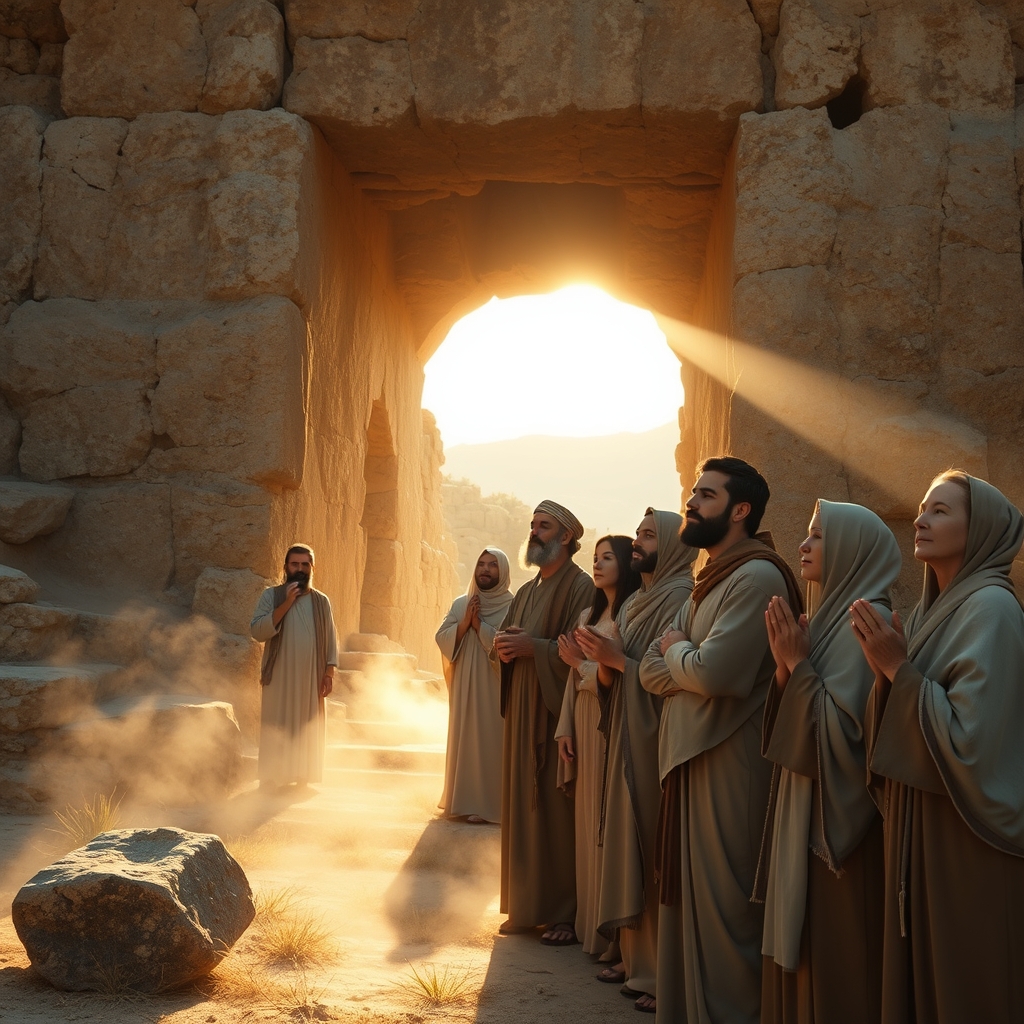
John 11 is the chapter in the Gospel of John that records the miraculous raising of Lazarus from the dead, one of the most powerful signs of Jesus’s divine authority over death. Through this event, Jesus declares, ‘I am the resurrection and the life’ (John 11:25), offering eternal hope to all who believe in Him.
Imagine standing at the edge of a tomb, surrounded by mourners, feeling the weight of grief pressing down on your chest. Now imagine that in that very moment—in the raw, unfiltered middle of heartbreak—Jesus Christ steps forward and speaks with an authority that shatters death itself. That is the breathtaking scene we encounter in John 11, one of the most powerful chapters in all of Scripture. It is here that our Lord Jesus performs what many consider His greatest miracle before His own resurrection: calling Lazarus out of the grave after four days of death. This is not merely a story of a miracle long ago. It is a living testimony that the Son of God holds absolute power over death and that no sorrow is beyond His compassion.
In this article, we will walk through John 11 together—verse by verse—to discover its meaning for your life today. Whether you are a new believer encountering this story for the first time or a mature Christian seeking fresh encouragement, this chapter speaks directly to the deepest needs of every human heart: the need to believe, the need to grieve with hope, and the need to know that Jesus Christ is alive. Together, we will explore the key verses, the profound truths, and the enduring hope found in this remarkable account. Let us open our Bibles and our hearts, and discover what the raising of Lazarus reveals about who Jesus truly is.
What is the main message of John 11?

`html
Jesus Has Power Over Death
The central message of John 11 is clear and powerful: Jesus Christ has absolute authority over death itself. This chapter presents one of the most dramatic miracles recorded in all of Scripture. Jesus raised Lazarus from the dead after he had been in the tomb for four days. This was no small act. In Jewish tradition, it was believed that the soul lingered near the body for three days. By the fourth day, decomposition had begun. Everyone present knew Lazarus was truly gone.
Yet Jesus stood before that tomb and spoke with divine authority. He called Lazarus forth, and life returned to a dead man. This miracle was not performed for show. It was a deliberate sign pointing to a greater truth. Jesus declared in John 11:25, “I am the resurrection and the life. He who believes in Me, though he may die, he shall live.” These words are not a metaphor. They are a direct claim to deity. Only God holds the power over life and death. Jesus exercised that power openly and without hesitation.
Furthermore, this miracle served as a preview of Jesus’s own resurrection. Just as He called Lazarus out of the grave, He would Himself conquer death three days after His crucifixion. The raising of Lazarus was a signpost pointing directly to the empty tomb of Easter morning. Every believer can take confidence in this truth. The same power that raised Lazarus is the same power that raised Jesus from the dead. And that same power is available to all who place their faith in Him (Ephesians 1:19–20). [1]
the glory of God Revealed Through Suffering
One of the most profound truths in John 11 is that God’s glory is often revealed through seasons of suffering and waiting. When Lazarus fell ill, his sisters Martha and Mary sent word to Jesus. They fully expected Him to come immediately. However, Jesus deliberately delayed His journey for two days. This delay was not neglect. It was purposeful. Jesus told His disciples, “This sickness is not unto death, but for the glory of God, that the Son of God may be glorified through it” (John 11:4).
This truth challenges us deeply. We often assume that if God loves us, He will remove our pain quickly. However, John 11 teaches a different lesson. Sometimes God allows suffering so that His power and glory can be displayed in ways that would otherwise be impossible. The delay in Jesus’s arrival meant that Lazarus died. It meant that Martha and Mary grieved. It meant that confusion and sorrow filled their home. Yet it was precisely through this suffering that God’s greatest work was accomplished.
Consider what would have happened if Jesus had arrived early. He would have healed a sick man. That is a wonderful miracle. But He would not have raised a dead man. The greater miracle required the deeper trial. In the same way, God often works through our hardest moments to accomplish purposes we cannot yet see. Romans 8:28 reminds us that “all things work together for good to those who love God, to those who are the called according to His purpose.” John 11 is a living testimony to that promise. [2]
Faith in the Midst of Grief
John 11 also teaches us what it looks like to hold faith and grief in the same hand. When Jesus arrived in Bethany, Martha ran to meet Him. Her words are filled with both sorrow and belief. She said, “Lord, if You had been here, my brother would not have died. But even now I know that whatever You ask of God, God will give You” (John 11:21–22). Martha was grieving. She was confused. Yet she still expressed faith in Jesus’s power and authority.
Mary’s response was similar. She fell at Jesus’s feet weeping. Her grief was raw and honest. She did not pretend to be strong. She brought her pain directly to Jesus. This is a powerful example for every believer. Faith does not mean the absence of tears. Believing in Jesus does not mean we will never experience sorrow. Rather, faith means bringing our deepest pain to the One who has the power to do something about it.
Jesus’s response to their grief is deeply moving. John 11:35 records the shortest verse in the entire Bible: “Jesus wept.” He did not rebuke them for crying. He did not tell them to have more faith. He entered into their sorrow. He felt the weight of death’s curse on humanity. His tears reveal the heart of a Savior who is not distant or cold. He is near to the brokenhearted (Psalm 34:18). He carries our sorrows and bears our grief. At the same time, He is the One who has the power to turn mourning into joy. [3]
The main message of John 11 ultimately points to one person: Jesus Christ. He is the resurrection and the life. He is the One who weeps with us in our pain and who holds the power to overcome death itself. This chapter calls every reader to place their trust in Him. Whether you are facing grief, confusion, or the reality of death, Jesus stands ready. He is not a distant religious figure. He is the living Son of God who conquered the grave and offers eternal life to all who believe.
`
John 11 KJV – The Full Chapter at a Glance
The News of Lazarus’s Illness (John 11:1–6)
John 11 opens with a heartbreaking situation. A man named Lazarus was seriously ill. His home was in Bethany, a small village near Jerusalem. Lazarus was the brother of two women who deeply loved Jesus—Martha and Mary. This was the same Mary who had anointed the Lord with poured expensive perfume and wiped His feet with her hair. [4]
When Lazarus fell gravely ill, his sisters did what any person of faith would do. They sent a desperate message to Jesus. Their words were simple yet profound: “Lord, behold, he whom thou lovest is sick” (John 11:3, KJV). They did not demand a miracle. They simply laid the situation before the One they trusted most.
When Jesus received the news, He made a surprising statement. He said this sickness would not end in death. Instead, it would be for the glory of God, so that the Son of God would be glorified through it (John 11:4, KJV). Remarkably, even though Jesus loved Martha, Mary, and Lazarus, He stayed where He was for two more days (John 11:5–6, KJV). His delay was not indifference. It was divine purpose. God’s timing often differs from ours, but His plans are always perfect.
- Lazarus was a close friend of Jesus, living in Bethany
- Martha and Mary sent word to Jesus about his illness
- Jesus declared the illness would glorify God
- Jesus intentionally delayed for two days before responding
Jesus Delays His Journey (John 11:7–16)
After two days, Jesus told His disciples it was time to return to Judea. The disciples were concerned. They reminded Him that the Jewish leaders in that region had recently tried to stone Him (John 11:8, KJV). Despite this real danger, Jesus was resolute. He asked them if anyone stumbles when walking during the day, reminding them that He was walking in the light and purpose of the Father’s will.
Jesus then openly declared that Lazarus had fallen asleep and that He was going to wake him. His disciples misunderstood, thinking He meant physical rest. So Jesus told them plainly: “Lazarus is dead. And I am glad for your sakes that I was not there, to the intent ye may believe; nevertheless let us go unto him” (John 11:14–15, KJV).
Then Thomas, sometimes called Didymus, boldly said to the other disciples, “Let us also go, that we may die with him” (John 11:16, KJV). Thomas’s words reveal both fear and loyalty. He did not fully understand what was about to happen. Yet he was willing to follow Jesus, even into danger.
This section teaches us an important truth about the Christian walk. Following Jesus does not guarantee an easy path. However, it does guarantee that every step is under God’s sovereign control.
Jesus Comforts Martha and Mary (John 11:17–37)
By the time Jesus arrived in Bethany, Lazarus had already been in the tomb for four days (John 11:17, KJV). The grief was deep and real. Many Jewish mourners had gathered at the home of Martha and Mary to comfort them in their loss.
Martha’s Faith Declaration (John 11:20–27)
When Martha heard that Jesus was approaching, she went out to meet Him. Mary stayed in the house. Martha’s words to Jesus were filled with both sorrow and faith: “Lord, if thou hadst been here, my brother had not died. But I know, that even now, whatsoever thou wilt ask of God, God will give it thee” (John 11:21–22, KJV).
Then Jesus spoke some of the most powerful words in all of Scripture. He said, “I am the resurrection, and the life: he that believeth in me, though he were dead, yet shall he live: And whosoever liveth and believeth in me shall never die. Believest thou this?” (John 11:25–26, KJV).
Martha’s response was a beautiful confession of faith: “Yea, Lord: I believe that thou art the Christ, the Son of God, which should come into the world” (John 11:27, KJV). This declaration echoes the very purpose of John’s Gospel, which is that you may believe that Jesus is the Christ, the Son of God, and that believing, you may have life in His name. [5]
Mary’s Grief and Jesus’s Tears (John 11:28–37)
Martha then quietly called Mary to come to Jesus. When Mary arrived, she fell at His feet and said the same words Martha had spoken—“Lord, if thou hadst been here, my brother had not died” (John 11:32, KJV). Her tears reflected the deepest kind of sorrow—the sorrow of loss coupled with a lingering hope.
What happened next reveals the heart of our Savior. When Jesus therefore saw her weeping, and the Jews also weeping which came with her, he groaned in the spirit, and was troubled. And said, Where have ye laid him? They said unto him, Lord, come and see. Jesus wept (John 11:33–35, KJV).
The crowd noticed His tears. Some said, “Behold how he loved him!” Others questioned whether He who opened the eyes of the blind could not have kept Lazarus from dying (John 11:36–37, KJV). But Jesus was not just weeping for Lazarus. He was grieving over the devastating reality of sin and death that had entered the world. His tears reveal that God is not distant from our pain. He enters into it fully and personally.
The Raising of Lazarus (John 11:38–44)
Jesus then arrived at the tomb, which was a cave with a stone rolled across the entrance. He commanded, “Take ye away the stone” (John 11:39, KJV). Martha immediately objected, warning that by now Lazarus’s body would have a strong odor because he had been dead for four days.
Jesus gently reminded her of what He had already spoken: “Said I not unto thee, that, if thou wouldest believe, thou shouldest see the glory of God?” (John 11:40, KJV). Then the stone was removed.
Jesus lifted His eyes to heaven and prayed aloud. He thanked the Father for always hearing Him. He spoke this prayer publicly so that the people standing nearby would believe that the Father had sent Him (John 11:41–42, KJV). This prayer was not for His own benefit. It was for the faith of those watching.
Then came the moment that changed everything. Jesus cried out with a loud voice, “Lazarus, come forth” (John 11:43, KJV). And the dead man came out. His hands and feet were still wrapped in grave cloths, and his face was covered with a cloth. Jesus then gave a simple instruction: “Loose him, and let him go” (John 11:44, KJV).
This miracle was extraordinary for several reasons:
- Lazarus had been dead for four days, well beyond any possibility of a natural explanation
- Jesus spoke the command publicly, so all could witness the power of God
- The miracle was a direct preview of Jesus’s own resurrection from the dead
- It demonstrated that Jesus has absolute authority over death itself
The raising of Lazarus stands as one of the most powerful signs recorded in the Gospel of John. It reveals that Jesus is not merely a healer or a teacher. He is the Lord of life and death. He is the resurrection and the life, just as He declared to Martha.
The Plot to Kill Jesus (John 11:45–57)
The response to this miracle was divided. Many of the Jewish visitors who had come to comfort Mary believed in Jesus when they saw what He had done (John 11:45, KJV). However, some went to the Pharisees and reported what had happened.
The chief priests and Pharisees convened the Sanhedrin, the ruling council. They were deeply troubled. They asked, “What do we? for this man doeth many miracles. If we let him thus alone, all men will believe on him: and the Romans shall come and take away both our place and nation” (John 11:47–48, KJV). Their concern was not spiritual truth. It was political power and self-preservation.
Then Caiaphas, the high priest that year, spoke words he did not fully understand. He said, “It is expedient for us, that one man should die for the people, and that the whole nation perish not” (John 11:50, KJV). John the Gospel writer then revealed the prophetic nature of Caiaphas’s words. He did not say this on his own. As high priest, he was prophesying that Jesus would die not only for the Jewish nation but also to gather together the scattered children of God (John 11:51–52, KJV).
From that day forward, the religious leaders plotted to kill Jesus (John 11:53, KJV). Jesus withdrew to a region near the wilderness, to a city called Ephraim, where He stayed with His disciples (John 11:54, KJV).
As Passover approached, people throughout the region were speculating about whether Jesus would come to Jerusalem. The chief priests and Pharisees had already issued orders that anyone who knew His whereabouts should report it so they could seize Him (John 11:55–57, KJV).
This final section of John 11 reveals a sobering truth. The greatest miracle ever performed did not soften every heart. Some believed. Others hardened themselves in opposition. The same Jesus who raised Lazarus from the dead would soon lay down His own life on the cross. The very leaders who plotted against Him were unknowingly fulfilling God’s eternal plan of salvation.
John 11 is a chapter that moves from grief to glory, from death to life, and from human despair to divine power. At its center stands Jesus Christ—the Son of God, the resurrection and the life, the One who weeps with those who weep and who holds the keys of death and the grave.
John 11 Meaning – A Verse-by-Verse Overview

John 11:1–4 – A Desperate Message
John chapter 11 opens with a deeply personal crisis. Lazarus, a close friend of Jesus, was seriously ill. He lived in Bethany with his sisters, Mary and Martha. These three siblings shared a special bond with the Lord. They had welcomed Him into their home many times. When Lazarus fell sick, the sisters did not hesitate. They sent an urgent message to Jesus, “Lord, behold, he whom Thou lovest is sick” (John 11:3, KJV). Their words were simple but full of faith. They did not demand a miracle. They simply brought their need to the One they trusted.
When Jesus received the message, He made a remarkable declaration. He said, “This sickness is not unto death, but for the glory of God, that the Son of God might be glorified thereby” (John 11:4, KJV). Jesus was not minimizing their pain. Instead, He was revealing a divine purpose. Even in suffering, God’s glory would be displayed. The situation looked hopeless to human eyes. Yet Jesus saw something far greater. He saw an opportunity to reveal His power over death itself.
John 11:5–6 – Jesus’s Surprising Delay
Here is where the story takes an unexpected turn. John tells us plainly, “Now Jesus loved Martha, and her sister, and Lazarus. When He had heard therefore that He was sick, He abode two days still in the same place where He was” (John 11:5–6, KJV). Jesus loved them deeply — and yet He deliberately waited. He did not rush to Bethany. He did not heal from a distance as He had done for others.
This delay was not born of indifference. It was purposeful and loving. Sometimes God’s timing does not match our expectations. The disciples may have been confused. Mary and Martha certainly struggled to understand. But Jesus knew exactly what He was doing. He allowed Lazarus to die so that a far greater miracle would follow. The delay was not denial. It was part of God’s sovereign plan to reveal His glory in a way no one could miss.
John 11:17–27 – Martha’s Declaration of Faith
By the time Jesus arrived in Bethany, Lazarus had been in the tomb four days. Martha heard that Jesus was coming and went out to meet Him. Her words carried both grief and faith. She said, “Lord, if Thou hadst been here, my brother had not died” (John 11:21, KJV). Even in her sorrow, she believed in Jesus’s power. She also added, “But I know, that even now, whatsoever Thou wilt ask of God, God will give it Thee” (John 11:22, KJV).
Jesus then spoke one of the most powerful statements in all of Scripture. He declared, “I am the resurrection, and the life: he that believeth in Me, though he were dead, yet shall he live: and whosoever liveth and believeth in Me shall never die. Believest thou this?” (John 11:25–26, KJV). Martha responded with a confession of faith that echoes through the centuries: “Yea, Lord: I believe that Thou art the Christ, the Son of God, which should come into the world” (John 11:27, KJV). Her declaration remains one of the clearest confessions of who Jesus is in the entire Bible.
This exchange between Jesus and Martha teaches us something profound. Faith does not mean the absence of questions. It means trusting God even when His ways are not fully understood. Martha was hurting. Yet she still worshipped. She still believed. Her words challenge every believer to confess the same truth with boldness.
John 11:28–37 – Mary’s Grief and Jesus’s Tears
After her conversation with Jesus, Martha went to call her sister, Mary. She told Mary quietly, “The Master is come, and calleth for thee” (John 11:28, KJV). Mary rose quickly and came to Jesus. When she reached Him, she fell at His feet and repeated the same words Martha had spoken: “Lord, if Thou hadst been here, my brother had not died” (John 11:32, KJV). Her grief was raw. Her tears were real. She poured out her heart before the Lord.
What Jesus did next reveals His tender and compassionate nature. John recorded something extraordinary: “When Jesus saw her weeping, and the Jews also weeping which came with her, He groaned in the spirit, and was troubled, and said, Where have ye laid him? They said unto Him, Lord, come and see. Jesus wept” (John 11:33–35, KJV). The Son of God — the One who holds all power in His hands — chose to weep alongside those who mourned.
Jesus’s tears were not a sign of weakness. They were a revelation of His heart. He entered into the pain of those He loved. The onlookers noticed. Some said, “Behold how He loved him!” (John 11:36, KJV). Others doubted. They questioned, “Could not this Man, which opened the eyes of the blind, have caused that even this man should not have died?” (John 11:37, KJV). Even in the presence of deep grief, mixed responses emerged. Some believed. Some questioned. This tension continues to this day. Jesus invites every heart to move from doubt to trust.
John 11:38–44 – The Miracle at the Tomb
The scene then shifted to the tomb. Jesus, still deeply moved, came to the grave. It was a cave with a stone lying against it. Jesus gave a direct command: “Take ye away the stone” (John 11:39, KJV). Martha immediately objected. Her brother had been dead four days. The body would have begun to decay. Yet Jesus gently reminded her: “Said I not unto thee, that, if thou wouldest believe, thou shouldest see the glory of God?” (John 11:40, KJV).
After the stone was removed, Jesus lifted His eyes to heaven and prayed. He thanked the Father for hearing Him. He also made clear that this prayer was not for His own sake but for the people standing nearby, “that they may believe that Thou hast sent Me” (John 11:42, KJV). Then came the moment that changed everything.
Jesus cried out with a loud voice: “Lazarus, come forth” (John 11:43, KJV). And the dead man came out. He was bound hand and foot with graveclothes. His face was wrapped in a cloth. Life had returned where death had reigned. Jesus then gave another command: “Loose him, and let him go” (John 11:44, KJV). This miracle was not performed in secret. Many witnesses were present. The power of God was undeniable.
This event carries deep spiritual significance for every believer:
- Death had no power over Jesus’s voice. A single command was enough to reverse death.
- The stone was not rolled away to let Lazarus out. It was rolled away to show that the tomb was already empty of death’s hold.
- Jesus called Lazarus by name. He knows each one of us personally and individually.
- The graveclothes had to be removed. Salvation sets us free, but others often help us walk in that freedom.
John 11:45–57 – The Religious Leaders Respond
The miracle of Lazarus’s resurrection produced two very different responses. John recorded that “many of the Jews which came to Mary, and had seen the things which Jesus did, believed on Him” (John 11:45, KJV). The evidence was overwhelming. Faith was the natural response for many. But not everyone reacted with belief. Some went to the Pharisees and reported what had happened.
The religious leaders convened the Sanhedrin, the ruling council. Their response was revealing. Instead of worshipping, they plotted. They asked, “What do we? For this Man doeth many miracles. If we let Him thus alone, all men will believe on Him: and the Romans shall come and take away both our place and nation” (John 11:47–48, KJV). Their concern was not truth. It was political power and self-preservation.
Then Caiaphas, the high priest that year, made a chilling statement. He said, “Ye know nothing at all, nor consider that it is expedient for us, that one man should die for the people, and that the whole nation perish not” (John 11:49–50, KJV). What he meant as political advice was, in fact, a prophetic declaration. John recognized this immediately. He explained, “Being high priest that year, he prophesied that Jesus should die for that nation; and not for that nation only, but that also He should gather together in one the children of God that were scattered abroad” (John 11:51–52, KJV).
Caiaphas intended death. God intended salvation. What human hands meant for evil, God transformed into the greatest act of love the world has ever known. From that day forward, the leaders made plans to kill Jesus (John 11:53). The contrast could not be starker:
- The common people believed when they saw God’s power displayed.
- The religious leaders schemed when their authority was threatened.
- A corrupt high priest prophesied without even realizing he was speaking God’s truth.
This section of John 11 shows us that the same Jesus who reveals Himself fully will always divide responses. Some will fall at His feet in worship. Others will harden their hearts in resistance. Yet whether people believe or reject Him, God’s purposes will always prevail. The death they plotted became the very doorway to eternal life for all who trust in Him.
Why is John 11:35 so important?
The Shortest Verse with the Deepest Meaning
Let us pause today on just two simple words. In the original Greek, the phrase “Jesus wept” consists of only two words: edakrysen ho Iēsous. Yet within these words lies one of the most profound truths about our Savior. This verse proves that true godliness is never cold, distant, or unfeeling. Instead, it shows us a God who draws close to our pain.
John 11:35 stands in stark contrast to the philosophical gods of ancient Greek thought. Those gods were often viewed as detached, uncaring, and entirely removed from human suffering. Furthermore, some critics question the authenticity of the Incarnation, suggesting that Jesus was merely a myth or an imposter performing miracles while lacking genuine human emotion. However, Scripture firmly refutes these claims.
The Apostle John, an eyewitness to this moment, records Jesus weeping. If Jesus were merely performing or putting on an act, He would not have shed genuine tears over the brokenheartedness of Lazarus’s sisters and friends. His tears validate His true humanity. A fake or mythical figure would not stand at the grave of a loved one and weep.
Jesus Christ is fully God and fully man. His divinity did not cancel out His humanity. Instead, His divinity elevated His humanity. He felt the sting of death, the sorrow of loss, and the ache of seeing people grieve. In fact, the crowds recognized this compassion right away. They looked at Jesus and said, “Behold how He loved him” (John 11:36). Remarkably, they did not marvel at His power over the grave first; they marveled at His tears. His love is never an abstract concept. It is always a visible, tangible reality.
Jesus Weeps with Those Who Weep
Romans 12:15 instructs us to weep with those who weep. Who better to show us how to carry this out than Jesus Himself? Before He ever raised Lazarus from the dead, before He ever rolled away the stone, He first shared in the mourning of Martha and Mary. By weeping as He did, Jesus established a vital principle: God never rushes past our pain. He enters into it.
Many times, turn to Him expecting Him to immediately fix the situation. Furthermore, people expect Him to rush to their rescue without acknowledging their sorrow first. However, the Lord does not see our tears as a lack of faith. He does not see grieving as a sign of spiritual weakness. Instead of ignoring the cries of Martha and Mary, He draws near. He hears their complaint. He listens to their doubts. He sees their tears. And then He weeps alongside them.
This moment reveals a God who does not stand at a distance. He does not speak to us from behind a barrier. Instead, He stands in the ashes with us. He enters the moment of our deepest despair. And He validates the full weight of our suffering. Yet, His weeping never contradicts His power. He can hold our tears in one hand and wield His mighty power in the other.
Because of the Incarnation, we have a High Priest who is able to sympathize with our weaknesses (Hebrews 4:15). This means we never suffer alone. Jesus, the Son of God, our Lord, and the King of Glory, has stepped into the very pit of human experience. He knows what it feels like to mourn. He knows the ache of loss. And He weeps with us today just as He wept at the tomb of Lazarus.
What Jesus’s Tears Reveal About His Heart
Beyond the fact of His tears lies something even deeper. His tears reveal His heart. They reveal the heart of a God who loves fiercely, who feels deeply, and who will one day wipe away all tears from our eyes forever (Revelation 21:4). His compassion encompasses more than just the human loss of a friend. His tears are a response to the profound and devastating reality of sin and death.
Why else weep? Death is an enemy. Death is not part of God’s original creation. Death is a consequence of sin. Therefore, every tear Jesus shed was a pointed, holy rebellion against the ultimate enemy of mankind. He knows that death will not have the final victory. In fact, He is on His way to conquer it.
The Bible tells us that Jesus was “moved in His spirit and troubled” (John 11:33). The Greek word used here, embrimaomai, carries a sense of deep indignation or anger. He was angry at the devastation that sin had brought into the world. He was angry at the grave. He was angry at the enemy who had stolen life from His friend. Yet, His anger is never sinful. It is a righteous anger against the works of the devil.
His tears also reveal His perfect timing. He did not weep because He was helpless. He did not weep because He was surprised. He wept because He was about to display the glory of God. He wept because He knew that this moment would lead to the cross. He wept because He knew that raising Lazarus would seal His own death sentence. He wept because He was about to lay down His life for the world.
Ultimately, the tears of Jesus at the tomb of Lazarus point us forward to the cross. At the cross, Jesus bore the full weight of our sin. He endured the wrath of God. He experienced the ultimate separation from the Father. And He did it all so that we might have eternal life. His tears at the grave were a preview of His tears of agony in the Garden of Gethsemane. They were a preview of His cry of dereliction on the cross. They were a preview of His ultimate victory over death.
Today, if you are grieving, if you are hurting, if you are weeping, know this: Jesus weeps with you. He is not distant. He is not uncaring. He is not a myth or a fake. He is the risen Lord. He is the Son of God. He is the Resurrection and the Life. And He loves you with an everlasting love.
John 11 in Different Bible Translations
John 11 NKJV
The New King James Version (NKJV) is a beloved translation known for its faithfulness to the original texts. It maintains traditional, reverent language while improving readability over the older King James Version.
In John 11, the NKJV preserves the beautiful, formal tone of Scripture. For example, the famous verse John 11:35 reads simply: “Jesus wept.” Both the KJV and NKJV use this same powerful, two-word statement. Additionally, the NKJV captures Jesus’ declaration to Martha with clarity:
“Jesus said to her, ‘I am the resurrection and the life. He who believes in Me, though he may die, he shall live. And whoever lives and believes in Me shall never die. Do you believe this?'” (John 11:25–26, NKJV)
John 11 ESV
The English Standard Version (ESV) is known for its “essentially literal” translation philosophy. It aims to hold closely to the wording and grammar of the original Greek and Hebrew texts.
The ESV is very similar to the NKJV in John 11. Verse 35 is again: “Jesus wept.” The ESV is often praised for its precision and is widely used in churches and for in-depth personal Bible study because of its consistent, word-for-word approach.
“Jesus said to her, ‘I am the resurrection and the life. Whoever believes in me, though he die, yet shall he live, and everyone who lives and believes in me shall never die. Do you believe this?'” (John 11:25–26, ESV)
John 11 NIV
The New International Version (NIV) is the best-selling modern English translation. It uses a “thought-for-thought” approach, aiming to convey the original meaning in clear, contemporary language.
In the NIV, John 11:35 is also rendered as “Jesus wept.” The NIV excels at making the emotional weight of the passage easily understandable for today’s reader.
“Jesus said to her, ‘I am the resurrection and the life. The one who believes in me will live, even though they die; and whoever lives by believing in me will never die. Do you believe this?'” (John 11:25–26, NIV)
John 11 NLT
The New Living Translation (NLT) is a dynamic equivalence translation. It prioritizes clarity and readability, making it an excellent choice for new believers or those reading the Bible for the first time.
The NLT also translates John 11:35 as “Jesus wept.” Its strength in John 11 is in making the conversations between Jesus, Martha, and Mary feel immediate and deeply personal.
“Jesus told her, ‘I am the resurrection and the life. Anyone who believes in me will live, even after dying. Everyone who lives in me and believes in me will never ever die. Do you believe this, Martha?'” (John 11:25–26, NLT)
John 11 CSB
The Christian Standard Bible (CSB) is a newer translation that seeks the “optimal equivalence” balance between word-for-word precision and thought-for-thought clarity.
Like the others, the CSB renders John 11:35 as “Jesus wept.” It is a highly readable and accurate translation that is gaining popularity for both personal devotion and public reading.
“Jesus said to her, ‘I am the resurrection and the life. The one who believes in me, even if he dies, will live. Everyone who lives and believes in me will never die—ever. Do you believe this?'” (John 11:25–26, CSB)
Comparing the Translations
While the core message of John 11 remains the same across all faithful translations, each version offers a slightly different reading experience. The following table highlights a key verse for comparison.
| Translation | John 11:35 |
|---|---|
| NKJV | Jesus wept. |
| ESV | Jesus wept. |
| NIV | Jesus wept. |
| NLT | Jesus wept. |
| CSB | Jesus wept. |
As you can see, the most famous verse in the chapter is identical across these major translations. This consistency underscores the profound simplicity of the moment. No matter which Bible you read, the truth is the same: Jesus Christ, the Son of God, was moved with compassion and wept with those He loved. This is a powerful reminder that our Savior is not distant from our pain. He is “a man of sorrows and acquainted with grief” (Isaiah 53:3). He enters into our suffering with us.
Key Verses from John 11
John 11:25–26 – Jesus Is the Resurrection and the Life
In this moment, Martha stands before the grief of losing her brother. Yet Jesus speaks words that pierce through the darkness of death itself. He declares, “I am the resurrection and the life. He who believes in me, though he may die, he shall live. And whoever lives and believes in me shall never die” (John 11:25–26, NKJV). These are not mere comforting words. They are a direct, unapologetic claim to divine authority.
Notice that Jesus does not say, “I have the resurrection and the life.” He says, “I am the resurrection and the life.” This is the same language God used when revealing Himself to Moses at the burning bush. In fact, Jesus makes seven profound “I am” statements throughout the Gospel of John, each revealing another dimension of who He truly is.[6]
Within this single verse, Jesus promises two incredible truths:
- The believer who dies physically will live again. Death is not the end for those who trust in Christ. It is merely a doorway into eternal life.
- The believer who is alive and remains in Christ will never experience spiritual death. Even in the face of physical death, their souls are secure forever in His hands.
John 11:35 – Jesus Wept
These two words form the shortest verse in most English translations of the Bible. Yet their depth is immeasurable. When Jesus saw Mary weeping and the mourners around her John 11, He was deeply moved in His spirit and troubled. Then He wept.
Some readers might wonder why Jesus would cry when He knew He was about to raise Lazarus from the dead. The answer reveals the heart of our Savior. Jesus was not weeping out of helplessness. Instead, He was expressing genuine compassion for the sorrow that death brings into the world. He entered fully into the human experience of grief.
Furthermore, His tears also reveal His holy anger at death itself. Death was never part of God’s original design for creation. It entered the world through sin (Romans 5:12). At the tomb of Lazarus, Jesus felt the full weight of what sin had done to His beloved creation—and He wept.
This verse is profoundly comforting for anyone walking through loss. It tells us that our Savior is not distant or detached from our suffering. He draws near. He grieves with us. And He carries our sorrows as His own.
John 11:43–44 – Lazarus Comes Forth
After a prayer of thanksgiving to His Father, Jesus calls out with a loud voice: “Lazarus, come forth!” (John 11:43, NKJV). And the dead man walks out of the tomb, still wrapped in grave clothes. This moment is breathtaking. A man who had been dead for four days—whose body had already begun to decay—steps back into the world of the living.
The religious leaders and the crowds who witnessed this miracle faced an undeniable reality. This was not a trick or a deception. It was a sovereign act of God Himself. As a result, many who saw this miracle believed in Jesus that day (John 11:45).
However, this miracle also serves as a powerful preview of something far greater. Just as Jesus called Lazarus out of the tomb, He Himself would walk out of His own grave on the third day. The same voice that shattered the silence of Lazarus’s tomb shattered the power of death forever. Jesus told Martha, “I am the resurrection and the life”. And through His own resurrection three days after His crucifixion, He proved beyond all doubt that every word He spoke was true.
Today, this passage calls each of us to the same choice that Mary and Martha faced. We can stand before the reality of death and grief, or we can stand before the One who has conquered both. Jesus is the resurrection and the life. And whoever believes in Him shall live, even if they die. That is the eternal promise promised throughout John 11, and it is just as true today as it was on the day Lazarus walked out of the tomb.
How Does John 11 Point to Jesus’s Own Resurrection?

A Preview of Christ’s Victory Over the Grave
The raising of Lazarus is far more than a miracle story. It is a living preview of Jesus’s own resurrection. Every detail in John 11 points forward to the empty tomb on Easter morning. Jesus did not raise Lazarus as an isolated act. He did it as a sign of what He Himself would soon accomplish.
Consider the parallels between Lazarus’s resurrection and Jesus’s own:
- Both involved death and burial. Lazarus had been in the tomb four days. Jesus would be in the tomb three days.
- Both required a stone to be moved. Martha warned about the smell at Lazarus’s tomb. Mary Magdalene found the stone already rolled away at Jesus’s tomb.
- Both were called forth by the voice of Jesus. “Lazarus, come forth!” echoes the power of God’s voice that would raise Jesus from the dead.
- Both left behind burial cloths. Lazarus came out still wrapped in grave clothes. Jesus left His wrappings folded in the tomb.
Jesus told Martha plainly, “I am the resurrection and the life” (John 11:25). He did not say He could give resurrection. He said He is the resurrection. The miracle of Lazarus proved that Jesus holds the keys to death itself. What He did for His friend, He would soon do for all who believe in Him.
Paul wrote, “For as in Adam all die, so in Christ all will be made alive” (1 Corinthians 15:22). The raising of Lazarus was a glimpse of that coming victory. It showed the world that death does not have the final word. Jesus does.
The Stone Was Rolled Away – Twice
One of the most striking details in John 11 is the stone. Before Jesus raised Lazarus, He gave a simple command: “Take away the stone” (John 11:39). Martha objected. The body had been there four days. The smell would be overwhelming. Yet Jesus insisted. The stone had to be removed so that everyone could see what God was about to do.
This moment foreshadows another stone. At Jesus’s own tomb, a massive stone was sealed in place. Roman guards watched over it. Yet on the third day, an angel rolled the stone away (Matthew 28:2). The stone was not removed to let Jesus out. He was already alive. It was removed so that everyone could see the tomb was empty.
Notice the difference between the two stones:
- At Lazarus’s tomb, the stone was rolled away so that death could be reversed. Lazarus came out still bound in grave clothes.
- At Jesus’s tomb, the stone was rolled away so that the world could witness the resurrection. Jesus had already passed through the grave clothes and left them behind.
Jesus then told those standing at Lazarus’s tomb, “Loose him, and let him go” (John 11:44). This is a beautiful picture of what Christ does for every believer. He not only gives us life. He sets us free from everything that binds us. Sin, shame, fear, and death no longer have authority over those who belong to Him.
The two stones tell one story. Death is defeated. Life has won. And the One who holds the victory is Jesus Christ, the Son of the living God.
The Call to Believe Before You See
Before Jesus raised Lazarus, He asked Martha a profound question. “Did I not tell you that if you believed, you would see the glory of God?” (John 11:40). Martha had already declared her faith in Jesus (John 11:27). Yet Jesus was calling her to trust Him in the midst of her grief. He was asking her to believe before she saw the miracle.
This is the same call Jesus extends to every person today. Faith does not wait for proof. Faith trusts the character and promises of God even when circumstances seem hopeless. Hebrews 11:1 tells us, “Faith is the substance of things hoped for, the evidence of things not seen.”
Jesus did not perform the miracle to create faith. He performed it because faith was already present. Martha believed. Mary believed. And their faith was rewarded with a display of God’s glory that they would never forget.
This principle carries directly into the resurrection of Christ. Thomas doubted until he saw the risen Lord. Yet Jesus said, “Blessed are those who have not seen and yet have believed” (John 20:29). The call has never changed. Jesus invites us to trust Him before we fully understand. He asks us to believe His Word even when our eyes cannot yet see the outcome.
The raising of Lazarus stands as a powerful reminder. Jesus is who He said He is. He is the resurrection and the life. He conquered the grave not only for Lazarus, not only for Himself, but for every soul who places their trust in Him. As Jesus declared, “Whoever lives and believes in Me shall never die” (John 11:26).
That promise is as true today as it was spoken on the road to Bethany. Jesus is alive. He is Lord. And because He lives, all who believe in Him will live also.
Frequently Asked Questions
What is the main message of John 11?
The main message of John 11 is that Jesus Christ has absolute power over death. Furthermore, this chapter reveals that God can bring glory out of our deepest suffering. Through the raising of Lazarus, Jesus proved He is the Son of God. He demonstrated that He holds the keys to life and death.
John 11 also teaches us about faith in the midst of grief. Martha and Mary were heartbroken. Yet, Jesus used their pain to reveal a greater truth. He declared, “I am the resurrection and the life” (John 11:25). Therefore, the chapter calls us to trust Jesus even when circumstances seem hopeless.
Ultimately, John 11 points to Jesus’s own resurrection. The miracle of Lazarus was a preview of Christ’s victory over the grave. It reminds us that death is not the end for those who believe in Him.
Who was the only disciple that was not killed?
According to Christian tradition, the Apostle John was the only disciple who was not martyred. He lived to an old age and died naturally on the island of Patmos. However, he still suffered greatly for his faith. The Roman Emperor Domitian exiled him for preaching the Gospel.
John wrote the Gospel of John, three epistles, and the Book of Revelation. His long life allowed him to provide a unique, detailed account of Jesus’s ministry. He often referred to himself as “the disciple whom Jesus loved” (John 13:23).
It is important to note that while John escaped martyrdom, he was not spared from hardship. He endured persecution, exile, and suffering. His life reminds us that following Jesus does not guarantee an easy path. Instead, it promises eternal life and God’s constant presence.
How soon after death do you go to heaven?
The Bible teaches that believers go to be with the Lord immediately after death. The Apostle Paul wrote, “To be absent from the body is to be present with the Lord” (2 Corinthians 5:8). Therefore, for a Christian, death is not a long sleep. It is a transition into the presence of God.
Jesus also confirmed this truth to the thief on the cross. He said, “Today you will be with me in paradise” (Luke 23:43). This promise shows that salvation is immediate. There is no waiting period for those who have placed their faith in Christ.
However, the Bible also speaks of a future resurrection. At the return of Jesus, believers will receive glorified bodies. Until then, the spirits of the faithful rest with Christ. This hope gives us great comfort. We know that death has no sting for those who belong to Jesus (1 Corinthians 15:55).
Why is John 11:35 so important?
John 11:35 is the shortest verse in the Bible. It simply says, “Jesus wept.” Despite its brevity, it carries profound meaning. It shows us that Jesus is not distant or unfeeling. He is deeply moved by our pain and suffering.
Jesus wept even though He knew He would raise Lazarus from the dead. His tears were not just for Lazarus. They were for the grief of Mary and Martha. They were for the brokenness of a world affected by sin and death. His tears reveal His true humanity and His perfect compassion.
This verse also refutes any claim that Jesus was merely a myth or a cold, detached figure. He is the Son of God who feels our sorrows. He is a high priest who can sympathize with our weaknesses (Hebrews 4:15). Therefore, we can approach Him with confidence, knowing He understands our struggles.
In conclusion, John 11:35 reveals the heart of Jesus Christ. He is both fully God and fully man. He has power over death, yet He weeps with those who mourn. This is the Jesus we serve. He is our Savior, our Comforter, and our Lord.
Sources
- https://www.biblegateway.com/passage/?search=John+11&version=NKJV
- https://www.biblegateway.com/passage/?search=Romans+8:28&version=NKJV
- https://www.biblegateway.com/passage/?search=Psalm+34:18&version=NKJV
- https://www.biblegateway.com/passage/?search=John+11%3A1-6&version=KJV
- https://www.biblegateway.com/passage/?search=John+20%3A31&version=KJV
- https://www.britannica.com/topic/Gospel-According-to-John