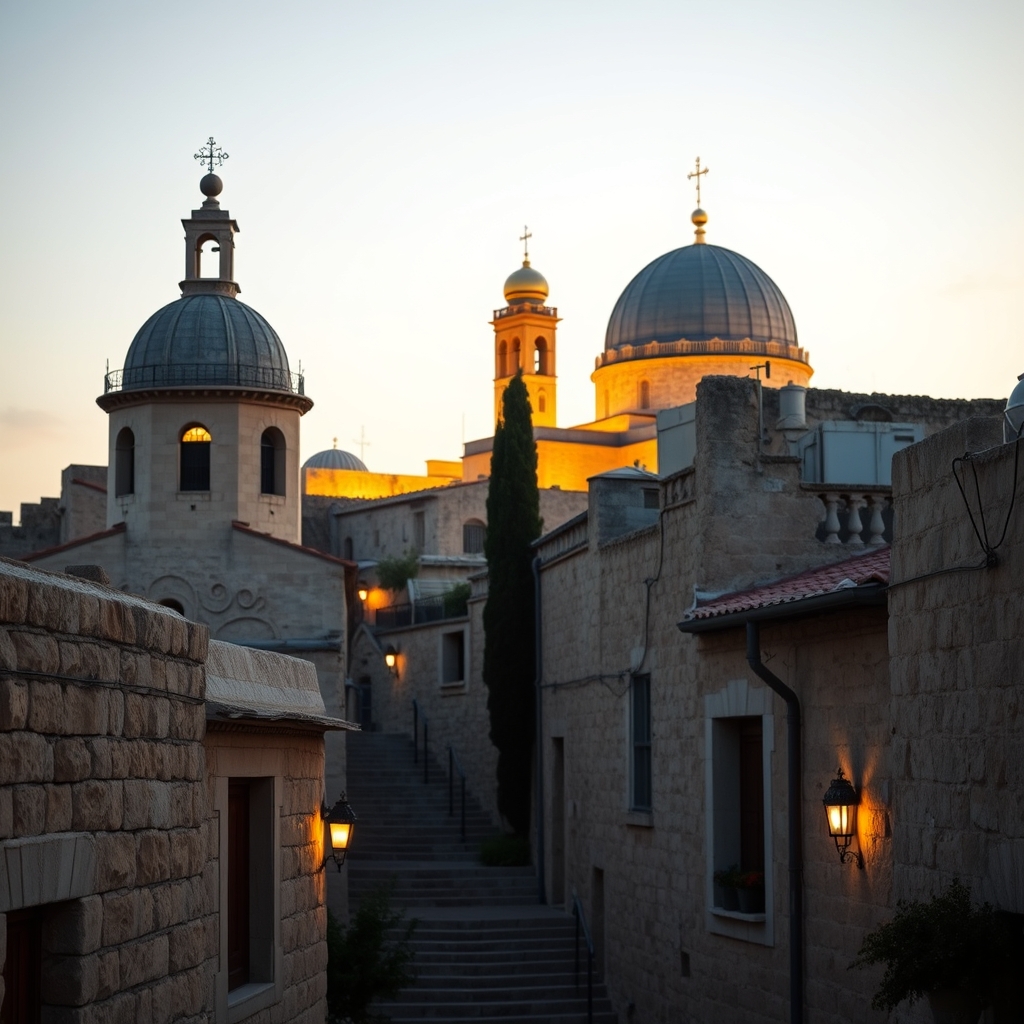
Jesus was born in Bethlehem, a small town in Judea, as recorded in the Gospels of Matthew and Luke. This fulfilled the Old Testament prophecy in Micah 5:2, which foretold that the Messiah would come from Bethlehem, the city of David.
The question of where Jesus was born is far more than a matter of geography—it is a matter of faith. For centuries, skeptics have asked, "Jesus was born in" some disputed location, and "Jesus Christ was born in" a place that carries deep prophetic significance. This article will walk you through the biblical truth about the birthplace of our Lord, grounded in Scripture and the unwavering authority of God’s Word. Whether you are a new believer seeking to understand the core truths of the Gospel or a mature Christian looking to deepen your faith, this article aims to provide clear, loving answers rooted in the Bible.
According to the Bible, the city of Bethlehem holds a central role in God’s plan of salvation. As we explore the details of Jesus’ birth, we will examine how the Old Testament prophecies were fulfilled, why the humble setting of a manger matters, and what it all means for our salvation. Join us as we uncover the truth about where Jesus was born, the historical context of His life, and why His birthplace remains a cornerstone of our faith today.
Where Was Jesus Born According to the Bible?
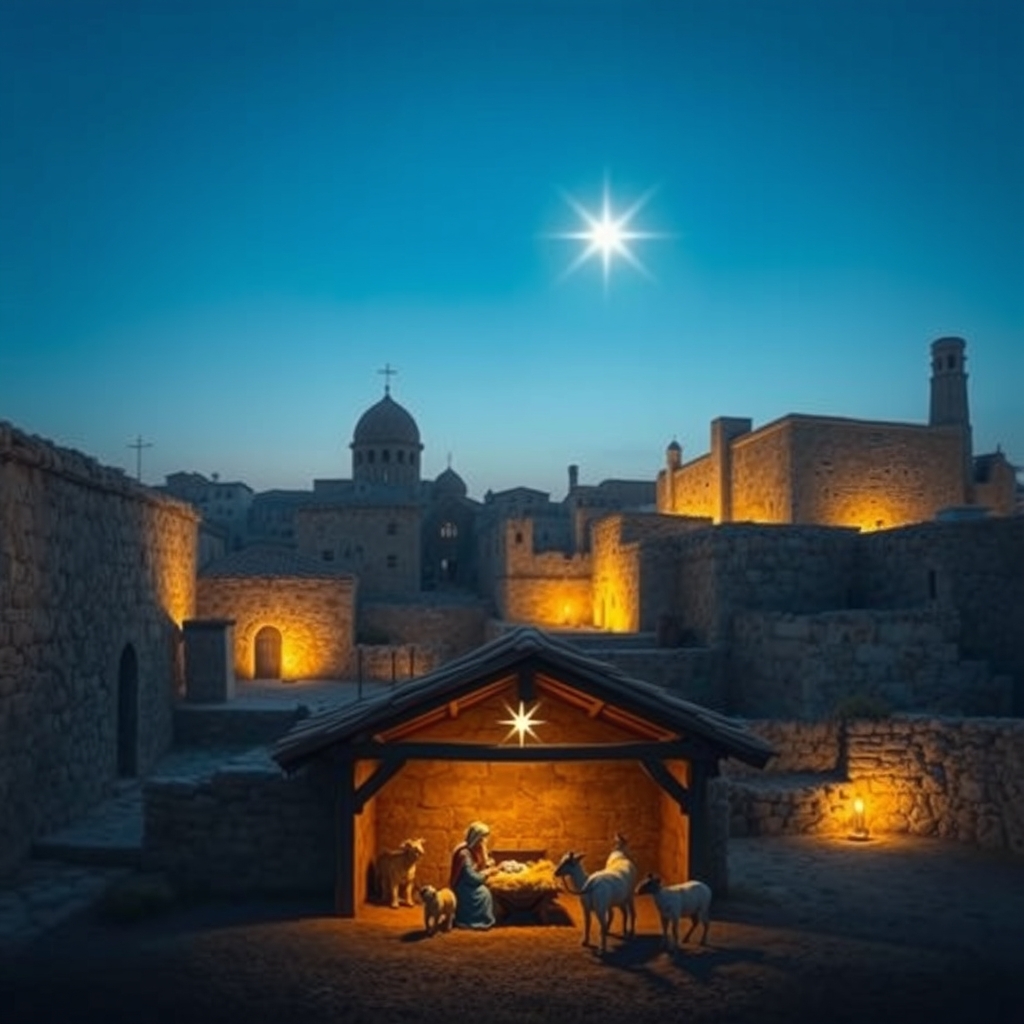
The City of Bethlehem
According to the Bible, Jesus was born in Bethlehem, a small town in Judea. This is not a matter of debate among scholars or believers. Scripture is clear and consistent on this point. Both the Gospel of Matthew and the Gospel of Luke affirm that Jesus Christ was born in Bethlehem, the city of David.
The Gospel of Luke provides the most detailed account. A Roman census required Joseph to travel from Nazareth to Bethlehem because he was of the lineage of David. Luke 2:4-5 tells us:
“So Joseph also went up from the town of Nazareth in Galilee to Judea, to Bethlehem the town of David, because he belonged to the house and line of David. He went there to register with Mary, who was pledged to be married to him and was expecting a child.” — Luke 2:4-5 (NIV)
It was in Bethlehem that Mary gave birth to her firstborn son. Luke 2:7 says, “She gave birth to her firstborn, a son. She wrapped him in cloths and placed him in a manger, because there was no guest room available for them.” This humble birth in a small Judean town changed the course of human history forever.
Matthew’s Gospel also confirms Bethlehem as the birthplace of Jesus. When the Magi arrived in Jerusalem asking, “Where is the one who has been born king of the Jews?” (Matthew 2:2), the chief priests and teachers of the law pointed to Bethlehem. Matthew 2:5-6 records their response:
“In Bethlehem in Judea,” they replied, “for this is what the prophet has written: ‘But you, Bethlehem, in the land of Judah, are by no means least among the rulers of Judah; for out of you will come a ruler who will shepherd my people Israel.'”
So the biblical record is unmistakable. Jesus Christ was born in Bethlehem, just as God had planned from before the foundation of the world.
The Fulfillment of Old Testament Prophecy
The birth of Jesus in Bethlehem was not an accident. It was the fulfillment of a prophecy spoken over 700 years before He was born. The prophet Micah, under the inspiration of the Holy Spirit, declared:
“But you, Bethlehem Ephrathah, though you are small among the clans of Judah, out of you will come for me one who will be ruler over Israel, whose origins are from of old, from ancient times.” — Micah 5:2 (NIV)
This prophecy is remarkable for several reasons:
- It names the specific town. God did not merely say the Messiah would come from the tribe of Judah. He pinpointed Bethlehem, a small and seemingly insignificant village.
- It predates Jesus by centuries. Micah prophesied during the reigns of Jotham, Ahaz, and Hezekiah, kings of Judah, around 740–686 BC. [1]
- It affirms the eternal nature of the Messiah. The phrase “whose origins are from of old, from ancient times” points to the divine, eternal nature of Jesus Christ. He is not merely a man born in time. He is the eternal Son of God who entered human history at a specific place and moment.
Furthermore, Bethlehem’s connection to King David is deeply significant. God promised David that one of his descendants would reign forever (2 Samuel 7:12-13). Since Bethlehem was known as the city of David, the Messiah’s birth there confirmed His rightful place on David’s throne.
In addition to Micah’s prophecy, other Old Testament passages point to the coming Messiah and His humble origins. Isaiah 7:14 foretold a virgin birth: “Therefore the Lord himself will give you a sign: The virgin will conceive and give birth to a son, and will call him Immanuel.” Isaiah 9:6 declared the divine identity of this child: “For to us a child is born, to us a son is given, and the government will be on his shoulders. And he will be called Wonderful Counselor, Mighty God, Everlasting Father, Prince of Peace.”
Every detail of Jesus’ birth in Bethlehem was orchestrated by God. He used a Roman census, a faithful couple, and a humble manger to bring His eternal plan of salvation to fulfillment. Jesus was born in Bethlehem because God is a God who keeps His promises. What He spoke through His prophets, He brought to pass in the fullness of time.
As we reflect on the birthplace of our Savior, let us marvel at the precision and faithfulness of God. The same God who named Bethlehem centuries before Jesus’ birth is the same God who holds your life in His hands today. His Word never fails, and His promises in Christ are “Yes” and “Amen” (2 Corinthians 1:20).
Which Country Was Jesus Born In?
Bethlehem in the Ancient World
When we ask which country Jesus was born in, we must first understand the ancient world. Jesus Christ was born in Bethlehem. This small city held enormous significance in biblical history. It was located in the region known as Judea. At the time of Jesus’ birth, this area was part of the Roman Empire. [2]
Bethlehem was a humble town. Yet it carried a mighty legacy. It was called the City of David. King Israel’s greatest king was born there centuries earlier. The prophet Micah foretold that the Messiah would come from Bethlehem. This prophecy was written approximately 700 years before Jesus was born.
The Gospel of Luke records the historical circumstances. Caesar Augustus decreed a census. Joseph traveled from Nazareth to Bethlehem. He went there because he was of the house and lineage of David. Mary accompanied him. While they were there, she gave birth to her firstborn Son. Jesus Christ was born in Bethlehem, just as Scripture declared.
Consider the biblical accounts that confirm this truth:
- Micah 5:2 prophesied the Messiah would come from Bethlehem Ephrathah
- Matthew 2:1 states plainly that Jesus was born in Bethlehem of Judea
- Luke 2:4-7 records Joseph and Mary’s journey and Jesus’ birth in Bethlehem
- John 7:42 confirms that the Christ would come from Bethlehem, the village where David was
These scriptures leave no room for doubt. Jesus was born in Bethlehem. This was not accidental. God sovereignly orchestrated every detail. He fulfilled His promises through the birth of His Son.
Was Jesus Born in Palestine?
This question requires careful and honest examination. Many people today ask whether Jesus was born in Palestine. The answer depends on how we define that term. In the ancient world, the region had different names and political boundaries than it does today.
During Jesus’ lifetime, the land was under Roman control. The Romans called the province “Judea.” The term “Palestine” was later applied to this region. The Roman Emperor Hadrian renamed the area “Syria Palaestina” around 135 AD. This was approximately 100 years after Jesus’ birth. [3]
So was Jesus born in Palestine? Here is what we know from Scripture and history:
- Jesus was born in Bethlehem of Judea, as recorded in Matthew 2:1
- The region was part of the Roman Empire at the time of His birth
- The name “Palestine” was not used during Jesus’ lifetime to describe this region
- Today, Bethlehem is located in the West Bank, a territory within the broader region historically associated with ancient Israel
It is important to focus on what matters most. The exact modern political label is secondary. What is primary is the biblical truth. Jesus Christ was born in Bethlehem. He was born in the land God promised to Abraham. He came to the people of Israel first. Then He extended salvation to all nations.
Jesus Himself declared His mission clearly. In Matthew 15:24, He said, “I was sent only to the lost sheep of the house of Israel.” However, His birth in this specific location was never meant to limit His love. After His resurrection, He commanded His disciples to go into all the world. The Gospel would reach every nation, tribe, and tongue.
Today, Bethlehem is a place of pilgrimage for millions of Christians worldwide. Believers from every country come to honor the birthplace of our Lord. The Church of the Nativity stands over the traditional site of Jesus’ birth. This ancient church has been a place of worship since the 4th century. [4]
Regardless of what we call the region today, the truth remains unchanged. Jesus Christ was born in Bethlehem. He is the Son of God. He came to seek and to save the lost. His birth in that humble town changed the course of human history forever. As John 3:16 reminds us, “For God so loved the world that He gave His only begotten Son, that whoever believes in Him should not perish but have everlasting life.”
Where Was Jesus Born Continent
The Middle Eastern Context of Jesus’ Birth
When we ask where Jesus was born, we must look beyond a single city. We must understand the broader region. Jesus Christ was born in the Middle East. This fact is central to our faith. The entire story of salvation unfolded in this part of the world. Understanding this context deepens our appreciation for the Gospel.
The Bible is clear about this location. The Gospels of Matthew and Luke place Jesus’ birth in Bethlehem. Bethlehem is a small town. It is located in the region of Judea. Judea was part of the ancient Near East. Today, this area is in modern-day Israel. [2]
Jesus Christ was born in a land rich with biblical history. This is the land of Abraham, Isaac, and Jacob. It is the land where God made His covenant. The birth of Jesus fulfilled promises made centuries before. The prophet Micah foretold this very location.
“But you, Bethlehem Ephrathah, though you are small among the clans of Judah, out of you will come for me one who will be ruler over Israel, whose origins are from of old, from ancient times.” — Micah 5:2 (NIV)
This prophecy was written about 700 years before Jesus was born. Its fulfillment is a powerful truth. It shows God’s perfect plan. Jesus’ birth in the Middle East was no accident. It was divine purpose.
The Middle Eastern setting is vital for our faith. It connects the Old and New Testaments. Jesus came to His own people first. He was born a Jew. He lived and ministered in this region. His death and resurrection happened there too. This grounds our faith in real history.
We must remember this context. Jesus is not a myth. He is real. He entered our world in a specific place. He was born in Bethlehem, in the Middle East. This truth anchors our belief. It shows God works in history.
As we study Scripture, let us honor this truth. Jesus Christ was born in the Middle East. He is the Savior for all nations. His birth in Bethlehem started our salvation. Let us trust in Him today.
When Was Jesus Born and Died
The Historical Timeline of Jesus’ Life
Understanding when Jesus was born and died helps us grasp the full story of our salvation. The Bible gives us clear clues about the timing of His life on earth.
Most scholars place the birth of Jesus Christ was around 4 to 6 BC. This may seem surprising. However, our calendar itself was later adjusted, and the Gospel accounts point to this timeframe. The Gospel of Matthew tells us that Jesus was born during the reign of King Herod, who died around 4 BC. [5]
Jesus Christ was born in Bethlehem, as the Scriptures foretold. He lived approximately 33 years. His ministry began around age 30. He taught, healed the sick, and ultimately gave His life on the cross. After three days, He rose again, securing our eternal hope.
Here is a simple timeline:
- Birth: ~4–6 BC in Bethlehem
- Ministry: Began ~AD 26–29
- Crucifixion: ~AD 30–33
- Resurrection: Third day after death
The death and resurrection of Jesus Christ stand at the center of our faith. He died for our sins, was buried, and rose again. This is the Gospel. As Paul wrote, “Christ died for our sins according to the Scriptures, and that He rose again” (1 Corinthians 15:3-4).
When Is Jesus’ Real Birthday Month?
Many celebrate December 25 as the birth of Jesus. Yet, the Bible does not give an exact month. Shepherds were in the fields, which suggests a warmer season. Most likely, Jesus Christ was born in spring or early fall. [6]
What matters most is not the date. The truth is that God became man. He came to save us. The birth, death, and resurrection of Jesus Christ are the foundation of our faith. As John 3:16 says, “For God so loved the world that He gave His only begotten Son.”
Let us focus on the mission of Jesus. He is Lord and Savior. The exact month is less important than the truth: He died for our sins and rose again.
Where Was Jesus Born in a Stable?
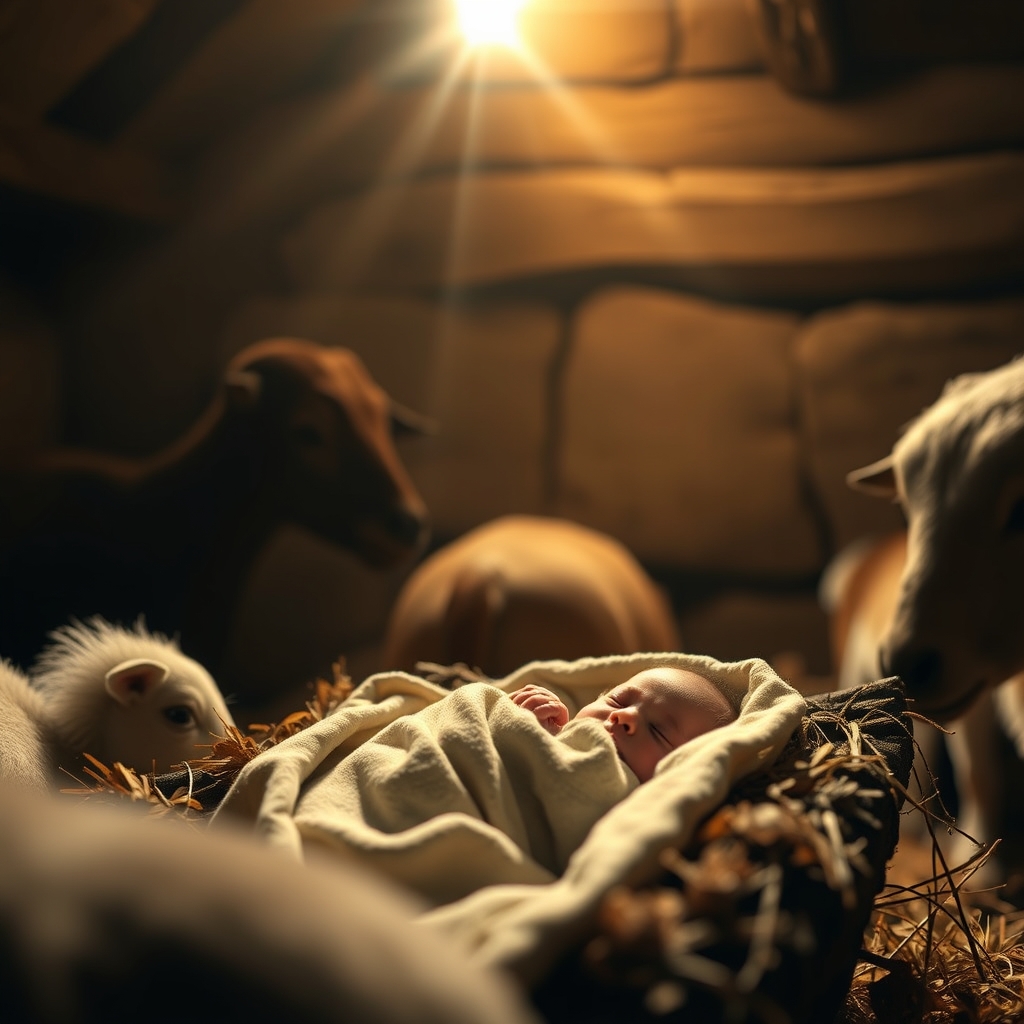
The birth of Jesus Christ is one of the most well-documented and significant events in human history. While many people know that Jesus was born in Bethlehem, fewer understand the humble circumstances surrounding His arrival. The Bible tells us that Jesus was born in a stable and laid in a manger. This detail is not just a historical footnote. It is a powerful truth that reveals the heart of God and the mission of our Savior.
The Manger Where Jesus Was Born
The Gospel of Luke provides a clear and beautiful account of the birth of Jesus. In Luke 2:7, we read:
“And she brought forth her firstborn son, and wrapped him in swaddling clothes, and laid him in a manger; because there was no room for them in the inn.” (Luke 2:7, KJV)
A manger is a feeding trough for animals. It is a simple, humble place for any child to be born. Yet this is exactly where the Son of God entered the world. Jesus Christ was born in a stable, surrounded by the lowliness of an animal’s resting place. This was not an accident or an oversight. It was part of God’s perfect plan.
Furthermore, the shepherds were the first to hear the news of Jesus’ birth. Angels appeared to them in the fields, announcing the arrival of the Savior. The shepherds then went to Bethlehem and found Mary, Joseph, and the baby Jesus lying in the manger, just as the angel had said (Luke 2:12, 16). This sign confirmed that this child was indeed the promised Messiah.
Consider these key details about the manger where Jesus was born:
- A manger was a feeding trough, typically carved from stone or wood, used to hold food for livestock.
- The stable or cave where Jesus was born reflected the humble conditions of Bethlehem at the time. Many scholars believe the birth took place in a cave used to shelter animals, which was common in that region. [7]
- Swaddling clothes were strips of cloth wrapped around a newborn for warmth and comfort, showing that Mary cared for Jesus with the tenderness of any loving mother.
- The manger served as a sign to the shepherds, confirming the angel’s message that the Savior had come.
Jesus was born in this humble setting because there was no room at the inn. The world was too busy to make room for its Creator. Yet God chose this very place to begin the greatest story of redemption ever told.
Why Was Jesus Born in a Humble Setting?
The humble birth of Jesus Christ was not a sign of weakness. It was a deliberate act of God’s love and wisdom. Scripture gives us several reasons why Jesus was born in a stable rather than a palace.
First, Jesus came to identify with the lowly and the broken. The prophet Isaiah foretold that the Messiah would be “despised and rejected of men; a man of sorrows, and acquainted with grief” (Isaiah 53:3). By being born in a stable, Jesus showed from His very first breath that He came for all people, especially those who are overlooked and forgotten by the world.
Second, the humble birth fulfilled God’s pattern of choosing the weak to shame the strong. Throughout the Bible, God consistently chooses the unlikely. He chose a shepherd boy named David to be king. He chose a humble stable in a small town to bring forth the King of Kings. As the Apostle Paul wrote:
“But God hath chosen the foolish things of the world to confound the wise; and God hath chosen the weak things of the world to confound the things which are mighty.” (1 Corinthians 1:27, KJV)
Third, Jesus’ humble birth points us to the cross. The manger and the cross are deeply connected. Both represent sacrifice, humility, and love beyond measure. Jesus was born in a place of lowliness so that He could die for the sins of the entire world. He left the glory of heaven to enter the poverty of a stable, all so that we could receive the riches of eternal life.
Here is a comparison that helps us understand the humility of Jesus’ birth:
| What the World Expected | What God Provided |
|---|---|
| A king born in a palace | The King of Kings born in a stable |
| A Messiah with armies and power | A Savior wrapped in swaddling clothes |
| A ruler surrounded by wealth | The Son of God laid in a manger |
Jesus Christ was born in a stable because His mission was not to conquer through force. It was to save through love. He came not to be served, but to serve and to give His life as a ransom for many (Mark 10:45). The manger reminds us that no one is beyond the reach of God’s grace.
As we reflect on the birth of Jesus, let us remember that the same God who chose a humble stable for His Son’s birth is the same God who chooses to dwell in the hearts of all who believe. Jesus was born in a manger so that we could be born again into the family of God. That is the beautiful truth of the Gospel, and it is the foundation of our faith.
Why Does Jesus’ Birthplace Matter?
The birthplace of Jesus Christ is far more than a historical detail. It is a vital part of God’s perfect plan for our salvation. When we understand why Jesus was born in Bethlehem, we see the faithfulness of God on full display. Every aspect of Jesus’ birth was intentional, ordained before the foundation of the world.
Bethlehem and the Line of David
God made a promise to King David many centuries before Jesus was born. He declared that the Messiah would come from David’s royal line. This is known as the Davidic Covenant.
The prophet Micah foretold the exact town where the Messiah would arrive. He wrote:
“But you, Bethlehem Ephrathah, though you are small among the clans of Judah, out of you will come for me one who will be ruler over Israel, whose origins are from of old, from ancient times.” — Micah 5:2 (NIV)
This prophecy was written approximately 700 years before Jesus Christ was born in Bethlehem. God’s Word never fails. Every promise He makes, He fulfills with perfect precision.
Consider the significance of this:
- God chose Bethlehem — a small, humble town — to show that His power works through weakness and humility.
- Jesus’ lineage traces back to David — both through Joseph (His legal father) and Mary (His biological mother), as recorded in the Gospels of Matthew and Luke.
- The Roman census brought Mary and Joseph to Bethlehem — God used even the decisions of worldly rulers to accomplish His divine purpose (Luke 2:1–5).
Nothing about Jesus’ birth was accidental. God orchestrated every detail so that His people would recognize the Messiah when He came. The fact that Jesus Christ was born in Bethlehem confirms that He is the promised Savior, the Son of David, and the King of Kings.
The Significance for Our Salvation
Why does this matter for us today? Because the birthplace of Jesus is directly connected to the truth of the Gospel. If Jesus had not been born in Bethlehem, the prophecy would have been broken. And if even one prophecy failed, we could not trust any of God’s promises.
But God’s Word stands firm. Jesus was born exactly where Scripture said He would be. This gives us confidence in the following truths:
- Jesus is who He said He is. He is the Son of God, fully divine and fully human, sent to save us from our sins (John 3:16).
- God keeps every promise. From Genesis to Revelation, every word of God proves true (Proverbs 30:5).
- Our salvation is secure. Because Jesus fulfilled every prophecy, we can trust that His death and resurrection are real and that eternal life is available to all who believe in Him (Romans 10:9).
Furthermore, the humble setting of Jesus’ birth reveals the heart of God. He did not come in worldly power or splendor. He came as a baby, laid in a manger, so that the lowest and the highest alike could come to Him. As the apostle Paul wrote:
“For you know the grace of our Lord Jesus Christ, that though he was rich, yet for your sake he became poor, so that you through his poverty might become rich.” — 2 Corinthians 8:9 (NIV)
Jesus Christ was born in Bethlehem so that you and I could be born again into the family of God. His birthplace is not just a point on a map. It is proof that God loves us, that He keeps His Word, and that His plan of salvation is perfect from beginning to end.
We serve a God who controls all of history. He guided nations, moved rulers, and directed the steps of a young couple — all so that His Son would be born in the right place, at the right time, for the right purpose. That purpose was you. Jesus was born so that through faith in Him, you would never perish but have everlasting life (John 3:16).
Frequently Asked Questions
Which country was Jesus born in?
Jesus was born in the land of Israel, in the small town of Bethlehem. At the time of His birth, this region was part of the Roman Empire. The Gospel of Luke records that Joseph and Mary traveled to Bethlehem because of a Roman census. Luke 2:4 tells us, “Joseph also went up from the town of Nazareth in Galilee to Judea, to Bethlehem the town of David, because he belonged to the house and line of David.” Today, Bethlehem is located in the West Bank region of the Middle East. [2]
Was Jesus born in Palestine?
This is a question that comes up often, and it deserves a careful answer. The term “Palestine” was not used during Jesus’ lifetime. The Bible identifies His birthplace as Bethlehem in the region of Judea, part of the land of Israel. The name “Palestine” was applied to the region centuries later by the Romans, after they conquered the area. So while Bethlehem is located in a region that is sometimes called Palestine today, Scripture is clear that Jesus was born in the land of Israel, in the town of Bethlehem, fulfilling God’s promise to Israel. Micah 5:2 prophesied this very location long before Jesus was born.
When was Jesus born month?
The Bible does not give us the exact month or date of Jesus’ birth. December 25th was chosen by the early church centuries after His birth. Many scholars believe Jesus was likely born in the spring or fall. This is because Luke 2:8 mentions shepherds living out in the fields watching their flocks at night. Shepherds typically kept their flocks in open fields during the warmer months. While we cannot know the exact month with certainty, what we do know is that God’s timing was perfect. Galatians 4:4 says, “But when the set time had fully come, God sent his Son, born of a woman, born under the law.” The exact date matters less than the eternal truth that God entered the world to save us.
Where was Jesus born in a stable?
The Bible tells us that Jesus was laid in a manger because there was no room for them in the inn. Luke 2:7 states, “She wrapped him in cloths and placed him in a manger, because there was no guest room available for them.” A manger is a feeding trough for animals. This likely means Jesus was born in a humble setting, possibly a cave or lower level of a home where animals were kept. The exact structure is not specified in Scripture. What matters is the profound truth that the Creator of the universe chose the humblest of beginnings. His humble birth reminds us that Jesus came not for the powerful, but for all who would receive Him.
Was Jesus born 2000 years ago?
Yes, most scholars place the birth of Jesus approximately 2,000 years ago, around 4 to 6 BC. This dating is based on historical records, including the reign of King Herod, who was alive at the time of Jesus’ birth. Matthew 2:1 notes, “Jesus was born in Bethlehem in Judea, during the time of King Herod.” Our modern calendar system is actually based on the estimated year of His birth. The exact year is debated, but the historical reality of Jesus’ birth is well supported. What is most important is not the precise year, but the eternal significance of His coming. As John 3:16 declares, “For God so loved the world that he gave his one and only Son, that whoever believes in him shall not perish but have eternal life.”
`
Sources
- https://www.britannica.com/biography/Micah-Hebrew-prophet
- https://www.britannica.com/place/Bethlehem
- https://www.britannica.com/place/Palestine
- https://whc.unesco.org/en/tentativelists/5714/
- https://www.biblegateway.com/resources/commentary/matthew/1:1-17
- https://www.biblegateway.com/resources/commentary/luke/2:1-20
- https://www.biblicalarchaeology.org/daily/biblical-sites-places/biblical-archaeology-places/bethlehem/