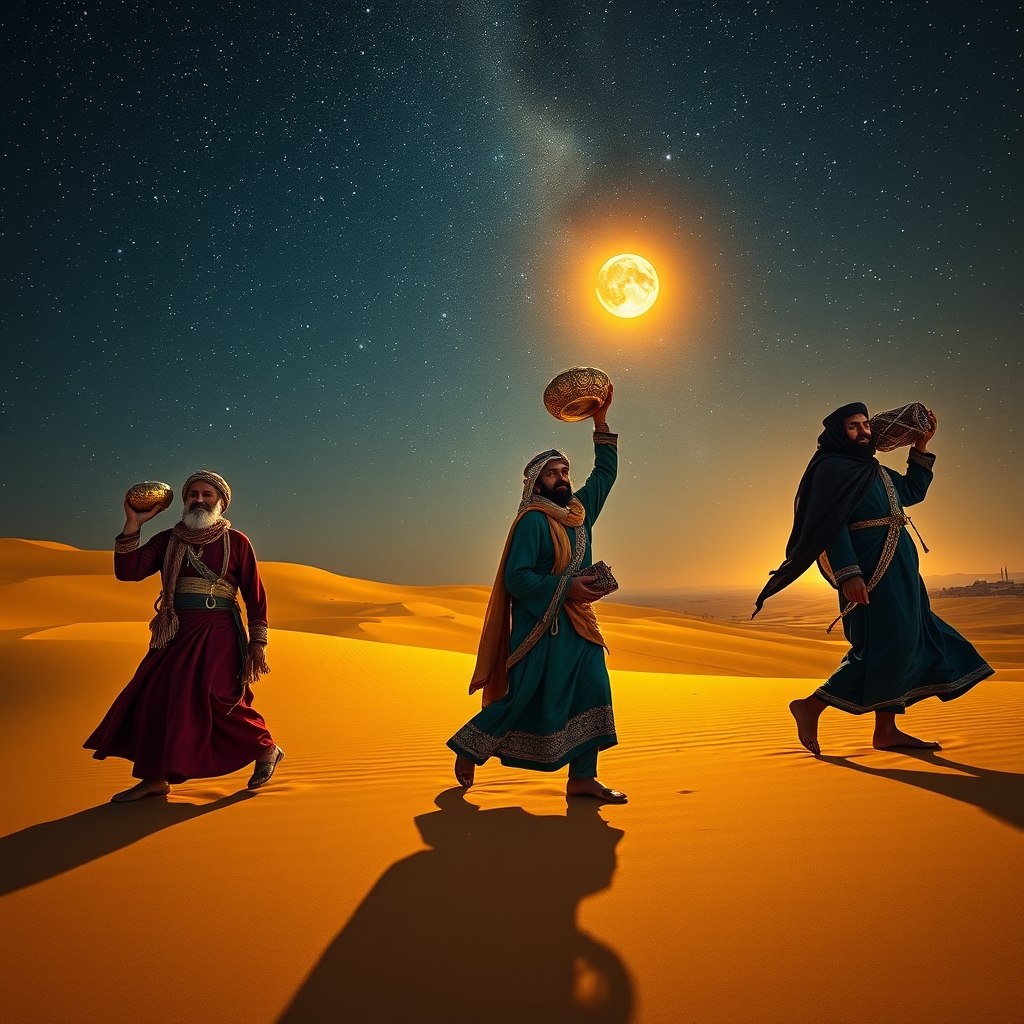
The three wise men, also called the Magi, were distinguished visitors from the East who traveled to worship the newborn Jesus, as recorded in Matthew 2:1-12. They brought Him gifts of gold, frankincense, and myrrh—each symbolizing His kingship, divinity, and sacrificial death. Though the Bible does not specify that there were exactly three men, their visit powerfully affirmed that Jesus Christ is the Savior for all nations.
Long before the shepherds arrived at the manger and the angels filled the night sky, God was already moving in the hearts of men far away in the East. He placed a star in the heavens — a divine signal that a King had been born. The three wise men saw it, and everything changed. Their journey is one of the most beloved stories in Scripture, yet it is also one of the most misunderstood. Who were these mysterious travelers? How many were they really? And what do their gifts actually mean for us today?
In this article, we will explore everything the Bible reveals about the three wise men in the Bible — from where they came from to the profound significance of their worship. We will separate tradition from truth, clarify what Scripture actually says, and uncover why their story still speaks powerfully to every heart that seeks the newborn King. Whether you are a new believer or have walked with Jesus for decades, get ready to discover the riches hidden in this familiar passage — and learn what it truly means to follow the Star to the feet of Christ.
Who Were the Three Wise Men?
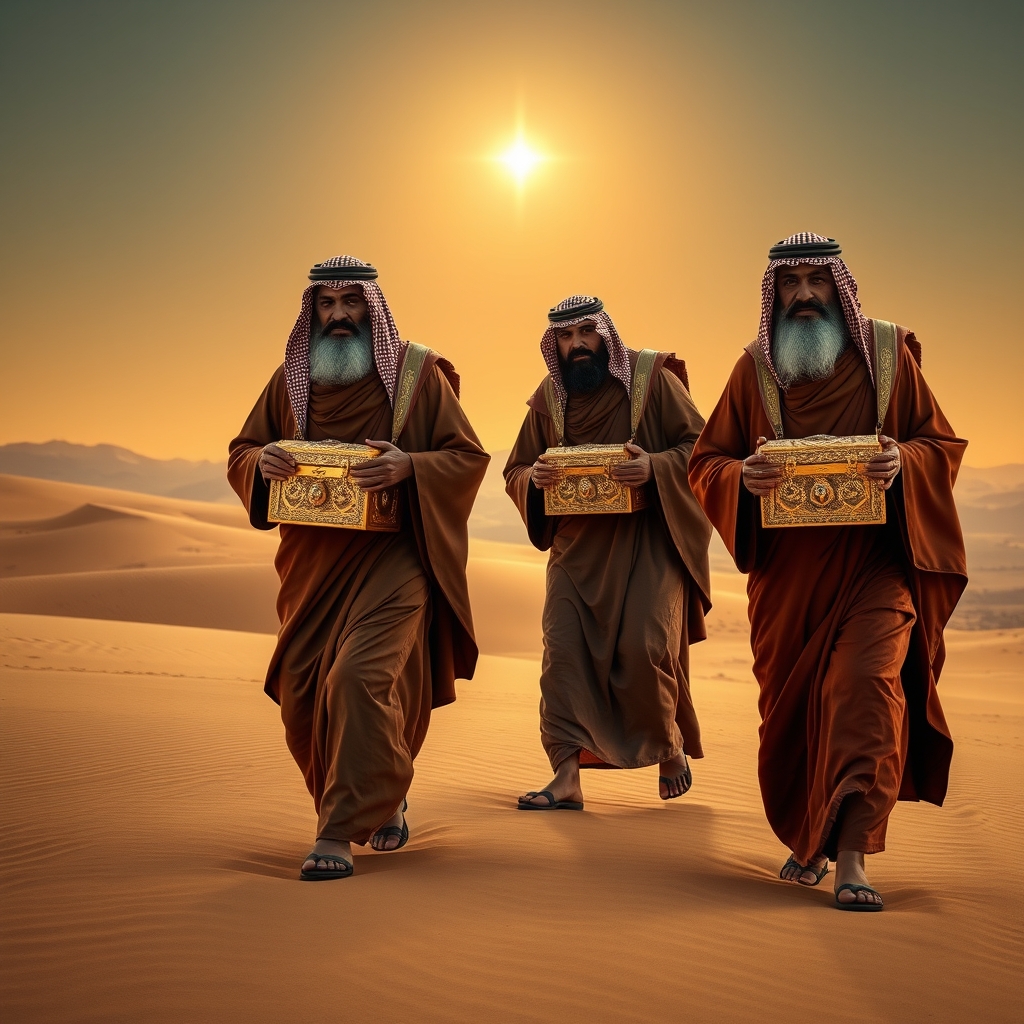
The identity of the three wise men has fascinated Christians for centuries. These mysterious figures from the East are mentioned in Matthew’s Gospel. They traveled great distances to worship Jesus Christ. Their story reveals profound truths about our Lord.
However, many traditional assumptions need careful examination. Let’s explore what Scripture actually teaches.
How Many Wise Men Were There?
The Bible never specifies the exact number of wise men. The common belief of three comes from the three gifts listed in Matthew 2:11. This traditional assumption has been passed down through centuries of Christian tradition.
In reality, the biblical account refers to them simply as “magi” from the East. [1] The Scriptures don’t give a specific count of men who made the journey.
Therefore, we must be careful not to read into text it doesn’t contain.
Where Did the Wise Men Come From?
Matthew 2:1 tells us only that they came “from the East.” This detail is important for understanding their journey. Bible scholars believe they likely traveled from Persia or Babylon.
Additionally, these regions were known for astronomical study. This astronomical background helps explain how they noticed the star.
Were the Three Wise Men in the Bible Astrologers?
This question deserves careful consideration from a biblical perspective. The term “magi” in ancient times referred to priestly scholars. [2] They studied both astronomy and interpreted dreams.
However, the Bible strongly condemns astrology and divination elsewhere. [3] So, their wisdom ultimately wasn’t found in star charts.
Instead, God sovereignly used their background to draw them. When they arrived, they abandoned all former methods in worship.
The Three Wise Men Names
The biblical text itself never names the wise men. However, later Christian tradition assigned them three names. According to Western church tradition, their names were Caspar, Melchior, and Balthasar.
Despite providing colorful detail, these names aren’t found in Scripture. They first appeared in a Greek manuscript around 500 AD. [4] This tradition likely helped believers connect personally with the story.
Their gifts spoke of a three-fold ministry of Jesus.
Where in the Bible Talks About the Three Wise Men?
Matthew 2:1-12: The Key Passage
The story of the three wise men appears in one place in Scripture: Matthew chapter 2, verses 1-12. This passage is the only biblical account we have of these visitors who traveled from the East to worship the newborn King. In addition, this short but powerful narrative carries deep meaning about Jesus’ identity and His mission to save the world.
Matthew writes:
“Now after Jesus was born in Bethlehem of Judea in the days of Herod the king, behold, wise men from the East came to Jerusalem, saying, ‘Where is He who has been born King of the Jews? For we have seen His star in the East and have come to worship Him.'” (Matthew 2:1-2, NKJV)
Several key details stand out in this passage. First, Jesus was born in Bethlehem of Judea. Second, their visit happened during the reign of King Herod. Third, these wise men — called “Magi” in the original Greek text — traveled from the East. Finally, their purpose was clear: they sought to worship the newborn King.
Furthermore, the passage describes how King Herod felt threatened by this news. He consulted with the chief priests and scribes. As a result, they directed him to Bethlehem, citing the prophet Micah’s prophecy (Micah 5:2). However, Herod secretly planned to use the wise men to find Jesus and destroy Him. God warned the wise men in a dream not to return to Herod. So they departed for their own country by another route.
The full account in Matthew 2:1-12 reveals God’s sovereign protection over His Son. It also shows that Jesus came not for one nation alone, but for all people — even Gentiles from distant lands recognized Him as King.
Three Wise Man Verse in the KJV
The King James Version renders this beloved passage with the reverent language that many Christians have cherished for generations. Below are select verses from the KJV:
- Matthew 2:1 (KJV): “Now when Jesus was born in Bethlehem of Judaea in the days of Herod the king, behold, there came wise men from the east to Jerusalem,”
- Matthew 2:2 (KJV): “Saying, Where is he that is born King of the Jews? for we have seen his star in the east, and are come to worship him.”
- Matthew 2:11 (KJV): “And when they were come into the house, they saw the young child with Mary his mother, and fell down, and worshipped him: and when they had opened their treasures, they presented unto him gifts; gold, and frankincense, and myrrh.”
Notice that Matthew 2:11 specifically describes the moment of worship. The wise men “fell down” before Jesus. Then they opened their treasures and presented three gifts: gold, frankincense, and myrrh. Consequently, even without a specific number mentioned in Scripture, three gifts gave rise to the tradition of three wise men.
Moreover, the KJV translation uses the phrase “young child” rather than “babe” or “infant” in Matthew 2:11. This suggests the wise men’s visit may have occurred some time after Jesus’ birth — a detail Matthew confirms when he notes they entered “the house,” not the manger. Understanding this timing helps us appreciate the accuracy of Scripture and trust that the Bible gives us exactly what we need to know for our faith.
As we study Matthew 2:1-12 and reflect on the KJV rendering together, we see that the Bible presents these visitors as real people who followed God’s leading with genuine hearts of worship. Their story encourages every believer to seek Jesus, no matter the distance, and to come before Him with our own offering of worship and surrender.
What Was the Three Wise Men Meaning and Significance?
When we read the story of the three wise men in the Bible, we often focus on the journey, the star, and the gifts. However, beneath the surface of this beloved story lies a powerful theological meaning. The visit of the Magi was not just a historical event. It was a divine declaration about who Jesus is and what His mission on earth would be.
The three wise men meaning and significance extends far beyond a single night in Bethlehem. These men, coming from a foreign land, fulfilled ancient prophecies and revealed truths that still inspire believers today. Understanding their purpose helps us see how God’s plan of salvation was always meant for the entire world.
The Wise Men Showed Jesus Is Lord of All Nations
One of the most profound truths in the story of the three wise men is that they were not Jewish. They were Gentiles, likely from Persia or Babylon. Their arrival in Jerusalem was a sign that Jesus came for all people, not just one nation.
Throughout the Old Testament, God promised that through Abraham’s seed, “all the families of the earth shall be blessed” (Genesis 12:3). The Magi’s visit was an early fulfillment of that promise. They recognized the newborn King before many in Israel did.
This truth is echoed in the New Testament. The Apostle Paul later wrote that in Christ, “there is neither Jew nor Gentile” (Galatians 3:28). The 3 wise men in the Bible were living proof of this spiritual reality.
Consider what their visit tells us:
- Jesus is the King of all kings. The Magi asked, “Where is He who has been born King of the Jews?” (Matthew 2:2). Their question acknowledged His royal authority.
- Salvation was always meant for the world. God’s plan was never limited to one group of people. The star led Gentiles to the Savior.
- God reveals Himself to those who seek. The Magi were not part of God’s chosen people, yet God drew them to Jesus through the star.
Therefore, the story of the three wise men in the Bible is a reminder that Jesus’ lordship has no borders. He is Lord over every nation, tribe, and tongue. As revelation 7:9 describes, people from every nation will one day stand before His throne in worship.
The Journey of the Three Wise Men Reveals True Worship
The journey of the Magi was long, difficult, and uncertain. Yet they pressed on. Their determination reveals what true worship looks like. It is not passive or convenient. It requires sacrifice, faith, and a willingness to follow wherever God leads.
When the three wise men finally found Jesus, Matthew 2:11 tells us they “fell down and worshiped Him.” This act of bowing before a child in a humble home was a powerful statement. They did not wait for a grand palace or a royal ceremony. They worshiped Him right where He was.
Their worship also involved giving. They presented gifts of gold, frankincense, and myrrh. These were not random offerings. Each gift carried deep meaning and pointed to Jesus’ identity and mission.
True worship, as demonstrated by the Magi, involves:
- Seeking Jesus with all your heart. The Magi traveled a great distance because they were compelled to find Him.
- Humility before the Lord. These wise and learned men bowed low before a child.
- Giving your best to Jesus. Their gifts were costly and intentional, reflecting the worth of the One they came to honor.
In addition, the Magi’s obedience to God’s warning in a dream (Matthew 2:12) shows that true worship leads to obedience. They did not return to Herod. They chose to follow God’s direction instead.
The three wise men meaning and significance is ultimately about pointing us to Jesus. Their journey, their worship, and their gifts all testify to His divine nature and His role as Savior of the world.
As we reflect on their story, we are invited to respond in the same way. We are called to seek Jesus, to worship Him wholeheartedly, and to offer Him the best of what we have. Just as the Magi were transformed by encountering the Christ child, we too are changed when we come to Him in faith.
The 3 wise men in the Bible remind us that Jesus is worthy of our pursuit, our praise, and our lives. Their story is not just a Christmas tradition. It is a living testimony to the power of God to draw all people to His Son.
How Old Was Jesus When the Three Wise Men Visited Him?
One of the most common questions surrounding the story of the three wise men is whether they visited Jesus on the night he was born. Many nativity scenes show the wise men gathered around the manger. However, a careful reading of Scripture reveals a different timeline.
A Later Visit, Not the Night of His Birth
The Bible tells us that the 3 wise men in the bible did not arrive on the night of Jesus’ birth. Instead, they came later. Matthew 2:1 says, “Now when Jesus was born in Bethlehem of Judaea in the days of Herod the king, behold, there came wise men from the east to Jerusalem.” The original Greek uses the word “paidion,” meaning young child, not “brephos,” which means newborn infant. [1]
Furthermore, when the wise men finally found Jesus, they entered a house. Matthew 2:11 states, “they saw the young child with Mary his mother.” They were not in a stable or a manger. This detail confirms that some time had passed since the night of His birth.
In addition, King Herod’s actions provide a chilling clue to the timeline. After the wise men did not return to him, Herod ordered the slaughter of all male children in Bethlehem who were two years old and under. Matthew 2:16. He based this order on the time he had learned from the wise men. This suggests Jesus could have been up to two years old when the three wise men arrived.
Why the Timing Matters for Understanding Scripture
Understanding the correct timeline is important for every believer. It shows us the importance of reading the Bible carefully. We must not let tradition override what God’s Word actually says.
Moreover, this timeline highlights the sovereignty of God. He used a star to guide these men from a distant land. Their journey was not a quick trip. It was a long, faithful pursuit of the King of Kings. Their worship was not a fleeting moment. It was the culmination of a dedicated search.
Finally, the story of the the three wise men in the bible points us to Jesus. He is the one true King, worthy of our worship and our gifts. Their journey reminds us that seeking Jesus is always worth the effort. As Jeremiah 29:13 promises, “And ye shall seek me, and find me, when ye shall search for me with all your heart.”
What Were the Three Wise Men Gifts?
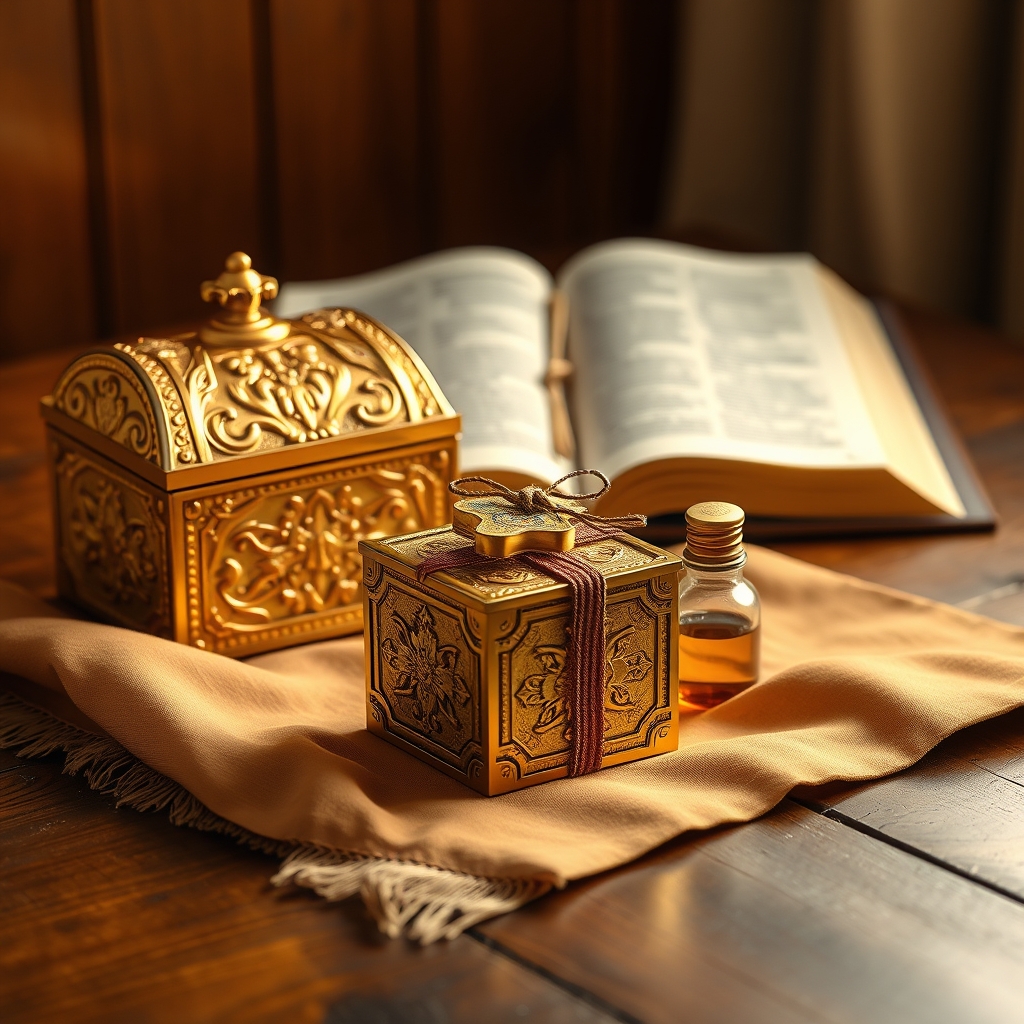
The three gifts brought by the Magi were far more than generous offerings. Each gift carried deep spiritual meaning that revealed who Jesus truly is. These were not random treasures from distant lands. They were prophetic declarations about the identity and mission of the Son of God.
As we explore each gift, we can truly understand how the Bible reveals the divine nature, kingship, and sacrificial purpose of Jesus Christ. Even centuries before His crucifixion, the Holy Spirit guided these wise men to present gifts that spoke of His entire earthly mission.
Gold: Acknowledging Jesus as King
Gold was a gift fit for royalty. In the ancient world, gold was associated with kings and kingdoms (Psalm 72:15). By presenting gold to the infant Jesus, the Magi were declaring Him to be a King.
However, His kingdom was not like earthly kingdoms. Jesus would later say, “My kingdom is not of this world” (John 18:36). He is the eternal King of Kings and Lord of Lords (Revelation 19:16).
The gift of gold reminds us that:
- Jesus has all authority in heaven and on earth (Matthew 28:18)
- His kingdom will never end (Luke 1:33)
- Every knee will one day bow before Him (Philippians 2:10-11)
Furthermore, 1 Timothy 6:15 calls Jesus “the King of kings and Lord of lords.” The gold from the wise men was an early acknowledgment of this eternal truth.
Frankincense: Declaring Jesus Is God
Frankincense was used in worship and temple offerings. It was a fragrant resin burned before the Lord in the tabernacle and temple (Exodus 30:34). Therefore, this gift pointed to the deity of Christ.
Frankincense was never offered to ordinary people. It was reserved for God alone. By bringing frankincense, the three wise men were declaring that this child was no ordinary child He was God in human flesh.
This gift affirms several essential truths:
- Jesus is fully God and fully man (Colossians 2:9)
- In Him dwells the fullness of the Godhead bodily
- Jesus is worthy of worship, which is due to God alone (Hebrews 1:6)
- He is Immanuel, “God with us” (Matthew 1:23)
In addition, the book of Hebrews declares that Jesus is “the radiance of the glory of God and the exact imprint of his nature” (Hebrews 1:3). The frankincense was a perfect symbol.
Myrrh: Prophesying Jesus’ Death
The third gift is perhaps the most striking. Myrrh was used for burial and embalming in Bible times (John 19:39-40). It was a hint of suffering and death that would come later.
Why would the Child Jesus receive a burial spice? Because from the very beginning, His sacrifice was part of God’s plan. Jesus was born to be the Lamb of God who takes away the sin of the world (John 1:29).
The gift of myrrh speaks of:
- Jesus’ humanity and His willingness to suffer on our behalf
- His death on the cross as an atoning sacrifice for sin (Isaiah 53:5)
- The anointing of His body after the crucifixion (Mark 16:1)
- God’s eternal plan of redemption fulfilled through the cross (Acts 2:23)
Moreover, myrrh was also brought to Jesus during His crucifixion (Mark 15:23). Therefore, this gift connects the manger directly to the cross. It reminds us that Christ’s birth and death are inseparable. He came into the world for one purpose: to lay down His life for us.
The Three Gifts Together: A Complete Picture of Christ
When we consider the three gifts together, something beautiful emerges. They form a complete declaration of who Jesus is and what He came to accomplish.
| Gift | Meaning | Symbolizes |
|---|---|---|
| Gold | Kingship | Jesus is the King of all creation |
| Frankincense | Deity | Jesus is truly God |
| Myrrh | Sacrifice | Jesus came to die for our sins |
King. God. Sacrifice. Every Christian doctrine about the identity and mission of Jesus Christ is wrapped up in these three gifts.
It was at the cross that Jesus brought together all of these roles: He was King as He conquered sin and death; He was God as He poured out His life as the perfect, sinless offering; and He was the Sacrifice as He shed His blood for our salvation. Just before His resurrection, a sign was placed above Him that read “King of the Jews” (Mark 15:26). Then on the third day, God brought Him back to life so that we, too, could share in His eternal life and be declared righteous before God (Romans 4:25).
The gifts of the 3 wise men in the Bible remind us that worship is not just about what we bring to Jesus. It is about who He is. True worship begins with recognizing Jesus as King, as God, and as our Redeemer.
As we study the three wise men in the Bible, we come away with a call. Will we present Jesus our own gifts of worship, service, and obedience? Will we honor Him for who He truly is?
Why Are They Called Three Wise Men?
The title “Three Wise Men” is one of the most beloved ways Christians refer to the visitors who came to worship Jesus after His birth. Yet this specific phrase does not appear in Scripture itself. So where does it come from, and why does it endure?
The answer lies in the original Greek language of the New Testament and in the spiritual truth these visitors embodied. Their story is recorded in Matthew 2:1–12.[5]
The Meaning of ‘Magi’ in the Bible
The Bible refers to these men not as kings or as three, but as magoi. This is the Greek word from which we derive “magician” or “wise man.” In the ancient world, Magi were known as scholars. They studied the stars, interpreted dreams, and sought out hidden knowledge.
However, their scholarly background does not define their most defining characteristic. What truly sets them apart was not their learning. It was their pursuit of Jesus. Scripture says:
“After they had heard the king, they went on their way, and the star they had seen when it went ahead of them
until it stopped over the place where the child was.
When they saw the star, they were overjoyed.”
— Matthew 2:9–10
Their wisdom was not a worldly calculation. It was a spiritual hunger. They did not simply seek information about a king. They journeyed to worship Him. That is the heart of their legacy. That is why we call three wise men not because they were wise in the ways of the world, but because they exercised spiritual wisdom beyond compare.
Their wisdom was twofold. They had enough knowledge to recognize the signs of God’s activity. Yet they also had enough humility to bow before a child in a manger.
- They read creation’s signs — a new star in the sky
- They responded in faith — following where God led
- They worshipped in truth — bowing before Jesus
- They offered in surrender — presenting costly gifts
Today, believers who “justjesustime” the time to seek Him discover the same wisdom. It is not found in human philosophy. It is found in His presence.
As the apostle Paul wrote:
“The foolishness of God
than human wisdom, and the weakness of God
is stronger than human strength.”
— 1 Corinthians 1:25
The the three wise men in the bible remind us that true wisdom is recognizing Jesus as Lord and Savior, no matter the distance or cost.
| Worldly Wisdom | Divine Wisdom |
|---|---|
| Seeks power and prestige | Seeks the presence of God |
| Relies on self-sufficiency | Follows God’s leading in faith |
| Pursues temporal knowledge | Pursues eternal truth in Christ |
| Rejects humble beginnings | Worships even in humble places |
Their Wisdom Was in Seeking Jesus
The journey of the 3 wise men in the bible was neither short nor easy. They traveled from the east — likely from Persia, Babylon, or Arabia. This would have been hundreds of miles across deserts and dangerous terrain.
Yet no hardship deterred them. Their eyes were fixed on one goal: finding the newborn King. When they finally reached Jerusalem, they asked:
“Where is the one who has been born king of the Jews?
We saw his star when it rose and have come to worship him.”
— Matthew 2:2
This simple question reveals their singular focus. They were not sightseers or curious travelers. They had come for one reason: to worship Jesus.
| Event | Location | Significance |
|---|---|---|
| Saw the star | The East (likely Persia/Babylon) | God revealed Himself through creation |
| Traveled to Jerusalem | The capital of Israel | They sought out the King of the Jews |
| Worshipped Jesus | Bethlehem | They found and bowed before Christ |
| Returned home | Another route | They obeyed God’s warning in a dream |
Their story challenges every reader of Scripture today. True wisdom is not merely knowing about God. True wisdom is coming to Him.
As Jesus Himself declared:
“Ask and it will be given to you;
seek and you will find;
knock and the door will be opened to you.”
— Matthew 7:7
The Magi asked, sought, and ultimately found. More importantly, they were found by grace.
If you have ever wondered about the three wise men in the bible and their lasting significance, consider this. Their wisdom was not in their numbers or their gifts. Their wisdom was in their posture — prostrate before the Christ child, surrendering everything to the One who alone deserves our worship.
Today, the same Jesus who received their gold, frankincense, and myrrh invites you to come. He is not limited by distance, time, or your past. He is the risen Lord, alive and calling your name. Will you seek Him as the Magi did? Will you bow before Him in faith?
Scripture assures us:
“You will seek me and find me
when you seek me with all your heart.”
— Jeremiah 29:13
The story of the three wise men is not merely a Christmas tradition. It is a living invitation to encounter the Son of God. Their wisdom endures because Jesus endures. And He remains faithful to all who come to Him in faith.
Were There 3 Wise Men in the Bible?
The Bible Doesn’t Specify a Number
One of the most common questions about the three wise men is whether there were actually three visitors. The honest answer is simple: the Bible never tells us exactly how many came.
In Matthew 2:1-12, the Bible refers to “Magi from the east.” Nowhere in this account does Scripture state that there were three travelers. The original Greek text uses the plural form, meaning more than one, but the specific number is never given.
So where did the idea of three wise Men come from? The answer lies in the gifts they brought. The Bible lists three specific gifts given to Jesus. Over the centuries, people naturally assumed that three gifts meant three givers. However, this is merely an assumption, not a scriptural fact.
Consider this for a moment. A group of three men traveling across the desert for weeks would have been vulnerable. Many Bible scholars believe the entire party likely included guards, servants, and several Magi. Therefore, the actual number of visitors may have been much larger than three.
What Tradition Has Taught and What Scripture Says
Tradition has played a powerful role in shaping how we picture this story. By the third century, three had become the widely accepted number of Magi who visited Jesus. This view remained largely unchanged for centuries.[6]
Early Christian artists nearly always depicted three wise men in their works. Moreover, the names Caspar, Melchior, and Balthazar became associated with them by the sixth century. These traditions are meaningful and beautiful in their own right. However, they should never be confused with direct biblical teaching.
Here is an important distinction we should hold as believers:
- What the Bible says: Magi from the east came bringing three gifts to worship the newborn King.
- What tradition added: There were exactly three visitors, and their names were Caspar, Melchior, and Balthazar.
Being honest about what Scripture actually says is not a weakening of faith. Quite the opposite. It strengthens our trust in God’s Word. We honor the Bible most when we let it speak for itself rather than adding human assumptions to it.
The real beauty of this story does not depend on the number of visitors. Instead, the significance lies in what happened. Gentile men from a distant land traveled far to worship Jesus. They recognized Him as King, as God, and as the Savior who would one day die for our sins.
This is the heart of the matter. Whether there were three wise men or twelve wise men, the message remains the same. Jesus Christ is Lord. He is worthy of worship from every nation, every tribe, and every tongue. As Romans 10:13 declares, “Everyone who calls on the name of the Lord will be saved.”
So let us not become distracted by details the Bible leaves open. Instead, let us fix our eyes on Jesus, the true gift He came to give, and the salvation freely offered to all who believe in Him. The Magi’s journey reminds us that the good news of Christ is for the whole world. And that truth needs no embellishment.
Do Christians Believe in the Three Wise Men?
What the Church Teaches About the Magi
Yes, Christians believe in the three wise men because the Bible gives us a true and trustworthy account of their visit. The story of the Magi is not fairy tale or legend. It is recorded in Scripture, and Scripture is God’s Word. Every Christian can trust it completely (2 Timothy 3:16).
So what does the broader church teach about the Magi? It teaches several beautiful truths. First, God draws people to Jesus from every nation. The Magi were not Jewish. Yet God used a star to lead them to worship His Son. Second, God honors genuine seeking. “You will seek Me and find Me when you search for Me with all your heart” (Jeremiah 29:13, NKJV).
Furthermore, the church across centuries has honored the story of the three wise men as evidence that Jesus is Lord of all people. Not just the Jews, but people from distant lands were drawn to Him. This was God’s plan from the beginning. “All the ends of the earth shall remember and turn to the LORD” (Psalm 22:27, ESV).
Here is what Christians believe about the core truths of the Magi:
- They were real men described in a real account of Jesus’ early life in Matthew chapter 2.
- God sovereignly directed them through signs (the star) and through Scripture (prophecies about Bethlehem).
- Their worship was genuine. They fell down and worshiped Jesus (Matthew 2:11). This is the proper response to the Son of God.
- Their gifts carried deep meaning that pointed to Jesus’ identity as King, God, and sacrificial Savior.
In short, the church teaches the three wise men in the Bible show us that Jesus came for the whole world. “For God so loved the world that He gave His only begotten Son, that whoever believes in Him should not perish but have everlasting life” (John 3:16, NKJV).
Honoring the Story Without Worshiping the Men
There is an important distinction Christians must understand. We honor the Magi’s story. However, we do not worship or pray to them. Only Jesus receives our worship. “You shall worship the Lord your God, and Him only you shall serve” (Matthew 4:10, NKJV).
Over the centuries, some Christian traditions have given the Magi special feast days or venerated relics associated with them. While this shows respect for their role in the biblical narrative, it can sometimes overshadow the one true focus of our faith: Jesus Christ. As believers, we must always keep the emphasis exactly where the Bible puts it — on Jesus.
Honoring the story means we learn from it. Let us learn these lessons together:
- The Magi traveled far to find Jesus. Our worship should also cost us something — our pride, our time, our whole lives.
- They brought their best gifts to Jesus. We too should give God our finest — our talents, resources, and obedience.
- They obeyed God rather than man. When God told them not to return to Herod, they obeyed (Matthew 2:12). We must obey God even when it is hard or dangerous.
- They recognized Jesus as King even as a child. We should not wait until we have all the answers to bow before Him.
It is wonderful to study the journey of the three wise men in the Bible. Their story inspires faith and wonder. At the same time, we must remember they were men — sinners who needed a Savior, just like us. They did not die for our sins. They did not rise from the dead. They could not save even themselves.
Only Jesus is our Savior. Only Jesus deserves our worship forever. Let us treasure every account in Scripture that points us to Him. Let us learn from the Magi’s obedience, their faith, and their worship. And then let us do what they did — we bow at the feet of Jesus alone.
For He alone is “the Way, the Truth, and the Life” (John 14:6, NIV). Christians absolutely believe in the three wise men, and most importantly, we believe in the One they came to worship. Jesus Christ is Lord.
The Three Wise Men Came from Where?

The Evidence Points to the East
The Bible tells us in Matthew 2:1 that the wise men “came from the east” to Jerusalem. This simple phrase opens a world of meaning. It places their homeland far from Israel, across vast deserts in the ancient world. Most scholars look to a region called ancient Persia, which is modern-day Iran, or perhaps Babylon, which is modern-day Iraq. [6]
However, the exact Bible verse does not name their country. Instead, it tells us something far more important. These men were Gentiles. They were outsiders to God’s chosen people. Yet God Himself called them to His Son. That fact alone speaks a powerful message. Jesus did not come for one nation only. He came for the whole world.
The wise men likely studied the stars as part of their heritage. Ancient eastern cultures were known for astronomy. Nevertheless, God did not leave them without a special sign. He sent a star that pointed beyond human knowledge. It pointed directly to the newborn King of the Jews.
They Traveled by Faith, Led by God’s Star
The journey from the east to Israel was not a short trip. It required traveling hundreds of miles. Such journeys often took weeks or even months. The men faced harsh conditions along the way. They crossed deserts and unknown lands.
So why did they endure such hardship? They saw what others missed. God revealed Himself through a star. Furthermore, their hearts were ready to follow it. Their faith carried them forward when the road was uncertain.
Think about this carefully. These men had no GPS. They had no detailed map. They had only a star and a promise written in ancient texts. Prophet Micah had spoken centuries earlier about a ruler coming from Bethlehem (Micah 5:2). In addition, Daniel, who lived in Babylon near where the Magi may have come from, had preserved God’s truth in the east. God connected these promises with a star to guide the wise men home — to Jesus.
Their journey teaches us a lasting lesson. Following Jesus is not always easy. It may demand that we leave our comfort behind. It may ask us to walk through uncertainty. However, just as the star led the Magi to the feet of Jesus, God’s Word and His Spirit will lead us to Christ as well. Romans 10:13 reminds us, “For whosoever shall call upon the name of the Lord shall be saved.”
Ultimately, the story of the three wise men shows that God leaves no one without witness. He used a star to call Gentiles to His throne. He used their journey to prove that Jesus is Lord over every nation, every people, and every heart willing to seek Him.
Frequently Asked Questions
Who Were the Three Wise Men?
The three wise men, known as the Magi, were distinguished visitors from the East who traveled to worship the newborn King of the Jews. The Bible describes them in Matthew chapter 2 as men of learning and faith. Furthermore, they recognized the significance of the star of Bethlehem and undertook a long journey to honor Jesus.
Their visit was remarkable for several reasons:
- They were Gentiles, showing that Jesus came as Savior for all nations, not just Israel.
- They brought meaningful gifts of gold, frankincense, and myrrh.
- They worshiped Jesus, acknowledging Him as a king and as God.
- They followed God’s guidance rather than their own understanding.
In truth, the wise men demonstrated what it means to seek Jesus with a whole heart. Their story reminds us that everyone who comes to Christ in faith is welcomed. As Jesus Himself said, “For God so loved the world that He gave His one and only Son, that whoever believes in Him shall not perish but have eternal life” (John 3:16, NIV).
Where in the Bible Talks About the Three Wise Men?
The account of the three wise men appears exclusively in the Gospel of Matthew, specifically in Matthew 2:1-12. This is the only passage in all of Scripture that records their journey to Bethlehem and their worship of the Christ child. In addition, Matthew’s Gospel highlights that this visit fulfilled Old Testament prophecy.
Key details from Matthew 2:1-12 include:
- The Magi arrived in Jerusalem asking, “Where is He who has been born King of the Jews?” (v. 2)
- King Herod was troubled by their inquiry (v. 3).
- The chief priests and scribes pointed to Bethlehem based on the prophet Micah (v. 5-6).
- The Magi found Jesus, fell down, and worshiped Him (v. 11).
- They were warned in a dream not to return to Herod (v. 12).
Therefore, when searching for the 3 wise men in the Bible, Matthew 2:1-12 is the complete and definitive passage. No other Gospel includes this account, making it a unique testimony of how God revealed His Son to the nations.
What Bible Verse Are the Three Wise Men In?
The primary Bible verse concerning the three wise men is found in Matthew 2:1-12. This passage provides the full narrative of their journey. However, several specific verses stand out as especially significant:
- Matthew 2:1: Introduces the Magi from the East.
- Matthew 2:2: They see His star and come to worship.
- Matthew 2:11: They present gifts and worship Jesus.
Additionally, the Old Testament provides prophetic background to this event. Isaiah 60:6 foretold, “All from Sheba will come, bearing gold and incense and proclaiming the praise of the Lord.” Micah 5:2 pinpointed Bethlehem as the birthplace of the ruler of Israel. Thus, the visit of the Magi fulfilled these ancient promises.
The three wise men in the Bible, as recorded in Matthew, demonstrate that God’s plan of salvation was always meant to reach every nation and every heart that seeks Him.
Why Are They Called Three Wise Men?
The term “three wise men” comes from the tradition of three gifts listed in Matthew 2:11: gold, frankincense, and myrrh. The Bible itself does not specify the number of Magi. However, the association of three visitors with three gifts has shaped Christian tradition for centuries.
The original Greek word used in Matthew 2 is magoi (Magi). This term referred to learned men from the East, often associated with astronomy, interpretation of dreams, and study of religious texts. Their wisdom was not found in earthly knowledge alone, but in their willingness to follow God’s revelation.
They are called “wise” because they:
- Recognized God’s sign, the star of Bethlehem.
- Responded immediately by traveling to worship Jesus.
- Understood the significance of His birth.
- Submitted themselves to God’s plan.
True wisdom, then, is not merely intelligence or academic achievement. Rather, true wisdom is found in knowing and worshiping Jesus Christ. As Paul wrote, “For the wisdom of this world is foolishness in God’s sight” (1 Corinthians 3:19).
Do Christians Believe in the Three Wise Men?
Yes, Christians believe the biblical account of the three wise men as recorded in Matthew 2:1-12. This passage is part of God’s inspired Word and holds the same authority as all Scripture. Therefore, the story of the Magi is not a myth or legend, but a real historical event that reveals profound truth about Jesus.
It is important to distinguish what Christians believe about this account:
- Christians believe the magi were real people who visited Jesus.
- Christians believe their worship of Jesus was genuine and meaningful.
- Christians believe their visit showed Jesus is Lord over all nations.
- Christians do not worship the Magi themselves.
- Christians do not pray to the Magi or treat them as saintly figures.
Honoring this biblical story is not the same as worshiping the men. Scripture teaches us to worship the Lord your God and serve Him only (Matthew 4:10). The Magi serve as an example of faith, but our devotion belongs entirely to Jesus Christ.
Ultimately, the story of the three wise men points us to the same truth the Magi themselves saw: Jesus is King. He is God. He is the one worthy of all worship, all honor, and all praise.
`
Sources
- https://www.biblehub.com/matthew/2-1.htm
- https://www.blueletterbible.org/lexicon/g3097/kjv/tr/1-1.htm
- https://www.biblegateway.com/passage/?search=Isaiah+47:13-14
- https://www.britannica.com/topic/Magi-Christianity
- https://www.biblegateway.com/passage/?search=Matthew+2:1-12&version=NIV
- https://www.britannica.com/topic/Magi