
The life and ministry of Jesus Christ, as recorded in the Gospels, chronicles the earthly journey of the Son of God. His life began with a miraculous virgin birth, followed by a three-year public ministry of teaching timeless truths through parables, performing miracles that demonstrated His deity, and calling all to repentance and faith. This culminated in His sacrificial death on the cross for the sins of the world and His victorious resurrection from the empty tomb, offering salvation and eternal life to all who believe (John 3:16).
From ancient prophecy to His powerful resurrection, the life and ministry of Jesus Christ are the foundation of our Christian faith. For centuries, the story of the Son of God has drawn seekers and followers alike, reshaping human history and offering eternal hope.
Here at Just Jesus Time, we invite you on a transformative journey. This complete biblical guide will help you understand Jesus’ unparalleled life and profound impact, deepening your connection to the very heart of the Gospel.
Together, we will trace Jesus’ life from His miraculous birth to His awe-inspiring teachings and mighty miracles. Our exploration will lead us to the ultimate act of love: His crucifixion and glorious triumph over death. As we journey through the Gospels, we will also address questions often posed by a skeptical world, reaffirming the unchanging truth of Christ.
For example, concerns about the jesus tomb, jesus's tomb, or the physical jesus grave are met with the triumphant reality of the empty sepulchre—a divine confirmation that He is risen (Luke 24:1-7). We will explore the tomb of Jesus Christ as described in scripture, showing why its emptiness is the cornerstone of our faith. We will also examine the biblical accounts of the passion of the christ, which reveal the depths of God’s love and His perfect plan for salvation. Prepare to encounter Jesus Christ not as a mythical figure, but as the living Lord and Savior who calls us to eternal life.
What is the life and ministry of Jesus?
The Prophesied Messiah: Understanding His Divine Purpose
The life and ministry of Jesus Christ are not random events but the perfect fulfillment of divine prophecy. For centuries, God’s Word foretold the coming of a Savior, and these ancient scriptures painted a clear picture of the Messiah. He would be born in Bethlehem (Micah 5:2), be called Immanuel, meaning “God with us” (Isaiah 7:14), and establish an everlasting kingdom (Isaiah 9:6-7).
Jesus perfectly embodied these prophecies, coming with the singular, divine purpose of reconciling humanity to God. Because sin had separated us from our Creator, Jesus offered the only way back. His entire life served as a testament to God’s faithfulness and incredible love for all people.
Understanding Jesus as the prophesied Messiah strengthens our faith. It not only confirms the Bible’s inerrancy but also reveals God’s meticulous plan for redemption. Jesus is not just a historical figure; He is the long-awaited Son of God and King of Kings, whose mission was planned from the beginning of time.
From Eternity Past: The Pre-existence of Christ (John 1:1-3)
To truly grasp Jesus’s identity, we must look beyond His earthly birth and acknowledge His pre-existence. The Bible teaches that Jesus existed before creation. John’s Gospel begins with the profound truth that He was with God, and He was God (John 1:1-3).
- “In the beginning was the Word.” This points to eternity.
- “And the Word was with God.” This shows distinct persons.
- “And the Word was God.” This affirms His full deity.
- “All things were made through Him.” This confirms His role in creation.
This doctrine is foundational, refuting any idea that Jesus was merely a good teacher or a prophet. He is the eternal Son of God, co-equal with the Father and the Holy Spirit. As the Alpha and the Omega (Revelation 1:8), His coming to Earth was a voluntary act. He temporarily laid aside His divine prerogatives to become human for our salvation (Philippians 2:6-8).
Therefore, when we speak of Jesus’s life, we are speaking of God incarnate. His ministry on Earth was a continuation of His eternal work and a demonstration of His divine power and love.
The Gospel Narrative: A Summary of His Earthly Journey
The Gospels (Matthew, Mark, Luke, and John) provide the inspired, eyewitness record of Jesus’s life. These accounts detail His miraculous birth, where angels announced His arrival and shepherds and wise men adored Him. He then grew in wisdom and stature (Luke 2:52).
At approximately thirty years old, Jesus began His public ministry, which was marked by His baptism by John the Baptist (Matthew 3:13-17). Afterward, He endured temptation in the wilderness and emerged victorious over Satan (Matthew 4:1-11). He then gathered His disciples, who left everything to follow Him.
His ministry was characterized by powerful teachings delivered with unparalleled authority, such as the timeless truths in the Sermon on the Mount (Matthew 5-7). He also performed countless miracles—healing the sick, casting out demons, and even raising the dead (John 11). These acts proved His divine nature and confirmed His identity as God’s Son.
Ultimately, Jesus willingly offered His life as a sacrifice. He suffered betrayal, endured unjust trials, and faced a brutal crucifixion. With His last words, “It is finished” (John 19:30), He declared the completion of His redemptive work. However, death could not hold Him. On the third day, He rose again (Matthew 28:6). This resurrection is the cornerstone of Christian faith, as it validates His claims and guarantees eternal life for all who believe (John 3:16). Following His ascension to heaven, He now reigns at the right hand of God, where He intercedes for His people.
In conclusion, Jesus’s life and ministry unveil God’s magnificent plan—a story of divine love, sacrifice, and triumph that invites every heart to believe in Him as Lord and Savior.
The Nativity: The Miraculous Birth of Jesus Christ

The Christmas Story: Jesus Born in a Manger (Luke 2:1-20)
The Nativity story, a foundational truth of our Christian faith, reveals the glorious and miraculous entry of God into human history. This account begins with a decree from Caesar Augustus, who called for a census throughout the Roman world (Luke 2:1).
In response to the decree, Joseph and Mary, who was expecting a child, traveled from Nazareth to Bethlehem. This journey fulfilled the ancient prophecy that the Messiah would be born in Bethlehem (Micah 5:2), the ancestral home of Joseph. The trip was long and likely difficult, especially for Mary, as her time to give birth was drawing near.
Upon their arrival in Bethlehem, they found no available room, as the inns were full due to the census. Consequently, Jesus was born in the humblest of surroundings and was laid in a manger—a feeding trough for animals (Luke 2:7). This lowly birthplace not only underscores His profound humility but also foreshadows His ultimate sacrifice for humanity.
God announced this magnificent birth in a spectacular way. An angel appeared to shepherds who were watching their flocks by night in the nearby fields (Luke 2:8-9). The angel declared, “Do not be afraid. I bring you good news that will cause great joy for all the people. Today in the town of David a Savior has been born to you; He is the Messiah, the Lord” (Luke 2:10-11).
Suddenly, a multitude of heavenly hosts joined the angel, praising God and singing, “Glory to God in the highest heaven, and on earth peace to those on whom His favor rests” (Luke 2:13-14). In response, the shepherds hurried to Bethlehem, where they found Mary, Joseph, and the baby Jesus, just as the angel had told them (Luke 2:16). Afterward, they spread the news about this incredible event, glorifying God for all they had seen and heard (Luke 2:17-20).
The birth of Jesus was not merely a historical event but the unfolding of God’s divine plan. It demonstrates His perfect timing and boundless love for us, affirming that Jesus is truly the Son of God, born to redeem all mankind.
The Star and the Wise Men: Gifts for the King
Sometime after Jesus’ birth in Bethlehem, a new group of seekers arrived: the Wise Men, or Magi, from the East. These men, who were scholars of ancient texts and astrology, were guided by a miraculous star that God provided to lead them on their journey to find the newborn King (Matthew 2:1-2).
The Magi first traveled to Jerusalem, where they inquired, “Where is the one who has been born king of the Jews?” (Matthew 2:2). Their question troubled King Herod, who feared a rival to his throne. In response, Herod secretly gathered the chief priests and teachers of the law and asked them where the Messiah was to be born. They answered, “In Bethlehem in Judea,” citing the prophet Micah (Matthew 2:4-6).
Herod then sent the Magi to Bethlehem, instructing them to report back after finding the child under the false pretense that he also wished to worship Him (Matthew 2:7-8). However, God divinely intervened. The same star that had guided them now led the Magi directly to the house where Jesus was (Matthew 2:9-10). Overjoyed, they knelt and worshipped Him, an act that affirms His divine kingship. They then presented Him with precious gifts, each carrying deep prophetic meaning:
- Gold: This gift symbolized Jesus’ royalty. He is the eternal King of Kings.
- Frankincense: This fragrant resin was used in Temple worship. It represented Jesus’ divinity and role as High Priest.
- Myrrh: This bitter herb was used for embalming. It foreshadowed Jesus’ future suffering and sacrificial death on the cross for our sins.
After their visit, the Wise Men were warned by God in a dream not to return to Herod (Matthew 2:12). Heeding this warning, they took another route back to their country. This divine intervention protected the infant Jesus, allowing His redemptive mission to continue. Ultimately, the Magi’s journey serves as a powerful confirmation of Jesus’ identity as the prophesied Messiah—the Son of God, worthy of all worship and honor.
The Early Years: Young Jesus in the Temple at 12
Following the events of the Nativity, Mary and Joseph returned to Nazareth, where Jesus “grew in wisdom and stature, and in favor with God and man” (Luke 2:52). Although His early life is mostly unrecorded, it prepared Him for His future ministry. We get a rare glimpse into His divine nature when He was twelve years old.
Each year, Jesus’ parents traveled to Jerusalem for the Passover Festival, a significant religious tradition (Luke 2:41). When Jesus was twelve, they made this annual pilgrimage as usual. However, after the festival concluded and they began their journey home, they assumed Jesus was with their traveling group. It wasn’t until a full day’s journey had passed that they realized He was missing (Luke 2:43-44).
Filled with great anxiety, they rushed back to Jerusalem and searched for Jesus for three agonizing days. Finally, they found Him in the Temple courts, sitting among the religious teachers, listening to them and asking profound questions (Luke 2:46). All who heard Him were astonished, marveling at His deep understanding and insightful answers (Luke 2:47).
His mother asked Him, “Son, why have you treated us like this? Your father and I have been anxiously searching for You” (Luke 2:48). Jesus’ response revealed His true identity and divine purpose: “Why were you searching for Me? Did you not know that I must be in My Father’s house?” (Luke 2:49). This remarkable statement showed that even at a young age, Jesus understood His unique relationship with God as His true Father and was aware of His divine mission.
Though Mary and Joseph did not fully grasp His words at the time, Mary treasured these things in her heart (Luke 2:50-51). This crucial episode affirms Jesus’ innate wisdom and divine consciousness, confirming that He is not merely a prophet or a wise man, but the Son of God, from eternity past, come to dwell among us.
The Preparation for Ministry
The Baptism of Christ by John
Jesus Christ began His public ministry with a profound act: His baptism by John the Baptist. John preached repentance to prepare people for the coming Messiah, baptizing many in the Jordan River as a symbol of cleansing from sin (Matthew 3:1-3).
However, since Jesus was without sin, He did not need baptism for repentance (Hebrews 4:15). Instead, His baptism was an act of identification with humanity and an affirmation of His divine mission. Through this act, He fulfilled all righteousness (Matthew 3:15).
As Jesus emerged from the water, a miraculous event unfolded. The heavens opened, and the Holy Spirit descended upon Him like a dove (Matthew 3:16). Then, a voice from heaven—God the Father—declared, “This is My beloved Son, in whom I am well pleased” (Matthew 3:17). This moment clearly revealed the Trinity: Father, Son, and Holy Spirit working in perfect unity.
- Identification: Jesus identified with our human condition and showed the importance of obedience to God’s will.
- Anointing: The Holy Spirit’s descent marked His anointing for ministry, preparing Him for the tasks ahead.
- Divine Affirmation: God the Father publicly affirmed Jesus’ true identity as His beloved Son.
- The Meaning of Anointing: Understand the biblical significance of the anointing. This guide explains how the Holy Spirit empowered Jesus for His ministry and its relevance for believers today.
This baptism was more than a ritual; it was a foundational moment that launched Jesus into His salvific work. It also foreshadowed His sacrificial death and glorious resurrection.
Jesus Tempted in the Wilderness: Victory Over Satan (Matthew 4:1-11)
Immediately after His baptism, the Holy Spirit led Jesus into the wilderness for a period of intense spiritual preparation (Matthew 4:1). There, He fasted for forty days and forty nights, during which He faced direct temptation from Satan.
Satan, the adversary, sought to derail Jesus’ mission by presenting three primary temptations:
- Turning Stones into Bread: Appealing to Jesus’ physical hunger, Satan challenged Him to use divine power for personal gain (Matthew 4:3-4). Jesus responded with Scripture: “Man shall not live on bread alone, but on every word that comes from the mouth of God.”
- Jumping from the Temple: Next, Satan urged Jesus to test God’s protection, twisting Scripture to support his claim (Matthew 4:5-7). Jesus again countered with truth: “Do not put the Lord your God to the test.”
- Worshiping Satan for Kingdoms: Finally, Satan offered Jesus all the kingdoms of the world in exchange for worship (Matthew 4:8-10). Jesus firmly rebuked him: “Away from Me, Satan! For it is written: ‘Worship the Lord your God, and serve only Him.'”
Each temptation was designed to undermine Jesus’ identity and mission. Yet, Jesus consistently countered by relying on the authority of God’s Word, exemplifying perfect obedience and unwavering faith. His victory in the wilderness demonstrated His authority over Satan and His complete devotion to the Father’s will. This triumph proved His power over sin and evil—a power He would later display fully on the cross and in His resurrection.
This event serves as a powerful model for believers, teaching us to resist temptation by standing firm on the truth of God’s Word (Ephesians 6:11-17).
Calling the First Disciples: Fishermen to Fishers of Men
After this period of preparation, Jesus began His public ministry by gathering His first followers. He started with a group of ordinary fishermen by the Sea of Galilee. Finding Simon (later called Peter) and his brother Andrew casting a net, Jesus called to them, “Follow Me, and I will make you fishers of men” (Matthew 4:19).
Without hesitation, they left their nets and followed Him. Soon after, Jesus saw two other brothers, James and John, in a boat with their father, Zebedee, mending their nets. When He called them, they also immediately left everything and followed Him (Matthew 4:21-22).
- Radical Obedience: These men left their livelihoods and families, answering Jesus’ call without hesitation.
- Transformation: Jesus intended to transform these ordinary workers into world-changers.
- New Purpose: Their mission shifted from catching fish to bringing people into God’s Kingdom.
This initial calling highlights several key aspects of Jesus’ ministry. He chose humble, ordinary people, intending to equip them for extraordinary tasks (1 Corinthians 1:27-29). His call demanded an immediate and decisive response, requiring total commitment. Through these first invitations, Jesus established the core of His earthly team—the disciples who would witness His teachings, miracles, and ultimately, His death and resurrection.
The response of these first disciples underscores Jesus’ authority to call and transform hearts. Their readiness to abandon their former lives speaks to the compelling power of an encounter with the Son of God. These men, equipped through their journey with Christ, would become the pillars of the early church [1].
The Teachings of Jesus: Words of Eternal Life
The teachings of Jesus Christ are the bedrock of Christian faith, not merely ancient philosophies or moral guidelines. Instead, they are living words filled with eternal truth, offering a pathway to an abundant life both now and forevermore. Jesus taught with unparalleled authority and compassion, and His words reveal the heart of God, inviting us into a deeper relationship with our Creator.
The Sermon on the Mount and The Beatitudes
A cornerstone of Christian instruction, the Sermon on the Mount is found in Matthew chapters 5-7. In this pivotal teaching, Jesus laid out the principles of His Kingdom. This was not a set of legalistic rules but a radical call to internal transformation, describing what it means to live as a true disciple. The sermon begins with the profound blessings known as the Beatitudes.
The Beatitudes offer a glimpse into God’s heart by turning worldly values on their head. Jesus declared blessings upon those who are:
- Poor in Spirit: Recognizing our spiritual need for God (Matthew 5:3).
- Those Who Mourn: Finding comfort in God’s presence (Matthew 5:4).
- The Meek: Inheriting the earth through humble submission (Matthew 5:5).
- Those Who Hunger and Thirst for Righteousness: Being fully satisfied by God (Matthew 5:6).
- The Merciful: Receiving God’s boundless mercy (Matthew 5:7).
- The Pure in Heart: Experiencing a direct vision of God (Matthew 5:8).
- The Peacemakers: Being called children of God (Matthew 5:9).
- Those Persecuted for Righteousness’ Sake: Claiming the Kingdom of Heaven (Matthew 5:10).
Furthermore, the Sermon on the Mount teaches about prayer, fasting, and giving, warning against hypocrisy and emphasizing the importance of seeking God’s Kingdom first (Matthew 6:33). By teaching as one who knew God’s will, Jesus confirmed His divine authority as God made manifest.
The Parables of Jesus: Unveiling the Kingdom of God
Jesus often used parables—earthly stories with deep heavenly meanings—to communicate profound spiritual truths. While these stories made complex ideas understandable, they also veiled truth from those with unwilling hearts, a purpose Jesus explained to His disciples (Matthew 13:10-17).
The parables reveal much about the Kingdom of God, describing its nature, growth, and values while illustrating God’s character and His interaction with humanity. A few key examples include:
- The Parable of the Sower (Matthew 13:3-9, 18-23): This parable illustrates different responses to God’s Word and shows the importance of a receptive heart.
- The Parable of the Prodigal Son (Luke 15:11-32): This beautiful story reveals God’s boundless love and His eager forgiveness for repentant sinners.
- The Parable of the Good Samaritan (Luke 10:25-37): Here, Jesus teaches a radical love and compassion that must be extended even to those considered enemies.
- The Parables of the Lost Sheep and Lost Coin (Luke 15:1-10): These show God’s fervent desire for every lost soul, whom He actively seeks out.
- Complete List of Parables: Discover a comprehensive list of all the parables Jesus told in the Bible. This guide explains their meanings and provides scripture references to deepen your understanding.
More than simple moral tales, these stories are divine insights that invite listeners to ponder, repent, and believe. As the master storyteller, Jesus used them to powerfully proclaim the coming of God’s eternal reign and unveil sacred truths.
Jesus’ Teachings on Marriage, Divorce, and Forgiveness
Jesus spoke with authority on essential aspects of human relationships, providing clarity on marriage, divorce, and forgiveness that continues to guide believers today.
Marriage and Divorce: God’s Sacred Covenant
Jesus upheld God’s original design for marriage by referencing the creation account: “Have you not read that He who created them from the beginning made them male and female?” (Matthew 19:4). He declared that a husband and wife become “one flesh,” and therefore, “what God has joined together, let no one separate” (Matthew 19:6). While explaining that Moses permitted divorce only due to the hardness of human hearts, Jesus reinforced the sanctity and permanence of the marriage covenant, calling believers to a higher standard of commitment and faithfulness.
The Boundless Nature of Forgiveness
Jesus taught that forgiveness should be limitless. When Peter asked if he should forgive seven times, Jesus replied, “I do not say to you, up to seven times, but up to seventy times seven” (Matthew 18:22), signifying a boundless, infinite forgiveness. He then shared the Parable of the Unforgiving Servant (Matthew 18:23-35), which powerfully illustrates God’s immense forgiveness toward us and our subsequent obligation to forgive others. This teaching, which calls us to extend the same grace we have received, is a cornerstone of Christian love and reconciliation.
The Olivet Discourse: Prophecy of the End Times
The Olivet Discourse, recorded in Matthew 24-25, Mark 13, and Luke 21, is a pivotal prophetic teaching by Jesus. In response to His disciples’ questions about the end of the age (Matthew 24:3), Jesus delivered a detailed prophecy about the events leading up to His glorious return.
Key themes within the Olivet Discourse include:
- Signs of the End: Jesus warned of false christs, wars, famines, and earthquakes, calling these “the beginning of birth pains” (Matthew 24:6-8).
- Persecution of Believers: He prophesied that His followers would face tribulation and be hated by all nations for His name’s sake (Matthew 24:9).
- The Abomination of Desolation: Referencing Daniel’s prophecy, Jesus pointed to a future desecration in the holy place (Matthew 24:15).
- The Great Tribulation: He foretold a period of intense suffering unlike any before it (Matthew 24:21).
- His Glorious Return: Jesus affirmed His certain second coming, which will be visible to all “with power and great glory” (Matthew 24:30).
- Call to Watchfulness: He urged His disciples to remain alert because no one knows the exact day or hour of His return (Matthew 24:36, 42), using parables like the Ten Virgins to emphasize preparedness.
Ultimately, the Olivet Discourse provides both warning and hope. It assures believers of Jesus’ ultimate victory while calling them to live faithfully in expectation of His return. As sovereign Lord, Jesus’ words offer comfort and a clear mandate to share the Gospel until He comes again.
The Olivet Discourse Explained: Gain a deeper understanding of Jesus’ prophecy about the end times. This guide explains the key events and warnings He gave His disciples.
The Miracles of Jesus: Signs of Divine Authority
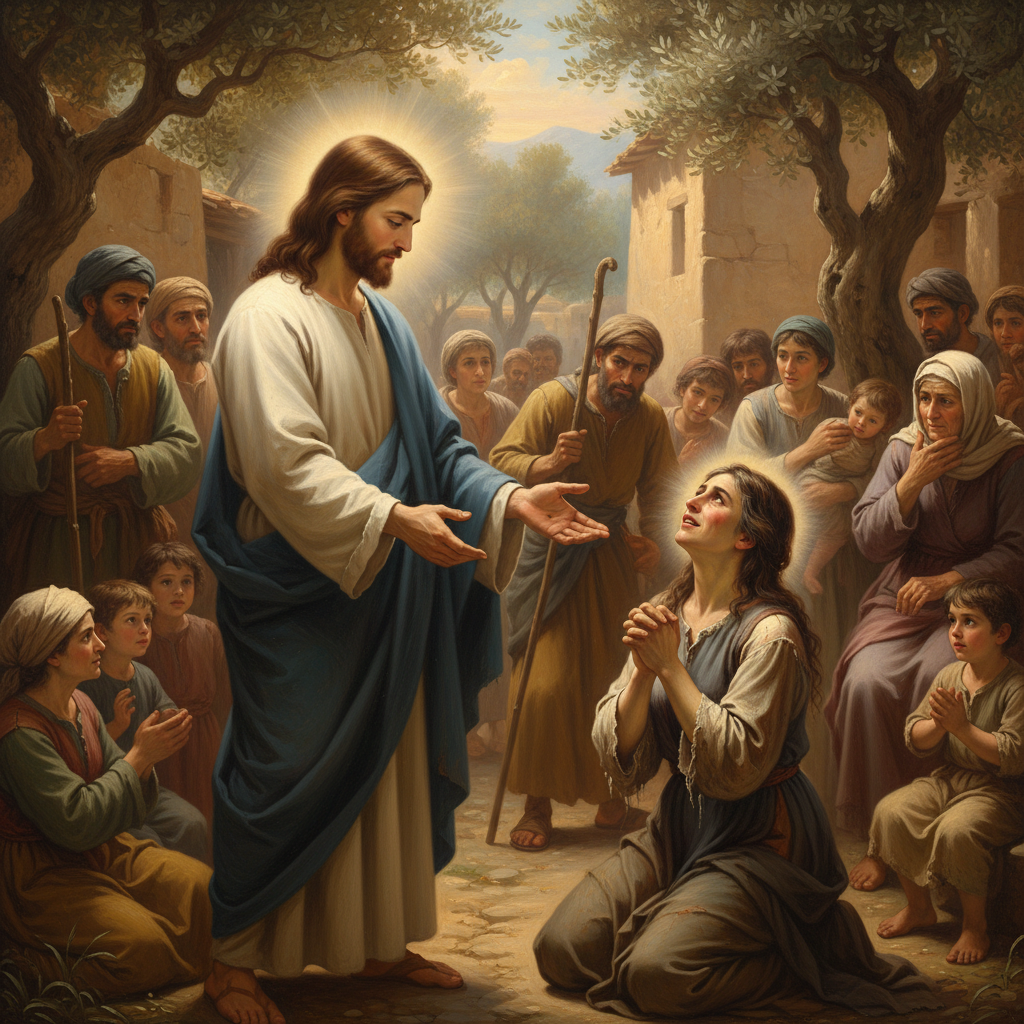
Power Over Nature: Calming the Storm and Walking on Water
Jesus Christ demonstrated His absolute sovereignty over creation through powerful displays. These events confirm His unique divine authority. They reveal that He is not merely a prophet, but God incarnate.
For instance, a fierce storm arose while Jesus and His disciples were crossing the Sea of Galilee. The disciples, who were experienced fishermen, became terrified, yet Jesus remained asleep in the boat. After they woke Him for help, He simply spoke to the wind and waves, commanding, “Peace! Be still!” Instantly, the storm ceased and a great calm settled over the water (Mark 4:35-41). The disciples marveled, asking, “Who then is this, that even the wind and the sea obey Him?” This miracle clearly shows His divine control.
In another powerful display, Jesus walked on water. After feeding the five thousand, He sent His disciples ahead in a boat. As they struggled against a strong headwind, Jesus approached them in the predawn hours, walking on the tumultuous sea. Peter stepped out of the boat in faith to join Him, and when that faith wavered, Jesus saved him. “Take courage; it is I. Do not be afraid,” He declared (Matthew 14:22-33). These acts of power over nature are undeniable signs of His deity, affirming that Jesus is the Creator, not merely a created being.
Power Over Sickness: Healing the Blind, Lame, and Leprous
Throughout His ministry, Jesus showed immense compassion and power by healing countless people. These were not mere tricks, but instant, complete, and verifiable miracles. His acts demonstrated His authority over all human affliction, and His touch brought wholeness.
Consider the lepers, who suffered from a devastating and incurable disease that resulted in social isolation. With just a word or a touch, Jesus healed many, not merely alleviating their symptoms but completely restoring them (Mark 1:40-42). This profound act of grace allowed them to return to their families and communities.
Jesus also restored sight to the blind, including a man who had been blind from birth—a feat impossible for any human (John 9:1-7). His power opened eyes that had never seen light. Similarly, He made the lame walk, telling a paralyzed man to pick up his mat and go home, which the man did immediately (Matthew 9:1-8). Witnessed by many, these healings served as undeniable proof that God was at work in Jesus. His power over sickness reveals both His loving heart and His divine authority over all physical limitations.
Power Over Demons: Casting Out Unclean Spirits
The Gospels consistently show Jesus confronting and conquering demonic forces. This power over evil spirits is a critical aspect of His divine authority, confirming His ultimate victory over the kingdom of darkness. In His time, demonic possession was a frightening reality that brought torment to many.
Jesus repeatedly cast out unclean spirits, who recognized Him immediately and cried out His true identity. For example, when Jesus encountered a man possessed by a legion of demons in the region of the Gerasenes, they identified Him as the “Son of the Most High God” (Mark 5:1-20). With a single command, Jesus expelled the demons into a herd of pigs. This event clearly demonstrated His absolute dominion over even the most powerful demonic entities.
Furthermore, these exorcisms signaled the arrival of God’s Kingdom (Matthew 12:28), as Jesus came to destroy the works of the devil (1 John 3:8). His absolute command over demons proves His divine power and confirms His role as our Rescuer and Victor, the sovereign Lord over all spiritual forces.
Power Over Death: Lazarus Raised from the Dead (John 11)
The most dramatic display of Jesus’ divine authority, before His own resurrection, was His power over death itself. The raising of Lazarus is a pivotal miracle that unequivocally proves His claim to be “the resurrection and the life” (John 11:25).
By the time Jesus arrived, Lazarus had been dead for four days and his body was decaying. Even his sister Martha acknowledged the human impossibility of the situation. Yet, Jesus had deliberately waited to come to Bethany, intending to perform a miracle that would bring ultimate glory to God. He stood at the tomb and called out, “Lazarus, come out!” (John 11:43). Immediately, Lazarus emerged, still wrapped in grave clothes. This was not a resuscitation; it was a full restoration to life.
This profound miracle deeply impacted all who witnessed it, causing many to believe in Him (John 11:45). It underscored His unique authority over life and death and pointed directly to His own impending victory over the grave. The power to summon a man back from death after four days affirms that Jesus is truly divine and solidifies His identity as the Son of God, who holds the keys of death and Hades [2].
The Passion of Jesus: The Final Week
Palm Sunday: The Triumphal Entry into Jerusalem
The final week of Jesus’ earthly ministry began on Palm Sunday with His triumphal entry into Jerusalem. By humbly riding on a donkey, He offered a powerful display of His Messianic identity, fulfilling the ancient prophecy of Zechariah 9:9.
Crowds gathered, spreading their cloaks and palm branches on the road. They shouted praises and proclaimed Him King: “Hosanna to the Son of David! Blessed is He who comes in the name of the Lord! Hosanna in the highest!” (Matthew 21:9). This joyful acclamation was a clear recognition of His divine authority and rightful claim as Israel’s long-awaited Messiah.
This joyous welcome, however, was filled with profound irony. Many in the same crowd that hailed Him as King would call for His crucifixion only days later. This stark contrast highlights Jesus’ unwavering commitment to His divine mission, despite the suffering He knew was to come.
Jesus Cleanses the Temple: My Father’s House
Shortly after His entry into Jerusalem, Jesus visited the Temple and found the sacred space transformed into a bustling marketplace. Merchants were selling animals for sacrifice while money-changers exchanged currency, often at exploitative rates. Jesus was angered by this blatant commercialism in a house of worship.
Ignited by zeal for God’s house, He overturned the tables of the money-changers and the seats of those selling doves. He declared, “It is written, ‘My house shall be called a house of prayer,’ but you have made it a ‘den of thieves'” (Matthew 21:13). This powerful act demonstrated His divine authority, underscoring His commitment to pure worship and challenging the corrupt religious leaders who profited from the commerce. By demanding reverence, Jesus highlighted His mission to restore true worship.
Jesus Cleanses the Temple: Delve into the meaning and significance of this powerful event. This biblical guide explains why Jesus cleansed the Temple and what it reveals about His divine authority and zeal for pure worship.
The Last Supper: Instituting the New Covenant
As Passover approached, Jesus gathered His disciples for a sacred meal known as the Last Supper. In this profound moment, He shared bread and wine, instituting the New Covenant that would be sealed by His death.
He took bread, broke it, and said, “This is My body which is given for you; do this in remembrance of Me” (Luke 22:19). He then took the cup, declaring, “This cup is the new covenant in My blood, which is shed for you” (Luke 22:20). This act transcended the Passover tradition, establishing a new way to commune with God. With these symbols, Jesus revealed that His coming sacrifice would atone for sins and create an eternal bond between God and humanity.
The Last Supper is more than a historical event; it is a foundational practice for Christians. Through the act of communion, believers remember Jesus’ ultimate sacrifice, anticipate His glorious return, and affirm His identity as Lord and Savior.
Prayer in the Garden of Gethsemane: ‘Not My Will, But Yours’
After the Last Supper, Jesus went to the Garden of Gethsemane with His closest disciples, seeking a place for solitude and prayer. Located on the Mount of Olives, this garden became the scene of intense spiritual agony where the “passion of Jesus”—His profound suffering—truly began. [3]
Describing his soul as “exceedingly sorrowful, even to death” (Matthew 26:38), Jesus prayed three times for the cup of suffering to be removed. Yet, His submission to God’s will remained unwavering as He pleaded, “Father, if it is Your will, take this cup away from Me; nevertheless not My will, but Yours, be done” (Luke 22:42). The Bible notes that an angel appeared to strengthen Him as He prayed (Luke 22:43).
While Jesus wrestled with the enormity of His impending sacrifice, His disciples slept. This poignant scene highlights both His solitary burden and His perfect obedience to the Father. The agony in Gethsemane reveals the depth of His love, as He willingly chose the path of suffering to secure humanity’s salvation. The garden has long been revered as a holy site and a place of pilgrimage for Christians. [4]
- What Happened in Gethsemane: Learn more about the profound spiritual battle Jesus endured in Gethsemane. This account explores His agonizing prayer and perfect submission to God’s will just before His arrest.
From the cheers on Palm Sunday to the anguish in Gethsemane, the events of this week reveal the identity and mission of Jesus Christ. They demonstrate His authority as King, His zeal for pure worship, and His sacrificial love as Savior. These moments, recorded in Scripture, form the cornerstone of Christian faith, showing a divine purpose unfolding even in the face of profound suffering.
The Crucifixion: The Ultimate Sacrifice
Betrayal, Arrest, and Unjust Trials
The journey to the cross began in the Garden of Gethsemane, a place of profound anguish and unwavering obedience. There, Jesus prayed, fully aware of the suffering that awaited Him (Matthew 26:36-46). Even in His deepest distress, He submitted to His Father’s will. This sacred moment was tragically interrupted by a kiss of betrayal from Judas Iscariot.
Judas, one of the twelve disciples, led a detachment of soldiers and officials to arrest Jesus (John 18:2-3). This act of treachery initiated the darkest hours of His life, as the Son of God was seized and bound.
What followed was a series of unjust and illegal trials. Jesus faced proceedings before several authorities:
- Annas: The former high priest questioned Jesus first (John 18:13).
- Caiaphas and the Sanhedrin: Meeting unlawfully at night, the Jewish high court condemned Jesus for blasphemy. They used false testimonies to seek grounds for His death (Matthew 26:57-68).
- Pontius Pilate: The Roman governor found no fault in Jesus, declaring, “I find no guilt in this man” (Luke 23:4). Yet, under pressure from the Jewish leaders and the crowd, Pilate sought to appease them.
- Herod Antipas: Pilate sent Jesus to Herod, who mocked Him before sending Him back (Luke 23:8-12).
Ultimately, Pilate succumbed to the crowd’s demands and washed his hands of the decision (Matthew 27:24). He released Barabbas, a notorious criminal, and sentenced Jesus to crucifixion. This entire process was a grave miscarriage of justice. Even so, it fulfilled prophecy, demonstrating Jesus’s willingness to endure every indignity for humanity’s redemption (Isaiah 53:7).
Jesus Carrying the Cross to Golgotha
After His condemnation, Jesus endured immense physical and emotional torment. He was brutally scourged by Roman soldiers, a horrifying flogging designed to weaken the victim severely before crucifixion (Matthew 27:26). Soldiers pressed a crown of thorns onto His head and draped a purple robe over Him, mocking Him as the “King of the Jews” (Matthew 27:28-29).
The journey to Golgotha, also known as Calvary, was arduous. Jesus was forced to carry His own cross—a heavy wooden beam—through the streets of Jerusalem (John 19:17). The weight, combined with the earlier torture, was immense.
As He struggled, the soldiers compelled a man named Simon of Cyrene to carry the cross for Him (Matthew 27:32). This moment underscores Jesus’s human vulnerability. Though physically weakened, the Son of God remained spiritually resolute in His purpose.
The procession arrived at Golgotha, which means “Place of a Skull” (Matthew 27:33). Here, He was stripped of His clothes and nailed to the cross, fulfilling ancient prophecies (Psalm 22:16). Two criminals were crucified alongside Him, one on His right and one on His left (Luke 23:33). This scene emphasized His humiliation, yet it was all part of God’s perfect plan for salvation.
The Seven Last Words of Jesus from the Cross
From the cross, amidst unimaginable pain and public shame, Jesus uttered seven profound statements. These “last words” offer deep insights into His character, mission, and the nature of His sacrifice. They reveal His compassion, His trust in God, and His ultimate victory over sin and death:
- “Father, forgive them, for they know not what they do.” (Luke 23:34)
- This reveals Jesus’s boundless mercy, even toward those who condemned and crucified Him.
- “Truly, I say to you, today you will be with me in Paradise.” (Luke 23:43)
- Spoken to the repentant thief, this affirms immediate salvation and hope for all who turn to Him.
- “Woman, behold, your son!” and “Behold, your mother!” (John 19:26-27)
- Jesus showed care for His earthly mother, Mary, entrusting her to the Apostle John.
- “My God, my God, why have you forsaken me?” (Matthew 27:46; Mark 15:34)
- This cry echoes Psalm 22:1. It expresses the agony of carrying the world’s sin and experiencing separation from the Father.
- “I thirst.” (John 19:28)
- A simple, human expression of physical suffering that fulfilled scripture (Psalm 69:21).
- “It is finished.” (John 19:30)
- This declaration marked the completion of His redemptive work on the cross. It was a cry of triumph, not of defeat.
- “Father, into your hands I commit my spirit!” (Luke 23:46)
- Jesus’s final act of trust, surrendering His life willingly to the Father.
It Is Finished: The Death of the Son of God (John 19:30)
Around the ninth hour, or 3 PM, darkness covered the whole land, signaling a momentous cosmic event (Matthew 27:45). Then, with a loud cry, Jesus declared, “It is finished!” (John 19:30). These were not words of resignation but of victorious completion. The Greek word, Tetelestai, means “paid in full.”
At that moment, Jesus yielded His spirit (Matthew 27:50). He died not as a victim, but as a sovereign Lord fulfilling His mission. His death was the ultimate sacrifice—the perfect atonement for the sins of humanity (Romans 5:8).
Powerful signs immediately accompanied His death:
- The Temple Veil Torn: The thick veil in the Jerusalem Temple, which separated the Holy Place from the Most Holy Place, was torn in two from top to bottom (Matthew 27:51). This symbolized that the way to God was now open for everyone through Jesus’s sacrifice. Humanity no longer needed a high priest to enter God’s presence, as Jesus Himself had become the access point (Hebrews 10:19-20).
- Earthquake and Resurrected Saints: The earth quaked, rocks were split, and graves were opened. Many holy people who had died were raised to life (Matthew 27:51-53). These miraculous events attested to Jesus’s divine power, even in death.
A Roman centurion who witnessed these events confessed, “Truly this was the Son of God!” (Matthew 27:54). His confession showed that even those overseeing the crucifixion were confronted with Jesus’s divine identity.
Joseph of Arimathea and Nicodemus then took Jesus’s body down from the cross and laid it in a new tomb (John 19:38-42). This temporary resting place would not hold Him for long. His death was not the end but a crucial step toward His glorious resurrection. The crucifixion stands as the ultimate proof of His sacrificial love. It confirmed His identity as the promised Messiah, Lord, and Savior, fulfilling a divine purpose for our eternal hope.
- What Happened on Good Friday?: Explore the profound events of Good Friday from a biblical perspective. This guide details Jesus’ unjust trials, His journey to the cross, and His ultimate sacrifice for our salvation.
The Resurrection: The Cornerstone of Faith

The Empty Tomb: He is Not Here, For He is Risen!
The story of Jesus’ resurrection begins not with His appearance, but with an astounding absence. After His crucifixion, Jesus’ body was honorably laid in a new, rock-cut tomb belonging to Joseph of Arimathea. This tomb was sealed with a massive stone and protected by Roman guards, who secured it to prevent any claims of a stolen body (Matthew 27:57-66).
However, early on the first day of the week, a miracle occurred. Mary Magdalene and other women arrived at the tomb, planning to anoint Jesus’ body with spices. To their astonishment, the heavy stone was rolled away, and the tomb was empty. This pivotal moment turned their grief and confusion into disbelief (Luke 24:1-3).
Inside the tomb, angels greeted them with the most profound news humanity has ever heard: “Why do you look for the living among the dead? He is not here; He has risen!” (Luke 24:5-6). This declaration is the core message of Christianity, transforming despair into an unshakeable hope.
Skeptics often ask, “Was the tomb of Jesus Christ ever found?” The biblical answer is clear: the true “finding” was in its emptiness. This wasn’t a lost jesus grave waiting to be discovered, but an empty space proclaiming that death had no power over the Son of God. The empty jesus tomb stands as the most powerful testament to His resurrection, proving He is truly Lord and Savior.
Biblical Proof of the Resurrection
The resurrection of Jesus Christ is more than a theological concept; it is a historical event deeply attested throughout Scripture. The Bible offers overwhelming evidence for this central truth, which confirms Jesus’ victory over sin and death.
- Old Testament Prophecies: Long before Jesus’ birth, prophets foretold His suffering, death, and resurrection. For example, Psalm 16:10 declares, “you will not abandon my soul to Sheol, or let your holy one see corruption.” This prophecy directly points to Jesus’ triumph over the grave.
- Jesus’ Own Predictions: Jesus repeatedly told His disciples that He would be killed and rise again on the third day (Matthew 16:21, Mark 9:31, Luke 18:31-33). These were not vague statements but specific prophecies that came to pass exactly as He foretold.
- Eyewitness Accounts: The New Testament provides numerous eyewitness accounts of the resurrected Jesus. These were not isolated sightings; many individuals and groups encountered Him.
- The Transformed Disciples: Before the resurrection, Jesus’ disciples were fearful and scattered. After encountering the risen Christ, they became bold, unwavering witnesses who preached the Gospel with power. Most suffered martyrdom for their conviction. This radical transformation cannot be explained by a stolen body or a hoax; it stems from a profound, life-changing encounter with their resurrected Lord.
While acclaimed films like “The Passion of the Christ” offer powerful cinematic representations of Jesus’ suffering, the ultimate authority and proof of His resurrection come from the inspired Word of God. The biblical narrative is not a fictional story but a faithful record of God’s redemptive plan, culminating in the glorious resurrection. This event confirms Jesus’ identity as the divine Son of God and the only way to eternal life (John 14:6).
Post-Resurrection Appearances and the Great Commission
While the empty tomb was compelling evidence, Jesus did more than leave an empty space—He appeared to many people. These post-resurrection appearances solidified the truth of His triumph over death, provided undeniable proof to His followers, and commissioned them for a global mission.
His appearances were varied and impactful:
- To Mary Magdalene: She was the first to see the risen Christ, and He brought her immense joy and conviction by calling her name (John 20:11-18).
- To the Women at the Tomb: As the women left to tell the disciples, Jesus met them with the greeting, “Greetings!” (Matthew 28:9-10).
- To Two Disciples on the Road to Emmaus: Jesus walked and talked with them, opening their understanding of the Scriptures before they finally recognized Him in the breaking of bread (Luke 24:13-35).
- To the Disciples in the Upper Room: Appearing to the disciples, He showed them His hands and side as physical proof of His identity. This led Thomas, who was initially skeptical, to declare, “My Lord and my God!” (John 20:19-29).
- To Over 500 Brethren: The Apostle Paul notes a single appearance to more than five hundred people (1 Corinthians 15:6). Since many of these witnesses were still alive when Paul wrote, his claims could be verified, making this a powerful and widespread testimony.
- To Peter and Other Disciples by the Sea of Galilee: He restored Peter and reaffirmed his calling (John 21:1-19).
Crucially, these were not mere spiritual visions but physical encounters. They transformed the disciples’ fear into courage and their doubt into unwavering faith, culminating in the ultimate directive for His followers: The Great Commission.
Before His ascension, Jesus gathered His disciples and gave them a monumental task: “All authority in heaven and on earth has been given to me. Go therefore and make disciples of all nations, baptizing them in the name of the Father and of the Son and of the Holy Spirit, teaching them to observe all that I have commanded you. And behold, I am with you always, to the end of the age” (Matthew 28:18-20).
Empowered by the resurrection, this command remains the Church’s guiding mission. His resurrection validates His authority, assures believers of His constant presence, and guarantees the ultimate victory of God’s Kingdom.
The resurrection of Jesus Christ is not a historical side note; it is the central event. It confirms His identity as the Son of God, validates His sacrifice for our sins, and secures our hope for eternal life. He is alive, and because He lives, we too can live in Him!
Was the tomb of Jesus ever found?
The Biblical Account of Joseph of Arimathea’s Tomb
The account of Jesus’ burial is crucial for understanding the truth of His resurrection. The Bible records that after the crucifixion, Jesus was laid in a new tomb belonging to Joseph of Arimathea, a wealthy and respected man.
Joseph, a secret disciple of Jesus, acted with reverence and courage. He boldly approached Pontius Pilate to request Jesus’ body for burial—a risky act that publicly associated him with a condemned criminal.
The tomb itself was significant. It was:
- New: No one had ever been buried in it before (Matthew 27:60).
- Hewn out of rock: This indicates a costly and secure burial place (Matthew 27:60; Mark 15:46).
- Close to Golgotha: Its proximity to the crucifixion site allowed for a swift burial before the Sabbath began (John 19:41-42).
After Jesus’ body was taken down from the cross, Joseph and Nicodemus prepared it for burial according to Jewish custom. They wrapped the body in linen cloths with spices and placed it in the rock-hewn tomb. Finally, a large stone was rolled against the entrance to seal it (Matthew 27:57-60; John 19:38-42).
This careful documentation by the Gospel writers confirms Jesus’ physical death and burial. It also sets the stage for the most astonishing event in history: the resurrection of the Lord Jesus Christ.
Why the Empty Tomb is the Greatest Proof of Christianity
For Christians, the question “Was the tomb of Jesus ever found?” has a profound answer: Yes, the tomb was found, and it was empty. The empty tomb is not a historical curiosity; it is the cornerstone of the Christian faith. Without the resurrection, our hope is lost.
The empty tomb provides undeniable evidence that Jesus Christ conquered death. Consider these powerful proofs:
- Eyewitness Accounts: On Sunday morning, women who went to anoint Jesus’ body found the stone rolled away and the tomb empty (Luke 24:1-3). Angels then proclaimed, “He is not here; he has risen!” (Matthew 28:5-6).
- The Grave Clothes: When Peter and John entered the tomb, they saw the linen cloths lying there but no body. The cloths were undisturbed, indicating an orderly departure, not a hasty robbery (John 20:6-7).
- No Opponent’s Body: Jesus’ enemies—the Jewish leaders and Roman authorities—were motivated to stop the spread of Christianity. They had every reason to produce a body if one existed, yet they could never present a corpse to refute the disciples’ claims.
- Post-Resurrection Appearances: Jesus appeared to His disciples many times over 40 days, proving He was alive. He ate with them, spoke with them, and invited them to touch His wounds (Luke 24:36-43; John 20:26-27). He also appeared to over 500 people at once (1 Corinthians 15:6).
As the Apostle Paul states, “If Christ has not been raised, your faith is futile and you are still in your sins” (1 Corinthians 15:17). The empty tomb affirms the truth of Jesus’ divinity and His victory over sin and death.
Refuting Skeptical Claims about Jesus’ Grave
Skeptics and critics sometimes search for “Jesus’ grave,” hoping to find His physical remains. However, Christians understand that finding His bones would disprove the very core of their faith, which rests on an empty tomb and a resurrected Savior.
Let’s address some common skeptical claims and offer biblical, faith-affirming responses:
- Claim 1: The “Swoon Theory”
- Skeptic’s Idea: Jesus didn’t truly die on the cross; He merely fainted or “swooned” and later revived in the tomb.
- Biblical Refutation: Roman crucifixion was expertly designed to ensure death. A soldier confirmed this by thrusting a spear into Jesus’ side, from which blood and water flowed, a sign of physical death (John 19:33-35). Moreover, Pilate verified Jesus’ death before releasing the body to Joseph (Mark 15:44-45).
- Claim 2: The “Stolen Body Theory”
- Skeptic’s Idea: The disciples stole Jesus’ body from the tomb to fake a resurrection.
- Biblical Refutation: The tomb was secured by a Roman guard and sealed with an official Roman seal, specifically to prevent this (Matthew 27:62-66). The disciples were fearful and in hiding, making such a daring act highly improbable. Their sudden transformation into bold witnesses only makes sense if they had truly seen the risen Christ.
- Claim 3: The “Wrong Tomb Theory”
- Skeptic’s Idea: The women and disciples simply went to the wrong tomb and found it empty.
- Biblical Refutation: This is unlikely for several reasons. Joseph of Arimathea was a prominent figure, so his tomb’s location would have been well known. The women had watched where Jesus was laid (Luke 23:55), and the Roman guards certainly knew which tomb they were assigned to protect.
- Claim 4: The “Hallucination Theory”
- Skeptic’s Idea: The disciples experienced mass hallucinations, imagining Jesus’ post-resurrection appearances.
- Biblical Refutation: Jesus appeared to many different individuals and groups, including over 500 people at once (1 Corinthians 15:6). He ate food, allowed people to touch Him, and taught for 40 days (Acts 1:3; John 20:27; Luke 24:41-43). Mass hallucinations of this nature, involving physical interaction and shared meals, are not a recognized psychological phenomenon.
The truth remains unwavering: the tomb of Jesus was found empty because Jesus Christ, the Son of God, rose from the dead. This miracle is the ultimate proof of His divine power, His victory over sin, and His promise of eternal life to all who believe in Him.
Frequently Asked Questions About the Life of Jesus
How would you characterize Jesus’ life and ministry?
The life and ministry of Jesus Christ are unparalleled, representing the ultimate demonstration of God’s love and justice for humanity. His journey on earth was a deliberate fulfillment of ancient prophecies that culminated in His sacrificial death and glorious resurrection. We can characterize His life and ministry through several key aspects:
- Divine Purpose: Jesus’s arrival was not by chance. As the Son of God, pre-existent with the Father, He was sent on a specific mission. He declared, “For the Son of Man came to seek and to save the lost” (Luke 19:10).
- Unwavering Obedience: From His humble birth to His final breath on the cross, Jesus lived a life of perfect obedience to God the Father. He consistently did the Father’s will (John 5:30).
- Transformative Teaching: Jesus’s words carried divine authority. His teachings, such as the Sermon on the Mount, redefined righteousness and revealed the heart of God’s Kingdom (Matthew 5-7). He spoke with power and clarity (Matthew 7:29).
- Compassionate Service: His ministry was marked by profound compassion for the suffering, the marginalized, and the broken. He healed the sick, fed the hungry, and offered hope to the hopeless, teaching that true greatness is found in service (Matthew 20:25-26).
- Miraculous Power: Jesus performed countless miracles that demonstrated His authority over nature, sickness, demons, and even death. These were not simple illusions; they were signs pointing to His divine identity as the Messiah (John 20:30-31).
- Ultimate Sacrifice: The pinnacle of His ministry was His death on the cross, a substitutionary sacrifice for the sins of the world. This single act of atonement provided the only way for humanity to be reconciled to God (Romans 5:8).
- Triumphant Resurrection: His life did not end in the tomb. Jesus rose from the dead, conquering sin and death and offering eternal life to all who believe in Him. The resurrection is the cornerstone of the Christian faith (1 Corinthians 15:3-4).
In essence, Jesus’ life and ministry were a perfect blend of divine power, sacrificial love, profound truth, and redemptive purpose. He is the Way, the Truth, and the Life (John 14:6).
What are the 5 moral lessons from the life of Jesus?
The life of Jesus Christ offers an unparalleled blueprint for moral living. His actions and teachings provide timeless wisdom for how to live with integrity and love. Here are five profound moral lessons from His example:
- Love God and Neighbor: Jesus taught that the greatest commandments are to love God with all your heart, soul, mind, and strength, and to love your neighbor as yourself (Matthew 22:37-39). This foundational love should guide all our actions and relationships.
- Practice Radical Forgiveness: Jesus not only taught forgiveness but embodied it. He forgave those who crucified Him (Luke 23:34) and instructed His followers to forgive relentlessly (Matthew 18:21-22). This lesson calls us to release bitterness and extend grace to others.
- Embrace Humility and Service: Despite His divine nature, Jesus consistently demonstrated humility. He washed His disciples’ feet, setting a powerful example of selfless service (John 13:14-15). True greatness, He taught, is found in serving others, not in being served (Mark 10:45).
- Prioritize Righteousness Over Worldly Gain: Jesus challenged His followers to seek first the Kingdom of God and His righteousness (Matthew 6:33). He warned against making wealth and earthly possessions a priority, emphasizing eternal spiritual treasures instead (Matthew 6:19-21).
- Live Sacrificially for Others: Jesus’ entire life was a testament to self-sacrifice, culminating in His death on the cross. He taught, “Greater love has no one than this: to lay down one’s life for one’s friends” (John 15:13). This encourages us to put the needs of others before our own.
These lessons are not merely abstract ideals but are calls to action. They have the power to transform our lives and reflect the character of Christ.
Where is Jesus’s tomb today?
This is a foundational question in Christianity. The simple yet profound answer is that Jesus’s tomb is empty today. It is empty because He is not there—He rose from the dead. The search for Jesus’s body, therefore, misses the central point of the biblical accounts.
The biblical narrative is clear and consistent on this point:
- The Burial: After His crucifixion, Jesus’s body was placed in a new tomb belonging to Joseph of Arimathea. The tomb was carved out of rock and sealed with a large stone (Matthew 27:57-60).
- The Guard: At the request of the religious leaders, Roman soldiers were stationed to guard the tomb. This was to prevent the disciples from stealing the body and falsely claiming a resurrection (Matthew 27:62-66).
- The Empty Tomb: On the first day of the week, women who came to the tomb found the stone rolled away and the tomb empty (Matthew 28:1-6). Angels then announced that Jesus had risen. “He is not here; He has risen, just as He said” (Matthew 28:6).
- Eyewitness Accounts: The resurrected Jesus appeared to over 500 people, providing overwhelming evidence that His body was no longer in the tomb (1 Corinthians 15:5-7).
Therefore, any claim of finding Jesus’s remains contradicts the core truth of the Gospel. The empty tomb is not a historical mystery to be solved; it is the ultimate proof of Jesus’s divinity. It confirms His victory over sin and death and offers the hope of eternal life to all believers. Christian faith rests on the fact that the tomb is empty, proclaiming His glorious resurrection.
Is Passion of the Christ biblically accurate?
Mel Gibson’s 2004 film, “The Passion of the Christ,” is a powerful and intensely visual portrayal of the final hours of Jesus’ life. The film largely adheres to the biblical narrative but, like most historical dramas, also incorporates extra-biblical traditions and artistic liberties for dramatic effect.
Here’s a breakdown of its accuracy:
- Biblical Foundation: The film draws heavily from the four Gospels (Matthew, Mark, Luke, and John) for its core events. These include Jesus’ arrest in Gethsemane, His trials before the Sanhedrin and Pilate, the scourging, the carrying of the cross, the crucifixion, and the resurrection.
- Depiction of Suffering: The movie is known for its unflinching and brutal depiction of Jesus’ physical suffering. While difficult to watch, this approach aims to convey the immense pain and sacrifice described in scripture (e.g., Isaiah 53:5).
- Extra-Biblical Elements: Some scenes and details are not explicitly found in the Bible. Instead, they are drawn from historical traditions, private revelations, or artistic interpretation. Examples include specific interactions between Mary and Jesus as He carried the cross, the visible torments of Satan, and some of the dialogue. These additions enhance the narrative but should be viewed as supplemental to the biblical text.
- Garden of Gethsemane: The film’s portrayal of Jesus’ agony in the garden, including His spiritual battle against Satan, effectively captures the intense struggle described in the Gospels (Luke 22:42-44). This scene vividly illustrates the spiritual and emotional weight Jesus carried.
While “The Passion of the Christ” aims for accuracy, it remains a cinematic interpretation. Its main purpose is to evoke emotion and communicate the profound sacrifice of Jesus. As such, it is a powerful artistic rendition of the biblical events. However, for a complete and authoritative understanding of Jesus’ passion, the Holy Bible remains the sole, infallible source. Viewers should always cross-reference any cinematic depiction with the inspired Word of God.
Regarding sequels, the Bible itself provides the ultimate continuation of the story: the glorious resurrection, the ascension into heaven, and the promise of His return. While filmmakers may explore these events, the biblical account is the definitive conclusion to Jesus’s earthly ministry and the beginning of His reign as Lord.