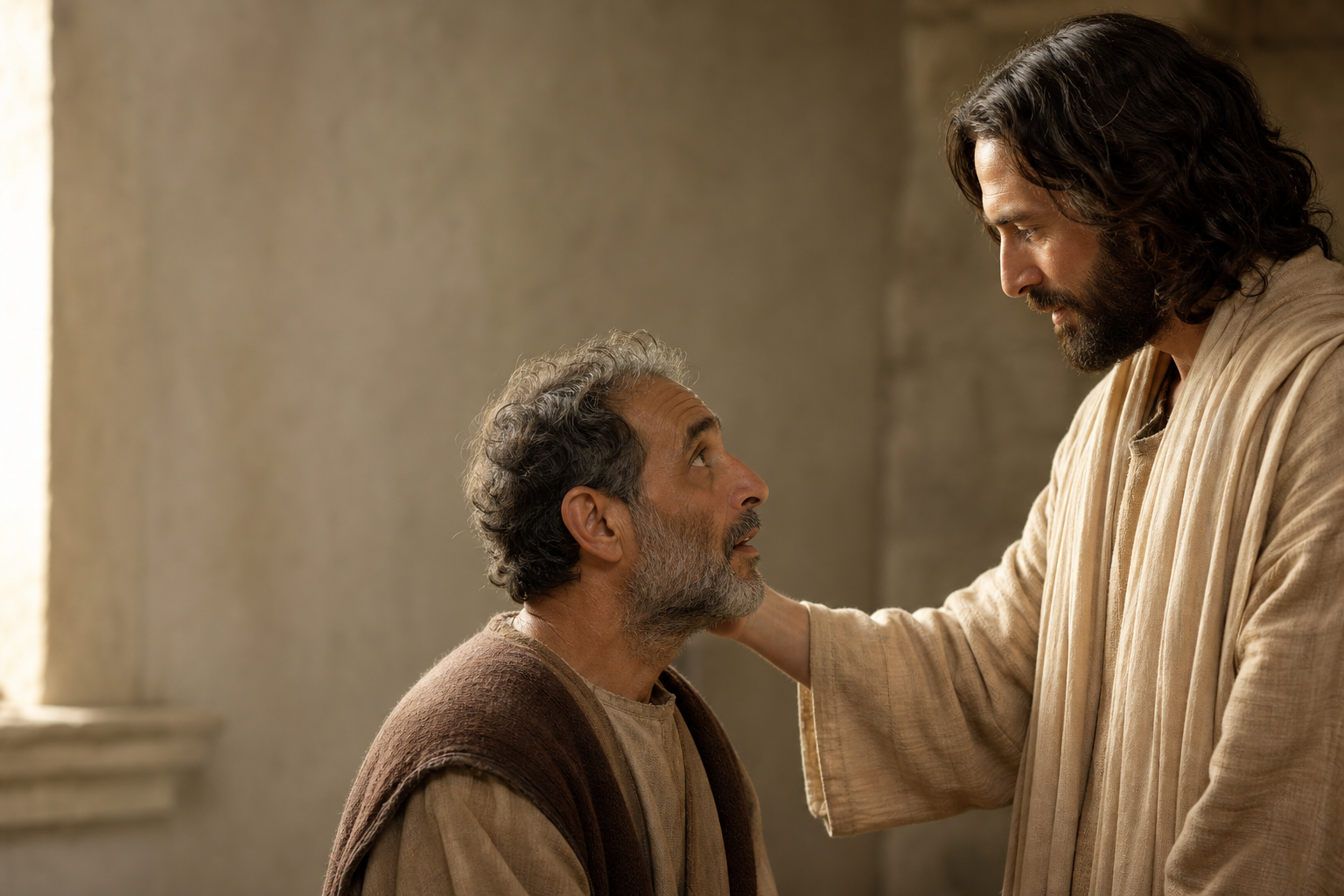
John 9:1–12 recounts Jesus healing a man who had been blind from birth, revealing that human suffering is not always the result of personal sin and that God’s works can be displayed through difficult circumstances. Jesus declares Himself to be the Light of the world and demonstrates His divine authority through this miraculous healing, pointing to His greater mission of saving sinners through His death and resurrection.
John 9:1–12 records one of Jesus’ most compassionate and revealing miracles: the healing of a man who had been blind from birth. When the disciples asked whether the man’s suffering was caused by his own sin or his parents’ sin, Jesus redirected their attention from speculation to God’s gracious work. He declared, “I am the light of the world” (John 9:5), showing that He came not only to restore physical sight but also to bring the light of salvation into a world darkened by sin.
This passage reveals Jesus Christ as the divine Son of God, sovereign over suffering, sickness, and darkness. Through the man’s simple obedience at the pool of Siloam, Jesus displayed His authority to heal and transform, while the man’s testimony began to point others toward the One who had changed his life. In this commentary on john 9 1 12, we will examine the meaning of the miracle, its lessons for Christian faith, and its significance for preaching—always looking to the Bible’s clear witness that Jesus died for our sins, rose again, and is the true Light and Savior of the world.
What Is the Meaning of John 9:1–12?

The Disciples’ Question About Suffering and Sin
John 9:1–12 begins as Jesus and His disciples encounter a man who had been blind from birth. The disciples ask, “Rabbi, who sinned, this man or his parents, that he was born blind?” (John 9:2, ESV).
Their question reflects a common assumption: suffering must always be the direct result of someone’s personal sin. Scripture does teach that sin brought brokenness and death into the world (Romans 5:12). However, the Bible does not teach that every specific hardship results from a particular sin committed by the suffering person or their parents.
Jesus rejects their mistaken conclusion. He answers, “It was not that this man sinned, or his parents” (John 9:3). Christ does not deny the reality of sin. Instead, He corrects the disciples’ attempt to explain this man’s condition through blame alone.
This passage offers comfort and caution:
- Comfort: Personal suffering does not prove that God has rejected someone.
- Caution: We should not accuse people when we do not know God’s purposes.
- Hope: Jesus can meet people in their deepest suffering and reveal His mercy.
Although pain remains grievous in this fallen world, it is never beyond Christ’s knowledge or power. The Lord sees the suffering person with compassion. He also works according to His wise and holy purpose.
Jesus Reveals God’s Works Through the Man’s Condition
Jesus continues, “but that the works of God might be displayed in him” (John 9:3). This does not mean the man’s blindness was good in itself. Rather, Jesus declares that God can bring glory, mercy, and redemption into circumstances marked by suffering.
Jesus then heals the man. The miracle displays more than compassion, though it certainly reveals His tender compassion. It also reveals Christ’s divine authority. Jesus performs the works of God because He is the Son of God. As He said earlier, the Son does the works of the Father (John 5:19).
John 9:1–12 therefore points beyond physical healing. It shows that Jesus enters human misery and brings restoration. His power reaches areas that human strength cannot repair. The man could not give himself sight, but Jesus acted with authority and grace.
Believers should therefore trust God without pretending to understand every reason for suffering. The Lord may not explain every circumstance immediately. However, He remains faithful, and He is able to use even painful situations to display His glory.
Jesus, the Light of the World
Before healing the man, Jesus says, “I am the light of the world” (John 9:5). This statement reveals His identity. Jesus is not merely a teacher who offers helpful guidance. He is the divine Savior who brings light into a world darkened by sin and death.
The man’s physical blindness becomes a visible picture of humanity’s spiritual need. Apart from Christ, people remain unable to see God rightly or save themselves. Jesus alone gives true sight and leads sinners into the truth. As John 8:12 declares, “Whoever follows me will not walk in darkness, but will have the light of life.”
Therefore, the meaning of John 9:1–12 centers on Jesus. He corrects false assumptions about suffering, reveals God’s works, and demonstrates that He is the Light of the world. His healing points to the greater salvation He accomplishes through His death and resurrection. Jesus Christ is the Son of God, Lord over darkness, and the only Savior who gives eternal life (John 3:16; John 14:6).
How Does Jesus Heal the Man Born Blind in John 9:1–12?

The Man’s Obedience to Jesus’ Command
After explaining that God’s works would be revealed, Jesus acted with compassion and authority. He spat on the ground, made mud with the saliva, and placed it on the man’s eyes (John 9:6). Then Jesus gave a clear command: “Go, wash in the pool of Siloam” (John 9:7).
The man did not argue with Jesus. He did not demand an explanation. Instead, he obeyed. John records, “So he went and washed and came back seeing” (John 9:7). His obedience did not earn the miracle. Rather, it demonstrated trust in the One who commanded him.
This moment also reveals Jesus’ authority. He was not merely offering advice or encouraging the man. Jesus gave a command that brought healing. The man responded with practical faith. He heard the word of Christ, acted upon it, and experienced His restoring power.
- Jesus spoke with authority. His command required a response.
- The man obeyed without delay. He trusted Jesus before seeing the result.
- The healing followed Christ’s command. Jesus alone deserves the glory.
Christians today should likewise respond to Jesus with humble obedience. Faith is not empty agreement. It receives Christ’s word and follows Him. As Jesus said, “If you love me, you will keep my commandments” (John 14:15).
The Miracle at the Pool of Siloam
The pool of Siloam became the place where the man obeyed Jesus’ instruction. The name “Siloam” means “Sent,” and John draws attention to this detail (John 9:7). The man went where Jesus sent him, washed, and returned with sight.
This was a genuine and complete miracle. The man had been blind from birth, yet he could now see. Jesus did not merely improve his condition. He restored what he had never possessed. The miracle displayed God’s creative power through the Son.
John 9:1–12 therefore presents Jesus as more than a teacher or prophet. He is the divine Son who brings light where darkness has prevailed. His works reveal the glory of God because He shares the Father’s authority and power. Later in the Gospel, Jesus declares, “I am the light of the world” (John 9:5).
The physical healing also points to a deeper spiritual truth. Sin has darkened humanity’s understanding, but Jesus gives true light and life. His saving work reaches its fullness through His death and resurrection. As Scripture says, “In him was life, and the life was the light of men” (John 1:4).
The Neighbors’ Response to the Healing
The man’s neighbors were astonished by what they saw. Some recognized him as the beggar who had previously sat and asked for help. Others were uncertain and said, “It is he.” Still others said, “No, but he looks like him” (John 9:8–9).
The change was so remarkable that people struggled to understand it. However, the healed man clearly identified himself: “I am the man” (John 9:9). His testimony was simple and personal. He did not yet explain everything about Jesus, but he could testify to what Christ had done.
When the neighbors asked how his eyes were opened, he answered by describing Jesus’ action and command (John 9:10–11). His witness centered on Christ. He did not take credit for the healing. Instead, he pointed others toward Jesus.
The neighbors then asked, “Where is he?” The man replied, “I do not know” (John 9:12). Although his understanding was still developing, his life had already been changed by the Lord. In the same way, believers can faithfully testify to Jesus while continuing to grow in knowledge. The essential truth remains clear: Jesus Christ is the Son of God, the Light of the world, and the Savior who brings sinners from darkness into life.
What Does John 9:1–12 Teach Christians Today?

Suffering Is Not Always a Direct Punishment for Personal Sin
In John 9:1–12, the disciples assumed the man’s blindness must have resulted from someone’s sin. Jesus corrected their assumption: “Neither hath this man sinned, nor his parents: but that the works of God should be made manifest in him” (John 9:3, KJV).
Jesus did not deny that sin brings suffering into the world. Scripture teaches that sin entered human experience through the fall (Romans 5:12). However, He rejected the idea that every hardship identifies a specific personal sin. Therefore, Christians should respond to suffering with humility rather than quick judgment.
- Do not assume the sufferer is being punished. We rarely know the full purpose behind another person’s trial.
- Show compassion before offering explanations. Jesus noticed the man and acted with mercy.
- Look for God’s work in difficult circumstances. The Lord can display His grace, strength, and faithfulness through suffering.
- Remember God’s future promise. In Christ, suffering will not have the final word (Revelation 21:4).
This truth does not make suffering insignificant. Instead, it directs our attention away from blame and toward the compassionate Lord. Jesus does not treat broken people as theological problems. He meets them with mercy and brings hope.
Jesus Has Divine Authority to Bring Light and Restoration
Jesus declared, “As long as I am in the world, I am the light of the world” (John 9:5). This statement reveals more than His ability to heal physical blindness. Jesus is the divine Savior who brings truth, holiness, hope, and eternal life to those in darkness.
The miracle in John 9:1–12 confirms His authority. The man had been blind from birth, yet Jesus restored his sight. This was not merely an encouraging act. It was a sign pointing to Christ’s divine identity and saving mission.
Jesus’ power reaches every part of human need:
- He brings truth to those confused by spiritual darkness.
- He brings forgiveness to those burdened by sin.
- He brings hope to those overwhelmed by suffering.
- He brings new life to those who trust in Him.
Physical healing is a gift, but the greater need is spiritual sight. A person may see the world clearly and still remain separated from God. Jesus came to save sinners through His death and resurrection. As He said, “I am the light of the world: he that followeth me shall not walk in darkness, but shall have the light of life” (John 8:12, KJV).
Faith Responds to Jesus with Obedience and Testimony
The healed man obeyed Jesus’ command to wash in the pool of Siloam. He did not understand everything about Jesus, yet he followed the instruction he received. As a result, he returned seeing (John 9:7).
This response teaches Christians that faith is not merely agreement with religious facts. Genuine faith trusts Christ and acts upon His word. Obedience does not earn salvation. Rather, it demonstrates a heart that believes the Lord is trustworthy.
The man also gave a simple testimony. When his neighbors questioned him, he answered, “I was blind, but now I see” (John 9:25). His testimony centered on what Jesus had done.
Christians today can follow this pattern:
- Listen to Jesus through Scripture. The Bible is God’s authoritative Word and reveals the truth about Christ.
- Obey what He commands. Trust grows as believers walk faithfully with Him.
- Speak honestly about His work. Share how Jesus brings forgiveness, transformation, and hope.
- Keep Jesus at the center. The goal is not to display ourselves, but to point others to the Savior.
John 9:1–12 therefore calls believers to reject careless judgment, trust Jesus’ restoring authority, and testify boldly. He is not merely a teacher or miracle worker. Jesus is the Son of God, the Light of the world, who died for our sins, rose again, and gives eternal life to everyone who believes in Him (John 3:16; 1 Corinthians 15:3–4).
How Can John 9:1–12 Be Used as a Sermon?
Sermon Theme: Jesus Is the Light of the World
John 9:1–12 provides a powerful sermon theme: Jesus is the Light of the world. Jesus declares, “As long as I am in the world, I am the light of the world” (John 9:5, KJV). He does more than restore physical sight. He reveals God’s power, mercy, and truth through His works.
Therefore, this passage points beyond the man’s eyes. It points to Jesus Christ, the Son of God, who brings light to people living in spiritual darkness. Sin blinds the human heart, but Christ opens our eyes to God’s glory and salvation. As Jesus says elsewhere, “I am the light of the world: he that followeth me shall not walk in darkness, but shall have the light of life” (John 8:12).
A sermon based on John 9:1–12 can emphasize these truths:
- Jesus sees people in their suffering. He noticed the man others may have overlooked.
- Jesus works according to God’s purposes. The man’s condition became an occasion for God’s works to be revealed (John 9:3).
- Jesus has authority to restore. His actions demonstrate divine compassion and power.
- Jesus calls people out of darkness. His light leads to spiritual understanding and faith.
Sermon Outline: From Blindness to Restored Sight
A clear sermon outline can follow the movement of the passage. The man begins in darkness, encounters Jesus, obeys His command, and returns with sight. This progression gives the congregation a memorable picture of God’s saving work.
-
Blindness: Humanity’s Need
The man had been blind from birth (John 9:1). His condition reminds us that people need more than physical help. Every person needs the saving light of Christ. Scripture teaches that “all have sinned, and come short of the glory of God” (Romans 3:23, KJV).
-
Compassion: Jesus Sees the Sufferer
Jesus did not treat the man as a theological puzzle or a burden. He saw him as a person. A sermon can encourage believers to look at suffering with compassion instead of quick judgment. Christ remains full of mercy toward the broken and needy.
-
Action: Jesus Reveals God’s Works
Jesus said, “I must work the works of him that sent me” (John 9:4, KJV). His healing ministry revealed the Father’s work and confirmed His divine authority. The miracle was not a performance. It was a sign pointing to Jesus’ identity.
-
Obedience: The Man Goes to Siloam
Jesus commanded the man to wash in the pool of Siloam. The man went, washed, and returned seeing (John 9:7). His obedience did not earn salvation. Instead, it demonstrated trust in Jesus’ word. Faith listens to Christ and responds to Him.
-
Testimony: The Healed Man Speaks
The neighbors asked what had happened. The man answered simply, “I was blind, but now I see” (John 9:11, KJV). His testimony offers a useful model for Christian witness. We can plainly tell others what Jesus has done.
This outline also helps a preacher connect the miracle to the Gospel. Jesus came not only to heal bodies but to save sinners. He gave His life on the cross, rose again, and offers forgiveness and eternal life to all who believe in Him (John 3:16; 1 Corinthians 15:3–4).
A Call to Trust and Obey Christ
John 9:1–12 should lead to a personal response. Jesus gave the man a command, and the man obeyed. Likewise, hearers are called to trust Christ rather than rely on human wisdom, religious effort, or personal goodness.
A sermon application may invite the congregation to consider the following questions:
- Am I trusting Jesus as the true Light of the world?
- Have I allowed suffering to produce bitterness, or am I seeking God’s purposes in it?
- Is Jesus calling me to obey Him in a specific area?
- Can I clearly testify to what Christ has done in my life?
- Am I helping others see the mercy and truth of Jesus?
Obedience does not mean that Christians understand every circumstance. The man did not receive a full explanation before he obeyed. However, he trusted the One who spoke. In the same way, believers can follow Christ even when the path is difficult or unclear.
The sermon should finally point listeners to Jesus Himself. He is not merely a teacher, healer, or example. He is the divine Son of God, the Light who entered our darkness. Through His death and resurrection, He provides salvation for everyone who believes. Therefore, the right response to John 9:1–12 is to trust Jesus, obey His Word, and boldly proclaim His grace.
How Does John 9:13–34 Continue the Account?
The Pharisees Investigate the Healing
After the man received his sight, his neighbors brought him to the Pharisees (John 9:13). The religious leaders questioned him because Jesus had healed him on the Sabbath. Their concern focused on the day of the miracle rather than the mercy and power Jesus had displayed.
Some Pharisees claimed, “This man is not of God, because he keepeth not the sabbath” (John 9:16, KJV). Others wondered how a sinful man could perform such signs. Their division reveals an important truth: the miracle was undeniable, but their hearts resisted its meaning.
John’s account shows that Jesus did not break God’s law. Instead, He confronted human traditions that had obscured God’s compassion. Jesus is Lord of the Sabbath (Mark 2:28). Therefore, restoring a suffering man displayed the holy purpose of God’s law.
The Healed Man Gives Witness to Jesus’ Work
The healed man answered the investigation with simple honesty. He did not claim to understand every detail about Jesus. However, he clearly testified to what had happened:
“One thing I know, that, whereas I was blind, now I see” (John 9:25, KJV).
When the Pharisees pressed him again, he explained that Jesus had opened his eyes. His testimony became increasingly bold. He reasoned that God does not ordinarily hear those who live in rebellion, yet God had clearly worked through Jesus (John 9:30–33).
The man’s witness offers a helpful pattern for Christians. We should speak truthfully about Christ’s work, even when others reject it.
- State what Scripture reveals: Jesus is the Son of God and the Savior of sinners.
- Testify to His grace: Christ brings spiritual light and new life.
- Remain faithful under pressure: Opposition does not make the Gospel less true.
The man’s physical sight was only the beginning. As the chapter continues, Jesus leads him toward a deeper understanding of His identity.
The Conflict Over Jesus’ Identity and Authority
The Pharisees were unwilling to accept the evidence before them. They questioned the man repeatedly and even summoned his parents. His parents confirmed that he was their son and had been born blind. However, they feared being put out of the synagogue, so they directed the leaders back to their son (John 9:18–23).
This investigation could not erase the miracle. The man had been blind from birth, and now he could see. Nevertheless, the Pharisees rejected Jesus because they had already decided against Him. Their response illustrates the danger of valuing human approval above God’s truth.
When the healed man defended Jesus, the Pharisees insulted him and expelled him from their community (John 9:34). Yet rejection by religious authorities did not mean rejection by God. Jesus later found him and revealed Himself as the Son of Man (John 9:35–37).
The man then believed and worshiped Jesus (John 9:38). This is the true climax of the account. Jesus is not merely a miracle worker or a teacher. He is the divine Son who deserves faith and worship. The Pharisees claimed to see, but their unbelief exposed their spiritual blindness (John 9:39–41).
John 9:13–34 therefore moves the account from physical healing to spiritual conflict. Jesus brings light, but His authority also reveals the condition of every heart. He is the Son of God who came to save sinners. His mission reaches its fullness through His sacrificial death and victorious resurrection. As Scripture declares, “God so loved the world, that he gave his only begotten Son” (John 3:16, KJV).
Frequently Asked Questions
What is the meaning of John 9:1–12?
John 9:1–12 reveals Jesus as the compassionate Son of God and the Light of the world. He meets a man who had been blind from birth and rejects the assumption that the man’s suffering was automatically caused by personal sin.
Instead, Jesus says that God’s works would be displayed through this situation (John 9:3). He then heals the man, showing His authority over physical blindness and human suffering. The passage teaches several important truths:
- Suffering is not always a direct punishment for a specific sin.
- Jesus brings light, mercy, and restoration.
- God can work through painful circumstances.
- Faith responds to Jesus with obedience.
- A genuine encounter with Christ leads to personal testimony.
Therefore, John 9:1–12 is more than a healing story. It points to Jesus’ divine identity and His mission to bring salvation. Physical sight was restored, but the larger Gospel message points toward spiritual sight through faith in Christ.
What is the meaning of John 9:1-12?
The meaning of John 9:1–12 centers on Jesus’ power to reveal God’s glory through compassionate healing. Jesus uses the man’s blindness to correct false assumptions and demonstrate that He is the Light of the world (John 9:5).
The man also provides an example of simple obedience. Jesus told him to wash in the pool of Siloam, and he went, washed, and returned seeing (John 9:7). His healing followed his response to Christ’s command.
Furthermore, the passage challenges believers to trust Jesus when they do not understand every circumstance. It does not explain every reason for suffering. However, it clearly shows that Jesus is sovereign, compassionate, and able to bring restoration.
The neighbors’ questions also highlight the public nature of Christ’s miracle. They knew the man as a blind beggar. After Jesus healed him, they could not deny the dramatic change. His testimony was simple: “I was blind, and now I see” (John 9:25). [1]
What does John 9:1-12 NIV say?
John 9:1–12 in the New International Version records Jesus’ encounter with the man born blind. The NIV presents the passage in clear, contemporary English while preserving its central message.
In summary, the NIV says that:
- Jesus saw a man who had been blind from birth.
- The disciples asked whether the man or his parents had sinned.
- Jesus answered that neither explanation should be assumed.
- Jesus declared that He was the Light of the world.
- He made mud, placed it on the man’s eyes, and told him to wash.
- The man obeyed and returned with sight.
- His neighbors questioned whether he was the same man.
One memorable NIV statement is Jesus’ declaration: “I am the light of the world” (John 9:5, NIV). This statement reaches beyond the physical miracle. Jesus gives spiritual light and leads sinners out of darkness. His saving work is confirmed by His death and resurrection, through which He offers forgiveness and eternal life.
For the complete NIV wording, read John 9:1–12 in an authorized Bible edition. [2]
What does John 9:1-12 KJV say?
John 9:1–12 in the King James Version describes Jesus healing a man who had been blind from birth. The KJV uses traditional wording and includes Jesus’ well-known declaration, “I am the light of the world” (John 9:5, KJV).
The passage records that Jesus:
- Passed by and saw the man who had been blind from birth.
- Corrected the disciples’ mistaken question about the cause of his blindness.
- Made clay with saliva and anointed the man’s eyes.
- Commanded him to wash in the pool of Siloam.
- Gave him sight when he obeyed.
The KJV emphasizes the man’s transformed condition with the words, “I was blind, but now I see” (John 9:25). Although that statement appears later in the chapter, it summarizes the miracle’s impact. Jesus truly healed him, and the man became a witness to Christ’s power.
Read the complete passage in the King James Version for its full wording and context. [3]
What is a John 9:1-12 sermon outline?
A sermon from John 9:1–12 can focus on this theme: Jesus is the Light of the world who brings healing and calls us to obedient faith.
-
The problem: a man living in darkness
Jesus encounters a man blind from birth. His condition reminds us that human suffering is real and that people need Christ’s mercy.
-
The correction: suffering is not always personal punishment
Jesus rejects the disciples’ assumption that the man’s blindness must have resulted from his own sin or his parents’ sin.
-
The revelation: Jesus is the Light of the world
Jesus does not merely discuss darkness. He enters the situation and reveals God’s work through His words and actions.
-
The response: obedience to Christ’s command
The man washes at Siloam because Jesus tells him to go. His obedience demonstrates trust before he receives the result.
-
The evidence: a changed life
The neighbors recognize that something remarkable has happened. The healed man’s life becomes visible evidence of Jesus’ power.
-
The application: walk in the light
Believers should trust Jesus, obey His Word, and testify to His grace. Christ is not merely a teacher. He is the divine Son of God and the Savior of the world.
A sermon conclusion may invite listeners to bring their spiritual blindness to Jesus. He alone gives true light and salvation. As John 3:16 teaches, whoever believes in Him receives eternal life. Jesus Christ died for sinners, rose again, and reigns as Lord. Therefore, John 9:1–12 calls every person to trust, obey, and testify about the Savior.