Jehu was a king of Israel in the Bible, anointed by a prophet under Elisha’s direction to destroy the house of Ahab and end Baal worship. While he obeyed God in carrying out judgment on Ahab’s family, he failed to fully follow the Lord, continuing the sins of Jeroboam, and his dynasty was eventually cut short as a consequence.
Few figures in Scripture carry a story as complex, as dramatic, and as soberingly instructive as Jehu in the Bible. Born into a nation spiraling deeper into idolatry, Jehu was thrust onto the center stage of Israel’s history not by ambition but by divine appointment—anointed by a prophet to fulfill a mission of justice that would reshape the entire kingdom. His story is one of bold obedience and tragic compromise, of fiery zeal for God that still fell short of wholehearted devotion. For the believer seeking to understand how God works through imperfect people, Jehu’s life holds profound lessons that deserve careful, prayerful attention.
<p>In this article, we will walk through the full arc of Jehu’s life from Scripture—his family background, the prophetic anointing that set him apart, his rise to kingship, his remarkable victories over the worship of Baal, and his ultimate failure to follow the Lord with an undivided heart. Along the way, we will examine the difficult question of whether Jehu was a good or bad king, why it was Elisha rather than Elijah who anointed him, and how God rewarded and judged him for both his obedience and his disobedience. Most importantly, we will see how Jehu’s story points us forward to the only King whose justice is perfect and whose heart is wholly devoted to the Father—our Lord Jesus Christ. Let us open the pages of God’s Word and discover what Jehu in the Bible has to teach us about justice, judgment, and the unwavering faithfulness of our God.</p>
Who Was Jehu in the Bible?
Photorealistic, professional photography style. A reverent, softly lit scene of an ancient Israelite warrior on horseback, wearing historically accurate bronze armor and a flowing cloak, riding through a sun-drenched desert landscape with rocky terrain and distant mountains. The figure has a determined, solemn expression, conveying divine purpose. Warm golden-hour lighting, shallow depth of field, cinematic composition. High-quality stock photo style, editorial religious publication aesthetic.
Jehu’s Background and Family Line
When we ask, “Who was Jehu in the Bible?” we discover a man whose life was shaped by God’s sovereign plan for Israel. Jehu was not born into royalty. He came from a military family in the northern kingdom of Israel. His father was Jehoshaphat, and his grandfather was Nimshi (2 Kings 9:2). Some scholars believe Nimshi may have been a notable figure, which gave Jehu a position of influence even before God called him to a greater purpose.
Jehu served as a military commander under King Ahab and later under Ahab’s sons, Ahaziah and Joram. He was a man of action. He was known for his speed and intensity, which the prophet Elisha’s messenger noted when he observed that Jehu drove his chariot “furiously” (2 Kings 9:20). This characteristic would define much of his reign as king.
Understanding Jehu’s background helps us see that God often chooses unlikely instruments for His purposes. Jehu was not a priest or a prophet. He was a soldier. Yet God used him to carry out a critical judgment against the wicked house of Ahab. This reminds us that the Lord works through ordinary people to accomplish His extraordinary plans.
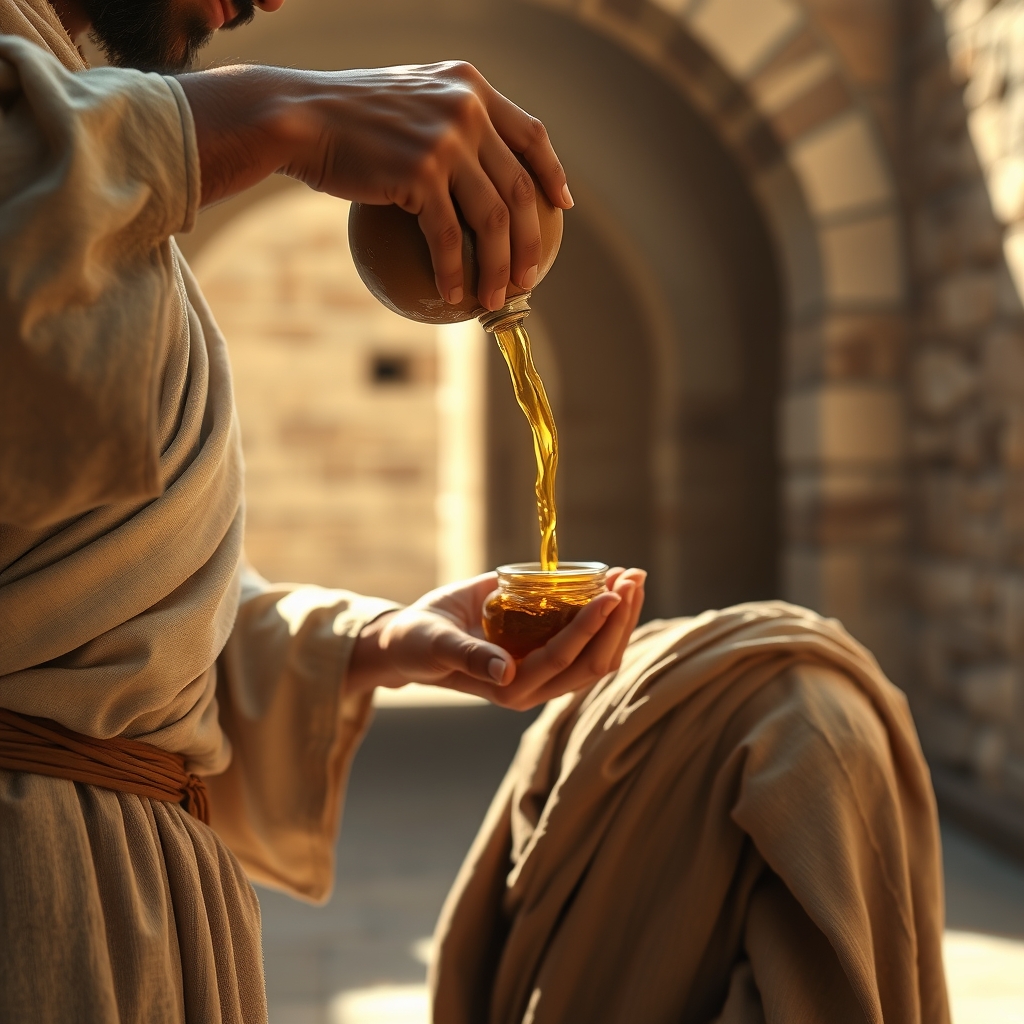
However, the task of anointing Jehu as king did not fall directly to Elijah. Instead, God instructed Elijah to anoint Jehu as part of a three-fold commission (1 Kings 19:15-17). Elijah fulfilled this commission through his successor, Elisha. Elisha sent one of the sons of the prophets to Ramoth-gilead, where Jehu was stationed with the army. The prophet took a flask of oil, poured it on Jehu’s head, and delivered God’s message:
“Thus says the Lord God of Israel: ‘I have anointed you king over the people of the Lord, over Israel. You shall strike down the house of Ahab your master, that I may avenge the blood of My servants the prophets, and the blood of all the servants of the Lord, at the hand of Jezebel.'” — 2 Kings 9:6-7 (NKJV)
This anointing was not merely a political appointment. It was a divine commission. God was raising up Jehu as an instrument of His justice. The prophet then fled, and Jehu’s fellow officers initially questioned what had happened. When Jehu told them, they immediately spread their garments before him and blew the trumpet, proclaiming him king (2 Kings 9:11-13).
The anointing of Jehu teaches us several important truths:
God’s justice may be delayed, but it is never abandoned. Years passed between God’s pronouncement against Ahab and its fulfillment through Jehu.
God uses human agents to accomplish His will. Jehu was the instrument, but the authority and the judgment belonged to the Lord.
As we study Jehu’s story, we are reminded that God is always at work behind the scenes of history. He is faithful to His Word, and He will bring about His purposes in His perfect timing. This truth points us forward to the ultimate fulfillment of God’s justice in Jesus Christ, who came not to condemn the world but to save it (John 3:17), while also assuring us that every wrong will ultimately be made right at His return.
Who Anointed Jehu in the Bible?
Photorealistic, professional photography style. A close-up of a young prophet’s hands gently pouring golden olive oil from a clay flask onto another man’s head in a quiet, sunlit stone courtyard. Both figures wear simple, historically accurate linen garments. Soft natural light filters through an archway. The moment is intimate, sacred, and reverent. Warm tones, shallow depth of field, editorial religious magazine photography style.
`html
Elijah’s Role and Elisha’s Fulfillment
The story of who anointed jehu in the bible begins with the great prophet Elijah. God first gave Elijah a specific mission. He was to anoint Jehu as king over Israel. This command is recorded in 1 Kings 19:16. There, the Lord told Elijah to anoint Jehu the son of Nimshi to be king.
However, Elijah did not complete this task himself. Instead, he passed the responsibility to his successor, Elisha. This shows us an important truth about God’s work. God’s plans are never dependent on one person alone. He raises up faithful servants to carry out His purposes across generations.
Elisha understood the importance of this mission. He knew the time had come to fulfill God’s word. So, he sent one of the sons of the prophets to Ramoth-Gilead. This young prophet carried out the actual anointing of Jehu. The account is found in 2 Kings 9:1-6.
Here is how the anointing took place:
Elisha instructed the young prophet to take a flask of oil.
He was to find Jehu among his fellow officers.
He was to lead Jehu into a private room.
He was to pour the oil on Jehu’s head.
He was to declare God’s message of judgment.
He was to flee immediately afterward.
The young prophet obeyed every instruction. He poured the oil on Jehu’s head and spoke the words of the Lord. He declared that God had anointed Jehu king over Israel. Then he ran away, just as Elisha had commanded. This dramatic moment changed the course of Israel’s history.
The Significance of Jehu’s Anointing
The anointing of Jehu was far more than a political event. It was a divine appointment with eternal significance. God chose Jehu to execute judgment on the house of Ahab. Ahab and his wife Jezebel had led Israel into terrible sin. They promoted the worship of Baal and persecuted the prophets of the Lord.
God’s justice demanded a response. Through the prophet Elijah, God pronounced judgment on Ahab’s family. Now, through Jehu, that judgment would be carried out. This reminds us that God is patient, but He will not tolerate sin forever. As Ecclesiastes 8:11 tells us, because the sentence against an evil deed is not executed speedily, the hearts of people are fully set to do evil.
Furthermore, Jehu’s anointing reveals God’s sovereignty over human history. God raises up leaders according to His purposes. He uses imperfect people to accomplish His perfect will. Jehu was not a perfect man. Yet God used him to fulfill a specific mission. This should give us great confidence. The same God who directed Jehu’s steps directs our lives today.
We also see in this story a beautiful picture of God’s faithfulness. God had spoken through Elijah years before. Now, through Elisha, that word came to pass. God always keeps His promises. As Numbers 23:19 reminds us, God is not a man, that He should lie. He has said it, and He will do it.
Most importantly, Jehu’s story points us forward to Jesus Christ. Jehu was an imperfect king who carried out partial justice. But Jesus is the perfect King who brings complete justice and mercy. Jesus was anointed by God Himself at His baptism. The Holy Spirit descended on Him like a dove. God the Father declared, “This is My beloved Son, in whom I am well pleased” (Matthew 3:17).
The anointing of Jehu reminds us that God is always at work. He judges sin. He keeps His promises. And He has provided a perfect Savior in Jesus Christ. We can trust Him completely with our lives and our future.
`
What Did God Do to Jehu?
God’s Commission to Destroy Ahab’s House
When we study Jehu in the Bible, we discover a remarkable story of divine justice. God raised up Jehu to carry out a solemn judgment against the house of Ahab. This was not a random act of violence. It was a carefully ordained mission from the Lord Himself.
King Ahab and his wife Jezebel had led Israel into terrible sin. They promoted the worship of Baal throughout the land. They persecuted the prophets of the Lord. They even murdered Naboth to steal his vineyard. Because of these sins, God pronounced judgment through the prophet Elijah. First Kings 21:21–24 records God’s word against Ahab’s household. The judgment was severe and specific.
Years later, God chose Jehu to fulfill this prophecy. The Lord sent a prophet from the school of Elisha to anoint Jehu as king over Israel. Second Kings 9:6–10 records the moment. The young prophet declared God’s message with clarity and urgency. He told Jehu that the Lord had chosen him to cut off the house of Ahab. Every male descendant would face judgment. This was God’s righteous response to generations of wickedness.
Jehu responded with boldness. He executed God’s commission with determination. He killed King Joram, who was Ahab’s son. He killed King Ahaziah of Judah, who was connected to Ahab’s line. He confronted Jezebel and she was thrown from a window, just as Elijah had prophesied. Jehu also had the seventy sons of Ahab put to death in Samaria. Furthermore, he destroyed all of Ahab’s remaining officials and close associates.
In addition to this, Jehu went further. He tricked all the worshippers of Baal into gathering in one place. Then he had them all killed and turned the temple of Baal into a ruin. Second Kings 10:28 states that Jehu destroyed Baal worship from Israel. This was a significant act of obedience to God’s command.
However, we must understand something important. God’s commission to Jehu was specific. He was called to destroy Ahab’s house and end Baal worship. He was not given unlimited authority to act on his own ambitions. This distinction matters greatly when we examine what happened next in Jehu’s life.
God’s Reward and Judgment on Jehu
God is perfectly just. He rewards faithfulness and He addresses disobedience. Jehu’s story shows us both sides of God’s character. On one hand, God honored Jehu’s obedience. On the other hand, God held Jehu accountable for his failures.
God’s Reward for Jehu’s Obedience
Second Kings 10:30 records a beautiful promise from the Lord. God said to Jehu, “Because you have done well in carrying out what is right in my eyes, and have done to the house of Ahab according to all that was in my heart, your sons of the fourth generation shall sit on the throne of Israel.” This was a remarkable blessing. God extended Jehu’s dynasty for four generations. That was longer than most dynasties in the northern kingdom of Israel lasted.
This reward teaches us an important truth. God sees and honors obedience. When Jehu carried out God’s specific commands, the Lord blessed him. Jehu’s descendants who sat on the throne included:
Jehoahaz — Jehu’s son who reigned after him
Jehoash (Joash) — Jehu’s grandson
Jeroboam II — Jehu’s great-grandson, under whom Israel experienced great prosperity
Zechariah — Jehu’s great-great-grandson, the last of his line to rule
God kept His word exactly as He promised. This shows us that the Lord is faithful to His covenants. When we obey God, He blesses us in ways we may not even expect.
God’s Judgment on Jehu’s Disobedience
Despite God’s reward, Jehu’s story also carries a sobering warning. God did not overlook Jehu’s failures. Second Kings 10:29 makes a critical statement. It says Jehu did not turn away from the sins of Jeroboam. Jeroboam had set up golden calves in Dan and Bethel. This led all of Israel into idolatry. Jehu had the power to remove these idols. Yet he chose not to do so.
Why did Jehu keep the golden calves? Most likely for political reasons. The golden calves were tied to Israel’s identity as a separate kingdom from Judah. Removing them might have weakened his hold on power. Jehu valued his throne more than he valued complete obedience to God. This is a tragic choice that many leaders have made throughout history.
Because of this, God pronounced judgment on Jehu’s kingdom. Second Kings 10:32 says, “In those days the Lord began to cut off parts of Israel.” The nation lost territory to Hazael, king of Syria. God allowed Israel’s borders to shrink as a consequence of Jehu’s half-hearted obedience.
Furthermore, the prophet Hosea later spoke God’s word about this judgment. Hosea 1:4 says, “I will punish the house of Jehu for the blood of Jezreel.” This does not mean God regretted using Jehu. Rather, it means Jehu went beyond God’s commission. He likely used God’s mission as a cover for his own political ambitions and violence. God sees the heart. He knows when obedience is genuine and when it is self-serving.
What This Teaches Us About God’s Justice
The story of Jehu reveals profound truths about our God. He is a God of perfect justice. He rewards faithfulness and He addresses sin. He does not show favoritism. He holds everyone accountable, including those He has blessed.
Consider these key lessons from Jehu’s story:
God’s justice is patient but certain. Ahab’s judgment took years to unfold. Yet it came exactly as God declared.
Partial obedience is still disobedience. Jehu did much that was right. Yet his failure to remove the golden calves brought God’s discipline.
God examines the motives of the heart. Jehu may have used God’s mission to advance his own power. God saw through this.
God’s rewards are faithful. Even with Jehu’s failures, God kept His promise of four generations on the throne.
Ultimately, Jehu’s story points us forward to a greater King. No human leader can perfectly carry out God’s justice. Every king, every prophet, every person falls short. This is why we need Jesus Christ. He is the only One who perfectly obeyed the Father in every way. Hebrews 4:15 tells us that Jesus was tempted in every way, yet without sin. Where Jehu failed, Jesus succeeded completely.
Jesus came not to destroy the wicked with the sword, but to save sinners with His own blood. Romans 5:8 says, “God demonstrates His own love toward us, in that while we were still sinners, Christ died for us.” The justice that fell on Ahab’s house through Jehu is the same justice that fell on Jesus at the cross. But there, it fell on our behalf. Jesus took the punishment we deserved so that we could receive the blessing we could never earn.
If you have never placed your faith in Jesus Christ, today is the day. He is the perfect King that Jehu could never be. He offers forgiveness, eternal life, and a relationship with the living God. As John 3:16 promises, “For God so loved the world that He gave His only begotten Son, that whoever believes in Him should not perish but have everlasting life.” Turn to Jesus today and find the salvation that no earthly king can provide.
Was Jehu a Good or Bad King?
Jehu’s Obedience in Destroying Baal Worship
When we study Jehu in the Bible, we are struck immediately by the boldness of his actions. Jehu did something that many other kings before him had failed to do. He utterly destroyed the worship of Baal in Israel.
God had commanded the removal of idolatry from His people. Jehu took this command seriously. He executed Ahab’s descendants. Furthermore, he eliminated Jezebel, who had led Israel deep into sin. In addition, he gathered all the prophets and worshippers of Baal and destroyed them, purging the land of this great evil (2 Kings 10:18-28).
Because of this obedience, God spoke directly to Jehu. He said:
“Because you have done well in carrying out what is right in my eyes, and have done to the house of Ahab according to all that was in my heart, your sons of the fourth generation shall sit on the throne of Israel.” (2 Kings 10:30)
Let us not overlook the significance of this moment. God rewarded Jehu’s actions. He promised Jehu that his descendants would rule for four generations. This was no small blessing. It demonstrated that God honors a heart willing to act against sin, even when the cost is high.
Jehu’s obedience teaches us several important truths:
God takes idolatry seriously. We cannot serve God and the world at the same time (Matthew 6:24).
God blesses decisive action against sin. Half-hearted obedience is not true obedience.
God keeps His promises. He honored Jehu with a lasting dynasty because of his faithfulness in this task.
There is no denying it. Jehu accomplished something great for God’s kingdom. He tore down what was evil. He stood firmly on the side of righteousness.
Jehu’s Failure to Follow God Wholeheartedly
Here, however, we face a difficult truth about Jehu in the Bible. Although he destroyed the worship of Baal, he did not turn his own heart fully to God. This is a critical distinction we must understand.
God evaluates us not only by what we tear down but also by what we build up. Jehu tore down the altar of Baal, yet he left standing the golden calves that Jeroboam had set up in Bethel and Dan (2 Kings 10:29). These golden calves had led Israel away from the true worship of God for generations (1 Kings 12:28-30).
As a result of this failure, God sent the prophet Hosea to deliver a sharp and sobering message:
“Yet the Lord said to Jehu, ‘Because you have done well in carrying out what is right in my eyes and have done to the house of Ahab according to all that was in my heart, your sons of the fourth generation shall sit on the throne of Israel.’ But Jehu was not careful to walk in the law of the Lord, the God of Israel, with all his heart. He did not turn from the sins of Jeroboam, which he made Israel to sin.” (2 Kings 10:31)
This passage is profoundly instructive. Jehu obeyed God partially. He did exactly what he was commanded in one area. However, he refused to abandon the religious compromises that benefited him politically and personally.
We must ask ourselves: what does partial obedience look like?
It looks like serving God on our own terms rather than His.
It looks like destroying one sin while clinging to another.
It looks like performing outward acts of righteousness while harboring inward compromise.
Jehu’s story warns us that God sees the whole heart. Our Lord Jesus Christ echoed this truth when He said:
“These people honor me with their lips, but their hearts are far from me.” (Matthew 15:8)
From Jehu’s example we learn that tearing down the wrong things is not enough. We must also build up what is right. We must follow God completely, not selectively. Partial obedience is, in God’s eyes, disobedience. Only wholehearted devotion to Him will satisfy His righteous standard — a standard that we can only fully meet through faith in Jesus Christ, the perfect King who obeyed God completely on our behalf.
Why Did Jehu Not Follow God?
The Sin of Jeroboam’s Golden Calves
Jehu was anointed by God to carry out judgment on the house of Ahab. He obeyed God in destroying the worship of Baal from Israel. However, Jehu failed to remove the golden calves at Bethel and Dan. These were set up centuries earlier by King Jeroboam I to prevent Israel from worshiping in Jerusalem (1 Kings 12:28-29). This was a direct violation of God’s command to worship Him alone.
God specifically commended Jehu for executing judgment on Ahab’s house (2 Kings 10:30). Yet the very next verse reveals Jehu’s critical failure. Scripture says, “But Jehu was not careful to keep the law of the LORD, the God of Israel, with all his heart. He did not turn away from the sins of Jeroboam, which he had caused Israel to commit” (2 Kings 10:31, NIV). Jehu removed Baal worship but kept the golden calves. He was selective in his obedience.
This was not a minor oversight. The golden calves represented a counterfeit system of worship. They led the entire nation of Israel into idolatry for generations. By leaving them in place, Jehu preserved a false foundation for Israel’s faith. He prioritized political stability over wholehearted devotion to God.
Half-Hearted Obedience and Its Consequences
Jehu’s story is a sobering reminder that partial obedience is still disobedience. He did what was convenient and politically advantageous. He removed the threat of Baal worship, which had been promoted by Jezebel and Ahab. But he kept the golden calves, which gave the people a familiar and comfortable form of worship. He wanted to please God without fully surrendering to God’s ways.
As a result, God’s blessing on Jehu’s dynasty was limited. God promised that Jehu’s descendants would sit on the throne of Israel to the fourth generation (2 Kings 10:30). This was a reward, but it was also a measured one. Unlike the eternal covenant God made with David (2 Samuel 7:16), Jehu’s line would eventually end. His half-heartedness had lasting consequences for his family and his nation.
Furthermore, God raised up Hazael of Aram to afflict Israel during Jehu’s reign (2 Kings 10:32). The territory of Israel was reduced. This was a direct result of Jehu’s failure to fully follow the Lord. When we compromise in our obedience, we open the door to loss and hardship.
Consider the lessons from Jehu’s half-heartedness:
God desires complete obedience. He does not accept selective compliance with His Word (Deuteronomy 6:5).
Idolatry takes many forms. It is not only bowing to statues. It is anything we place above God in our hearts (Colossians 3:5).
Compromise has consequences. Even when we accomplish great things for God, compromise limits His full blessing in our lives (James 4:17).
Political or personal gain is never worth disobedience. Jehu kept the golden calves to secure his throne. In the end, it cost him and his descendants dearly.
Jehu’s story challenges every believer to examine their own heart. Are there areas of our lives where we obey God partially? Are there golden calves we have refused to tear down? True faith in Jesus Christ calls us to surrender completely. As Jesus said, “If anyone would come after me, he must deny himself and take up his cross and follow me” (Matthew 16:24, NIV).
Unlike Jehu, we have been given the Holy Spirit to empower us to walk in full obedience (Ezekiel 36:27). We do not have to rely on our own strength. Through Christ, we can tear down every idol and follow the Lord with all our heart, soul, and mind. Let Jehu’s example serve as both a warning and an encouragement to pursue wholehearted devotion to our Savior, Jesus Christ.
Why Did Elijah Not Anoint Jehu?
God’s Timing and Prophetic Succession
When we study Jehu in the Bible, one question often arises: why did Elijah receive the command to anoint Jehu, yet never actually carry it out? The answer lies in God’s perfect timing and His plan for prophetic succession.
God first gave this instruction to Elijah in 1 Kings 19:15–17. The Lord told Elijah to anoint Hazael as king over Syria, Jehu as king over Israel, and Elisha as prophet in his own place. However, Scripture records that Elijah only directly anointed Elisha. The other two anointings were left for the next generation of prophetic ministry.
This was not an oversight. It was part of God’s sovereign design. Consider the following:
God works across generations. He does not limit His plans to one person’s lifetime. What Elijah began, Elisha would complete.
Prophetic succession was essential. Elijah’s mantle passing to Elisha ensured God’s word continued without interruption.
God’s timing is always perfect. Jehu was not yet ready to receive his commission. The circumstances in Israel had to align first.
Elijah’s primary mission was to confront the idolatry of his own day. He stood against Ahab and Jezebel during a critical moment in Israel’s history. His bold stand on Mount Carmel, recorded in 1 Kings 18, demonstrated God’s power over Baal. Yet the full judgment on Ahab’s house would come later, through a different instrument.
Furthermore, God often assigns different tasks to different servants. Elijah was a prophet of fire and confrontation. Elisha, on the other hand, would operate during a season of political transition. As a result, the anointing of Jehu fit more naturally within Elisha’s ministry.
Elijah’s Mission vs. Elisha’s Mission
Understanding the distinct missions of Elijah and Elisha helps clarify why Elijah did not anoint Jehu. Each prophet served God during a unique period and with a specific purpose.
Elijah’s mission was primarily one of confrontation and restoration. He called Israel to choose between the Lord and Baal. His ministry was marked by dramatic miracles, such as calling fire from heaven and raising the dead. He was a voice crying out against the corruption of his generation.
Elisha’s mission, however, involved guiding the political and military leaders of Israel. He worked closely with kings and commanders. This made Elisha the right person to anoint Jehu, who was a military captain at the time.
In 2 Kings 9:1–3, we see Elisha send one of the sons of the prophets to Ramoth-Gilead. There, the young prophet anoints Jehu privately and delivers God’s message of judgment against Ahab’s house. This moment fulfilled what God had spoken to Elijah years earlier.
Several key differences between their missions stand out:
Elijah confronted kings publicly; Elisha worked behind the scenes with individuals.
Elijah’s ministry focused on spiritual revival; Elisha’s included political guidance.
Elijah prepared the way; Elisha executed the next phase of God’s plan.
In addition, Elijah’s departure from earth in a chariot of fire, described in 2 Kings 2:11, marked a clear transition. Elisha picked up Elijah’s mantle and continued the work. The anointing of Jehu was part of that continuing work.
Ultimately, this teaches us an important truth: God’s purposes never depend on one person alone. He raises up servants for every generation. What one begins, another completes. This pattern points us forward to Jesus Christ, who fulfilled every promise God had ever made. As 2 Corinthians 1:20 declares, “For all the promises of God in Him are Yes, and in Him Amen, to the glory of God through us.”
Just as God’s plan for Jehu unfolded through both Elijah and Elisha, His plan of salvation unfolded through the entire Old Testament and reached its fulfillment in Jesus. Every prophet, every king, and every anointing pointed toward the coming of our Lord and Savior, who reigns forever as the perfect King.
What Happened to Jehu in the Bible?
Jehu’s Reign Over Israel
Jehu established a dynasty in the northern kingdom.
His reign lasted for twenty-eight years [1]. This period marked a significant turning point in Israel’s history. God used Jehu to execute judgment upon the house of Ahab.
However, his legacy remains complex.
Jehu demonstrated zeal for God’s law.
He eradicated Baal worship from the land completely [1].
Yet, he failed to follow God wholeheartedly.
Here are the key aspects of his rule:
Justice Executed: Jehu destroyed the Baal prophets and idols.
Partial Obedience: He did not remove the golden calves.
Hungry for Praise: He acted with pride during his anointing.
Sixty-Year Legacy: His line ruled for four generations.
His heart was not fully devoted to the Lord.
He continued the sins of Jeroboam the son of Nebat.
These were the golden calves in Bethel and Dan.
This idolatry was a test for their faithfulness [1].
Consequently, God promised his kingdom would not last forever.
Although he was an instrument of God’s justice, he remained a sinner.
Jehu in the Bible: How Did He Die?
Jehu passed away at the end of his earthly journey.
He rested with his ancestors in Samaria [1].
His son, Jehoahaz, succeeded him as the king of Israel.
This succession continued the line established by Jehu.
However, the spiritual condition of the nation did not improve instantly.
The following table summarizes the events of his death and succession:
Event
Scripture Reference
Detail
Death Location
2 Kings 10:35
He died in Samaria and was buried there.
Successor
2 Kings 10:36
Hoshaiah (Jehoahaz) son of Jehu became king.
Legacy
2 Kings 10:30
God granted him descendants to the fourth generation.
Furthermore, we see God’s faithfulness in this story.
God kept His promise regarding the house of Ahab.
Jehu fulfilled the prophecy delivered by Elisha.
Yet, his story highlights the need for a perfect King.
Human leaders often fail to uphold God’s law completely.
We need a Savior who offers complete righteousness.
Ultimately, Jehu’s history points us to Jesus Christ.
He is the only King who perfectly obeys the Father.
He is the only Son who brings eternal life [1].
We trust in Him for our salvation and justice.
Lessons for Us Today
We can learn much from this account of Jehu.
First, God is holy and requires perfect obedience.
Second, God can use imperfect people to accomplish His purposes.
However, He expects our whole hearts, not just outward actions.
Third, we must wait for the true King to arrive.
Jesus Christ fulfills all the justice and mercy we need.
His reign never ends, unlike human dynasties.
We find our hope in His eternal kingdom [1].
Jehu in the Bible: Which Book?
Key Passages in 2 Kings
The primary account of jehu in the bible is found in the book of 2 Kings. This historical book records the reigns of the kings of Israel and Judah. Jehu’s story spans several chapters and provides a detailed look at his rise to power and his reign as king.
Here are the key chapters in 2 Kings that cover Jehu’s life and actions:
2 Kings 9:1-13 — The anointing of Jehu by a prophet sent by Elisha.
2 Kings 9:14-37 — Jehu’s violent overthrow of King Joram, King Ahaziah, and Queen Jezebel.
2 Kings 10:1-17 — The execution of Ahab’s seventy sons and the destruction of Baal worshipers.
2 Kings 10:18-36 — Jehu’s summary of reign, including his failures and God’s response.
These chapters together form the most complete narrative of Jehu’s life. They show both his obedience to God’s command and his failure to walk fully in God’s ways. The account is sobering. It reminds us that partial obedience is still disobedience in God’s eyes.
Furthermore, 2 Kings 10:30 records God’s direct assessment of Jehu’s actions. The Lord said to Jehu, “Because you have done well in carrying out what is right in my eyes, and have done to the house of Ahab according to all that was in my heart, your sons of the fourth generation shall sit on the throne of Israel” (ESV). This verse shows that God honors obedience, even when it is imperfect. Yet it also sets the stage for the consequences that would follow Jehu’s incomplete faithfulness.
Cross-References in 1 Kings and Hosea
While 2 Kings contains the main narrative, other books of the Bible also reference Jehu. These cross-references help us understand the broader context of his story and God’s sovereign plan throughout Israel’s history.
Here are the key cross-references to consider:
1 Kings 19:15-17 — God commands Elijah to anoint Jehu as king over Israel. This passage shows that Jehu’s rise to power was part of God’s plan long before it happened.
Hosea 1:4-5 — The prophet Hosea records God’s future judgment on the house of Jehu for the bloodshed at Jezreel. This shows that God holds leaders accountable for violence done outside His command.
In 1 Kings 19, God speaks to Elijah on Mount Horeb. He gives Elijah three tasks. One of those tasks is to anoint Jehu as king. This moment is significant. It reveals that God’s justice was already in motion, even during the darkest days of Ahab and Jezebel’s reign. God was preparing a deliverer for His people.
However, Hosea 1:4 adds a sobering dimension to Jehu’s story. God says, “I will punish the house of Jehu for the blood of Jezreel, and I will put an end to the kingdom of the house of Israel” (ESV). This prophecy was fulfilled when the Assyrians conquered Israel in 722 BC. [2]. It reminds us that God’s justice is both merciful and exacting. He used Jehu to accomplish His purposes. Yet He also held Jehu accountable for going beyond what God had commanded.
As we study these passages together, we see a consistent theme. God is sovereign over all human history. He raises up leaders and brings them down according to His perfect will. Jehu’s story is not just an ancient tale. It is a window into the heart of God, who is both just and merciful.
Ultimately, every story in Scripture points us forward to Jesus Christ. Jehu was an imperfect king who carried out God’s judgment but failed to follow God wholeheartedly. In contrast, Jesus is the perfect King who always does the will of the Father. As Hebrews 1:3 tells us, Jesus is “the radiance of the glory of God and the exact imprint of his nature.” When we look at Jehu’s story, we are reminded of our need for a Savior who is faithful in every way. Jesus is that Savior, and His kingdom will never end.
How to Pronounce Jehu in the Bible
The name Jehu is pronounced “JEE-hoo” in English. The first syllable rhymes with “see.” The second syllable sounds like “who.” It is a two-syllable name with the emphasis placed on the first syllable.
Understanding how to pronounce biblical names correctly can enrich your study of God’s Word. When we read about figures like Jehu in the Bible, saying their names with confidence helps us engage more deeply with the scriptures.
The Origin of the Name Jehu
The name Jehu comes from the Hebrew name Yehu (יֵהוּא). It is derived from a shortened form of the name Yahweh, the covenant name of God. In fact, the name Jehu essentially means “He is Yahweh” or “Yahweh is He.”[3]
This is significant because Jehu’s very name pointed to the sovereignty of God. Throughout his story in scripture, God used Jehu as an instrument of divine judgment. The name served as a constant reminder that the Lord reigns supreme over all nations and kings.
How the Pronunciation Has Changed Over Time
Biblical names often shift in pronunciation as they move from one language to another. Here is a brief overview of how the name Jehu has been rendered:
Hebrew (original): Yehu — pronounced “YEH-hoo”
Greek (Septuagint): Iou — pronounced “ee-OO”
Latin (Vulgate): Jehu — pronounced “YAY-hoo”
English (modern): Jehu — pronounced “JEE-hoo”
As you can see, the English pronunciation differs from the original Hebrew. This is common with many biblical names. The important thing is that we approach God’s Word with reverence and a desire to understand the truths it reveals.
Why Pronunciation Matters for Bible Study
While pronunciation may seem like a small detail, it plays a meaningful role in how we study and share scripture. Consider these reasons:
Confidence in reading aloud: When you know how to say a name correctly, you can read passages about Jehu in the Bible with assurance during personal or group study.
Deeper engagement: Correctly pronouncing names helps you connect more personally with the biblical narrative and the people God used.
Clear communication: Whether you are teaching, discussing, or sharing your faith, accurate pronunciation helps others follow along without confusion.
As believers, we are called to handle God’s Word with care and precision. Second Timothy 2:15 reminds us: “Study to shew thyself approved unto God, a workman that needeth not to be ashamed, rightly dividing the word of truth.” Taking the time to learn how to pronounce biblical names is one small way we honor that calling.
Other Biblical Names with Similar Pronunciation Patterns
If you are interested in learning more about biblical name pronunciations, here are a few names that follow similar patterns to Jehu:
Name
Pronunciation
Meaning
Jehu
JEE-hoo
He is Yahweh
Jehoshaphat
jeh-HOSH-uh-fat
Yahweh has judged
Jeremiah
jer-uh-MY-uh
Yahweh will exalt
Joel
JOH-el
Yahweh is God
Notice how many of these names contain a form of God’s covenant name, Yahweh. This is a beautiful reminder that every name in scripture ultimately points us back to the Lord and His purposes.
As you continue exploring the story of Jehu in the Bible, remember that God’s justice and sovereignty are woven throughout every chapter of his narrative. And ultimately, every story in scripture points us to Jesus Christ — the perfect King who fulfilled all of God’s promises and established an eternal kingdom built on righteousness and grace.
Summary of Jehu in the Bible (KJV Perspective)
Key Events in Jehu’s Life
Jehu’s story in the King James Version of the Bible is dramatic and full of pivotal moments. His life serves as a powerful case study in obedience, justice, and the consequences of half-hearted devotion to God. Below is a summary of the major events recorded in Scripture.
Prophetic Anointing: While still a military captain, Jehu was secretly anointed king over Israel by a young prophet sent by Elisha (2 Kings 9:1–10). This fulfilled God’s earlier command through Elijah (1 Kings 19:16).
Assassination of Joram: Jehu killed King Joram of Israel at Jezreel, fulfilling God’s judgment against the house of Ahab (2 Kings 9:14–26).
Death of Ahaziah: King Ahaziah of Judah was also slain during Jehu’s purge, as he was allied with the house of Ahab (2 Kings 9:27–28).
Execution of Jezebel: Jehu ordered Jezebel thrown from a window, and she was devoured by dogs, fulfilling Elijah’s prophecy (2 Kings 9:30–37).
Destruction of Ahab’s Sons: Jehu had all seventy sons of Ahab killed and their heads brought to Jezreel (2 Kings 10:1–11).
Slaughter of Baal Worshippers: Through cunning, Jehu gathered all the prophets and worshippers of Baal and destroyed them, tearing down the temple of Baal (2 Kings 10:18–28).
God’s Approval and Reward: God commended Jehu for executing His judgment and promised that his descendants would sit on the throne of Israel to the fourth generation (2 Kings 10:30).
God’s Rebuke: Despite his zeal against Baal, God rebuked Jehu for not walking in the law of the LORD with all his heart and for tolerating the golden calves of Jeroboam (2 Kings 10:29, 31).
Military Decline: During Jehu’s reign, Hazael of Syria conquered large portions of Israel’s territory east of the Jordan (2 Kings 10:32–33).
Death and Burial: Jehu reigned for twenty-eight years and was buried in Samaria. His son Jehoash succeeded him (2 Kings 10:34–36).
Lessons from Jehu’s Story
The account of Jehu in the Bible offers profound spiritual lessons for every believer. His life reminds us that God takes sin seriously, that obedience must be wholehearted, and that no human leader can perfectly fulfill God’s justice.
God’s Justice Is Certain
One of the clearest lessons from Jehu’s story is that God’s judgment will always come to pass. The wickedness of Ahab and Jezebel did not go unpunished. God declared judgment through Elijah, and He carried it out through Jehu. As Scripture assures us, “For the ways of man are before the eyes of the LORD, and he pondereth all his goings” (Proverbs 5:21). No sin escapes God’s notice, and His justice, though sometimes delayed, is never denied.
Partial Obedience Is Not Enough
Jehu obeyed God in destroying Baal worship and executing judgment on Ahab’s house. However, he failed to remove the golden calves at Bethel and Dan. God commended what Jehu did right but also held him accountable for what he left undone. This teaches us that God desires complete obedience, not selective compliance. As Jesus said, “Thou shalt love the Lord thy God with all thy heart, and with all thy soul, and with all thy mind” (Matthew 22:37). Half-hearted devotion falls short of God’s standard.
Zeal Without True Faithfulness Falls Short
Jehu was zealous in carrying out God’s commands, but his motives appear to have been mixed. He used God’s commission to advance his own political power. His zeal against Baal was real, but his heart was not fully surrendered to God. This reminds us that outward religious activity means nothing without inward transformation. God looks at the heart (1 Samuel 16:7). True faithfulness requires more than action; it requires a heart wholly devoted to the Lord.
God Uses Imperfect People
Despite Jehu’s flaws, God used him to accomplish His purposes. This is a recurring theme throughout Scripture. God is sovereign and can work through imperfect instruments to bring about His will. However, being used by God does not excuse disobedience. Jehu was rewarded for his faithfulness in one area and judged for his failure in another. This should humble every believer and remind us that we serve a God who is both merciful and just.
Every Human King Points to the Need for a Perfect King
Ultimately, Jehu’s story reveals the insufficiency of human leadership. He was bold, decisive, and used by God, yet he still fell short. Israel needed a king who would obey God perfectly, remove all idolatry, and reign with perfect justice. That King is Jesus Christ. Unlike Jehu, Jesus obeyed the Father completely. Unlike Jehu, Jesus did not act from mixed motives. Jesus is the King who reigns forever, whose kingdom will never end, and whose justice is perfect (Isaiah 9:7). As believers, we place our trust not in human leaders but in the Lord Jesus Christ, who alone fulfills every promise of God.
Jehu’s life is a sobering reminder that God’s standards are high and that He calls His people to wholehearted obedience. At the same time, it points us forward to the perfect obedience of Jesus, who fulfilled the law on our behalf and offers us His righteousness by faith (Romans 5:19). In Christ, we find both the justice and the mercy that Jehu’s story so powerfully illustrates.
How Does Jehu’s Story Point Us to Jesus?
Photorealistic, professional photography style. A contemplative Christian man in modern business attire, sitting alone in a quiet, warmly lit study with an open Bible on a wooden desk. Soft morning light streams through a window. His hands are folded in prayer, eyes closed, expression peaceful and reflective. Background includes shelves of theological books. Warm, reverent atmosphere. High-end editorial religious publication photography.
God’s Justice Fulfilled in Christ
Jehu’s story is a powerful reminder that God’s justice is real. God judged the house of Ahab for its wickedness. He used Jehu as His instrument of judgment. However, Jehu’s justice was imperfect. It was driven by ambition as much as obedience. In contrast, God’s ultimate justice is perfect. It is fulfilled in Jesus Christ.
Jesus is the righteous Judge. The Bible tells us, “For the Father judgeth no man, but hath committed all judgment unto the Son” (John 5:22). Jesus judges with perfect holiness and perfect mercy. He does not act out of selfish motives. His justice is always pure and right. When we look at Jehu, we see a flawed human judge. When we look at Jesus, we see the perfect divine Judge.
Furthermore, Jesus bore the full weight of God’s justice on our behalf. On the cross, He took the punishment for our sins. As it is written, “For he hath made him to be sin for us, who knew no sin; that we might be made the righteousness of God in him” (2 Corinthians 5:21). This is the heart of the Gospel. God’s justice demanded a penalty for sin. Jesus paid that penalty in full. Through faith in Him, we are declared righteous. We are forgiven. We are set free.
Jehu’s story shows us that human justice is incomplete. It always falls short. Only in Christ is God’s justice fully satisfied. Only in Christ can we find true peace with God.
The Need for a Perfect King
Jehu was anointed to be king. He was given a divine mission. Yet, he failed to lead God’s people in true worship. He removed Baal worship but kept the golden calves of Jeroboam. His obedience was partial. His heart was divided. As a result, his dynasty eventually fell. His story highlights a critical truth: we need a perfect King.
Throughout the Bible, God promised to send a King who would reign forever. This King would be from the line of David. He would rule with justice and righteousness. The prophet Isaiah declared, “For unto us a child is born, unto us a son is given: and the government shall be upon his shoulder: and his name shall be called Wonderful, Counsellor, The mighty God, The everlasting Father, The Prince of Peace” (Isaiah 9:6).
Jesus Christ is that perfect King. Unlike Jehu, Jesus obeyed God completely. He never sinned. He never wavered. He fulfilled every command of His Father. The Bible says, “For he hath made him to be sin for us, who knew no sin” (2 Corinthians 5:21). Jesus is the sinless King we desperately need.
Moreover, Jesus’ kingdom will never end. Jehu’s line was cut off after four generations. But Jesus reigns forever. The angel Gabriel told Mary, “And the Lord God shall give unto him the throne of his father David: And he shall reign over the house of Jacob for ever; and of his kingdom there shall be no end” (Luke 1:32-33). Jesus is the eternal King. His throne is secure. His rule is unshakeable.
When we place our faith in Jesus, we become citizens of His everlasting kingdom. We are no longer under the curse of sin. We are under the grace of our perfect King. As the apostle Paul wrote, “For he hath delivered us from the power of darkness, and hath translated us into the kingdom of his dear Son” (Colossians 1:13).
Jehu’s story points us to our need for a Savior. It shows us that no human leader is enough. Only Jesus can save. Only Jesus can reign with perfect justice and mercy. He is the King of Kings and the Lord of Lords. He is the One our hearts have always longed for.
Frequently Asked Questions
Was Jehu a Good or Bad King?
Jehu’s kingship is complex. His story reveals both faithfulness and failure. To understand him, we must look honestly at what the Bible says.
Where Jehu was faithful:
He carried out God’s judgment against Ahab’s wicked house (2 Kings 9–10).
He destroyed Baal worship in Israel, removing the prophets and priests of Baal (2 Kings 10:18–28).
God Himself commended Jehu for executing His will against the house of Ahab (2 Kings 10:30).
Where Jehu failed:
He did not remove the golden calves at Bethel and Dan (2 Kings 10:29).
He followed the sins of Jeroboam son of Nebat, leading Israel into idolatry (2 Kings 10:29, 31).
He obeyed God’s command but had no real love for God’s law.
In summary, Jehu was a king who partially obeyed. He served as God’s instrument of justice. Yet he never gave God his whole heart. As believers, we see in Jehu a warning: outward obedience without inward devotion is not enough. Scripture reminds us, “The LORD looks at the heart” (1 Samuel 16:7).
What Did God Do to Jehu?
God worked powerfully through Jehu’s life in two ways — through blessing and through judgment.
God’s blessing on Jehu:
God chose Jehu to be king over Israel (2 Kings 9:6–7).
God promised that Jehu’s sons would sit on the throne to the fourth generation (2 Kings 10:30).
This promise was fulfilled through Jehoahaz, Jehoash, Jeroboam II, and Zechariah (2 Kings 10:30–15:12).
God’s judgment on Jehu:
Because Jehu did not follow God wholeheartedly, God began to reduce Israel’s territory during his reign (2 Kings 10:32–33).
The prophet Hosea later declared that God would punish the house of Jehu for the bloodshed at Jezreel (Hosea 1:4).
This does not mean God was unjust. Rather, Jehu carried out God’s righteous judgment with a violent, self-serving heart.
God’s dealings with Jehu teach us an essential truth. God uses imperfect people to accomplish His purposes. However, He still holds them accountable for their motives. As Jesus Himself teaches, “Seek first the kingdom of God” (Matthew 6:33). God desires hearts that are wholly His.
Why Did Elijah Not Anoint Jehu?
This is a thoughtful question that many readers of Scripture ask. The answer reveals God’s perfect timing and His sovereign plan.
God’s command to Elijah: God told Elijah to anoint Jehu back at Mount Horeb (1 Kings 19:16). This shows the plan was established by God from the beginning.
Elisha fulfilled the mission: Before Elijah was taken up to heaven, the anointing had not yet occurred. God’s prophet Elisha carried out this commission through one of the sons of the prophets (2 Kings 9:1–3).
Prophetic succession: God’s work does not depend on a single person. Elijah’s ministry transitioned to Elisha, just as Moses’ work was completed by Joshua.
Divine timing in Christ: This same principle is seen in our Lord Jesus Christ. God’s plan of salvation was established before the foundation of the world (Ephesians 1:4). Yet it was fulfilled “when the fullness of time had come” (Galatians 4:4).
Elijah did not anoint Jehu because that specific act was not Elijah’s assignment. God assigned it to the next generation of prophets. This reminds us that God’s purposes are accomplished according to His sovereign will and perfect timing — not by human initiative.
Why Did Jehu Not Follow God?
Jehu was zealous in destroying the house of Ahab and the worship of Baal. So why did he fail to follow God with his whole heart?
Jehu’s greatest failure was the sin of golden calves. He continued the worship system that Jeroboam son of Nebat had established at Bethel and Dan (2 Kings 10:29). This idolatrous system had led Israel into sin for decades.
Several factors may explain Jehu’s half-hearted obedience:
Political motivation: The golden calves helped keep the northern kingdom independent from Jerusalem’s temple. Removing them would have undermined Jehu’s political support.
Self-interest: Jehu was more concerned with securing his throne than honoring God’s law. His zeal was passionate but incomplete.
Lack of true faith: Obedience motivated by power is not obedience at all. God desires worship that flows from a sincere heart.
Ultimately, Jehu followed God only when it served his own interests. His story is a sobering lesson for every believer. Jesus said, “No one can serve two masters” (Matthew 6:24). We cannot follow Christ with divided hearts. True faithfulness means surrendering every area of our lives to Jesus, not just the convenient parts (Romans 12:1).
Who Anointed Jehu in the Bible?
God chose Jehu to be king through prophetic anointing. Here is how it happened, step by step:
God spoke to Elijah: At Mount Horeb, God commanded Elijah to anoint Jehu as king over Israel (1 Kings 19:16).
Elisha sent a prophet: Near the end of Elisha’s ministry, he called one of the sons of the prophets and sent him to Ramoth-Gilead (2 Kings 9:1).
The prophet anointed Jehu: In private, the young prophet poured oil on Jehu’s head and delivered God’s message of judgment against Ahab’s house (2 Kings 9:3–10).
Jehu’s comrades confirmed it: At first, Jehu’s companions did not understand. But when Jehu told them what the prophet had said, they immediately blew their trumpets and proclaimed him king (2 Kings 9:11–13).
Jehu was anointed by an unnamed prophet sent by Elisha. This shows that God often works through unexpected people to accomplish His will. The anointing set Jehu apart as God’s chosen instrument. It placed him under God’s authority and responsibility.
As believers, we see a greater truth here. Jesus Christ is the ultimate Anointed One — the Messiah (which literally means “Anointed One”). While Jehu was anointed with oil, Jesus was anointed with the Holy Spirit (Acts 10:38). And unlike Jehu, Jesus was perfectly obedient to the Father in everything. Jesus is the King we truly need — One who executes perfect justice and offers eternal mercy to all who believe in Him (John 3:16).
As we reflect on Jehu’s story, let us be encouraged to follow not a flawed king, but the risen Lord Jesus Christ. He alone offers forgiveness, righteousness, and eternal life to all who trust in Him (Acts 4:12).