What Are Stations of the Cross Prayers?
Stations of the Cross prayers are a way of slowing down to remember the final suffering, death, and burial of Jesus. A person or congregation pauses at a series of stations. At each stop, they read Scripture, think about Christ’s sacrifice, and pray for faith and obedience. The devotion is also called the Way of the Cross or Via Crucis.
The traditional form has fourteen stations. The scenes usually begin with Jesus being condemned by Pilate and end with His body being placed in a tomb. Some stations come directly from the Gospels. Others belong to Christian tradition and are not described as events in the Bible. The Museum of the Bible’s short history gives a helpful overview of the traditional fourteen scenes.
The purpose is not to worship an image or to earn God’s forgiveness through a ritual. Salvation is by grace through faith in Jesus Christ. Prayerful meditation can help us see the love, holiness, justice, and mercy revealed at the cross. For more help with a life of prayer, read our guide to Christian prayers, worship, and devotion.
A Biblical Foundation for the Way of the Cross
The Bible does not present one required service called the Stations of the Cross. Christians are free to use a prayer guide that helps them obey the clear commands of Scripture: remember Christ, proclaim His death, confess sin, give thanks, and hope in His return. The form is useful when it serves the truth of the Gospel.
The Gospel accounts give us the foundation. Luke 23:26-49 tells of Jesus on the road, His crucifixion, and His death. John 19:16-37 shows His willing obedience, care for His mother, and completed work.
Read the stations with an open Bible. Let Scripture correct imagination, tradition, and emotion. Some traditional details can help a person reflect, but they must not be treated as if the Bible recorded them when it did not. Jesus and His apostles teach us to honour the written Word of God.
Why Jesus Went to the Cross
Jesus did not go to the cross because He lost control of events. He went willingly to obey the Father and save His people. He is the eternal Son of God who became truly man. He lived without sin, bore the judgment sinners deserve, died, and rose again in victory.
The cross shows the seriousness of sin. Our guilt cannot be removed by good intentions, religious effort, or comparing ourselves with other people. It also shows the depth of God’s love. In Christ, God Himself provides the sacrifice that sinners need. Jesus is not only an example of courage. He is the Lord and Savior who gives His life as a ransom.
First Peter 2:21-25 connects Christian suffering with the suffering of Christ, but it keeps Jesus at the centre. He “bore our sins” in His body on the tree. We look to Him for forgiveness, new life, and a new way to live.
Station 1: Jesus Is Condemned
The first traditional station remembers Jesus standing before Pilate and being condemned to death. The Gospels show that Jesus was innocent, yet He was handed over to be crucified. He did not answer false charges by saving Himself. He entrusted Himself to the Father’s will.
This station invites an honest confession. We have all sinned. We cannot stand before God on the strength of our own record. Yet Jesus, the righteous One, stood in the place of the guilty. His innocence makes His sacrifice precious. His willing silence was not weakness. It was obedient love.
Prayer: Lord Jesus, You are the righteous Judge and the spotless Lamb. Forgive my sin, teach me to trust Your mercy, and make me truthful when I am treated unfairly. Help me follow You with a clean heart. Amen.
Station 2: Jesus Takes Up His Cross
Jesus takes up the cross and begins the road to Golgotha. The wood is not a symbol of vague suffering. It points to the real place where the Son of God gave His life for sinners. The crown, the road, the soldiers, and the public shame all show the cost of His obedience.
Jesus had already taught His disciples to take up their cross and follow Him. Christian self-denial does not purchase salvation. We deny ourselves because we belong to the One who first gave Himself for us. The cross calls us away from pride, revenge, and a life controlled by comfort.
Pause over the words of Jesus: “Follow me.” Ask where you resist His rule. Then remember that His command comes from the Savior who loved you and gave Himself for you. His yoke is good because He is gentle and true.
Station 3: Jesus Falls Beneath the Weight
The traditional stations often include three falls of Jesus. The canonical Gospels do not record them as separate events. The Bible does tell us that Jesus was mocked, scourged, crucified, and killed.
A careful prayer does not need to add details to Scripture in order to feel sorrow. The Lord of glory accepted humiliation, carried the shame of the cross, and loved His people to the end.
Prayer: Jesus, keep me close to the truth of Your Word. When I feel weak, remind me that You understand suffering and that Your grace is sufficient. Amen.
Station 4: Jesus Meets His Mother
Many traditional guides include a station where Jesus meets Mary on the road. The Gospels do not describe that meeting on the road, but John does record Mary standing near the cross. She saw the terrible suffering of her Son. Jesus also saw her and entrusted her to the beloved disciple.
This station can lead us to think about the cost of faithful love. Mary was not the Savior, and Scripture never tells us to place her where only Jesus belongs. Yet her presence near the cross shows courage and grief. The Christian response is not to make Mary the centre. It is to look with her toward her Son.
When your prayers are shaped by grief, bring them to Jesus. He is able to receive sorrow without being overcome by it. He is the compassionate High Priest who knows our pain and intercedes for His people.
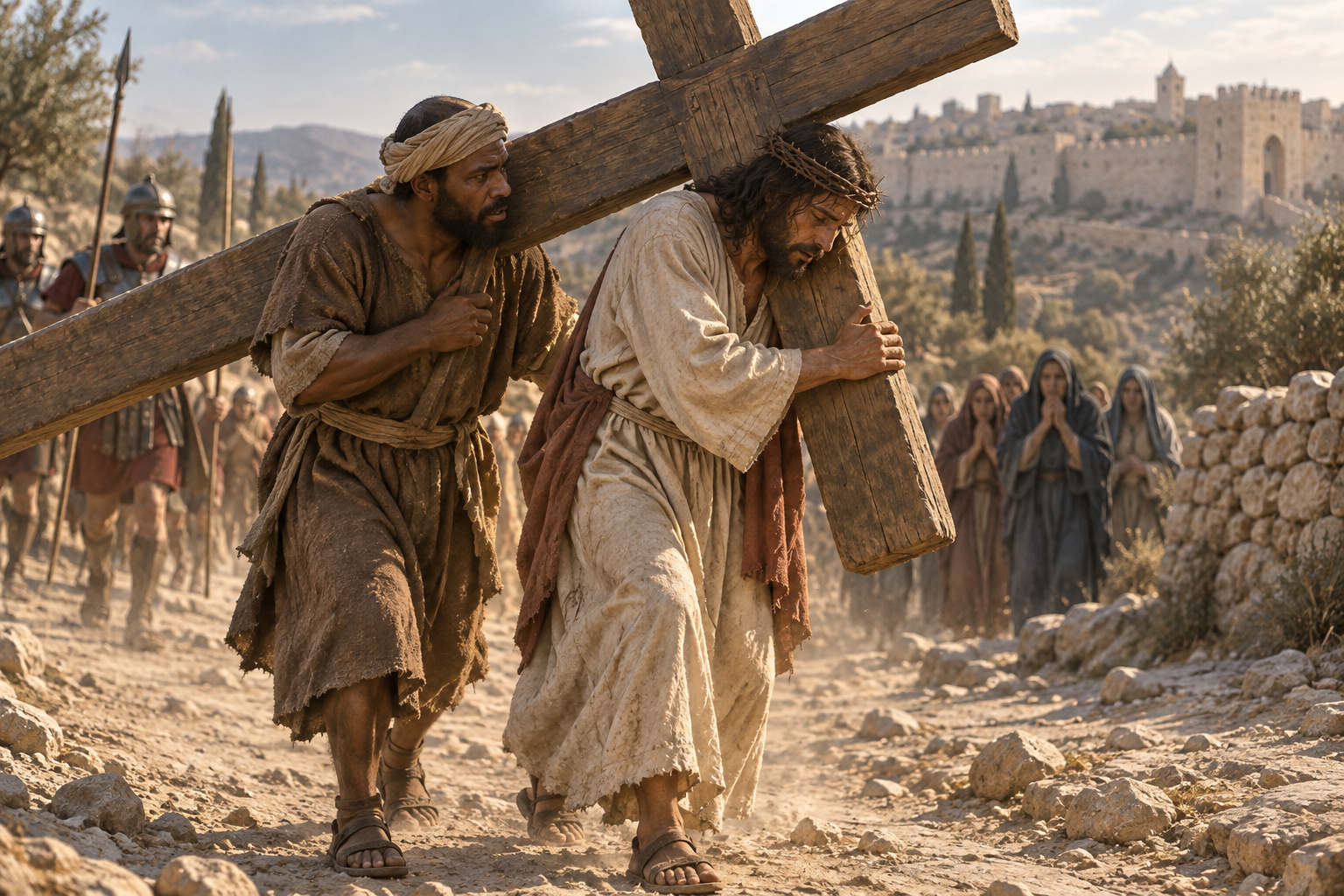
Station 5: Simon Helps Jesus Carry the Cross
The soldiers seized Simon of Cyrene and made him carry the cross of Jesus. This event is recorded in the Gospel accounts. Simon may have been drawn into the scene unwillingly, but his service became a picture of what it means to follow a suffering Savior.
No believer carries the guilt of the world. Only Jesus could do that. Still, Christians are called to carry one another’s burdens, serve without applause, and remain near people who suffer. A prayer that remembers Simon should lead us to practical love, not only private feeling.
Ask the Lord to show you one person you can help this week. Small acts of love can point people to the great love of Christ.
Station 6: Veronica and the Face of Jesus
The traditional stations sometimes include Veronica wiping the face of Jesus. This story is not recorded in the canonical Gospels, so it should not be presented as a Bible event. It may still remind us to show mercy under the authority of Scripture.
The Bible gives us many clear commands about compassion. Jesus teaches His people to care for the hungry, thirsty, sick, stranger, and prisoner. He also teaches us to love our enemies and to speak the truth. The safest way to honour His face is to listen to His Word and obey His commands.
For a Jesus-centred study of His teaching, read what Jesus preached. Let devotion lead to mercy, holiness, and faithful action.
Station 7: Jesus Falls Again
The second and third falls belong to the traditional fourteen stations, not to a direct Gospel description. The truth they are meant to express is still clear: Jesus endured the full burden of the cross and did not turn away from the Father’s will.
The cross exposes our habit of giving up when obedience becomes hard. Jesus calls us to trust God, receive strength from Him, and keep walking in faithful obedience.
If you are tired, pray simply. “Lord Jesus, keep me.” The risen Christ is not distant from weak disciples. He restores the fallen, carries the humble, and gives strength for the next faithful step.
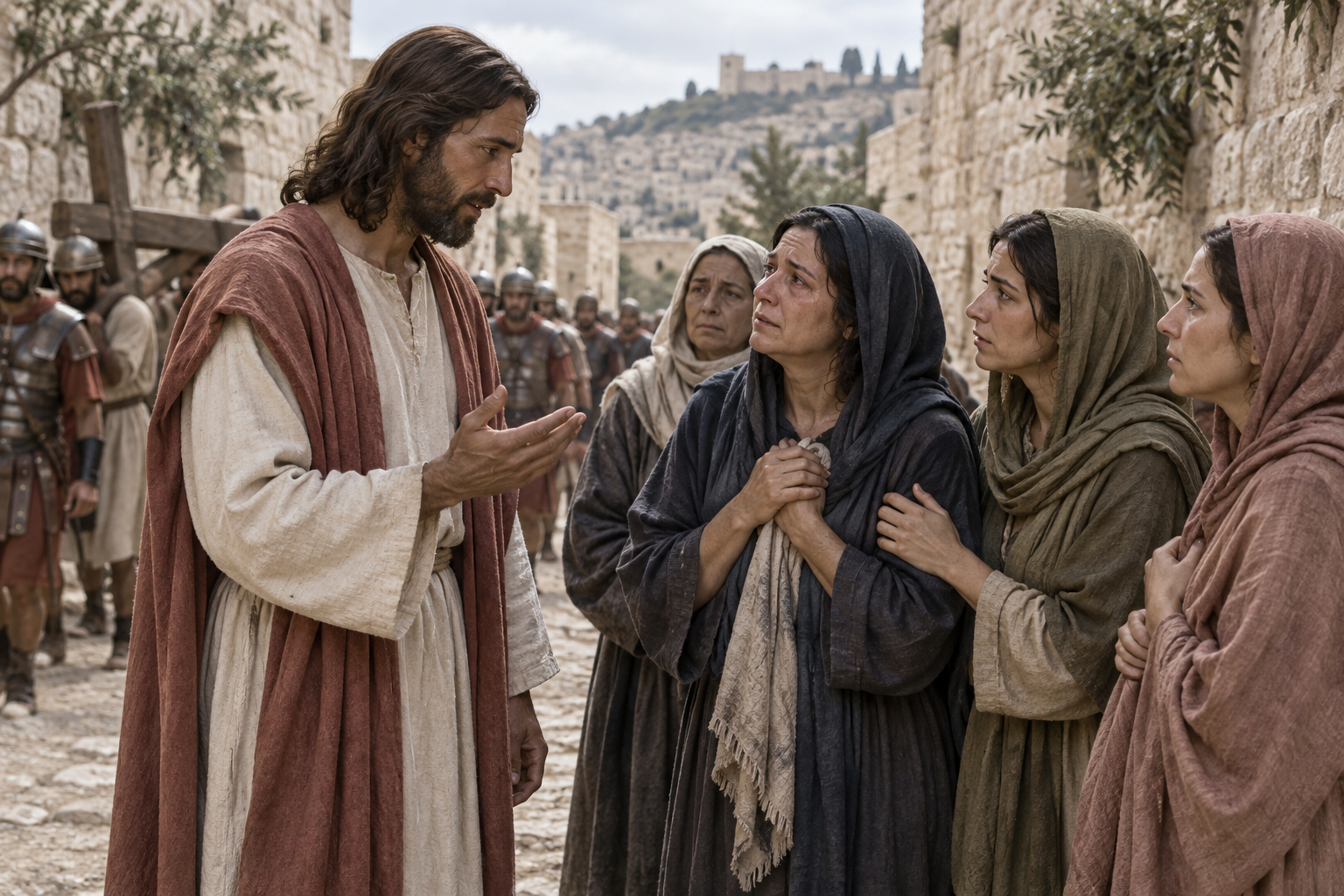
Station 8: Jesus Meets the Women of Jerusalem
Luke records that a great company of women followed Jesus and mourned for Him. Jesus turned to them and told them to weep for themselves and for their children. Even as He suffered, He spoke truth. His compassion did not flatter people or hide the seriousness of sin.
This station teaches us that Christian sorrow must become repentance. We should not only feel sad that Jesus suffered. We should ask why He suffered. He went to the cross because sin is evil and because His mercy is greater than our guilt.
When you pray here, name your sins honestly. Do not excuse them and do not despair. Confess them to God, trust the finished work of Christ, and turn again to Him. Jesus gives mercy to those who come to Him in faith.
Station 9: The Road to Golgotha
The traditional ninth station remembers a third fall. Whether or not a person uses that scene, the prayer should return to the road that led to Golgotha. Jesus was moving toward the place where He would be crucified. Every step brought Him closer to the sacrifice appointed by the Father.
The cross was not an accident or proof that evil had defeated God. Human rulers acted wickedly, yet God used the event to accomplish salvation. The Lord is sovereign even when people rebel against Him.
Pray for confidence when the world looks confused. God is still holy and faithful. Jesus is still Lord.
Station 10: Jesus Is Stripped
The soldiers took Jesus’ garments before the crucifixion. The scene is humiliating and public. Jesus, the King of glory, was treated as an object of contempt. He allowed Himself to be shamed so that sinners could be clothed with His righteousness.
Shame can make people hide from God. The Gospel invites us into the light. Jesus knows our guilt, yet He offers forgiveness to those who repent and believe. His righteousness is a gift, not a reward.
Prayer: Lord Jesus, You endured shame for me. Remove my false pride and heal the shame that keeps me from Your mercy. Clothe me with Your righteousness and teach me to walk in the light. Amen.
Station 11: Jesus Is Nailed to the Cross
Jesus was nailed to the cross. The Gospels do not hide the violence of the crucifixion, but they also do not turn it into spectacle. They show the willing Savior fulfilling the Scriptures and loving His people to the end.
The nails do not save us by themselves. Jesus saves us because He is the sinless Son of God who offered Himself in our place. His body was given and His blood was shed. His death is sufficient for every sinner who trusts Him.
Meditate on the words, “It is finished.” This does not mean that Jesus’ story ended. It means His saving work was completed. Nothing needs to be added to the sacrifice of Christ. We respond with faith, gratitude, and a life of obedience.
Station 12: Jesus Dies on the Cross
Jesus died. This is the centre of the Christian message. He did not merely faint, appear to die, or offer a symbolic gesture. The Son of God truly entered death. He bore sin, satisfied divine justice, and gave Himself for His people.
In Luke’s account, Jesus entrusts His spirit to the Father. In John’s account, He announces that His work is complete. The cross is both sorrow and victory. It reveals the terrible cost of sin and the greater mercy of God.
Mark 15:16-39 records the crucifixion and the confession of the Roman centurion. A Gentile soldier saw something true about Jesus. We should also confess that Jesus is the Son of God and the only Savior.
Station 13: Jesus Is Taken Down
After Jesus died, His body was taken down from the cross. The Gospel accounts describe real people handling a real body. The disciples did not invent an empty tomb story while Jesus’ body remained available. His death and burial were public and connected to the events that followed.
This station can help us sit with grief. Jesus entered the deepest sorrow, and He will one day remove death forever.
Pray for people who are grieving. Ask the Lord to comfort them through the presence of Christ, the promises of Scripture, and the care of His church.
Station 14: Jesus Is Laid in the Tomb
Jesus was laid in a tomb. A stone was placed at the entrance, and the day came to its close. The burial confirms that Jesus really died. The Christian faith is not built on a general idea that love wins. It is built on the historical Gospel that Jesus died, was buried, and rose again.
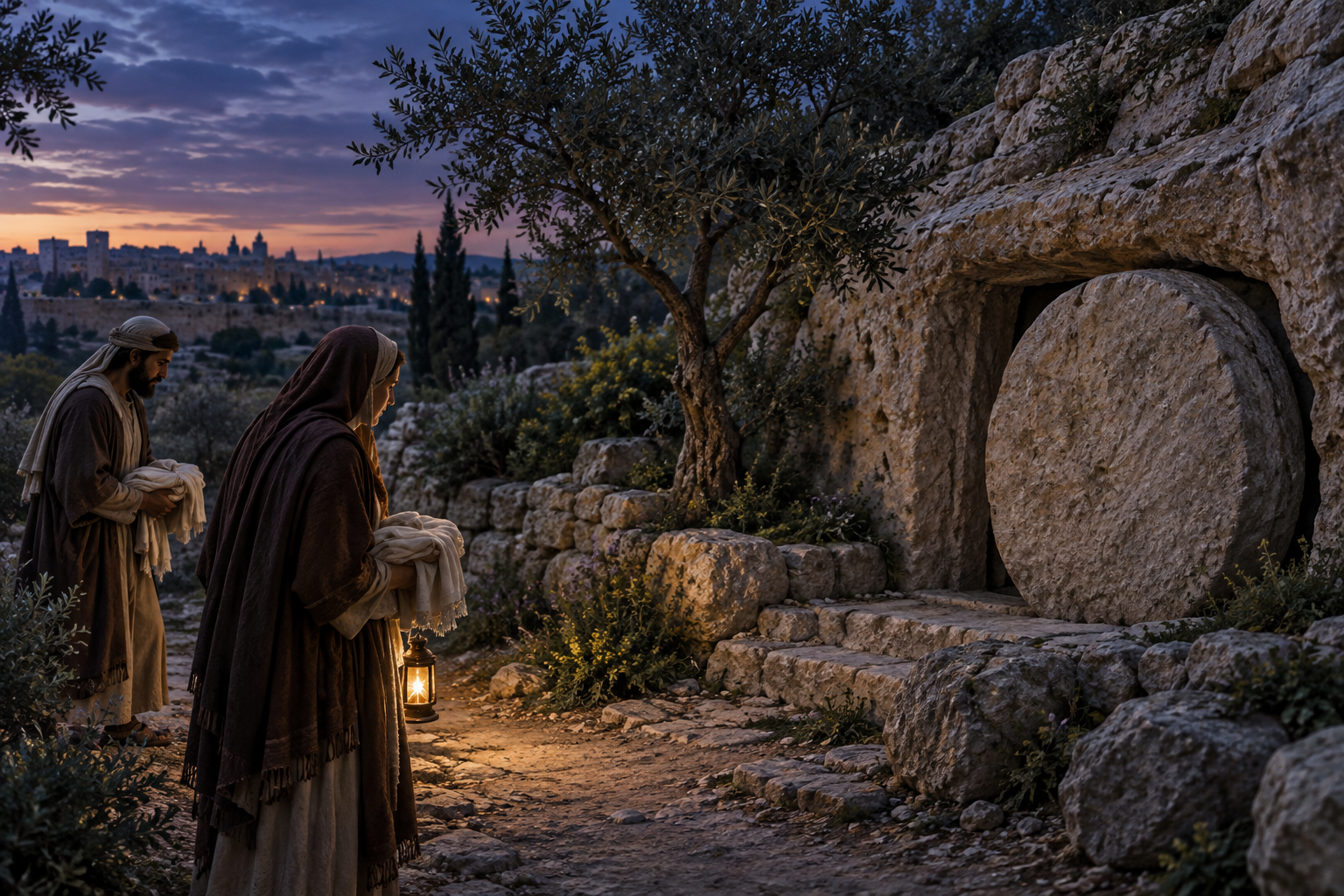
Do not stop at the tomb. The sorrow of the station is real, but it points forward. Luke 24:1-12 records the women finding the stone rolled away and hearing that Jesus was alive. The resurrection is God’s declaration that the sacrifice of Christ was accepted and that death has been defeated.
Jesus is the crucified Savior and the risen Lord. The cross gives forgiveness. The resurrection gives living hope.
A Simple Prayer Pattern for Every Station
You do not need complicated words. At each station, read the passage, look to Jesus, confess your need, thank Him for His sacrifice, and ask for grace to obey. Prayer is not a performance. It is an honest response to God through Christ.
Read: Choose a short Gospel passage. Notice what Jesus says and does. Remember: Think about the holy love and costly obedience of Christ. Repent: Name the sin or fear that the passage exposes. Receive: Trust the forgiveness and help Jesus gives. Respond: Ask how you can love God and your neighbour today.
A short prayer might be: “Lord Jesus Christ, Son of God, have mercy on me. Thank You for dying for sinners and rising again. Help me trust You, follow You, and love others in Your name. Amen.” You can also use our Biblical guide to prayer to Jesus Christ as you build a regular habit.
How the Cross Leads to the Resurrection
The cross and resurrection must stay together. Without the resurrection, sorrow crushes us. Without the cross, we forget the cost of forgiveness. The Gospel gives us both.
The risen Jesus is not a different Jesus from the One who died. He is the same Lord, bearing the marks of His crucifixion and reigning in victory. Hebrews 12:1-3 tells believers to look to Jesus, who endured the cross and now sits at the right hand of God.
The stations should send us into daily life with deeper faith. We do not admire suffering for its own sake. We worship Jesus, who used the cross to bring sinners home and who will return to make all things new.
How to Pray the Stations of the Cross Today
You can pray the stations in a church, with a small group, or alone at home. Set aside enough time to read slowly. You may use a printed guide, walk between crosses, or simply move through the Gospel passages in a quiet room. The place matters less than the truth you are remembering.
If you use a traditional guide, mark which scenes come directly from Scripture and which come from later tradition. This protects your conscience and honours the Bible. The Vatican’s presentation of the Way of the Cross explains why traditional and Biblical forms can differ, including versions that use scenes such as Gethsemane, the repentant thief, and the risen Lord’s saving work.
Finish with praise. Thank Jesus for His holy life, His atoning death, and His bodily resurrection. Ask Him to make you more faithful, more compassionate, and more ready to tell others the good news. Seek Christian wisdom for daily life as you put your prayers into action.
Frequently Asked Questions
What are the Stations of the Cross?
The Stations of the Cross are a Christian devotion that remembers the suffering, death, and burial of Jesus through a series of prayerful stops. The traditional form has fourteen stations, while some Biblical forms use different scenes that are directly recorded in Scripture.
Are all fourteen Stations of the Cross found in the Bible?
No. The condemnation, carrying of the cross, help from Simon, meeting with the women, crucifixion, death, and burial are recorded in the Gospels. Some traditional scenes, such as the three falls, the meeting with Mary on the road, and Veronica wiping Jesus’ face, are not directly narrated in the canonical Gospels.
How do I pray the Stations of the Cross at home?
Read a short Scripture passage, pause to remember what Jesus did, confess your need for His mercy, and offer a simple prayer. You can use fourteen stations, a shorter Gospel-based set, or meditate through Luke 23, John 19, and the resurrection accounts.
Why should Christians focus on Jesus when praying the stations?
The stations are valuable only when they lead us to Jesus Christ. He is the divine Son of God who willingly died for sinners, rose from the grave, and now reigns as Lord. Prayer should produce faith, repentance, gratitude, and hope in Him.
Should the Stations of the Cross end with the resurrection?
Yes, Christian prayer should never treat the cross as the end of the story. Jesus truly died and was buried, but He rose again. Ending with the resurrection helps us hold together the sorrow of Good Friday and the living hope of Easter.
Scripture Passages for Further Study
Read these passages in context and keep Jesus at the centre of your prayer.
- Luke 23:26-49 follows Jesus on the road to the cross and records His death.
- Mark 15:16-39 shows Jesus mocked, crucified, and confessed as the Son of God.
- John 19:16-37 records Jesus’ willing death and completed work.
- 1 Peter 2:21-25 explains how Christ bore our sins and calls us to follow Him.
- Hebrews 12:1-3 calls us to look to Jesus, who endured the cross.
- Luke 24:1-12 announces that Jesus rose from the dead.
Stations of the Cross prayers are useful when they help us remember the true Gospel. Jesus Christ is the divine Son, the sinless sacrifice, the crucified Savior, and the risen Lord. Trust Him, worship Him, and follow Him in hope.