
Bible verses about water often reveal God’s provision, cleansing, renewal, and eternal life through Jesus Christ. Jesus said, “Whoever drinks of the water that I will give him will never be thirsty again” (John 4:14), pointing to salvation and lasting satisfaction found only in Him.
Water is one of the most familiar gifts in God’s creation, yet throughout Scripture it carries a message far deeper than physical refreshment. From the waters of creation to the Red Sea, from the rock in the wilderness to the river of life in Revelation, the Bible uses water to reveal God’s provision, cleansing, judgment, mercy, and eternal life. For every thirsty soul, these passages point beyond the symbol itself to the Lord Jesus Christ, who said, “Whoever drinks of the water that I will give him will never be thirsty again” (John 4:14).
In this article, we will explore Bible verses about water and what they teach us about living water, spiritual cleansing, healing, baptism, and God’s faithful care. The goal is not merely to study a theme, but to see Christ more clearly—the Son of God who died for our sins, rose again, and offers eternal life to all who come to Him in faith (John 3:16; 1 Corinthians 15:3-4). As we look to the authority of God’s Word, may these Scriptures encourage your heart, strengthen your faith, and remind you that Jesus alone satisfies the deepest thirst of the human soul.
Let us begin by asking what Bible verses about water teach us and how this powerful picture in Scripture reveals the goodness, holiness, and saving grace of God.
What Do Bible Verses About Water Teach Us?
Bible verses about water teach us that God is the giver of life, the cleanser of sin, and the faithful provider for thirsty souls. From Genesis to Revelation, water appears as a sign of God’s power, mercy, judgment, cleansing, and eternal salvation.
Most importantly, Scripture uses water to point us to Jesus Christ. He is not merely a teacher about spiritual thirst. He is the Son of God, crucified for our sins and raised from the dead, who gives eternal life to all who believe in Him (John 3:16; 1 Corinthians 15:3-4).
Water in Scripture points to God’s provision and care
Throughout the Bible, water often reveals God’s tender care for His people. In dry places, God provides. In wilderness seasons, He sustains. When His people are weak, He refreshes them.
For example, Psalm 23:2 says, “He maketh me to lie down in green pastures: he leadeth me beside the still waters.” This picture is deeply comforting. The Lord does not abandon His sheep. Instead, He leads them, feeds them, and gives them rest.
In addition, God provided water for Israel in the wilderness. When the people were thirsty, the Lord brought water from the rock (Exodus 17:6). This was not luck or human achievement. It was divine mercy.
- Water reminds us that God sees our needs. He knows when His people are tired, dry, and afraid.
- Water shows that God provides at the right time. His help may come in a wilderness, but it is never beyond His power.
- Water teaches us to depend on the Lord. Physical thirst points to a deeper need for God Himself.
However, the Bible does not present God’s provision as only physical. God cares for the body, but He also cares for the soul. As a result, every gift from His hand should lead us to worship Him with trust and gratitude.
Water often symbolizes cleansing, renewal, and spiritual life
Water also points to cleansing in Scripture. God uses this image to help us understand forgiveness, renewal, and a new heart. Sin defiles us before a holy God, yet the Lord promises to cleanse His people by His grace.
Ezekiel 36:25-26 says, “Then will I sprinkle clean water upon you, and ye shall be clean… A new heart also will I give you.” This promise shows that true cleansing is more than outward religion. It is the work of God within the human heart.
Furthermore, water is connected to renewal. Just as rain revives dry ground, God brings spiritual life to those who belong to Him. Isaiah 44:3 says, “For I will pour water upon him that is thirsty, and floods upon the dry ground.” The Lord gives life where there was barrenness.
| Water Image in Scripture | What It Teaches | Example Verse |
|---|---|---|
| Still waters | God gives rest and care to His people | Psalm 23:2 |
| Clean water | God cleanses sin and renews the heart | Ezekiel 36:25-26 |
| Water on dry ground | God revives the spiritually thirsty | Isaiah 44:3 |
| Living water | Jesus gives eternal life through faith in Him | John 4:14 |
Still, we must be clear. Water itself does not save anyone. Baptism, washing, and religious rituals cannot remove sin apart from Christ. Only the blood of Jesus cleanses us from all sin (1 John 1:7). Therefore, the symbol of water points beyond itself to the saving work of the Lord.
Jesus Christ is the true source of living water
The deepest meaning of water in the Bible is found in Jesus Christ. He is the true source of living water. He satisfies the thirst that nothing in this world can heal.
In John 4:14, Jesus said, “Whosoever drinketh of the water that I shall give him shall never thirst.” He spoke these words to the Samaritan woman at the well. She came for ordinary water, but Jesus offered her eternal life.
Later, Jesus cried out, “If any man thirst, let him come unto me, and drink” (John 7:37). This invitation is personal, gracious, and urgent. In other words, Jesus calls sinners, seekers, the weary, and the broken to come to Him.
- Jesus is fully God. He has authority to give eternal life (John 1:1; John 10:30).
- Jesus died for our sins. His death was the sacrifice sinners need (Romans 5:8).
- Jesus rose from the dead. His resurrection proves His victory over sin and death (1 Corinthians 15:3-4).
- Jesus alone satisfies the soul. No earthly pleasure, success, or religion can replace Him (John 6:35).
Therefore, when Christians read Bible verses about water, we should not stop at the image itself. We should look to the Savior it reveals. Water refreshes the body for a time, but Christ gives life forever.
As a result, every thirsty soul is invited to come to Jesus. He is the living water, the risen Lord, and the only Savior. The Bible’s message is clear: those who believe in Him will never be cast out (John 6:37).
The Best Bible Verses About Water
The Bible uses water to show God’s care, cleansing, judgment, deliverance, and eternal life. Most importantly, the best bible verses about water point us to Jesus Christ. He is the Son of God, crucified for sinners, risen from the dead, and the only Savior who can satisfy the thirsty soul.
These passages are not merely poetic images. Rather, they reveal the heart of God. He provides for His people, cleanses sin, gives the Holy Spirit, and invites the thirsty to come to Christ by faith.
| Scripture | Main Theme | How It Points to Christ |
|---|---|---|
| John 4:14 | Living water | Jesus gives eternal life to those who believe in Him. |
| John 7:37-38 | Spiritual thirst | Jesus invites sinners to come and receive life through Him. |
| Revelation 22:17 | The final invitation | The risen Christ offers the water of life freely. |
| Isaiah 44:3 | God’s refreshing grace | God promises to pour out His Spirit on the needy. |
| Psalm 23:2 | Rest and shepherd care | The Lord leads His people into peace and safety. |
| Ezekiel 36:25-26 | Cleansing and a new heart | God promises inner renewal that is fulfilled through Christ. |
| Matthew 3:16-17 | Jesus’ baptism | The Father declares Jesus to be His beloved Son. |
John 4:14 — Jesus gives living water
Jesus said, “Whosoever drinketh of the water that I shall give him shall never thirst” (John 4:14). This is one of the clearest Bible verses about water because it reveals what the human soul truly needs.
Jesus was speaking to the Samaritan woman at the well. She came for physical water. However, Jesus offered something far greater. He offered eternal life, forgiveness, and satisfaction in God.
The “living water” is not ordinary water. Rather, it is the life Christ gives to all who trust in Him. This life is not earned by good works. It is received by faith in the Lord Jesus.
- Jesus sees the thirsty soul: He knew the woman’s sin, yet He spoke to her with grace.
- Jesus offers eternal life: His gift becomes “a well of water springing up into everlasting life” (John 4:14).
- Jesus alone satisfies: Earthly things may comfort for a moment, but Christ satisfies forever.
Therefore, this verse calls every person to come to Jesus. He is not merely a teacher or prophet. He is the Son of God, the Savior who gives life to the dead.
John 7:37-38 — Rivers of living water
Jesus cried out, “If any man thirst, let him come unto me, and drink” (John 7:37). Then He said that those who believe in Him would have “rivers of living water” flowing from within them (John 7:38).
This is a loving and powerful invitation. First, Jesus names the problem: people are thirsty. In other words, they are spiritually empty without God. Then, He gives the answer: “come unto me.”
Notice the order in this passage:
- Thirst: We recognize our need before God.
- Come: We turn to Jesus in faith.
- Drink: We receive what only Christ can give.
- Overflow: God works in us and through us by His Spirit.
In addition, John explains that Jesus was speaking about the Holy Spirit (John 7:39). The Spirit is given to believers because Jesus died, rose again, and was glorified. As a result, Christian life is not dry religion. It is life in Christ through the Holy Spirit.
Revelation 22:17 — Let the thirsty come
Revelation 22:17 says, “Let him that is athirst come. And whosoever will, let him take the water of life freely.” This verse comes near the end of the Bible. Therefore, it gives one of Scripture’s final invitations.
The message is clear. God still calls sinners to come. The water of life is offered freely, but it was purchased at great cost. Jesus shed His blood on the cross and rose again so that sinners could receive eternal life.
- The invitation is gracious: “Come” is the language of mercy.
- The invitation is personal: “Whosoever will” includes all who will come to Christ.
- The invitation is free: Eternal life cannot be bought. It is God’s gift in Jesus.
However, “free” does not mean cheap. Salvation is free to us because Christ paid for it with His own life. As Scripture says, “Christ died for our sins” and “rose again the third day” (1 Corinthians 15:3-4).
Isaiah 44:3 — God pours water on the thirsty land
Isaiah 44:3 says, “I will pour water upon him that is thirsty, and floods upon the dry ground.” This beautiful promise shows God’s mercy toward the spiritually dry and needy.
In this verse, water pictures God’s refreshing work. The Lord promises not only outward help, but also spiritual renewal. He says, “I will pour my spirit upon thy seed, and my blessing upon thine offspring” (Isaiah 44:3).
This matters because the human heart cannot revive itself. We need God to act. We need His mercy, His Word, and His Spirit. Furthermore, this promise prepares us to understand the fullness of life given through Jesus Christ.
- Dry ground pictures spiritual need: Without God, the heart is barren.
- Water pictures God’s grace: He gives life where there was no life.
- The Spirit brings renewal: God changes people from the inside out.
So, when you feel dry, do not run from the Lord. Instead, come to Him. He is able to refresh weary souls and strengthen weak faith.
Psalm 23:2 — He leads me beside still waters
Psalm 23:2 says, “He maketh me to lie down in green pastures: he leadeth me beside the still waters.” This verse presents the Lord as the faithful Shepherd of His people.
Still waters speak of peace, safety, and rest. Sheep need calm waters because rushing water can frighten and endanger them. In the same way, God knows how to lead His people gently.
For Christians, this shepherd care is fully revealed in Jesus. He said, “I am the good shepherd” (John 10:11). Then He explained the depth of His love: “the good shepherd giveth his life for the sheep.”
- Jesus leads: He does not abandon His people.
- Jesus provides: He gives what the soul truly needs.
- Jesus protects: He laid down His life and rose again for His sheep.
- Jesus gives rest: He calls the weary to come to Him (Matthew 11:28).
Therefore, Psalm 23 is more than a comforting poem. It is a powerful reminder that the Lord personally cares for His people. In Christ, we are not shepherdless, hopeless, or alone.
Ezekiel 36:25-26 — Clean water and a new heart
Ezekiel 36:25-26 says, “Then will I sprinkle clean water upon you, and ye shall be clean.” Then God promises, “A new heart also will I give you.” This is one of the strongest passages about cleansing and spiritual renewal.
Here, water represents cleansing from sin. However, the passage goes deeper than outward washing. God promises to remove the stony heart and give a heart of flesh. In other words, He changes the inner person.
This points us to the saving work of Jesus Christ. We are not cleansed by self-improvement. We are cleansed by the blood of Christ. As 1 John 1:7 says, “the blood of Jesus Christ his Son cleanseth us from all sin.”
- Clean water pictures forgiveness: God removes guilt and defilement.
- A new heart pictures regeneration: God gives new spiritual life.
- A new spirit pictures transformation: God changes desires, worship, and obedience.
- Christ fulfills the promise: Through His death and resurrection, believers are made new.
As a result, Christianity is not only about turning over a new leaf. It is about becoming a new creation in Christ. “If any man be in Christ, he is a new creature” (2 Corinthians 5:17).
Matthew 3:16-17 — Jesus’ baptism and the Father’s declaration
Matthew 3:16-17 records the baptism of Jesus. After Jesus came up from the water, the heavens opened. The Spirit of God descended like a dove, and the Father declared, “This is my beloved Son, in whom I am well pleased.”
This passage is deeply important. Jesus did not need baptism because He had sin. He is holy, sinless, and fully pleasing to the Father. Instead, His baptism publicly revealed His identity and mission.
- The Son is revealed: Jesus is the beloved Son of God.
- The Spirit descends: The Holy Spirit rests upon Him.
- The Father speaks: God the Father openly approves His Son.
- The mission begins: Jesus moves toward the cross, where He will save His people from sin.
In addition, this moment helps us see that water in Scripture often points beyond itself. The water of baptism is important, but water itself is not the Savior. Jesus is the Savior. He is the Lamb of God who takes away the sin of the world (John 1:29).
Therefore, the best Bible verses about water all lead us to the same truth. God provides. God cleanses. God gives life. And He does this through His Son, Jesus Christ, who died for our sins and rose again in victory.
What Does Water Symbolize in the Bible?
Throughout Scripture, water is more than a physical necessity. It is often a picture of God’s life-giving presence, His cleansing mercy, His righteous judgment, and His promise of eternal life through Jesus Christ. Many bible verses about water help us see the Gospel more clearly.
However, water itself is never the Savior. The Bible points beyond the symbol to the Lord who gives it meaning. Jesus Christ, the Son of God, died for our sins and rose again, and He alone gives the living water that satisfies the soul forever (John 4:14; 1 Corinthians 15:3-4).
Water as life and provision from God
Water often symbolizes life because God uses it to sustain His creation. From the beginning, Scripture shows that life depends on God’s power and provision. In Genesis, the Spirit of God was “hovering over the face of the waters” (Genesis 1:2). This reminds us that creation itself belongs to the Lord.
In addition, God repeatedly provides water for His people in dry places. When Israel wandered in the wilderness, the Lord brought water from the rock (Exodus 17:6). This was not only a miracle of supply. It was also a testimony that God cares for His people when they are weak, thirsty, and unable to save themselves.
- Psalm 23:2: “He leads me beside still waters.” God shepherds His people with peace and care.
- Isaiah 44:3: “I will pour water on the thirsty land.” God refreshes what is dry and barren.
- Psalm 107:35: “He turns a desert into pools of water.” God can bring life where there is no human hope.
Therefore, when the Bible speaks about water as provision, it teaches us to trust the Lord in every dry season. He sees the need. He knows the thirst. Furthermore, He is able to provide at the perfect time.
Water as cleansing from sin
Water also symbolizes cleansing. In the Old Testament, washings were often connected to purity before God. These outward washings pointed to a deeper need. Humanity does not only need clean hands. We need clean hearts.
The Lord promised this kind of cleansing through the prophet Ezekiel: “I will sprinkle clean water on you, and you shall be clean from all your uncleannesses” (Ezekiel 36:25). However, the promise does not stop with outward cleansing. God also says, “I will give you a new heart” (Ezekiel 36:26).
This points us to the saving work of Jesus Christ. Only His blood cleanses us from sin. As 1 John 1:7 says, “the blood of Jesus his Son cleanses us from all sin.” Water can picture cleansing, but Christ accomplishes it.
- Water can wash the body, but Jesus cleanses the soul.
- Religious rituals can point to holiness, but Jesus gives true forgiveness.
- Baptism displays faith, but salvation is by grace through faith in Christ (Ephesians 2:8-9).
As a result, Christians should read water imagery with humble gratitude. We were stained by sin. Yet through the death and resurrection of Jesus, believers are washed, forgiven, and made new.
Water as judgment and deliverance
Scripture also uses water to show both judgment and deliverance. This is especially clear in the flood. In Noah’s day, the waters judged a wicked world, yet the ark carried Noah and his family safely through (Genesis 7:17-23; 1 Peter 3:20).
Likewise, the Red Sea became a place of salvation for Israel and judgment for Egypt. God opened the waters so His people could pass through on dry ground. Then the waters returned upon Pharaoh’s army (Exodus 14:21-30).
| Event | Water Shows | Scripture |
|---|---|---|
| The flood | Judgment on sin and preservation by God’s mercy | Genesis 7:17-23 |
| The Red Sea | Deliverance for God’s people and defeat of their enemies | Exodus 14:21-30 |
| Jonah in the sea | Discipline, mercy, and a sign pointing to Christ | Jonah 2:3-10; Matthew 12:40 |
However, these accounts are not merely dramatic stories. They reveal God’s holy character. He judges sin, yet He also provides a way of rescue. Ultimately, that rescue is found in Jesus Christ. He bore judgment for sinners on the cross and rose again in victory (Romans 5:8-9).
Water as the Holy Spirit’s work in believers
Water also points to the Holy Spirit’s work in the lives of believers. Jesus made this clear when He cried out, “If anyone thirsts, let him come to me and drink” (John 7:37). Then Scripture explains, “This he said about the Spirit” (John 7:39).
This means that the thirsty soul is invited to come to Jesus. In addition, those who believe in Him receive the Spirit, who brings spiritual life, renewal, and strength. The Holy Spirit does not draw attention away from Christ. Rather, He glorifies Christ and makes His truth known (John 16:14).
- The Spirit gives new birth: Jesus said we must be born of water and the Spirit (John 3:5).
- The Spirit refreshes the soul: God’s presence brings life where sin brought dryness.
- The Spirit produces fruit: Believers grow in love, joy, peace, and holiness (Galatians 5:22-23).
- The Spirit points to Jesus: True spiritual life always honors Christ as Lord.
Therefore, water imagery helps us understand the believer’s daily need. We do not live by human strength alone. We need the Spirit of God to renew us, guide us, and keep our hearts fixed on Jesus.
Water as a picture of eternal life in Christ
Most importantly, water in Scripture points to eternal life in Jesus Christ. When Jesus spoke to the Samaritan woman at the well, He said, “Whoever drinks of the water that I will give him will never be thirsty again” (John 4:14). He was not speaking about ordinary water. He was speaking about the gift of eternal life.
Furthermore, the final chapters of the Bible show “the river of the water of life” flowing from the throne of God and of the Lamb (Revelation 22:1). This beautiful picture reveals the fullness of life in God’s presence. There is no more curse, no more death, and no more separation from the Lord (Revelation 22:3-5).
- Jesus gives living water: He satisfies the deepest thirst of the human soul (John 4:14).
- Jesus invites the thirsty: “Let the one who is thirsty come” (Revelation 22:17).
- Jesus is the Lamb on the throne: Eternal life flows from God through Him (Revelation 22:1).
- Jesus alone saves: There is salvation in no other name (Acts 4:12).
So, what does water symbolize in the Bible? It symbolizes life, provision, cleansing, judgment, deliverance, the Holy Spirit’s renewing work, and eternal life. Yet every stream of meaning leads us to the same Savior. Jesus Christ is Lord, crucified and risen, and He alone gives the living water of eternal life.
Where Does the Bible Speak About Living Water?

Jesus and the Samaritan woman at the well
One of the clearest Bible verses about water is found in John 4. Jesus met a Samaritan woman at Jacob’s well and used ordinary water to reveal eternal truth.
He said to her, “Whosoever drinketh of this water shall thirst again: But whosoever drinketh of the water that I shall give him shall never thirst” (John 4:13-14).
This moment is deeply important. The woman came for physical water. However, Jesus offered something greater. He offered spiritual life, forgiveness, and eternal satisfaction.
- The well water could satisfy thirst for a short time.
- The living water Jesus gives satisfies the soul forever.
- The woman’s need was not only physical, but spiritual.
- Jesus’ answer was not religion alone, but Himself.
In addition, Jesus crossed social and religious barriers to speak with her. Jews and Samaritans had a long history of division. Yet Christ came with grace, truth, and mercy. He revealed that salvation is not limited by background, past sin, or social status.
Most importantly, Jesus revealed His identity to her. When she spoke of the coming Messiah, Jesus answered, “I that speak unto thee am he” (John 4:26). Therefore, living water is directly connected to Jesus as the Christ, the Son of God, and the Savior of the world.
| John 4 Theme | What It Teaches |
|---|---|
| Physical thirst | Human needs are real, but they cannot fully satisfy the soul. |
| Living water | Jesus gives eternal life to those who believe in Him. |
| The Samaritan woman | Christ receives sinners and calls them to truth. |
| The Messiah revealed | Jesus openly declares Himself as the promised Savior. |
Jesus’ invitation to the thirsty
Another powerful passage is John 7:37-38. Jesus stood and cried out, “If any man thirst, let him come unto me, and drink” (John 7:37).
This is not a weak suggestion. It is a loving invitation from the Lord of glory. Jesus calls the thirsty to come to Him personally. As a result, the answer to spiritual emptiness is not found in human effort. It is found in Christ alone.
Jesus continued, “He that believeth on me, as the scripture hath said, out of his belly shall flow rivers of living water” (John 7:38).
Then Scripture explains that He spoke of the Holy Spirit (John 7:39). Therefore, living water is connected to the Spirit’s work in those who believe in Jesus.
- “If any man thirst” means the invitation is open to all who recognize their need.
- “Let him come unto me” shows that Jesus is the source of life.
- “And drink” points to personal faith and receiving what Christ gives.
- “Rivers of living water” describes the Spirit-filled life of the believer.
Furthermore, this passage shows the unity of Christ and the Holy Spirit’s work. Jesus saves. The Holy Spirit gives life, dwells in believers, and bears witness to Christ. However, the Spirit never leads people away from Jesus. He glorifies the Son, as Jesus said in John 16:14.
So, when Christians speak about living water, we are not speaking about a vague spiritual feeling. We are speaking about eternal life given by Jesus Christ and the Holy Spirit’s life-giving work in believers.
The river of life in Revelation
The Bible also speaks about living water at the end of Scripture. In Revelation, John sees a beautiful picture of the eternal life God gives His people.
Revelation 22:1 says, “And he shewed me a pure river of water of life, clear as crystal, proceeding out of the throne of God and of the Lamb.”
This river flows from the throne of God and of the Lamb. The Lamb is Jesus Christ, who died for sinners and rose again in victory. Therefore, the water of life is not separate from the person and work of Christ.
In addition, Revelation 22:17 gives a final gospel invitation: “And let him that is athirst come. And whosoever will, let him take the water of life freely.”
This verse is full of grace. The thirsty are invited to come. The water of life is given freely. Yet it was not cheap. It was purchased through the blood of Jesus Christ, who gave Himself on the cross and rose from the dead.
- The river is pure, showing the holiness of God’s eternal kingdom.
- It flows from the throne, showing that life comes from God’s authority and grace.
- It is connected to the Lamb, showing that eternal life comes through Jesus.
- The invitation is free, showing that salvation is by grace, not human merit.
As a result, Revelation brings the whole theme of water to its glorious fulfillment. From Eden to the New Jerusalem, God gives life. Yet the final vision makes the truth unmistakable. Eternal life flows from God and the Lamb.
Why living water can only be found in Christ
Living water can only be found in Jesus because only Jesus can give eternal life. No person, church tradition, ritual, or good work can replace Him. The Bible is clear: salvation is found in Christ alone.
Jesus said, “I am the way, the truth, and the life: no man cometh unto the Father, but by me” (John 14:6).
Peter also declared, “Neither is there salvation in any other” (Acts 4:12). Therefore, living water is not one option among many. It is the life of God given through the crucified and risen Savior.
There are several reasons Scripture points us to Christ alone:
- Jesus is fully God. John 1:1 says, “the Word was God.” John 1:14 says the Word became flesh.
- Jesus died for our sins. Christ “died for our sins according to the scriptures” (1 Corinthians 15:3).
- Jesus rose again. He was raised on the third day, proving His victory over sin and death (1 Corinthians 15:4).
- Jesus gives eternal life. He said His sheep will never perish (John 10:28).
- Jesus sends the Holy Spirit. The Spirit brings new life and points believers back to Christ (John 7:39; John 16:14).
However, this truth also brings comfort. If you are spiritually thirsty, you do not have to earn living water. You come to Jesus in faith. You trust His finished work. You believe the Word of God.
In simple terms, the Bible speaks about living water in these key places:
| Passage | Living Water Truth |
|---|---|
| John 4:13-14 | Jesus gives water that springs up into eternal life. |
| John 7:37-39 | Jesus invites the thirsty to come, and the Holy Spirit gives life. |
| Revelation 21:6 | God gives the fountain of the water of life freely to the thirsty. |
| Revelation 22:1 | The river of life flows from the throne of God and of the Lamb. |
| Revelation 22:17 | All who thirst are invited to take the water of life freely. |
Therefore, living water is not merely a symbol of refreshment. It is a Bible-rich picture of salvation, cleansing, eternal life, and the Spirit’s work. Above all, it points to Jesus Christ, the Son of God, who died, rose again, and still calls the thirsty to come to Him.
What Are Short Bible Verses About Water?
Short bible verses about water can be easy to remember and powerful to pray. In Scripture, water often points us to God’s provision, cleansing, renewal, and eternal life. Most importantly, these verses lead our eyes to Jesus Christ, the Son of God, who died for our sins and rose again to give life to all who believe.
Use these passages for prayer, encouragement, Scripture memory, or quiet reflection. However, always remember this: water itself does not save. Jesus Christ saves. He is the true source of living water, and the Bible is our sure authority for understanding Him.
Psalm 42:1 — My soul pants for You
“As the hart panteth after the water brooks, so panteth my soul after thee, O God.” — Psalm 42:1
This verse gives us a beautiful picture of spiritual thirst. Just as a deer longs for flowing streams, the soul of the believer longs for God. In addition, it reminds us that our deepest need is not comfort, success, or human approval. Our deepest need is the Lord Himself.
Psalm 42:1 is a helpful verse to pray when you feel spiritually dry. It teaches us to bring our longing to God instead of hiding it. Furthermore, it points us toward worship, even in sorrow.
- Water picture: A thirsty deer searching for streams.
- Spiritual meaning: The human soul was made to desire God.
- Christ-centered hope: Jesus satisfies the thirsty soul with eternal life.
If your heart feels restless, this verse is an invitation to seek the Lord. As Jesus said, “Come unto me, all ye that labour and are heavy laden, and I will give you rest” (Matthew 11:28).
Isaiah 12:3 — Draw water from salvation
“Therefore with joy shall ye draw water out of the wells of salvation.” — Isaiah 12:3
Isaiah 12:3 connects water with salvation and joy. God’s people are not pictured as barely surviving. Instead, they are drawing water from deep wells of salvation. As a result, this verse shows that God’s saving work brings lasting gladness.
For Christians, this hope is fulfilled in Jesus Christ. He is not one option among many. He is the Savior promised in Scripture. He died on the cross for sinners, rose from the dead, and gives eternal life to those who believe in Him (John 3:16; Romans 10:9).
- Water picture: Drawing refreshing water from a well.
- Spiritual meaning: God’s salvation is deep, strong, and joyful.
- Christ-centered hope: Salvation is found in Jesus alone.
This short verse is a wonderful reminder that salvation is not earned by human effort. Rather, it is received by faith. Therefore, the believer can rejoice because Christ has done the saving work.
John 4:14 — Water springing up to eternal life
“But whosoever drinketh of the water that I shall give him shall never thirst.” — John 4:14
Jesus spoke these words to the Samaritan woman at the well. She came looking for ordinary water. However, Jesus offered her something far greater. He offered living water that leads to eternal life.
This is one of the clearest bible verses about water because Jesus Himself explains the deeper meaning. The water He gives is not physical water. Instead, it points to the spiritual life, forgiveness, and eternal satisfaction found in Him.
- Water picture: A spring of water rising up within a person.
- Spiritual meaning: Jesus gives eternal life to those who believe.
- Christ-centered hope: No one who trusts in Christ will be spiritually abandoned.
This verse also shows the compassion of Jesus. He spoke with a woman who was broken, known, and in need of grace. Yet He did not turn her away. In the same way, He welcomes sinners today and gives life to all who come to Him in faith.
Revelation 21:6 — The water of life without cost
“I will give unto him that is athirst of the fountain of the water of life freely.” — Revelation 21:6
Revelation 21:6 gives a glorious promise from the risen Lord. The thirsty are invited to receive the water of life freely. This means eternal life is not purchased with money, religious performance, or personal goodness. Instead, it is given by God’s grace.
In addition, this verse looks forward to the final hope of every believer. One day, God will make all things new. There will be no more death, sorrow, crying, or pain (Revelation 21:4). Therefore, the water of life points to the complete and eternal satisfaction found in God’s presence.
- Water picture: A fountain of life freely given.
- Spiritual meaning: Eternal life is a gift of grace.
- Christ-centered hope: The risen Jesus gives life to the thirsty.
This verse is especially comforting for those who feel unworthy. The gospel is not for the proud who think they need nothing. Rather, it is for the thirsty who know they need mercy. Jesus gives that mercy freely to those who trust Him.
Psalm 46:4 — A river makes glad the city of God
“There is a river, the streams whereof shall make glad the city of God.” — Psalm 46:4
Psalm 46 speaks of God as our refuge and strength. Even when the earth shakes and nations rage, God remains faithful. Then, in verse 4, the psalm gives a peaceful image: a river making glad the city of God.
This river represents God’s presence, blessing, and sustaining care. Although the world may feel unstable, the Lord is not shaken. As a result, His people can have peace even in troubling times.
- Water picture: A river bringing joy and life to God’s city.
- Spiritual meaning: God’s presence strengthens and gladdens His people.
- Christ-centered hope: Jesus is the secure refuge for every believer.
This verse also points our hearts forward to the river of life in Revelation 22:1. There, the river flows from the throne of God and of the Lamb. Therefore, the Bible’s picture of water reaches its fullness in the reign of Jesus Christ, who is both Lord and Savior.
| Verse | Water Image | Main Encouragement |
|---|---|---|
| Psalm 42:1 | Water brooks | Seek God when your soul is thirsty. |
| Isaiah 12:3 | Wells of salvation | Rejoice in God’s saving grace. |
| John 4:14 | Living water | Jesus gives eternal life. |
| Revelation 21:6 | Water of life | God gives life freely to the thirsty. |
| Psalm 46:4 | A glad river | God’s presence brings peace and joy. |
These short verses are simple enough to memorize, yet rich enough to strengthen your faith. Above all, they remind us that every spiritual thirst finds its answer in Jesus Christ. He is the crucified and risen Lord, the Son of God, and the only Savior who gives living water that never runs dry.
What Does the Bible Say About Healing With Water?

The Bible speaks about water and healing in ways that are both powerful and humble. In several passages, God uses water as part of His healing work. However, Scripture never teaches that water itself is the Savior. Rather, water often becomes a sign that points us to the mercy, power, and authority of God.
As we study these bible verses about water, we should keep our eyes fixed on the Lord. Jesus Christ is the Son of God, crucified for our sins and raised from the dead. He alone gives true cleansing, true healing, and eternal life.
Naaman Washed in the Jordan River
One of the clearest Old Testament examples of healing with water is found in the story of Naaman. Naaman was a respected commander in the army of Syria. However, he suffered from leprosy, a serious skin disease that brought great pain and shame.
In 2 Kings 5:10, the prophet Elisha sent a message to Naaman:
“Go and wash in the Jordan seven times, and your flesh shall be restored, and you shall be clean.”
At first, Naaman was angry. He expected a dramatic miracle. He also thought the rivers of Damascus were better than the Jordan. However, his servants urged him to obey the prophet’s word. As a result, Naaman humbled himself and washed in the Jordan seven times.
Then Scripture says:
“His flesh was restored like the flesh of a little child, and he was clean.” — 2 Kings 5:14
This healing was not caused by magic in the Jordan River. Instead, God healed Naaman through obedient faith. The water was the place where Naaman surrendered his pride and trusted the word of the Lord.
- Naaman had to humble himself. He could not receive healing while clinging to pride.
- Naaman had to obey God’s word. The instruction came through the prophet Elisha.
- Naaman learned that the Lord is God. After his healing, he confessed faith in the God of Israel.
Naaman’s story reminds us that God often works in simple ways. Therefore, we should not despise obedience. The Lord may use ordinary means, but the power always belongs to Him.
Jesus Healed at the Pool of Bethesda
In the New Testament, John 5 tells us about a man who had been disabled for thirty-eight years. He was lying near the pool of Bethesda in Jerusalem. Many sick people gathered there, hoping for healing.
However, the focus of the story is not the pool. The focus is Jesus Christ. When Jesus saw the man, He asked:
“Do you want to be healed?” — John 5:6
The man explained that he had no one to help him into the pool. Yet Jesus did not need the pool to heal him. Instead, the Lord spoke with divine authority:
“Get up, take up your bed, and walk.” — John 5:8
Immediately, the man was healed. He picked up his bed and walked. This miracle shows the power of Jesus’ word. He is not merely a teacher or prophet. He is the Son of God, the Lord over sickness, sin, and death.
Furthermore, John’s Gospel presents these signs so that we would believe in Jesus. John 20:31 says:
“These are written so that you may believe that Jesus is the Christ, the Son of God, and that by believing you may have life in His name.”
So, when we read about healing near water, we should not place our faith in a location. Instead, we should place our faith in Christ. The pool did not command healing. Jesus did.
Why Water Itself Is Not the Savior
Water is important in Scripture. It can symbolize cleansing, life, judgment, deliverance, and the work of the Holy Spirit. However, the Bible is clear that created things cannot save us. Only God saves.
This matters because people can easily turn signs into objects of trust. Yet the Lord calls us to worship Him alone. In Isaiah 45:22, God says:
“Turn to Me and be saved, all the ends of the earth! For I am God, and there is no other.”
Therefore, Christians should not treat water as a spiritual force apart from God. We should not trust rituals, rivers, pools, or ceremonies more than the Lord Himself. Water may be used by God, but it is never equal to God.
| Passage | Water’s Role | Main Truth |
|---|---|---|
| 2 Kings 5:10-14 | Naaman washed in the Jordan | God healed as Naaman obeyed His word |
| John 5:1-9 | A man waited near the pool of Bethesda | Jesus healed by His own authority |
| Ezekiel 36:25-26 | Clean water pictured cleansing | God gives a new heart by His grace |
| John 4:14 | Living water points to eternal life | Jesus alone satisfies the soul forever |
In addition, baptism is a precious command of Christ. It publicly identifies believers with His death and resurrection. However, the New Testament teaches that salvation is by grace through faith, not by human works. Ephesians 2:8-9 says we are saved by grace through faith, “not a result of works.”
As a result, we honor water’s biblical meaning without making water our redeemer. The Redeemer is Jesus Christ, who shed His blood on the cross and rose again on the third day.
True Healing Comes From the Lord Jesus Christ
The Bible teaches that God can heal the body. He can also heal the brokenhearted, cleanse the guilty, and raise the spiritually dead. Yet the deepest healing we need is reconciliation with God. That healing comes only through Jesus Christ.
Isaiah 53:5 points forward to the saving work of the Messiah:
“With His wounds we are healed.”
This does not mean every sickness disappears immediately in this life. Rather, it means Christ’s suffering brings the complete healing of salvation. Through His death and resurrection, believers receive forgiveness, peace with God, and the promise of resurrection life.
Furthermore, Jesus invites all who are spiritually thirsty to come to Him:
“If anyone thirsts, let him come to Me and drink.” — John 7:37
This invitation is personal. It is also urgent. If your soul is dry, weary, guilty, or afraid, come to Jesus. He is not distant from the suffering. He is compassionate, holy, and mighty to save.
- Come to Jesus for forgiveness. His blood cleanses us from all sin (1 John 1:7).
- Come to Jesus for peace. He gives peace the world cannot give (John 14:27).
- Come to Jesus for eternal life. Whoever believes in Him shall not perish but have eternal life (John 3:16).
- Come to Jesus for hope in suffering. He is risen, and He will make all things new (Revelation 21:5).
So, what does the Bible say about healing with water? It shows that God may use water as a sign, setting, or act of obedience. However, the healing power belongs to the Lord. Above all, Scripture points us to Jesus Christ, fully God and fully man, crucified and risen. He is the true living water, the Savior of sinners, and the only One who can heal the deepest thirst of the human soul.
What Does Scripture Say About Water Flowing?
When Scripture speaks of water flowing, it often points to God’s active grace. Flowing water is not stagnant. It moves, refreshes, cleanses, and gives life. In the same way, the Lord does not merely give temporary relief. He gives life that continues, overflows, and reaches others.
Throughout the bible verses about water, we see this beautiful pattern. God brings rivers into dry places. Jesus gives living water to thirsty souls. The Holy Spirit works within believers. Finally, the Bible ends with the river of life flowing from the throne of God and of the Lamb.
Rivers in the desert as a sign of God’s mercy
In Scripture, the desert often represents dryness, weakness, danger, and need. However, God promises to bring water even there. This shows His mercy toward His people.
Through the prophet Isaiah, the Lord says:
“Behold, I will do a new thing; now it shall spring forth; shall ye not know it? I will even make a way in the wilderness, and rivers in the desert.” — Isaiah 43:19
This promise shows that God is able to provide where human strength fails. He makes a way in the wilderness. In addition, He brings rivers where no river should be expected.
For believers, this is deeply encouraging. Dry seasons do not mean God has abandoned His people. Instead, they can become places where His mercy is seen more clearly.
- God provides in impossible places. He is not limited by the wilderness.
- God refreshes weary souls. His grace reaches the tired and thirsty.
- God brings new life. What seems barren can become fruitful by His power.
- God keeps His promises. His Word remains true in every season.
Furthermore, Isaiah 35:6 says, “for in the wilderness shall waters break out, and streams in the desert.” This points to restoration, joy, and divine help. Ultimately, every act of mercy points us to Jesus Christ, who came to save sinners through His death and resurrection.
Living water flowing from those who believe in Jesus
Jesus gives the clearest teaching about flowing water in the New Testament. During the Feast of Tabernacles, He stood and cried out with a gracious invitation:
“If any man thirst, let him come unto me, and drink. He that believeth on me, as the scripture hath said, out of his belly shall flow rivers of living water.” — John 7:37-38
John then explains what Jesus meant:
“But this spake he of the Spirit, which they that believe on him should receive.” — John 7:39
Therefore, living water is not merely a poetic idea. It points to the work of the Holy Spirit in those who believe in Christ. Jesus, the Son of God, gives eternal life. Then, by His Spirit, He produces spiritual life within His people.
This flowing water begins with coming to Jesus. Notice the order in the passage:
- The soul is thirsty. A person recognizes their need before God.
- The thirsty come to Christ. Jesus Himself is the source of life.
- The believer drinks by faith. Faith receives what Christ freely gives.
- Living water flows outward. The Spirit bears fruit through the believer’s life.
As a result, Christians are not called to live on empty religion. They are called to abide in the risen Lord Jesus. He alone satisfies the soul. Moreover, His Spirit works through His people to bless others with truth, love, holiness, and Gospel witness.
| Scripture | What Is Flowing? | What It Reveals |
|---|---|---|
| John 7:37-39 | Rivers of living water | The Holy Spirit given to believers in Christ |
| John 4:14 | Water springing up to eternal life | Jesus gives lasting salvation to the thirsty soul |
| Isaiah 44:3 | Water poured on thirsty ground | God pours out blessing and His Spirit |
However, it is important to say this clearly: the believer is not the source of living water. Jesus is the source. The water flows from believers because Christ has first given life to them.
The river flowing from the temple in Ezekiel
Ezekiel 47 gives a powerful vision of water flowing from the temple. The water begins as a small stream. Then it grows deeper and deeper until it becomes a river that cannot be crossed.
The vision says:
“And by the river upon the bank thereof, on this side and on that side, shall grow all trees for meat… because their waters they issued out of the sanctuary.” — Ezekiel 47:12
This river brings life wherever it goes. In addition, it turns dead and barren places into fruitful places. The picture is rich with meaning.
- The water flows from God’s dwelling place. Life begins with the presence of the Lord.
- The river increases in depth. God’s work is greater than human control.
- The water brings healing. What was lifeless becomes alive.
- The trees bear fruit. God’s life produces visible blessing.
Christians read this vision in light of the whole Bible. Jesus is the true and greater temple, because in Him God dwelt among us in the flesh. John 1:14 says, “the Word was made flesh, and dwelt among us.” Jesus also said, “Destroy this temple, and in three days I will raise it up,” speaking of His body (John 2:19-21).
Therefore, the flowing river in Ezekiel points forward to the life God gives through His presence, His Spirit, and His Messiah. That promise finds its fulfillment in Jesus Christ, crucified and risen.
The final river of life in the New Jerusalem
The Bible’s final picture of flowing water appears in Revelation. There, the apostle John sees the New Jerusalem. At its center is a river unlike any earthly river.
“And he shewed me a pure river of water of life, clear as crystal, proceeding out of the throne of God and of the Lamb.” — Revelation 22:1
This is one of the most glorious bible verses about water. The river flows from “the throne of God and of the Lamb.” This affirms the majesty of Jesus Christ. He is not a mere teacher or symbol. He is the risen Lamb, reigning with divine authority.
Revelation 22 shows the complete restoration of God’s people. Sin is gone. The curse is removed. God’s servants worship Him. As a result, the thirst of humanity is finally and fully satisfied in the presence of the Lord.
- The river is pure. Nothing unclean remains in God’s eternal kingdom.
- The river is life-giving. Eternal life flows from God Himself.
- The river comes from the throne. God’s rule is the source of perfect peace.
- The Lamb is present. Jesus Christ reigns as Savior, Lord, and King.
In addition, Revelation 22:17 gives a final invitation: “And let him that is athirst come. And whosoever will, let him take the water of life freely.” This is the Gospel invitation. Eternal life is not earned by human effort. It is freely given through Jesus Christ to all who repent and believe.
So, what does Scripture say about water flowing? It says that God gives life where there is dryness. It says that Jesus gives living water to thirsty souls. It says that the Holy Spirit flows through believers. Finally, it says that eternal life comes from the throne of God and of the Lamb.
All flowing water in Scripture ultimately points us to Jesus Christ. He is the Son of God, crucified for sinners and raised from the dead. He alone can cleanse, satisfy, and save.
What Is the Mystery of Water in the Bible?
The “mystery” of water in the Bible is not hidden knowledge for a select few. Rather, it is a spiritual pattern God reveals throughout Scripture. From Genesis to Revelation, water points us to His power, His judgment, His mercy, and His gift of eternal life in Jesus Christ.
As we study bible verses about water, we see that water is never greater than God Himself. Water can symbolize cleansing, life, deliverance, and renewal. However, only the Lord can save. Ultimately, every holy picture of water finds its deepest meaning in Jesus Christ, who died for our sins and rose again to give eternal life to all who believe.
Water Reveals God’s Power in Creation
The Bible begins with God’s sovereign power over creation. Genesis says, “The Spirit of God was hovering over the face of the waters” (Genesis 1:2). Before land appeared, before rivers flowed, and before rain fell, God was already Lord over the waters.
This teaches us an important truth. Water is not random or divine by itself. Instead, water is part of God’s created world. He rules over it completely.
- God created with authority: He spoke, and creation obeyed (Genesis 1:6-10).
- God separated the waters: He formed order where there was emptiness and darkness.
- God brought forth life: The waters became filled with living creatures by His command (Genesis 1:20-22).
- God called His creation good: Everything He made reflected His wisdom and glory (Genesis 1:31).
Therefore, water in creation reminds us that the Lord is not distant. He is powerful, present, and purposeful. In addition, the New Testament reveals that Jesus Christ is not merely part of creation. He is the eternal Son of God through whom all things were made.
John 1:3 says, “All things were made through him, and without him was not any thing made that was made.” Colossians 1:16 also declares that all things were created through Christ and for Christ. So, when we see God’s power over water in creation, we are also seeing the glory of Jesus, who is fully God.
Water Shows Both Judgment and Salvation in the Flood
The flood in Noah’s day is one of the clearest examples of water showing both judgment and salvation. Humanity had become deeply corrupt, and the earth was filled with violence (Genesis 6:5-13). As a result, God judged sin through the waters of the flood.
However, the same waters that judged the wicked also lifted the ark. Noah and his family were saved because they believed God’s warning and entered the ark by faith (Genesis 7:1, Genesis 7:17-18).
| Flood Waters Show | Biblical Meaning | Scripture |
|---|---|---|
| Judgment | God is holy and must judge sin. | Genesis 6:5-7 |
| Mercy | God provided a way of rescue through the ark. | Genesis 6:18 |
| Faith | Noah trusted God’s word and obeyed. | Hebrews 11:7 |
| A Promise | God set the rainbow as a sign of His covenant. | Genesis 9:12-16 |
Furthermore, the flood points forward to the salvation found in Jesus Christ. Just as the ark was the place of safety, Christ is the only Savior. Acts 4:12 says there is salvation in no one else. Therefore, the mystery of water in the flood is not that water saved by itself. Rather, God saved through the means He provided.
In the same way, we are saved not by religious effort, rituals, or symbols. We are saved by grace through faith in Jesus Christ, who died for sinners and rose from the dead (Ephesians 2:8-9; 1 Corinthians 15:3-4).
Water Marks Deliverance at the Red Sea
Water also marks deliverance in the story of the Red Sea. Israel had been enslaved in Egypt. Then God sent Moses to lead His people out. However, Pharaoh pursued them, and the sea stood before them.
Humanly speaking, there was no way forward. Yet God made a way where there was no way. Exodus 14:21 says the Lord drove the sea back and made the waters divide. Israel passed through on dry ground, but the Egyptian army was judged in the waters (Exodus 14:22-28).
This moment reveals several truths about God’s saving power:
- God hears the cries of His people: He remembered His covenant and acted with compassion (Exodus 2:23-25).
- God delivers by His power: Israel could not save itself from Egypt.
- God makes a path through impossible places: The Red Sea became a road of rescue.
- God defeats the enemy: Pharaoh’s power could not overcome the Lord.
- God receives the glory: Israel sang, “The LORD is my strength and my song” (Exodus 15:2).
In addition, the Red Sea helps us understand the greater deliverance found in Christ. Egypt can remind us of bondage. Pharaoh can remind us of cruel slavery. Yet Jesus delivers us from something even deeper: sin, death, and the power of darkness.
Colossians 1:13-14 says God “has delivered us from the domain of darkness” and transferred us to the kingdom of His beloved Son. Therefore, the Red Sea is not only a story of ancient rescue. It is also a picture of the saving power of God, fulfilled in the Lord Jesus Christ.
Water Points Forward to Cleansing, Baptism, and Life in Christ
Throughout Scripture, water often points to cleansing. Yet the Bible is clear: outward water cannot wash away sin by itself. Only God can cleanse the heart. David prayed, “Wash me thoroughly from my iniquity, and cleanse me from my sin” (Psalm 51:2).
The prophets also looked forward to a deeper cleansing. In Ezekiel 36:25-26, God said He would sprinkle clean water on His people, cleanse them from uncleanness, and give them a new heart. This promise points to the inward work of God’s Spirit and the saving work of Christ.
Baptism also uses water as a visible sign. It points to the believer’s union with Jesus in His death, burial, and resurrection. Romans 6:4 says believers are buried with Christ by baptism into death, so they may walk in newness of life.
However, Christians must keep the symbol and the Savior in the right order:
- Water baptism is important: Jesus commanded His disciples to baptize believers (Matthew 28:19).
- Baptism publicly identifies us with Christ: It testifies that we belong to Him.
- Water itself does not save: Salvation comes through faith in Jesus Christ (John 3:16; Ephesians 2:8-9).
- The blood of Christ cleanses sin: “The blood of Jesus his Son cleanses us from all sin” (1 John 1:7).
- The Holy Spirit gives new life: Jesus said we must be born of the Spirit (John 3:5-8).
Most importantly, water points us to Jesus as the source of true life. He told the Samaritan woman, “Whoever drinks of the water that I will give him will never be thirsty again” (John 4:14). Later, He cried out, “If anyone thirsts, let him come to me and drink” (John 7:37).
So the mystery of water in the Bible is beautifully fulfilled in Christ. Water reveals God’s power in creation. It displays judgment and salvation in the flood. It marks deliverance at the Red Sea. Furthermore, it points to cleansing, baptism, and eternal life.
Yet the final answer is not found in water itself. It is found in Jesus Christ, the Son of God. He is the crucified and risen Savior. He alone cleanses sin, satisfies the thirsty soul, and gives the water of life freely to all who come to Him in faith (Revelation 22:17).
What Are the Types of Water in the Bible?
When we read bible verses about water, we quickly see that water is not used in only one way. Sometimes it shows God’s power in creation. At other times, it shows judgment, deliverance, cleansing, or eternal life. Most importantly, Scripture uses water to point us to Jesus Christ, the Son of God, who died for our sins and rose again.
Therefore, the “types of water” in the Bible help us understand God’s works more clearly. They also teach us to trust His Word, depend on His mercy, and come to Christ for true life.
Creation waters
The first type of water in the Bible appears at creation. Genesis says, “The Spirit of God was hovering over the face of the waters” (Genesis 1:2). Before dry land, seas, rivers, and rain are described in detail, Scripture shows God ruling over the waters.
This teaches us that water is not random or independent. Instead, it belongs to the Lord. He created it, ordered it, and gave it purpose. As a result, creation waters remind us that God is sovereign over all life.
- God rules over creation: “In the beginning, God created the heavens and the earth” (Genesis 1:1).
- God separates and orders the waters: He divided the waters and gathered the seas (Genesis 1:6-10).
- God brings life through His command: The waters became part of His good creation (Genesis 1:20-22).
Furthermore, the New Testament reveals that creation points to Jesus. “All things were made through him” (John 1:3). Therefore, even the waters of creation declare the glory of Christ, who is fully God and Lord over all.
Flood waters
Flood waters in the Bible show both judgment and salvation. In Noah’s day, human wickedness had become great. Therefore, God sent the flood as righteous judgment (Genesis 6:5-7). However, God also provided an ark to save Noah and his family.
The flood reminds us that sin is serious. God is holy, and He will judge evil. Yet it also shows that God is merciful. He made a way of rescue for those who believed His word.
- Judgment: The flood waters came because of sin and corruption (Genesis 6:11-13).
- Mercy: God saved Noah, his family, and the animals in the ark (Genesis 7:1).
- Covenant promise: God set the rainbow as a sign that He would never again destroy the earth by flood (Genesis 9:11-13).
In addition, the flood points forward to our need for salvation in Christ. Just as the ark was the place of rescue, Jesus is the only Savior. Scripture says, “There is salvation in no one else” (Acts 4:12). Therefore, flood waters call us to flee from sin and trust the risen Lord.
Red Sea waters
The Red Sea waters show God’s mighty deliverance. Israel was trapped between Pharaoh’s army and the sea. However, the Lord made a way where there was no way. He divided the waters, and His people passed through on dry ground (Exodus 14:21-22).
These waters teach us that God saves His people by His power. Israel could not rescue itself. Likewise, we cannot save ourselves from sin. We need the Lord to act on our behalf.
| Red Sea Event | Spiritual Lesson |
|---|---|
| Israel was trapped and helpless | We are helpless to save ourselves apart from God’s grace |
| God opened the sea | God makes a way of salvation by His power |
| Israel passed through safely | The Lord delivers those who trust Him |
| Pharaoh’s army was judged | God defeats the enemies of His people |
Furthermore, the Red Sea points us to Jesus Christ, who delivers believers from slavery to sin. Through His death and resurrection, He brings His people out of darkness and into life. As Colossians 1:13 says, God “has delivered us from the domain of darkness and transferred us to the kingdom of his beloved Son.”
Wilderness water from the rock
In the wilderness, Israel became thirsty. They had been delivered from Egypt, yet they still needed daily provision. Therefore, God gave water from a rock (Exodus 17:6). This was a miracle of mercy.
Later, the apostle Paul explains the deeper meaning. He writes, “They drank from the spiritual Rock that followed them, and the Rock was Christ” (1 Corinthians 10:4). This is one of the clearest Bible passages connecting wilderness water to Jesus.
- The people were thirsty: Their physical need revealed their dependence on God.
- God provided water: He cared for them in a dry and barren place.
- The rock pointed to Christ: Jesus is the true source of life for thirsty souls.
As a result, wilderness water reminds us that Jesus satisfies what this world cannot. In dry seasons, believers can trust Him. He is not only a helper in trouble. He is the Lord, the crucified and risen Savior, and the giver of eternal life.
Baptism waters
Baptism waters are another important type of water in Scripture. Christian baptism does not save by the power of water itself. Rather, it points to the saving work of Jesus Christ. It is a public sign of faith in His death, burial, and resurrection.
Jesus Himself was baptized in the Jordan River. When He came up from the water, the heavens opened, the Spirit of God descended, and the Father declared, “This is my beloved Son, with whom I am well pleased” (Matthew 3:16-17). Therefore, baptism also bears witness to the identity of Jesus as the Son of God.
- Baptism points to repentance: John the Baptist called people to turn from sin (Matthew 3:11).
- Baptism points to union with Christ: Believers are identified with His death and resurrection (Romans 6:3-4).
- Baptism points to obedience: Jesus commanded His disciples to baptize in the name of the Father, Son, and Holy Spirit (Matthew 28:19).
However, Christians must be clear. The water does not replace the cross. Forgiveness comes through the blood of Jesus, not through a ritual by itself. “In him we have redemption through his blood, the forgiveness of our trespasses” (Ephesians 1:7).
Living water
Living water is one of the most beautiful images in the Bible. Jesus used this phrase when He spoke to the Samaritan woman at the well. He said, “Whoever drinks of the water that I will give him will never be thirsty again” (John 4:14).
Here, Jesus was not speaking mainly about physical water. Instead, He was speaking about eternal life, salvation, and the satisfaction only He can give. The woman came to a well for ordinary water. However, she met the Messiah, the Savior of the world.
- Living water comes from Jesus: He alone gives eternal life (John 4:14).
- Living water satisfies the soul: Christ meets our deepest spiritual thirst.
- Living water overflows: Those who believe in Jesus receive the Spirit’s life and work (John 7:37-39).
In addition, Jesus cried out, “If anyone thirsts, let him come to me and drink” (John 7:37). This invitation is still open. Therefore, every thirsty soul should come to Him in faith. He is not one religious option among many. He is the Lord and Savior, risen from the dead.
The water of life
The final type of water is the water of life. This appears clearly in Revelation. The risen Christ says, “To the thirsty I will give from the spring of the water of life without payment” (Revelation 21:6). Then Revelation 22:1 describes “the river of the water of life” flowing from the throne of God and of the Lamb.
This water points to eternal life in God’s presence. It shows the complete satisfaction, healing, and joy that belong to all who are in Christ. No sin, death, curse, or sorrow will remain for God’s redeemed people (Revelation 21:4; Revelation 22:3).
| Type of Water | Where It Appears | What It Teaches |
|---|---|---|
| Creation waters | Genesis 1:2 | God is Creator and Lord over all things |
| Flood waters | Genesis 6–9 | God judges sin and provides salvation |
| Red Sea waters | Exodus 14 | God delivers His people by His power |
| Water from the rock | Exodus 17:6; 1 Corinthians 10:4 | Christ is the true Rock who gives life |
| Baptism waters | Matthew 3:16-17; Romans 6:3-4 | Believers identify with Christ’s death and resurrection |
| Living water | John 4:14; John 7:37-39 | Jesus satisfies the thirsty soul |
| Water of life | Revelation 21:6; Revelation 22:1 | Eternal life flows from God and the Lamb |
Ultimately, all these waters lead us to one great truth: God gives life through Jesus Christ. From Genesis to Revelation, the Bible shows that the Lord provides, cleanses, saves, and satisfies. Therefore, when we study bible verses about water, we should not stop at the symbol. We should come to the Savior whom the symbol reveals.
How Should Christians Apply Bible Verses About Water Today?
Come to Jesus when your soul is thirsty
Many bible verses about water remind us that the deepest thirst of the human soul is not physical. It is spiritual. We need forgiveness, truth, peace, and eternal life. Above all, we need Jesus Christ.
Jesus said, “If anyone thirsts, let him come to Me and drink” (John 7:37). This is a gracious invitation. He does not tell the thirsty soul to fix itself first. Instead, He calls sinners, sufferers, and weary believers to come directly to Him.
Therefore, when your soul feels dry, do not run first to distractions. Come to Christ in faith. He is the Son of God, crucified for sinners and raised from the dead. Only He gives the living water that becomes “a fountain of water springing up into everlasting life” (John 4:14).
- Come to Jesus in prayer: Tell Him honestly where you are weak, weary, or afraid.
- Come to Jesus through Scripture: Let the Bible correct, comfort, and strengthen you.
- Come to Jesus in repentance: Turn from sin and trust His finished work on the cross.
- Come to Jesus with faith: Believe that He is able to satisfy what the world cannot.
As a result, Bible verses about water should lead Christians into deeper dependence on Christ. They are not merely beautiful images. They are invitations to drink from the Savior Himself.
Trust God to provide in dry seasons
Dry seasons are part of life in a fallen world. Sometimes a believer may feel spiritually weak, emotionally tired, or uncertain about the future. However, Scripture shows that God is faithful in the wilderness.
When Israel had no water in the desert, the Lord provided water from the rock (Exodus 17:6). This was not only an act of mercy. It also pointed forward to Christ. The apostle Paul wrote, “that Rock was Christ” (1 Corinthians 10:4).
Therefore, Christians can trust God when life feels barren. The Lord may not always provide in the way we expect. Yet He always remains faithful to His Word.
- In seasons of lack: Remember that your Father knows what you need (Matthew 6:32).
- In seasons of waiting: Trust that God’s timing is wise and holy.
- In seasons of grief: Look to Christ, who is near to the brokenhearted.
- In seasons of confusion: Let Scripture guide your steps, not fear.
In addition, Psalm 23 gives great comfort. David says, “He leads me beside the still waters” (Psalm 23:2). The Shepherd does not abandon His sheep. He leads, restores, and provides.
Remember that Christ cleanses from sin
Water in the Bible often points to cleansing. Yet Christians must be clear. Water itself does not save the soul. Religious rituals cannot remove sin apart from faith in Christ. Only the blood of Jesus cleanses us before God.
First John 1:7 says, “the blood of Jesus Christ His Son cleanses us from all sin.” This is the heart of the Gospel. Jesus, who is fully God and fully man, died on the cross for our sins. Then He rose again in victory.
Because of this, every believer can rest in His finished work. We do not cleanse ourselves by good works. Instead, we are washed, justified, and sanctified in the name of the Lord Jesus (1 Corinthians 6:11).
| Water Picture in Scripture | How Christians Apply It Today |
|---|---|
| Clean water | Remember that God promises cleansing and a new heart (Ezekiel 36:25-26). |
| Baptism waters | Publicly identify with the death, burial, and resurrection of Jesus (Romans 6:3-4). |
| Living water | Receive eternal life through faith in Christ alone (John 4:14). |
| Water of life | Look forward to eternal joy with God forever (Revelation 22:1-2). |
Furthermore, believers should confess sin quickly. We do not hide from God when we fail. Instead, we come to Him through Jesus Christ, trusting His mercy and righteousness.
Let the Holy Spirit produce spiritual life in you
Jesus said that those who believe in Him would have “rivers of living water” flowing from their hearts (John 7:38). John then explains that Jesus was speaking about the Holy Spirit (John 7:39).
This matters deeply for daily Christian living. The Christian life is not lived by human strength alone. Instead, the Holy Spirit gives new life, convicts us of sin, helps us obey, and makes us more like Christ.
However, believers must not treat the Holy Spirit as a vague force. He is God. He glorifies Jesus, leads us into truth, and works through the written Word of God.
- Ask for help: Pray for the Spirit to strengthen your faith and obedience.
- Walk in holiness: Turn away from sin and pursue what honors Christ.
- Abide in Scripture: The Spirit uses God’s Word to shape God’s people.
- Bear spiritual fruit: Look for love, joy, peace, patience, and self-control (Galatians 5:22-23).
As a result, Bible verses about water should not remain abstract. They should move us to live Spirit-filled lives. The living water of Christ changes what we love, how we speak, and how we serve.
Share the invitation of living water with others
Jesus does not give living water so believers can keep it to themselves. He saves us and sends us. Therefore, Christians should lovingly invite others to come to Christ.
Revelation 22:17 says, “Let him who thirsts come. Whoever desires, let him take the water of life freely.” This invitation is urgent and gracious. Eternal life is not earned. It is received by faith in Jesus Christ.
In a world full of confusion, Christians must speak with compassion and conviction. Jesus is not a myth. He is not merely a teacher. He is the eternal Son of God, the crucified and risen Lord, and the only Savior of the world (John 14:6; Acts 4:12).
- Share the Gospel clearly: Explain sin, the cross, the resurrection, repentance, and faith.
- Use Scripture: Let God’s Word carry the authority, not personal opinion.
- Speak with gentleness: Answer questions with patience and love.
- Point to Jesus: Keep the focus on who He is and what He has done.
- Pray for open hearts: Salvation belongs to the Lord.
Ultimately, applying Bible verses about water today means coming to Jesus, trusting His provision, resting in His cleansing, walking by the Holy Spirit, and inviting others to receive eternal life. Christ alone satisfies the thirsty soul, and His Word remains true forever.
Frequently Asked Questions
What generation will not pass away?
Jesus said, “This generation will not pass away until all these things take place” (Matthew 24:34). This statement appears in His teaching about the end times, judgment, and His glorious return.
Christians have understood this phrase in a few faithful ways. However, the most important truth is clear: Jesus’ words are certain, and His return is sure.
- It may refer to the people living when those events begin. They will see the fulfillment unfold.
- It may refer to the Jewish people as a continuing generation. God has preserved Israel according to His purposes.
- It may refer to the kind of unbelieving generation Jesus often rebuked. Such rebellion continues until the end.
In addition, Jesus immediately said, “Heaven and earth will pass away, but my words will not pass away” (Matthew 24:35). Therefore, believers should not fear. We should watch, pray, and trust the authority of Scripture.
Like many bible verses about water, this passage reminds us that only God’s Word remains firm. The world may shake, but Christ remains Lord forever.
Why is 3am God’s hour?
The Bible does not teach that 3am is officially “God’s hour.” However, many Christians use quiet early morning hours for prayer, worship, and seeking the Lord.
Scripture does show that God’s people often prayed during the night or before dawn. For example, Jesus Himself rose early to pray:
- Mark 1:35: Jesus went to a desolate place early in the morning to pray.
- Psalm 63:6: David meditated on God during the watches of the night.
- Psalm 119:147: The psalmist rose before dawn and cried for help.
However, Christians should avoid superstition. God is not limited to one hour. He hears His people at all times. As Psalm 34:17 says, “When the righteous cry for help, the Lord hears.”
Therefore, if you wake at 3am, you may use that time to pray. But do not fear the hour. Instead, fix your heart on Jesus Christ, who died for our sins and rose again. He is our peace, our Shepherd, and our living water.
What is Proverbs 14:23 saying?
Proverbs 14:23 says, “In all toil there is profit, but mere talk tends only to poverty.” This verse teaches that faithful work matters. Empty words do not produce lasting fruit.
In simple terms, the verse contrasts action with talk:
| Proverbs 14:23 Teaches | Meaning |
|---|---|
| “In all toil there is profit” | Diligent, honest labor brings benefit and blessing. |
| “Mere talk tends only to poverty” | Words without action lead to lack, delay, and disappointment. |
However, this does not mean we earn God’s love by working. Salvation is by grace through faith in Jesus Christ, not by works (Ephesians 2:8-9). Still, after we are saved, our lives should show wisdom, diligence, and faithfulness.
Furthermore, the image of water helps us understand this. A stream must flow to give life. In the same way, faith should move into obedience. James 2:17 says, “Faith by itself, if it does not have works, is dead.”
What does Proverbs 19:17 say?
Proverbs 19:17 says, “Whoever is generous to the poor lends to the Lord, and he will repay him for his deed.” This verse reveals God’s heart for mercy, compassion, and generosity.
When we help the poor, we are not ignored by God. Instead, the Lord sees the act of love. He receives it as service done unto Him.
- God cares for the poor. He commands His people to show mercy.
- Generosity honors the Lord. It reflects His kindness toward us.
- God remembers faithful service. He rewards according to His wisdom.
Jesus also taught this truth. In Matthew 25:40, He said, “As you did it to one of the least of these my brothers, you did it to me.”
As a result, Christians should give with humility, not pride. We give because Christ first gave Himself for us. He poured out His life at the cross, rose from the dead, and now calls His people to love others in His name.
What does “I am the water of life” mean?
The exact phrase “I am the water of life” is not recorded as a direct quote from Jesus in that wording. However, the truth is deeply biblical. Jesus is the source of eternal life, spiritual cleansing, and lasting satisfaction.
In John 4:14, Jesus said, “Whoever drinks of the water that I will give him will never be thirsty again.” He was speaking about eternal life through Him. He gives what no earthly well can provide.
In addition, Revelation 21:6 says, “To the thirsty I will give from the spring of the water of life without payment.” This points to God’s free gift of salvation. It cannot be bought. It is received by faith.
- Jesus is the living water. He satisfies the thirsty soul (John 7:37-38).
- Jesus cleanses sinners. His blood brings forgiveness and new life (1 John 1:7).
- Jesus gives eternal life. All who believe in Him will be saved (John 3:16).
- Jesus is fully divine. He is Lord, Savior, and the Son of God (John 20:28).
Therefore, when Christians speak of Jesus as the water of life, we mean that He alone can save, cleanse, and satisfy forever. Water in Scripture often points to God’s provision. Yet the greatest provision is Christ Himself.
So, as we read bible verses about water, we should look beyond the symbol. We should come to the Savior. Jesus Christ died for our sins, rose again, and now invites every thirsty soul to come to Him.
How Do Bible Verses About Water Point Us to Jesus Christ?
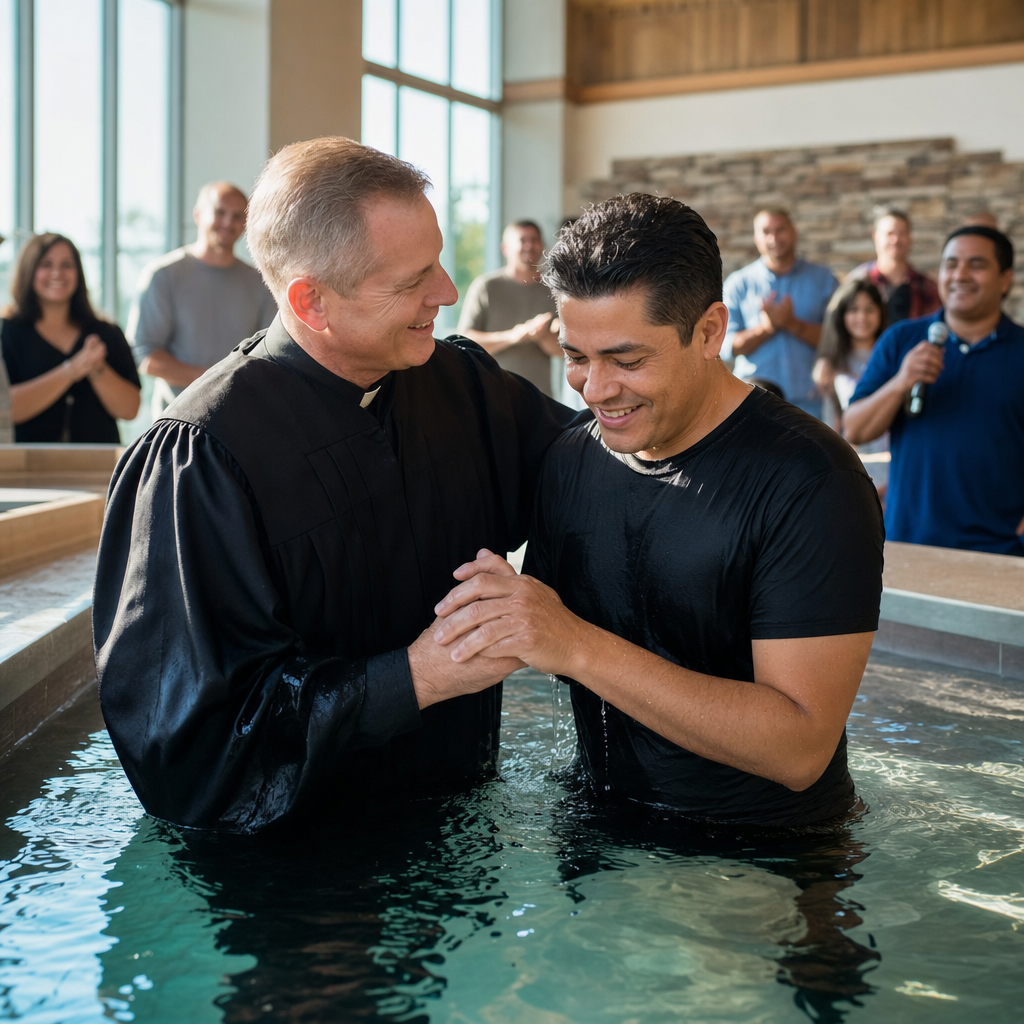
Bible verses about water ultimately point us to Jesus Christ. In Scripture, water often speaks of life, cleansing, refreshment, judgment, and salvation. However, these themes are not meant to end with water itself. They lead us to the Lord Jesus, who gives the “living water” of eternal life to all who believe in Him.
Jesus said, “Whoever drinks of the water that I shall give him will never thirst” (John 4:14). Therefore, when we read Bible verses about water, we should ask a deeper question: How does this reveal Christ, His salvation, and His promise to satisfy the soul?
Jesus is fully God and the Savior of the world
The Bible does not present Jesus as merely a teacher, prophet, or moral example. Rather, Scripture reveals Him as fully God, fully man, and the only Savior of the world. John begins his Gospel by declaring, “In the beginning was the Word, and the Word was with God, and the Word was God” (John 1:1). Then John says, “The Word became flesh and dwelt among us” (John 1:14).
This truth matters deeply when we read about living water. Jesus does not simply point people to spiritual life. He is the source of spiritual life. He can give living water because He is the eternal Son of God.
- Jesus is the Creator: “All things were made through Him” (John 1:3).
- Jesus is the giver of life: “In Him was life, and the life was the light of men” (John 1:4).
- Jesus is the Savior: “The Father has sent the Son as Savior of the world” (1 John 4:14).
- Jesus is worthy of worship: Thomas confessed, “My Lord and my God!” (John 20:28).
Therefore, the living water Jesus offers is not a religious idea or emotional comfort alone. It is eternal life from the living God. In addition, this life is not earned by human effort. It is received by faith in Christ.
His death and resurrection give eternal life to all who believe
Water can cleanse the body, but only the blood of Jesus can cleanse the soul. This is why Bible verses about water must be understood through the cross and resurrection. Jesus came to save sinners by dying in their place and rising again in victory.
Scripture says, “Christ died for our sins according to the Scriptures, and that He was buried, and that He rose again the third day according to the Scriptures” (1 Corinthians 15:3-4). As a result, salvation is not found in religious rituals, human goodness, or outward washing. Salvation is found in Jesus Christ alone.
- His death pays for sin: “In Him we have redemption through His blood, the forgiveness of sins” (Ephesians 1:7).
- His resurrection proves His victory: “He was raised because of our justification” (Romans 4:25).
- His grace gives eternal life: “The gift of God is eternal life in Christ Jesus our Lord” (Romans 6:23).
- His invitation is open: “Whoever believes in Him should not perish but have everlasting life” (John 3:16).
This is why Jesus’ words in John 7 are so powerful: “If anyone thirsts, let him come to Me and drink” (John 7:37). Notice the invitation. He does not say, “Come to a system.” He says, “Come to Me.” Furthermore, He promises that those who believe in Him will receive life by the Spirit (John 7:38-39).
| Water Theme in Scripture | How It Points to Jesus |
|---|---|
| Thirst | Our souls need Christ, not temporary satisfaction (John 4:13-14). |
| Cleansing | Jesus washes sinners clean through His saving work (1 John 1:7). |
| Provision | Christ provides eternal life as a gift of grace (Romans 6:23). |
| Living water | Jesus gives the Holy Spirit to those who believe (John 7:38-39). |
| River of life | Eternal life flows from God and the Lamb forever (Revelation 22:1). |
The Bible is the authority for understanding living water
To understand living water rightly, we must let the Bible speak. Human opinions can confuse the issue. However, Scripture gives clear truth. The Bible is God’s Word, and it reveals who Jesus is, why He came, and how sinners receive eternal life.
Paul wrote, “All Scripture is given by inspiration of God” (2 Timothy 3:16). In addition, Jesus prayed to the Father, “Your word is truth” (John 17:17). Therefore, Christians should not define living water by feelings, traditions, or cultural ideas. We should define it by the Word of God.
- John 4:14 teaches that Jesus gives water springing up into everlasting life.
- John 7:37-39 connects living water with the Holy Spirit given to believers.
- Revelation 21:6 shows Christ giving the water of life freely to the thirsty.
- Revelation 22:17 invites anyone who desires to take the water of life freely.
These passages show that living water is not superstition. It is not magic. It is not a hidden ritual. Rather, it is the life of God given through Jesus Christ to those who come to Him in faith.
Because the Bible is our authority, we can speak with confidence and compassion. Jesus is not fake, symbolic only, or one religious option among many. He is the crucified and risen Lord. As He said, “I am the way, the truth, and the life. No one comes to the Father except through Me” (John 14:6).
Christ alone satisfies the deepest thirst of the human soul
Every person knows thirst of some kind. Some thirst for forgiveness. Others thirst for peace, purpose, love, healing, or hope. Yet the deepest thirst of the human soul is for God. Sin separates us from Him. However, Jesus came to reconcile us to God through His death and resurrection.
The Samaritan woman at the well had tried to satisfy her thirst in broken places. Still, Jesus met her with truth and mercy. He told her about living water, and He revealed Himself as the Messiah (John 4:25-26). As a result, her life became a witness to others.
This same Savior still invites thirsty souls today. He does not turn away the repentant. He does not reject the broken. Instead, He says, “The one who comes to Me I will by no means cast out” (John 6:37).
- If you are guilty, Jesus offers forgiveness through His blood.
- If you are weary, Jesus offers rest for your soul (Matthew 11:28).
- If you are spiritually dry, Jesus offers living water that does not run out.
- If you are afraid of death, Jesus offers eternal life through His resurrection.
- If you are searching for truth, Jesus Himself is the truth (John 14:6).
Therefore, Bible verses about water are not merely beautiful images. They are invitations. They call us to come to Christ, trust His Word, receive His grace, and live by the power of the Holy Spirit.
In the end, all the streams of Scripture flow toward Jesus. He is fully God. He died for sinners. He rose again. He gives eternal life freely to all who believe. Christ alone is the living water, and only He can satisfy the deepest thirst of the human soul.