John Dominic Crossan is a New Testament scholar and former Catholic priest best known for his role in the Jesus Seminar, where he and others denied the bodily resurrection of Jesus and rejected the supernatural elements of the Gospels. As Christians, we must reject these claims and reanchor our faith in the Jesus of Scripture—the Son of God who died, bodily rose from the dead, and is Lord over all (1 Corinthians 15:3–4).
Have you ever come across a quote or reference from John Dominic Crossan while reading online or scrolling through social media? Maybe a friend mentioned that the resurrection of Jesus was just a metaphor, or that the Gospels are largely fictional. Perhaps you encountered his name in a book or documentary that questioned the heart of your faith. If so, you are not alone. Today, as never before, the claims of scholars and skeptics circulate freely, and they often present a radically different picture of Jesus than the one proclaimed in Scripture and believed by Christians for over two thousand years. This article is written to help you understand who John Dominic Crossan is, what he teaches, and — most importantly — what the Bible declares about the true Jesus Christ.
As believers, we are not called to hide from difficult questions or to fear what the world says about our Lord. The Apostle Paul urged us to “test all things; hold fast what is good” (1 Thessalonians 5:21). That means understanding what is being said about Jesus, and — with the Word of God as our firm foundation — knowing how to respond with truth and grace. After all, Scripture tells us plainly: “Jesus Christ is the same yesterday, today, and forever” (Hebrews 13:8). No scholar, no theory, and no popular book can change the overwhelming historical and biblical evidence that Jesus of Nazareth is the risen Son of God, bodily resurrected, seated at the right hand of the Father, and coming again. If you have ever wondered who John Dominic Crossan is and why his claims matter, this article will walk you through everything you need to know — and point you back to the Jesus who is, and always will be, Lord.
Why Study Figures Like John Dominic Crossan as Christians?
Facing challenging voices about Jesus can feel overwhelming. Why should we bother studying someone whose core claims oppose the biblical gospel? There are actually very good reasons to explore the arguments of john dominic crossan. Furthermore, doing so can sharpen our own understanding of the faith.
To Understand What Is Being Taught Today
His ideas are widely discussed on university campuses and sometimes in high schools. Consequently, new believers will eventually encounter his claims. Understanding his arguments equips us to provide clear, loving answers to the questions our friends and family may face.
To Sharpen Our Own Faith and Knowledge
Knowing the historical evidence for Jesus is deeply encouraging. As we study the objections to His deity and resurrection, we discover that the biblical case is incredibly strong. First Clemente,
The passages inscribed beneath the original oil painting are not legible, so I cannot determine the biblical text they reference
. Consequently, our own trust in the unshakeable Word of God grows much deeper.
To Identify the real Jesus
John Dominic Crossan presents a very different figure from the biblical Jesus. However, we can clearly see the differences when we compare his claims to Scripture. Below, we contrast his historical reconstruction with the biblical record.
| The Claims of Crossan | The Biblical Jesus |
|---|---|
| Jesus was executed, but remained dead and buried. | Jesus died and then physically rose from the dead. |
| The Gospels are largely symbolic legends. | the Gospels are reliable, Spirit-inspired history. |
| Jesus was a wandering Cynic philosopher. | Jesus is the divine Son of God and the Messiah. |
| The Bible contains multiple old languages passed down by oral tradition. | God faithfully preserved His authoritative Word for all generations. |
Ultimately, studying critical figures helps us cling even tighter to the revealed Truth. It moves our faith from assumption into confident assurance. Furthermore, we can lovingly point others away from doubt and toward the glorious reality of the risen Lord.
Who Is John Dominic Crossan?
When people search for John Dominic Crossan, they are usually looking for information about a scholar whose claims about Jesus Christ stand in stark contrast to what true Christians believe. Therefore, it is vital to understand who he is so believers can guard their faith carefully.
John Dominic Crossan is a former Catholic priest and New Testament scholar. He is widely known as a co-founder of the controversial Jesus Seminar, a group of scholars formed in 1985. The Jesus Seminar drew significant attention because they voted on which words and deeds of Jesus in the Gospels they consider authentic. Shockingly, they rejected the majority of Jesus’ own words and supernatural acts as genuine historical events.
Crossan argued that the historical Jesus was primarily a wandering wisdom teacher. He claimed Jesus was much like a Hellenistic cynic philosopher who focused on social justice and radical equality. Furthermore, he taught that many elements of the Gospel narratives, such as the virgin birth and bodily resurrection, were not real events. Instead, he insisted these were added by the early Church much later.
Here are several key facts about John Dominic Crossan:
- Academic Background: He received his doctorate from Maynooth College in Ireland. He later taught at DePaul University in Chicago for many years as a professor of biblical studies.
- The Jesus Seminar: He co-founded this group alongside Robert Funk. The seminar became infamous for using colored beads to vote on whether Jesus truly spoke the words recorded in the Gospels. Red meant Jesus said it; pink meant He probably did; grey meant He did not but the ideas were close to His; and black meant the words were invented by the early church.
- Rejection of the Supernatural: Crossan outright denied the bodily resurrection of Jesus Christ. He claimed that the resurrection was entirely a spiritual experience or vision that the disciples had, rather than an actual physical event.
- Historical Influence: Despite rejecting the core of Christianity, Crossan has remained a prominent figure in liberal theological circles. He had many speaking engagements and wrote extensively on his views of Jesus.
- Publications: He authored numerous books, including The Historical Jesus: The Life of a Mediterranean Jewish Peasant and Jesus: A Revolutionary Biography. These works present a portrait of Jesus stripped of His divinity and miracles.
It is crucial to recognize that Crossan’s Jesus is not the Jesus revealed in Scripture. The real Jesus is fully God and fully man. As we clearly read in the Gospel of John:
“In the beginning was the Word, and the Word was with God, and the Word was God.” — John 1:1 NKJV
The Bible presents Jesus as Lord over all creation, Savior of the world, and the Conqueror of death itself. Crossan’s portrayal fundamentally contradicts the witness of the New Testament writers who personally walked with Jesus, witnessed His death, and encountered Him alive after the resurrection.
As Christians, we must always measure every teacher and every claim against the unfailing Word of God. 2 Timothy 4:3-4 solemnly warns us:
“For the time will come when they will not endure sound doctrine, but according to their own desires, because they have itching ears, they will heap up for themselves teachers; and they will turn their ears away from the truth…”
While it is valuable to know about figures like John Dominic Crossan, we must always hold fast to the truth. The Scripture stands firm, declaring Jesus as the risen Son of God who died for our sins and rose again on the third day. That world-changing truth never changes, regardless of any scholar’s opinion.
Why did John Dominic Crossan leave the priesthood?
John Dominic Crossan was once a Catholic priest. However, he left the priesthood in 1969. Understanding why he left helps Christians see how far his views drifted from biblical truth.
Crossan did not leave because he found Jesus. He left because he increasingly disagreed with Church teachings. Over time, he embraced ideas that rejected core Christian doctrines.
Growing Theological Differences
Crossan’s journey away from the priesthood was not sudden. It happened gradually. While serving as a priest and scholar, he began to adopt historical-critical methods. These methods questioned the reliability of Scripture.
Furthermore, Crossan became influenced by liberal theology. This approach often treats the Bible as merely a human document. It denies the supernatural elements of the faith. For Christians, this is deeply troubling. We believe the Bible is the inspired, authoritative Word of God (2 Timothy 3:16).
His Rejection of Core Christian Beliefs
Ultimately, Crossan left because his beliefs no longer aligned with Christianity. He rejected several foundational truths:
- The bodily resurrection of Jesus Christ
- The divine nature of Jesus as the Son of God
- the authority and inerrancy of Scripture
- The traditional understanding of salvation through Christ alone
As a result, remaining in the priesthood became untenable for him. He chose to pursue an academic path instead.
A Warning for Today’s Believers
Crossan’s story reminds us to hold fast to sound doctrine. The Apostle Paul urged Timothy to “guard the good deposit that was entrusted to you” (2 Timothy 1:14). True faith does not shift with cultural trends.
“Jesus Christ is the same yesterday and today and forever.” — Hebrews 13:8 (NIV)
Unlike Crossan, we are called to stand firm. Jesus is Lord. He is risen. And His Word endures forever.
What denomination is John Dominic Crossan?
John Dominic Crossan is best described as an Irish-American religious scholar. For a time, he was a Catholic. However, his specific denominational affiliation is complex and has changed over the years.
To understand his background, it helps to look at his journey:
- Early Life and Seminary: Crossan was born in county Tipperary, Ireland. He joined the Servite order, a Roman Catholic religious order. He was a Catholic priest for many years.
- Departure from the Priesthood: He left the Roman Catholic priesthood in 1969. This was a major turning point in his life and career. He then turned to a purely academic pursuit of religious studies.
- Current Affiliation: Since leaving the priesthood, Crossan has not been a member of any specific denomination. He is now a scholar of the “Jesus Seminar.” This group of scholars is known for its radical views on Jesus and the Gospels. It is not a church or a denomination itself.
Ultimately, it is difficult to assign a single “denomination” to John Dominic Crossan today. He began as a Catholic. Yet his work has moved far outside the boundaries of traditional Catholic teaching. Therefore, he is now widely recognized as an independent scholar of religion. His views are not representative of any major Christian group.
Is John Dominic Crossan Still alive
As of 2024, John Dominic Crossan is still alive. He was born on February 17, 1934, in Nenagh, County Tipperary, Ireland. He would be approximately 89-90 years old. However, in recent years, he has been less active in public life. Otherwise, he spent decades as a prominent scholar.
Crossan moved to the United States as a young man. He joined the Servite order of priests. He spent nearly 15 years as a Catholic priest before leaving the priesthood in 1969. He later married Margaret Deganais, a professor of psycholinguistics.
Despite his controversial views, Crossan had a long academic career. He served as a professor of biblical studies at DePaul University in Chicago.
Here are key facts about his background:
- Birth: February 17, 1934
- Place of birth: Nenagh, Ireland
- Primary affiliation: DePaul University (retired)
- Status: Still alive as of this writing
For a more detailed overview of his life and work, you can visit his Wikipedia page. [1]
However, for Christians, the question is not simply whether Crossan is alive, but whether his teachings lead people to the truth of the risen Lord Jesus Christ. While Crossan wrote many books, his views stand in stark contrast to Scripture.
We encourage believers to turn to God’s Word for guidance. The Bible is our unchanging source of truth. We must compare all human teachings against Scripture. Jesus said in John 14:6, “I am the way and the truth and the life. No one comes to the Father except through me.” Let us trust in Him alone.
What is John Dominic Crossan known for?
His Role in the Jesus Seminar
John Dominic Crossan is best known as a co-founder of the Jesus Seminar, a controversial group of scholars that operated from 1985 to 2006. This group gathered to debate and vote on which words and deeds attributed to Jesus in the Gospels were historically authentic. [2]
The Jesus Seminar attracted widespread media attention due to its unusual method. Scholars would cast colored beads to rate the authenticity of Jesus’ sayings and actions. Red meant Jesus likely said it. Pink meant He probably said something similar. Grey meant the idea came from His followers but not His lips. Black meant the saying was not His at all.
However, this method was deeply flawed from a Christian perspective. It placed the opinions of scholars above the authority of Scripture. The Gospel writers, moved by the Holy Spirit, recorded Jesus’ words with reliability and purpose (2 Timothy 3:16). The Bible does not need a panel of academics to authenticate its message. It carries the authority of God Himself.
Crossan’s conclusions were especially troubling. He voted that Jesus said very little of what the Gospels attribute to Him. In fact, two researchers found that Crossan voted a greater percentage of sayings as false than any 76 other members of the Seminar. [3]
As believers, we must be discerning when we encounter such claims. The Bible warns us: “See to it that no one takes you captive through hollow and deceptive philosophy, which depends on human tradition and the elemental spiritual forces of this world rather than on Christ” (Colossians 2:8, NIV).
His Rejection of the Bodily Resurrection
Perhaps the most consequential of Crossan’s views is his rejection of the bodily resurrection of Jesus Christ. Crossan claims that Jesus did not physically rise from the dead. Instead, he proposes that Jesus’ body was buried in a shallow grave and likely consumed by wild dogs or dissolved in the earth. This view directly contradicts the heart of the Christian faith.
Consider what the Bible clearly teaches:
- The tomb was empty: The women who came to anoint Jesus’ body found the tomb open and vacant. An angel declared, “He is not here; He has risen, just as He said” (Matthew 28:6, NIV).
- Jesus appeared physically: The risen Jesus ate fish in front of His disciples (Luke 24:42-43). He invited Thomas to touch His wounds (John 20:27). These were not visions or hallucinations. These were encounters with a real, bodily risen Savior.
- Paul grounded the Gospel in the resurrection: The Apostle Paul wrote plainly, “If Christ has not been raised, your faith is futile; you are still in your sins” (1 Corinthians 15:17, NIV).
Crossan’s view is not a minor scholarly disagreement. It strikes at the very foundation of Christianity. If Jesus did not rise bodily from the dead, then there is no victory over sin, no hope of eternal life, and no reason to place our faith in Him.
Yet the evidence and the testimony of Scripture are overwhelming. Over 500 witnesses saw the risen Christ (1 Corinthians 15:6). The early Church transformed the world because they proclaimed a Savior who conquered death — not merely in spirit, but in body, once and for all.
The Apostle Peter declared on the day of Pentecost: “God has made this Jesus, whom you crucified, both Lord and Messiah” (Acts 2:36, NIV). That declaration only holds power because Jesus is alive.
We can respectfully study figures like Crossan to understand the claims made against our faith. But we must never allow human theories to shake our confidence in the risen Lord. “He is risen! He is risen indeed!” — this is the unshakable truth upon which our faith stands.
Does John Dominic Crossan believe in the resurrection?
John Dominic Crossan does not believe in the bodily resurrection of Jesus Christ as described in Scripture. This is one of the most important things for Christians to understand about his teachings. Let us explore what he teaches and what the Bible clearly proclaims in contrast.
What John Dominic Crossan Teaches About the Resurrection
Crossan teaches that Jesus of Nazareth was crucified and buried, but he rejects the idea that Jesus physically rose from the dead. Crossan denies the bodily resurrection entirely. He claims that resurrection was not a historical event that happened in time and space. Instead, he argues the early Christians used resurrection language in a metaphorical or symbolic way. [source: www.religion-online.org/article/john-dominic-crossan-the-historical-jesus-and-the-christ-of-faith/]
According to Crossan, resurrection stories were the early Church’s way of saying that Jesus’ teachings and influence continued after his death. He sees the resurrection accounts as theological expressions, not literal history. For him, the tomb was never truly empty. Jesus’ body either decayed in the grave or was never found.
In addition, Crossan places heavy emphasis on literary and archaeological evidence to reconstruct what he calls the “historical Jesus.” However, this reconstruction leaves out any supernatural elements. By design, his method filters out the very miracles that Scripture presents as central to the Christian faith.
How Crossan’s View Differs From Historic Christianity
The bodily resurrection of Jesus is not a minor doctrine. It is the cornerstone of the gospel message. The following comparison highlights key differences:
| Belief | John Dominic Crossan | Biblical Christianity |
|---|---|---|
| Did Jesus die on the cross? | Yes | Yes |
| Was Jesus buried? | Yes (most likely) | Yes |
| Did Jesus physically rise from the dead? | No | Yes |
| Is the resurrection literal or metaphorical? | Metaphorical only | Literal and historical |
| Is the resurrection essential to faith? | No | Absolutely essential |
As you can see, the differences are not small. They represent two entirely different understandings of who Jesus is and what He accomplished.
What the Bible Teaches About the Resurrection
Scripture is unmistakably clear. Jesus rose bodily from the grave. This is not a matter of interpretation. It is the consistent testimony of every New Testament writer.
Consider these foundational truths:
- Jesus predicted His own resurrection. He told His disciples plainly that He would die and rise again on the third day (Matthew 16:21).
- The tomb was found empty. The women who went to anoint His body discovered the stone rolled away and the grave vacant (Luke 24:1–3).
- Jesus appeared to many witnesses. He showed Himself to Mary Magdalene, to the disciples, to over five hundred people at once, and to the apostle Paul (1 Corinthians 15:5–8).
- Jesus invited physical touch. He told Thomas to touch His wounds, proving He was not a spirit but had a real, risen body (John 20:27).
- Jesus ate food after rising. He ate fish in the presence of His disciples to demonstrate His bodily resurrection (Luke 24:42–43).
The apostle Paul made the resurrection the very heart of the gospel. He wrote, “If Christ has not been raised, your faith is futile; you are still in your sins” (1 Corinthians 15:17, NIV). This verse alone shows how essential the resurrection is. Without it, there is no salvation. Without it, there is no hope.
Why This Matters for Every Believer
When someone like Crossan denies the bodily resurrection, he is not simply offering a different opinion. He is contradicting the very foundation of the Christian faith. The resurrection proves that Jesus is who He claimed to be. It is the Son of God, victorious over sin and death.
Furthermore, the resurrection guarantees our own future hope. Jesus said, “Because I live, you also will live” (John 14:19, NIV). Our eternal life depends on His victory over the grave.
Therefore, Christians can have complete confidence. The resurrection is not a myth. It is not a metaphor. It is a historical reality confirmed by eyewitness testimony, by the transformation of the early Church, and by the power of the Holy Spirit working in believers today.
We serve a risen Savior. Jesus Christ is Lord, and He is alive forevermore (Revelation 1:18). That is the truth we stand on, no matter what any scholar may claim.
Is John Dominic Crossan a Christian
That’s a deeply important question, and the answer requires careful thought. John Dominic Crossan was once a Catholic priest. However, his later theological views place him far outside historic Christian belief. Here is a clear distinction:
- Professing Christian: He uses Christian language and studies biblical texts. He has spent his life studying Jesus. However, his conclusions differ greatly from the faith once delivered to the saints.
- Biblical Christian: A biblical Christian affirms core doctrines. These include the virgin birth, the atoning death of Jesus, His bodily resurrection, and His return in glory. Crossan rejects all of these essential truths.
In short, Crossan is not a Christian in any biblical sense. He might use the word “Christian.” Yet his beliefs deny the very heart of the Gospel he claims to study. As Paul wrote, “Even if we or an angel from heaven should preach a gospel other than the one we preached to you, let them be under God’s curse” (Galatians 1:8, NIV). Scripture warns us to test all teachers against God’s Word (1 John 4:1). When we test Crossan’s teachings, they fail to match the Jesus of the Bible. Therefore, whatever he is, he is not a follower of the risen Lord Jesus Christ.
Is John Dominic Crossan Catholic
John Dominic Crossan is widely discussed among both Catholics and Protestants. This leads many to wonder about his religious background. Understanding his connection to the Catholic Church requires examining his history.
A Catholic Priest for Nearly Two Decades
John Dominic Crossan was indeed a Catholic priest. He was ordained in 1959 as a member of the Servite Order. This religious order has deep roots in the Catholic tradition. Father Crossan served as a priest for approximately 19 years.
During those years, he taught at the Catholic Theological Union. He was well-respected in Catholic academic circles. However, tensions began to grow. His theological views started to conflict with official Catholic teaching.
The Decision to Leave the Priesthood
In 1969, Crossan made a life-changing decision. He chose to leave both the priesthood and the Servite Order. This was not a simple or easy choice. It came after years of intellectual struggle.
The Catholic Church requires priests to uphold its doctrines. Crossan’s research led him to question core beliefs. These included the bodily resurrection of Jesus. As a result, he felt he could no longer serve as a Catholic priest.
Interestingly, the Church never formally excommunicated him. He simply resigned his priestly ministry. Later, he married. Catholic priests are required to remain celibate. His departure was therefore both personal and theological.
Catholic Influences That Remained
Crossan did not entirely abandon Catholic influence. He often acknowledged his formative years in the Church. The Servite Order shaped his early approach to Scripture.
However, his later work moved far away from Catholic orthodoxy. The Catholic Church affirms the bodily resurrection of Christ. It also upholds the full authority of Scripture. Crossan rejected both of these positions.
Today, Crossan is not a practicing Catholic. He joined DePaul University as a professor. There, he taught religious studies from a secular perspective. His academic work no longer represented Catholic theology.
What the Catholic Church Teaches
It is important to note what authentic Catholic teaching affirms. The Church firmly believes in Jesus Christ as fully God and fully man. It teaches the true bodily resurrection from the dead.
Scripture affirms this truth clearly. Jesus appeared to His disciples in a physical body. He told Thomas, “Put your finger here; see my hands. Reach out your hand and put it into my side” (John 20:27). The resurrection was not merely symbolic. It was real.
Furthermore, the Catholic Church upholds the Bible’s divine authority. While interpretation methods may vary, core doctrines remain fixed. True Catholic faith and true evangelical faith share these essential beliefs.
The Key Difference Matters
So was John Dominic Crossan once Catholic? Yes, he was an ordained Catholic priest. However, he left that ministry decades ago.
More importantly, what someone once was does not define what they believe today. Crossan’s current positions are incompatible with Catholic teaching. They are also incompatible with the Gospel itself.
As Christians, we must evaluate all teachers by one standard. Does their teaching align with the Word of God? Scripture calls us to “test everything; hold fast what is good” (1 Thessalonians 5:21). The truth of Jesus Christ stands firm regardless of any scholar’s credentials.
John Dominic Crossan’s Religion and Theological Views
His View of Scripture
John Dominic Crossan holds a view of Scripture that should concern every Bible-believing Christian. He approaches the Bible as a purely human document. In other words, he sees it as a collection of ancient books written by fallible people. He does not accept the Bible as the inspired, authoritative Word of God.
Crossan divides the Gospels into layers. He claims that the earliest layer of tradition was written decades after Jesus lived. As a result, he argues that much of what we read in the Gospels reflects the imagination of early Christian communities, not actual historical events. This stands in direct contradiction to what Scripture declares about itself.
The Bible clearly states, “All Scripture is God-breathed and is useful for teaching, rebuking, correcting and training in righteousness” (2 Timothy 3:16). We also read, “For prophecy never had its origin in the will of human beings, but prophets, though human, spoke from God as they were carried along by the Holy Spirit” (2 Peter 1:21). These verses affirm that God Himself, through the Holy Spirit, guided the human authors to write His truth.
Crossan’s approach undermines the reliability of Scripture. When we question the God-breathed nature of the Bible, we open the door to doubt and deception. Scripture cannot be set aside without consequences.
Consider the following comparison to better understand the difference between Crossan’s view and the Christian view of Scripture:
| Topic | John Dominic Crossan’s View | The Biblical Christian View |
|---|---|---|
| Origin of Scripture | Written entirely by human authors with no divine inspiration | Written by human authors inspired by the Holy Spirit of God |
| Reliability of the Gospels | Contains layers of myth and later additions by early Christians | Historically reliable, eyewitness-based testimony of the risen Jesus |
| Authority of the Bible | A cultural and historical document open to scholarly reinterpretation | The supreme, inerrant authority for faith and life |
| Historical Jesus | Separated from the Christ of faith; reconstructed through human scholarship | Fully revealed in the Gospels as the eternal Son of God, fully God and fully man |
Christians are called to trust the whole of God’s Word. As Jesus Himself said, “Your word is truth” (John 17:17). We do not reconstruct Jesus through our own theories. Instead, we receive Him as He has revealed Himself in the pages of Scripture.
His View of Jesus
John Dominic Crossan’s view of Jesus is perhaps the most troubling aspect of his theology as a Christian. He presents Jesus as a first-century Jewish peasant and wisdom teacher. In Crossan’s framework, Jesus was a social prophet who preached justice and equality. However, Crossan denies the most essential truths about who Jesus truly is.
Specifically, Crossan rejects the following core elements of the Christian faith:
- The Virgin Birth: Crossan denies that Jesus was born of a virgin. He views the birth narratives as later theological additions.
- The Miracles of Jesus: He treats many of Jesus’ miracles as symbolic or allegorical stories rather than real historical events.
- The Bodily Resurrection: Crossan denied that Jesus physically rose from the dead. He claims the resurrection was a spiritual or visionary experience among the disciples, not a bodily event.
- The Divinity of Christ: Perhaps most damaging, Crossan does not accept Jesus as the Son of God incarnate. He redefines Jesus as a metaphorical image of God’s justice rather than God Himself.
This reconstructed Jesus of Crossan’s imagination is not the Christ of Scripture. The Bible presents a Jesus who is far greater than a social reformer or a symbol. The eternal Son of God stepped into human history. He was God in the flesh.
Scripture is clear on the true identity of Jesus. The apostle John wrote, “In the beginning was the Word, and the Word was with God, and the Word was God” (John 1:1). He continued, “The Word became flesh and made his dwelling among us” (John 1:14). Paul declared that in Christ “the fullness of the Deity lives in bodily form” (Colossians 2:9).
Jesus did not leave room for ambiguity about His identity. He asked His disciples, “Who do you say I am?” Peter answered rightly, “You are the Messiah, the Son of the living God” (Matthew 16:15–16). Jesus affirmed Peter’s declaration and revealed that God Himself had revealed this truth.
Any view of Jesus that strips away His divinity, His virgin birth, His miracles, or His bodily resurrection is not Christianity. It is what the apostle Paul warned about in his letter to Timothy: “If we are faithless, He remains faithful, for He cannot disown Himself” (2 Timothy 2:13). We cannot redefine Jesus and still call ourselves His followers.
The real Jesus is the one the Bible reveals. He is the eternal God who became man. He lived a sinless life. He died on the cross for our sins. He rose bodily from the grave on the third day. And He is Lord over all creation. As the angel declared at His birth, “You are to give him the name Jesus, because he will save his people from their sins” (Matthew 1:21).
When evaluating the claims of any scholar or theologian, Christians must measure everything against God’s Word. If a teaching contradicts Scripture, it must be rejected, no matter how celebrated or academic its source. Let us hold fast to the Jesus of the Bible, the risen Lord who alone offers eternal life to all who place their trust in Him (John 3:16).
John Dominic Crossan and the Bodily Resurrection: What Does the Bible Say?
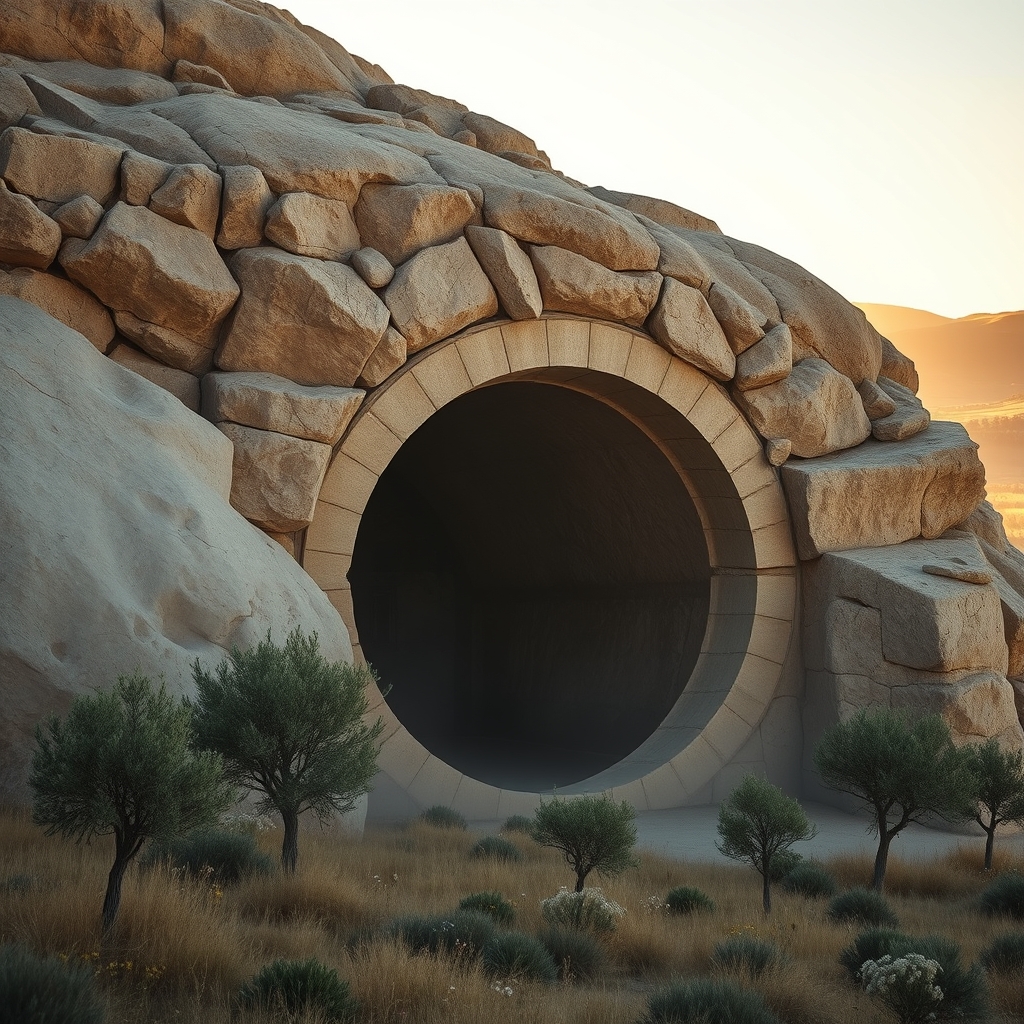
John Dominic Crossan has become one of the most well-known voices questioning the bodily resurrection of Jesus Christ. His views have influenced many and have led some to doubt the very foundation of our faith. However, what does the Bible itself say about the resurrection? Let us turn to Scripture and examine the truth.
Jesus Declared Himself Risen
Throughout His ministry, Jesus made it clear that He would die and rise again. He did not leave His followers guessing. He spoke plainly about what was to come.
In Matthew 16:21, Jesus declared, “From that time on Jesus began to explain to his disciples that he must go to Jerusalem and suffer many things… and that he must be killed and on the third day be raised to life.” Furthermore, He repeated this promise multiple times so there would be no confusion.
Consider these powerful declarations from Jesus Himself:
- Matthew 17:22–23 – Jesus told His disciples He would be killed and raised on the third day.
- Mark 8:31 – “He then began to teach them that the Son of Man must suffer many things… and that he must be killed and after three days rise again.”
- John 2:19–21 – Jesus said, “Destroy this temple, and I will raise it again in three days,” referring to His own body.
- Luke 24:6–7 – The angels at the tomb confirmed, “He is not here; he has risen!”
Jesus did not speak in metaphors about His resurrection. He spoke of a real, bodily rising from the dead. When John Dominic Crossan and others suggest the resurrection was only spiritual or symbolic, they stand against the very words of Christ. Jesus declared He would rise bodily, and He did exactly that.
The Apostles Preached a Risen, Bodily Jesus
After Jesus rose from the dead, the apostles did not preach a vague spiritual experience. They proclaimed a risen, physical, bodily Jesus. Their message was clear and consistent.
When the apostles chose a replacement for Judas, Peter stood before the crowd and said in Acts 1:21–22 that the new apostle must be someone who had been with them “beginning from John’s baptism to the time when Jesus was taken up from us. For one of these must become a witness with us of his resurrection.” The bodily resurrection was the central qualification for apostleship.
Furthermore, the apostles gave specific, physical evidence of the risen Jesus:
- Luke 24:39 – Jesus said, “Look at my hands and my feet. It is I myself! Touch me and see; a ghost does not have flesh and bones, as you see I have.”
- Luke 24:41–43 – Jesus ate a piece of broiled fish in their presence, proving He was physically alive.
- John 20:27 – Jesus invited Thomas to touch His wounds, saying, “Put your finger here; see my hands. Reach out your hand and put it into my side.”
- Acts 2:24–32 – Peter preached that God raised Jesus from the dead, “freeing him from the agony of death,” and that the disciples were all witnesses.
- Acts 3:15 – Peter declared, “You killed the author of life, but God raised him from the dead. And we are witnesses of this.”
The apostles staked their entire lives on the truth of the bodily resurrection. They were beaten, imprisoned, and martyred for this message. People do not die for what they know to be a metaphor. They died because they had seen the risen Lord with their own eyes.
Paul’s Testimony Inspires Us All
The Apostle Paul provides some of the most powerful testimony for the bodily resurrection of Jesus. His words have inspired believers for over two thousand years.
In 1 Corinthians 15:3–8, Paul lays out the resurrection evidence with remarkable clarity:
“For what I received I passed on to you as of first importance: that Christ died for our sins according to the Scriptures, that he was buried, that he was raised on the third day according to the Scriptures, and that he appeared to Cephas, and then to the Twelve. After that, he appeared to more than five hundred of the brothers and sisters at the same time… Then he appeared to James, then to all the apostles, and last of all he appeared to me also.”
Paul did not say Jesus appeared as a vision or a feeling. He said Jesus appeared — physically, visibly, tangibly. Moreover, Paul noted that most of the five hundred witnesses were still alive at the time of his writing. In other words, he was inviting people to go ask them themselves.
Paul also made the resurrection the cornerstone of Christian faith. In 1 Corinthians 15:14, he wrote, “And if Christ has not been raised, our preaching is useless and so is your faith.” The entire Christian faith stands or falls on the bodily resurrection of Jesus Christ.
Paul’s own life is a testimony to the power of the risen Jesus. He was once Saul, a persecutor of Christians. Then he encountered the risen Christ on the road to Damascus (Acts 9:1–6). That encounter transformed him completely. He went from killing Christians to becoming the greatest missionary the Church has ever known. Only a real, bodily resurrection could produce such a transformation.
The Bible’s Answer to John Dominic Crossan
When we examine what the Bible actually says, the answer is clear. Jesus declared He would rise bodily. The apostles witnessed and preached a physically risen Jesus. Paul built his entire ministry on the reality of the empty tomb and the living Christ.
John Dominic Crossan’s views may be popular in some academic circles, but they do not align with the testimony of Scripture. The Bible presents the bodily resurrection not as a symbol or a metaphor, but as a historical, physical, world-changing event.
As believers, we do not follow the opinions of scholars. We follow the risen Lord who said, “I am the resurrection and the life. The one who believes in me will live, even though they die” (John 11:25). The tomb is empty. Jesus is alive. And that changes everything.
Is John Dominic Crossan’s Jesus the Real Jesus?
Understanding the Difference Between Crossan’s Jesus and the Biblical Jesus
When we examine the Jesus presented by John Dominic Crossan, we find a figure who looks very different from the Jesus of Scripture. Crossan’s Jesus is a wandering sage who taught radical social wisdom. However, the Bible presents Jesus as the divine Son of God who came to save humanity from sin. The contrast between these two portraits is not a minor disagreement. It is a fundamental difference that changes everything about our faith.
Crossan’s Jesus never claimed to be God. The biblical Jesus declared, “I and the Father are one” (John 10:30). Crossan’s Jesus did not perform miracles. The biblical Jesus healed the sick, calmed storms, and raised the dead. Crossan’s Jesus died and stayed dead. The biblical Jesus rose again in a glorified body and appeared to over 500 witnesses (1 Corinthians 15:6).
What Scripture Tells Us About the Real Jesus
The Bible gives us a clear and consistent picture of who Jesus is. He is not merely a teacher or a prophet. He is the eternal Word who became flesh (John 1:14). He is the Lamb of God who takes away the sin of the world (John 1:29). He is the way, the truth, and the life (John 14:6).
Consider what Scripture reveals about the real Jesus:
- He is fully God and fully man. “For in Christ all the fullness of the Deity lives in bodily form” (Colossians 2:9).
- He came to die for our sins. “Christ died for our sins according to the Scriptures” (1 Corinthians 15:3).
- He rose bodily from the grave. “He is not here; he has risen, just as he said” (Matthew 28:6).
- He is seated at the right hand of the Father. “Christ Jesus, who died — more than that, who was raised to life — is at the right hand of God” (Romans 8:34).
- He is coming again. “This same Jesus, who has been taken from you into heaven, will come back in the same way” (Acts 1:11).
A Side-by-Side Comparison
To help clarify the differences, here is a direct comparison between Crossan’s portrayal and the biblical account:
| Topic | Crossan’s Jesus | The Biblical Jesus |
|---|---|---|
| Identity | A human wisdom teacher | The Son of God, fully divine and fully human |
| Miracles | Myths and legends added later | Real events witnessed by many |
| Death | A tragic end to a revolutionary life | A sacrificial atonement for sin |
| Resurrection | A spiritual idea, not a physical event | A bodily, historical resurrection |
| Authority of Scripture | A human document full of contradictions | The inspired, authoritative Word of God |
Why This Matters for Your Faith
The question is not simply academic. It is deeply personal. If Crossan is right, then Christianity is a beautiful philosophy with no power to save. However, if the Bible is right, then Jesus is alive today. He forgives sin. He transforms lives. He offers eternal hope.
Paul made this point clearly: “If Christ has not been raised, your faith is futile; you are still in your sins” (1 Corinthians 15:17). The resurrection is not optional. It is the foundation of everything we believe. Without it, there is no gospel. With it, we have a living Savior who holds all authority in heaven and on earth (Matthew 28:18).
Crossan’s Jesus may appeal to those who want a comfortable, non-threatening teacher. But he cannot save. He cannot forgive. He cannot conquer death. Only the real Jesus — the Jesus of Scripture — can do that. As Peter declared, “Salvation is found in no one else, for there is no other name under heaven given to mankind by which we must be saved” (Acts 4:12).
Resting in the Truth
We do not need to be afraid of scholars like John Dominic Crossan. Their ideas may sound impressive. However, God’s Word stands firm forever (1 Peter 1:25). The real Jesus has already proven who He is. He did it through His sinless life. He did it through His sacrificial death. Most of all, He did it through His glorious resurrection.
When you open your Bible, you are not reading the opinions of men. You are hearing the voice of the living God. He is telling you the truth about His Son. Jesus is not a reconstructed figure from history. He is the risen Lord who walks with you today. He is the same yesterday, today, and forever (Hebrews 13:8). And He is more than enough.
John Dominic Crossan: Books and Key Writings
John Dominic Crossan has authored numerous books that are widely studied in academic and theological circles. Understanding his major works helps believers recognize the theological framework they represent. Furthermore, this knowledge equips Christians to engage thoughtfully with those influenced by his claims.
Below is a list of his most significant publications, along with a brief description of each and the primary concerns they raise from a Biblical perspective.
Major Works by John Dominic Crossan
| Title | Primary Focus | Key Concern for Christians |
|---|---|---|
| The Historical Jesus: The Life of a Mediterranean Jewish Peasant (1991) | Presents Jesus as a secular social activist rather than the divine Son of God. | Strips Jesus of His divinity and reduces His mission to a political movement. (John 1:1–14 clearly affirms that Jesus is God in the flesh.) |
| Jesus: A Revolutionary Biography (1994) | Portrays Jesus as a wisdom teacher and social reformer. | Ignores the miracles, virgin birth, and resurrection that define the Gospel message. |
| Who Killed Jesus? (1995) | Examines the political crucifixion but denies its redemptive purpose. | Contradicts scripture, which teaches that Jesus laid down His life willingly for the salvation of humanity (John 10:17–18). |
| The Birth of Christianity (1998) | Explores early Christian communities through a non-supernatural lens. | Dismisses the authority of eyewitness testimony found throughout the New Testament. |
| The Resurrection of Jesus: John Dominic Crossan and N.T. Wright in Dialogue (2006) | Presents his view that the resurrection was spiritual, not bodily. | Directly contradicts Luke 24:39, where the risen Jesus declares, “Touch me and see; a ghost does not have flesh and bones, as you see I have.” |
| The Power of Parable (2012) | Analyzes Jesus’ parables as literature rather than divinely inspired truth. | Undermines the sacred nature of the words Jesus spoke to reveal the Kingdom of God (Matthew 13:11). |
| How to Read the Bible and Still Be a Christian (2015) | Offers a human-centered method of Biblical interpretation. | Rejects the Bible as the inspired, authoritative Word of God (2 Timothy 3:16). |
Critics of orthodox Christianity have cited Crossan’s works for decades. He is a founding member of the Jesus Seminar, a group of scholars who voted on which sayings and deeds of Jesus they considered authentic. As a result, they rejected a significant portion of the Gospels as historically unreliable. [4]
How Should Christians Approach These Books?
When Christians encounter Crossan’s writings, several principles should guide our response:
- Know the Word first. A thorough grounding in scripture is the best defense against theological error. Jesus Himself answered temptation with Scripture (Matthew 4:1–11).
- Understand the assumptions. Crossan begins with a presupposition that miracles are impossible. However, the Bible declares that “with God all things are possible” (Matthew 19:26).
- Respond with truth and grace. When discussing these ideas with others, speak the truth firmly while demonstrating the love of Christ (Ephesians 4:15).
- Point to the risen Savior. The resurrection is the cornerstone of the faith. Without it, as Paul wrote, “your faith is futile” (1 Corinthians 15:17).
The real Jesus is not the diminished figure of Crossan’s reconstruction. He is the Lord who conquered death, forgives sin, and offers eternal life to all who believe. As it is written, “If you declare with your mouth, ‘Jesus is Lord,’ and believe in your heart that God raised him from the dead, you will be saved” (Romans 10:9).
John Dominic Crossan Wikipedia and Online Resources
John Dominic Crossan is a well-known figure in modern biblical scholarship. Many people search for reliable information about him online. If you are seeking clarity about his claims and Jesus, it can help to know where to look. Below are trusted Wikipedia and online resources that provide information about John Dominic Crossan and the controversies surrounding his theological positions.
Wikipedia Page on John Dominic Crossan
The most widely referenced overview of his life and work is found on Wikipedia. This page includes his biography, scholarly contributions, and key controversies such as his views on the bodily resurrection.
- It covers his education and academic background.
- It explains his role as co-founder of the Jesus Seminar.
- It documents his shift away from orthodox Christian teaching on the resurrection.
- Wikipedia can be a useful starting point. However, remember it is edited by many contributors and may reflect a secular or critical viewpoint.
Academic and Religious Reference Sites
Several academic and faith-based platforms summarize or analyze Crossan’s work. These can help you explore both his arguments and historic Christian responses.
| Resource Type | Helpful For |
|---|---|
| University Library Databases | Finding scholarly articles and essays on his views and the Jesus Seminar movement. |
| Christian Apologetics Websites | Understanding a biblical response to his claims about Jesus and the resurrection. |
| Church and Seminary Pages | Locating teachings that contrast Crossan’s ideas with historic Christian doctrine. |
| Peer-Reviewed Journals | Reading detailed theological analysis from various perspectives. |
Trusted Christian Responses Online
When you are trying to respond to Crossan’s claims, it is important to use resources that honor Scripture. Many Christian organizations and authors have written detailed responses to his teachings about Jesus and the resurrection.
- Some authors defend the reliability of the Gospels and the bodily resurrection of Scripture.
- Others compare Crossan’s claims with eyewitness testimony from the New Testament.
- Still others help believers understand the difference between faith in Jesus and modern skepticism.
Using Online Resources Wisely
As you read about John Dominic Crossan online, remember to compare every claim with the Bible. Scripture warns us to test what we hear against God’s Word (1 John 4:1). A good practice is to:
- Note the main claim or idea from the source.
- Find the relevant sections of Scripture that speak to the topic.
- Ask whether the claims line up with what the Bible teaches about Jesus.
- Seek guidance through prayer and trusted Christian teachers.
Focusing on the Real Jesus
As you explore these resources, keep your focus on the true Jesus revealed in Scripture. As Paul wrote, “For I determined not to know anything among you except Jesus Christ and Him crucified” (1 Corinthians 2:2, NKJV). The Jesus of the Bible:
- Lived as fully God and fully man.
- Died on the cross for our sins.
- Rose bodily from the dead.
- Is Lord over all and offers salvation to everyone who believes.
Online tools can help you understand figures like John Dominic Crossan. However, our final authority is not a scholar’s opinion, but the Word of God. When you compare the two, Scripture will always point you to the risen, sovereign Jesus—He alone is Lord and Savior.
Why Do People Search for John Dominic Crossan?
Have you ever stumbled across the name John Dominic Crossan while reading about Jesus online? You are not alone. Many Christians and curious seekers encounter his name and wonder who he is—and why his views matter. Understanding why people search for John Dominic Crossan can help you navigate conversations about faith with greater confidence and clarity.
He Is a Well-Known Biblical Scholar
John Dominic Crossan is one of the most widely discussed scholars in modern religious studies. For decades, he has written books, appeared in documentaries, and lectured at universities around the world. Because of his prominence, his name often appears at the top of search results whenever people look up topics like the historical Jesus, the resurrection, or biblical interpretation. His academic reputation draws attention—both from those who agree with him and from those who strongly disagree.
His Views Challenge Core Christian Beliefs
Many people search for Crossan because his teachings directly contradict foundational truths of the Christian faith. He was a founding member of the controversial Jesus Seminar, a group of scholars who voted on which words and deeds of Jesus they believed were historically authentic. They used colored beads to cast their votes—a method that many Christians found deeply troubling. [5]
Crossan’s own conclusions are even more concerning. He denies the bodily resurrection of Jesus. He argues that Jesus’ body decayed in a tomb and that the resurrection was merely a spiritual or metaphorical experience. For Christians who build their faith on the risen Christ, understanding these claims is essential. We must know what is being taught so we can respond with truth.
His Ideas Spread Through Media and Education
Crossan’s views reach far beyond academic journals. He has been featured in numerous television documentaries and interviews. Many people first encounter his ideas through these media sources. In addition, some of his books are assigned reading in university courses on religion and history. As a result, students and lifelong learners alike often search his name to better understand what they have heard or read.
Christians Search for Answers
Perhaps the most encouraging reason people search for John Dominic Crossan is this: Christians are looking for answers. When someone quotes Crossan to challenge the resurrection or the authority of Scripture, believers want to respond wisely. First Peter 3:15 tells us, “But in your hearts revere Christ as Lord. Always be prepared to give an answer to everyone who asks you to give the reason for the hope that that you have.” Searching for information about Crossan is often the first step toward fulfilling that biblical call.
Here are some common reasons Christians look him up:
- Someone at work, school, or church quoted him and they want to understand his claims
- They heard a documentary reference the Jesus Seminar and want to know more
- They personally read one of his books and want to compare his views with Scripture
- They want to be equipped to share the Gospel confidently when Crossan’s ideas come up in conversation
Searching Leads to Deeper Faith
Here is the beautiful truth: studying what others claim about Jesus often strengthens our own faith. When we examine challenges to the resurrection and then turn to Scripture, we discover just how solid our foundation really is. The apostle Paul wrote in Romans 1:4 that Jesus “was declared to be the Son of God in power according to the Spirit of holiness by his resurrection from the dead, Jesus Christ our Lord.”
Every search for Crossan’s name is an opportunity—an opportunity to dig deeper into God’s Word, to grow in knowledge, and to stand firm in the truth that Jesus Christ is alive. He is not a metaphor. He is not a symbol. He is Lord of lords and King of kings, and no scholar’s theory can change that eternal reality.
How to Respond When Someone Quotes John Dominic Crossan
When someone quotes John Dominic Crossan, it can catch you off guard. However, you do not need a theology degree to respond. You just need to stand firmly on the Word of God. Always remember to respond with both truth and grace, as Colossians 4:6 instructs us.
Step 1: Listen with Compassion
First, listen carefully to the person speaking. Often, people quote Crossan because they are genuinely seeking truth. Furthermore, they may be struggling with doubts about the Bible. Therefore, do not react with anger. Instead, show them the love of Jesus.
Step 2: Identify the Core Claim
Crossan’s quotes usually target two key areas. Identify which one is being discussed:
- The reliability of Scripture: He suggests the Bible is myth or political propaganda.
- The bodily resurrection: He claims the resurrection was only a spiritual experience or a shared hallucination, not a historical event.
Step 3: Ask Clarifying Questions
Next, gently ask questions to expose the flaws in Crossan’s logic. For instance, if they claim the resurrection was a hallucination, ask how over 500 people could share the exact same hallucination at once. Additionally, ask why the apostles would die for a story they knew was a lie. As a result, they will see that Crossan’s theories lack historical backing [6].
Step 4: Counter with Scripture
Then, lovingly replace Crossan’s claims with the unshakeable truth of the Bible. Use these simple, powerful responses:
- If they deny Scripture: Remind them that Jesus verified the Old Testament’s authority. In Matthew 5:18, Jesus said that not one letter of God’s Word will pass away.
- If they deny the bodily resurrection: Point them to Jesus’ own words in Luke 24:39. He told His disciples to touch His physical body, saying, “A spirit does not have flesh and bones as you see I have.”
Step 5: Point to the Real Jesus
Finally, redirect the conversation back to the true Jesus. Crossan creates a human teacher who stayed in the grave. Conversely, the Bible reveals the living Son of God who conquered death. Therefore, remind your friend that our hope is not in a myth. Rather, our hope is in the risen Lord. As Paul boldly declared in 1 Corinthians 15:20, “Christ has indeed been raised from the dead.”
Quick Reference Guide
Use this table to quickly prepare your responses:
| Crossan’s Claim | Biblical Response | Scripture Reference |
|---|---|---|
| The Bible is just human tradition. | Jesus affirmed Scripture as God’s eternal truth. | Matthew 5:18 |
| The resurrection was a shared vision. | Jesus proved His physical body was alive and real. | Luke 24:39 |
| Jesus was merely a wise peasant. | Jesus is the divine Son of God and Lord of all. | John 1:14 |
In conclusion, you do not need to win a debate. Instead, your goal is to gently guide others to the true Jesus. When you speak the truth in love, you honor Christ and offer real hope to a searching world.
Frequently Asked Questions
Is John Dominic Crossan a Christian
This is a question many believers have asked. The answer requires careful thought. By his own admission, Crossan was once a Catholic priest. However, his later writings reveal a dramatic departure from orthodox Christian faith. He ultimately left the priesthood altogether.
Today, Crossan identifies himself as a “historian” and “scholar” rather than a practicing Christian in the biblical sense. His theological views reject core Christian doctrines. The resurrection of Jesus, the deity of Christ, and the authority of Scripture are all affirmed by true Christians. Crossan specifically denies these truths.
For believers, this distinction matters greatly. A Christian is someone who trusts in Jesus as Lord and Savior (John 3:16). Crossan’s published works consistently contradict this faith.
So, while he may have Christian roots, his current beliefs place him outside biblical Christianity. His teachings should not be treated as Christian doctrine.
John Dominic Crossan resurrection
Crossan’s view of the resurrection differs radically from what the Bible teaches. He rejects the bodily resurrection of Jesus Christ. Instead, he claims the resurrection was a spiritual experience or metaphor.
He argues that Jesus’ body remained in the tomb. The resurrection, in his view, was the disciples’ later realization of Jesus’ teachings. This directly contradicts Scripture, which clearly states:
- Luke 24:39 — “Look at my hands and my feet. It is I myself! Touch me and see; a ghost does not have flesh and bones, as you see I have.”
- 1 Corinthians 15:14 — “And if Christ has not been raised, our preaching is useless and so is your faith.”
- John 2:19-21 — Jesus Himself predicted His bodily resurrection.
We must remember: the bodily resurrection is not optional for Christians. It is the foundation of our faith. Without it, as Paul says, “we are of all people most to be pitied.”
Furthermore, the apostles died as martyrs. They were willing to suffer and die because they had seen the risen, bodily Christ. Their eyewitness testimony cannot be dismissed as mere metaphor.
Is John Dominic Crossan Catholic
Crossan was indeed a Catholic priest, ordained in 1957. However, his journey took a significant turn. He left the priesthood in 1969, though he remained a Catholic for some time after.
Over the years, his theology moved far outside both Catholic and Protestant orthodoxy. He is currently associated with the Jesus Seminar, a group of scholars known for their highly skeptical approach to the Gospels. [2]
So while Crossan has Catholic roots, his later views on Scripture, Jesus, and the resurrection do not align with official Catholic teaching either. His beliefs occupy a space far outside traditional Christianity.
For believers, the most important question is not Crossan’s denominational background. It is whether his teachings align with God’s Word. They do not.
Is John Dominic Crossan Still alive
As of the most recent available information, John Dominic Crossan remains alive. He was born on February 17, 1934, in Nenagh, County Tipperary, Ireland. That would make him approximately 90 years old. [1]
It should be noted that websites and resources may not always be updated immediately regarding a person’s current status. For the most up-to-date information, checking reputable biographical sources is recommended.
Regardless of his current status, the content of his teachings is what matters for believers. We must always evaluate ideas against the truth of Scripture.
Why did John Dominic Crossan leave the priesthood?
Crossan left the Catholic priesthood in 1969 after serving for approximately 12 years. His reasons were multifaceted. He has spoken about intellectual disagreements with institutional structures. He also desired greater freedom in his academic research.
However, there is a deeper pattern worth noting. Crossan’s departure from the priesthood coincided with a growing skepticism toward orthodox Christian doctrine. His later writings reveal a progressive movement away from the faith he once served.
This trajectory is not unique to Crossan. Scripture itself warns us:
- 2 Timothy 4:3-4 — “For the time will come when people will not put up with sound doctrine. Instead, to suit their own desires, they will gather around them a great number of teachers to say itching ears what they want to hear. They will turn their ears away from the truth and turn aside to myths.”
While we should approach Crossan with empathy and compassion, we must also hold firmly to the truth. The priesthood, the church, and institutional structures are secondary. What matters most is the Gospel of Jesus Christ.
We should pray for all who have wandered from the faith. God’s grace is sufficient. His truth endures forever.
Standing on the Truth of the Risen Jesus

As we have explored the claims of John Dominic Crossan, we must now turn to the truth that stands forever. The bodily resurrection of Jesus Christ is not a point of debate for believers. It is the foundation upon which our entire faith rests.
Jesus did not merely inspire a movement. He rose from the grave. This is the central difference between the biblical gospel and the theories of scholars like Crossan. When we speak of the risen Jesus, we are not discussing metaphor. We are declaring a historical event with eternal consequences. “If Christ be not risen, then is our preaching vain, and your faith is also vain” (1 Corinthians 15:14).
The Gospels give us a clear, consistent witness. Jesus appeared to Mary Magdalene at the tomb. He walked with two disciples on the road to Emmaus. He showed His wounds to Thomas. He ate fish on the shore of Galilee. These were not visions. They were real encounters with a living, bodily Savior.
Furthermore, the early Church did not begin because people remembered a wise teacher. It began because people met a risen Lord. The apostles faced persecution and death for this testimony. People do not die for a metaphor. They die for the truth they know firsthand.
John Dominic Crossan asks us to reconsider the nature of the resurrection. However, Scripture calls us to proclaim it without wavering. The Jesus of the Bible is the Jesus who conquered death. He is the same “yesterday, and to day, and for ever” (Hebrews 13:8). When we stand on the truth of the risen Jesus, we stand on solid ground.
The invitation of the gospel remains open to everyone, including those influenced by skeptical scholarship. Jesus Christ is Lord. He is not a historical puzzle to be debated. He is the living God who calls us to repentance and faith. We do not need to fear difficult questions. We need only to look to the risen Christ, who holds all authority in heaven and on earth.
- The bodily resurrection is the cornerstone of Christian faith.
- Historical evidence and eyewitness testimony affirm the empty tomb.
- The early Church was birthed by the power of the risen Jesus.
- Jesus is alive today, and He offers eternal life to all who believe.
In conclusion, the debate over John Dominic Crossan’s views ultimately leads us back to a simple question. Who is Jesus to you? The Bible reveals Him as the Son of God, the Lamb who was slain, and the King who lives forever. We stand on this truth, and it will never be shaken.
Sources
- https://en.wikipedia.org/wiki/John_Dominic_Crossan
- https://en.wikipedia.org/wiki/Jesus_Seminar
- https://www.biola.edu/talbot/reed/reflections/responding-to-the-facts-about-the-jesus-seminar
- https://www.hodder.co.uk/authors/john-dominic-crossan
- https://www.religion-online.org/article/the-jesus-seminar-and-its-critics/
- https://www.bethinking.org/is-christianity-believable/the-resurrection-hallucination-theory