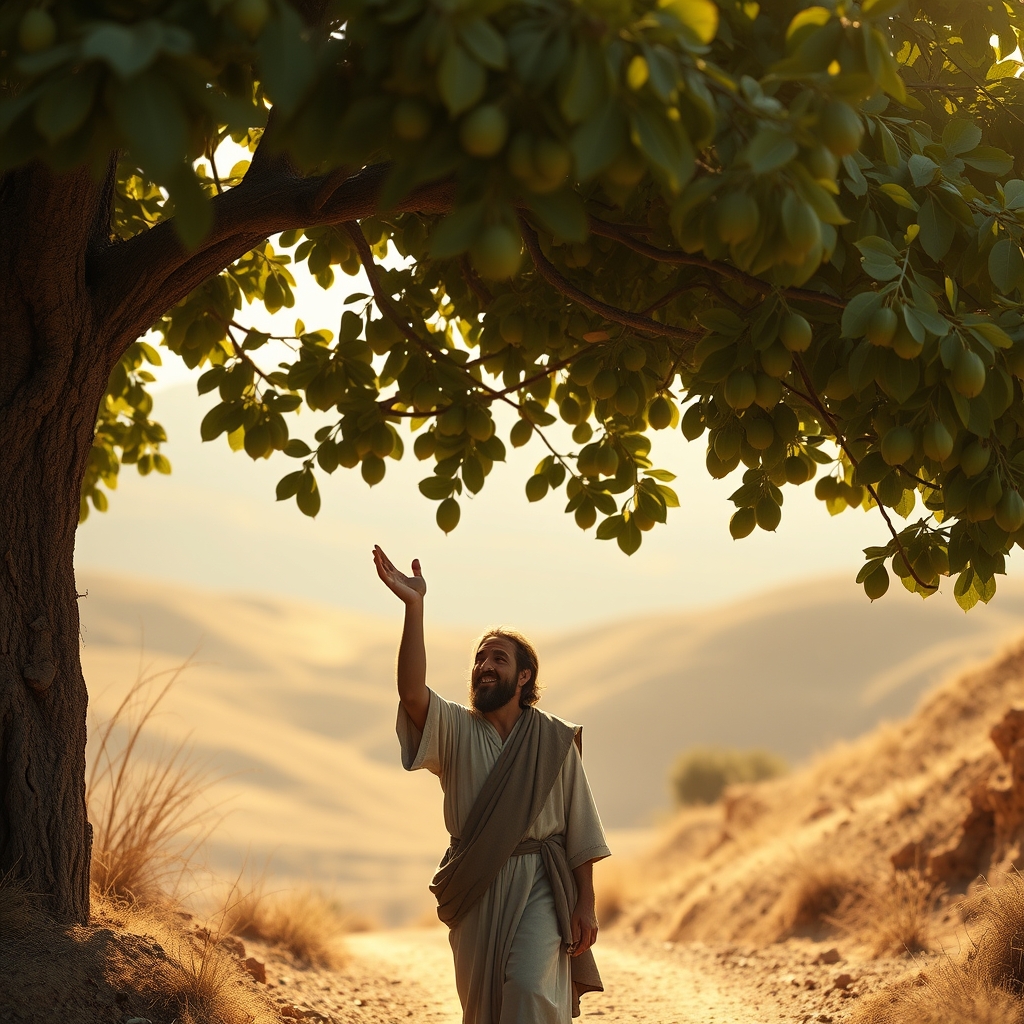
Zacchaeus was a wealthy chief tax collector in Jericho whom Jesus personally called down from a sycamore tree before going to his house, resulting in Zacchaeus’s immediate repentance and salvation. This powerful encounter, recorded in Luke 19:1-10, demonstrates that no one is beyond the reach of God’s transforming grace through Jesus Christ.
What happens when the most unlikely person in town becomes the one whom Jesus chooses to visit? The story of Zacchaeus in the Bible is one of the most powerful and encouraging accounts in all of scripture — a true story of radical transformation that proves no one is beyond the reach of God’s grace. In Luke 19, we encounter a wealthy tax collector, despised by his community, who climbs a sycamore tree just to catch a glimpse of Jesus passing by. What happens next is a life-changing encounter that reveals the heart of the Gospel: that Jesus Christ came not for the righteous, but for sinners in desperate need of a Savior.
In this article, we will walk through the true story of Jesus and Zacchaeus, exploring the biblical account in detail, the meaning behind Zacchaeus’s name, the moral lessons his story teaches us, and the lasting impact of that single day when Jesus called a lost man down from a tree and into redemption. Whether you are a new believer discovering these truths for the first time or a mature Christian seeking encouragement, the story of Zacchaeus in the Bible offers a profound reminder that salvation is available to all who respond to Jesus in faith — just as He promised in Luke 19:10, “For the Son of Man came to seek and to save the lost.”
Who Was Zacchaeus in the Bible?

The Biblical Account in Luke 19:1-10
The story of Zacchaeus in the Bible is one of the most beautiful and powerful moments in the Gospels. It is found only in the Gospel of Luke, chapter 19, verses 1 through 10. In this account, Jesus and Zacchaeus meet in a way that reveals the very heart of God’s love for every sinner.
As Jesus was passing through the city of Jericho, a man named Zacchaeus, who was a chief tax collector and very wealthy, wanted to see who Jesus was. However, because he was short in stature, he could not see over the crowd. So he ran ahead and climbed a sycamore tree. When Jesus reached that place, He looked up and said, “Zacchaeus, come down immediately. I must stay at your house today.” Joyfully, Zacchaeus welcomed Jesus into his home. In response to this encounter, Zacchaeus stood and declared that he would give half of his possessions to the poor and repay four times anything he had taken falsely. Jesus then proclaimed, “Today salvation has come to this house, because this man, too, is a son of Abraham.”
The full passage concludes with these profound words: “For the Son of Man came to seek and to save the lost” (Luke 19:10, NKJV). This single verse summarizes the entire mission of Jesus Christ.
Zacchaeus: A Chief Tax Collector
To fully understand the story of Zacchaeus, we must understand who tax collectors were in the ancient world. Tax collectors, also called publicans, were among the most despised people in Jewish society. They worked for the Roman Empire, which occupied Israel at the time. As a result, they were seen as traitors and collaborators with a foreign oppressor.
Furthermore, tax collectors were known for their dishonesty. They were permitted to collect more than the required amount and keep the difference. This practice made them wealthy but deeply hated by their own people. Many religious leaders of the day considered them beyond the reach of God’s grace.
Zacchaeus held an even more prominent and notorious position. He was not just an ordinary tax collector. He was a chief tax collector. This meant he oversaw other tax collectors and likely amassed enormous wealth. His sin was not hidden. It was public, ongoing, and deeply offensive to those around him.
Yet the very fact that Jesus and Zacchaeus had this encounter is a profound testimony. It shows that no person is too sinful, too corrupt, or too far gone for the transforming love of Christ. Jesus did not come for the righteous. He came for people exactly like Zacchaeus.
The story of Zacchaeus stands as a living reminder that the Gospel of Jesus Christ is not for the perfect. It is for the broken, the outcast, and the lost. Today, just as in Jericho, Jesus still seeks those who feel unworthy and invites them into salvation.
Why Did Zacchaeus Climb a Sycamore Tree?
`html
Zacchaeus’s Desperation to See Jesus
The Gospels record a simple yet powerful detail: Zacchaeus climbed a sycamore tree to see Jesus. This was no casual curiosity. The Bible tells us, “He wanted to see who Jesus was, but because he was short he could not see over the crowd” (Luke 19:3, NIV). His small stature created a physical barrier. However, that barrier revealed something far deeper — a desperate hunger in his heart.
Zacchaeus was a chief tax collector in Jericho. He was also deeply despised by his own people. Tax collectors were seen as traitors who served Rome and enriched themselves at the expense of their neighbors. As a result, most people would have considered him beyond the reach of God’s grace. Yet something drove him forward. He was not willing to let a crowd stand between him and the Man he had heard about.
His Determination Despite Obstacles
Consider what Zacchaeus had to overcome just to glimpse Jesus:
- Physical limitation: He was “short in stature” and could not see over the people surrounding Jesus.
- Social rejection: As a wealthy tax collector, he was viewed as a sinner and an outcast.
- Public vulnerability: Climbing a tree was undignified for a man of his status and wealth.
Despite all of this, Zacchaeus ran ahead and climbed the sycamore tree. He did not care about appearances. He cared only about encountering Jesus. His actions reveal a man who recognized his own need. He was not merely intrigued by rumors. He was desperate for something he could not find anywhere else.
What His Desperation Teaches Us
The story of Zacchaeus in the Bible is more than an ancient account. It is a living picture of what happens when a soul begins to seek God. Jesus later declared, “For the Son of Man came to seek and to save the lost” (Luke 19:10). Zacchaeus’s climb was not ignored by heaven. Before he spoke a word, Jesus had already noticed him. Before he could formulate a request, grace was on its way.
This is the heart of the story of Zacchaeus — God meets the desperate seeker. It does not matter how far someone has wandered. It does not matter what others think. When a person truly seeks Jesus, He responds. He calls them by name. He enters their home. He transforms their life. Jesus and Zacchaeus met in that tree, and from that moment, everything changed.
`
What Is the Moral of the Story of Zacchaeus?

The story of Zacchaeus in the Bible carries one of the most powerful and beautiful spiritual messages found anywhere in Scripture. At its core, the story of Zacchaeus reveals two timeless truths that remain just as relevant today. It teaches us about the reality of salvation and repentance. Furthermore, it shows us the heart of Jesus and His mission on earth.
A Lesson in Salvation and Repentance
The story found in Luke 19:1–10 is a perfect example of how salvation truly works. It begins not with human effort, but with a desperate hunger to encounter the Lord. Zacchaeus was a wealthy chief tax collector. He had everything the world said should make him happy. Yet, something was missing. He was spiritually empty, and he knew it.
However, when he heard that Jesus was passing through Jericho, something stirred in his heart. He ran ahead of the crowd and climbed a sycamore tree just to get a glimpse of Jesus. He was short in stature, but his desire to see Jesus was great. In that simple act of climbing the tree, we see the beginning of faith. Zacchaeus did not know all the religious rules. He simply wanted to see Jesus.
Then something remarkable happened. Jesus stopped at the base of the tree. He looked up and called Zacchaeus by name. He told him to come down because He must stay at his house that day. This moment changed everything. Why? Because Jesus chose to enter the home of a sinner. In the eyes of the religious leaders, Zacchaeus was beyond hope. He was a traitor to his own people. He had grown wealthy by cheating others. Yet Jesus saw past all of that. He saw a soul in need of grace.
As a result, Zacchaeus stood up and made a stunning declaration:
- He would give half of his possessions to the poor.
- He would repay four times the amount he had cheated from anyone.
- He publicly committed to a life of justice and restitution.
This was not just generosity. This was true repentance. It was a visible, costly turning away from his old life. In addition, Jesus declared that salvation had come to his house that day. He said, “Today salvation has come to this house, because this man, too, is a son of Abraham. For the Son of Man came to seek and to save the lost” (Luke 19:9–10).
Salvation is not something we earn by good works. It is a gift from God. However, when salvation truly takes root, it produces fruit. Zacchaeus’s repentance proved that his heart had been genuinely transformed. His actions flowed from a faith that had been awakened by the voice of Jesus calling him down from that tree.[1]
Jesus Came to Seek and Save the Lost
The second great moral of the story of Jesus and Zacchaeus is not just about Zacchaeus. It is about the heart of Jesus Himself. This is a truth that every Christian and every seeker needs to understand. Jesus came to earth on a mission. He did not come for those who thought they were already righteous. He came to seek and save those who were lost.
Zacchaeus was lost in more ways than one. He was lost in his sin. He was lost in his pursuit of wealth. He was lost in the approval of men rather than the approval of God. Yet Jesus saw him. He called him by name. He invited Himself into his home. This shows that no one is too far gone for the reach of Jesus Christ.
Furthermore, this story powerfully illustrates what humility and openness look like. Zacchaeus did not approach Jesus with pride or religious credentials. He climbed a tree, knowing how foolish he might look to others. In doing so, he laid aside his reputation. He opened his heart, and Jesus met him right there.
As believers, this story serves as a personal reminder. It calls us to:
- Examine our own hearts for areas where we have placed wealth, power, or reputation above our love for God.
- Be willing to surrender everything at the feet of Jesus when He calls us by name.
- Trust that Jesus is still in the business of seeking and saving the lost today.
- Recognize that true repentance is not just sorrow, but a transformed life marked by action.
The moral of the story of Zacchaeus in the Bible is not merely a historical account. It is a living testimony to the transforming power of Jesus Christ. He still seeks those who are lost. He still calls them by name. And when a life is surrendered to Him, salvation comes, just as surely as it came to the house of Zacchaeus that day in Jericho.
What Happened to Zacchaeus After Meeting Jesus?
Zacchaeus’s Immediate Transformation
The moment Jesus spoke to Zacchaeus, everything changed. This encounter with the Son of God did not leave Zacchaeus unchanged. It produced an immediate and powerful transformation in his heart. In Luke 19:6, we read that Zacchaeus “came down at once and welcomed Him gladly.” His response was not slow. It was not hesitant. It was immediate and joyful. When the Lord Jesus invites Himself into a life, genuine transformation follows without delay.
Before this moment, Zacchaeus was a man consumed by greed. He had built his fortune by exploiting his own people as a chief tax collector. The Romans trusted him, but his neighbors despised him. Nevertheless, the power of Jesus broke through every wall Zacchaeus had built. The Bible tells us that Zacchaeus made a bold declaration right then and there. He stood before Jesus and said:
- “Look, Lord, I give half of my goods to the poor.”
- “And if I have taken anything from anyone by false accusation, I restore fourfold.” (Luke 19:8, NKJV)
This was not a small promise. Zacchaeus did not offer a token gesture. Instead, he poured out the evidence of a heart that had been truly changed by the grace of Jesus Christ. His words reveal that he understood something profound: meeting Jesus demands more than admiration. It demands action.
Furthermore, notice the reaction of the crowd. They grumbled and muttered, saying, “He has gone to be a guest with a man who is a sinner” (Luke 19:7). Their judgment was harsh and unforgiving. However, Jesus did not see Zacchaeus the way the crowd did. Instead, Jesus saw a soul ready for redemption. God does not look at outward appearances. He looks at the heart (1 Samuel 16:7). Zacchaeus proved this truth that very day.
Jesus then spoke one of the most beautiful verses in all of Scripture. He declared:
“Today salvation has come to this house, because he too is a son of Abraham. For the Son of Man came to seek and to save the lost.” (Luke 19:9-10, NKJV)
This declaration was revolutionary. In one sentence, Jesus affirmed three eternal truths:
- Salvation is personal. It came specifically “to this house.”
- Salvation is inclusive. Even a despised tax collector like Zacchaeus is “a son of Abraham” through faith.
- Salvation is the mission of Christ. Jesus came specifically “to seek and to save the lost.”
The transformation of Zacchaeus teaches us that no one is too far gone for the love of Jesus. Whether a person has committed small sins or great ones, the blood of Christ is sufficient to wash them all away (1 John 1:7). Zacchaeus’s story is not just an ancient account. It is a living testimony that Jesus still transforms lives today.
The Cost of True Repentance
True repentance always comes with a cost. It is not merely feeling sorry for sin. Genuine repentance involves a complete change of mind, heart, and direction. Zacchaeus demonstrated this reality in the most practical and costly way possible. He voluntarily committed to giving away half of his considerable wealth to the poor. Additionally, he pledged to repay four times the amount to anyone he had cheated.
To understand the weight of this commitment, consider the Roman law of that era. Under Roman legal standards, the maximum restitution for theft was typically four times the amount stolen. [2] Zacchaeus was essentially binding himself to the highest standard of repayment the ancient world recognized. He was not offering the minimum. He was offering everything required and more. This reveals the depth of his change of heart.
Many people wonder: did Zacchaeus have to do these things to earn his salvation? The answer is absolutely not. Salvation is a free gift from God. No amount of good works can earn it (Ephesians 2:8-9). However, true saving faith always produces real fruit. As James 2:17 teaches, “Faith by itself, if it does not have works, is dead.” Zacchaeus’s generosity and repentance were not the cause of his salvation. They were the proof of it.
Furthermore, the cost of Zacchaeus’s repentance was financial, but it also affected his entire life. Repentance involves:
- Turning away from sin completely. Zacchaeus left his corrupt practices behind.
- Making things right with others. He took personal responsibility for the harm he caused.
- Giving sacrificially. He joyfully parted with his wealth to bless those in need.
- Following Jesus wholeheartedly. He welcomed Jesus into his home and his life without reservation.
This story challenges every believer to examine the authenticity of their own faith. Are we willing to pay the cost of true discipleship? Jesus Himself said, “If anyone desires to come after Me, let him deny himself, and take up his cross, and follow Me” (Matthew 16:24, NKJV). Zacchaeus took up his cross that day. He traded his old life of greed for a new life of generosity and faith.
The story of Zacchaeus in the Bible is ultimately a story about the transforming power of Jesus Christ. It shows us that when a person truly encounters the living God, nothing remains the same. Old habits fall away. Old sins are confessed. Old treasures lose their grip. In their place, the love of Christ fills the heart and produces a life that glorifies God.
As you reflect on the story of Jesus and Zacchaeus, remember this: the same Jesus who stopped under that sycamore tree is the same Jesus who stands ready to transform your life today. He is not willing that any should perish but that all should come to repentance (2 Peter 3:9). Will you, like Zacchaeus, welcome Him gladly into your heart?
What Does the Name Zacchaeus Mean?
The Etymology and Significance of “Zacchaeus”
The name Zacchaeus carries profound meaning that enriches our understanding of this beloved biblical account. Understanding what his name means helps us appreciate the depth of God’s grace demonstrated in the story of Zacchaeus. [3]
The name Zacchaeus comes from the Greek form of a Hebrew name. It is derived from the Hebrew name Zakkai, which means “pure” or “innocent.” This meaning is quite ironic given Zacchaeus’s profession and reputation. He was a chief tax collector, a man known for extortion and greed. Yet his very name pointed to a different destiny.
The Irony of a Tax Collector Named “Pure”
Consider the contrast between Zacchaeus’s name and his life. His parents likely gave him this name with hopes of righteousness. However, as a chief tax collector in Jericho, he became wealthy through corrupt practices. Romans hired tax collectors to gather revenue, and many like Zacchaeus exploited their own people for personal gain. [4]
The biblical account in Luke 19:1-10 reveals this tension. Zacchaeus was wealthy but spiritually impoverished. His name meant pure, but his actions were anything but pure. Nevertheless, Jesus saw beyond the surface. Jesus saw the man Zacchaeus was created to be.
This irony highlights a beautiful truth about the Gospel. Just Jesus Time reminds us, God’s grace does not depend on our perfection. God meets us in our brokenness and transforms us from the inside out. The story of Zacchaeus proves that no one is beyond the reach of Jesus Christ our Lord.
How Jesus Redefined Zacchaeus’s Name
When Jesus called Zacchaeus down from that sycamore tree, everything changed. Jesus did not come to condemn the tax collector. Instead, Jesus declared salvation had come to his house. As a result, Zacchaeus’s name began to match his life.
The transformation was immediate and tangible. Zacchaeus stood before the Lord and made a remarkable declaration. He pledged to give half of his possessions to the poor. Furthermore, he committed to repaying fourfold anyone he had cheated. This was genuine repentance, not mere words.
Consider what this means for us today. The story of Jesus and Zacchaeus shows that true salvation produces real change. When we truly encounter Christ, our lives align with who we were meant to be. Zacchaeus literally became “pure” through the transforming power of Jesus.
| Before Meeting Jesus | After Meeting Jesus |
|---|---|
| Gained wealth through exploitation | Gave generously to the poor |
| Known as a sinner and outsider | Declared a son of Abraham |
| Isolated from his community | Welcomed by Jesus into relationship |
| Living in spiritual darkness | Experienced salvation and freedom |
A Powerful Reminder of God’s Grace
The story of Zacchaeus in the Bible teaches us that our past does not define our future in Christ. Zacchaeus carried a name meaning purity while living in corruption. Yet Jesus did not mock him for this contradiction. Instead, Jesus purified him from within.
This is the heart of the Gospel message we share at Just Jesus Time. Jesus Christ came into this world to seek and save the lost. He did not come for the righteous. He came for sinners like Zacchaeus and like us. Luke 19:10 states it clearly: “For the Son of Man came to seek and to save the lost.”
The name Zacchaeus reminds us that God’s plans for us are always greater than our failures. Though Zacchaeus had fallen far from his name’s meaning, Jesus restored him completely. Today, if you feel far from God, take heart. The same Jesus who transformed Zacchaeus stands ready to transform you. His grace is sufficient, and His love knows no bounds.
As you reflect on the name Zacchaeus, remember this truth. In Christ, we are made new. We are purified, redeemed, and called by name. Just as Jesus sought out Zacchaeus in that sycamore tree, He seeks you today. Answer His call, and experience the life-changing power of the Gospel.
Characteristics of Zacchaeus in the Bible
`html
A Man Short in Stature but Great in Faith
When we first meet Zacchaeus in Luke 19:3, the Bible tells us something very specific: he was short in stature. He could not see Jesus because of the crowd. But rather than giving up, Zacchaeus did something unexpected. He ran ahead and climbed a sycamore tree just to catch a glimpse of the Lord.
This small detail reveals something powerful about his heart. Zacchaeus did not let his physical limitations stop him. He did not care what others thought of him. A wealthy, powerful chief tax collector climbing a tree would have looked ridiculous to the crowd. Yet he pressed forward anyway.
His short stature became the very reason his faith stood so tall. In addition, Jesus noticed him. Scripture tells us that “when Jesus came to the place, He looked up and said to him, ‘Zacchaeus, make haste and come down, for today I must stay at your house” (Luke 19:5). What a moment that must have been! The Son of God saw one man up in a tree and called him by name.
- Zacchaeus was physically short but spiritually bold.
- He did not let embarrassment keep him from seeking Jesus.
- His willingness to climb the tree showed extraordinary determination.
- Jesus responded to his faith with personal attention and grace.
Furthermore, Zacchaeus reminds us that God does not measure faith by outward appearances. As 1 Samuel 16:7 says, “Man looks at the outward appearance, but the Lord looks at the heart.” Zacchaeus’s heart was ready. And Jesus honored that readiness.
A Wealthy Sinner Desperate for Change
The second characteristic of Zacchaeus is equally important. The Bible describes him as a chief tax collector and a wealthy man (Luke 19:2). In first-century Jewish society, tax collectors were among the most despised people. They worked for Rome, often cheating their own people to enrich themselves.
| What Others Saw | What the Story Reveals |
|---|---|
| A greedy sinner | A man hungry for something more |
| A powerful official | Someone spiritually empty despite his wealth |
| An outcast beyond hope | A soul ready for transformation |
However, Zacchaeus’s wealth did not satisfy him. He may have had everything the world offered, yet something was missing. When he heard that Jesus was passing through Jericho, desperation drove him to act. He did not simply hope to see Jesus from a distance. He climbed a tree. He positioned himself where Jesus could not miss him.
This desperation is the mark of a heart that God is already at work in. The Holy Spirit was drawing Zacchaeus before Jesus ever spoke a word. As John 6:44 teaches, “No one can come to Me unless the Father who sent Me draws him.” Zacchaeus’s climb was not random. It was the response of a soul being pursued by the living God.
When Jesus called him down from that tree, Zacchaeus received Him joyfully (Luke 19:6). His heart was open. His will was ready. And in that single moment, everything changed. He stood before the Lord and declared, “Look, Lord, I give half of my goods to the poor; and if I have taken anything from anyone by false accusation, I restore fourfold” (Luke 19:8).
This is what true repentance looks like. It is not just feeling sorry. It is a complete change of direction that shows up in real, tangible action. As a result, Jesus spoke words that echo through all of history: “Today salvation has come to this house, because he also is a son of Abraham; for the Son of Man has come to seek and to save that which was lost” (Luke 19:9–10).
The story of Zacchaeus reminds every one of us that no one is too far gone for Jesus. Whether you are searching from a sycamore tree or from the depths of regret, Jesus sees you, He calls you by name, and He offers you new life today.
`
Is the Story of Zacchaeus Only in Luke?
Yes, the account of Zacchaeus appears exclusively in the Gospel of Luke. No other writer of Scripture recorded this beautiful story. Luke, who was a physician and careful historian, documented Jesus meeting this chief tax collector. [5]
However, even though only Luke tells the story, the message it carries is central to the entire Gospel. In fact, it mirrors what other gospels say about Jesus in a different way. The story of Zacchaeus illustrates a powerful truth: Jesus came to seek and save the lost.
This theme echoes throughout the Bible. For example, both Matthew and Mark record Jesus saying, “Those who are well have no need of a physician, but those who are sick. Go and learn what this means: ‘I desire mercy, and not sacrifice.’ For I came not to call the righteous, but sinners” (Matthew 9:13, cf. Mark 2:17). Although they do not mention Zacchaeus, they teach the same truth that Luke reveals through this story.
Furthermore, Luke may have included it because of his special focus in his gospel. Luke often highlights Jesus’ compassion for the outcast, the poor, and sinners. [6] Therefore, the story of Zacchaeus fits perfectly in Luke’s portrait of Jesus as Savior of all people.
In summary, while the specific event appears only in Luke, the heart of the story is found in the whole Bible. God uses this one account to show who Jesus is.
How Old Was Zacchaeus in the Bible?
One of the most curious details about the story of Zacchaeus is the question of his age. How old was Zacchaeus in the Bible? The surprising answer is that the Bible does not tell us.
While Scripture gives us many clues about who Zacchaeus was, his exact age is never revealed. This is actually consistent with many people we meet in the Bible. Other major biblical figures are also never given an age when their stories are first told.
In fact, here are some details the Bible does give us about the man Zacchaeus:
- His Name and Meaning: His name, Zacchaeus, means “pure” or “righteous” in Hebrew (Luke 19). This is ironic because he was a wealthy man known for taking advantage of others.
- He Was Chief Tax Collector: Zacchaeus was not just any tax collector. He held a high position in Jericho. As a result, he had great wealth. However, his dishonest practices had made him despised by his own people.
- He Was Short in Stature: Luke 19:3 tells us Zacchaeus was short in height. He could not see Jesus because of the crowd. This led him to climb a sycamore tree to get a glimpse of the Lord (Luke 19:4).
The truth is, Zacchaeus age does not affect the meaning of the story at all. The focus of this account is squarely on Jesus and Zacchaeus and what happened in their encounter. Salvation came to his house because of his response to Jesus, not because of how old he was.
In many ways, the story of Zacchaeus in the Bible perfectly illustrates these powerful words from Jesus:
“For the Son of man is come to seek and to save that which was lost.” – Luke 19:10 (KJV)
Furthermore, we do not know if Zacchaeus was a young man full of ambition or an older man worn down by years of greed and guilt. Nevertheless, what truly matters is the repentance that Zacchaeus showed in the very next moment.
After Jesus called him down from that tree, Zacchaeus stood before the Lord and declared both sorrow for his sins and a sincere desire to make things right. As a result, Jesus responded with one of the most beautiful statements in all of Scripture:
“This day is salvation come to this house, forsomuch as he also is a son of Abraham.” – Luke 19:9 (KJV)
At the end of the day, the story of Zacchaeus teaches us that it does not matter how old we are, what we look like, or what we have done in the past. Jesus Christ is Lord over every stage of life and every kind of sin. When we respond to Him with faith and repentance, He brings salvation, just as He did for Zacchaeus that day in Jericho.
Zacchaeus in the Bible KJV
`html
The King James Version Account of Zacchaeus
The story of Zacchaeus in the Bible is recorded in Luke 19:1-10, and the King James Version (KJV) offers a beautiful and precise rendering of this powerful encounter between Jesus and the tax collector. The passage begins simply:
“And Jesus entered and passed through Jericho.” (Luke 19:1, KJV)
With just a few words, the stage is set. Jesus is on His way to Jerusalem, and Jericho becomes the backdrop for one of the most touching stories of salvation in all of Scripture. The city was known for its wealth and commerce. Into this setting steps a man named Zacchaeus, whom the KJV describes in vivid and memorable language.
Zacchaeus: The Chief Among Publicans
Luke 19:2-3 in the KJV introduces Zacchaeus with specific and revealing details:
“And, behold, there was a man named Zacchaeus, which was the chief among the publicans, and he was rich. And he sought to see Jesus who he was; and could not for the press, because he was little of stature.”
Several important details emerge from these verses:
- He was a chief publican: Zacchaeus held a high-ranking position among tax collectors, making him one of the most powerful and despised men in the city.
- He was wealthy: His riches likely came from the corruption and exploitation associated with Rome’s tax system.
- He was short in stature: His physical inability to see Jesus over the crowd becomes the very means by which his humility and determination shine through.
Today, many believers find comfort in knowing that Zacchaeus was a real person who lived in a real place. The city of Jericho has been extensively studied by archaeologists, and its biblical significance is well documented. [7]
Zacchaeus Climbs the Sycamore Tree
The KJV account of the sycamore tree moment is one of the most vivid and beloved passages in all of Scripture:
“And he ran before, and climbed up into a sycomore tree to see him: for he was to pass that way.” (Luke 19:4, KJV)
Imagine the scene. This wealthy, important man — a chief among publicans — ran ahead of the crowd and climbed a tree. In that culture, such behavior from a man of his status would have been considered deeply undignified. Yet Zacchaeus did not care what others thought. His desire to see Jesus was greater than his pride.
This is one of the most powerful lessons of the story of Zacchaeus. He did not allow social embarrassment to stand between him and the Savior. He acted with urgency and humility. In many ways, this mirrors what every person must do when seeking Jesus — setting aside pride and self-importance.
Jesus Calls Zacchaeus by Name
What happens next is perhaps the most remarkable moment in the passage. In Luke 19:5, the KJV reads:
“And when Jesus came to the place, he looked up, and saw him, and said unto him, Zacchaeus, make haste, and come down; for today I must abide at thy house.”
Notice — Jesus spoke first. Before Zacchaeus asked for anything, before he introduced himself, Jesus called him by name. Jesus already knew who Zacchaeus was. He knew his sins. He knew his failures. He knew the hatred of the crowd. And still, Jesus chose to stop and dine with him.
This is the heart of the Jesus and Zacchaeus story. This is the Gospel in its purest form:
- Jesus sought out a sinner.
- Jesus spoke to someone others rejected.
- Jesus invited Himself into Zacchaeus’s home.
- Jesus said, “Today I must abide at thy house” — a divine appointment, not a coincidence.
The Crowd’s Reaction vs. Jesus’s Intent
The religious people of that day were displeased. Luke 19:7 (KJV) records their response:
“And when they saw it, they all murmured, saying, That he was gone to be guest with a man that is a sinner.”
However, the crowd missed the entire point. They judged Zacchaeus by his past. Jesus saw his future. Throughout His ministry, Jesus demonstrated that He came not for the righteous, but for sinners — those who knew they needed saving.
This principle echoes throughout the New Testament. As the apostle Paul later wrote, “Christ Jesus came into the world to save sinners” (1 Timothy 1:15, KJV). The encounter with Zacchaeus is a living illustration of that truth.
Zacchaeus’s Repentance in the KJV
The moment Jesus entered Zacchaeus’s home, everything changed. Luke 19:8 in the KJV records the tax collector’s response:
“And Zacchaeus stood, and said unto the Lord; Behold, Lord, the half of my goods I give to the poor; and if I have taken any thing from any man by false accusation, I restore him fourfold.”
Zacchaeus did not wait to be told what to do. True repentance was immediate and specific. He did not offer vague promises. Instead, he made concrete commitments:
- Giving half his goods to the poor: His wealth, gathered through unjust means, would now bless others.
- Fourfold restitution: He went far beyond what the Law required as repayment — showing his heart had genuinely changed.
This is what genuine transformation looks like. Repentance is not merely feeling sorry. It is turning around and living differently.
Jesus Declares Salvation Has Come
The climax of the story is found in Luke 19:9-10, and these words from Jesus are among the most hope-filled in all of Scripture:
“And Jesus said unto him, This day is salvation come to this house, forsomuch as he also is a son of Abraham. For the Son of man is come to seek and to save that which was lost.” (Luke 19:9-10, KJV)
These two verses reveal several profound truths about Jesus and Zacchaeus and about the mission of Christ Himself:
- Salvation came that day: It was not a future hope but a present reality. The moment Zacchaeus opened his heart to Jesus, salvation entered his home.
- He is a son of Abraham: Jesus affirmed Zacchaeus’s identity. Despite his sin and his rejection by society, he was still part of God’s covenant people.
- The Son of Man came to seek and save the lost: This is perhaps the clearest single verse that states the entire mission of Jesus Christ. He does not wait for us to find Him. He comes to seek us.
Why This Story Still Matters
The Zacchaeus in the Bible KJV passage remains one of the most beloved stories across Christian traditions. It teaches every reader — whether new to faith or a lifelong believer — that no one is beyond the reach of Jesus Christ.
The story continues to inspire Christians around the world. According to surveys, Luke 19:1-10 is one of the most frequently taught and referenced passages in churches globally. [8]
Zacchaeus was short in stature. He was despised by his community. He was a wealthy sinner living far from God. Yet Jesus saw him, knew him, called him by name, and saved him. The same Jesus who stopped for Zacchaeus in Jericho is the same Jesus who seeks every lost soul today.
“For the Son of man is come to seek and to save that which was lost.” (Luke 19:10, KJV)
`
The Story of Zacchaeus for Kids
Have you ever felt too small for something really important? Zacchaeus did! Let’s learn his amazing story!
Meet Zacchaeus: A Very Short Man with a Big Problem
Zacchaeus was a very short man. He lived in a town called Jericho. Everyone could see over him! But that wasn’t his biggest problem. He was also a tax collector. Back then, tax collectors were often dishonest. They took extra money for themselves. Because of this, most people really didn’t like him.
Zacchaeus Wants to See Jesus
One day, Zacchaeus heard that Jesus was coming to town. He really, really wanted to see Him. But there was a huge crowd. So what did he do? He climbed up a sycamore tree! Can you imagine that? A grown man climbing a tree just to catch a glimpse of Jesus?
That shows us something important. When we truly want to know Jesus, we find a way.
Jesus Calls His Name!
When Jesus came to the tree, He looked up and said something amazing.
“Zacchaeus, come down immediately. I must stay at your house today.” — Luke 19:5 (KJV)
Jesus knew his name! He wanted to be his friend. The crowd grumbled. They whispered, “Why would Jesus go to a sinner’s house?” But Jesus saw what no one else could see. A heart ready to change.
Zacchaeus’s Big Decision
Speaking of which, meeting Jesus changed everything. Right there, Zacchaeus stood up and made a bold promise.
“Look, Lord! Here and now I give half of my possessions to the poor, and if I have cheated anybody out of anything, I will pay back four times the amount.” — Luke 19:8 (KJV)
Half of everything he had? And four times what he cheated? That’s a lot! In other words, Zacchaeus didn’t just say sorry. He showed it with his actions. That’s what real repentance looks like.
Jesus’s Beautiful Reply
Jesus was so happy with Zacchaeus’s new heart. He said something wonderful.
“Today salvation has come to this house.” — Luke 19:9 (KJV)
Salvation! That means being saved. Jesus came to seek and save people just like Zacchaeus.
For the Son of Man came to seek and to save the lost. — Luke 19:10 (KJV)
What Can We Learn?
So what does this story teach us? Here are some simple truths:
- No one is too small or too lost for Jesus. He sees you, no matter what.
- Jesus calls us by name. He knows and loves you personally.
- Meeting Jesus changes how we live. Zacchaeus gave back four times what he had taken!
- Jesus seeks those far from God. Jesus came to seek and save the lost (Luke 19:10).
In conclusion, never think you’re too little or too far gone. If you seek Jesus, He will find you. And He will change your heart. Ask yourself today: Am I ready for Jesus to change my life? That’s the beautiful truth of zacchaeus in the bible!
Why Did Zacchaeus Want to See Jesus?
The story of Zacchaeus in the Bible is one of the most compelling encounters in the Gospels. It reveals a deep spiritual hunger that drove a man to take extraordinary measures. Understanding why Zacchaeus wanted to see Jesus unlocks the heart of the entire narrative. For the story of Jesus and Zacchaeus is ultimately about the magnetic pull of the Savior.
When we look at the life of this tax collector, we find multiple reasons for his desperate search. His motivation was not simple curiosity. It was a profound, inner need for something the world could not offer. Today, many people still carry that same hidden longing. Therefore, exploring his reasons remains deeply relevant.
A Heart Troubled by Sin
First, Zacchaeus was a chief tax collector. This position was notorious in first-century Judea. Furthermore, tax collectors were seen as traitors who served Rome. They often extorted wealth from their own people. As a result, the entire community viewed Zacchaeus with suspicion and deep contempt.
- He was a social outcast among his own people.
- His wealth came from exploiting others for personal gain.
- Religious leaders would have considered him an enemy of God’s law.
Therefore, despite his riches, his soul likely felt empty daily. Moreover, this emptiness may have grown over time. In addition, he may have heard whispers about a Teacher who forgave sinners. That knowledge planted a seed of hope in his heart.
The Stirring of Spiritual Hunger
Beyond his guilt, Zacchaeus heard reports about Jesus of Nazareth. He learned that Jesus welcomed sinners. He saw how Jesus ate with tax collectors and outcasts. Furthermore, he witnessed Jesus heal the sick and raise the dead. In addition, he heard Jesus preach about the Kingdom of God. Therefore, something within Zacchaeus stirred with both fear and hope.
He sensed that this Teacher was different. The other religious leaders upheld strict rules and judgments. However, Jesus offered grace and transformation instead. As a result, Zacchaeus felt an irresistible spiritual hunger. He knew he needed to see this Man. Perhaps he could find what he desperately lacked.
The Gospels tell us that Jesus spoke often about lost things being found. In fact, God promises to seek those who are lost in sin. You can read about this mission in Luke 19:10: “For the Son of Man came to seek and to save the lost.” [9]
The Influence of Others’ Testimonies
People around Zacchaeus likely shared personal stories about Jesus. Perhaps a friend described experiencing forgiveness after meeting the Rabbi. Alternatively, a family member may have been healed of a long illness. Furthermore, Zacchaeus witnessed crowds gathering wherever Jesus traveled. Consequently, these accounts built great anticipation within him.
The collective witness of many believers convinced him. Their stories of transformation pointed to something radical. Therefore, Zacchaeus believed Jesus could offer him what he desperately needed. Not just healing for his body, but healing for his entire life.
An Awareness of His Own Need for Change
Zacchaeus likely carried a burden of regret. He knew his life had wounded others. Moreover, he understood the moral cost of his career. Therefore, he felt a deep awareness of his need. This realization was not merely guilt. It was a driving desire for authentic change.
Many find this same awareness today. Life without God leaves a person hollow. Subsequently, spiritual awakening begins with surrender. In addition, it often starts with confronting our own brokenness. Therefore, the story of Zacchaeus resonates with countless souls seeking transformation. Like him, we must first recognize our hopelessness apart from Christ.
Scripture warns us: “For all have sinned and fall short of the glory of God.” This verse from Romans 3:23 appears in the New Testament. [10]
The Magnetism of Jesus Christ
Finally, we must consider Jesus’ divine nature. The Son of God draws hearts with an eternal purpose. Furthermore, His love reaches into darkness. In addition, He sees every person with value and hope. Therefore, the attraction Zacchaeus felt was not merely psychological.
The story of Jesus and Zacchaeus shows us a Person with supernatural authority. Jesus spoke kingship over situations instantly. He commanded storms and cast out demons. Furthermore, He forgave sins only God could pardon. Consequently, approaching such a Teacher required great faith. Yet, Zacchaeus was driven irresistibly toward Him.
This divine attraction is prophesied in scripture. Jesus declared in John 12:32: “When I am lifted up, I will draw all people to myself.” [11] Therefore, Zacchaeus’ desire to see Jesus. It is actually Jesus drawing Zacchaeus to Himself.
Reaching Out in Faith
Zacchaeus’ actions testify about his heart. He climbed a sycamore tree to see Jesus publicly. This was not mere curiosity. Rather, it was a sincere, humble attempt to encounter the Savior. Furthermore, he risked public ridicule. As a result, many laughed at a wealthy chief climbing trees. However, Zacchaeus paid them no mind.
His hunger for Jesus overwhelmed his pride. Therefore, he positioned himself to see the Savior pass by. Furthermore, he waited patiently for that moment. This decision reveals tremendous courage. It also demonstrates active faith. Zacchaeus pursued the thing his soul needed most.
The book of Hebrews teaches: “Without faith it is impossible to please God, because anyone who comes to Him must believe that He exists.” This truth appears in Hebrews 11:6. [12]
An Invitation to Encounter Jesus
Ultimately, why did Zacchaeus want to see Jesus? Because his soul was weary of empty living. Furthermore, he sensed that Jesus offered authentic life. In addition, he longed for grace beyond human forgiveness. Therefore, he climbed that tree with desperate sincerity.
Moreover, Jesus responded to this sincere posture immediately. He called Zacchaeus by name. Furthermore, He invited Himself to the tax collector’s home. This encounter shattered the walls of shame forever. As a result, Zacchaeus’ life transformed that very day.
We see similar encounters today. Many feel spiritually hungry and empty. However, Jesus remains available to all who seek Him. He sees you regardless of your past sins. Furthermore, He desires intimacy with every human heart.
The prophet Jeremiah records: “You will seek me and find me when you seek me with all your heart.” This promise from God appears in Jeremiah 29:13. [13] Therefore, seeking Jesus wholeheartedly yields profound life change. Your journey can mirror Zacchaeus’ story today.
The account of Zacchaeus in the Bible invites every reader to confess our need. Jesus came specifically for lost people like us. Furthermore, He honors sincere hearts that pursue transformation. As a result, He welcomes all who repent in faith.
Are you spiritually hungry today? Are you tired of living apart from Jesus Christ? Like Zacchaeus, climb your own sycamore tree. Remove every obstacle that blocks your view. Furthermore, surrender your pride and shame completely. Jesus notices those who reach for Him. In fact, the encounter He offers changes everything. Therefore, embrace Him fully today.
What Is the Moral Lesson of Luke 19:1-10?
The story of Zacchaeus in the Bible offers one of the most profound moral lessons found in Scripture. Through this brief encounter, we learn essential truths about salvation, grace, and the transforming power of Jesus Christ.
Jesus Came to Seek and Save the Lost
The moral lesson of Luke 19:1-10 begins with understanding the mission of Jesus Christ. Verse 10 states, “For the Son of Man has come to seek and to save that which was lost.”
This verse reveals the heart of the Gospel message. Jesus did not wait for Zacchaeus to come to Him. Instead, Jesus initiated the encounter. He entered the city of Jericho knowing Zacchaeus was there.
The story of Zacchaeus teaches us several important truths:
- Jesus seeks us personally: He knows our name. Just as He called Zacchaeus by name, He knows your name.
- Jesus is not deterred by sin: Zacchaeus was a sinner, yet Jesus chose to go to his home.
- Jesus offers salvation to all: No one is beyond the reach of His grace.
- Jesus transforms lives: Salvation is not just words. It produces real change.
Salvation Comes Through Faith and Repentance
In addition to revealing the heart of God, Jesus and Zacchaeus also illustrate the nature of genuine salvation. Zacchaeus did not simply feel sorry. He demonstrated repentance through action.
When Jesus arrived at his home, Zacchaeus stood and said, “Behold, Lord, half of my possessions I will give to the poor, and if I have defrauded anyone, I will give back four times as much” (Luke 19:8).
As a result, Jesus declared, “Today salvation has come to this house” (Luke 19:9). This moment reveals that true faith produces visible change. Genuine repentance is followed by a life that reflects the lordship of Christ.
The Apostle Paul echoed this truth when he wrote, “If you confess with your mouth Jesus as Lord, and believe in your heart that God raised Him from the dead, you will be saved” (Romans 10:9). Salvation is both received and demonstrated.
No One Is Too Lost for the Grace of God
Furthermore, the story of Zacchaeus shatters the lie that some people are too sinful to be saved. Zacchaeus was hated. He was a chief tax collector who had grown wealthy by cheating others. Yet, Jesus said to him, “Today I must stay at your house.”
This passage directly refutes the claim that Jesus is fake or that His message was only for certain people. Jesus came for the broken, the outcast, and the sinner. As Paul testified, “It is a trustworthy statement, deserving full acceptance, that Christ Jesus came into the world to save sinners” (1 Timothy 1:15).
Jesus Christ is the Son of God. His mission was to offer salvation through His death on the cross and His resurrection. As He promised, “Whoever comes to Me I will certainly not cast out” (John 6:37).
Key Moral Lessons Summarized
| Lesson | Scripture Reference |
|---|---|
| Jesus seeks sinners | Luke 19:5 |
| True repentance requires action | Luke 19:8 |
| Salvation is available to all | John 3:16 |
| Christ transforms lives | 2 Corinthians 5:17 |
In conclusion, the moral lesson of Luke 19:1-10 is clear. Jesus Christ came to seek and save the lost. He offers salvation to everyone who repent and believe. No one is beyond His reach, and no one is too far gone for His grace.
Just as He transformed Zacchaeus, Jesus is ready to transform your life today. Will you respond to Him?
What Sins Will God Never Forgive?
When we look at the story of Zacchaeus in the Bible, a powerful question often arises: Is there any sin so great that God cannot forgive? The story of Jesus and Zacchaeus in Luke 19 offers one of the most beautiful answers to this question in all of Scripture.
Zacchaeus: The Chief Tax Collector
Zacchaeus was not just any sinner. He was a chief tax collector. In first-century Israel, tax collectors were among the most despised people in society. They were seen as traitors to their own people, working for the Roman Empire. Furthermore, many tax collectors, including Zacchaeus, grew wealthy by extorting excess money from their fellow Jews. Furthermore, he was considered an outsider, even by other tax collectors. As a result, his sin was not hidden. It was public, systemic, and deeply entangled with injustice against the very people Jesus came to save.
What Does Scripture Teach About Unforgivable Sin?
The Bible speaks clearly about a sin that will not be forgiven. In Matthew 12:31-32, Jesus says:
“And so I tell you, every kind of sin and slander can be forgiven, but blasphemy against the Spirit will not be forgiven. Anyone who speaks a word against the Son of Man will be forgiven, but anyone who speaks against the Holy Spirit will not be forgiven, either in this age or in the age to age to come.”
So what is the blasphemy against the Holy Spirit?
- It is not a single momentary sin. Throughout Scripture, blasphemy against the Holy Spirit refers to a persistent, willful rejection of the work of the Holy Spirit. It is essentially attributing the work of Jesus — His miracles, His love, His salvation, His teaching — to the devil.
- It is a hardened state of unrepentance. It is not one bad decision. It is a final, settled rejection of God’s grace that never turns back to Jesus.
- It is the refusal to be convinced of sin and righteousness. It is the persistent refusal to come to the light (John 3:19-20), choosing to call good evil and evil good (Isaiah 5:20).
- It is an enduring rejection of the only means of salvation. Jesus Christ is the only way to the Father (John 14:6). To permanently reject Him is to permanently reject the only path to forgiveness.
The Wonderful News for Zacchaeus — And for Us
Here is where the story of Zacchaeus shines with such extraordinary hope. Zacchaeus had every reason to be declared beyond forgiveness. He was wealthy through exploitation. He was a collaborator with an oppressive empire. He was hated by his entire community.
But he climbed a tree.
That sycamore tree was an act of desperate faith. When Zacchaeus wanted to see Jesus, nothing stopped him — not his short stature, not his wealth, not his shame. And when Jesus called him down from that tree, something remarkable happened immediately. Zacchaeus responded. He opened his heart. He opened his home. And he opened his life to transformation.
Jesus declared, “Today salvation has come to this house” (Luke 19:9). Not tomorrow. Not after Zacchaeus earned it. Today.
What the Story of Zacchaeus Teaches Us About Forgiveness
The encounter between Jesus and Zacchaeus teaches us several profound truths:
- No sin is too great for the grace of God. If Jesus could forgive a chief tax collector who had built his fortune on greed and extortion, then His grace is sufficient for every sinner.
- Repentance is the key that unlocks forgiveness. Zacchaeus did not just feel sorry. He demonstrated his repentance through action — giving half his possessions to the poor and repaying anyone he had cheated four times the amount (Luke 19:8).
- Jesus seeks the lost. Jesus said, “For the Son of Man came to seek and to save the lost” (Luke 19:10). He did not wait for Zacchaeus to clean up his life first. He went to him. This is the heart of the Gospel.
- The only truly unforgivable sin is dying without having come to Jesus. The blasphemy against the Holy Spirit is a permanent rejection — never turning to Christ. The moment you turn to Him, as Zacchaeus did, you prove that this sin has not been committed in your life.
Romans 8:1 offers this glorious assurance: “There is therefore now no condemnation for those who are in Christ Jesus.” If you are in Christ — if you have turned to Him in faith as Zacchaeus did — then your sins are forgiven. All of them. Not some. Not most. All.
Trusting in the Boundless Mercy of Jesus Christ
The story of Zacchaeus in the Bible is not just a historical account. It is a living testimony to the transforming power of Jesus Christ. Furthermore, it is proof that God’s mercy reaches into the darkest places of human sin and brings light, restoration, and new life.
If you are struggling with guilt, shame, or the fear that your sin is too great, look at Zacchaeus. Look at the cross. Jesus did not come for the righteous. He came for sinners (Mark 2:17). He came for you. Do not let another day pass without surrendering your heart to Him.
“Come now, let us settle the matter,” says the LORD. “Though your sins are like scarlet, they shall be as white as snow” (Isaiah 1:18).
Frequently Asked Questions
Did Zacchaeus have a wife?
According to the biblical account in Luke 19:1-10, the Bible does not mention whether Zacchaeus had a wife. The passage focuses entirely on Zacchaeus’s encounter with Jesus, his salvation, and his response of repentance and generosity.
Although later Christian tradition in some church histories speculates about a possible wife named Mary Magdalene, this idea has no scriptural basis. The Word of God is silent on the matter of Zacchaeus’s marital status.
What we do know is that Zacchaeus was a wealthy chief tax collector. He used to cheat people. But after meeting Jesus, his life changed completely. Jesus declared, "Today salvation has come to this house" (Luke 19:9). That truth is the heart of the story.
What is the moral of the story of Zacchaeus?
The story of Zacchaeus teaches us three powerful truths about God’s grace. First, no one is beyond the reach of Jesus. Zacchaeus was despised by society as a sinner and a traitor. Yet Jesus sought him out personally. Jesus still seeks the lost today.
Second, true repentance produces real change in behavior. Zacchaeus didn’t just feel sorry. He acted. He promised to give half of his possessions to the poor. He promised to repay four times what he had stolen. True faith always leads to action.
Third, Jesus came to seek and save the lost. As Luke 19:10 says, "For the Son of Man came to seek and to save the lost." This mission defines everything Jesus does. He sees you. He calls you. He saves you.
Why did God love Jacob but not Esau?
This question comes from Romans 9:13 where Scripture says, "Jacob I loved, but Esau I hated." Before we seek to understand this, let us be honest: only God can fully explain the sovereign choices of the Most High. However, we can look to Scripture for clarity.
First, God’s love for Jacob flowed from His own sovereign grace, not from Jacob’s goodness. Jacob was a deceiver. Jacob was a schemer. He tricked his own brother. Yet God chose him. This shows that salvation is by grace alone, not by works.
Second, Esau despised his birthright. Hebrews 12:16 warns that Esau was "profane" and later could not find a place for repentance "though he sought it carefully with tears." God’s choices reflect His perfect wisdom and justice.
In the same way, Jesus calls Zacchaeus (a despised sinner) and transforms him. God’s grace reaches the unworthy. That is the gospel.
Some scholars note that the "hate" language may be Semitic idiom meaning "loved less." Others focus on the broader New Testament teaching that God shows no partiality (Romans 2:11). All agree that God’s glory and man’s responsibility stand firm.
What is the moral lesson of Luke 19:1-10?
Luke 19:1-10 gives us one of the clearest pictures in the Bible of salvation by grace through faith. The moral lesson is simple and profound.
First, Jesus takes the initiative. Zacchaeus climbed the sycamore tree to see Jesus. But Jesus spoke first. Jesus said, "Zacchaeus, come down immediately. I must stay at your house today" (Luke 19:5). Grace moves toward us before we move toward grace.
Second, salvation comes to the household. Jesus did not just save Zacchaeus individually. "Today salvation has come to this house" (Luke 19:9). One encounter with Christ transforms an entire home.
Third, transformed lives produce fruit. Zacchaeus gave freely. He repented of his greed. His actions matched his new heart. "If I have cheated anybody out of anything, I will pay back four times the amount" (Luke 19:8). True faith bears fruit.
Fourth, Jesus came for sinners, not the righteous. The crowd grumbled. The religious leaders complained. But Jesus responded, "The Son of Man came to seek and to save the lost" (Luke 19:10). He still does today.
If you are like Zacchaeus, whether wealthy or poor, religious or far from God, know this: Jesus sees you. He knows your name. He is calling you to come down from your isolation, your pride, and your sin. He invites you to receive Him today. "For God so loved the world that He gave His one and only Son, that whoever believes in Him shall not perish but have eternal life" (John 3:16).
`
Conclusion: The Transforming Power of Jesus Christ

The story of Zacchaeus in the Bible is far more than an account of a short man climbing a tree. It is a powerful testament to the transforming power of Jesus Christ. When we look at the narrative found in Luke 19, we encounter a living God who actively pursues those who are lost, regardless of their status or past.
The encounter between Jesus and Zacchaeus illustrates a fundamental truth of the Gospel. It demonstrates that no one is beyond the reach of God’s grace. This story challenges us to examine our own lives and consider how Christ is calling us to a deeper faith and a changed existence.
Salvation Comes to the House of Zacchaeus
One of the most striking elements of the story is Jesus’ initiative. Zacchaeus was a wealthy chief tax collector, deeply despised by his community. Yet, Jesus did not wait for Zacchaeus to come to Him.
- Jesus stopped beneath the sycamore tree and called Zacchaeus by name.
- He announced He would stay at Zacchaeus’s home, breaking social and religious barriers.
- Furthermore, Jesus declared that salvation had come to Zacchaeus’s house that very day.
This act of radical grace moved Zacchaeus’s heart. It turned his life upside down. The story of Zacchaeus shows us that transformation begins when we invite Jesus into the very core of our daily lives.
A Heart Changed by Grace
The response of Zacchaeus shows the immediate reality of the Gospel. His transformation was not merely a change in feelings. It was a complete alteration of his values and his actions.
Zacchaeus publicly declared he would give half of his possessions to the poor. In addition, he committed to fourfold repayment to anyone he had defrauded (Luke 19:8). This is the fruit of genuine repentance. It is a powerful demonstration that meeting Jesus changes everything.
Therefore, the story of Zacchaeus is a call for every believer. It asks us to consider where we might be holding onto old habits or unjust gains. Moreover, it assures us that the same power that saved Zacchaeus is available to us today.
The Mission of the Son of Man
In Luke 19:10, Jesus Himself explains His mission: “For the Son of Man has come to seek and to save that which was lost.” Jesus spoke these words directly in the context of Zacchaeus’s salvation. The entire encounter was a living parable of the Gospel.
- Jesus seeks us even when we are spiritually distant.
- He saves us, not because of our merit, but by His grace.
- As a result, we are called to walk in the newness of life He provides.
The story of Zacchaeus confirms that Jesus is not a distant historical figure. He is the risen Christ, alive and active in transforming hearts today. Thus, Jesus and Zacchaeus stand as a permanent reminder that our Lord’s mission is personal, immediate, and effective. The transforming power of Jesus Christ is the hope of every generation, and it is a hope that never fails.
Sources
- https://www.biblegateway.com/passage/?search=Luke+19:1-10&version=NIV
- https://www.bibleodyssey.org/articles/tax-collectors-in-the-time-of-jesus/
- https://www.biblehub.com/greek/2195.htm
- https://www.britannica.com/biography/Zacchaeus
- https://www.biblegateway.com/resources/encyclopedia-of-the-bible/Luke-Gospel-of
- https://www.desiringgod.org/articles/the-gospel-according-to-luke
- https://www.biblicalarchaeology.org/daily/people-cultures-in-the-bible/people-in-the-bible/who-was-zacchaeus/
- https://www.gotquestions.org/Zacchaeus.html
- https://www.biblegateway.com/passage/?search=Luke%2019:10
- https://www.biblegateway.com/passage/?search=Romans%203:23
- https://www.biblegateway.com/passage/?search=John%2012:32
- https://www.biblegateway.com/passage/?search=Hebrews%2011:6
- https://www.biblegateway.com/passage/?search=Jeremiah%2029:13