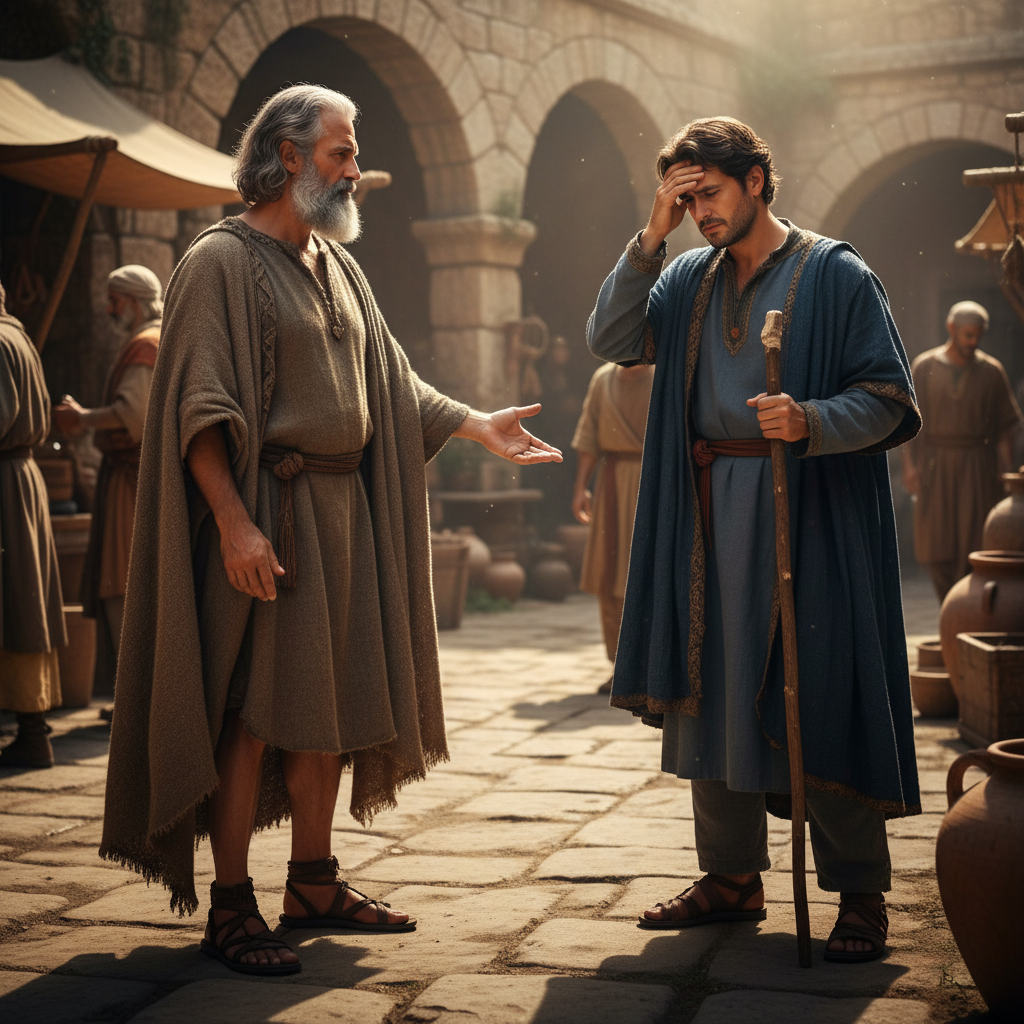
Bar-Jesus, also called Elymas, was a Jewish sorcerer and false prophet mentioned in the Bible in Acts 13. He encountered the apostles Paul and Barnabas in Paphos and attempted to prevent the proconsul, Sergius Paulus, from hearing the Gospel. As a result, Paul, filled with the Holy Spirit, rebuked him and caused him to be temporarily blinded, demonstrating God’s power over evil.
Proclaiming the Gospel of Jesus Christ has always faced spiritual opposition, a truth clearly illustrated throughout Scripture. Even the Apostle Paul, empowered by the Holy Spirit, encountered people who actively sought to thwart God’s plan. These biblical encounters are more than historical accounts; they are powerful reminders that spiritual battles are real. Ultimately, they demonstrate that God’s power prevails, affirming the unwavering authority of His Word.
A compelling example of this is Bar-Jesus, also known as Elymas the sorcerer, whose dramatic confrontation with Paul is recorded in the Book of Acts. This article will explore the biblical account of this intriguing character: who he was, the meaning of his names, and why he so vehemently opposed Paul and Barnabas in Paphos. By examining this pivotal moment, we see the authority of God’s Spirit over spiritual deception and learn timeless lessons for our faith, affirming that Jesus Christ is Lord over all.
Who Was Bar-Jesus in the Bible?

The Encounter in Paphos (Acts 13:4-12)
Our journey to understand Bar-Jesus begins during a pivotal moment for the early Church: the Apostle Paul’s first missionary journey. Traveling with Barnabas to the island of Cyprus, Paul—then known as Saul—faithfully preached the Word of God.
Upon arriving in Paphos, the capital of Cyprus and a significant Roman administrative center [source: https://www.britannica.com/place/Paphos], they met the Roman proconsul, Sergius Paulus. Described as an intelligent man with great authority, the proconsul wished to hear the Word of God directly from Paul and Barnabas.
However, this quest for truth faced immediate opposition from a man in the proconsul’s company named Bar-Jesus. This individual stood firmly against the Gospel message, attempting to turn Sergius Paulus away from the faith and representing a clear spiritual battle (Acts 13:8).
This powerful encounter serves as a clear example of how the light of Christ often meets darkness, highlighting the spiritual warfare inherent in spreading the Gospel.
A Jewish Sorcerer and False Prophet
The Bible identifies Bar-Jesus with two specific and troubling titles: “sorcerer” and “false prophet.” These descriptions, which should not be taken lightly, reveal a character and set of practices fundamentally opposed to God’s truth.
As a sorcerer, Bar-Jesus practiced magic and occult arts that relied on deception and drew from dark spiritual forces. This stands in stark contrast to the pure power of God, which is revealed through the Holy Spirit to build faith and bring healing (Acts 13:9-11). Under the name Elymas, Bar-Jesus manipulated and misled people by presenting a counterfeit version of spiritual insight and power.
Furthermore, the title “false prophet” distinguishes him from a true prophet who faithfully speaks God’s words. A false prophet, in contrast, speaks lies and distorts the truth for personal gain or to lead others astray. By using his influence to obstruct the Gospel and actively prevent Sergius Paulus from believing, Bar-Jesus revealed himself as an adversary to God’s plan.
The fact that Bar-Jesus was Jewish is significant because he should have been familiar with God’s law, which strictly forbade sorcery and false prophecy (Deuteronomy 18:10-12). In choosing a path of spiritual rebellion, his actions became a direct challenge to the authority and truth of Jesus Christ, the Son of God, the fulfillment of all prophecy.
What is the Meaning of Bar-Jesus?
The Meaning of the Name ‘Bar-Jesus’
The name “Bar-Jesus” originates from Aramaic, a common language in the first century. The prefix “Bar-” means “son of,” so the name literally translates to “Son of Jesus.”
However, this requires historical context. The Greek name Iesous (Jesus) was a common transliteration of the popular Hebrew name Yeshua. Yeshua, the source of the English name “Joshua,” was a respected name that means “The Lord is salvation.”
Therefore, “Bar-Jesus” almost certainly means “Son of Joshua.” It does not connect him to Jesus Christ but simply indicates his father had the common name Yeshua. This distinction is crucial for understanding his identity.
- Bar-: Aramaic for “son of”
- Jesus (Iesous): Greek transliteration of the Hebrew “Yeshua” or “Joshua”
- Combined Meaning: “Son of Joshua”
He was a man with a common Jewish name, not a descendant or follower of the Lord Jesus Christ.
The Irony of His Name and Actions
The meaning of “Bar-Jesus”—Son of Salvation—creates a tragic irony when compared to his actions. While his name pointed to salvation, his life was defined by active opposition to God’s message.
The Bible identifies Bar-Jesus, also called Elymas, as a sorcerer and false prophet (Acts 13:6-8). He used deception to mislead others and even tried to turn the proconsul, Sergius Paulus, away from the Christian faith. His efforts were a direct attempt to obstruct the Gospel.
In stark contrast to a name signifying “salvation,” Elymas promoted spiritual darkness. The Apostle Paul confronted this hypocrisy directly, calling him a “child of the devil” and an “enemy of all righteousness” (Acts 13:10).
This contrast reveals a foundational truth: a name, no matter how noble, does not define one’s character. What truly matters are the heart’s intentions and actions. Bar-Jesus had a name connected to salvation, yet he rejected its true source. Ultimately, genuine and eternal salvation is found only through faith in Jesus Christ, the Son of God (John 3:16; Acts 4:12).
Why Was Bar-Jesus Also Called Elymas?
Understanding the Name ‘Elymas the Sorcerer’
The man known as Bar-Jesus went by two names. The first was his Hebrew or Aramaic name, Bar-Jesus. The second, Elymas, revealed his profession. As Acts 13:8 states, “But Elymas the sorcerer (for so his name is translated) opposed them, seeking to turn the proconsul away from the faith.”
The name ‘Elymas’ is revealing. It is widely understood to derive from an Arabic word for a “wise one” or “sorcerer” [1]. This name was not just an identifier but a title, one that affirmed his reputation for practicing magical and occult arts.
Therefore, when Luke calls him “Elymas the sorcerer,” he is not just stating a name; he is describing the man’s very essence. This title serves as a stark contrast to ‘Bar-Jesus,’ which means ‘Son of Jesus’ or ‘Son of Joshua.’ The irony is profound: one name suggests a divine connection, while the other points to dark deception.
The Deception of Magic vs. the Power of the Holy Spirit
The confrontation between Elymas and Paul in Paphos powerfully demonstrated the vast difference between human deception and divine power. Elymas’s magic was a counterfeit authority, aiming to manipulate and mislead for personal gain or influence. Scripture explicitly condemns such practices (Deuteronomy 18:10-12).
In contrast, Paul operated under the anointing of the Holy Spirit. This power is genuine, pure, and comes from God alone. Its purpose is to reveal truth, bring healing, and lead people to salvation. Acts 13:9 confirms Paul was “filled with the Holy Spirit” when he confronted Elymas.
Consider these key differences:
- Source: Elymas’s power stemmed from worldly or demonic sources, while the Holy Spirit’s power flows directly from Almighty God.
- Purpose: Elymas sought to obstruct the Gospel and maintain his influence (Acts 13:8). In contrast, the Holy Spirit empowers believers to spread the Gospel and glorify Jesus Christ.
- Nature: Magic often relies on illusion, trickery, or hidden forces. In contrast, God’s power is transparent, mighty, and undeniable. It changes lives and opens blind eyes, both physically and spiritually.
The temporary blindness inflicted upon Elymas was a visible sign of God’s ultimate authority over all false powers. It proved that Jesus Christ is Lord over every dark force (Colossians 2:15). True power lies not in human cunning or occult practices but in the Holy Spirit, who reveals Jesus as the Way, the Truth, and the Life (John 14:6). We are reminded that “He who is in you is greater than he who is in the world” (1 John 4:4).
What Happened Between Bar-Jesus and the Apostle Paul?

An Attempt to Turn a Leader from the Faith
The pivotal confrontation between the Apostle Paul and a sorcerer named Bar-Jesus (also known as Elymas) unfolded in Paphos on the island of Cyprus. While proclaiming the Good News of Jesus Christ, Paul and Barnabas were summoned by the Roman proconsul, Sergius Paulus. Described as an intelligent man, the proconsul was eager to hear the Word of God.
However, an obstacle stood in their way: Bar-Jesus, a Jewish false prophet who was an attendant to the proconsul. This sorcerer actively sought to turn Sergius Paulus away from the faith, directly opposing the work of the Holy Spirit through the apostles. This confrontation highlights the spiritual battle that often accompanies the spread of the Gospel, as forces of darkness attempt to hinder God’s saving message (Acts 13:6-8).
Paul’s Rebuke: ‘You Child of the Devil’
Filled with the Holy Spirit, Paul perceived the true nature of the sorcerer’s opposition. Looking intently at Elymas, he did not hesitate to confront him directly with a powerful and unwavering rebuke.
Paul’s words were sharp and convicting: “O full of all deceit and all fraud, you son of the devil, you enemy of all righteousness, will you not cease perverting the straight ways of the Lord?” (Acts 13:9-10). This was not a mere insult but a divinely inspired pronouncement that exposed the sorcerer’s true spiritual identity. Despite his name, Bar-Jesus (meaning “son of Jesus” or “son of Joshua”), his actions revealed he was an instrument of Satan. Paul’s forceful words underscored the severity of Elymas’s deception, serving as a stark warning against anyone who would deliberately obstruct the Gospel and lead others astray.
A Temporary Blindness as a Sign of God’s Power
Immediately following Paul’s declaration, God’s judgment was made manifest. Paul announced, “Indeed, the hand of the Lord is upon you, and you shall be blind, not seeing the sun for a time” (Acts 13:11). The effect was instantaneous. A mist and darkness fell upon Elymas, and he began to grope around, seeking someone to lead him by the hand.
This powerful sign accomplished several things:
- Confirmation of Authority: It powerfully confirmed Paul’s apostolic authority, showing he spoke with the power of God.
- Demonstration of Power: It demonstrated that God’s supreme power far surpasses any sorcery or human deception.
- Removal of Obstruction: The blindness removed Bar-Jesus as an immediate obstacle, allowing Sergius Paulus to hear the Gospel unimpeded.
- A Visible Sign: The temporary nature of the blindness served as a sign of God’s patience even in judgment, offering Elymas a chance for repentance.
Witnessing this divine intervention, the proconsul was so astonished at the teaching of the Lord that he believed (Acts 13:12). Ultimately, this event demonstrates that God’s truth prevails over all opposition, shining brightest when confronted by darkness and affirming the unmatched power and authority of Jesus Christ.
What Can We Learn from the Story of Elymas Bar-Jesus Today?

The account of Elymas Bar-Jesus, the sorcerer who confronted Paul and Barnabas in Paphos, offers profound lessons for believers today. It provides a vivid illustration of spiritual realities and reinforces core truths about God’s kingdom. From recognizing spiritual opposition to understanding the ultimate power of God, this ancient narrative holds incredible relevance for the contemporary Christian walk.
Recognizing Opposition to the Gospel
The story of Elymas Bar-Jesus (Acts 13:4-12) powerfully illustrates the direct opposition the Gospel faces. In this account, Elymas, a Jewish sorcerer and false prophet, actively sought to turn the proconsul Sergius Paulus away from the faith, representing a spiritual force working against God’s truth.
Today, while we may not encounter sorcerers in the same way, the spirit of Elymas Bar-Jesus persists as the Gospel continues to face resistance. This opposition appears in many forms:
- False Teachings: Doctrines that twist scripture in an attempt to mislead believers.
- Skepticism and Scorn: Arguments that openly mock the Christian faith by questioning Jesus’ divinity and resurrection. The Bible warns against those who will “scoff and say, ‘Where is the promise of His coming?'” (2 Peter 3:3-4).
- Worldly Distractions: Countless pursuits and worries that pull people’s attention away from spiritual truths.
- Direct Hostility: Overt persecution and hatred endured by Christians for their faith in some parts of the world.
Therefore, believers must remain vigilant and exercise discernment, as we are called to “test the spirits to see whether they are from God” (1 John 4:1). Understanding the reality of this spiritual battle is crucial, as it prepares us to stand firm in our faith.
The Ultimate Authority and Power of God
Despite the sorcerer’s strong opposition, God’s power unequivocally prevailed. Filled with the Holy Spirit, Paul directly confronted Bar-Jesus and declared God’s judgment upon him, resulting in Elymas being struck blind. This dramatic event was a clear demonstration of God’s absolute authority.
This incident reminds us of several unchanging truths about God’s power:
- God’s Sovereignty: No human scheme or demonic power can thwart God’s plans, for He remains in ultimate control (Psalm 115:3).
- Divine Intervention: God can and does intervene directly to defend His truth and protect His servants.
- Power Over Darkness: Jesus Christ has already triumphed over all dark forces. “He disarmed the rulers and authorities and put them to open shame, by triumphing over them in Him” (Colossians 2:15).
- Empowerment for Believers: The Holy Spirit empowers believers with the boldness needed to confront spiritual strongholds.
Consequently, we have no need to fear opposition. Our God is all-powerful and faithful, and His kingdom will ultimately prevail. This truth provides immense comfort and strength to all who believe in Him.
The Transformative Power of Witnessing God’s Work
The story concludes with a powerful demonstration of God’s transformative grace. When the proconsul, Sergius Paulus, witnessed the blinding of Bar-Jesus, he was so astonished by the power of the Lord that he believed.
This highlights the profound impact of God’s manifest work:
- Confirming the Message: Divine signs and wonders validate the Gospel message by confirming its truth and demonstrating its power (Hebrews 2:4).
- Drawing People to Faith: Witnessing God’s power can profoundly move hearts, causing people to turn to Him as they recognize His reality.
- Strengthening Believers: Such events encourage existing believers, building their faith and deepening their trust in Christ.
- God’s Use of All Things: God even uses opposition for His glory, as the encounter with Bar-Jesus ultimately led to the proconsul’s conversion. “And we know that in all things God works for the good of those who love him” (Romans 8:28).
Therefore, we are called to be witnesses who share the good news of Jesus Christ, trusting that God is always working. He uses His power to transform lives, and His mighty deeds continue to testify to His matchless glory.
Ultimately, the story of Elymas Bar-Jesus unequivocally affirms the identity and mission of Jesus Christ—the Son of God and our Savior, whose power overcomes all darkness and whose Gospel transforms every heart that believes.
Frequently Asked Questions About Bar-Jesus
Where is Bar-Jesus in the Bible?
Bar-Jesus is mentioned in Acts 13, during the Apostle Paul’s first missionary journey. While visiting Paphos on the island of Cyprus, Paul and Barnabas encountered Bar-Jesus, a Jewish sorcerer and false prophet who was also known as Elymas (Acts 13:6).
The passage details a critical confrontation where Bar-Jesus attempted to turn the proconsul, Sergius Paulus, away from the Christian faith. This account highlights not only the opposition the Gospel often faces but also the ultimate authority of God working through His apostles (Acts 13:7-8).
What does the name Elymas mean?
Bar-Jesus went by two names, each revealing a different aspect of his identity. His Hebrew name, Bar-Jesus, means “son of Jesus” or “son of Joshua.” However, he was better known by his professional title, Elymas. Derived from Aramaic, Elymas means “sorcerer” or “magician” [2].
This second name, Elymas, accurately defined his role as someone who practiced magic and deception (Acts 13:8). His title and actions stood in stark contrast to the genuine power of the Holy Spirit presented by the apostles. In this way, his name signified his opposition to the light and truth of the Gospel.
What happened to Bar-Jesus after he was blinded by Paul?
The Bible records a swift judgment on Bar-Jesus for his interference. After rebuking him, Paul declared that the sorcerer would be blind for a time. Immediately, a mist and darkness fell on Elymas, forcing him to seek someone to lead him by the hand (Acts 13:9-11).
Scripture does not provide further details about his life, so we don’t know if his blindness was permanent or if he ever repented. However, the immediate impact of this event was clear. Witnessing this display of divine power, the proconsul Sergius Paulus believed in the Lord (Acts 13:12). This powerful sign affirmed the truth of the Gospel and demonstrated the supremacy of God’s power over deception.
Who was Simon Bar-Jesus?
The name “Simon Bar-Jesus” does not appear in the Bible. This question likely stems from confusing two different biblical figures who were both sorcerers:
- Bar-Jesus (Elymas): The sorcerer in Acts 13 who opposed Paul in Paphos and was temporarily blinded (Acts 13:6-11).
- Simon Magus (Simon the Sorcerer): The magician in Acts 8 who, after his conversion, tried to buy the power of the Holy Spirit from the apostles (Acts 8:9-24).
While both men practiced magic, their accounts are distinct and found in different chapters of Acts. The Bible presents them as separate individuals whose stories illustrate different forms of opposition to the Gospel. Ultimately, both narratives affirm God’s power over any form of human deception or dark magic.