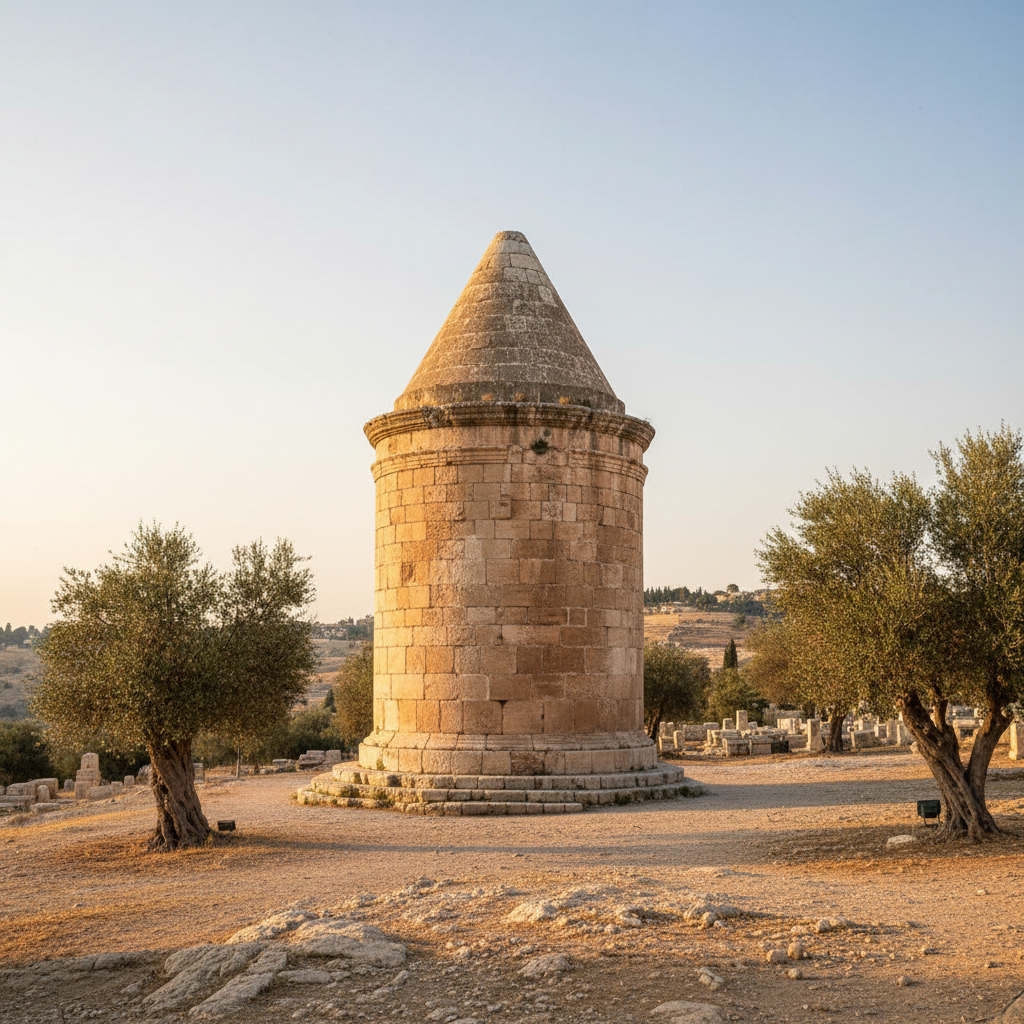
Absalom’s Monument, as described in 2 Samuel 18:18, was a pillar Absalom erected for himself in the King’s Valley because he had no son to preserve his name. This act was rooted in pride and rebellion against his father, King David, and serves as a biblical warning against self-glorification. The tomb in Jerusalem today known as ‘Absalom’s Monument’ is a much later structure, dated to the 1st century AD, and is not the original pillar mentioned in the Bible.
The desire to leave a lasting mark has shaped human ambition for centuries. However, when these aspirations are not guided by humility and divine wisdom, they can lead to pride and temporary memorials. The inspired Scriptures (2 Timothy 3:16-17) offer a powerful case study of this struggle in the cautionary tale of Absalom, the rebellious son of King David.
Absalom’s story is a clear reminder of the dangers of self-glorification and unchecked pride. Believing it would immortalize his name, he built a monument to secure an earthly legacy for himself. But what does the Bible reveal about this misguided effort? This article explores the narrative of Absalom’s Monument, examining his motivations, sins, and the spiritual lessons his story holds for believers following our Lord and Savior, Jesus Christ.
By exploring this account, we aim not just to recount history, but to find truths that strengthen faith and deepen our understanding of God’s Word. We will turn to Scripture to discover what the Bible says about Absalom’s pillar and its message for us today. This story guides us toward a life anchored in Christ rather than in fleeting human glory.
What Does the Bible Say About Absalom’s Pillar?
The Monument of a Rebel Son (2 Samuel 18:18)
The Bible tells the profound and cautionary tale of Absalom, King David’s son, who tragically chose a path of rebellion. Deeply embedded in the Old Testament, his story reveals crucial spiritual truths for all believers.
Before his untimely death, Absalom erected a monument for himself, an act recorded in 2 Samuel 18:18. The passage states: “Now Absalom in his lifetime had taken and set up for himself a pillar in the King’s Valley, for he said, ‘I have no son to keep my name in remembrance.’ So he called the pillar after his own name, and it is called Absalom’s Monument to this day.”
This verse offers a stark revelation about Absalom. Despite his royal lineage, he had no son and feared his name would vanish from history. To prevent this, he built the pillar as a physical marker intended to preserve his memory. However, it ultimately became a lasting symbol of his tragic rebellion against God’s anointed king, David.
A Symbol of Self-Glorification
Absalom’s decision to build the monument speaks volumes about his character, revealing a deep-seated pride and an obsession with his own fame. He sought to secure his place in history—quite literally—with stone and mortar.
This self-glorification stands in stark contrast to a legacy built on faith, as God’s kingdom values humility above all else (Matthew 23:12). Absalom’s desire was not to honor God but to magnify himself, aiming for earthly renown instead of heavenly reward.
In contrast, a true spiritual legacy comes from serving the Lord Jesus Christ, through whom our names are written in the Book of Life (Philippians 4:3). Absalom’s pillar represents a futile human attempt at immortality. His story powerfully reminds us that lasting remembrance comes only through God’s grace, found in Christ’s sacrifice and resurrection. He alone offers eternal life and a legacy that truly endures.
Why did Absalom construct a monument for himself?

A Desire for an Earthly Legacy
Absalom built his monument for one primary reason: a desire for an enduring earthly legacy. The Bible clearly states his motivation:
“For Absalom in his lifetime had taken and reared up for himself a pillar, which is in the king’s dale: for he said, I have no son to keep my name in remembrance: and he called the pillar after his own name: and it is called unto this day, Absalom’s place.” (2 Samuel 18:18)
This verse reveals a stark truth: Absalom had no son to carry on his name. Therefore, he sought to immortalize himself through a physical structure. This act highlights a common human desire for self-glorification and a lasting name.
However, such a desire often stems from pride, focusing on human achievement rather than God’s glory. Absalom’s monument was a testament to his own ego, a symbol of his ambition to be remembered on his own terms. True legacy, however, is found not in stone, but in Christ Jesus (1 Corinthians 3:11).
Forgetting His Place in God’s Kingdom
Absalom’s actions also show that he had forgotten his true place in God’s kingdom. As a prince of Israel, his focus should have been on serving God and His anointed king, David. Instead, Absalom became consumed by his own personal fame.
His ambition overshadowed his sense of duty and spiritual understanding, causing him to neglect the divine order. This monument was not built for God’s glory or for the well-being of Israel; it was solely for Absalom’s honor. This stands in stark contrast to the humility and obedience God expects from His people (Micah 6:8).
Indeed, a life lived for self ultimately leads to spiritual emptiness. Our true purpose is to glorify God and serve Him with all our heart, soul, mind, and strength (Matthew 22:37). This was a crucial truth Absalom missed entirely.
A Contrast to a Godly Heritage
Absalom’s decision to erect a monument to himself stands in stark contrast to the godly heritage he received. His father, King David, was famously called “a man after God’s own heart” (Acts 13:22). Despite his flaws, David consistently sought the Lord’s guidance and repented when he sinned.
Absalom, however, pursued a path of rebellion and self-exaltation, a sharp deviation from his father’s example of humility and reliance on God. A true godly heritage emphasizes:
- Humility: Acknowledging God as sovereign.
- Obedience: Following God’s commands.
- Faith: Trusting in God’s plan, not our own.
Absalom’s monument, therefore, represented a rejection of these foundational principles. It symbolized a desire to build his own kingdom in opposition to God’s established order. The legacy we should truly seek is one of faith in Jesus Christ—a spiritual inheritance that lasts for eternity and far surpasses any earthly pillar or monument (John 14:6).
What was Absalom’s sin?
The Root of Pride and Rebellion
Absalom’s greatest sin stemmed from deep-seated pride and an insatiable desire for personal glory. Possessing a striking appearance and charisma, he used these gifts for selfish ambition rather than for God’s purposes. His heart became consumed by a desire to usurp his father’s throne, a direct defiance of God’s established order.
Pride is often the root of sin, hardening our hearts against God’s will. The Bible clearly warns of its dangers, stating, “Pride goes before destruction, and a haughty spirit before a fall” (Proverbs 16:18). Failing to recognize God’s sovereignty, Absalom mistakenly believed his own abilities and popularity were enough to succeed. This spiritual blindness led him down a path of rebellion, separating him from both wisdom and true humility.
Conspiracy Against His Father, King David
Absalom’s pride soon escalated into open rebellion as he actively conspired against King David, his own father. This was not a sudden act but a carefully calculated betrayal. To steal the hearts of the people, Absalom meticulously stood at the city gate, offering sympathetic hearings to those with grievances (2 Samuel 15:1-6).
While he pretended to be a just and caring leader, his true motive was power. He criticized David’s administration, implying that he could govern better. To further his deception, Absalom even made a false vow to the Lord in Hebron (2 Samuel 15:7-10). This cunning manipulation led many to follow him. His actions were a grave offense—an act of profound disrespect and treachery that directly challenged God’s anointed king and undermined the nation’s stability.
The Tragic Consequences of Sin
Absalom’s sin brought tragic and widespread consequences, plunging Israel into a devastating civil war. His ambition afflicted the land with bloodshed and suffering, causing many lives to be lost. Even King David, a man after God’s own heart, endured immense grief and was forced to flee Jerusalem from his own son (2 Samuel 15:13-14).
Ultimately, Absalom met a violent end. During the battle, he was caught by his long hair in an oak tree (2 Samuel 18:9) and killed by Joab, David’s commander (2 Samuel 18:14-15). His death was a direct result of his sinful path. In stark contrast to the monument he had built to secure an earthly legacy, there was no one to mourn him. His life serves as a somber reminder that sin always has a devastating cost, bringing pain to individuals and entire communities. However, even in such tragedy, God’s justice and sovereignty prevail. For those who repent and turn to Jesus Christ, there is forgiveness and true life, overcoming sin’s final grip (Romans 6:23).
Is the ‘Tomb of Absalom’ in Jerusalem the Original Monument?
Archaeological and Historical Context
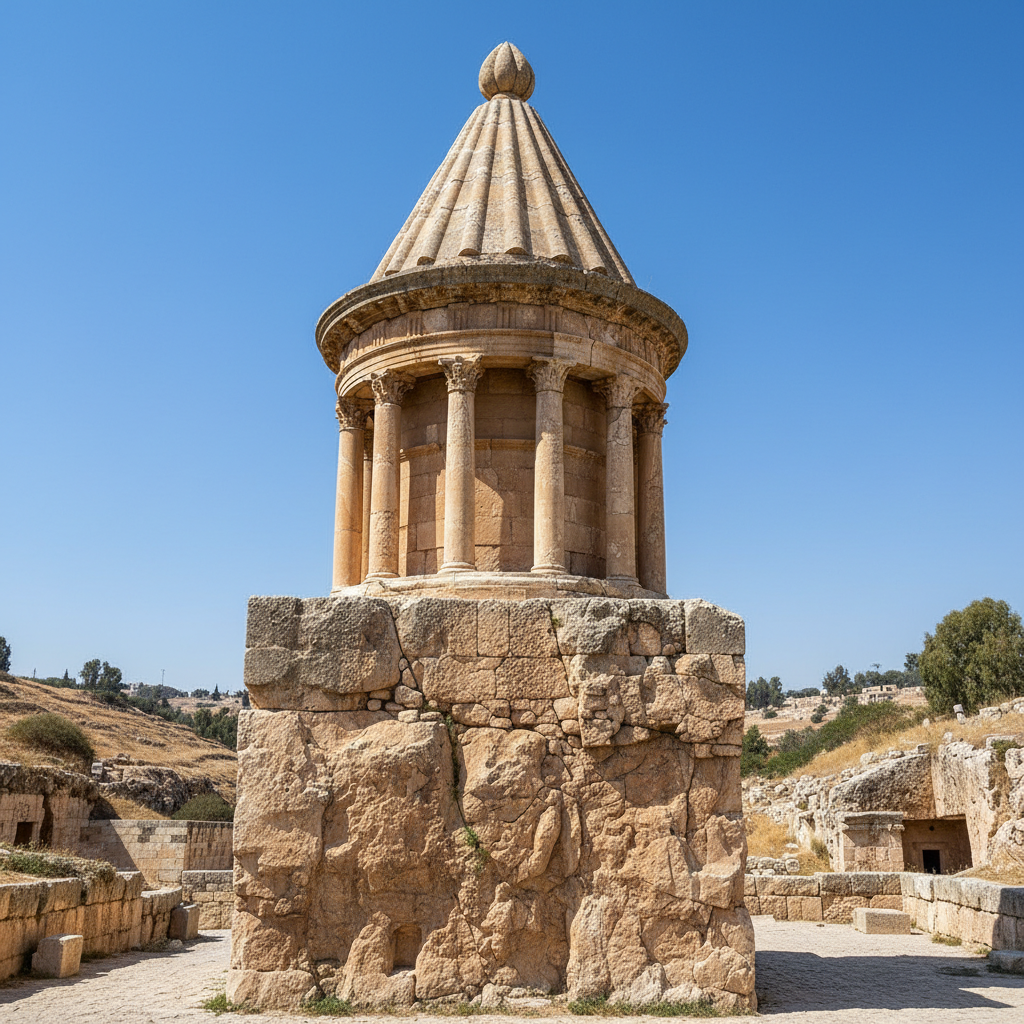
Many visitors to Jerusalem see a prominent rock-cut monument in the Kidron Valley, popularly known as “Absalom’s Tomb” or “Absalom’s Pillar.” However, its connection to the biblical Absalom requires careful examination.
Archaeological evidence, however, tells a different story. Experts date the monument to the Hellenistic period, around the 1st century BCE [1]. This is nearly a thousand years after the biblical Absalom, who lived during the reign of King David. Therefore, the structure seen today cannot be the one Absalom built for himself.
The monument’s architectural style also points to a later era, featuring elements common to Nabatean and Roman influences. It includes a square base topped with a cylindrical drum and a conical roof—styles not present in Jerusalem during David’s reign.
Scholars widely agree that the name “Absalom’s Tomb” is a later attribution, reflecting a popular tradition rather than historical accuracy. In fact, many historical sites gather legendary names over time in a similar way.
A Later Structure, A Lasting Story
While the monument in the Kidron Valley is a fascinating example of ancient architecture, it is not the actual pillar mentioned in 2 Samuel 18:18. The biblical account states that Absalom built a monument to preserve his name because he had no sons to carry on his legacy. The exact location of that original pillar is now lost to time.
Despite this historical distinction, the name “Absalom’s Tomb” has endured, serving as a powerful reminder of the biblical narrative. The story of Absalom’s rebellion and his untimely end remains profound, speaking to generations about the consequences of pride.
Furthermore, the physical structure, regardless of its namesake, carries a lesson. It reminds us that human attempts at self-glorification are often fleeting, and only a legacy built on God’s truth truly endures. The world offers many monuments to human ambition, but they pale in comparison to eternal spiritual truths.
Separating Biblical Truth from Tradition
For believers, understanding the Bible is paramount because God’s Word is our ultimate authority. While archaeological sites offer valuable insights, their findings should be interpreted in light of Scripture. Because traditions can sometimes obscure the Bible’s clear teachings, it is crucial to discern between them.
The story of Absalom’s pillar teaches us about the dangers of pride (Proverbs 16:18). This spiritual lesson remains true, regardless of whether the monument in Jerusalem is the original. The Bible records that Absalom’s desire for an earthly legacy ultimately led to his downfall, a fate we are warned against.
Our true legacy is found in Jesus Christ alone, the Son of God and our Lord and Savior (John 3:16). His death and resurrection offer us eternal life, and He calls us to build our lives on Him, not on fleeting worldly achievements. This means seeking humility and repentance, unlike Absalom. Jesus Himself affirmed the enduring truth of His divine authority, saying, “Heaven and earth will pass away, but My words will not pass away” (Matthew 24:35). Let us fix our eyes on Him, the author and perfecter of our faith.
What Spiritual Lessons Can We Learn from Absalom’s Story?

The powerful and tragic story of Absalom offers profound spiritual lessons for believers today. His life and ultimate downfall highlight critical truths about pride, legacy, and our relationship with God.
The Dangers of an Unchecked Ego
Absalom’s life serves as a stark warning about the devastating effects of an unchecked ego. Though he was a charismatic and handsome man (2 Samuel 14:25), his heart harbored a deep pride that fueled his ambition and rebellion.
Driven by self-glorification, Absalom actively sought to elevate himself above God’s anointed king, his own father David. He even built a pillar for himself in the King’s Valley, known as Absalom’s monument, to ensure his name would be remembered (2 Samuel 18:18). This was his attempt to build an earthly legacy rooted in personal achievement rather than God’s will.
The Bible clearly warns against such self-exaltation. As Proverbs 16:18 states, “Pride goes before destruction, and a haughty spirit before a fall.” Absalom’s story is a perfect illustration of this truth. His inflated ego led him to believe he knew better than God’s established order, a path that led to ruin, alienated him from his father, and ultimately cost him his life. An ego focused on self will always pull us away from God’s guidance and blind us to the wisdom of humility.
Finding Our True Legacy in Jesus Christ
Absalom desperately sought a lasting name for himself, wanting to be remembered through an earthly monument. This desire contrasts sharply with the legacy believers find in Jesus Christ. Our true, eternal legacy is not built on stone or human achievement but is forged in our relationship with our Lord and Savior.
Jesus taught us to store up treasures in heaven, which “neither moth nor rust destroys” (Matthew 6:19-20). This heavenly inheritance is far more valuable than any physical monument. While Absalom’s pillar would eventually crumble, a spiritual legacy in Christ endures forever. Our true identity and worth are not found in our accomplishments but in being children of God (John 1:12), a gift received through faith in Jesus.
A legacy rooted in Christ involves:
- Loving God and Neighbor: Fulfilling the greatest commandments (Matthew 22:37-39).
- Serving Others: Using our gifts to build up the body of Christ (1 Peter 4:10).
- Sharing the Gospel: Pointing others to the saving grace of Jesus (Mark 16:15).
- Living a Godly Life: Bearing fruit of the Spirit (Galatians 5:22-23).
Our purpose is not self-glorification but to glorify God in all we do. This is a much richer and more lasting legacy than any monument Absalom could conceive.
The Importance of Humility and Repentance
Absalom’s downfall stemmed from a failure of humility and repentance. By refusing to submit to authority, ignoring his father’s wisdom, and consistently choosing his own path, he rejected the source of true spiritual strength: humble submission to God’s will. As James 4:6 reminds us, “God opposes the proud but shows favor to the humble.”
Humility means recognizing our dependence on God and acknowledging His sovereignty in our lives. Absalom’s story highlights the destructive consequences of rejecting this posture. He never sought forgiveness or repented of his rebellious actions.
Repentance is a crucial step in our walk with Christ. It involves turning away from sin and turning toward God—a change of heart and mind that leads to a new direction (Acts 3:19).
In contrast, consider King David, Absalom’s father. Though David also made grave mistakes, he consistently humbled himself before God and repented deeply when confronted with his sin (Psalm 51). This posture of humility allowed God to restore him. God offers the same grace to us through Jesus. When we humbly confess our sins, He is faithful to forgive (1 John 1:9). While pride like Absalom’s leads to spiritual death, humility opens the door to God’s boundless grace and new life in Christ—the true path to lasting peace.
The lesson from Absalom’s monument is clear: we must seek a legacy built not on pride, but on faith, humility, and obedience to God. Our ultimate hope and purpose are found solely in Jesus Christ, who gave His life for us and rose again to conquer sin and death. He is the Way, the Truth, and the Life (John 14:6).
Frequently Asked Questions about Absalom’s Monument
How old is Absalom’s monument?
The Bible records that Absalom built a monument for himself during his lifetime, which would place its origin around 1000 BC (2 Samuel 18:18). However, the famous structure in Jerusalem’s Kidron Valley known today as “Absalom’s Tomb” is not that same monument.
Archaeologists and historians agree that the tomb you can see today was built much later, during the Hellenistic or Roman period. It most likely dates to the 1st century BC or 1st century AD [2]. So, while a monument in the valley still bears his name, the physical structure is a much later creation, built about a thousand years after his death.
This distinction reminds us that while earthly structures fade, the Word of God, which tells Absalom’s story, remains forever (Matthew 24:35).
Is Absalom’s Monument still there?
Yes, a monument known as “Absalom’s Monument” still stands in the Kidron Valley in Jerusalem. It’s important to remember, however, that this is not the original pillar Absalom built for himself.
The Bible says Absalom erected his pillar in “the King’s Valley” (2 Samuel 18:18). After more than 3,000 years of exposure to war, weather, and the general ravages of time, that original structure is no longer there.
The current tomb serves as a powerful, though much later, reminder of Absalom’s tragic quest for an earthly legacy. It highlights the fleeting nature of human ambition when compared to the eternal kingdom of God.
What was Absalom’s sin?
Absalom’s primary sin was rebellion against his father, King David, who was God’s anointed leader. His actions were driven by immense pride and an overwhelming desire for power and glory.
His specific sins included:
- Usurping Authority: He deceptively won the loyalty of the people and had himself declared king in Hebron (2 Samuel 15:1-12).
- Disrespect for God’s Anointed: By defying David, Absalom was rebelling against God’s chosen king, which was an offense against God Himself.
- Conspiracy and Deception: He actively plotted to overthrow his father’s kingdom, which plunged the nation into a bloody civil war.
- Sexual Immorality and Public Shame: He publicly slept with his father’s concubines to demonstrate his complete takeover and to shame David (2 Samuel 16:21-22).
Ultimately, Absalom’s life is a stark warning about the dangers of pride and rebellion. His story stands in sharp contrast to the humility of Jesus Christ, who “made himself nothing, taking the form of a servant” (Philippians 2:7).
Can you visit Absalom’s monument?
Yes, you can visit the structure commonly known as “Absalom’s Tomb” or “Absalom’s Pillar.” It is located in the Kidron Valley in Jerusalem, situated between the Temple Mount and the Mount of Olives.
The site is a major historical and archaeological landmark that draws visitors from all over the world. While it is not the original monument Absalom built, it serves as a tangible reminder of his biblical story and its profound spiritual lessons.
Visiting the tomb provides a unique opportunity to reflect on the biblical narrative of Absalom’s pride and his ultimate fall. It encourages us to consider our own legacies and reminds us that a true, lasting legacy is found not in self-glorification, but in humble faith in Jesus Christ, who offers eternal life (John 3:16).