
John 9 tells the story of Jesus miraculously healing a man born blind to demonstrate that Jesus is the Light of the World. The chapter’s core message is that Jesus opens the eyes of the spiritually blind while exposing the spiritual blindness of those who reject Him.
Have you ever wondered what it truly means to see? Not just with your eyes, but with your heart and soul? In the ninth chapter of John’s Gospel, we encounter one of the most powerful and transformative encounters in all of Scripture—a story that takes us from the darkness of unbelief into the brilliant, life-changing light of Jesus Christ. A man who had never known the gift of sight suddenly receives not only his physical vision but also a profound spiritual awakening that would shake the religious establishment to its core. This is a story that speaks to every one of us because, in one way or another, we have all experienced seasons of spiritual blindness.
The account recorded in John 9 is far more than a miracle story. It is a masterful portrait of who Jesus truly is—the Light of the World declared in John 9:5—and a sobering revelation about what happens when hardened hearts refuse to believe even in the face of undeniable evidence. As we walk through this chapter together, we will explore the healing of the man born blind, the meaning of John 9:39, and the urgent call for every believer to reject spiritual darkness and walk boldly in the light of Christ. Whether you are a new believer learning about Jesus for the first time or a seasoned follower of the Lord seeking deeper truth, this complete guide will equip you with a richer, more Scripture-rooted understanding of one of the most important chapters in the Gospel of John.
What is the main message of John 9?
In John 9, Jesus delivers a life-changing miracle. He heals a man blind from birth. This chapter reveals a powerful truth about who Jesus is.
The story is not just about physical sight. It is also about spiritual sight. In fact, the main message of John 9 includes two key themes that can transform how we see Jesus.
Jesus is the Light of the World
One of the main messages of John 9 is that Jesus is the Light of the World. Before He healed the blind man, Jesus made a clear declaration. He said, “I am the light of the world” (John 9:5). This statement is not just symbolic. It is a direct proclamation of His divinity.
Consider the following truths from this passage:
- Jesus identifies Himself as the Light. Only God can bring light to a world trapped in darkness.
- The miracle proves His authority over creation. Jesus made mud, applied it to the man’s eyes, and restored what nature could not provide from birth.
- He acted on the Sabbath. This showed His lordship over religious traditions and pointed to the New Covenant He would establish.
Furthermore, this light is not limited to physical healing. Jesus came to open eyes spiritually. He came so that those who were spiritually blind could finally see the truth of who He is. John 3:16 reminds us that God gave His only Son so that whoever believes in Him will not perish but have eternal life. The light of Jesus brings salvation to all who believe.
A Story of Physical and Spiritual Sight
John 9 presents two kinds of blindness. The first is physical. The man born blind had never seen the light of day. The second is spiritual. the Pharisees, who could see with their eyes, were blind to the truth of Jesus.
As a result, the man who could not see gained both physical and spiritual sight. He confessed his faith in Jesus (John 9:35-38). However, the religious leaders, despite having access to the Scriptures, rejected the Light standing before them.
John 9:39 further confirms this message. Jesus said, “For judgment I have come into this world, so that the blind will see and those who see will become blind.” This verse powerfully summarizes the entire chapter. Jesus came to open eyes — both literal and spiritual. Yet those who are proud in their own understanding will remain in darkness.
In conclusion, John 9 calls every reader to a decision. Will you, like the blind man, come to Jesus and see? Or will you, like the Pharisees, remain spiritually blind? The Light of the World is here. He is Jesus Christ, the Son of the living God. He came to give sight to all who humbly believe.
The Story of Jesus Healing a Man Born Blind (John 9:1-12)
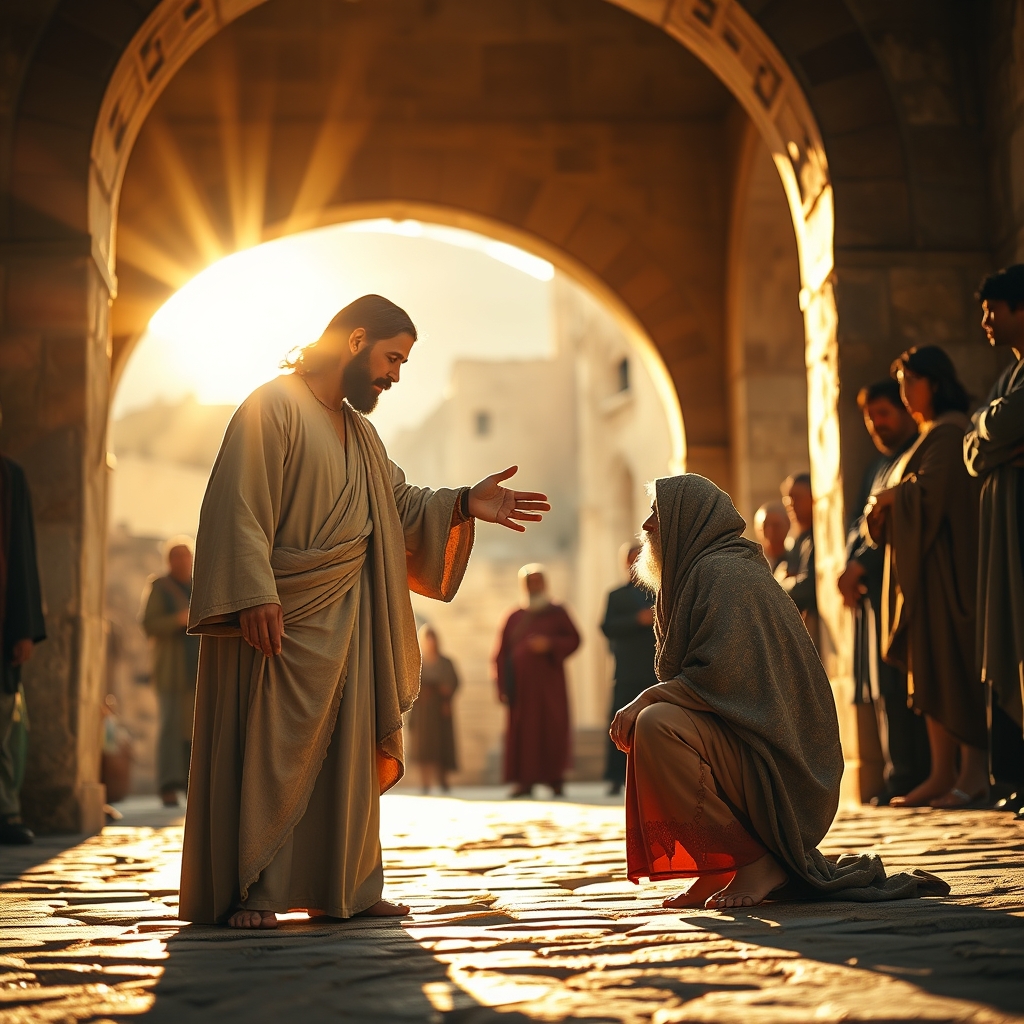
In the Gospel of John chapter 9, we encounter one of the most remarkable miracles recorded in all of Scripture.
This passage reveals the heart of Jesus Christ as He encounters a man blind from birth. It is a story of compassion, divine power, and spiritual truth.
Discussing Sin and Suffering
As Jesus walked with His disciples, they saw a man who had been blind since the day he was born. The disciples immediately asked a question rooted in the common thinking of their day.
“Rabbi, who sinned, this man or his parents, that he was born blind?” (John 9:2, NKJV). This question reflected a widespread belief that all suffering was a direct result of personal sin.
However, Jesus corrected this misunderstanding with a profound answer. He said, “Neither this man nor his parents sinned, but that the works of God should be revealed in him” (John 9:3, NKJV).
This response is deeply important for every believer to understand. Not every hardship we face is punishment for sin. Sometimes, God allows suffering so that His glory can be displayed in our lives.
Furthermore, Jesus made a declaration about His mission. He said, “I must work the works of Him who sent Me while it is day; the night is coming when no one can work” (John 9:4, NKJV). Jesus was urgently focused on doing the Father’s will.
Then He made a powerful statement about His identity. “As long as I am in the world, I am the light of the world” (John 9:5, NKJV). This miracle would prove that Jesus is exactly who He claimed to be.
The Miracle of Mud and the pool of Siloam
After speaking these words, Jesus performed the healing in a unique and personal way. The method He chose carried deep spiritual meaning.
First, Jesus spat on the ground and made clay from the saliva. Then He anointed the blind man’s eyes with the clay. This act was intimate and deliberate. Jesus touched the man’s darkness with His own hands.
Next, Jesus gave the man a simple instruction. “Go, wash in the pool of Siloam” (John 9:7, NKJV). The word “Siloam” means “Sent.” This pointed to Jesus Himself, the One sent by the Father.
The man obeyed without hesitation. He went to the pool, washed the clay from his eyes, and received his sight. For the first time in his entire life, he could see the world around him.
The impact was immediate and undeniable. His neighbors and those who had known him as a beggar were astonished. Some said, “Is this not he who sat and begged?” (John 9:8, NKJV). Others were not sure. But the man himself declared with confidence, “I am he” (John 9:9, NKJV).
As a result, the people asked the most natural question: “How were your eyes opened?” (John 9:10, NKJV). The man gave a clear and simple testimony. “A Man called Jesus made clay and anointed my eyes and said to me, ‘Go to the pool of Siloam and wash.’ So I went and washed, and I received sight” (John 9:11, NKJV).
His testimony was powerful because it was honest. He did not embellish or exaggerate. He simply told what Jesus had done for him. This is the heart of every Christian testimony.
Finally, they asked, “Where is He?” The man replied, “I do not know” (John 9:12, NKJV). He had not yet seen Jesus face to face. Yet he already believed enough to obey and to testify.
This miracle in John 9 stands as a powerful reminder that Jesus is the Light of the World. He still opens blind eyes today, both physically and spiritually. No one is beyond the reach of His healing touch.
The Pharisees Investigate the Healing (John 9:13-34)
The Man’s Bold Stand for Jesus
After Jesus healed the man born blind, the religious leaders refused to celebrate the miracle. Instead, they launched an investigation. They wanted to discredit what Jesus had done. However, the formerly blind man became an unexpected witness for Christ.
The Pharisees first questioned the man about how he received his sight. They were divided among themselves. Some said, “This man is not from God, for He does not keep the Sabbath” (John 9:16, NKJV). Others asked how a sinner could perform such signs.
Then they turned to the man. They asked, “What do you say about Him?” (John 9:17). The man’s answer was simple yet powerful. He said, “He is a prophet.” He did not waver. He did not soften his testimony to please the religious authorities. He simply told the truth about what Jesus had done for him.
Still unsatisfied, the Pharisees called the man’s parents. They hoped to find a way to deny the miracle altogether. The parents confirmed that the man was indeed their son and that he was born blind. However, they were afraid to say more. the Jewish leaders had already agreed that anyone who confessed Jesus as the Christ would be put out of the synagogue (John 9:22).
As a result, the Pharisees called the man a second time. They tried to pressure him into denying Jesus. They said, “Give God the glory! We know that this Man is a sinner” (John 9:24). But the man refused to back down. Instead, he delivered one of the most courageous statements in all of Scripture.
He replied, “Whether He is a sinner or not, I do not know. One thing I know: though I was blind, now I see!” (John 9:25, NKJV). This statement is a powerful testimony. The man did not need a theology degree. He did not need to understand every religious debate. He only needed to know one thing — Jesus had changed his life.
Furthermore, the man pressed further with bold logic. He asked the Pharisees, “Did you also want to become His disciples?” (John 9:27). This question infuriated the religious leaders. They insulted the man and declared themselves disciples of Moses, not of Jesus.
The man’s courage teaches us several important lessons:
- Personal testimony is powerful. No one can argue with your experience of what Jesus has done in your life.
- Boldness grows from encounter. The more we experience Jesus, the more willing we are to stand for Him.
- Truth does not require compromise. The man refused to soften his witness, even under pressure.
- Simple faith speaks volumes. You do not need complex arguments. You only need to share what you know to be true.
The Man’s Excommunication
The Pharisees’ investigation ended not with faith, but with fury. They could not deny the miracle. They could not refute the man’s testimony. So they resorted to the only weapon they had left — rejection and expulsion.
John 9:34 records their harsh response. They answered, “You were completely born in sins, and are you teaching us?” And they cast him out (NKJV). The man who had received the gift of sight was now cast out of the synagogue. He lost his place in the religious community. He faced social isolation and likely economic hardship as well.
This was a devastating consequence. In first-century Jewish culture, being put out of the synagogue meant being cut off from the center of community life. It was a form of social death. Yet the man did not regret his testimony. He did not take back his words to regain his standing. He chose faithfulness to Jesus over acceptance by men.
However, this is where the story takes a beautiful turn. Jesus heard that they had cast the man out. When He found him, He asked, “Do you believe in the Son of God?” (John 9:35). The man answered, “Who is He, Lord, that I may believe in Him?” (John 9:36). Then Jesus revealed Himself. He said, “You have both seen Him, and it is He who is talking with you” (John 9:37).
The man’s response was immediate and full of worship. He said, “Lord, I believe!” And he worshiped Him (John 9:38). What the Pharisees took away, Jesus restored and multiplied. The man lost the synagogue but gained the Savior. He lost the approval of religious leaders but received the presence of the living God.
This exchange reveals a profound truth about the kingdom of God. Jesus said in John 9:39, “For judgment I have come into this world, so that the blind will see and those who see will become blind” (NKJV). This verse is central to understanding the entire chapter. Jesus came to open eyes — both physical and spiritual. Yet those who claimed to see, the Pharisees, revealed their own spiritual blindness.
The contrast in this section is striking:
| The Man Born Blind | The Pharisees |
|---|---|
| Received physical sight from Jesus | Claimed to already see |
| Grew in faith through each encounter | Hardened their hearts against evidence |
| Spoke truth boldly despite pressure | Used authority to suppress the truth |
| Was cast out of the synagogue | Cast others out to protect their power |
| Was found and worshiped Jesus | Remained in spiritual blindness |
The Pharisees’ excommunication of the man exposes the danger of religious pride. They were so convinced of their own spiritual sight that they could not recognize the Son of God standing before them. Their investigation was not a search for truth. It was an attempt to protect their position and discredit Jesus.
As believers today, this passage challenges us to examine our own hearts. Are we willing to follow Jesus even when it costs us? Are we open to what the Holy Spirit is doing, even when it disrupts our expectations? The man born blind shows us that true sight begins with humility. It begins by admitting our need and trusting in Jesus alone.
Furthermore, this story reminds us that rejection by the world is not the end of the story. When the Pharisees cast the man out, Jesus went looking for him. In the same way, Jesus seeks out every person who is willing to believe. He does not leave His children in exile. He draws near to those who honor Him.
As Jesus said, “If anyone serves Me, let him follow Me; and where I am, there My servant will be also. If anyone serves Me, him My Father will honor” (John 12:26, NKJV). The man born blind lost everything the world offered. But he gained something far greater — the presence, the revelation, and the worship of Jesus Christ, the Light of the World.
What is the meaning of John 9 39?
One of the most powerful and thought-provoking verses in the entire chapter is John 9:39. Jesus declares, “For judgment I have come into this world, so that the blind will see and those who see will become blind.” At first, this statement may seem surprising. However, when we understand the context, we discover a profound spiritual truth about the mission of Jesus Christ.
Jesus Came for Judgment
When Jesus spoke these words, He was not contradicting His message of love and grace. Instead, He was revealing a deeper reality. His very presence in the world acts as a spiritual dividing line. In other words, when the Light of the World shines, people are forced to respond.
Consider this carefully. Jesus did not come to condemn the world in that moment. Scripture tells us in John 3:17 that God did not send His Son into the world to condemn the world, but to save the world. Yet His arrival inevitably brings judgment. Why? Because how we respond to Jesus reveals the true condition of our hearts.
Think of it this way. When sunlight enters a room, it does not create the darkness. It simply exposes what was already there. In the same way, Jesus exposes the truth about every person. Those who humble themselves receive sight. Those who are proud remain in darkness.
This is the meaning of judgment in John 9:39. It is not primarily about punishment. It is about revelation. Jesus reveals who truly sees and who is truly blind. The man born blind received both physical and spiritual sight because he came to Jesus with an open heart. The Pharisees, despite their religious knowledge, remained spiritually blind because of their pride.
Blind Eyes Opened, Proud Eyes Closed
The contrast in John 9 could not be clearer. On one side, we have a man who had never seen a single thing in his life. He was poor, marginalized, and had no religious credentials. Yet when Jesus healed him, this man demonstrated remarkable faith. He stood before the most powerful religious leaders of his day and boldly testified about what Jesus had done for him.
On the other side, we have the Pharisees. They were the religious experts. They knew the Scriptures. They held positions of authority. Yet when confronted with an undeniable miracle, they refused to believe. Their pride blinded them to the truth standing right in front of them.
Jesus summarized this contrast perfectly in John 9:39-41. When the Pharisees asked, “Are we blind too?” Jesus replied, “If you were blind, you would not be guilty of sin; but now that you claim you can see, your guilt remains.” This is a sobering warning. Claiming to see spiritually while rejecting Jesus is the most dangerous form of blindness.
Here is what we can learn from this powerful verse:
- Jesus opens the eyes of the humble. The man born blind had nothing to offer Jesus except his need. That was enough.
- Pride is the greatest barrier to spiritual sight. The Pharisees could not see Jesus for who He was because they trusted in their own understanding.
- Jesus’ presence demands a response. No one can remain neutral when confronted with Christ. We either come to Him in faith or turn away in unbelief.
- Spiritual blindness is more dangerous than physical blindness. The man born blind gained everything. The Pharisees, who claimed to see, lost everything.
The meaning of John 9:39 ultimately points us to the heart of the Gospel. Jesus came to give sight to those who know they are blind. He came to heal those who admit they need a Savior. At the same time, He exposes the self-righteousness of those who think they have no need of Him.
If you are reading this today and feel spiritually lost or broken, take heart. Jesus came for you. He came to open your eyes and bring you into His marvelous light. All you need to do is come to Him in faith, just as the man born blind did. As Jesus said in John 12:46, “I have come into the world as a light, so that no one who believes in me should stay in darkness.”
Spiritual Blindness in John 9

The Blindness of the Pharisees
One of the most striking themes in John 9 is spiritual blindness. Jesus opens the eyes of a man born blind. Yet the Pharisees, who claim to see the truth, remain completely blind.
The Pharisees saw the miracle with their own eyes. They knew the man had been blind from birth. They had to admit that something incredible had happened. Even so, they refused to recognize Jesus as the source of this healing.
Their blindness was not physical. It was deeply rooted in pride, tradition, and hardened hearts. Instead of rejoicing that a blind man could see, they were angry. They questioned the man. They questioned his parents. They questioned Jesus.
Jesus declares the depth of their problem in John 9:39:
“For judgment I have come into this world, so that the blind will see and those who see will become blind.”
This statement reveals a shocking truth. The more the Pharisees claimed to “see” spiritually, the blinder they became. Their religious knowledge became a barrier to receiving the truth. They trusted their own understanding more than they trusted God.
Signs of Spiritual Blindness Today
Spiritual blindness is not just a problem of ancient Pharisees. It exists today whenever people:
- Believe that good works alone earn God’s favor.
- Refuse to see Jesus for who He truly is.
- Let pride or tradition block the truth of Scripture.
- Use religion as a way to control others rather than worship God.
Spiritual blindness takes many forms. For some, it looks like self-righteousness. For others, it looks like indifference. In either case, it keeps people from seeing Jesus clearly.
The Pharisees had every advantage. They knew the Scriptures. They studied the Law. They waited for the Messiah. Still, when Jesus stood right in front of them, they could not see.
How Jesus Responds to Our Blindness
Jesus did not leave the Pharisees in their pride. He confronted them. He spoke truth directly. He did not soften His words to avoid conflict. He left no question about the consequences of rejecting Him.
Yet Jesus also came to heal blindness. He opened the eyes of the man born blind. He revealed Himself as the Light of the World. His mission was, and still is, to bring sight to those who cannot see.
How to Open Our Hearts to Jesus
The story of John 9 calls us to examine our own hearts. Are there areas where we are spiritually blind? Are we willing to see Jesus as He truly is?
Opening our hearts to Jesus begins with humility. It starts with acknowledging our need for Him. Only then can He open our eyes.
Here are ways to keep your heart open to Jesus:
- Admit your need. Confess that without Jesus, you are spiritually blind. (Revelation 3:17)
- Study Scripture daily. Let God’s Word correct your thinking. (Psalm 119:105)
- Pray for spiritual eyes. Ask God to reveal Himself to you. (Ephesians 1:18)
- Be willing to change. Let go of pride and tradition that block truth. (Romans 12:2)
- Follow Jesus boldly. Like the man born blind, be willing to stand for Christ. (Mark 8:38)
The man born blind stands as a powerful example. He had no religious training. He could not see Jesus with his eyes at first. Yet once Jesus healed him, the man’s heart was wide open. He proclaimed the truth about Jesus before the very leaders who should have believed.
In contrast, the Pharisees claimed to see everything. Yet they missed the most important truth of all — Jesus is the Son of God.
John 9:39 reminds us that Jesus came into the world for judgment. That judgment is not only punishment. It is also a revealing of truth. Jesus came to open blind eyes and expose proud hearts.
Do not let pride, tradition, or self-reliance keep you from seeing Jesus. Come to Him with a humble heart. Let Him be your light. Trust in His finished work on the cross and His resurrection power.
Only Jesus can open blind eyes. Only Jesus can transform a hardened heart. He is the Light of the World, and He is waiting for you to believe.
If you have never put your trust in Jesus, today is the day. Confess Him as Lord. Believe that He died for your sins and rose again. Ask Him to open your eyes to His truth.
For He promises in John 9:5:
“While I am in the world, I am the light of the world.”
Let His light shine in your life. Walk with Him in freedom, truth, and sight that only He can give.
The Top Verses in John 9
`html
John 9:5 – The Light of the World
One of the most powerful declarations Jesus ever made appears in John 9:5. He said, “As long as I am in the world, I am the light of the world.” This verse is the heartbeat of the entire chapter. It sets the stage for the miracle that follows and reveals the true identity of Jesus Christ.
Jesus did not merely bring light. He is the light. This statement echoes John 1:4-5, which tells us, “In Him was life, and that life was the light of all mankind. The light shines in the darkness, and the darkness has not overcome it.” Jesus is not a teacher pointing to the light. He is the source of all light itself.
Consider the context of this declaration. Jesus had just encountered a man blind from birth. Instead of debating theology, Jesus acted. He healed the man. Then He explained His mission. The physical healing was a living illustration of a deeper spiritual truth. Jesus came to open blind eyes, both physically and spiritually.
Here is what John 9:5 teaches us about Jesus:
- Jesus is divine. Only God can claim to be the light of the entire world. This is not a metaphor for good advice. It is a declaration of deity.
- Jesus’ time on earth was purposeful. The phrase “as long as I am in the world” points to His intentional mission. Every miracle, every word, every act was part of God’s plan.
- Jesus offers sight to the spiritually blind. The man born blind received physical sight that day. But Jesus came so that all who believe in Him would receive spiritual sight as well (John 12:46).
Furthermore, this verse reminds us that Jesus’ light is available to everyone. It is not reserved for the religious elite. It is not limited to those who have their lives together. The light of Jesus reaches the broken, the lost, and the hopeless. As Psalm 146:8 affirms, “The Lord opens the eyes of the blind.”
Today, Jesus still shines His light into the darkness of our lives. He illuminates truth. He exposes sin. He guides our steps. And He offers salvation to all who will receive it. If you are walking in darkness, Jesus is calling you into His marvelous light (1 Peter 2:9).
John 9:25 – One Thing I Know
John 9:25 contains one of the most courageous confessions in all of Scripture. The man born blind, now healed and standing before the religious leaders, declared with boldness: “One thing I know. I was blind but now I see!”
This simple statement is a masterpiece of faith. The Pharisees were the most educated and powerful religious figures of the day. They questioned, challenged, and pressured this man repeatedly. Yet he did not waver. He did not need a theology degree to testify. He only needed to tell the truth about what Jesus had done for him.
There is profound wisdom in this verse for every believer. The man did not try to argue every point. He did not attempt to answer every accusation. Instead, he anchored himself in one undeniable reality. Jesus had changed his life. That was enough.
Consider the power of personal testimony:
- Testimony is irrefutable. No one could deny that this man had been blind. His condition was well known. The miracle was public and undeniable. In the same way, when Jesus transforms a life, the evidence is real.
- Testimony requires courage. The Pharisees threatened him. They cast him out of the synagogue. Yet he spoke the truth anyway. Standing for Jesus sometimes costs us something. But the truth is always worth proclaiming.
- Testimony is simple. You do not need to be a scholar to share what Jesus has done. You only need to be honest. “I was blind, but now I see” is a testimony anyone can understand.
This verse also reveals a beautiful contrast. The Pharisees claimed to see spiritually, yet they rejected Jesus. The blind man, who had never seen the light of day, recognized the Son of God. As Jesus said in John 9:39, “For judgment I have come into this world, so that the blind will see and those who see will become blind.”
Like this man, every believer has a story. You may not have all the answers to every question. But you know what Jesus has done for you. Hold fast to that truth. Let your testimony be your strength. As Revelation 12:11 promises, “They triumphed over him by the blood of the Lamb and by the word of their testimony.”
John 9:39 – Jesus’ Mission of Judgment and Sight
John 9:39 is one of the most theologically rich verses in the entire Gospel. Jesus declared, “For judgment I have come into this world, so that the blind will see and those who see will become blind.” At first glance, this statement may seem surprising. Did not Jesus say elsewhere that He did not come to judge the world (John 12:47)? The answer lies in understanding the dual nature of His mission.
Jesus came first and foremost to save. John 3:17 confirms this: “For God did not send His Son into the world to condemn the world, but to save the world through Him.” However, the very presence of the Savior creates a dividing line. When the light enters a room, it reveals what was hidden in darkness. In the same way, Jesus’ presence forces every person to make a choice.
John 9:39 teaches us several vital truths:
- Jesus opens the eyes of those who acknowledge their blindness. The man born blind had nothing to offer Jesus. He simply received. As a result, he gained both physical and spiritual sight. Humility is the doorway to revelation.
- Jesus exposes the blindness of those who claim to see. The Pharisees were convinced they understood God perfectly. Their pride blinded them to the very Messiah standing before them. Self-righteousness is the greatest barrier to knowing Jesus.
- Jesus’ presence brings judgment by revelation. He does not force anyone away. Rather, He reveals the true condition of every heart. Those who reject the light choose darkness for themselves (John 3:19-20).
This verse also carries a sobering warning. Spiritual blindness is not a neutral condition. It is a dangerous one. The Pharisees had devoted their lives to studying Scripture. Yet they missed the One Scripture pointed to. Knowledge without humility leads to darkness, not light.
On the other hand, this verse carries tremendous hope. If you feel spiritually blind today, Jesus came for you. He came to open your eyes. He came to reveal Himself to your heart. As Paul wrote in 2 Corinthians 4:6, “For God, who said, ‘Let light shine out of darkness,’ made His light shine in our hearts to give us the light of the knowledge of God’s glory displayed in the face of Christ.”
The question John 9:39 poses to every reader is simple: Will you acknowledge your need for Jesus, or will you trust in your own understanding? The answer to that question determines everything. Those who come to Jesus in humble faith will see. Those who rely on their own righteousness will remain in darkness.
Let us come to Jesus with open hearts. Let us confess our spiritual blindness and ask Him to open our eyes. He is the Light of the World, and He is still shining today.
`
Frequently Asked Questions
What is the key verse in John 9?
While John 9 is filled with powerful truths, many believers point to John 9:5 as the key verse: “While I am in the world, I am the light of the world.” This declaration by Jesus is the heart of the entire chapter. It reveals His divine identity and His mission to bring sight—both physical and spiritual—to a world lost in darkness.
Furthermore, John 9:39 is equally significant. Jesus says, “For judgment I have come into this world, so that the blind will see and those who see will become blind.” This verse summarizes the chapter’s central theme: Jesus came to open blind eyes and expose spiritual pride.
In addition, John 9:25 stands as a bold testimony: “One thing I know. I was blind but now I see!” This simple statement from the healed man captures the transformative power of encountering Jesus.
What can we learn from the Pharisees in this chapter?
The Pharisees in John 9 serve as a sobering warning. Their response to the miracle reveals the danger of spiritual pride and hardened hearts. Here are key lessons we can draw from their example:
- Religious knowledge is not the same as spiritual sight. The Pharisees knew the Scriptures thoroughly, yet they failed to recognize the Messiah standing before them. Knowing about God is not the same as knowing God personally.
- Pride blinds us to truth. The Pharisees were so convinced of their own righteousness that they rejected the evidence of a miraculous healing. Their pride prevented them from acknowledging Jesus’ divine authority.
- Hardened hearts lead to excommunication from God’s presence. Just as they cast out the healed man, they themselves were cast out of true fellowship with God. Their actions revealed where their true allegiance lay.
- Jesus exposes spiritual blindness. In John 9:41, Jesus tells them, “If you were blind, you would not be guilty of sin; but now that you claim you can see, your guilt remains.” Their claim of sight was their greatest blindness.
As a result, the Pharisees teach us that genuine faith requires humility. We must come to Jesus with open hearts, willing to be transformed by His light rather than defending our own understanding.
How does John 9 relate to today’s world?
John 9 is profoundly relevant to our modern world. The same spiritual realities at work in Jesus’ day are active today. Here’s how this chapter speaks to contemporary life:
- Physical and spiritual blindness are still realities. Millions live without access to the Gospel, and many more are blinded by worldly philosophies, self-reliance, and pride. Jesus remains the Light of the World, offering sight to all who come to Him.
- Miracles still happen. While not every healing is physical, Jesus continues to transform lives through the power of the Holy Spirit. Testimonies of changed lives are as powerful today as the man born blind sharing his story.
- Religious opposition to Jesus persists. Just as the Pharisees rejected Jesus, many today reject His claims. Cultural Christianity often replaces genuine faith. The call to follow Jesus remains a personal decision that requires surrender.
- Bold witness is still needed. The healed man’s simple testimony—”I was blind but now I see!”—remains one of the most powerful evangelistic messages. Every believer is called to share their story of transformation.
Furthermore, John 9 reminds us that Jesus’ mission has not changed. He still opens blind eyes and exposes spiritual darkness. The question for us today is the same as it was then: Will we come to the Light?
In conclusion, John 9 challenges us to examine our own hearts. Are we like the blind man, willing to receive sight? Or are we like the Pharisees, so certain of our own vision that we miss the Light standing before us? The invitation of Jesus remains open: “While I am in the world, I am the light of the world” (John 9:5). Let us walk in His light today.
Conclusion: Walking in the Light of Jesus

The story of the man born blind in John 9 is one of the most powerful chapters in all of Scripture. It reveals the heart of Jesus, the depth of human need, and the spiritual blindness that keeps so many from seeing the truth. As we come to the close of this study, John 9:39 stands as the hinge upon which the entire chapter turns. Jesus declared, “For judgment I have come into this world, so that the blind will see and those who see will become blind.” This statement captures the essence of Christ’s mission: to open eyes, both physical and spiritual, and to expose the darkness that hides behind religious pride.
Throughout this chapter, we witnessed the miraculous healing of a man who had never seen the light of day. Yet the greater miracle was not in the mud and the pool of Siloam. The greater miracle was the opening of a heart. This man, once blind in body, was given spiritual sight that even the most learned religious leaders of his day lacked. His simple confession in John 9:25 echoes through the ages: “One thing I know. I was blind but now I see!” That testimony is the heartbeat of every genuine encounter with Jesus Christ.
The Light That Cannot Be Extinguished
Jesus proclaimed in John 9:5, “While I am in the world, I am the light of the world.” This was not a metaphor describing a temporary condition. It was a declaration of His eternal identity. Jesus is the Light. He was the Light when He walked the dusty roads of Galilee, and He remains the Light today, shining in the darkness of our broken world.
Consider what this means for those who have come to faith:
- Jesus does not simply illuminate the path; He is the path. As John 8:12 says, “Whoever follows me will never walk in darkness, but will have the light of life.”
- The Light of Jesus reaches into every corner of human suffering, shame, and sin. No darkness is too deep for His power to penetrate.
- Walking in His light means we are never alone. His presence sustains us through every trial and every season of doubt.
The healing of the man born blind was not an isolated event. It was a sign pointing to the greater reality of Christ’s redemptive work. Through His death on the cross and His resurrection, Jesus opened the eyes of all who will believe. He broke the power of spiritual darkness and offered freedom to every soul held captive by sin.
Spiritual Blindness: The Greater Danger
Perhaps the most sobering lesson of John 9 is the danger of spiritual blindness. The Pharisees had the Scriptures. They studied the law. They knew the prophecies about the Messiah. Yet when the Messiah stood before them performing undeniable miracles, they refused to see. Their pride, their tradition, and their love of human approval blinded them to the very God they claimed to serve.
Jesus addressed this directly. When the Pharisees asked, “What? Are we blind too?” Jesus replied, “If you were blind, you would not be guilty of sin; but now that you claim you can see, your guilt remains” (John 9:41). This is a piercing word. It reminds us that claiming to see the truth while rejecting Jesus Christ is the deepest form of blindness.
Spiritual blindness today takes many forms:
- The belief that good works alone can save apart from faith in Christ.
- The assumption that religious knowledge equals genuine relationship with God.
- The refusal to accept the authority of Scripture over personal opinion.
- The pride that says, “I don’t need a Savior.”
Each of these reflects the same hardened heart the Pharisees displayed. Yet the good news of John 9 is that Jesus came precisely for those who recognize their blindness. He did not come to call the righteous, but sinners to repentance (Luke 5:32).
The Man Born Blind: A Model of Faith
The formerly blind man is an extraordinary model for every believer. His faith did not begin with understanding. It began with need. He did not debate Jesus or demand proof. When Jesus healed him, he simply obeyed and followed. As the chapter progressed, his faith deepened. When interrogated by the Pharisees, he spoke boldly. When they pressured him to deny Jesus, he stood firm. When they excommunicated him, he did not waver.
His journey mirrors the journey of every believer:
- We come to Jesus in our brokenness. Like the man born blind, we cannot fix ourselves. We need a Savior.
- Jesus meets us where we are. He does not wait for us to clean ourselves up. He touches our wounds and calls us to trust.
- We grow in faith through trials. The hostility of the Pharisees did not destroy this man’s faith; it strengthened it.
- We arrive at full worship. In John 9:38, the man said, “Lord, I believe,” and he worshiped Him. This is the destination every believer is moving toward.
Walking in the Light: An Ongoing Journey
Walking in the light of Jesus is not a one-time decision. It is a daily surrender. It is waking each morning and choosing to trust Him, to listen to His Word, and to follow His leading. As 1 John 1:7 tells us, “But if we walk in the light, as he is in the light, we have fellowship with one another, and the blood of Jesus, his Son, purifies us from all sin.”
John 9 invites us to examine our own hearts:
- Do we truly see Jesus for who He is, the Son of God and the Light of the World?
- Have we allowed pride, tradition, or fear to blind us to the truth?
- Are we willing to stand for Jesus, even when the world opposes us?
- Do we recognize, like the man born blind, that everything we have spiritually comes from His mercy?
The story of John 9 ends not with the healed man, but with Jesus. After the Pharisees cast him out, Jesus found him. That detail is everything. Jesus seeks those who seek Him. He draws near to those whose hearts are open. He never abandons His own.
Responding to the Light
If you have never placed your faith in Jesus Christ, the invitation of John 9 is for you. Jesus said in John 9:39 that He came so the blind might see. If you sense the blindness of your own heart right now, that awareness is itself the work of the Holy Spirit drawing you. Do not resist. Come to Him in honesty. He already knows your need, and He is ready to heal you.
If you are already walking with Jesus, let this chapter renew your commitment. Let the boldness of the man born blind challenge you. Let the tragedy of the Pharisees’ blindness warn you. And let the compassion of Jesus fill you with gratitude and purpose.
The light of Jesus shines today just as it did at the pool of Siloam. The question is not whether He is able to open blind eyes. The question is whether we will walk into His light and let Him transform us completely. The One who spoke light into the darkness on the first day of creation (Genesis 1:3) is the same One who spoke healing into a blind man’s eyes in John 9. He is the same yesterday, today, and forever (Hebrews 13:8).
Let us walk in His light. Let us share His light. And let us never forget the simple, powerful truth that the man born blind declared: “I was blind, but now I see.” That is the testimony of every soul touched by the grace of Jesus Christ, the Light of the World.