
The phrase ‘Church of Jesus Christ temples’ may refer to Latter-day Saint (LDS) temples, but biblically, the true Church is not a physical building—it is the body of believers in Jesus Christ, who Himself is our eternal Temple (John 2:19–21). Every gathering of believers is centered on Christ alone, the Son of God, through whom we access the Father by faith.
When you hear the phrase “church of Jesus Christ temples,” your mind might picture the striking buildings maintained by The Church of Jesus Christ of Latter-day Saints — those beautiful, sacred structures found on LDS temples map lists, which all LDS temples in order number well over a hundred worldwide. But did you know that the Bible has something very different to say about the true temple of God?
In this article, we will explore what Scripture actually teaches about the church of jesus christ temples—and what sets the biblical church apart from Mormon temple practices. Together, we’ll examine key Mormon temple vs church differences, address what happens Mormon temple inside during ceremonies, and contrast it with the worship Jesus Himself established.
If you’ve ever wondered whether the LDS temple experience truly aligns with the true church of Jesus Christ, this article is designed for you. Whether you’re a curious seeker or a seasoned Christian, let us return together to the Word of God and discover the truth that sets us free.
What Does the Bible Teach About the True Temple of God?

The Believer as God’s Temple
The Bible reveals a stunning truth. God no longer dwells in buildings made with human hands. Instead, through the finished work of Jesus Christ, God now makes His home inside each born-again believer by the power of the Holy Spirit.
The Apostle Paul wrote clearly to the Corinthians: “Do you not know that your body is a temple of the Holy Spirit who is in you, whom you have from God?” (1 Corinthians 6:19). This is not a metaphor or a poetic idea. It is a foundational Christian truth. When you place your faith in Jesus Christ as your Lord and Savior, the Holy Spirit comes to live within you. You become the dwelling place of the living God.
In addition, Paul reinforced this teaching by asking: “Do you not know that you are the temple of God and that the Spirit of God dwells in you?” (1 Corinthians 3:16). Notice the language is personal. It is not about an institution. It is not about a specific building. It is about you — the individual who has received Christ by faith.
Furthermore, the Apostle Peter described believers as “living stones“ being built into a spiritual house (1 Peter 2:5). Each person who comes to Jesus is like a brick in a divine construction project — not made of mortar and stone, but of redeemed souls joined together by grace.
This means every Christian is set apart as holy. The presence of God sanctifies the believer. No special garment or ceremonial ritual is required to stand before God. Jesus opened the way for all believers to approach God directly through His sacrifice (Hebrews 10:19–22).
- God’s presence is personal. He lives in each believer, not confined to a single building.
- Every born-again Christian is a temple. Your body is holy ground.
- No human structure can replace what God has done. The Holy Spirit’s indwelling is the fulfillment of God’s promise to dwell with His people (Ezekiel 36:27).
The Church Built on Jesus Christ, the chief cornerstone
The New Testament never describes the church of Jesus Christ as a network of ornate buildings or ritual centers. Instead, the Bible teaches that the church is the people — all believers united by faith in Jesus Christ and indwelt by the Holy Spirit.
Jesus Himself declared the foundation of His church. He said, “On this rock I will build My church, and the gates of Hades shall not prevail against it” (Matthew 16:18). Jesus is that rock — the unfailing foundation upon which everything rests.
Moreover, the Apostle Paul taught that the church is “built on the foundation of the apostles and prophets, Jesus Christ Himself being the chief cornerstone” (Ephesians 2:20). A cornerstone is the first stone laid in ancient construction. It determines the alignment, strength, and direction of the entire building. In this picture, Jesus is not merely a teacher or a prophet. He is the One upon whom everything depends and is aligned.
| Biblical Teaching | What It Means for Us |
|---|---|
| Ephesians 2:19–22 | Believers are no longer strangers. Together, we are God’s household, built on Christ and growing into a holy temple. |
| 1 Corinthians 3:11 | “For no other foundation can anyone lay than that which is laid, which is Jesus Christ.” The foundation cannot be replaced or supplemented. |
| Hebrews 10:24–25 | Believers gather to encourage one another in love and good works — not in ornate buildings, but in fellowship centered on Christ. |
As a result, the true church of Jesus Christ cannot be identified by walls, spires, or architecture. It is identified by its Head — the Lord Jesus Christ — and by its foundation — the inspired Word of God.
In closing, the Bible’s teaching is remarkably clear. God’s true temple is not a physical structure on earth. It is the redeemed people of God, born again by the Holy Spirit, built on the unshakable foundation of Jesus Christ alone. He is the cornerstone. He is the foundation. And by His grace, every believer is a living temple — set apart, holy, and filled with His glorious presence.
Is the Mormon Temple the Same as the Biblical Church of Jesus Christ?
As Christians seeking to understand the differences between the Mormon temple and the biblical Church, it is essential to examine both the origins and core doctrines. The Church of Jesus Christ of Latter-day Saints (LDS) was founded by Joseph Smith in 1830. [1] However, the true Church of Jesus Christ was established nearly 1,800 years earlier by Christ Himself on the day of Pentecost.
In addition, the Bible presents the Church as a spiritual body of believers. This is not a physical building. The Apostle Paul taught clearly about this truth.
- Biblical Truth: “Do you not know that you are God’s temple and that God’s Spirit dwells in you?” (1 Corinthians 3:16)
- LDS Teaching: The temple is a sacred building reserved for special ordinances.
- Key Difference: Scripture teaches that YOU are the temple, not a building.
Furthermore, the role of Jesus differs between the two faiths. In biblical Christianity, Jesus is the eternal Son of God (John 1:1-3). He is fully God and fully man. In contrast, LDS theology teaches that Jesus is one of many gods. This belief reflects a fundamentally different understanding of who the Bible says Christ truly is.
| Aspect | Biblical Church of Jesus Christ | Mormon Temple / LDS Church |
|---|---|---|
| Founding | Established by Jesus Christ (Matthew 16:18) | Founded by Joseph Smith (1830) |
| Temple Meaning | The believer’s body (1 Corinthians 6:19) | Reserved building for ordinances |
| Jesus Christ | Fully God, one with the Father (John 10:30) | One of many gods; separate from the Father |
| Scripture Authority | the Bible alone (2 Timothy 3:16) | Bible plus Book of Mormon, Pearl of Great Price |
As a result, while some terms like “church of jesus christ temples” may appear similar, the underlying beliefs are radically different. However, we must approach this topic with truth and grace. Yet the core question ultimately is not about buildings or rituals. It is about Jesus Christ.
The Bible warns us in Galatians 1:8, “But even if we or an angel from heaven should preach a gospel other than the one we preached to you, let them be under God’s curse.” This is serious.
Therefore, for Christians, the identity of Jesus Christ is everything. We must test all teachings by Scripture (1 John 4:1). the true Church is not a physical building. It is a living body of believers united by the Holy Spirit, built on the foundation of Jesus Christ alone.
Mormon Temple vs Church
When discussing spiritual practices and worship, understanding the distinction between Latter-day Saint (LDS) temple ceremonies and biblical fellowship is essential for believers. The practices associated with church of jesus christ temples differ significantly from the worship described in the New Testament. We will explore these differences while remembering that our knowledge of Jesus and His Word must always remain central to our faith.
LDS Temple Practices
The temples operated by the Church of Jesus Christ of Latter-day Saints are distinct from their regular meetinghouses. These buildings are reserved for specific sacred rituals. Consider the following unique practices:
- Sacred Underwear (“Garments”): Members who participate in temple ceremonies are required to wear specific undergarments, which they believe provide spiritual protection. [1]
- Baptism for the Dead: A living person is baptized by proxy on behalf of a deceased individual. This practice is based on LDS interpretation of 1 Corinthians 15:29.
- Sealing Ceremonies: Marriages are performed in temples with the belief that they are binding “for eternity,” not just “until death do us part.” [2]
- The Endowment Ritual: This is a complex, multi-hour ordinance involving symbolic instruction, covenants, and a reenactment of the creation and the fall of Adam and Eve.
- Restricted Access: Unlike a standard church building, temples are not open to the public. Only members who meet specific worthiness standards, including tithing, are permitted to enter.
These rituals are central to LDS theology, as they are viewed as necessary for attaining the highest level of salvation. However, it is important to examine them in light of Scripture. While churchofjesuschristtemples present these as ancient truths restored, the Bible teaches a simpler, more direct path to God. Furthermore, the Bible never instructs believers to perform rituals on behalf of the dead.
For example, 1 Corinthians 15:29 is the only verse in the Bible that mentions such a practice, yet it is mentioned by Paul to mock those who deny the resurrection, rather than to command the practice. In addition, Hebrews 9:27 states, “It is appointed for men to die once, but after this the judgment.” This suggests that individual decisions in this life are critical. Therefore, performing rituals for those who have already passed is not scripturally supported.
Biblical Worship and Fellowship
In stark contrast to the secretive and ritualistic nature of the LDS temple, the New Testament presents a model of worship that is open, centered on Christ, and available to all believers. The early church gathered regularly to build one another up in faith.
- The Believer as the Temple: The Apostle Paul clearly taught, “Do you not know that you are the temple of God and that the Spirit of God dwells in you?” (1 Corinthians 3:16). A building made of stone cannot replace the living body of a redeemed person.
- Fellowship and Teaching: Acts 2:42 describes the early church: “And they continued steadfastly in the apostles’ doctrine and fellowship, in the breaking of bread, and in prayers.” Their gathering was defined by learning and unity, not complex, hidden rituals.
- Direct Access to God: Unlike temples that restrict access, the Bible teaches that every believer has direct access to the Father through Jesus Christ. Hebrews 4:16 encourages us, “Let us therefore come boldly to the throne of grace, that we may obtain mercy and find grace to help in time of need.”
Furthermore, biblical worship focuses on the finished work of Jesus on the cross. We gather to remember His sacrifice, to pray, and to study His Word. There are no secret handshakes or passwords required to enter His presence. In addition, the focus is always on glorifying God and edifying fellow believers, rather than on performing rituals for personal status or the dead. As a result, the church is not a physical building but a living body of believers.
What Is a Latter-day Saint (LDS) Temple?
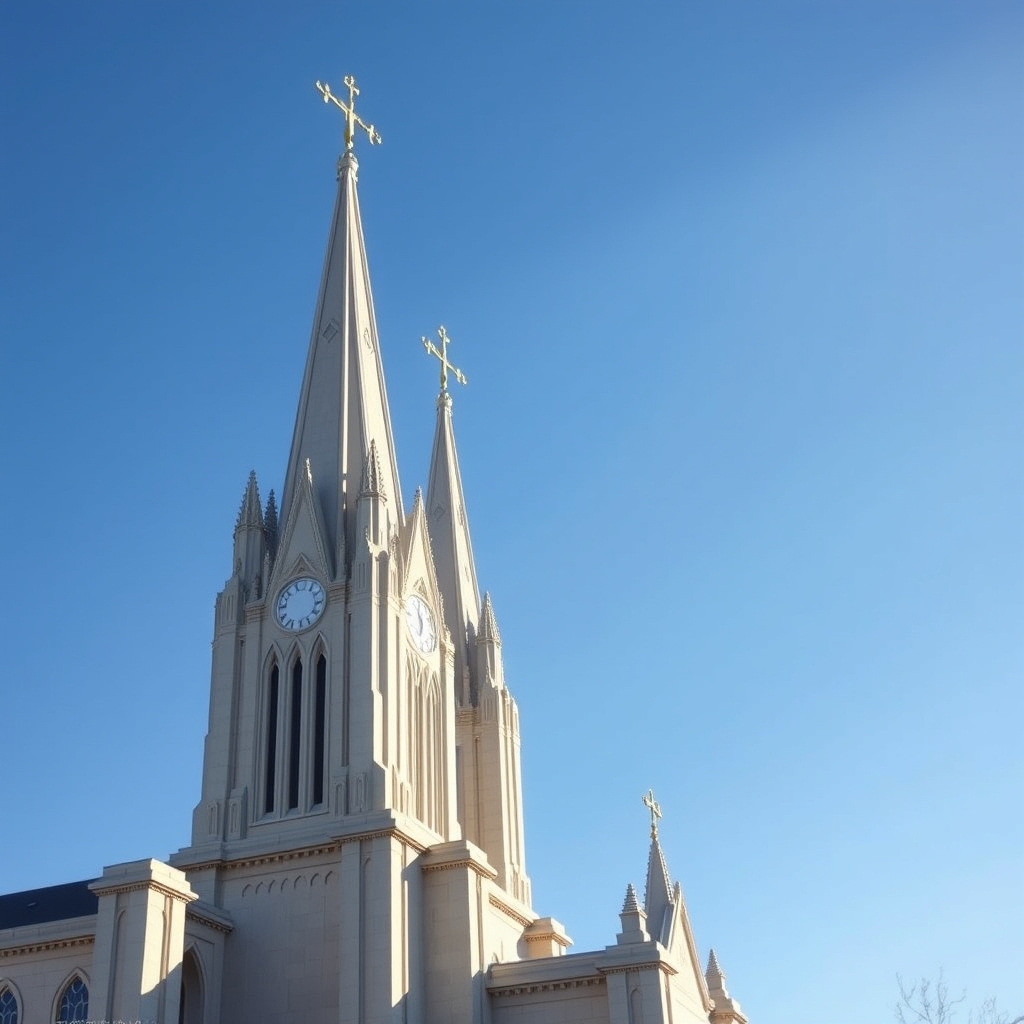
`html
Because many people search for information about church of jesus christ temples and churchofjesuschristtemples, it is important to understand what a Latter-day Saint (LDS) temple actually is from their own teaching—so that we can lovingly compare it to the true temple of God described in Scripture.
History of LDS Temples
The history of LDS temples begins in the early 1830s. Joseph Smith, the founder of the Church of Jesus Christ of Latter-day Saints, claimed to receive revelations instructing the construction of sacred buildings called “temples.” The first temple was built in Kirtland, Ohio, and was completed in 1836. This was followed by additional temples in Nauvoo, Illinois, and eventually in Salt Lake City after the migration westward.
Over the centuries, the church has expanded significantly. Today, there are over 170 dedicated temples worldwide, with many more announced or under construction. [3] These buildings serve as the most sacred spaces for Latter-day Saint worship and ritual practice.
However, it is important to note that biblical Christianity recognizes no such “temple” system. In the Old Testament, God dwelt in the temple in Jerusalem. But in the New Testament, the temple was fulfilled in Jesus Christ Himself. As Jesus declared: “Destroy this temple, and in three days I will raise it up” (John 2:19). The apostle Paul later explained that believers themselves are now the temple of the Holy Spirit (1 Corinthians 6:19). Therefore, physical temples are no longer required for worship.
Purpose and Rituals According to LDS Teaching
According to LDS teaching, temples are not ordinary meetinghouses for Sunday worship. They are reserved exclusively for what they call “sacred ordinances.” Only members in good standing may enter. The primary purposes and rituals include:
- Baptism for the dead: Living members are baptized on behalf of deceased persons who did not accept the LDS gospel in life.
- Endowment ceremonies: Members receive secret instructions, protections, and what they call “keys” to the afterlife.
- Sealing ceremonies: Families are bonded together for eternity through special temple rites.
- Washing and anointing: Ritual purification and dedication to the LDS church and its teachings.
These rituals are considered essential for achieving the highest level of salvation in LDS theology, referred to as “exaltation.” However, for Christians who follow the Bible, these practices find no support in Scripture. The Bible teaches clearly that “there is one baptism” (Ephesians 4:5) and that it is for the living, not the dead. Furthermore, the work of salvation is completed through faith in Jesus Christ alone: “For by grace you have been saved through faith, and that not of yourselves; it is the gift of God” (Ephesians 2:8).
Moreover, Jesus said, “It is finished” (John 19:30) when He died on the cross. There are no additional rituals, temples, or ordinances required for salvation. The gates of heaven are opened to all who believe in the name of Jesus Christ (John 3:16). The true temple is not made with human hands. It is the heart of every believer, indwelt by the Holy Spirit.
In the next section, we will examine how the true Church of Jesus Christ gathers and why no building or ritual is required to be in fellowship with God—only faith in His Son.
`
How Does the True Church of Jesus Christ Gather?
`html
The New Testament Pattern of Assembly
The true Church of Jesus Christ gathers in the same way His followers did from the very beginning. After Jesus ascended to heaven, the early believers showed us the pattern. They met together regularly for prayer, fellowship, and teaching. Acts 2:42 tells us, “They devoted themselves to the apostles’ teaching and to fellowship, to the breaking of bread and to prayer.”
Furthermore, the New Testament never commanded special temples or restricted sacred rituals to secret buildings. Instead, believers met in homes. Romans 16:5 mentions a church that met in a house. Colossians 4:15 also refers to a church meeting in someone’s home. The early Church was simple and focused on Jesus.
What mattered most was not the building. It was the presence of Jesus among His people. He promised, “Where two or three gather in my name, there am I with them” (Matthew 18:20). As a result, the true Church of Jesus Christ gathers around Christ Himself, not around sacred architecture or ritual objects.
Hebrews 10:24-25 gives believers this instruction:
- Spur one another on toward love and good deeds
- Not give up meeting together
- Encourage each other
These gatherings were open and centered on Jesus Christ. They included:
- Teaching from Scripture — Believers read and studied God’s Word together.
- Prayer — They lifted their hearts to God in thanksgiving and need.
- Fellowship — They shared meals, encouraged one another, and cared for each other’s needs.
- Worship — They sang praises and magnified the name of the risen Lord Jesus.
This pattern is still how the true Church of Jesus Christ gathers today. It is pure, simple, and Jesus-centered.
The Holy Spirit as Our Guide and Teacher
Another key difference is that the true Body of Christ does not rely on human priesthoods or elaborate ceremonies. The Holy Spirit leads every believer. Jesus promised this in John 14:26: “But the Advocate, the Holy Spirit, whom the Father will send in my name, will teach you all things.”
The Holy Spirit:
- Guides believers into all truth (John 16:13)
- Convicts the world of sin and righteousness (John 16:8)
- Empowers believers for service and witness (Acts 1:8)
- Unites all believers as one Body in Christ (1 Corinthians 12:13)
Because the Holy Spirit dwells in every believer, God’s presence is not limited to any temple or special location. Paul wrote in 1 Corinthians 6:19, “Do you not know that your bodies are temples of the Holy Spirit, who is in you?” This is the biblical foundation. Each believer carries God’s presence wherever they go.
As a result, the true Church relies on the Holy Spirit’s guidance rather than on ordinances performed by a privileged few. Every Christian has direct access to God through Christ. Hebrews 4:16 says, “Let us then approach God’s throne of grace with confidence.”
In conclusion, the true Church of Jesus Christ gathers in simple, open fellowship. It is empowered by the Holy Spirit and built upon the unchanging Word of God. This Church does not need secret ceremonies. It needs Jesus Christ — crucified, risen, and alive forever. He is its foundation, its Head, and its hope.
`
Frequently Asked Questions
List of LDS Temples in Order: How Many Are There?
As of early 2025, The Church of Jesus Christ of Latter-day Saints has announced over 350 temples worldwide. [4]
Many of these are already dedicated and operating. Others are under construction or in the planning stages. The church continues to announce new temples at a rapid pace.
However, from a biblical perspective, we must ask a deeper question. Are these temples the same as the church that Jesus built? The answer, according to scripture, is clearly no.
Jesus said in Matthew 16:18, “And I say also unto thee, That thou art Peter, and upon this rock I will build my church; and the gates of hell shall not prevail against it.” His church is not defined by buildings. It is defined by faith in Him.
Mormon Temple Inside: What Happens During Ceremonies?
The interior of an LDS temple is unlike a typical Christian church. Latter-day Saint temples do not hold regular Sunday worship services. Instead, they are reserved for specific rituals including:
- Endowment ceremonies, where participants make covenants and receive instruction.
- Baptisms for the dead, where living members are baptized on behalf of deceased individuals.
- Sealings, where families are joined together for eternity.
- Washing and anointing rituals performed by temple workers.
Certain roles are restricted to those who hold what is called the “Melchizedek Priesthood.” Only faithful members holding this priesthood authority may participate in core ceremonies. [5]
The Bible teaches something very different for God’s people. First Corinthians 3:16 says, “Know ye not that ye are the temple of God, and that the Spirit of God dwelleth in you?” The true temple where God dwells is not a building made by human hands. It is every person who trusts in Jesus Christ.
LDS Temples Map: Where Are They Located?
LDS temples are located across six continents. The highest concentration remains in the United States, especially in Utah. [6]
Major temple locations include:
- Salt Lake City, Utah — the most famous and the flagship temple.
- Rome, Italy — representing the faith’s global expansion.
- São Paulo, Brazil — serving Latin American members.
- Tokyo, Japan — serving members across Asia.
- Accra, Ghana — serving growing African congregations.
Most major cities around the world now have a temple or announced temple. The church’s goal is to bring temples closer to members globally.
Yet Christians know that Jesus did not build a kingdom of stone buildings. Acts 17:24 tells us, “God that made the world and all things therein, seeing that he is Lord of heaven and earth, dwelleth not in temples made with hands.” Our Savior’s presence fills every place where His people gather in His name.
Pictures of All LDS Temples: Are Images Sacred?
The Church of Jesus Christ of Latter-day Saints does release official photographs and videos of many temples. These images often appear in church publications and on temple grounds during open house events.
However, interior photographs of the inside of dedicated temples are generally not published. The church considers certain areas of the temple to be sacred and not suitable for general photographs or media coverage.
As Christians, we are reminded by the Second Commandment in Exodus 20:4: “Thou shalt not make unto thee any graven image.” While Latter-day Saints do not worship images, believers in Jesus Christ focus worship exclusively on the living God and His Son.
Jesus said in John 4:24, “God is a Spirit: and they that worship him must worship him in spirit and in truth.” True worship does not require photographs of buildings. It requires a heart surrendered to Christ.
Are LDS Temples the Same as Churches That Follow Jesus?
This is the most important question a seeker can ask. The answer is clear when we compare LDS temple theology with biblical Christianity.
| LDS Temples | The Biblical Church of Jesus Christ |
|---|---|
| Dedicated buildings with restricted access | Every believer is God’s temple (1 Corinthians 3:16) |
| Priesthood ceremonies required for participation | Every believer is a priest through Jesus (1 Peter 2:9) |
| Baptism for the dead and other vicarious rites | Each person hears the gospel and responds by faith (Romans 10:17) |
| Family sealings for eternal progression | Eternal life is a gift of grace through faith alone (Ephesians 2:8–9) |
| Instruction given inside temple walls | The Holy Spirit indwells all believers as our teacher (John 14:26) |
However, scripture is unmistakably clear. Hebrews 9:24 says that Christ entered “now to appear in the presence of God for us” not into a temple made with hands. His sacrifice on the cross was sufficient. No additional rituals are needed.
Are Latter-day Saints sincere? Many undoubtedly are. But sincerity does not change truth. Jesus alone is “the way, the truth, and the life” (John 14:6). The true church of Jesus Christ is founded on the rock of His finished work, not on any building made by human effort.
Whatever building or organization may exist, the invitation of Scripture remains open to all: “Believe on the Lord Jesus Christ, and thou shalt be saved” (Acts 16:31). That is the foundation that will never be shaken.
Conclusion: Returning to the True Foundation

Throughout this study, we have explored what the Bible truly teaches about the temple of God. In addition, we have compared these truths with the teachings and practices of the Latter-day Saint (LDS) tradition. However, the most important question remains: where does God truly dwell today? Scripture gives us a clear and beautiful answer. The living God no longer resides in buildings made by human hands. Instead, He has chosen to make His home in the hearts of those who place their faith in His Son, Jesus Christ.
The true temple of God is not a structure of stone and mortar. It is the heart of every believer who has been washed, sanctified, and justified in the name of the Lord Jesus and by the Spirit of our God (1 Corinthians 6:19). This is the unchanging truth of the Gospel. Furthermore, it is the message that the Church of Jesus Christ of Latter-day Saints ultimately obscures by directing faith and devotion toward man-made temples and a system of works-based salvation.
The foundation of everything is Jesus Christ. He is the cornerstone, and we are His living stones, being built up as a spiritual house (1 Peter 2:5). Therefore, our faith must rest entirely on Him. We encourage you not to be swayed by the impressive rituals or emotional appeals of any group. Instead, anchor your soul in the written Word of God. In addition, let the Holy Spirit guide you into all truth (John 16:13). The promise of the Gospel is simple: “For God so loved the world that He gave His only begotten Son, that whoever believes in Him should not perish but have everlasting life” (John 3:16).
If you have been searching for answers, we invite you to return to the true foundation. Place your trust in Jesus Christ alone. He is the Way, the Truth, and the Life (John 14:6). Consequently, there is no other name under heaven given among men by which we must be saved (Acts 4:12). Today is the day of salvation. Come to the foot of the cross and find everlasting rest in the finished work of the Lord Jesus Christ.