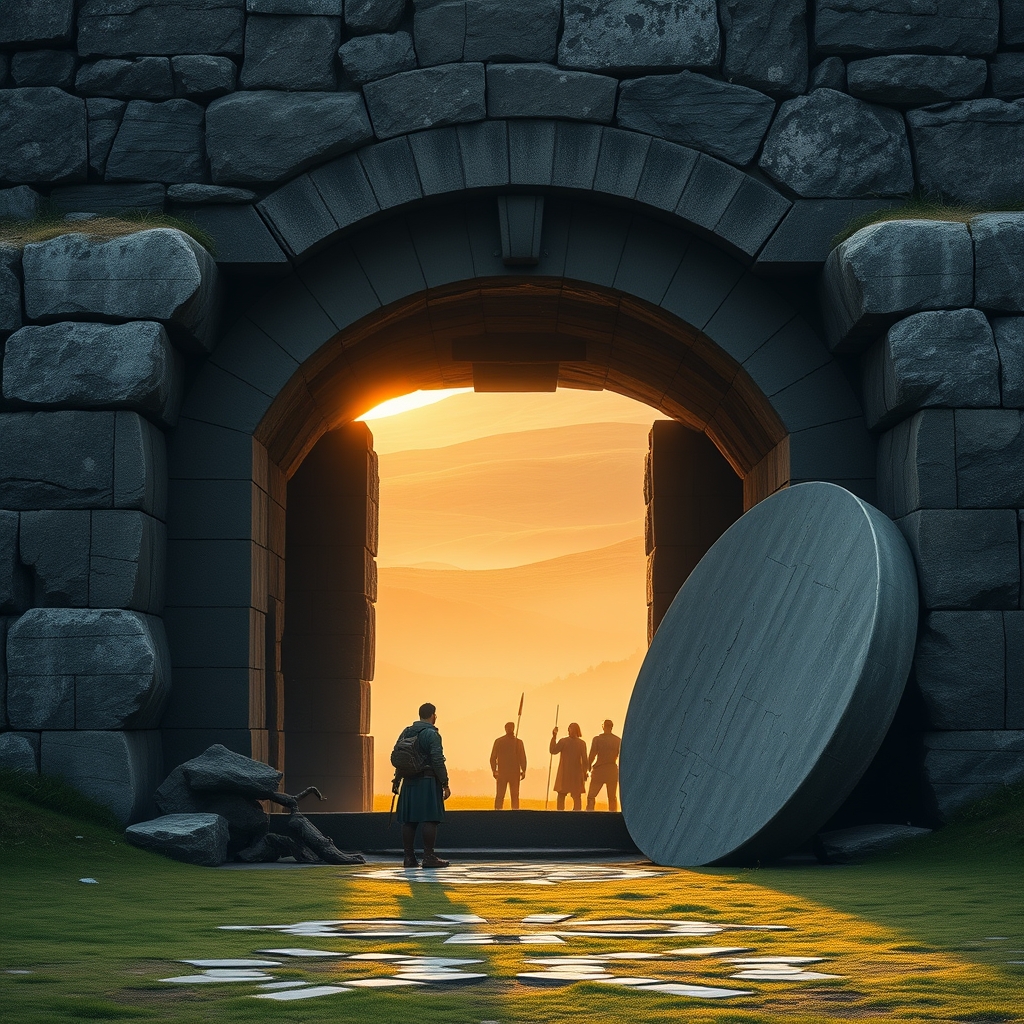
The empty tomb is the historical and spiritual proof that Jesus Christ rose from the dead. It signifies His victory over sin and death, providing believers with the assurance of eternal life and salvation through faith in Him.
Few events in human history have been scrutinized, debated, and celebrated as much as the empty tomb of Jesus. For nearly two thousand years, skeptics have questioned its authenticity, while believers have pointed to it as the cornerstone of their faith. The phrase “empty tomb” resonates far beyond the pages of Scripture, shaping art, literature, theology, and even courtroom arguments. But what does the empty tomb truly mean? And why does it matter whether the tomb was really empty? This article explores the powerful evidence for the resurrection of Jesus Christ—the Son of God—as revealed in the Bible.
Whether you are a lifelong believer seeking deeper understanding or someone curious about the core truths of the Gospel, this article will walk you through the historical event, the first witnesses, and the profound spiritual meaning of the empty tomb. We will examine what the Bible says, address common questions, and discover why the empty tomb remains the most important evidence for the resurrection. As the apostle Paul wrote, “If Christ has not been raised, your faith is futile” (1 Corinthians 15:17). Let us explore together why the empty tomb changes everything.
What is the meaning of empty tomb?
The Historical Event
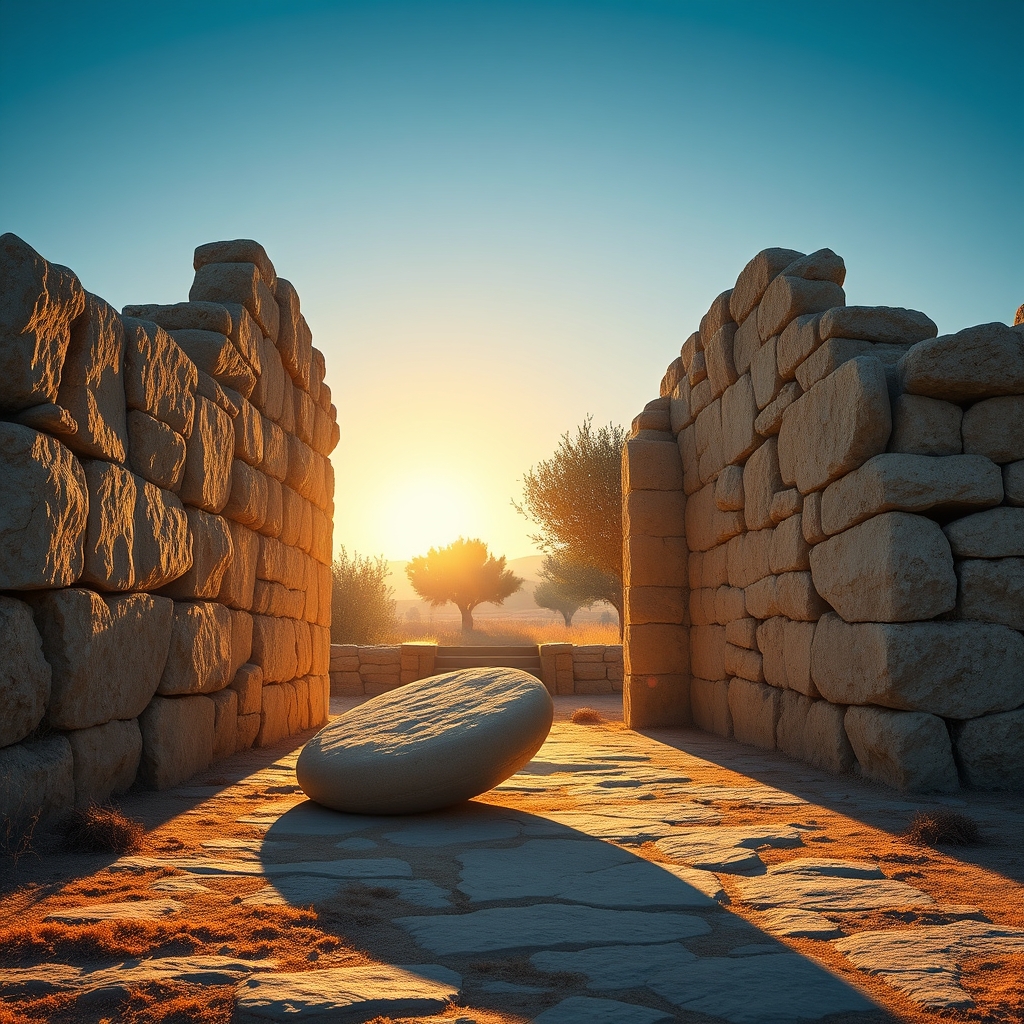
The empty tomb of Jesus is one of the most well-documented events in ancient history. On the third day after His crucifixion, the tomb where His body had been laid was found completely empty. This was not a secret event hidden from public view. It happened in Jerusalem, a city filled with witnesses, both friends and enemies of Jesus.
According to the Gospel of Matthew, Jesus was buried in the tomb of Joseph of Arimathea, a wealthy follower of Christ. A large stone was rolled across the entrance. Furthermore, Roman guards were posted to secure the tomb (Matthew 27:62–66). Despite these precautions, the stone was rolled away, and the body was gone.
The empty tomb was not a matter of confusion or mistaken identity. The location of the tomb was known to both the followers of Jesus and the religious authorities. As a result, when the tomb was found empty, it could not be easily explained away. Something extraordinary had happened.
The historical reality of the empty tomb is supported by multiple independent accounts in the New Testament. All four Gospels record this event. In addition, the apostle Paul references the resurrection in his letters, which were written within decades of the actual event (1 Corinthians 15:3–8). This early testimony strengthens the historical credibility of the empty tomb.
The First Witnesses
The first people to discover the empty tomb were women who had followed Jesus. Mary Magdalene, Mary the mother of James, and other women went to the tomb early on the first day of the week. They came to anoint the body of Jesus with spices, as was the custom of the time.
However, when they arrived, they found the stone already rolled away. an angel of the Lord met them and delivered a powerful message: “He is not here; He has risen, just as He said” (Matthew 28:6, NKJV). This announcement was the first proclamation of the resurrection.
It is significant that God chose women as the first witnesses. In the ancient world, women’s testimony was often given less weight in legal settings. Yet God, in His sovereignty, entrusted them with the most important news in human history. This detail actually strengthens the historical reliability of the account. The Gospel writers would not have invented a story that could be easily dismissed by their audience.
After receiving the angel’s message, the women ran to tell the disciples. Peter and John rushed to the tomb to see for themselves. They found the burial cloths lying empty, with the cloth that had covered Jesus’ face folded separately (John 20:6–7). This was not the scene of a robbery. It was the evidence of a miraculous resurrection.
The testimony of these first witnesses has been preserved in Scripture for nearly two thousand years. Their experience at the empty tomb changed everything. It transformed them from grieving followers into bold proclaimers of the risen Christ. The empty tomb was not just an empty room. It was the doorway to the greatest hope the world has ever known.
What does the empty tomb mean in the Bible?
The empty tomb is not just an empty grave. It is a divine announcement that God kept His promises from long ago. It rests on the foundation of centuries of prophetic expectation.
A Fulfillment of Prophecy
The empty tomb is the loudest possible confirmation of a promise kept. Long before Jesus walked in Galilee, the prophets spoke in shadows and symbols. They pointed forward to a coming Lamb, a suffering Servant, and a conquering King. The empty tomb shows that Jesus fulfilled every detail.
Jesus Himself pointed to the Scriptures as His own witness. On the road to Emmaus, He explained how all the Laws, the Prophets, and the Psalms spoke of Him.
“Then he said to them, ‘This is what I told you while I was still with you: Everything must be fulfilled that is written about me in the Law of Moses, the Prophets and the Psalms.’ Then he opened their minds so they could understand the Scriptures.” (Luke 24:44-45)
The writers of the New Testament saw the Old Testament not as a collection of random scrolls, but as one unfolding story of redemption. They realized its Hero was Jesus. The empty tomb gave them the final proof.
Here are key prophecies that the empty tomb fulfilled:
- Psalm 16:10: “You will not abandon my soul to the realm of the dead” — Peter quotes this prophecy in Acts 2:27-31 and applies it directly to Jesus’ resurrection
- Isaiah 53:10-11: The Servant would “see his offspring and prolong his days” after offering for sin
- Jonah 1:17: Jesus points to “three days and three nights” in the belly of the fish as a sign of His own burial and rising (Matthew 12:40)
- Hosea 6:2: “After two days he will revive us; on the third day he will raise us up”
The empty tomb is God’s way of saying, “Exactly as I said.” In addition, this is not wishful thinking. It is covenant faithfulness. He did what He said He would do.
The Foundation of the Gospel
The empty tomb is the bedrock of the Good News. Paul states this clearly:
“If Christ has not been raised, your faith is futile; you are still in your sins.” (1 Corinthians 15:17)
The empty tomb is central to the Gospel message. Here’s why:
- Christ’s death paid for sin: His burial shows He truly died
- His resurrection declares victory: The empty grave shows He truly rose
- The Gospel is the power of God: It saves all who believe (Romans 1:16)
- Believers are justified: His rising proves God accepted His sacrifice (Romans 4:25)
Furthermore, the empty tomb explains why the early Church preached without compromise. They did not merely teach ethics. They announced an event. Jesus is risen. This is not a symbol.
The Gospel is a message. It announces Jesus paid for sin. It announces He defeated death. And it invites all to respond in faith.
The empty tomb is God’s exclamation point on the cross. The cross shows His love. The empty tomb shows His power. Together they bring hope to every sinner and comfort to every saint.
This is more than historical curiosity. It is the very heartbeat of our faith. the risen Christ is our living hope (1 Peter 1:3). He is our advocate (1 John 2:1). And He is our soon-returning King (Revelation 22:20).
Do you want to know the risen Jesus personally? He forgives sin and gives eternal life to all who call on Him (Romans 10:13). Your empty heart can be filled with the fullness of God through faith in the One who left the tomb empty for you.
Is it true that Jesus’ tomb is empty?
The Testimony of the Gospels
The empty tomb of Jesus is not a minor detail. It is a central, well-attested historical fact. All four Gospel accounts agree on this truth. Jesus is risen! Matthew, Mark, Luke, and John each record the discovery of the empty tomb. Their unified voice stands as powerful evidence.
On the third day after His crucifixion, women went to the tomb. They planned to anoint His body with spices as was the custom. However, they found the stone rolled away. The tomb was empty. In addition, an angel greeted them with life-changing news. He declared, “He is not here; He has risen!” (Luke 24:6, NIV).
Let us examine the unified witness of each Gospel:
- Matthew tells us there was a great earthquake. An angel descended and rolled away the stone. The guards were so afraid that they “became like dead men” (Matthew 28:4). Later, the religious leaders bribed the guards to spread a lie. They claimed the disciples stole the body while they slept.
- Mark describes three women finding the tomb already open. A young man, dressed in a white robe, sat inside. He told them Jesus had risen and instructed them to tell the disciples.
- Luke provides further detail. At first, the women did not understand. They reported these things to the apostles. Furthermore, Peter ran to the tomb. He saw the linen cloths lying by themselves. Then he went home, marveling at what had happened.
- John gives us the beautiful account of Mary Magdalene’s discovery. She wept, thinking someone had taken the Lord. Then, the risen Jesus spoke her name. She recognized Him immediately. Her grief transformed into overwhelming joy.
These accounts are consistent, yet each offers unique details. This independence strengthens their credibility. Furthermore, the testimony of women is significant. In the first century, women’s testimony was not highly regarded in court. If the story were fabricated, the writers would likely have used male witnesses. As a result, the Gospels’ inclusion of women as the first discoverers shows honesty. They recorded what actually happened.
Addressing Alternative Theories
Throughout history, skeptics have proposed alternative explanations for the empty tomb. They attempt to explain it away without accepting the resurrection. However, when examined carefully, each theory fails to account for all the evidence. A rational, honest look demonstrates the truth. The tomb is empty because Jesus is alive!
Here are the most common alternative theories and why they fall short:
| Theory | Biblical & Historical Refutation |
|---|---|
| The Disciples Stole the Body | The disciples were terrified and in hiding. Peter even denied knowing Jesus. Furthermore, they would not die for a known lie. History shows they faced persecution and death. Their martyrdom testifies to their absolute sincerity. |
| The Authorities (Romans or Jews) Moved the Body | This makes no logical sense. The authorities wanted to stop the movement. If they had the body, they would have simply displayed it. As a result, the Christian faith would have ended immediately. Their silence speaks volumes. |
| Jesus Did Not Actually Die on the Cross (Swoon Theory) | Roman executioners were experts. They confirmed Jesus was dead. A spear pierced His side, bringing a flow of blood and water (John 19:34). Furthermore, a severely wounded man could not roll away a massive stone. He certainly could not appear to healthy to His disciples. |
| The Women Went to the Wrong Tomb | This is highly unlikely. The tomb belonged to Joseph of Arimathea, a prominent council member. Several women watched where Jesus was buried (Mark 15:47). In addition, grave clothes were found in the empty tomb, indicating a specific location. The authorities also knew the location and would have verified it. |
| The Resurrection Was a Hallucination | Jesus appeared to over 500 people at one time, including hardened skeptics like James and Paul (1 Corinthians 15:6). Hallucinations are private, shared psychological phenomena. They do not explain a group of diverse individuals. Finally, a hallucination cannot explain the physical, empty tomb. |
As you can see, each alternative theory has fatal flaws. It actually requires more faith to believe these alternatives. Accepting the biblical account is far more reasonable. Therefore, we can confidently stand on the truth. The historical evidence, combined with scriptural testimony, is overwhelming.
The apostle Paul understood this. He wrote, “And if Christ has not been raised, your faith is futile; you are still in your sins” (1 Corinthians 15:17). The resurrection is the lynchpin. It validates everything Jesus said and did. In addition, it secures our hope for eternal life.
Are you seeking the truth today? Let the empty tomb speak to your heart. It declares that Jesus Christ has conquered death. He offers you the gift of life. Place your faith in Him. Discover the freedom and peace that only the risen Savior can give. His empty tomb is not just history. It is a present reality that transforms lives forever.
The Spiritual Meaning of the Empty Tomb

Victory Over Death
The empty tomb of Jesus stands as the most powerful declaration in all of human history: death has been conquered. For centuries, humanity lived under the shadow of death. Every grave was final. Every goodbye was permanent. But on that first Easter morning, everything changed.
The empty tomb is not merely an absence. It is a presence. It is the living Christ who once was dead but now lives forevermore. As Paul wrote with triumphant certainty:
“Where, O death, is your victory? Where, O death, is your sting?” — 1 Corinthians 15:55
Death had held humanity captive since the fall of Adam. The wages of sin was death, and no one could escape it. No one could overcome it. But Jesus, the sinless Son of God, walked willingly into death’s grip and shattered it from the inside. The empty tomb is the proof that the grave could not hold Him.
Consider what this means for every person who has ever lived:
- Death is not the end. Because Jesus rose, those who trust in Him will also rise.
- The power of sin has been broken. The cross paid the price, and the empty tomb confirmed it was enough.
- Fear of death has been replaced with the hope of eternal life.
Jesus Himself declared this victory before He ever went to the cross. He said:
“I am the resurrection and the life. Whoever believes in me, though he die, yet shall he live.” — John 11:25-26
The empty tomb is not a symbol. It is not a metaphor. It is a real, historical event that changed the course of eternity. The stone was rolled away — not so Jesus could get out, but so the world could see that He had already gone. [1]
Furthermore, the resurrection of Jesus is the cornerstone of the Christian faith. Without it, there is no gospel. Without it, there is no hope. Paul made this clear when he wrote:
“If Christ has not been raised, your faith is futile.” — 1 Corinthians 15:17
But Christ has been raised. The empty tomb testifies to this truth. And because He lives, we too shall live. This is the victory that the empty tomb proclaims to every generation, in every nation, in every heart that will listen.
Assurance of Salvation
The empty tomb of Jesus does more than prove He rose from the dead. It guarantees the salvation of every person who places their faith in Him. If Jesus had remained in the tomb, our sins would still be unpaid. Our guilt would still be unforgiven. But because the tomb is empty, we can know — with absolute certainty — that God accepted the sacrifice of His Son on our behalf.
Salvation is not something we earn. It is not something we achieve through good works or religious effort. It is a gift, freely given, fully paid for by the blood of Jesus Christ. The empty tomb is God’s receipt. It is His declaration that the debt has been settled.
Scripture makes this assurance clear:
- Romans 4:25 — “He was delivered over to death for our sins and was raised to life for our justification.”
- Romans 8:1 — “There is therefore now no condemnation for those who are in Christ Jesus.”
- 1 Peter 1:3 — “Blessed be the God and Father of our Lord Jesus Christ! According to his great mercy, he has caused us to be born again to a living hope through the resurrection of Jesus Christ from the dead.”
Notice the connection in these verses. The resurrection is not separate from salvation. It is the very foundation of it. Jesus died to pay for our sins. He rose to prove that payment was accepted. The empty tomb links the cross to the believer’s hope.
For the new believer, this brings incredible peace. You do not need to wonder if God has forgiven you. You do not need to live in fear of judgment. The empty tomb answers both questions with a resounding yes — you are forgiven, and you are free.
For the mature Christian, this truth is a daily anchor. Life brings trials. Doubts arise. The enemy whispers that God has forgotten you. But the empty tomb stands as an eternal reminder that God keeps every promise He makes. If He raised Jesus, He will also raise you. If He forgave you, He will never take it back.
As Jesus promised:
“I give them eternal life, and they will never perish, and no one will snatch them out of my hand.” — John 10:28
The empty tomb of Jesus is the bedrock of our assurance. It tells us that salvation is secure, our hope is certain, and our future is alive with the promise of eternity with Christ. This is the spiritual meaning of the empty tomb — not just that Jesus rose, but that because He rose, we too will rise, and nothing in all creation can separate us from the love of God that is in Christ Jesus our Lord.
The Power of the Empty Tomb

Transforming Lives Today
The empty tomb of Jesus is not just a historical fact. It is a living power that transforms hearts today. When we truly believe in the resurrection, everything changes.
Consider what happened to the disciples after they saw the risen Jesus. They were fearful and hiding. Then they encountered the empty tomb. As a result, they became bold witnesses for Christ. Peter, who denied Jesus three times, preached to thousands at Pentecost. Many believed and were saved that day (Acts 2:41). [2]
The same power that transformed the disciples is available to us. When we accept that Jesus conquered death, we receive:
- Victory over fear. Death no longer has the final word. Because Jesus rose, we have nothing to fear (1 Corinthians 15:55-57). [3]
- Purpose for living. Our lives have meaning. We are called to share the good news of salvation (Matthew 28:19-20). [4]
- Hope for eternity. Because Jesus rose, we too will rise one day (John 14:1-3). [5]
The empty tomb tells us that no situation is hopeless. Jesus can redeem every broken story. He turned the tragedy of the cross into the greatest victory in history. He can do the same in your life today.
A Message of Hope
The empty tomb of Jesus is the ultimate message of hope. It tells us that God keeps His promises. Jesus said He would rise, and He did (Luke 24:6-7). [6]
This hope is not wishful thinking. It is built on the solid foundation of the empty tomb. Consider what this means:
- Sin is forgiven. The resurrection proves that God accepted Jesus sacrifice for our sins (Romans 4:25). [7]
- Death is defeated. Because Jesus lives, those who trust in Him will also live forever (John 11:25-26). [8]
- New life is possible. The same power that raised Jesus can raise us to new life today (Ephesians 1:19-20). [9]
No matter what you face today the empty tomb brings hope. If you are grieving, Jesus offers comfort. If you are lost, Jesus is the way. If you are burdened by sin, Jesus offers forgiveness.
The empty tomb is not just about the past. It is about the present and the future. Jesus is alive right now. He intercedes for us (Hebrews 7:25). [10] He is coming again one day (Acts 1:11). [11]
The power of the empty tomb is this: Jesus Christ is Lord. He died for our sins. He rose again on the third day. And He offers eternal life to all who believe in Him (John 3:16). [12]
Will you place your trust in the risen Savior today? The same Jesus who walked out of that empty tomb is ready to walk with you through every moment of your life.
Frequently Asked Questions
What is the meaning of the empty tomb?
The empty tomb is the most powerful proof of Jesus’ resurrection. It means the tomb where Jesus was buried is vacant. Jesus Christ is not dead. He is alive. The empty tomb shows death could not hold our Lord. He conquered the grave forever. As the angel declared, “He is not here; He has risen” (Matthew 28:6).
Furthermore, the empty tomb was not a secret event. It was discovered by those who loved Jesus. The guards who watched the tomb could not explain what happened. Even the religious leaders of the day could not produce a body. They could not deny the resurrection.
What does the empty tomb mean in the Bible?
Biblically, the empty tomb fulfills Jesus’ own prophecies. Jesus said, “Destroy this temple, and in three days I will raise it up” (John 2:19). Moreover, the empty tomb fulfills Old Testament prophecy. Scripture says, “You will not abandon me to the realm of the dead” (Psalm 16:10).
In addition, the empty tomb is the foundation of the Gospel. The Apostle Paul wrote, “If Christ has not been raised, your faith is futile” (1 Corinthians 15:17). The entire message of salvation rests on this single, glorious truth: Jesus rose from the dead. Without the empty tomb, there is no Good News.
The Bible makes this message abundantly clear:
- Matthew 28:6: “He is not here; He has risen, just as He said.”
- Mark 16:6: “He has risen! He is not here.”
- Luke 24:34: “The Lord has risen and has appeared to Simon.”
- John 20:8: The disciples saw the empty tomb and believed.
Is it true that Jesus’ tomb is empty?
Yes, it is true. The testimony of all four Gospels confirms the empty tomb. Matthew, Mark, Luke, and John all record this extraordinary event. Even secular historians from the first century acknowledged the tomb was found empty. No credible historical source disputes this fact. [13]
Throughout history, skeptics have proposed alternative theories. For example, some claim the disciples stole the body. Others suggest Jesus merely fainted on the cross. However, every alternative theory collapses under scrutiny. Consider these points:
- The tomb was guarded by Roman soldiers. Stealing the body would have been impossible without detection.
- Jesus’ followers were terrified after His crucifixion. They were in no state to attempt a daring theft.
- Jesus ate food and appeared to many people after His resurrection. He was truly alive, not merely revived from fainting.
- The enemies of Christianity never produced the body. They had every motivation to disprove the resurrection.
As a result, the empty tomb stands unchallenged. The evidence is overwhelming. Jesus Christ truly rose from the dead.
Do we have DNA of Jesus?
No, we do not have the DNA of Jesus Christ. The resurrected body of Jesus is glorified and heavenly. After His resurrection, Jesus ascended to heaven (Acts 1:9). He is seated at the right hand of God the Father (Hebrews 1:3).
Furthermore, the absence of physical DNA does not weaken our faith. On the contrary, it strengthens it. Our faith rests on the testimony of Scripture and the witness of the Holy Spirit. Scripture tells us, “We walk by faith, not by sight” (2 Corinthians 5:7). We do not need physical evidence of DNA to believe.
In addition, the Gospels record that Jesus allowed Thomas to touch His wounds (John 20:27). Yet He also told Mary Magdalene, “Do not hold on to Me, for I have not yet ascended to the Father” (John 20:17). These accounts show that Jesus’ resurrected body was both physical and glorified. He is no longer bound by earthly limitations.
The lack of DNA proves one glorious truth: Jesus is not here on earth. He is alive in heaven. He is our risen Lord and Savior. His resurrection is a matter of faith, anchored in the Word of God.
What can we learn from the empty tomb?
The empty tomb teaches us many life-changing truths. First, it teaches us that Jesus is who He said He is. He is the Son of God. He is the way, the truth, and the life (John 14:6). Second, it teaches us that death has been defeated. Through Jesus, we have victory over death. “Where, O death, is your victory?” (1 Corinthians 15:55).
In addition, the empty tomb gives us assurance of our own resurrection. Scripture promises, “Because I live, you also will live” (John 14:19). All who place their trust in Jesus will be raised to eternal life. This is the blessed hope of every believer.
Finally, the empty tomb transforms lives today. Here is what every person can take from this truth:
- Hope for the hopeless: If Jesus conquered death, He can overcome any struggle in your life.
- Peace in suffering: The resurrection promises eternal joy, beyond all earthly pain.
- Courage in fear: The risen Lord walks with you through every trial and every valley.
- Salvation for all who believe: “If you declare with your mouth, ‘Jesus is Lord,’ and believe in your heart that God raised Him from the dead, you will be saved” (Romans 10:9).
The empty tomb is not merely a historical fact. It is the living hope of the Gospel. Jesus Christ is risen. He is Lord. And He invites every person to receive the gift of eternal life through faith in His glorious name.
Sources
- https://www.biblegateway.com/resources/commentaries
- https://www.biblegateway.com/passage/?search=Acts+2&version=NIV
- https://www.biblegateway.com/passage/?search=1+Corinthians+15&version=NIV
- https://www.biblegateway.com/passage/?search=Matthew+28&version=NIV
- https://www.biblegateway.com/passage/?search=John+14&version=NIV
- https://www.biblegateway.com/passage/?search=Luke+24&version=NIV
- https://www.biblegateway.com/passage/?search=Romans+4&version=NIV
- https://www.biblegateway.com/passage/?search=John+11&version=NIV
- https://www.biblegateway.com/passage/?search=Ephesians+1&version=NIV
- https://www.biblegateway.com/passage/?search=Hebrews+7&version=NIV
- https://www.biblegateway.com/passage/?search=Acts+1&version=NIV
- https://www.biblegateway.com/passage/?search=John+3&version=NIV
- https://www.britannica.com/topic/resurrection-of-Jesus