Revelation 22:16 is a direct testimony from Jesus Christ, where He affirms His identity to the churches. He declares, “I am the Root and the Offspring of David, and the bright Morning Star,” confirming His fulfillment of Old Testament prophecy, His royal lineage, and His divine status as the ultimate hope for humanity.
The book of Revelation unveils God’s final plan and triumphant victory, culminating in a direct and personal declaration from Jesus Christ. Amid prophecies of His return and calls to remain faithful, Jesus offers a profound self-identification in Revelation 22:16. These are not merely ancient words; they are living truths that reveal our Savior’s heart and invite us to understand Him more deeply.
In this single, powerful verse, Jesus declares Himself to be “the Root and the Offspring of David, and the bright Morning Star.” Each title is rich with divine significance, weaving together prophetic fulfillment, royal lineage, and radiant hope. These names testify to His undisputed sovereignty, His perfect humanity, and His eternal divinity—the foundational truth of our faith, sustained by His death and glorious resurrection.
What does it mean for Jesus to be both the “Root” and “Offspring” of David? And why does He use the image of the “bright Morning Star” to describe Himself? In this article, we will explore the profound meaning of Revelation 22:16 to see what these titles reveal about the identity and authority of Jesus Christ. Join us to deepen your understanding and strengthen your faith in the One who holds all things together.
What is Revelation 22:16 in the Bible?
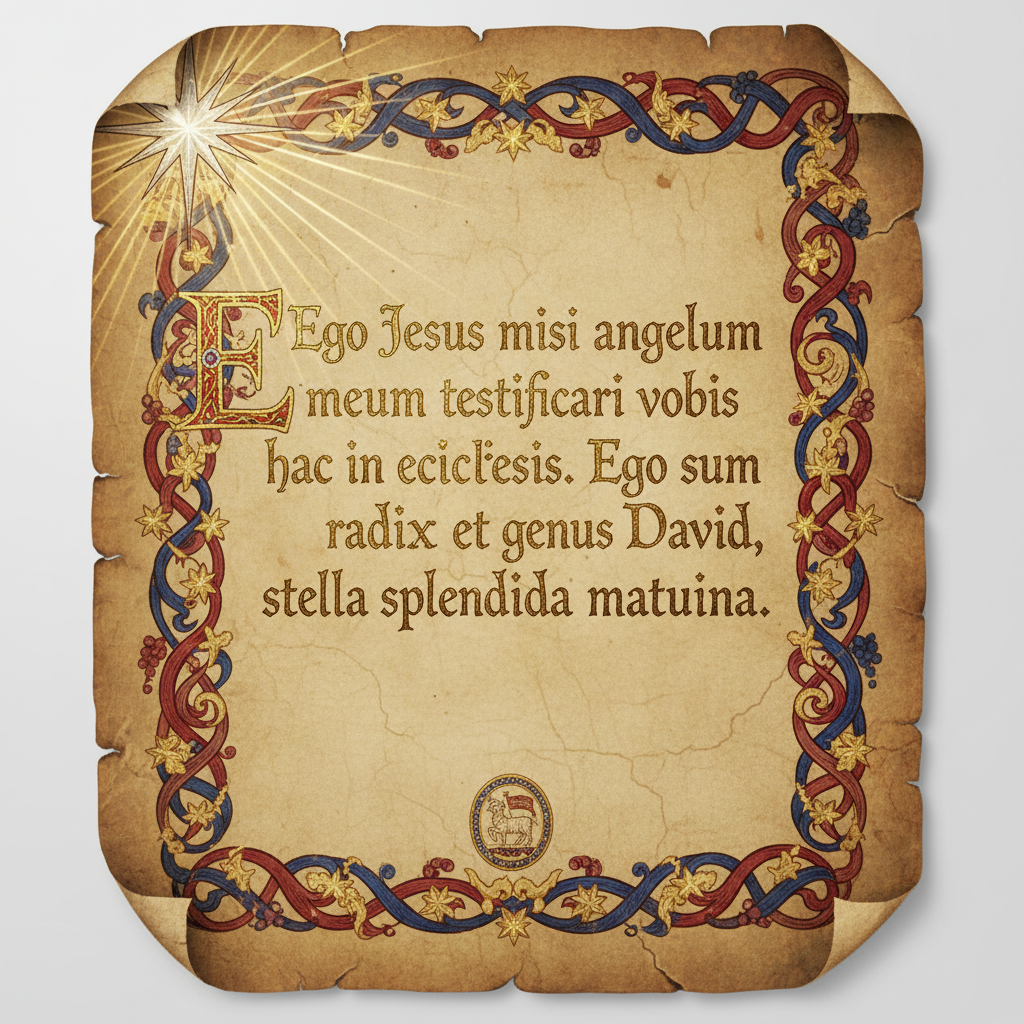
The Verse Text in Key Translations (KJV, NIV, ESV)
Revelation 22:16 is a direct and profound declaration from Jesus Christ Himself. As a pivotal statement in the Bible’s final chapter, this verse confirms His identity and authority. To understand its full impact, let’s examine the text in three widely respected translations.
- King James Version (KJV): “I Jesus have sent mine angel to testify unto you these things in the churches. I am the root and the offspring of David, and the bright and morning star.”
- New International Version (NIV): “I, Jesus, have sent my angel to give you this testimony for the churches. I am the Root and the Offspring of David, and the bright Morning Star.”
- English Standard Version (ESV): “I, Jesus, have sent my angel to testify to you about these things for the churches. I am the root and the descendant of David, the bright morning star.”
Each translation offers a distinct style: the KJV uses traditional, majestic language; the NIV provides a clear, contemporary reading; and the ESV balances accuracy with readability. Despite these differences, the message remains consistent. Jesus unequivocally declares who He is, providing a foundational truth that anchors our faith.
The Immediate Context: Jesus’ Final Words
To understand Revelation 22:16, we must consider its place in Scripture. The verse appears in the concluding chapter of Revelation, at the very end of the Bible. This context is profoundly significant, as these are among Jesus’ final recorded words to humanity, carrying immense weight and authority.
The book of Revelation unveils future events, describing God’s ultimate victory and showing the new heaven and new earth (Revelation 21:1-4). In this restored creation, the river of the water of life flows freely (Revelation 22:1), the curse is no more (Revelation 22:3), and God’s presence is fully realized among His people. It is within this concluding setting that Jesus steps forward to provide a final, personal testimony, affirming His divine identity and solidifying the truth of all that has been revealed.
The preceding verses in Revelation 22 speak of Jesus’ imminent return (Revelation 22:7, 12, 20) and offer an invitation to all who thirst (Revelation 22:17). Within this powerful closing message, Jesus’ declaration in verse 16 serves several key purposes: it underscores His authority, clarifies His lineage, and confirms His divine nature. Ultimately, these final words act as both a loving assurance to His church and an eternal promise of hope and salvation.
What is the meaning of Revelation 22:16?
The Immediate Context: Jesus’ Final Words
To understand Revelation 22:16, we must consider its place within the wider context of Biblical scripture and verses. The verse appears in the concluding chapter of Revelation, at the very end of the Bible. This context is profoundly significant, as these are among Jesus’ final recorded words to humanity, carrying immense weight and authority.
The book of Revelation unveils future events, describing God’s ultimate victory and showing the new heaven and new earth (Revelation 21:1-4). In this restored creation, the river of the water of life flows freely (Revelation 22:1), the curse is no more (Revelation 22:3), and God’s presence is fully realized among His people. It is within this concluding setting that Jesus steps forward to provide a final, personal testimony, affirming His divine identity and solidifying the truth of all that has been revealed.
The preceding verses in Revelation 22 speak of Jesus’ imminent return (Revelation 22:7, 12, 20) and offer an invitation to all who thirst (Revelation 22:17). Within this powerful closing message, Jesus’ declaration in verse 16 serves several key purposes: it underscores His authority, clarifies His lineage, and confirms His divine nature. Ultimately, these final words act as both a loving assurance to His church and an eternal promise of hope and salvation.
Who is referred to as the morning star?
Who is the morning star? The Bible’s clearest answer comes directly from Jesus Christ Himself. This title carries immense spiritual weight, revealing a deep truth about His identity and role in God’s plan.
Jesus Christ: The True Morning Star of Hope
In Revelation 22:16, Jesus declares, “I am the Root and the Offspring of David, the bright Morning Star.” Coming directly from our Lord, this foundational statement is a powerful affirmation of His divine nature and ultimate authority. He is not merely *a* morning star; He is *the* bright Morning Star.
This title holds profound symbolism:
- A New Day: The morning star signals the end of night and heralds the dawn. Similarly, Jesus’ arrival marked the end of spiritual darkness, bringing the light of truth to a world lost in sin (John 1:4-5).
- Guiding Light: Just as the morning star guides travelers, Jesus is our ultimate guide. He shows us the way to salvation and leads us into eternal life (John 14:6).
- Unwavering Hope: The morning star is a constant, dependable presence that always appears before the sun. In the same way, Christ offers unwavering hope and promises His glorious return (Titus 2:13).
- Divine Splendor: The brightness of the morning star reflects Jesus’ divine glory and radiance. He is the Son of God, full of grace and truth (John 1:14).
Jesus’ self-identification as the bright Morning Star confirms His preeminence, His role as the bringer of a new covenant, and His ultimate victory over sin and death. He is the light that darkness cannot overcome (John 1:5).
Biblical Context: How Jesus’ Title Differs from Others
The term “morning star” can cause confusion, especially when comparing Revelation 22:16 with Isaiah 14:12. In that Old Testament passage, a fallen entity—often identified as Lucifer or Satan—is called “Day Star” or “Morning Star” in some translations (e.g., KJV). However, the context reveals a vast and crucial difference.
The Bible presents a clear distinction:
- Jesus Christ: The Uncreated Creator. As eternal God, He is the source of all light and life (Colossians 1:16). He is the “bright Morning Star” because He is inherently divine. His light is His own, for He is the One who creates the dawn.
- Lucifer: A Created Being. Isaiah 14 describes the fall of a created angel who aspired to be like God (Isaiah 14:13-14). While this being possessed great splendor, it was a borrowed light—a gift from God. That light was extinguished through pride and rebellion, leaving him the prince of darkness, not a source of true light (Ephesians 6:12).
Therefore, to link Jesus with Satan through this shared title is a profound misunderstanding of biblical context. The Hebrew term in Isaiah 14:12 (הֵילֵל, Helel) refers to a created being who fell from grace. In stark contrast, the Greek phrase in Revelation 22:16 (ὁ ἀστὴρ ὁ λαμπρὸς ὁ πρωϊνός) speaks of Jesus’ inherent, eternal divinity as the ultimate reality.
Our Savior, Jesus Christ, is the one true Bright and Morning Star. He is not a fallen creature; He is the Creator. He is the resurrected Lord who shines with a glory that never fades. He offers us eternal life and hope. Let us fix our eyes on Him, the radiant source of all truth.
How Does This Verse Affirm Our Faith Today?

A Personal Testimony from Jesus Himself
Revelation 22:16 offers a profound gift: the sound of Jesus Christ’s own voice speaking directly to us. He declares, “I, Jesus, have sent My angel to testify to you these things for the churches. I am the Root and the Offspring of David, the Bright and Morning Star.” This isn’t a description from a prophet or an interpretation by an apostle; these are the very words of our Lord Himself, carrying immense weight and personal significance.
This verse powerfully affirms Jesus’ unique authority, for He is both the sender of the message and its content. Because He is “the way, the truth, and the life” (John 14:6), we can trust His words implicitly. This direct testimony not only seals the truth of the entire Book of Revelation but also solidifies His divine identity for all time.
Furthermore, this personal declaration reminds us of His unwavering love. He desires for us to know Him and to understand His divine nature, and so He chooses to reveal Himself personally. This direct communication builds our faith, reassuring us that He is indeed who He claims to be and establishing His testimony as a pillar of truth for every believer.
The Ultimate Promise of Christ’s Return
When Jesus identifies Himself as “the Bright and Morning Star,” He offers a powerful symbol of hope. Just as the morning star appears in the sky just before dawn to announce a new day, this title points to His glorious return, which will signal the beginning of an eternal day for His followers.
This promise is central to Christian hope because it means that darkness will not last forever. Our current struggles and sorrows are temporary, for Jesus will return in power and glory to establish His perfect kingdom. This truth provides immense comfort and strengthens our resolve during difficult times.
This hope in Christ’s return is built on several key truths:
- Certainty: Jesus promised His return (John 14:3), and His word is always true.
- Hope: We eagerly await a future free from sin and pain (Revelation 21:4).
- Motivation: This promise encourages us to live holy lives (1 John 3:3) and inspires us to share the Gospel.
- Justice: Christ’s return will bring ultimate justice, where every wrong will be made right.
Therefore, just as the morning star heralds the sunrise, Jesus’ title assures us of His coming kingdom. We hold to the promise that He will come to gather His own and reign forevermore (Revelation 11:15). It is this ultimate promise that fuels our daily walk of faith.
An Invitation to All Who Thirst (Revelation 22:17)
Immediately following Jesus’ powerful self-declaration, Revelation 22:17 extends a beautiful invitation: “The Spirit and the bride say, ‘Come!’ And let the one who hears say, ‘Come!’ Let the one who is thirsty come; and let the one who wishes take the free gift of the water of life.” This profound call is a testament to God’s boundless grace.
This invitation is universal, extended to “all who thirst.” It includes everyone seeking meaning and embraces all who long for true peace. The imagery connects directly to Jesus, who often spoke of Himself as the source of living water, telling the Samaritan woman, “whoever drinks the water I give them will never thirst” (John 4:14).
This gracious invitation affirms our faith in several ways:
- Accessibility: Salvation is a free gift, not earned by works but offered freely to all.
- Urgency: The Spirit and the Church (the bride) echo Jesus’ call, highlighting its importance.
- Fulfillment: Jesus alone satisfies our deepest spiritual longings and quenches our soul’s thirst.
- Openness: No one is turned away; all who truly desire it can receive the water of life.
Therefore, Revelation 22:16-17 provides a powerful conclusion to this message. Together, these verses affirm Jesus’ divine identity, secure our hope in His return, and extend a gracious invitation to salvation for all. We are called to come to Him and drink from the wellspring of eternal life. This is the very heart of our faith—the everlasting truth of Jesus Christ, our Lord and Savior.
Frequently Asked Questions About Revelation 22
What is the meaning of Revelation 22 16?
Revelation 22:16 is a profoundly significant verse, as it contains Jesus Christ’s personal testimony and final self-identification in the Bible.
In this powerful statement, Jesus reveals three crucial aspects of His being:
- “I, Jesus, have sent My angel”: This phrase highlights Jesus’ divine authority. As the sender of heavenly messengers, He confirms His sovereignty and direct involvement in revealing truth to humanity. It shows He possesses ultimate power over the prophetic message of Revelation (Revelation 22:6).
- “The Root and the Offspring of David”: This phrase beautifully encapsulates Jesus’ dual nature as both fully God and fully man. As the “Offspring of David,” He fulfills the prophecies of a Messiah from David’s royal lineage (Matthew 1:1; Romans 1:3). Yet, as the “Root of David,” He is also David’s ultimate source and origin. This means David’s kingship and covenant promises flow from Christ’s eternal existence, making Him the foundation of David’s line, not merely a descendant (Isaiah 11:1, 10).
- “The bright Morning Star”: This glorious title declares Jesus’ divine majesty. It signifies His triumph over darkness and His role as the herald of a new, eternal day. Just as the morning star appears before the sunrise, Jesus announces the dawn of His everlasting kingdom and the promise of His return (2 Peter 1:19). This title underscores His unparalleled glory as the true light of the world (John 8:12).
Ultimately, Revelation 22:16 is a clear, personal declaration from Jesus Himself. It affirms His divine authority, His fulfillment of Messianic prophecy, and His radiant glory as our Savior and coming King.
Who is referred to as the morning star?
In Revelation 22:16, Jesus Christ declares Himself “the bright Morning Star,” an exclusive and glorious title that belongs to Him alone.
The “Morning Star” is a profound symbol:
- It signifies Jesus’ divine nature and radiant glory.
- It represents Him as the herald of a new day, bringing light and hope after the long night of sin and suffering.
- It proclaims His ultimate victory over darkness, evil, and death (1 John 3:8).
It is important to distinguish Jesus’ title from other biblical references to a “morning star.” For example, Isaiah 14:12 mentions a fallen figure: “how you are fallen from heaven, O Day Star, son of Dawn!” While this passage refers to the king of Babylon, it is also widely interpreted as a description of the fall of Satan. The name often associated with this fall, Lucifer, comes from the Latin term for “light-bearer” or “morning star.”
However, the two figures are clearly distinct:
- Jesus is the bright Morning Star: He is the eternal, uncreated light who brings salvation and never falls (John 1:4-5).
- Lucifer (Satan) was a created being: His light was borrowed. He fell from his position due to pride and became darkness (Isaiah 14:12-15; Luke 10:18).
Therefore, when Jesus declares Himself “the bright Morning Star,” He is affirming His unique, divine, and unwavering position as our Lord, our hope, and the true light of the world (Revelation 22:5).
Who was the woman on the red horse in the Bible?
The Bible does not describe a “woman on a red horse.” This image likely combines two separate, and often confused, prophetic figures from the book of Revelation.
Here is a clarification of the two distinct figures:
-
The Rider on the Red Horse (Revelation 6:3-4):
- This figure is one of the Four Horsemen of the Apocalypse.
- The rider is given a great sword and the power “to take peace from the earth, so that people should slay one another.”
- This red horse and its rider symbolize warfare, bloodshed, and civil strife. Importantly, the Bible does not identify this rider as a woman.
-
The Woman on the Scarlet Beast (Revelation 17:3-6):
- In this vision, the apostle John sees “a woman sitting on a scarlet beast that was full of blasphemous names, and it had seven heads and ten horns.”
- This woman is called “Babylon the Great, mother of prostitutes and of earth’s abominations.”
- She is dressed in purple and scarlet, adorned with gold and jewels, and holds a golden cup full of abominations. She is described as being drunk with the blood of God’s people.
- This woman symbolizes a powerful, corrupt system—be it spiritual, political, or both—that opposes God and persecutes His people in the end times.
It is important to study scripture carefully to understand its rich symbolism. These figures are not positive; they are prophetic symbols that point to forces standing against God’s kingdom. In contrast, Jesus, our true “bright Morning Star,” offers hope and salvation amidst these challenging prophecies (Revelation 22:16).