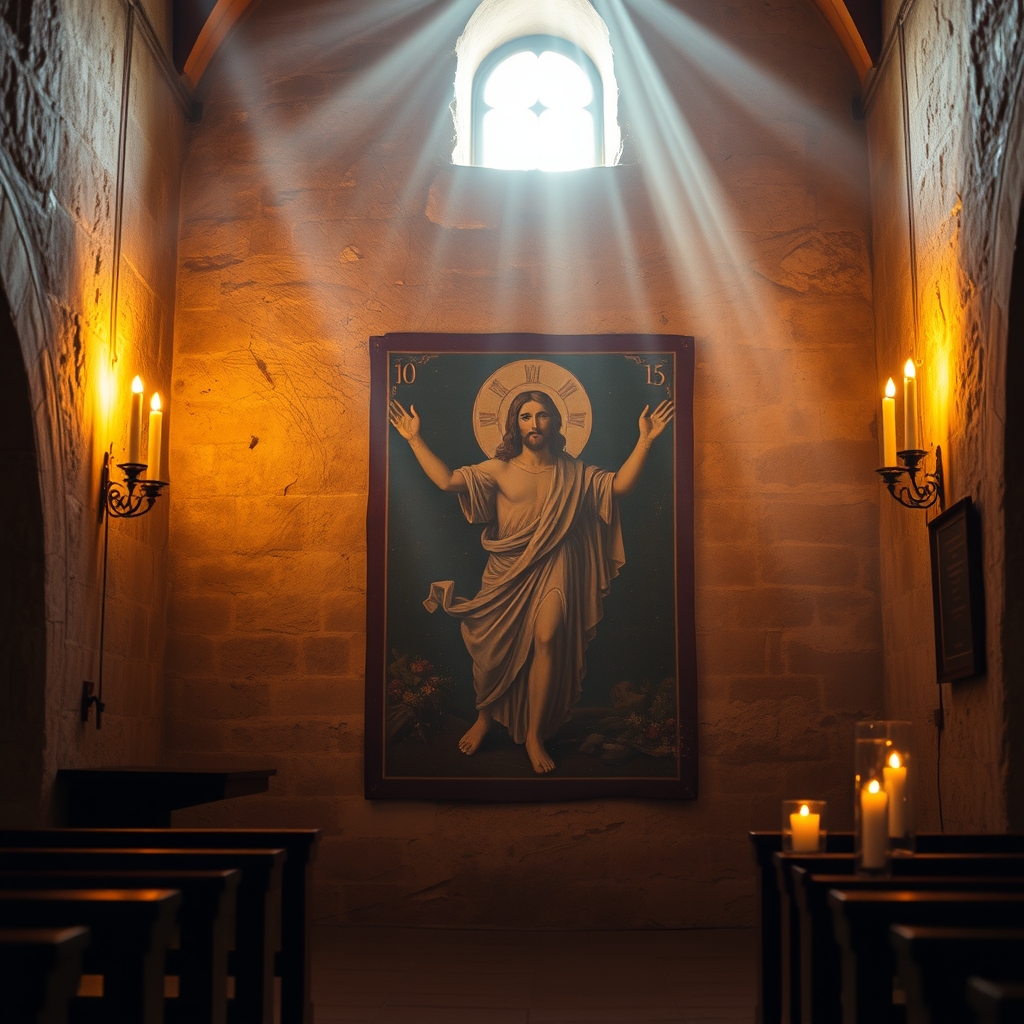
“Potato Jesus” refers to a botched 2012 restoration of a 1930s fresco of Jesus Christ in Borja, Spain, carried out by Cecilia Giménez. The well-intentioned but untrained restoration turned the painting into a distorted image that went viral worldwide as a meme. While the incident became an internet sensation, it serves as a reminder that Jesus Christ—the risen Son of God—deserves to be honored with reverence and care, not reduced to a joke.
In 2012, a small church in Borja, Spain, became the center of a global sensation when an elderly parishioner’s attempt to restore a nearly century-old fresco of Jesus Christ went terribly wrong. The result—a distorted, potato-like face that the internet quickly dubbed “Potato Jesus“—sparked laughter, memes, and endless headlines. But behind the humor lies a deeper story about reverence, intention, and the importance of how we represent the Son of God.
This article explores the full story of Potato Jesus: who created it, what happened during the botched restoration, and how the internet turned a small-town mishap into a worldwide phenomenon. More importantly, it invites us to reflect on what this incident teaches us about honoring the real Jesus—the risen Savior whose image deserves our very best, not our carelessness. Whether you’re a lifelong believer or someone curious about the Gospel, this story offers a lighthearted yet meaningful reminder of who Jesus truly is, as revealed in Scripture.
What Is Potato Jesus?
The Original Fresco of Jesus
Before the world ever heard the phrase “Potato Jesus,” there was a humble, century-old fresco of Jesus Christ painted on the wall of a small church in Borja, Spain. The painting, titled Ecce Homo (“Behold the Man”), was created in 1930 by Elías García Martínez, a Spanish painter. It depicted Jesus crowned with thorns, a sorrowful yet serene expression on His face. For decades, it was a quiet piece of sacred art, a reminder of Christ’s suffering and sacrifice for humanity.
The fresco was not a masterpiece in the technical sense, but it held deep spiritual significance for the local community. It was a focal point for prayer and reflection, a visual representation of the Gospel message: that Jesus endured the cross for the joy set before Him (Hebrews 12:2). The painting, though simple, served its purpose—to honor Christ and remind worshippers of His love.
How the Restoration Went Wrong
In 2012, an elderly parishioner named Cecilia Giménez attempted to restore the fresco. Her intentions were good; she wanted to preserve the painting. However, the result was far from what anyone expected. The restored version bore little resemblance to the original. The face of Jesus became distorted, with features that many compared to a “potato,” leading to the nickname “Potato Jesus.”
The incident quickly went viral, turning a local restoration attempt into a global phenomenon. While the meme brought laughter, it also sparked a deeper conversation about how we represent Christ. The botched restoration serves as a powerful lesson: our efforts, no matter how well-intentioned, can fall short if not guided by skill and reverence. It reminds us that Jesus deserves our best, not our carelessness.
As Christians, we are called to honor Christ in all we do, ensuring our worship and service reflect His glory. The story of Potato Jesus is a humorous yet poignant reminder that misrepresenting Christ, even accidentally, can distract from the true message of the Gospel. Let it encourage us to seek excellence in how we present Jesus to the world.
Who painted Potato Jesus?
Cecilia Giménez: The Well-Intentioned Restorer
When most people hear the phrase “Potato Jesus,” they immediately think of Cecilia Giménez. She is the woman behind the infamous restoration attempt that took the internet by storm. However, it is important to understand her story with compassion and grace.
Cecilia Giménez was an elderly parishioner at the Sanctuary of Mercy Church in Borja, Spain. She was not a professional art restorer. In fact, she had no formal training in art conservation. Despite this, she felt a deep love for her church. She noticed that the fresco was deteriorating due to humidity. As a result, she decided to take action.
Her intentions were pure. She wanted to preserve a beloved piece of her church’s heritage. She began working on the fresco in 2012. Unfortunately, the results were not what she had hoped for. The face of Jesus ended up looking unrecognizable. The internet quickly dubbed the result “Potato Jesus.”
Despite the global mockery, Cecilia remained humble. She later stated that she was not finished with the painting. She felt embarrassed by the attention. However, she also expressed that she had acted out of love for the church. Her story reminds us that good intentions do not always lead to perfect outcomes.
The Original Artist: Elías García Martínez
Before the botched restoration, there was the original masterpiece. The fresco was painted by Elías García Martínez. He was a Spanish painter born in 1858. He created the work around 1930. It was a traditional depiction of Jesus during his crucifixion.
García Martínez was a respected artist in his time. He studied at the Real Academia de Bellas Artes de San Fernando in Madrid. He later became a professor at the School of Art in Zaragoza. His work on the Ecce Homo fresco was a gift to the church. It was meant to inspire prayer and reflection.
The original painting showed Jesus crowned with thorns. It was a solemn and reverent image. It served the church community for decades. It was a focal point for worship. The painting was not considered a high art masterpiece. However, it held deep spiritual significance for the local congregation.
When we look at the original, we see a skilled hand. García Martínez captured the sorrow of Christ. He painted a face that invited viewers to contemplate the sacrifice of Jesus. It was a humble work of devotion. It stood as a testament to the artist’s faith.
Today, the original is gone. The botched restoration changed it forever. Yet, the legacy of Elías García Martínez remains. He created a piece that touched many hearts. His work, though altered, still points people to Jesus. Even in its current state, it draws thousands of visitors. They come to see the “Potato Jesus,” but they learn about the real Jesus.
As Christians, we can appreciate the original artist’s intent. He sought to honor Christ through his talent. We can also learn from the situation. It teaches us to handle sacred things with care. It reminds us that our efforts must always point to the true Jesus. The real Jesus is not a potato. He is the Son of God. He is the Savior of the world.
Was Potato Jesus restored?
The 2012 Restoration Attempt
In 2012, an elderly parishioner named Cecilia Giménez took it upon herself to restore a nearly century-old fresco of Jesus in her local church in Borja, Spain. The original painting, titled “Ecce Homo,” was created in 1930 by Elías García Martínez. Over the decades, the fresco had begun to deteriorate. Cecilia, acting out of love for her faith and her church, decided to restore it without seeking permission from the local authorities or the original artist’s estate. Her intentions were pure, but the result was a disaster. The restoration attempt left the figure of Jesus looking unrecognizable, with a blurry, potato-like appearance. This is how the world came to know it as “Potato Jesus.” [1]
The Aftermath and Global Reaction
The story of Potato Jesus quickly went viral. News outlets around the world covered the botched restoration, and the internet exploded with memes. However, beneath the humor, there is a deeper lesson. The incident serves as a powerful reminder of how easily the image of Christ can be misrepresented. For Christians, this story is more than just a funny internet moment. It is a cautionary tale about the importance of honoring the true Jesus of Scripture.
As believers, we must be careful not to create our own version of “Potato Jesus.” We must ensure that our understanding and presentation of Christ aligns with the Bible. The real Jesus is not a blurry, unrecognizable figure. He is the Son of God, fully divine and fully human, who died for our sins and rose again. Let us always strive to present Him clearly and accurately, giving Him the honor He deserves.
- The Viral Sensation: The story of Potato Jesus became a global phenomenon, with news outlets and social media users sharing the image widely. [1]
- A Lesson in Humility: The incident reminds us that our best efforts, without proper skill and guidance, can lead to unintended consequences. It underscores the need for reverence and care when representing Christ.
- Focus on the Real Jesus: While the meme is humorous, it is crucial to redirect our focus to the true Jesus of the Bible. He is the Way, the Truth, and the Life (John 14:6). Let us never allow a distorted image to define our faith.
In the end, the story of Potato Jesus is not just about a botched restoration. It is a call to honor the real Jesus in all we do. Let us be diligent in our study of Scripture and in our witness to the world. Let us present Christ clearly, accurately, and with the reverence He deserves.
Is Cecilia Gimenez still alive?
Her Life After the Incident
After the “Potato Jesus” incident went viral in 2012, Cecilia Giménez became an unlikely global sensation. However, she remained in her small hometown of Borja, Spain. She continued to live a quiet, humble life. The fame did not change her devotion to her faith. Cecilia was a devoted Christian. She saw her attempt as an act of love for her church. [2]
In addition, she faced the situation with remarkable grace. She did not seek to profit from the meme. Instead, she asked for a share of the donations collected by the church. The church had received many visitors. These visitors came to see the botched restoration. Cecilia felt she deserved compensation for the artwork. Eventually, an agreement was reached. She received a portion of the funds. [3]
How She Responded to the Viral Fame
Cecilia initially felt deep embarrassment. She was horrified by the global mockery. Yet, she later found peace. She understood the situation was in God’s hands. She maintained her faith throughout the ordeal. She saw the humor in the situation eventually. She even embraced the attention in a lighthearted way.
Furthermore, she used the attention for good. She became an advocate for art restoration. She spoke about the importance of professional care. She also highlighted the value of community art. Her story became a lesson in humility. It showed how mistakes can bring people together.
As a result, Cecilia’s response was a testament to her character. She did not let the mockery define her. Instead, she focused on her faith. She continued to serve her community. Her story reminds us of a biblical truth. God works through our imperfections. As it says in 2 Corinthians 12:9, “My grace is sufficient for you, for my power is made perfect in weakness.”
In the end, the “Potato Jesus” incident was not a tragedy. It was a moment of grace. It brought joy to millions. It also reminded the world of the real Jesus. He is not a painting. He is the risen Savior. He is the one who transforms lives. Cecilia’s story points us to Him.
What Does the Potato Jesus Meme Mean?

The Rise of the Potato Jesus Meme
In 2012, a small church in Borja, Spain, became the center of an unexpected global phenomenon. An elderly parishioner named Cecilia Giménez attempted to restore a century-old fresco of Jesus. The result was a distorted, potato-shaped face that the internet quickly dubbed “Potato Jesus.” [4]
Within days, the image went viral. Social media platforms exploded with shares, comments, and reactions. Furthermore, news outlets around the world picked up the story. The meme spread like wildfire because it was instantly recognizable and deeply humorous. People began creating their own versions, editing famous artworks to look like the botched restoration.
The meme resonated for several key reasons:
- Relatability: Everyone has made a mistake. The image became a symbol of well-intentioned failure.
- Simplicity: The visual was immediately understandable without any explanation.
- Shareability: It was perfect for quick social media engagement.
- Universality: Art and faith are topics that cross cultural boundaries.
As a result, “Potato Jesus” became one of the most recognizable internet memes of the early 2010s. It demonstrated the power of the internet to turn a local event into a global conversation.
How the Internet Turned a Mistake into a Cultural Phenomenon
The transformation from a local restoration error to a worldwide meme happened at remarkable speed. Within 48 hours, the image had been shared millions of times. [5]
Several factors fueled this rapid spread:
- Visual Impact: The distorted face was striking and memorable.
- Humor: The contrast between the sacred and the absurd was inherently funny.
- Accessibility: Anyone with internet access could participate.
- Creativity: People began remixing and reimagining the image.
Furthermore, the meme evolved beyond simple sharing. It became a template for commentary on various topics. People used it to discuss art restoration, religious representation, and even political satire. The image appeared on t-shirts, coffee mugs, and countless social media posts.
The phenomenon also had real-world consequences. Tourism in Borja increased dramatically. The small Spanish town saw thousands of visitors come to see the infamous fresco. [6] In addition, the unexpected attention brought economic benefits to the local community.
However, beneath the humor lies a deeper question. The meme raises important issues about how we represent Christ. While the internet found comedy in the botched restoration, it also sparked conversations about reverence and care in depicting our Lord.
For believers, the Potato Jesus meme serves as a reminder. We must handle sacred things with diligence and respect. As Scripture warns, “Whatever you do, work heartily, as for the Lord” (Colossians 3:23). The meme’s popularity highlights both the human tendency to find humor in imperfection and the need for careful stewardship of God’s image.
Ultimately, the Potato Jesus phenomenon shows how quickly culture can reshape meaning. What began as a sincere act of devotion became a global joke. Yet even in this, we see an opportunity. The meme invites us to reflect on how we present Christ to the world. Let us ensure our representations honor the true Jesus—not through careless attempts, but through faithful, Spirit-led devotion.
What Can Potato Jesus Teach Us About Honoring the Real Jesus?

The Danger of Misrepresenting Christ
The story of Potato Jesus is humorous on the surface. However, it carries a deeply important spiritual lesson for every believer. When we misrepresent Jesus—whether through art, words, or actions—we risk distorting who He truly is.
Cecilia Giménez had good intentions. She wanted to restore a beloved fresco. Yet the result bore almost no resemblance to the original painting. In the same way, when we present Jesus to the world carelessly, we can create a distorted image of Him.
Second Corinthians 4:2 reminds us: “Rather, we have renounced secret and shameful ways; we do not use deception.” As followers of Christ, we are called to represent Him with integrity. Our words about Jesus must be truthful. Our portrayal of His character must align with Scripture.
Misrepresenting Christ can take many forms:
- Reducing Jesus to a mere moral teacher while denying His divinity
- Portraying Him as harsh and unloving, ignoring His compassion and grace
- Using His name to justify personal agendas that contradict His teachings
- Presenting a watered-down gospel that omits the cross and the resurrection
Each of these distortions does real damage. They confuse seekers. They mislead new believers. And they dishonor the One who gave everything for us.
Jesus Deserves Our Best—Not Our Carelessness
One of the most powerful lessons from the Potato Jesus incident is simple: Jesus deserves our best. Not our leftovers. Not our carelessness. Not our half-hearted efforts.
Think about what Scripture tells us about worship and service to God. Colossians 3:23 says, “Whatever you do, work at it with all your heart, as working for the Lord, not for human masters.” This principle applies to every area of our lives—including how we honor and represent Jesus.
When we approach our faith with carelessness, we communicate something false about who Jesus is. We suggest that He is not worthy of our full devotion. But nothing could be further from the truth.
Consider these ways we can give Jesus our best:
- Study His Word diligently. The Bible is our primary source for knowing who Jesus truly is. Second Timothy 2:15 urges us to “correctly handle the word of truth.”
- Share the Gospel accurately. When we tell others about Jesus, we must present the full truth—His life, death, burial, and resurrection (1 Corinthians 15:3–4).
- Live with intentionality. Our daily lives should reflect the transforming power of Christ. Matthew 5:16 calls us to “let your light shine before others.”
- Worship with sincerity. Jesus said true worshipers will worship “in the Spirit and in truth” (John 4:24).
The fresco of Ecce Homo was meant to honor Jesus. Cecilia’s heart was in the right place. But good intentions alone are not enough. We must also pursue excellence in how we honor Christ.
Furthermore, this lesson extends beyond art or public ministry. It touches every quiet moment of our walk with God. How we pray. How we read Scripture. How we treat others. Each of these moments is an opportunity to honor Jesus with our best.
The True Face of Jesus: What Scripture Reveals
Potato Jesus gave the world a distorted image. But Scripture gives us the true picture of who Jesus is. If we want to honor the real Jesus, we must look to the Bible—not to human imagination.
So what does the Bible actually reveal about Jesus?
First, Jesus is fully God. John 1:1 declares, “In the beginning was the Word, and the Word was with God, and the Word was God.” He is not a created being. He is not a prophet who merely pointed to God. He is God in human flesh.
Second, Jesus is the Savior of the world. His mission was clear from the beginning. Luke 19:10 states, “For the Son of Man came to seek and to save the lost.” He did not come to be served. He came to serve and to give His life as a ransom for many (Mark 10:45).
Third, Jesus is alive today. The resurrection is the cornerstone of our faith. First Corinthians 15:17 warns, “If Christ has not been raised, your faith is futile.” But Christ has been raised! He conquered death. He reigns as Lord. And He promises to return.
Here is a summary of what Scripture reveals about the true Jesus:
| What Scripture Reveals | Key Verse |
|---|---|
| Jesus is fully God and fully man | John 1:1, 14 |
| Jesus came to save sinners | 1 Timothy 1:15 |
| Jesus died on the cross for our sins | Isaiah 53:5 |
| Jesus rose from the dead on the third day | 1 Corinthians 15:4 |
| Jesus is the only way to the Father | John 14:6 |
| Jesus will return again | Acts 1:11 |
Unlike a painting that can fade or be botched, God’s Word stands forever. Isaiah 40:8 promises, “The grass withers and the flowers fall, but the word of our God endures forever.” When we anchor our understanding of Jesus in Scripture, we will never end up with a distorted image.
The Potato Jesus story will likely continue to circulate online for years to come. It will make people laugh. It will spark conversations. But for those of us who know the real Jesus, it serves as a lasting reminder.
We must never be careless with the image of Christ. We must never present a version of Jesus that the Bible does not support. Instead, we must point everyone—believers and seekers alike—to the Jesus of Scripture. The Jesus who loves us. The Jesus who died for us. The Jesus who rose again and offers eternal life to all who believe.
As John 3:16 so beautifully declares, “For God so loved the world that he gave his one and only Son, that whoever believes in him shall not perish but have eternal life.” That is the real Jesus. And He is worthy of our very best.
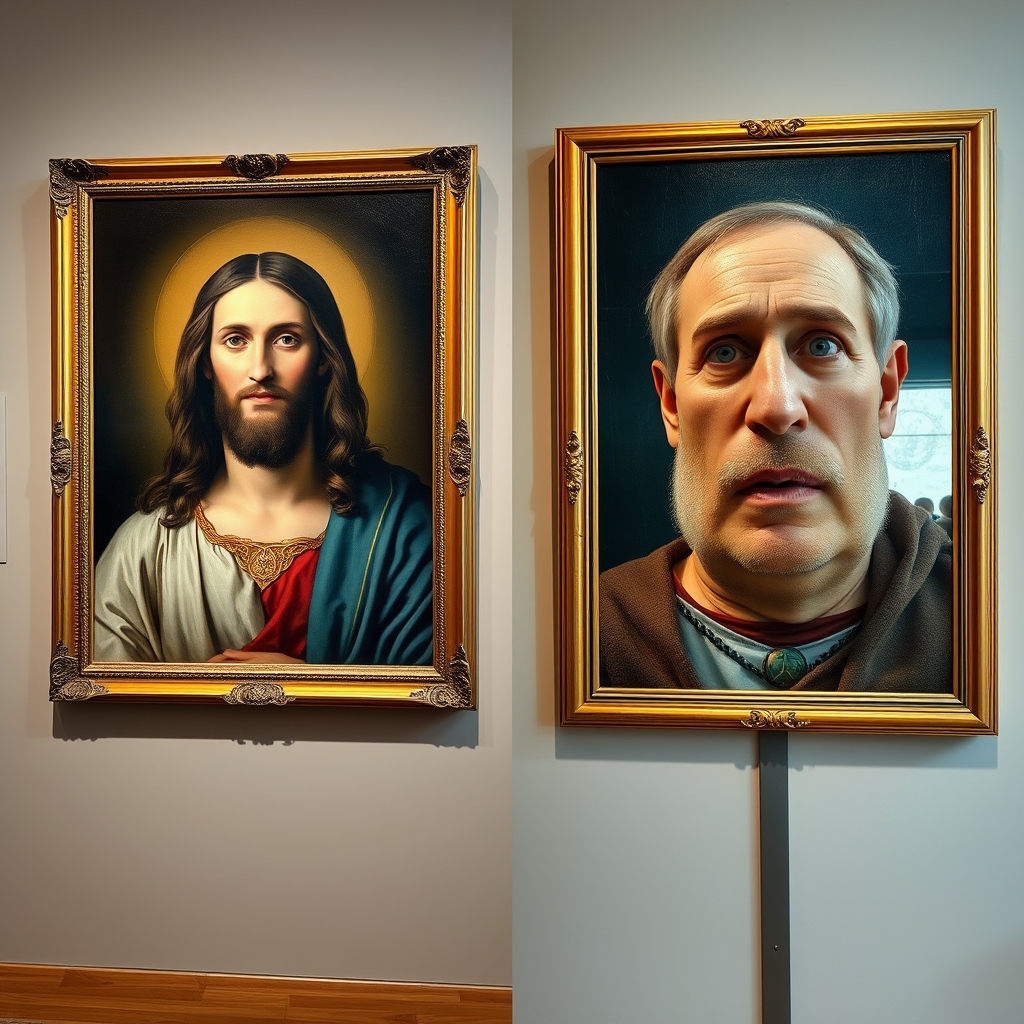
Potato Jesus Before and After: A Visual Comparison
`html
The Original Fresco
The original Potato Jesus fresco was painted in 1930 by Spanish artist Elías García Martínez. It depicted a traditional image of Jesus Christ. The painting was located in the Sanctuary of Mercy church in Borja, Spain. For over 80 years, it hung quietly as a humble piece of religious art. Most people outside the small town had never seen it. However, it was a familiar and beloved image to the local congregation.
The fresco showed Christ crowned with thorns, a common artistic representation of His suffering. The style was simple and modest, reflecting the era in which it was created. It was not a masterpiece by worldly standards, but it held deep spiritual meaning for the community. The painting served as a reminder of Christ’s sacrifice and love.
Here are key details about the original fresco:
- Artist: Elías García Martínez
- Year Created: 1930
- Location: Sanctuary of Mercy Church, Borja, Spain
- Style: Traditional religious fresco
- Subject: Ecce Homo (Behold the Man) — Jesus crowned with thorns
The original painting was a faithful, if modest, attempt to honor Jesus Christ. It reflected the artist’s devotion and reverence. Scripture tells us, “Whatever you do, work at it with all your heart, as working for the Lord” (Colossians 3:23, NIV). García Martínez clearly poured his heart into this work.
The Restored Version
In 2012, the Potato Jesus fresco underwent an unexpected transformation. Cecilia Giménez, an elderly parishioner, attempted to restore the deteriorating painting. She acted out of love and concern for the artwork. However, the results were far from what anyone expected.
The restored version quickly became an internet sensation. The face of Jesus appeared distorted and unrecognizable. Many compared the result to a potato. Others said it looked like a monkey or a cartoon character. The image spread across social media within days. It became one of the most famous art restoration failures in history.
Here is a comparison of the two versions:
| Feature | Original Fresco (1930) | Restored Version (2012) |
|---|---|---|
| Artist | Elías García Martínez | Cecilia Giménez (restoration attempt) |
| Appearance | Traditional, recognizable depiction of Christ | Distorted, unrecognizable face |
| Public Reaction | Quietly appreciated by local community | Global viral sensation and meme |
| Condition | Aging but intact | Significantly altered from original |
| Cultural Impact | Local religious significance | International internet phenomenon |
Despite the humorous reaction, the incident carries a deeper lesson. It reminds us how easily the image of Christ can be misrepresented. As Christians, we are called to honor Jesus with care and intentionality. The Bible warns against false representations of God (Exodus 20:4-5). While this was not an idol, it does illustrate the importance of reverence.
Furthermore, the story of Potato Jesus invites us to reflect on how we present Christ to the world. Our words, actions, and worship should reflect His true glory. Jesus said, “I am the way, the truth, and the life” (John 14:6, NKJV). He deserves our very best — not our carelessness.
In the end, the botched restoration became a blessing in disguise. It drew global attention to a small Spanish town. More importantly, it sparked conversations about art, faith, and the real Jesus. For believers, it serves as a gentle reminder: the true face of Christ is not found in any painting. It is found in the pages of Scripture and in the hearts of those who follow Him.
`
Frequently Asked Questions
Who painted Potato Jesus?
The original fresco was painted by Elías García Martínez, a Spanish artist. He created the work around 1930. It depicted Jesus in a traditional style common in Spanish churches. The painting hung in the Sanctuary of Mercy church in Borja, Spain, for decades. [7]
Was Potato Jesus restored?
Yes, but not successfully. In 2012, an elderly parishioner named Cecilia Giménez attempted to restore the fresco. She had no formal training in art restoration. The result was a distorted image that looked nothing like the original. The botched restoration became an internet sensation overnight. [8]
Is Cecilia Gimenez still alive?
Yes, Cecilia Giménez is still alive. She was born in 1921 and was 91 years old when the restoration went viral. Despite the global mockery, she handled the situation with remarkable grace. She later became an unexpected local celebrity in Borja. [9]
Is Arnold Friberg LDS?
Yes, Arnold Friberg was a member of The Church of Jesus Christ of Latter-day Saints. He was a renowned religious artist. His most famous work is “The Prayer at Valley Forge.” However, his art is not connected to the Potato Jesus story. The Potato Jesus fresco was painted by Elías García Martínez, a Catholic artist in Spain. [10]
What is the Potato Jesus story?
The Potato Jesus story began in 2012 in Borja, Spain. An elderly woman tried to restore a church fresco of Jesus. The result was a distorted, potato-like image. The internet quickly turned it into a viral meme. Despite the humor, the story reminds us how easily we can misrepresent Christ. As believers, we must honor Jesus with care and reverence. Scripture tells us, “At the name of Jesus every knee should bow” (Philippians 2:10). Let us always seek to present Him accurately and with the honor He deserves.
Sources
- https://www.bbc.com/news/world-europe-19330593
- https://www.bbc.com/news/magazine-23885361
- https://www.theguardian.com/artanddesign/2015/nov/13/cecilia-gimenez-potato-jesus-restoration
- https://www.bbc.com/news/world-europe-23875603
- https://www.theguardian.com/artanddesign/2012/aug/23/potato-jesus-meme-viral
- https://www.nytimes.com/2015/09/15/world/europe/potato-jesus-borja-spain.html
- https://www.bbc.com/news/world-europe-23814342
- https://www.nytimes.com/2012/08/23/world/europe/spanish-womans-restoration-of-fresco-becomes-internet-sensation.html
- https://www.theguardian.com/artanddesign/2015/dec/03/potato-jesus-restoration-cecilia-gimenez-borja-spain
- https://www.churchofjesuschrist.org/study/ensign/1975/01/arnold-friberg?lang=eng