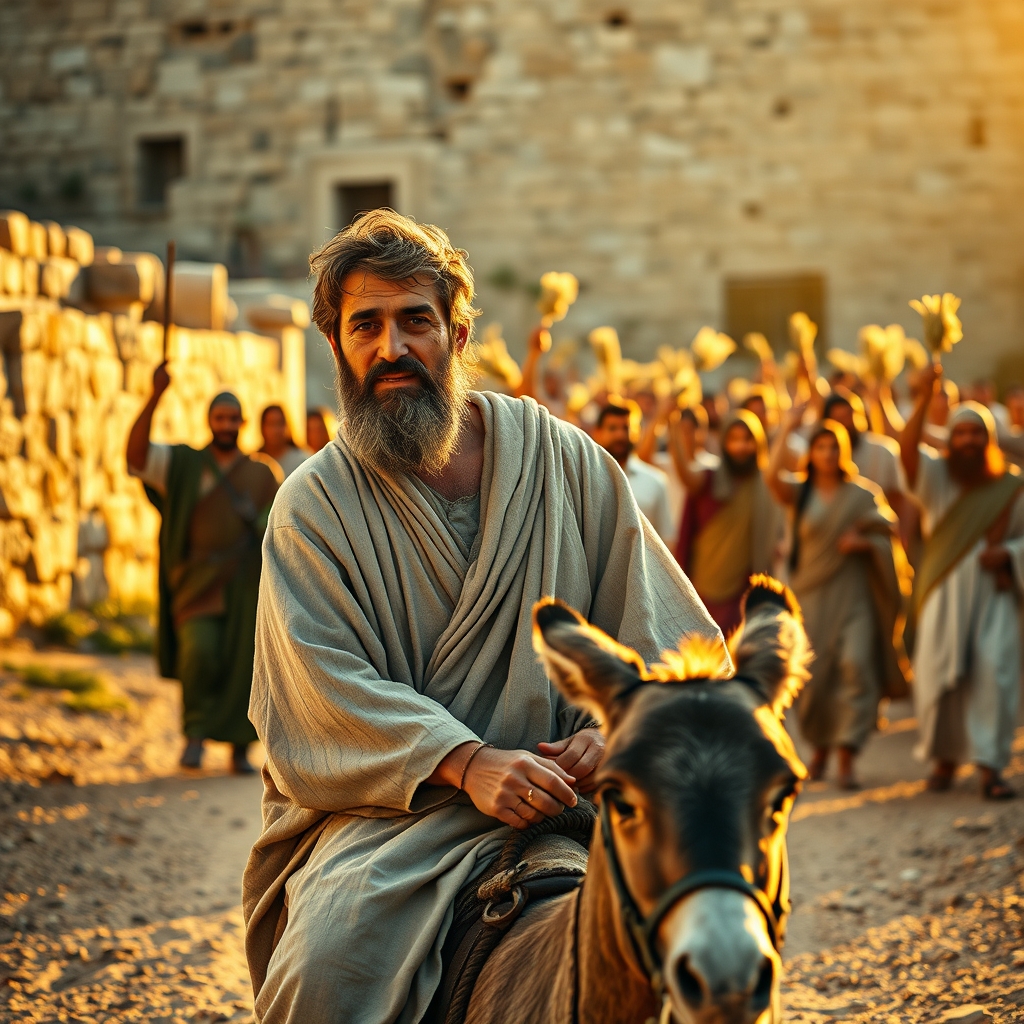
Palm Sunday in the Bible records the triumphal entry of Jesus Christ into Jerusalem, where crowds laid palm branches and garments before Him while shouting ‘Hosanna!’ This event, described in all four Gospels (Matthew 21, Mark 11, Luke 19, and John 12), marks the beginning of Passion Week and reveals Jesus as the promised Messiah and King.
Every year, Christians around the world commemorate one of the most powerful moments in the Gospel narrative — the day Jesus Christ rode into Jerusalem, and the people welcomed Him as King. Known as Palm Sunday in the Bible, this remarkable event was far more than a celebration; it was a turning point that set in motion the final days leading to the cross, the resurrection, and the salvation of all who believe. But what exactly happened on that day, and why does it still matter so deeply for us today?
In this article, we will walk through the full Palm Sunday story as recorded in all four Gospels — from the moment Jesus sent His disciples to fetch a donkey, to the lays down their cloaks and palm branches, to the Pharisees‘ frustration, and even Jesus’ tears over Jerusalem. Whether you are a lifelong believer or someone simply curious about the life and mission of Jesus, this exploration of Palm Sunday in the Bible will help you understand not only what happened, but what it reveals about who Jesus truly is and why His entry into Jerusalem changed everything.
What is Palm Sunday in the Bible?
Palm Sunday marks the day Jesus Jesus Christ entered Jerusalem as the promised King, riding humbly on a donkey.
This event is recorded in all four Gospels (Matthew, Mark, Luke, and John). It took place just one week before Jesus was crucified. Palm Sunday signals the beginning of what Christians call Holy Week—the most significant week in all of human history.
The crowds welcomed Him with excitement. Some laid palm branches on the road. Others spread their cloaks as He passed by. Many cried out, “Hosanna to the Son of God! Blessed is He who comes in the Name of the Lord!” (Matthew 21:9). Their words were both a prayer and a confession. They declared their hope—that God was fulfilling His ancient promise to send a King who would bring salvation.
This day reveals the identity of Jesus. The King did not come on a war horse. He entered on a lowly donkey. the Lamb who would be slain for the sins of the world came first as a King. Palm Sunday shows how the Messiah would triumph—not with an army, but by the cross.
The story of Palm Sunday in the Bible is about the arrival of the Savior-King, the stir it caused, and the sorrow it foreshadowed. It is a day of praise, of Jesus, and of the hard truth that within days the same crowd would call for His crucifixion.
This does not undermine His Lordship. Instead, it shows God’s perfect sovereign plan. Jesus entered Jerusalem on purpose. He went to suffer, to be lifted up, and to draw all people to Himself (John 12:32). Palm Sunday is where royal honor meets sacrificial love.
The entry also fulfills ancient Scripture. The prophet Zechariah wrote:
“Rejoice greatly, O daughter of Zion! Shout aloud, O daughter of Jerusalem! Behold, your king is coming to you; righteous and having salvation is he, humble and mounted on a donkey.” — Zechariah 9:9 (ESV)
By riding a donkey into the city, Jesus affirmed this prophecy. He declared plainly that He is the promised King.
Moreover, the people’s cries of “Hosanna” meant “save, we pray.” They longed for deliverance. Jesus answered that prayer in the deepest way possible—by laying down His own life (Philippians 2:8).
So what is Palm Sunday? It is the day when Jesus was publicly revealed as the King—the Righteous, Saving, Humble Son of God. It is praise meeting prophecy and the shadow of the cross. It is a call to welcome the true King and trust His saving plan.
In what book of the Bible is Palm Sunday?
The events of Palm Sunday are recorded in all four Gospels in the New Testament. This means the triumphal entry of Jesus into Jerusalem is documented in:
- Matthew 21:1–11
- Mark 11:1–11
- Luke 19:28–44
- John 12:12–19
Each account tells the same wonderful truth: Jesus rode into Jerusalem as the promised King. Yet each writer shares unique details that deepen our understanding.
Furthermore, the Gospel of John provides the most emotional depth. He records how the crowds took palm branches and shouted “Hosanna!” Interestingly, Luke adds a detail the others omit: Jesus weeping over Jerusalem even as the people celebrated.
| Gospel | Unique Detail |
|---|---|
| Matthew | Crowds shout “Hosanna to the Son of David!” |
| Mark | Most concise account of the colt preparation |
| Luke | Jesus weeps over Jerusalem’s coming judgment |
| John | Explicitly mentions palm branches and a great crowd |
Therefore, when reading about Palm Sunday in the Bible, Christians have four inspired accounts. As a result, this repetition reveals how significant this moment truly was in God’s plan.
In addition, the early church saw these events as fulfillment of prophecy. Zechariah 9:9 foretold the Messiah would come “gentle and riding on a donkey”. Jesus fulfilled this perfectly.
So where is Palm Sunday in the Bible? It is woven throughout the four Gospels. Each writer testifies that Jesus Christ entered Jerusalem as King, just as God promised. Indeed, this is the foundation of our faith: Jesus’ life, death, and resurrection are recorded for all to believe in Him.
What is the full story of Palm Sunday?
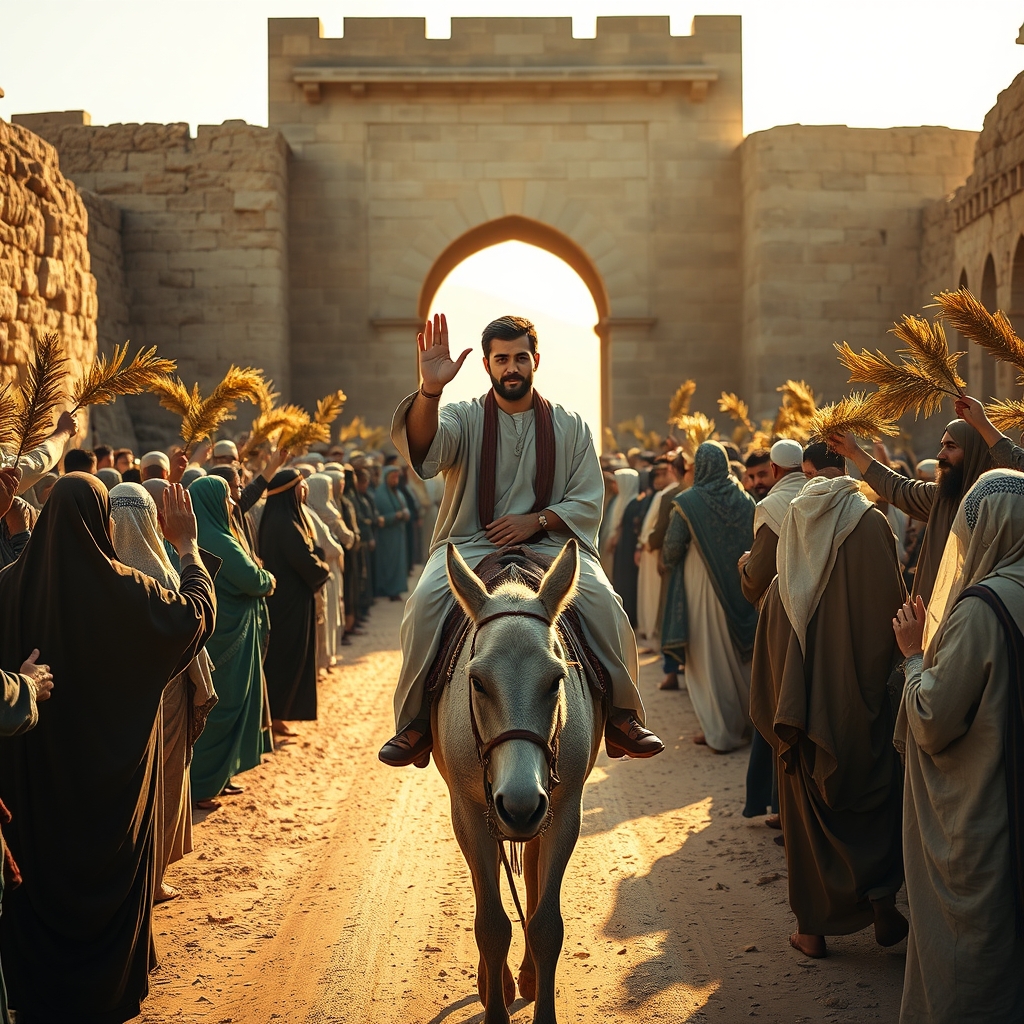
Jesus Sends for the Donkey
The Palm Sunday story begins with a deliberate, purposeful act by Jesus. As He approached Jerusalem, He gave specific instructions to two of His disciples. He told them to go into the village ahead of them. There they would find a donkey colt that had never been ridden. They were to untie it and bring it to Him. If anyone questioned them, they were to say, “The Lord needs it” (Luke 19:30–31).
This was not a last-minute plan. Jesus knew exactly what would happen. He was fulfilling an ancient prophecy spoken by Zechariah over 500 years earlier:
- Zechariah 9:9 – “Rejoice greatly, Daughter Zion! Shout, Daughter Jerusalem! See, your king comes to you, righteous and victorious, lowly and riding on a donkey, on a colt, the foal of a donkey.”
By choosing a donkey instead of a war horse, Jesus made a powerful statement. He was coming in peace, not as a military conqueror. Yet He was still coming as the rightful King. This humble entrance revealed the heart of God’s kingdom. It is built on humility, not force.
The Crowd Welcomes the King
As Jesus rode into Jerusalem, something extraordinary happened. A massive crowd gathered. Many had heard about His miracles. Some had witnessed Him raising Lazarus from the dead (John 12:17–18). The excitement was electric. The people believed something monumental was taking place.
The crowd responded with overwhelming enthusiasm:
- They spread their cloaks on the road, creating a royal carpet for Him.
- They cut branches from the trees and waved them.
- They shouted, “Hosanna to the Son of David! Blessed is he who comes in the name of the Lord! Hosanna in the highest heaven!” (Matthew 21:9).
The word “Hosanna” means “save now” or “save, we pray.” The people were crying out for salvation. They recognized Jesus as the promised Messiah, the Son of David. Their worship was genuine and passionate. The entire city was stirred by His arrival. Matthew 21:10 records, “When Jesus entered Jerusalem, the whole city was stirred and asked, ‘Who is this?'”
This moment reveals a beautiful truth. Jesus deserves our loudest praise. He is worthy of every honor we can give. The crowd’s response models what true worship looks like. It is joyful, public, and wholehearted.
The Pharisees’ Reaction
Not everyone was celebrating. The religious leaders, particularly the Pharisees, were deeply troubled. They watched the crowd’s enthusiasm with growing anger and fear. To them, this public declaration of Jesus as King was dangerous. It threatened their authority and could provoke Roman intervention.
Their reaction took two forms:
- They demanded Jesus silence His disciples. In Luke 19:39, some Pharisees said, “Teacher, rebuke your disciples!” They wanted the worship to stop.
- Jesus refused. His response was stunning: “I tell you,” he replied, “if they keep quiet, the stones will cry out” (Luke 19:40).
Jesus’ words carried profound meaning. Worship of the Messiah is inevitable. If human voices were silenced, creation itself would take up the praise. God’s plan cannot be silenced by human opposition. The Pharisees’ rejection highlights a sobering reality. Religious pride can blind people to the very presence of God.
Furthermore, the Pharisees’ hostility foreshadowed what was coming. Within days, these same leaders would orchestrate Jesus’ arrest and crucifixion. Yet even their evil intentions would serve God’s redemptive plan. What meant for destruction, God meant for salvation.
Jesus Weeps Over Jerusalem
Perhaps the most moving moment of Palm Sunday is often overlooked. Amid the celebration, Jesus paused. He looked out over the city of Jerusalem. Then He wept. Luke 19:41–44 records this heartbreaking scene in detail.
Jesus knew what was coming. Not just for Himself, but for the city. He prophesied the destruction of Jerusalem. He spoke of enemies building siege walls, crushing the city and its children. Why? Because, as Jesus said, “you did not recognize the time of God’s coming to you” (Luke 19:44).
This moment reveals the tender heart of Christ. He is not distant or indifferent. He grieves over those who reject Him. His tears show that God’s judgment is never His first choice. He desires repentance and relationship. He longs for people to turn to Him.
Jesus weeping over Jerusalem also carries a message for us today. God’s patience is real, but it is not unlimited. There is a time to respond to His call. Today is the day of salvation (2 Corinthians 6:2). We must not harden our hearts to His voice.
The full story of Palm Sunday is a powerful blend of triumph and sorrow. It shows Jesus as the humble King who deserves our worship. It reveals His authority over prophecy and history. Most importantly, it displays His deep love for humanity. Even as He faced the cross, His heart broke for those who would not receive Him. This is the Jesus we serve. He is the King of Kings, full of grace and truth.
What did Jesus do on Palm Sunday?
Palm Sunday marks one of the most significant days in the entire biblical narrative. It describes the events of Jesus’ triumphal entry into Jerusalem. Understanding what Jesus did on this day reveals profound truths about His identity as the Messiah.
Jesus Rode into Jerusalem on a Donkey
Jesus deliberately chose to enter Jerusalem riding on a donkey. This was no accident or convenience. It fulfilled the prophecy given by Zechariah over 500 years earlier.
“Rejoice greatly, Daughter of Zion! Shout, Daughter of Jerusalem! See, your king comes to you, righteous and having salvation, gentle and riding on a donkey, on a colt, the foal of a donkey.” — Zechariah 9:9
Jesus sent two of His disciples ahead. He instructed them to find a donkey tied in the nearby village. They were to untie it and bring it to Him. This detail appears in all four Gospels.
The Crowd Praised Jesus as King
As Jesus rode along the road, great crowds gathered. They spread their cloaks on the ground before Him. Others cut branches from the palms and waved them. The people shouted loudly as they walked beside Him.
- “Hosanna to the Son of David!”
- “Blessed is He who comes in the name of the Lord!”
- “Hosanna in the highest heaven!” — Matthew 21:9
These words were not casual greetings. They were declarations of worship. The crowd recognized Jesus as the promised King of Israel.
Jesus Accepted Their Worship
When the Pharisees demanded that Jesus silence the crowd, He refused. He said, “If they keep quiet, the stones will cry out” (Luke 19:40). Jesus accepted their praise because He truly is the Son of God. He is worthy of all worship.
Jesus wept over Jerusalem
As Jesus approached the city, He wept. He knew Jerusalem would reject Him. He foresaw the destruction that would come because the people did not recognize their Messiah. This moment shows the deep compassion of Jesus. He grieved over those who would not receive His love.
Jesus Entered the Temple
After entering Jerusalem, Jesus went to the temple. He looked around at everything. Then, because it was late, He returned to Bethany with the twelve disciples. The next day, He would cleanse the temple, driving out those who bought and sold there.
Every action Jesus took on Palm Sunday was intentional. He fulfilled prophecy. He accepted worship. He showed compassion. He prepared for His final week before the cross. Palm Sunday reveals Jesus as the humble King who came to save His people.
Why is it called Palm Sunday?
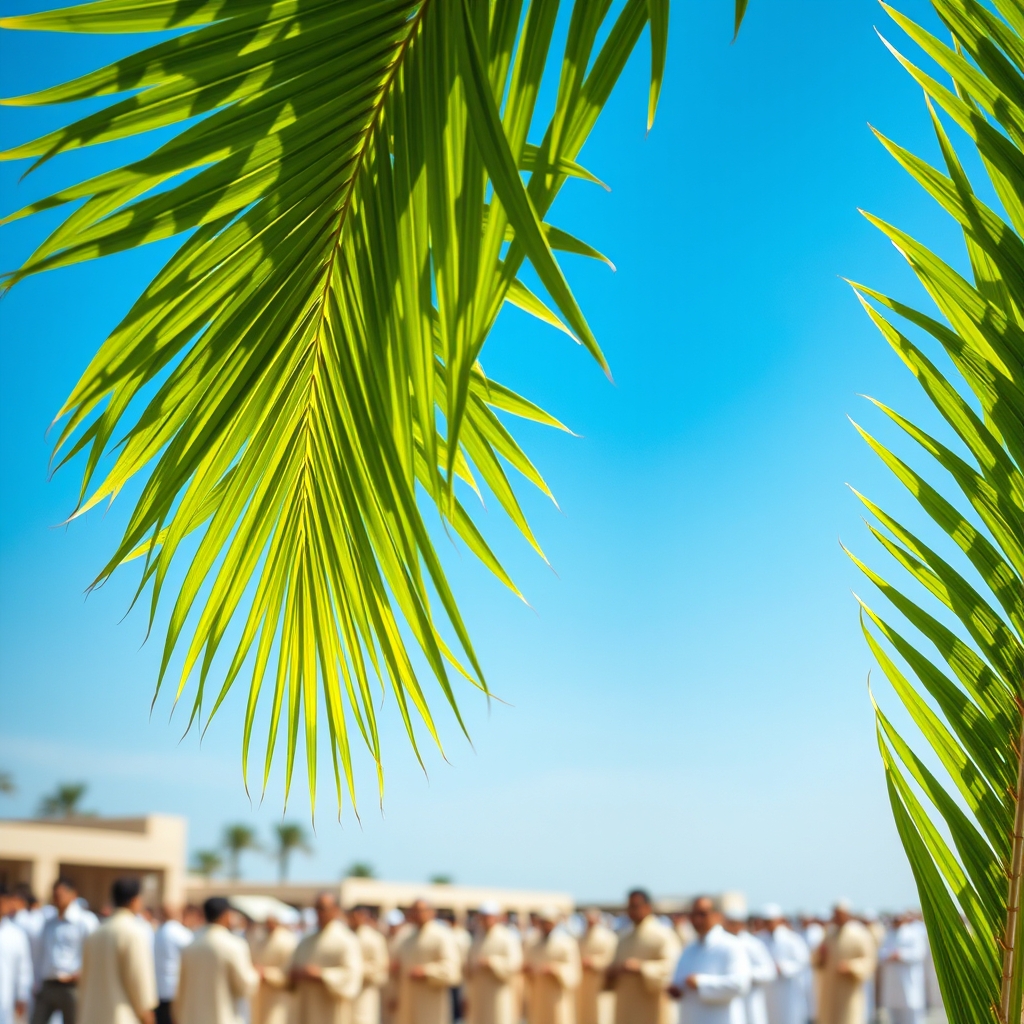
This day is one of the most visually striking moments in all of Scripture. The title “Palm Sunday” comes directly from a specific detail recorded in the Gospel of John. In His account, John writes that the crowds took branches of palm trees and went out to meet Jesus as He rode into Jerusalem.
“The next day a great crowd that had come to the feast heard that Jesus was coming to Jerusalem. So they took branches of palm trees and went out to meet him, crying out, ‘Hosanna! Blessed is he who comes in the name of the Lord, even the King of Israel!'” — John 12:12–13 (ESV)
The palm branch held deep significance in the ancient world. During the time of Christ, palm branches were more than just foliage. They were powerful symbols of victory, triumph, and national restoration. [1] To understand why the crowd used them, one must look to the history of Israel.
Palm Branches as Symbols of Victory
In the Old and New Testaments, palms were associated with joy and conquest. Furthermore, the prophet Ezekiel saw a vision of a future temple where the doorposts were decorated with palm trees, symbolizing the flourishing life of God’s presence. [2]
- Victory over Enemies: In the Maccabean revolt roughly 160 years before Palm Sunday, Judas Maccabeus and the Israelites reclaimed the Temple in Jerusalem. They celebrated by carrying palm branches, a scene recorded in 1 Maccabees 13:51.
- Royal Celebration: Just as a conquering king would be welcomed home, the crowd was honoring Jesus as their long-awaited King.
- Hope for the Messiah: The people believed Jesus was the Messiah who would free them from oppression. As a result, they used the ultimate symbol of triumph to greet Him.
A Deliberate Prophetic Act
This was not a random act of welcome. The palm sunday story is a deliberate fulfillment of prophecy and a public declaration of who Jesus is. The crowd’s actions echoed the words of the prophet Zechariah:
“Rejoice greatly, O daughter of Zion! Shout aloud, O daughter of Jerusalem! Behold, your king is coming to you; righteous and having salvation is he, humble and mounted on a donkey, on a colt, the foal of a donkey.” — Zechariah 9:9 (ESV)
By waving palms and laying them on the road, the crowd was not merely celebrating a festival. They were acknowledging Jesus as the Victorious King. Even when the religious leaders demanded that Jesus silence the crowd, He replied that if the people were silent, the very stones would cry out (Luke 19:40).
The Deeper Meaning for Us Today
The name “Palm Sunday” serves as a reminder of the glory of Jesus Christ. Furthermore, it reminds us to respond with wholehearted worship. Even though the crowd’s understanding was incomplete, their action revealed a truth.
- Jesus is the rightful King over all creation.
- His kingdom is one of peace, victory, and everlasting hope.
- He humbly chose the path of the cross, not a throne of war.
Ultimately, the palm branches pointed to a victory far greater than anyone on that road could have imagined. They pointed to a tomb that would be empty and a Savior who would rise again.
What does the Palm Sunday symbolize?
Palm Sunday carries deep and powerful meaning for every believer. At its heart, this sacred day points us to Jesus Christ as the promised Messiah and King. It is far more than a historical event. It is a living symbol of hope, sacrifice, and the unstoppable love of God.
Jesus Enters as King, Not Conqueror
When Jesus rode into Jerusalem on a colt of a donkey, He fulfilled an ancient prophecy. Zechariah 9:9 foretold this moment:
> “Rejoice greatly, O daughter of Zion! Shout aloud, O daughter of Jerusalem! Behold, your king is coming to you; righteous and having salvation is he, humble and mounted on a donkey.”
This was no accident. Jesus chose a donkey rather than a war horse. He came in humility, not in military power. The palm branches the crowd waved were symbols of victory and national pride. Yet the kind of kingdom Jesus represented was unlike anything the world expected. His kingdom is built on grace, mercy, and self-giving love — never on force or domination.
In addition, the crowd’s cry of “Hosanna” means “save now” or “save, we pray.” They were calling out to Jesus as their deliverer. While many expected a political liberator, Jesus came to free humanity from the power of sin and death itself. His ultimate victory would come not through a throne of gold, but through the cross at Calvary.
Symbolism of the Palm Branches
The palm branches carried profound significance. In the ancient world, they represented:
- Victory and triumph — Romans used palms to celebrate military conquests
- Peace and rest — a sign that after struggle, blessing had arrived
- Royal honor — they were laid before dignitaries and kings
By waving palm branches and spreading their cloaks on the road, the people were giving Jesus the highest honor they knew how to give. They were acknowledging Him as King. However, the true victory He came to win was over sin, death, and the grave — not over Roman occupation.
The Foreshadowing of the Cross
Perhaps the most important symbol of Palm Sunday is what it foreshadows. Just days after this triumphal entry, Jesus would be arrested, tried, and crucified. The same crowd that shouted “Hosanna” would call for His death. Yet this was all part of God’s perfect plan of redemption.
Jesus wept over Jerusalem on Palm Sunday because He knew many would reject Him (Luke 19:41–44). Even so, He moved forward with holy purpose. Palm Sunday therefore symbolizes the painful truth that the road to glory runs through sacrifice. The King who rode in triumph on Sunday would hang on a cross by Friday — and rise victorious on Sunday morning.
A Call to Worship with Our Whole Lives
Palm Sunday also symbolizes a call to true worship. God does not need our palms or our praise. He desires hearts that are wholly surrendered to Him (John 4:23–24). The public celebration of that day was a genuine outpouring of faith from many. Yet Jesus knew that outward expression alone was not enough.
For us today, Palm Sunday reminds us that worship must go deeper than words. It must shape how we live, how we love, and how we follow Jesus daily. As Romans 12:1 urges, we are to offer our bodies as living sacrifices — holy and pleasing to God.
Summary of Key Symbols
| Symbol | What It Represents |
|---|---|
| The donkey | Jesus’ humility and His identity as the promised Prince of Peace |
| Palm branches | Victory, honor, and the people’s recognition of Jesus as King |
| “Blessed is He who comes in the name of the Lord” | Public acknowledgment of Jesus as the Messiah sent by God the Father |
| The spreading of garments on the road | A traditional act of royal homage and submission |
| Jesus weeping over Jerusalem | His compassion for those who reject Him and His knowledge of the cost of salvation |
Ultimately, Palm Sunday symbolizes the heart of the Gospel. God sent His only Son into the world — not to condemn it, but to save it through sacrificial love (John 3:16–17). Every branch waved, every garment laid down, and every “Hosanna” cried out that day pointed forward to the cross and the empty tomb. Jesus is the King who saves, and His love for you is never-ending.
What are the three lessons from Palm Sunday?
Jesus Is the Promised King
The Palm Sunday story reveals a powerful truth: Jesus is the long-awaited King foretold by the prophets. When Jesus rode into Jerusalem on a donkey, He was fulfilling the prophecy of Zechariah 9:9:
“Rejoice greatly, Daughter Zion! Shout, Daughter Jerusalem! See, your king comes to you, righteous and victorious, lowly and riding on a donkey, on a colt, the foal of a donkey.” [3]
This was no accident. Jesus deliberately chose this moment to declare His identity. The crowd recognized it immediately. They spread palm branches and cloaks on the road. They shouted, “Hosanna to the Son of David! Blessed is he who comes in the name of the Lord!” (Matthew 21:9).
However, Jesus came not as a political conqueror. He came as a humble, suffering servant-King. His kingdom is not of this world (John 18:36). Furthermore, His throne was a cross, not a palace. Yet His reign is eternal. Today, every knee will bow before Him (Philippians 2:10-11).
True Worship Comes from the Heart
On Jesus Palm Sunday, the crowd’s worship was loud and enthusiastic. But Jesus knew that many would abandon Him within days. This teaches us that outward celebration is not the same as genuine faith. True worship goes far deeper than songs and shouts.
Jesus desires hearts fully surrendered to Him. In John 4:23-24, He said:
“Yet a time is coming and has now come when the true worshipers will worship the Father in the Spirit and in truth, for they are the kind of worshipers the Father seeks. God is spirit, and his worshipers must worship in the Spirit and in truth.” [4]
Therefore, our worship must be rooted in sincerity. It should reflect a life committed to following Christ daily. Palm Sunday challenges us to examine our own hearts. Are we worshiping Jesus only when it is popular? Or do we follow Him even when the road is difficult?
God’s Plan Cannot Be Stopped
One of the most striking moments in the Palm Sunday story is Jesus weeping over Jerusalem (Luke 19:41). He knew the city would reject Him. He knew the religious leaders were already plotting His death. Yet He rode into the city anyway.
Why? Because God’s plan of salvation cannot be stopped. The Pharisees tried to silence the crowd. They demanded Jesus rebuke His followers. But Jesus replied, “I tell you, if they keep quiet, the stones will cry out” (Luke 19:40). Creation itself declares His glory.
As a result, we can have absolute confidence in God’s sovereignty. No human opposition, no scheme of the enemy, and no circumstance can thwart His purposes. The cross was not a tragedy. It was the fulfillment of God’s eternal plan to redeem humanity through His Son, Jesus Christ.
Today, Palm Sunday reminds us that Jesus is still on His throne. He is the promised King. He receives true worship from surrendered hearts. And His plan for your life and for this world will surely come to pass. Trust Him completely.
Palm Sunday Bible Verses
Matthew 21:1–11
Matthew’s account of Palm Sunday gives us one of the most detailed pictures of Jesus’ triumphal entry. Furthermore, this passage shows us exactly how Jesus intentionally fulfilled ancient prophecy. Let’s walk through the key moments.
The journey begins when Jesus sent two disciples ahead into a village. He told them they would find a donkey and her colt. Moreover, they were to untie them and bring them to Him. This was not a spontaneous plan. Rather, it was a deliberate act of fulfilling what the prophet Zechariah had foretold centuries earlier. As Matthew writes:
“Say to the Daughter of Zion, ‘See, your king comes to you, gentle and riding on a donkey, and on a colt, the foal of a donkey.'” — Matthew 21:5 (NIV)
This was a powerful declaration. Unlike a warrior arriving on a horse, Jesus came in humility. He came as the Prince of Peace, not as a conquering general. However, His kingship was never in question.
The crowd responded with overwhelming enthusiasm. They spread their cloaks on the road. Others cut branches from the trees. Then they shouted:
“Hosanna to the Son of David! Blessed is he who comes in the name of the Lord! Hosanna in the highest heaven!” — Matthew 21:9 (NIV)
In addition, the entire city was stirred. People asked, “Who is this?” The crowds answered, “This is Jesus, the prophet from Nazareth in Galilee.” [5]
Mark 11:1–11
Mark’s Gospel provides another beautiful perspective on the palm sunday story. His account is vivid and action-packed. Mark moves quickly through the events, which gives us a sense of excitement and urgency.
First, Jesus instructed two disciples to go into the village ahead of Him. There they would find a colt tied up that no one had ever ridden. They were to untie it and bring it to Jesus. If anyone questioned them, they were to say, “The Lord needs it and will send it back shortly.” Sure enough, the disciples found everything just as Jesus said. This demonstrates Jesus’ divine foreknowledge and authority over all things.
As Jesus rode into Jerusalem, the people welcomed Him with great joy. They spread their cloaks on the road. Others spread branches they had cut in the fields. The crowd shouted:
“Hosanna! Blessed is he who comes in the name of the Lord! Blessed is the coming kingdom of our father David! Hosanna in the highest!” — Mark 11:9–10 (NIV)
Mark also tells us something unique. After entering Jerusalem, Jesus went to the temple. He looked around at everything. However, since it was late, He returned to Bethany with the Twelve. This quiet moment is significant. Jesus surveyed the temple before His coming confrontation with the religious leaders. [6]
Luke 19:28–44
Luke’s account of jesus palm sunday adds a deeply emotional dimension that the other Gospels do not include. As Jesus approached Jerusalem, He saw the city and wept over it. This moment is often called “Flevit super illam” — Latin for “He wept over it.”
Jesus said:
“If you, even you, had only known on this day what would bring your peace — but now it is hidden from your eyes.” — Luke 19:42 (NIV)
He foresaw the destruction that would come upon Jerusalem. The people had missed their moment of visitation. They did not recognize the time of God’s coming to them. This is a sobering reminder. God’s peace is available, but we must receive it when it is offered.
Despite His grief, the disciples continued to praise God joyfully. They shouted:
“Blessed is the king who comes in the name of the Lord! Peace in heaven and glory in the highest!” — Luke 19:38 (NIV)
However, some Pharisees in the crowd told Jesus to rebuke His disciples. Jesus replied with a stunning statement:
“I tell you, if they keep quiet, the stones will cry out.” — Luke 19:40 (NIV)
Nothing could stop this moment of praise. Creation itself would declare His glory if the people remained silent. [7]
John 12:12–19
John’s Gospel offers a unique and powerful perspective on palm sunday in the bible. He focuses on the reaction of the people and the religious leaders. His account reveals the growing tension surrounding Jesus’ ministry.
John tells us that a great crowd had come to the feast. When they heard that Jesus was coming to Jerusalem, they took palm branches and went out to meet Him. They shouted:
“Hosanna! Blessed is he who comes in the name of the Lord! Blessed is the king of Israel!” — John 12:13 (NIV)
John also notes that Jesus’ disciples did not understand these things at first. Only after Jesus was glorified did they realize that these things had been written about Him. The Holy Spirit opened their eyes to see the full picture.
Furthermore, John records the reaction of the Pharisees. They said to one another:
“See, this is getting us nowhere. Look how the whole world has gone after him!” — John 12:19 (NIV)
This statement was filled with frustration and fear. Ironically, they spoke more truth than they knew. Indeed, the whole world would go after Jesus. His kingdom would extend far beyond Jerusalem. It would reach every nation, tribe, and tongue. [8]
Summary of the Four Gospel Accounts
Each Gospel writer gives us a unique lens through which to view the triumphal entry. Together, they paint a complete and beautiful picture of who Jesus is.
| Gospel | Unique Emphasis | Key Verse |
|---|---|---|
| Matthew | Fulfillment of prophecy | Matthew 21:5 |
| Mark | Action and immediacy | Mark 11:9–10 |
| Luke | Jesus’ compassion and tears | Luke 19:41–42 |
| John | Growing opposition and global impact | John 12:19 |
As we read these passages together, we see one clear truth. Jesus is the promised King. He came in humility. He came to save. And nothing — not religious opposition, not human ignorance, not even death itself — could stop God’s plan of redemption.
How is Palm Sunday celebrated?
Palm Sunday is celebrated by Christians around the world as a joyful reminder of Jesus’ triumphal entry into Jerusalem. Churches often hold special services that include the reading of the Palm Sunday story from the Bible. Congregations wave palm branches to honor the King who came in humility. Through worship, prayer, and reflection, believers remember that Jesus is the promised Savior whose love and sacrifice changed everything.
Blessing and Distribution of Palm Branches
Many churches begin Palm Sunday by blessing palm branches. These branches are then handed to the congregation. The palms represent the same branches the crowd laid before Jesus as He rode into Jerusalem. In addition, the act of waving palms symbolizes praise and surrender to Christ. This tradition originates directly from the biblical account where the people cried, “Hosanna! Blessed is He who comes in the name of the Lord!” (John 12:13, NKJV).
Reading the Scriptural Account Together
Another central way Palm Sunday is celebrated is through the public reading of Scripture. Churches read from the Gospels—Matthew, Mark, Luke, and John—to recount Jesus’ Palm Sunday entry word for word. Furthermore, some congregations process around the church or through the streets, just as the crowd followed Jesus into Jerusalem. As a result, the entire community enters into the story and participates in worship.
Songs of Praise and Reflection
Palm Sunday services are filled with joyful hymns and songs. Congregations sing praises like “Hosanna” and “All Glory, Laud, and Honor.” They lift their voices in worship to the King who came to save. However, the tone quickly shifts as the service often leads into the solemn events of Holy Week. This combination of joy and reverence reflects the full Palm Sunday story—a King welcomed with praise but heading toward the cross.
Applying the Message to Daily Life
Palm Sunday celebration does not end at the church door. Believers are encouraged to carry the message home. Some families create palm crosses together. Others discuss how to worship Jesus with genuine hearts rather than empty rituals. Above all, the celebration points every believer back to the cross and the empty tomb. As Scripture declares, “Jesus Christ is the same yesterday, today, and forever” (Hebrews 13:8, NKJV). He is worthy of all our praise, every day of the year.
Frequently Asked Questions
What happened to Jesus on Palm Sunday?
On Palm Sunday, Jesus rode into Jerusalem on a donkey while crowds welcomed Him as King. They spread palm branches and cloaks on the road before Him. They shouted, “Hosanna to the Son of David! Blessed is He who comes in the name of the Lord!” (Matthew 21:9). Furthermore, Jesus entered the temple and drove out those who were buying and selling. He healed the blind and the lame who came to Him there. This event fulfilled the prophecy of Zechariah 9:9, which promised a humble King would come riding on a donkey.
Is Palm Sunday only a Catholic tradition?
No, Palm Sunday is not only a Catholic tradition. It is observed by Christians worldwide, including Protestants, Orthodox believers, and many other denominations. The event itself is recorded in all four Gospels: Matthew, Mark, Luke, and John. Therefore, it belongs to the entire body of Christ. The focus is not on any single church tradition. Instead, it is on the Lord Jesus Christ and His triumphal entry into Jerusalem. Every believer can celebrate this powerful moment in Scripture.
What is the Palm Sunday story for kids?
The Palm Sunday story for kids is a wonderful way to teach children about Jesus. Here is a simple version:
- Jesus was going to Jerusalem for a special celebration.
- He sent two disciples to find a donkey for Him to ride.
- When Jesus rode into the city, people were so happy to see Him.
- They waved palm branches and laid them on the road.
- They shouted, “Hosanna!” which means “Save us!”
- They recognized Jesus as the King God had promised.
Most importantly, this story shows that Jesus is the King who came to save us. Even children can worship Him with joy and praise.
What color do we wear on Palm Sunday?
Many churches use red or purple on Palm Sunday. Red represents the blood Jesus would shed on the cross just days later. Purple represents royalty, honoring Jesus as King. However, the color of clothing matters far less than the condition of the heart. What truly matters is that we come before Jesus with reverence and faith. He sees our hearts, not our outward appearance (1 Samuel 16:7).
What is the Palm Sunday message for today?
The Palm Sunday message for today is this: Jesus Christ is still King. He is still worthy of our worship and praise. Just as the crowd welcomed Him into Jerusalem, we must welcome Him into our hearts and lives. Furthermore, Palm Sunday reminds us that God’s plan will be fulfilled. Even when the world rejects Jesus, His purposes cannot be stopped. As a result, we can trust Him completely. He is the same yesterday, today, and forever (Hebrews 13:8). Let us come to Him with open hearts, just as the people of Jerusalem did so long ago.
Sources
- http://www.biblicalarchaeology.org/daily/people-cultures-in-the-bible/jesus-historical-jesus/the-triumphal-entry/
- https://www.biblestudytools.com/dictionary/palm-tree/
- https://www.biblegateway.com/passage/?search=Zechariah+9:9&version=NIV
- https://www.biblegateway.com/passage/?search=John+4:23-24&version=NIV
- https://www.biblegateway.com/passage/?search=Matthew+21:1-11&version=NIV
- https://www.biblegateway.com/passage/?search=Mark+11:1-11&version=NIV
- https://www.biblegateway.com/passage/?search=Luke+19:28-44&version=NIV
- https://www.biblegateway.com/passage/?search=John+12:12-19&version=NIV