“My Jesus I Love Thee” is a beloved Christian hymn originally written by William Ralph Featherston in 1864, expressing deep personal devotion and love for Jesus Christ. The hymn has been cherished for generations and has been reimagined by modern worship artists such as Darlene Zschech, who released a contemporary version titled “My Jesus I Love Thee (I Love You Jesus).”
Few hymns capture the heart of devotion quite like My Jesus I Love Thee. Written as a tender, personal declaration of love for the Savior, this beloved hymn has echoed through churches, prayer closets, and quiet moments of worship for well over a century. Its simple yet profound words remind us that loving Jesus is not merely a feeling—it is a response to the immeasurable love He first showed us on the cross. As the Apostle John wrote, “We love Him because He first loved us” (1 John 4:19).
In this article, we will explore the rich history behind My Jesus I Love Thee. We will walk through its full lyrics and provide the chords so you can play and sing it yourself. We will also uncover the deep spiritual meaning that has made this hymn a timeless treasure for believers across generations. Whether you are a new believer discovering the beauty of worship or a longtime follower of Christ seeking to deepen your devotion, this guide is for you. Let us begin by understanding the origins of this extraordinary hymn and the remarkable story of the young man who penned it.
What Is ‘My Jesus I Love Thee’?
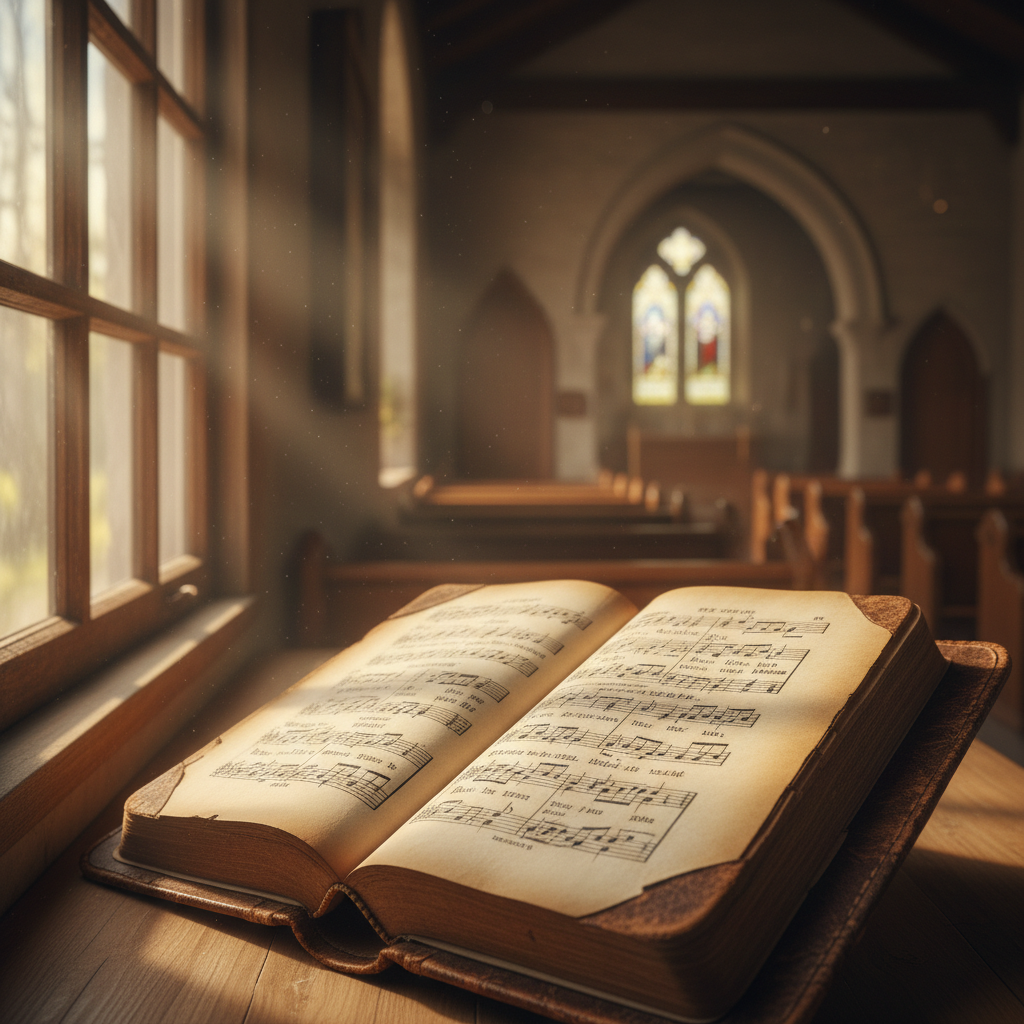
“My Jesus I Love Thee” is one of the most cherished hymns in the history of Christian worship. Its tender words express a deep, personal love for Jesus Christ. The hymn has touched hearts for nearly two centuries. It remains a powerful declaration of faith and devotion.
The Origins of the Hymn
The story of “My Jesus I Love Thee” begins in the early 19th century. It was born out of a young man’s profound love for the Savior. The hymn first appeared in print in 1864. However, its origins trace back much earlier.
The poem was originally written as a personal expression of faith. It was not intended for public worship at first. Over time, it found its way into hymnals across many denominations. Today, it is sung in churches around the world.
Several key facts about the hymn’s origins include:
- It was written as a poem before being set to music.
- The text reflects deep personal devotion to Jesus Christ.
- It has been translated into numerous languages over the years.
- The hymn is now in the public domain and freely used worldwide.
Who Wrote ‘My Jesus I Love Thee’?
The author of “My Jesus I Love Thee” was William Ralph Featherston. He was a young man from Montreal, Canada. He wrote the poem in 1864 when he was only 16 years old. [1]
Featherston’s life was tragically short. He passed away at the young age of 27. Despite his brief life, his words have had an eternal impact. His poem was a sincere outpouring of love for Jesus.
The music most commonly associated with the hymn was composed by Adoniram Judson Gordon in 1876. Gordon was a prominent Baptist pastor and hymn writer. He gave Featherston’s words a melody that perfectly matches their reverent tone. [2]
Featherston’s story reminds us that God can use anyone, at any age, to glorify His name. As Scripture tells us, “Let the word of Christ dwell in you richly” (Colossians 3:16). This young man’s simple poem continues to fulfill that purpose to this day.
My Jesus I Love Thee Lyrics
Full Traditional Lyrics
The hymn My Jesus I Love Thee is a beloved classic in the Christian church. Its words stir the hearts of believers worldwide. Below are the full traditional lyrics, organized by verse. [3]
Verse 1
My Jesus, I love Thee, I know Thou art mine;
For Thee all the follies of sin I resign;
my gracious Redeemer, my Savior art Thou;
If ever I loved Thee, my Jesus, ’tis now.
Verse 2
I love Thee because Thou hast first loved me,
And purchased my pardon on Calvary’s tree;
I love Thee for wearing the thorns on Thy brow;
If ever I loved Thee, my Jesus, ’tis now.
Verse 3
I’ll love Thee in life, I will love Thee in death,
And praise Thee as long as Thou lendest me breath;
And say when the death dew lies cold on my brow,
If ever I loved Thee, my Jesus, ’tis now.
Verse 4
In mansions of glory and endless delight,
I’ll ever adore Thee in heaven so bright;
I’ll sing with the glittering crown on my brow,
If ever I loved Thee, my Jesus, ’tis now.
These four verses capture the heart of the hymn. Each one grows deeper in devotion. The lyrics express personal love for Jesus and gratitude for His sacrifice. Moreover, they look ahead to eternal worship in heaven.
Darlene Zschech’s ‘My Jesus I Love Thee (I Love You Jesus)’ Version
Darlene Zschech is a well-known worship leader and songwriter. She originally served at Hillsong Church in Australia. Zschech created a modern adaptation of My Jesus I Love Thee. Her version is often titled My Jesus I Love Thee (I Love You Jesus). [4]
Zschech’s arrangement blends lines from the original hymn with new original lyrics. The result is a fresh yet reverent worship song. It connects a hymn of the past to modern worship styles.
Here are some key features of Darlene Zschech’s version:
- Blended lyrics: She weaves the original words with new expressions of love for Jesus.
- Simple chorus: The chorus centers on the phrase “I love You Jesus,” making it easy to sing.
- Contemporary musical style: The song often uses modern chords and a flowing melody while keeping a worshipful tone.
- Focus on intimacy: The lyrics emphasize a close, personal relationship with Jesus.
Although the exact full lyrics are owned by their publisher and not reproduced here, the song repeatedly affirms love for Jesus. It echoes the original hymn’s themes of devotion, gratitude, and surrender. In addition, it invites congregations to express their love for Christ in a heartfelt, modern way.
Both versions of My Jesus I Love Thee point to the same truth. Jesus Christ is worthy of all our love and praise. Whether sung in a traditional or modern style, the message remains powerful. As Scripture says, “We love Him because He first loved us” (1 John 4:19, NKJV).
My Jesus I Love Thee Chords and How to Play It

Basic Chord Progression
One of the beautiful things about the hymn My Jesus I Love Thee is its musical simplicity. This beloved song of devotion can be played on guitar, piano, or any instrument with basic chord knowledge. Whether you are a beginner or an experienced musician, the chords are accessible and joyful to play.
The hymn is most commonly written in the key of G major or C major. Both keys work wonderfully for congregational singing and personal worship. Below you will find the basic chord progression for each key.
Chords in the Key of G Major
| Section | Chord Progression |
|---|---|
| Verse | G – C – G – D – G – C – G – D7 – G |
| Chorus (if applicable) | C – G – D – Em – C – G – D7 – G |
| Bridge (optional) | Em – C – G – D – Em – C – G – D7 |
Chords in the Key of C Major
| Section | Chord Progression |
|---|---|
| Verse | C – F – C – G – C – F – C – G7 – C |
| Chorus (if applicable) | F – C – G – Am – F – C – G7 – C |
| Bridge (optional) | Am – F – C – G – Am – F – C – G7 |
Additionally, the key of D major is also frequently used, especially in hymnals. Here are the corresponding chords:
- D – The tonic chord, used to begin and end phrases
- G – The subdominant chord, adding warmth and richness
- A or A7 – The dominant chord, creating resolution back to the tonic
Furthermore, you may encounter seventh chords (such as D7 or G7) in the progression. These chords add a gentle tension that resolves beautifully. Seventh chords are particularly common at the end of a verse or phrase.
For piano players, these chords translate into simple triads. Using basic left-hand bass notes paired with right-hand chords will provide a full, worshipful sound. A gospel-style approach would add suspended chords and gentle arpeggios.
The simplicity of these chords is intentional. Just as the hymn’s lyrics pour out a heart full of love for Jesus, the music should be accessible so that anyone can join in worship. As Psalm 100:1–2 reminds us, “Make a joyful noise to the LORD, all the earth! Serve the LORD with gladness! Come into his presence with singing!” (ESV) [5]. The chords serve the song and, most importantly, the One the song is about — our Lord and Savior, Jesus Christ.
Strumming Pattern and Tempo
Getting the strumming pattern and tempo right will bring My Jesus I Love Thee to life. This hymn carries a reverent, reflective character. It is not a fast-paced praise anthem. Instead, it is a tender, loving declaration of devotion to Jesus.
Recommended Tempo
The ideal tempo for this hymn is between 60 and 76 beats per minute (BPM). This slow to moderate pace allows each word to be sung with intention and meaning. It gives space for the heart to meditate on the truth of each line.
In addition, many hymnals list the time signature as 3/4 or 6/8. Both time signatures give the hymn a gentle, flowing feel. The 3/4 time signature creates a waltz-like rhythm, while 6/8 adds a lilting, swaying quality.
Basic Strumming Pattern
For guitar players, a simple and effective strumming pattern in 3/4 time is:
- Down – on beat one (strongest strum)
- Down – on beat two (lighter strum)
- Up – on beat three (lightest strum)
This pattern can be written as: Down – Down – Up. Repeat this pattern steadily throughout each measure. The result is a gentle, rolling rhythm that supports the hymn’s tender mood.
For a 6/8 time signature, try this pattern:
- Down – on beat one
- Down – on beat two
- Up – on beat three
- Down – on beat four
- Up – on beat five
- Up – on beat six
This creates a flowing Down – Down – Up – Down – Up – Up pattern. It gives the hymn a beautiful, wave-like motion.
Tips for Playing with Feeling
- Keep your strums soft and gentle. This is a hymn of love, not a battle cry. Let the dynamics reflect tenderness.
- Use palm muting sparingly. Lightly resting your strumming hand on the strings can add warmth and intimacy.
- Let the chords ring. Do not cut chords short. Allow each chord to sustain naturally before transitioning to the next.
- Sing while you play. This hymn is meant to be sung from the heart. As you play, let your voice join in worship.
- Practice slowly first. Start at a slower tempo and gradually increase speed as you become comfortable.
Moreover, if you are playing for a group or congregation, consider using a capo to adjust the key to match the vocal range of the singers. A capo on the second or third fret can make the song easier for most voices to sing comfortably.
Ultimately, the goal of playing My Jesus I Love Thee is not technical perfection. It is heartfelt worship. As Colossians 3:16 teaches, “Let the word of Christ dwell in you richly, teaching and admonishing one another in all wisdom, singing psalms and hymns and spiritual songs, with thankfulness in your hearts to God” (ESV) [6]. Whether you strum a simple pattern or add intricate fingerpicking, let every note be an offering of love to Jesus Christ — the One who first loved us and gave Himself for us.
What Is the Meaning Behind ‘My Jesus I Love Thee’?
A Personal Declaration of Love for Christ
At its heart, “My Jesus I Love Thee” is a deeply personal declaration of love for Jesus Christ. It is not merely a song. It is a prayer. It is a confession of the soul’s devotion to the Savior. Every line flows from a heart overwhelmed by the goodness and grace of God.
The hymn’s language is intimate and direct. The singer does not speak about Jesus from a distance. Instead, the words draw near. “My Jesus” — this possessive language reveals a personal relationship. It is the language of someone who has encountered Christ and been forever changed.
Furthermore, the hymn moves from gratitude to surrender. The singer first acknowledges what Jesus has done. Then the singer responds with total devotion. This mirrors the Christian journey. We first receive God’s love through the gospel. Then we offer our lives in return.
In addition, the hymn expresses love that is not based on feelings alone. It is rooted in truth. The singer loves Jesus because of who He is and what He has done. This is the kind of love that endures through trials, doubts, and suffering. It is a love anchored in the unchanging character of God.
Consider the key themes woven throughout the hymn:
- Gratitude for redemption: The singer thanks Jesus for bearing the cross and enduring the shame of Calvary on our behalf.
- Personal surrender: The hymn calls the believer to offer their “highest praise” and their entire life to Christ.
- Eternal devotion: The final stanza looks ahead to heaven, where love for Jesus will continue forever.
- Intimacy with God: The repeated use of “my Jesus” and “Thee” reflects a close, personal bond with the Savior.
As a result, “My Jesus I Love Thee” has resonated with believers for over 160 years. It gives voice to what every Christian heart longs to say. We love Jesus because He first loved us (1 John 4:19). This hymn simply puts that love into words.
Biblical Foundations of Loving Jesus
The love expressed in “My Jesus I Love Thee” is not sentimental. It is deeply biblical. Scripture calls every believer to love Jesus Christ with all their heart, soul, mind, and strength. This is not optional. It is the very essence of what it means to follow Him.
Jesus Himself taught that love for God is the greatest commandment. In Matthew 22:37-38, He said, “Love the Lord your God with all your heart and with all your soul and with all your mind. This is the first and greatest commandment.” The hymn echoes this command beautifully. It is an act of obedience wrapped in worship.
Moreover, the Bible teaches that our love for Jesus is a response to His love for us. The apostle John wrote, “We love because he first loved us” (1 John 4:19). The hymn reflects this truth. The singer does not love Jesus out of obligation alone. The love flows from a heart that has been transformed by the gospel.
Scripture also connects love for Jesus with faithful obedience. In John 14:15, Jesus said, “If you love me, keep my commands.” Similarly, in John 14:21, He declared, “Whoever has my commands and keeps them is the one who loves me.” The hymn’s call to surrender and devotion aligns perfectly with this biblical teaching.
Here are key scriptural foundations that undergird the hymn’s message:
- 1 John 4:19 — “We love because he first loved us.” Our love for Jesus is a response to His initiating love.
- John 14:15 — “If you love me, keep my commands.” Love for Christ is expressed through obedience.
- Matthew 22:37 — “Love the Lord your God with all your heart.” This is the greatest commandment.
- Romans 5:8 — “But God demonstrates his own love for us in this: While we were still sinners, Christ died for us.” The cross is the ultimate proof of God’s love.
- Galatians 2:20 — “I have been crucified with Christ and I no longer live, but Christ lives in me.” The hymn’s theme of surrender reflects this truth.
- Psalm 73:25 — “Whom have I in heaven but you? And earth has nothing I desire besides you.” The hymn expresses this same singular devotion.
In addition, the hymn’s focus on the cross and Christ’s sacrifice is thoroughly biblical. Paul wrote in Galatians 6:14, “May I never boast except in the cross of our Lord Jesus Christ.” The hymn’s second and third stanzas center on the cross — Jesus bearing our shame, enduring the nails and spear, and pouring out His blood for our redemption. This is the gospel in poetic form.
Finally, the hymn’s closing stanza points to eternity. The singer declares that in heaven, “I’ll sing upon a nobler song, my love for Thee.” This reflects the biblical hope of eternal worship. Revelation 5:9 describes the heavenly chorus singing, “You are worthy… for you were slain, and with your blood you purchased for God persons from every tribe and language and people and nation.” Our love for Jesus will never end. It will only grow deeper throughout eternity.
The meaning behind “My Jesus I Love Thee” is ultimately the meaning of the Christian life itself. It is a wholehearted, grateful, obedient, and eternal love for Jesus Christ — the Son of God who left heaven, bore our sins on the cross, rose from the dead, and offers eternal life to all who believe in Him (John 3:16). This hymn invites every listener to make that love their own.
Why Is ‘My Jesus I Love Thee’ Still Relevant Today?
Some hymns fade with time. However, “My Jesus I Love Thee” continues to thrive. Its simplicity and depth speak to every generation. This beloved hymn bridges the gap between the past and the present. It remains a cornerstone of Christian worship today.
Its Enduring Place in Worship
The hymn’s staying power is not accidental. It survives because the truth within it is eternal. The themes of the hymn never grow old.
- Universal Language of the Soul: The hymn begins with the first person, “My Jesus.” This creates an immediate, personal connection. Worshipers are not just singing facts. They are making a subjective declaration of faith.
- Gratitude for Salvation: The lyrics thank Jesus for wearing the thorns. This reminds believers of the great sacrifice. As a result, the hymn stirs deep thankfulness.
- Preparation for Death: The final verse speaks about life ending. It looks forward to eternal life. This provides comfort and peace to those who are grieving or ill.
In addition, churches worldwide still include it in services. Whether it is a traditional Sunday service or a quiet prayer time, its melody brings people closer to God. Because it is in the public domain, it is easy to share freely.
How Modern Artists Have Revived the Hymn
Recently, a new generation has discovered this hymn. Many modern worship leaders have put their own spin on it. Consequently, the song feels fresh and new.
Darlene Zschech helped spark this revival. She released her version in the 2010s. Her arrangement brought the hymn to large audiences for the first time in decades.
- The melody was updated to fit modern music styles.
- The original, difficult poetry was made more accessible to younger worshipers.
- It focused on the main message: loving Jesus is the core of faith.
Furthermore, events like Passion Conferences played a big role. When popular artists sing these classic words, it unites believers of all ages. It proves that the Gospel message is truly timeless.
Ultimately, “My Jesus I Love Thee” is still relevant because the love of Jesus never changes. As Hebrews 13:8 states, “Jesus Christ is the same yesterday and today and forever.” No matter what happens in the world, we always need a song that reminds us to love our Savior first.
Frequently Asked Questions
Who originally wrote ‘My Jesus I Love Thee’?
“My Jesus I Love Thee” was written by William Ralph Featherston in 1864. He was only 16 years old at the time. Featherston was a devout young man from Montreal, Canada. He wrote this hymn as a personal expression of his love for Jesus Christ. Tragically, he died at the young age of 27. The hymn was later set to music by Adoniram Gordon, who was the founder of Gordon College. [1]
What are the full lyrics to ‘My Jesus I Love Thee’?
The full traditional lyrics to “My Jesus I Love Thee” are as follows:
- Verse 1: My Jesus, I love Thee, I know Thou art mine; for Thee all the follies of sin I resign. My gracious Redeemer, my Savior art Thou; if ever I loved Thee, my Jesus, ’tis now.
- Verse 2: I love Thee because Thou hast first loved me, and purchased my pardon on Calvary’s tree. I love Thee for wearing the thorns on Thy brow; if ever I loved Thee, my Jesus, ’tis now.
- Verse 3: I’ll love Thee in life, I will love Thee in death, and praise Thee as long as Thou lendest me breath. And say when the death dew lies cold on my brow: if ever I loved Thee, my Jesus, ’tis now.
- Verse 4: In mansions of glory and endless delight, I’ll ever adore Thee in heaven so bright. I’ll sing with the glittering crown on my brow: if ever I loved Thee, my Jesus, ’tis now.
These lyrics are a powerful declaration of devotion. They reflect a deep, personal relationship with Jesus Christ. Each verse builds upon the last, moving from earthly love to eternal praise.
What are the chords for ‘My Jesus I Love Thee’?
The hymn “My Jesus I Love Thee” is typically played in the key of G major. The basic chord progression is simple and accessible for beginners. Here are the primary chords used:
- G Major (G): The tonic chord, providing a stable foundation.
- C Major (C): The subdominant chord, adding warmth and movement.
- D Major (D): The dominant chord, creating tension that resolves back to G.
- E minor (Em): Used occasionally for emotional depth.
A common strumming pattern is down, down, up, up, down. The tempo is slow and reverent, usually around 60-70 beats per minute. This allows the lyrics to be sung with heartfelt expression. For a more detailed chord chart, many online resources provide fingerpicking patterns and variations. [7]
Is ‘My Jesus I Love Thee’ in the public domain?
Yes, “My Jesus I Love Thee” is in the public domain. The hymn was written in 1864, and its copyright has long since expired. This means it can be freely used, reproduced, and performed without permission or licensing fees. Many churches and worship teams use this hymn regularly. Its public domain status has contributed to its widespread availability in hymnals and songbooks. You can find it in countless collections of classic Christian hymns. [8]
What is the difference between the original hymn and Darlene Zschech’s version?
Darlene Zschech released a modern adaptation titled “My Jesus I Love Thee (I Love You Jesus).” While the original hymn is a 19th-century poem set to a traditional melody, Zschech’s version features a contemporary worship style. Here are the key differences:
| Feature | Original Hymn | Darlene Zschech’s Version |
|---|---|---|
| Musical Style | Traditional hymn with a classical melody | Modern worship with contemporary instrumentation |
| Lyrics | Four verses of poetic, 19th-century English | Simplified, repetitive chorus with modern language |
| Tempo | Slow and reverent | Moderate, building to a powerful crescendo |
| Audience | Traditional church congregations | Contemporary worship settings and younger audiences |
Despite these differences, both versions share the same core message. They both express a deep, personal love for Jesus Christ. Zschech’s adaptation has introduced this timeless hymn to a new generation. It bridges the gap between classic and modern worship. Ultimately, both versions point to the same truth: Jesus is worthy of all our love and praise.
Sources
- https://www.hymntime.com/tch/bio/f/e/a/featherston_wr.htm
- https://www.hymntime.com/tch/bio/g/o/r/dordon_aj.htm
- https://www.hymnary.org/text/my_jesus_i_love_thee
- https://www.pinterest.com/pin/my-jesus-i-love-thee-darlene-zschech-lyrics–374495650169523650/
- https://www.biblegateway.com/passage/?search=Psalm+100&version=ESV
- https://www.biblegateway.com/passage/?search=Colossians+3&version=ESV
- https://www.worshiparchive.com/
- https://www.ccli.com/