
Mark 4:38 describes the moment during a violent storm when Jesus’ disciples, terrified for their lives, wake him and ask, ‘Teacher, don’t you care if we drown?’ The verse highlights their human fear and their questioning of Jesus’ concern amidst their crisis. This event sets the stage for Jesus to demonstrate His divine power by calming the storm, teaching a profound lesson about faith over fear.
Life confronts us all with overwhelming storms. These can be personal crises, seasons of doubt, or the turbulence of world events. In these moments, fear can threaten to sink our hope, and a desperate question rises from our hearts: “Does anyone truly care? Is God even aware of my struggle?” This timeless cry is powerfully captured in a dramatic scene from the Gospel of Mark—a story that speaks directly to our modern anxieties.
During a furious squall on the Sea of Galilee, Jesus’ disciples faced imminent danger. Even though they were seasoned fishermen, the storm was overwhelming. Waves crashed over their boat, threatening to sink it, yet they found Jesus sound asleep on a cushion. Overcome with fear, they woke Him with a question that reveals the raw vulnerability of human faith: “Teacher, don’t you care if we drown?” (Mark 4:38). This single verse, Mark 4:38, is more than a historical detail; it is a window into Christ’s heart and a mirror of our own struggles with trust.
This article will explore the profound meaning of Mark 4:38. We will examine the context of the terrifying storm, the desperation in the disciples’ plea, and the divine authority in Jesus’ response. By looking closely at this pivotal moment, we can uncover timeless truths about Jesus Christ, our Lord and Savior. His actions on the storm-tossed sea offer a steadfast anchor for our faith, providing encouragement for any storm we face. First, let’s set the scene to better understand the events that led to the disciples’ desperate cry.
What is the Context of the Storm in Mark 4:38?
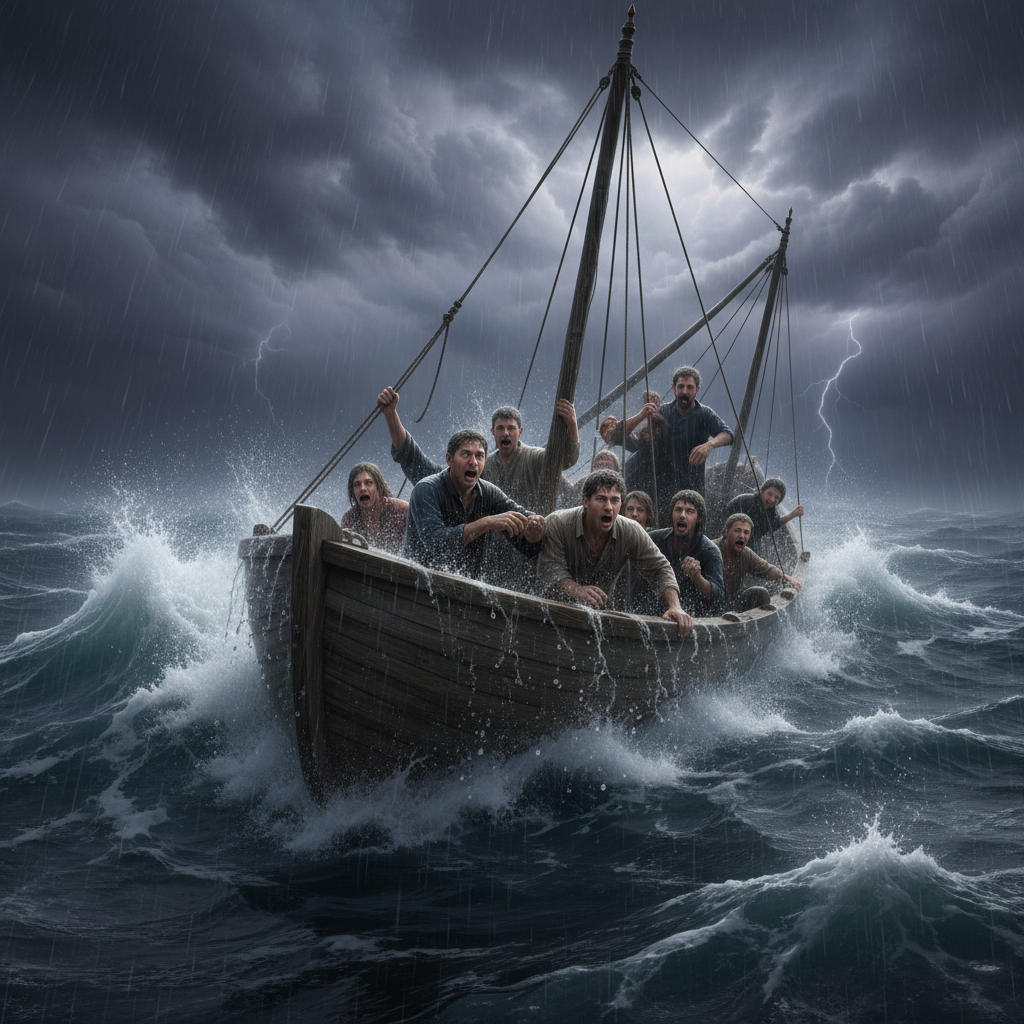
A Furious Squall on the Sea of Galilee
The Gospel of Mark introduces us to a moment of profound faith and human frailty on the Sea of Galilee. This beautiful freshwater lake is notorious for sudden, violent storms due to its unique geography. Sitting nearly 700 feet below sea level, its surrounding hills create a funneling effect for strong winds [1].
Jesus had just finished an intense day of teaching, speaking in parables to large crowds (Mark 4:1-34). He then proposed crossing to the other side of the lake. Mark 4:35 states, “That day when evening came, he said to his disciples, ‘Let us go over to the other side.'”
As they sailed, a “furious squall” descended—a violent tempest that sent waves crashing over the boat until it was nearly swamped (Mark 4:37). Even though many of the disciples were experienced fishermen familiar with the lake’s dangers, this storm was different. It threatened to overwhelm their seasoned abilities, placing their lives in peril.
Jesus Asleep on a Cushion
Amidst the terrifying chaos, Jesus was sound asleep on a cushion in the stern (Mark 4:38). This detail highlights His complete humanity; after a long day of ministry, Jesus, our Lord and Savior, experienced real physical exhaustion.
However, His sleep also showcases a profound peace that demonstrated His absolute trust in His Heavenly Father. While the boat filled with water and the disciples panicked, He remained undisturbed. This remarkable ability to sleep through such danger points to a divine calm that transcended the immediate crisis.
This image of the sleeping Jesus offers deep comfort. It assures us that even when life’s storms rage, He is present in our “boat,” possessing a peace that passes all understanding (Philippians 4:7).
The Disciples’ Fear and Desperate Plea
Utterly terrified and with the storm’s ferocity beyond their control, the disciples’ lives hung in the balance. After exhausting their efforts to save the boat, their desperation grew. They turned to Jesus as their last hope.
They awoke Him with a frantic question: “Teacher, don’t you care if we drown?” (Mark 4:38). Their plea reveals not only genuine fear but also their still-developing understanding of Jesus. Although they had witnessed His miracles and knew Him as a remarkable teacher, in this moment of crisis, they questioned His care for them.
Their question went beyond survival; it was a cry for reassurance of His love and concern. It expressed a deep human vulnerability we often feel when our own lives seem out of control and we question God’s care. This passage reminds us that even those closest to Jesus can struggle with fear and doubt during trials. Nevertheless, Jesus is always near and always cares, even before we call out to Him (Psalm 145:18).
What is the meaning of Mark 4-38?
A Question of Care, Not Just Safety
The disciples’ cry in Mark 4:38, “Teacher, don’t you care if we drown?”, is more than a simple plea for help—it reveals deep emotional anguish. Their words express not only fear for their lives but also a profound sense of abandonment, questioning Jesus’ compassion in their moment of crisis.
This feeling of abandonment is a common human experience. In life’s overwhelming storms, it’s easy to feel that God is distant or unaware of our suffering. This passage, however, directly challenges that notion. Jesus was physically with them in the boat, even while asleep. His very presence signified His care, long before His miraculous intervention.
Caught in a perilous situation, the disciples’ focus understandably shifted from Jesus’ teachings to His perceived inaction. Their urgent question reveals a belief that Jesus *could* do something, but a fear that He might not *care* enough. This highlights the crucial difference between acknowledging Jesus’ power and fully trusting in His loving concern. It is a trust affirmed by the promise that the Lord will never leave or forsake us (Hebrews 13:5).
Understanding Human Fear in the Face of Overwhelming Circumstances
The disciples’ fear was entirely understandable. A “furious squall” (Mark 4:37) threatened their lives. Even as experienced fishermen, they recognized the immediate danger as the boat began filling with water, making sinking a real possibility.
Reacting with fear to severe threats is a natural survival instinct. Even people of strong faith can feel intense fear when facing overwhelming circumstances. The disciples, despite having witnessed Jesus’ miracles, were still human. Their raw reaction demonstrates that faith does not eliminate fear, but instead provides an anchor in the storm.
The Bible often acknowledges this human frailty, yet it consistently calls believers to place their trust in God’s sovereignty. The Lord knows our struggles (Psalm 103:14), and His compassion is boundless, even when our circumstances seem hopeless. He patiently works through our fear to build a stronger faith.
How the Disciples’ Question Reveals Their View of Jesus
By this point in their journey, the disciples had seen Jesus perform many miracles and knew Him as a powerful teacher and healer. Yet, their question in Mark 4:38 reveals an incomplete understanding of His true identity. They saw Him as a remarkable man, perhaps even a prophet, but had not yet grasped that He was the divine Son of God who holds all creation in His hands.
Consider these aspects of their perspective:
- Limited Awareness: They wondered if He was simply unaware of their desperate plight.
- Lack of Control: Their panic implied they didn’t fully grasp His ultimate authority over nature.
- Human Expectation: They treated Him as someone who needed to be alerted and persuaded to act.
Their urgent plea was a blend of hope and doubt: they believed He *could* help, but questioned if He *would*. This incident became a pivotal moment, forcing them to confront the true magnitude of Jesus’ identity. His subsequent calming of the storm was an act that transcended all human power. It revealed a divine authority that left the disciples in awe, asking one another, “Who then is this, that even the wind and the sea obey Him?” (Mark 4:41).
What was Jesus’ response when he was tired Mark 4-38?
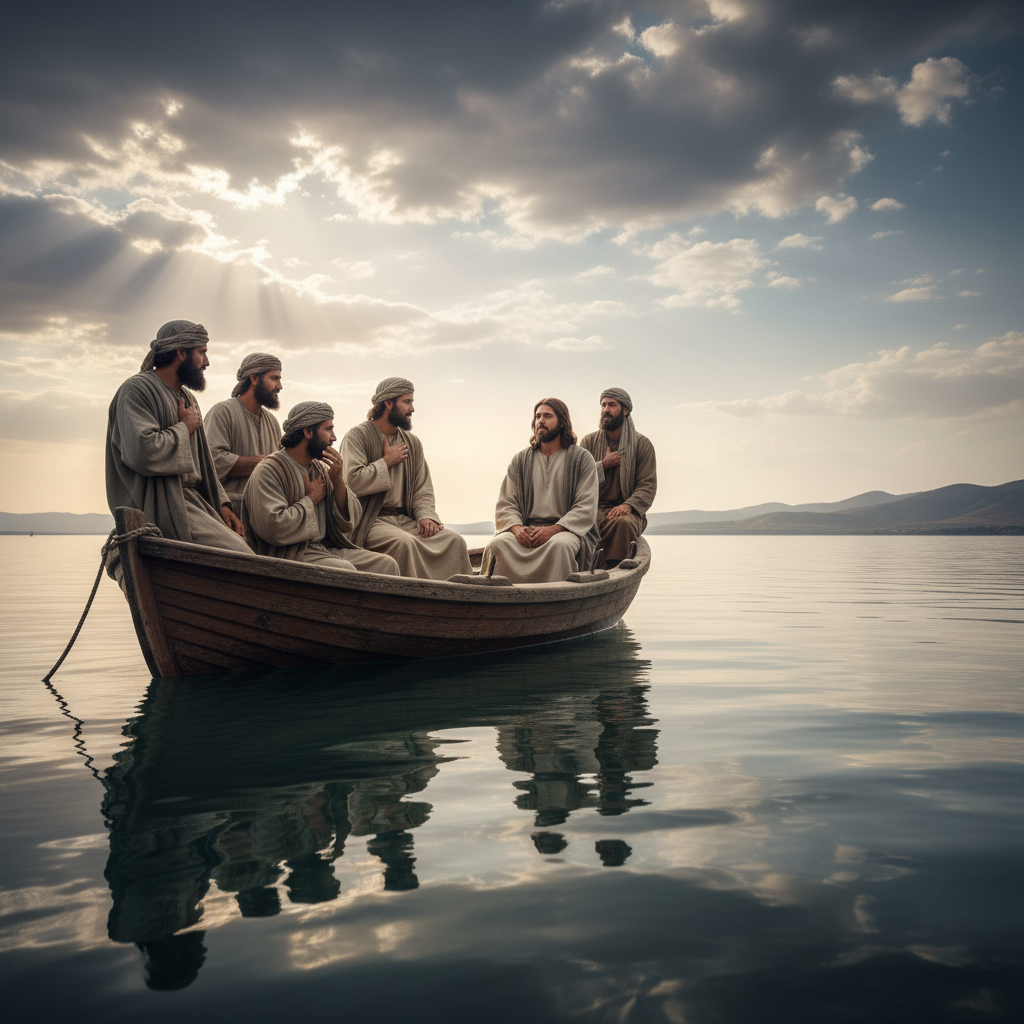
He Rebuked the Wind and the Waves
When the disciples cried out in fear, Jesus did not panic or debate. Instead, He rose and confronted the source of their terror. Mark 4:39 tells us, "He woke up and rebuked the wind and said to the sea, ‘Silence! Be still!’ Then the wind ceased, and there was a dead calm."
Without struggle or visible effort, Jesus spoke with absolute authority. His words were not a plea but a command, instantly calming the violent storm. This act was a clear demonstration of His divine control over nature, as the elements themselves obeyed their Creator’s voice.
A Question of Faith: ‘Why are you so afraid?’
After this incredible display, Jesus turned to His disciples with a poignant question: "Why are you so afraid? Do you still have no faith?" (Mark 4:40). This was not an angry reprimand but a challenge meant to deepen their understanding.
Jesus knew their fear was rooted in a lack of trust. Even after witnessing His miracles, they had doubted His power or willingness to protect them. His question, therefore, invites us to examine our own hearts. Do we truly believe Jesus is with us in our storms? Do we trust in His power when circumstances feel overwhelming? This inquiry marks the path from fear to unwavering faith—a journey He desires for all believers.
- Understanding their fear: The disciples were seasoned fishermen. They understood the mortal danger of such a storm on the Sea of Galilee [2].
- Jesus’ expectation: He expected them to recognize His divine presence and trust in it.
- Our lesson today: When facing life’s tempests, Jesus still asks us, "Why are you so afraid?" He calls us to place our faith in Him.
Demonstrating Divine Authority Over Creation
Jesus’s command over the storm was more than an act of compassion—it was a profound revelation of His divine nature. In the Old Testament, only God has such authority over the natural world, commanding the seas and winds (Psalm 89:9, Psalm 107:29). By rebuking the storm, Jesus demonstrated that He shares this unique, divine power.
The disciples’ reaction underscores this truth. Mark 4:41 says they were terrified, asking each other, "Who then is this, that even the wind and the sea obey Him?" They understood they were not in the presence of a mere prophet or teacher, but of someone with power belonging solely to the Creator. Jesus Christ, fully God and fully man, holds ultimate authority. As Lord over all creation, He is sovereign even over the wildest storms in our lives—a truth that provides immense comfort and strength to those who trust in Him.
Did Jesus say peace be still?
The Command of the Creator (Mark 4:39)
When the desperate disciples cried out, Jesus awoke. He did not panic; instead, He rose with calm authority and spoke directly to the raging storm. His words were simple yet profoundly powerful: “Peace, be still!” (Mark 4:39). This was not a plea—it was a divine command.
This command echoes God’s creative power from the very beginning. Just as God spoke and creation obeyed (Genesis 1:3, 6, 9), Jesus demonstrated the same absolute authority. He was not a man requesting a favor from nature; He was the Creator commanding His creation. This act undeniably affirmed His deity, revealing His ultimate power over all the elements.
- Jesus’ command to the storm revealed His divine authority.
- His words, “Peace, be still!”, instantly silenced the chaos.
- The act mirrored God’s creative power in Genesis.
The Immediate and ‘Great Calm’ That Followed
The effect of Jesus’ command was immediate. As Mark 4:39 notes, “Then the wind ceased, and there was a great calm.” This was no gradual quieting—the storm vanished in an instant. The furious squall gave way to perfect tranquility, and the waves that had threatened to swamp the boat suddenly lay flat.
This miraculous stillness was more than just a lull in the storm; it was a “great calm.” The sea became like glass, a contrast that highlighted Jesus’ total control. This tangibly demonstrated His power, as the disciples witnessed something far beyond human capability. Indeed, only the God of all creation could orchestrate such an immediate and complete change.
This sudden stillness served a powerful purpose. It not only confirmed Jesus’ identity to His disciples but also continues to reassure believers today that no storm is too great for Him. His peace can overcome any chaos.
The Disciples’ Awe: ‘Who is this?’
Witnessing this astonishing event, the disciples were filled with awe. Mark 4:41 states, “And they were greatly afraid and said to one another, ‘Who then is this, that even the wind and the sea obey Him?'” Their fear, however, was no longer of the storm. Instead of fearing for their lives, they now felt a reverential fear of the One in their boat.
This question—”Who then is this?”—is central to the passage, as it reveals the disciples’ growing understanding of Jesus’ true nature. They had seen Him heal the sick and cast out demons, but now they saw Him control the very forces of nature. Their question was not rhetorical; it was a genuine search to understand who could possibly wield such power.
The only logical answer points to His divine identity. Jesus Christ is more than a prophet or a good teacher; He is the Son of God, Lord over all creation. This miracle solidified His claim to divinity, showing that He is indeed the Lord and Savior capable of bringing peace to any storm—including the storms in our lives.
How Can This Passage Strengthen Your Faith?
Trusting Jesus is in Your Boat, Even When He Seems Silent
The scene in Mark 4:38 often mirrors our own lives. We face overwhelming storms, feel consumed by fear, and sometimes wonder if Jesus is silent or asleep in our boat. Like the disciples, we might cry out in desperation, questioning if He cares about our peril. Their fear clouded their understanding of His divine presence.
However, this passage teaches a profound truth: Jesus is always present in our storms. His seeming silence doesn’t signal His absence or apathy. On the contrary, He is actively with us, even when we can’t perceive His immediate action. We must hold on to His promise: “And behold, I am with you always, to the end of the age” (Matthew 28:20).
Therefore, we can strengthen our faith by cultivating trust—trust that Jesus is truly in our boat and cares deeply for us. While His timing is perfect, it may not align with ours. Yet, His presence alone is enough to bring comfort. As we learn to rest in His sovereign control, we can surrender our anxieties to Him.
- His Presence: Jesus is with us in every trial.
- His Care: He deeply cares about our struggles.
- His Timing: He acts on His perfect, divine schedule.
- Our Response: We are called to trust His unwavering commitment.
Exchanging Your Fear for Faith in His Power
Terrified by the violent storm, the disciples felt completely helpless. Their plea to Jesus, “Teacher, don’t you care if we drown?” (Mark 4:38), sprang from this deep-seated fear. By focusing on the magnitude of the waves and their immediate danger, they forgot the identity of the One with them in the boat.
Yet, when Jesus awoke, He responded not with panic, but with authority. He rebuked the wind and the waves, calming the raging sea with a single command. This moment clearly demonstrated His divine power and ultimate dominion over creation—a power available to us through faith.
Consequently, we are called to exchange our fear for faith. Though our natural human response is often fear, God has not given us a spirit of fear (2 Timothy 1:7). Instead, He provides us with power, love, and a sound mind. When we face our own “storms,” we must choose to look to Jesus and declare His power over our circumstances. This shift in focus is crucial for developing our faith.
This passage invites us to:
- Acknowledge Fear: Recognize when fear tries to take hold.
- Recall Jesus’ Authority: Remember His unmatched power over all things.
- Embrace Faith: Deliberately choose to trust His ability to intervene.
- Speak His Truth: Declare His promises over your situation.
Finding Peace in the Midst of Life’s Storms
The “great calm” that followed Jesus’ command was immediate and absolute. This sudden peace was not merely the absence of external trouble, but a supernatural demonstration of divine control. It offered profound reassurance, moving the astonished disciples from terror to awe in a matter of moments.
Similarly, Jesus offers us this same deep peace. He promised, “Peace I leave with you; my peace I give you. I do not give to you as the world gives. Do not let your hearts be troubled and do not be afraid” (John 14:27). This peace isn’t dependent on perfect external conditions; it is an inner tranquility that comes from knowing Christ.
Therefore, even when life’s storms rage, we can find true peace by fixing our eyes on Jesus and surrendering our anxieties to Him in prayer. This act of surrender allows us to experience a peace that “transcends all understanding” (Philippians 4:7). This divine peace guards our hearts and minds in Christ Jesus, empowering us to live confidently because we know He is our refuge and strength.
To cultivate this peace:
- Seek Jesus: Turn to Him first in times of trouble.
- Pray Constantly: Cast all your anxieties on Him (1 Peter 5:7).
- Meditate on Scripture: Let His words anchor your soul.
- Trust His Sovereignty: Believe He works all things for good (Romans 8:28).
Frequently Asked Questions about Mark 4:38
What is the meaning of Mark 4-38?
Mark 4:38 captures a pivotal moment when a furious storm terrified the disciples on the Sea of Galilee while Jesus was peacefully asleep in their boat.
Their urgent question, “Teacher, don’t you care if we drown?” reveals not only their deep human fear but also their limited understanding of who was with them.
This passage highlights several key themes:
- Human Vulnerability: Even experienced fishermen were overwhelmed by the storm’s fury (Mark 4:37).
- Jesus’ Humanity: He grew tired and needed to sleep, just as any human would (Mark 4:38).
- A Question of Faith: The disciples questioned Jesus’ care and power, doubting His concern even though He was with them.
- Divine Authority: In contrast, Jesus’ response showcased His absolute power over creation (Mark 4:39).
Ultimately, the passage shows that Jesus is present in our storms. Even when He seems silent, He cares deeply and His divine power is ready to bring peace.
What was Jesus’ response when he was tired Mark 4-38?
Awakened by the disciples’ desperate plea, Jesus’ response was swift and powerful. He did not ignore their fear but rose to address the chaos directly.
He first rebuked the wind and then commanded the raging waves, saying, “Quiet! Be still!” (Mark 4:39). Immediately, the wind died down and a great calm settled over the sea.
After this incredible display of divine authority, Jesus turned to His disciples and questioned their fear and lack of faith. He asked them, “Why are you so afraid? Do you still have no faith?” (Mark 4:40).
These actions reveal His dual nature. While His sleep showed His humanity, His command over creation proved His divinity. He is the Lord over all circumstances.
Did Jesus say peace be still?
Yes, Jesus gave the powerful command, “Quiet! Be still!” as recorded in Mark 4:39. This phrase marks a profound moment in the Gospels.
The original Greek phrase, “Σιώπα, πεφίμωσο” (Siōpa, pephimōso), translates to “Be silent! Be muzzled!” It is a command of incredible authority, spoken to the wind and waves as if they were unruly children.
The effect was instantaneous. A furious squall became a great calm, demonstrating His unique power as Creator and leaving the disciples in awe. They were left wondering, “Who is this?” (Mark 4:41).
This phrase remains a powerful declaration of Jesus’ authority over nature and His ability to bring peace into any storm, both literal and metaphorical.
What does Mark 14 38 teach us?
Mark 14:38 occurs during a different but equally critical moment: Jesus’ agony in the Garden of Gethsemane. As He prepared for His crucifixion, He found His disciples sleeping instead of praying.
He warns them, “Watch and pray so that you will not fall into temptation. The spirit is willing, but the flesh is weak” (Mark 14:38).
This verse provides vital teachings for every believer:
- Vigilance Against Temptation: We must remain spiritually alert, and prayer is our primary defense against sin.
- The Battle Within: The verse acknowledges the conflict between our spiritual intentions and our human weakness. While our spirit desires to follow God, our flesh is prone to fail.
- The Importance of Prayer: Jesus modeled intense prayer in Gethsemane and taught His disciples that it is essential in times of trial.
- Human Weakness: It realistically acknowledges the limits of human endurance. We need divine strength to overcome our natural frailty.
Therefore, Mark 14:38 serves as a timeless call to prayer and spiritual watchfulness. It encourages us to rely on God’s strength to overcome temptation. Unlike Mark 4:38, which highlights divine power over nature, this verse focuses on the need for spiritual discipline to combat our inner struggles.