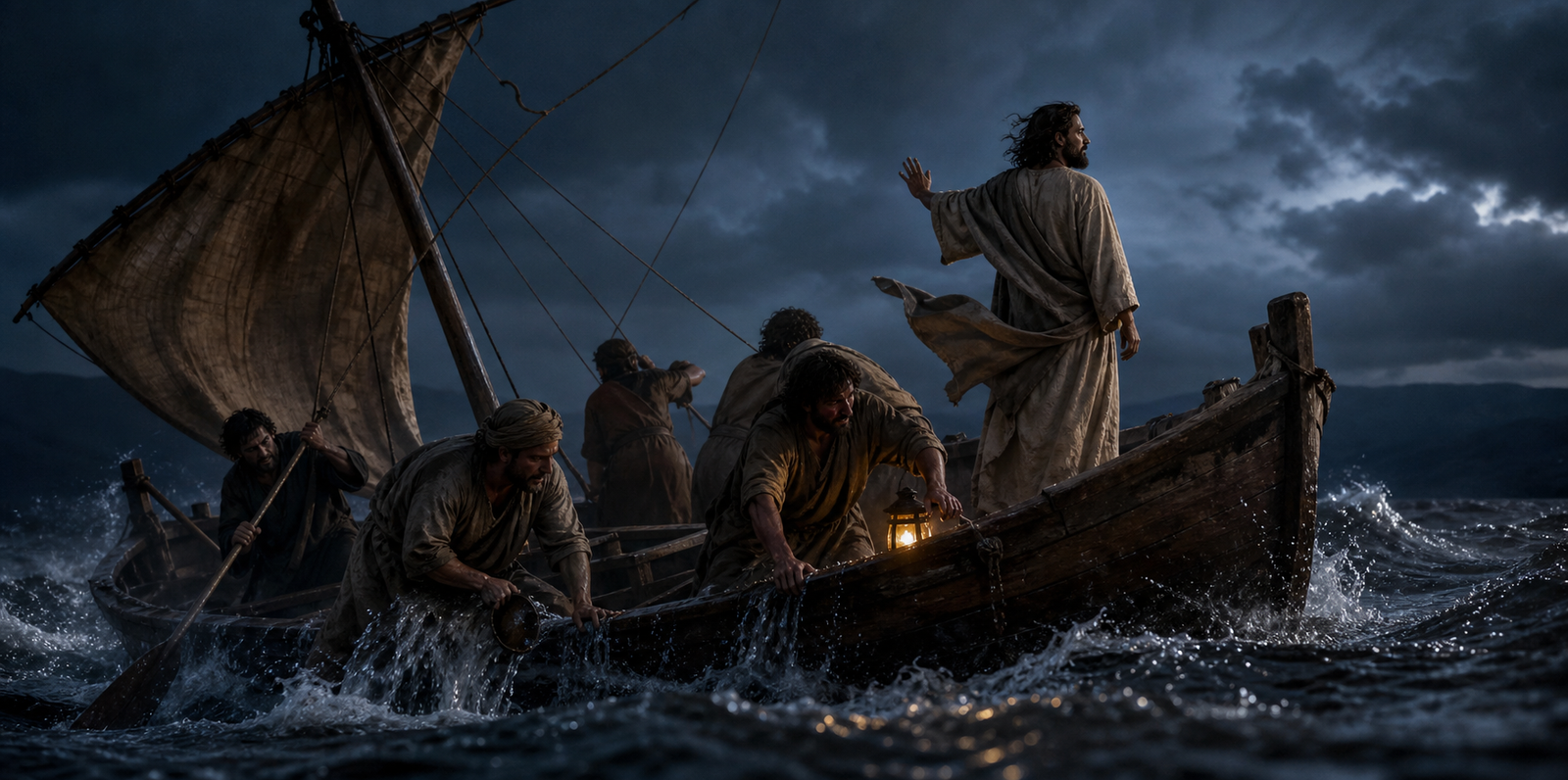
Mark 4:35-41 tells how Jesus calmed a dangerous storm on the Sea of Galilee. The miracle shows His true humanity, His divine authority over creation, and His patient call for the disciples to trust Him. The passage does not promise that Christians will avoid every hardship. It teaches that Jesus is Lord, that He is present with His people, and that fear should lead us toward faith rather than away from Him.
A small boat is filling with water. Experienced fishermen cannot control it. Jesus is asleep, and His disciples ask the painful question many people still ask in trouble: “Do you not care?” Then Jesus speaks, the wind stops, and the sea becomes calm.
Mark 4:35-41 is more than a story about surviving bad weather. It asks who Jesus is. It also shows what fear can reveal about our hearts, what biblical faith looks like, and why the presence of Christ matters even when a storm has not yet ended.
This guide follows the passage carefully and keeps it within the message of Mark’s Gospel. It will not use the story to promise an easy life. Instead, it will show why the crucified and risen Jesus is worthy of trust in both calm and danger.
What happens in Mark 4:35-41?
The scene begins at evening after a long day of teaching. Jesus tells His disciples to cross to the other side of the Sea of Galilee. They leave the crowd and take Him in the boat. Mark also mentions that other boats go with them.
A great windstorm rises. Waves break into the boat, and it begins to fill. Jesus is asleep on a cushion in the stern. The disciples wake Him and ask, “Teacher, do you not care that we are perishing?”
Jesus gets up, rebukes the wind, and commands the sea to be still. The wind stops, and there is a great calm. He then asks the disciples why they are afraid and whether they still have no faith.
The disciples respond with a deeper kind of fear. They ask one another who Jesus can be, since even the wind and sea obey Him. You can read Mark 4:35-41 here before studying each part.
The story follows Jesus’ teaching about God’s kingdom
Mark places this event directly after Jesus teaches several parables in chapter 4. He speaks about seed falling on different soils, a lamp that should be seen, seed growing quietly, and a mustard seed becoming large. These parables explain the surprising growth of God’s kingdom.
The storm story then moves from words to action. The disciples have heard Jesus teach with authority. Now they must learn who is with them in the boat. Knowing a teaching and trusting the Teacher are connected, but they are not always the same experience.
The BibleProject guide to the Gospel of Mark explains that the first part of the book repeatedly shows Jesus acting with God’s authority while people, including His disciples, struggle to understand who He is. Mark 4:35-41 fits that pattern exactly.
Jesus had been preaching the kingdom of God. His rule is not only an idea. In Mark, it confronts sickness, evil, sin, chaos, and death. The calm sea is one sign that God’s saving rule has come near in Jesus.
The danger on the Sea of Galilee was real
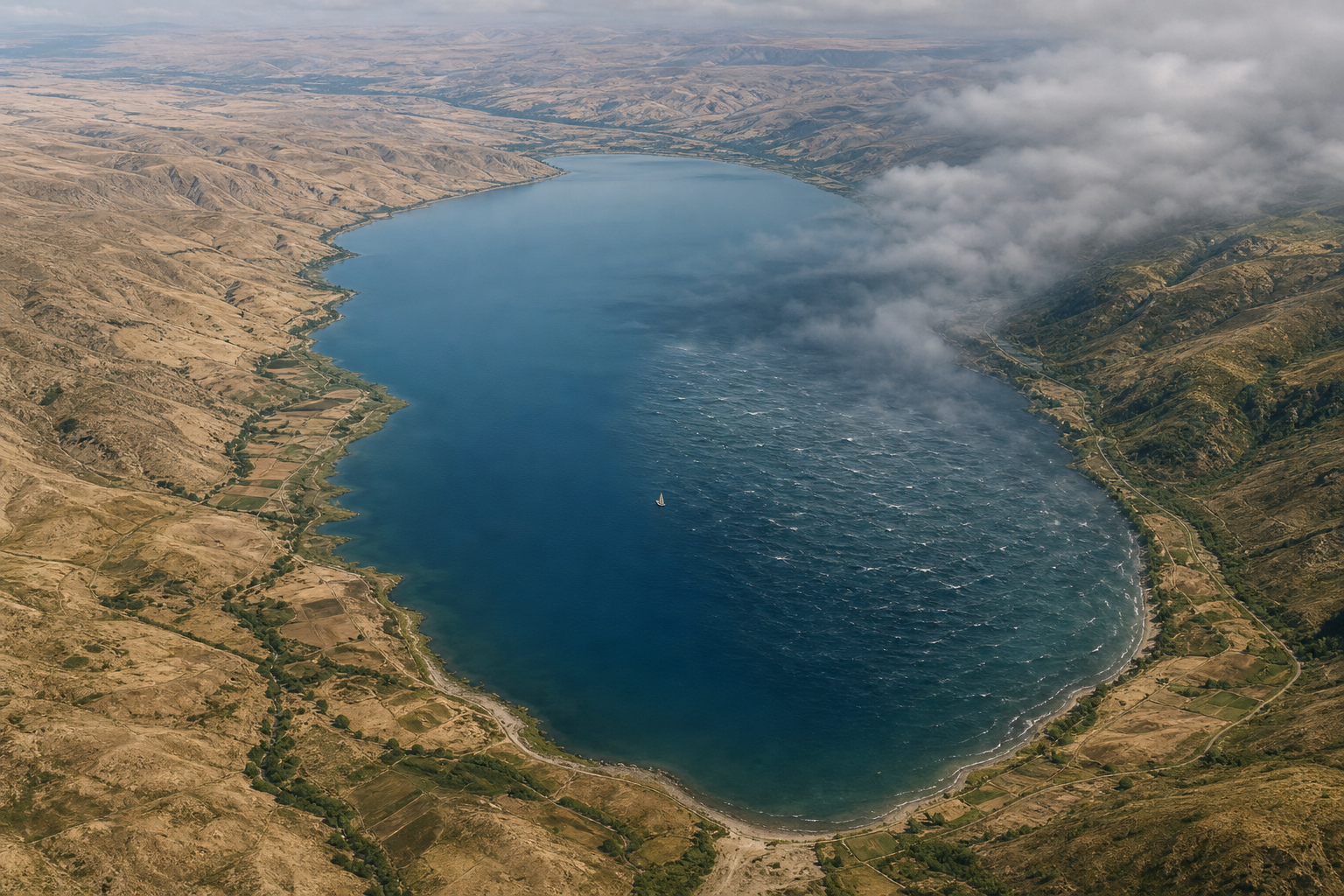
The Sea of Galilee is a freshwater lake in the Jordan Rift Valley. A NASA Earth Observatory overview shows the lake lying in a deep basin with surrounding uplands. The geography helps readers picture how changing air and wind can affect the water.
Mark does not present the disciples as people frightened by a few drops of rain. Waves are entering the boat, and the boat is already filling. Several disciples had worked as fishermen, so their fear should not be dismissed as ignorance. They understood the danger of open water.
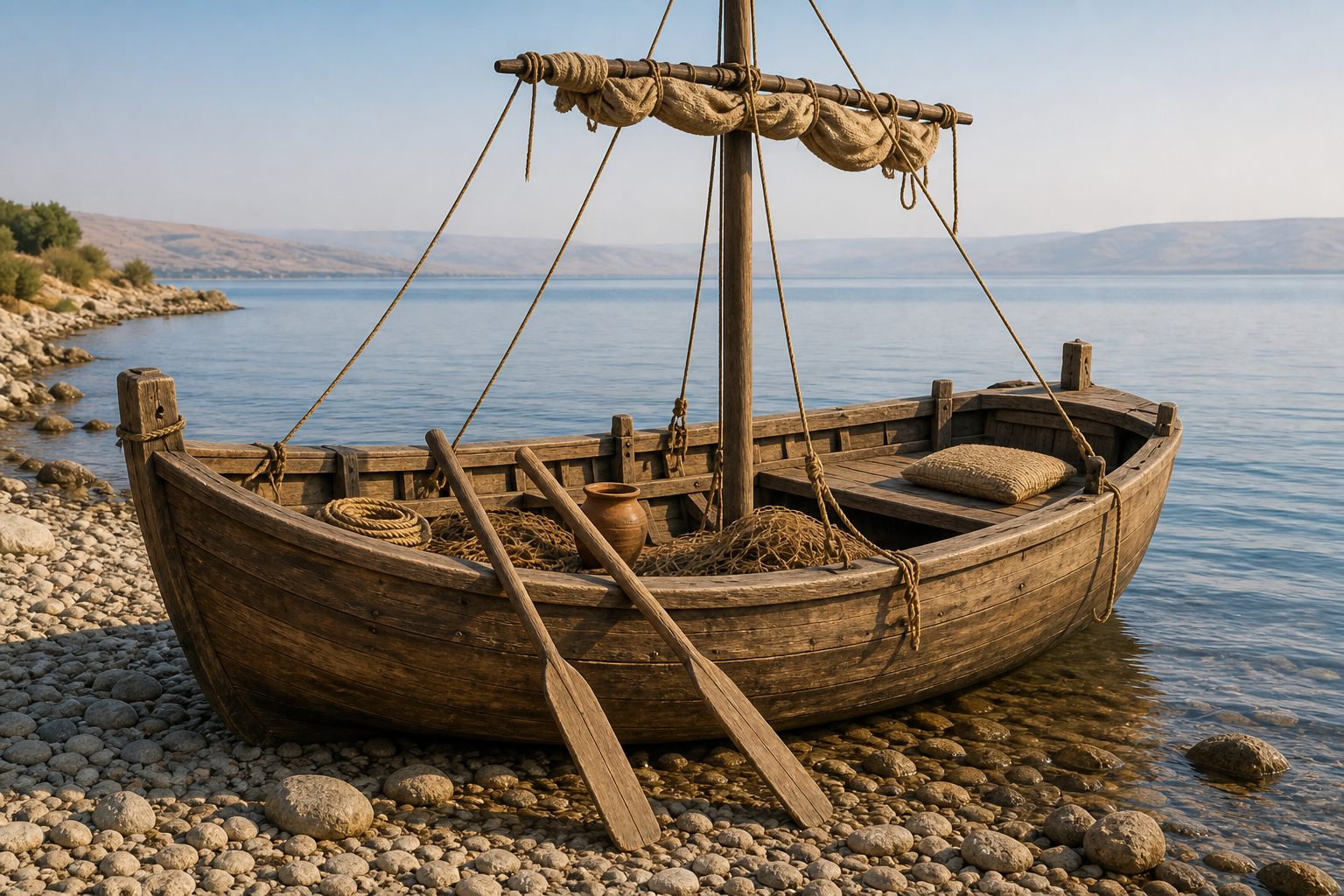
The boat was likely a small working craft, not a large ship. It had room for a crew, fishing gear, oars, and a sail, but little protection from breaking waves. Mark’s detail about the stern and cushion makes the memory feel concrete.
This matters because biblical faith does not begin by pretending danger is imaginary. The storm was real. The water was real. The disciples’ physical limits were real. Trusting Jesus does not require us to call a hard situation easy.
Why was Jesus asleep during the storm?
Jesus had spent the day teaching a large crowd. Sleeping in the boat shows His true humanity. The eternal Son of God truly took on human nature. He experienced hunger, tiredness, pain, and sleep, yet without sin.
His sleep also creates a sharp contrast. The boat is in chaos, but Jesus is at rest. This does not mean He is careless. It shows that the storm is not greater than Him, even before He speaks.
The disciples do not simply say, “Save us.” They ask whether He cares. Fear turns their danger into a judgment about His heart. Many believers recognize that movement. A painful event becomes the thought, “If God cared, this would not be happening.”
Mark does not shame us for bringing an honest cry to Jesus. The disciples wake Him, and He responds. A Yale Bible Study guide to Mark 4:35-6:29 describes these stories as accounts of both power and mercy. Jesus uses His power to help people in trouble.
The cross gives the fullest answer to the question of His care. Jesus did not remain far from human suffering. He gave Himself for sinners, died, and rose again. His love is not measured only by whether today’s circumstances are easy.
Jesus speaks, and creation obeys
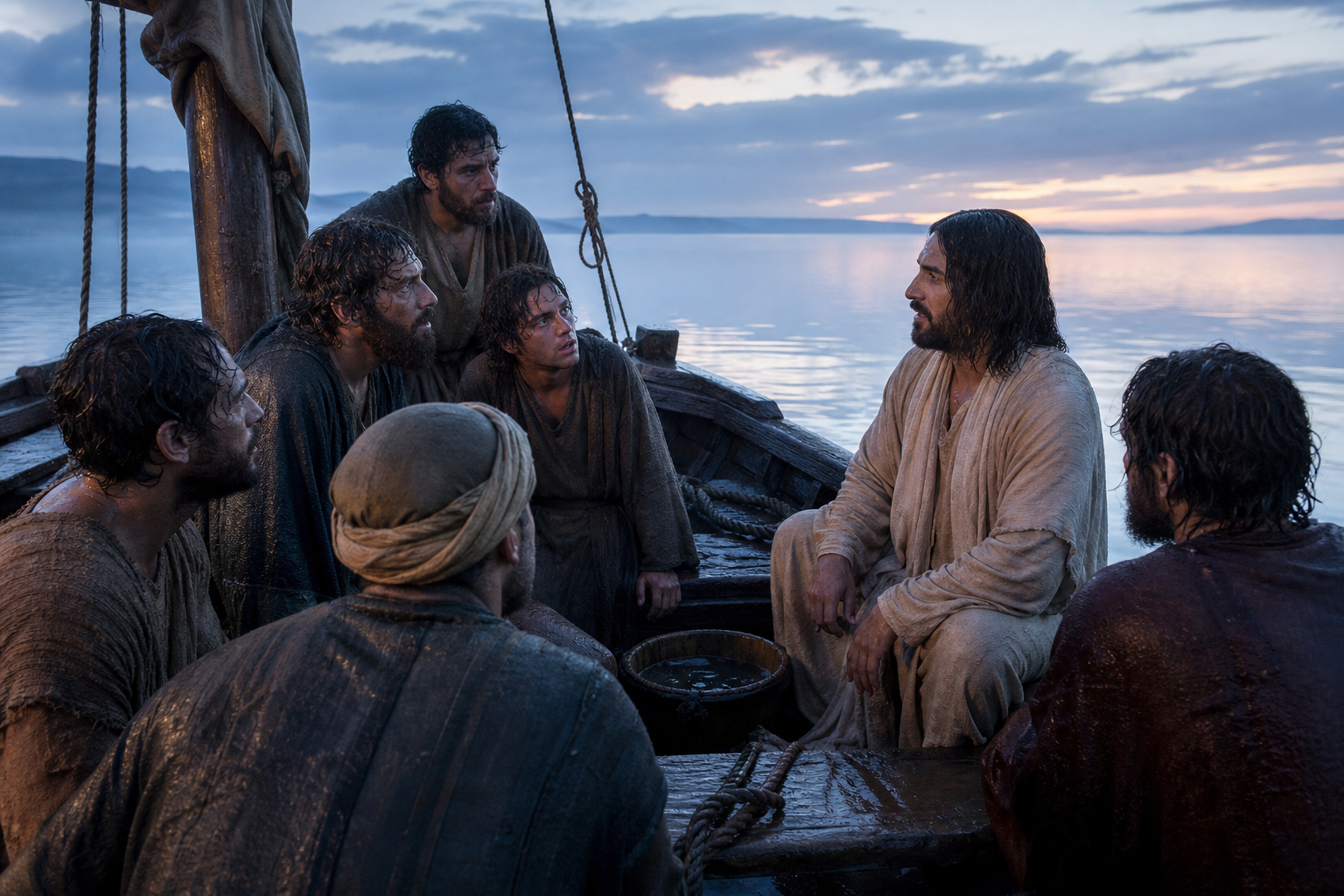
Jesus rebukes the wind and commands the sea. Mark uses direct, forceful language. The wind stops, and the rough water becomes a great calm. The change is immediate and complete.
For readers who know the Old Testament, authority over the sea points beyond the power of an ordinary teacher. The Psalms describe the Lord ruling the waters. In Psalm 107, sailors cry to God in a storm, and He stills the waves and brings them to safety. Read the striking parallel in Psalm 107:23-32.
Mark does not pause to give a long explanation. He lets the disciples ask the right question: “Who then is this?” The miracle calls the reader to answer. Jesus is not only a wise man who knows how weather works. Creation responds to His command.
This fits the opening claim of Mark’s Gospel that Jesus is the Messiah and the Son of God. It also points ahead. The One with authority over the sea will give His life as a ransom, be crucified, and rise from the dead. His power and His self-giving love belong together.
Christians confess Jesus Christ as Lord and Savior, truly God and truly human. Mark 4 does not contain the whole Christian doctrine of Christ by itself, but it gives an unforgettable sign of His identity.
What does Jesus teach about fear and faith?
After calming the storm, Jesus asks why the disciples are afraid and whether they still have no faith. He does not say the storm was harmless. He asks why they have not yet learned to trust Him.
Faith in this passage is not confidence that the disciples can control the boat. It is confidence in Jesus. They have seen His authority in teaching, healing, forgiving sins, and freeing people from evil. Yet fear makes them act as if His presence has no meaning.
Fear is a normal human response to danger. The Bible does not command people to ignore safety, refuse help, or hide strong emotion. Jesus’ question reaches deeper. Will fear have the final word? Will it decide what we believe about His character?
Biblical faith can cry out, act wisely, and still trust. A believer may put on a life jacket, call emergency services, see a doctor, leave an unsafe place, or ask the church for help. None of those actions denies God. Faith uses the means available while refusing to treat fear as lord.
The disciples’ final awe is also important. At first they fear the storm. After the calm, they realize that someone greater than the storm is in their boat. The passage moves attention from the size of the waves to the identity of Jesus.
What Mark 4:35-41 does not promise
This passage is sometimes reduced to the sentence, “Jesus will calm every storm in your life.” That can sound comforting, but it is not a promise the Bible makes.
Jesus sometimes removes trouble quickly. At other times, He carries His people through suffering that continues. The apostles later face persecution, prison, shipwreck, illness, and death. Their hardships do not prove that Christ stopped caring or that their faith failed.
The phrase “storms of life” can be a useful picture, but Mark is first reporting a real miracle. We should not turn every detail into a secret symbol. The boat is not automatically your career, the waves are not automatically your bills, and the cushion is not a formula for inner peace.
The solid promise is better: Jesus is Lord. He is present with His people by the Holy Spirit. Nothing can separate those in Christ from God’s love. He may deliver us from danger, sustain us within it, or bring us safely through death into resurrection life.
Christian hope rests on the death and resurrection of Jesus, not on a guarantee of comfort. The wider life and ministry of Jesus shows that His path to victory passed through the cross.
How to trust Jesus in a storm today
When life feels out of control, begin with honesty. Tell Jesus what is happening and what you fear. The disciples’ words were imperfect, but they brought their fear to Him instead of rowing away from Him.
Remember what is already true
Fear narrows attention to the immediate threat. Recall who Jesus is and what He has done. He is the Son of God. He died for our sins, rose from the grave, reigns, and will keep every promise in Scripture.
Take the next wise action
Trust is not passivity. The disciples were right to respond to water entering the boat. Do the clear work in front of you. Seek medical care, make the necessary call, ask forgiveness, protect a vulnerable person, or request practical help.
Pray with other believers
Fear often grows in isolation. Ask trusted Christians to pray, listen, and help. God frequently cares for His people through the body of Christ.
Refuse false conclusions about God’s care
A delayed answer is not proof that Jesus does not care. Hold the question beside the cross. The Lord who gave Himself for you may be working in ways you cannot yet see.
Let hardship deepen your knowledge of Christ
The disciples crossed the lake knowing Jesus as Teacher. They reached the other side with a larger question about His identity. Trials can expose shallow beliefs and lead us to know Christ more truly.
A simple Bible study plan for Mark 4:35-41
This short passage rewards slow reading. Use the following plan alone, with a family, or in a small group.
- Read the passage twice. On the first reading, follow the action. On the second, notice every word about fear, faith, care, command, and response.
- Read the surrounding chapter. Notice the kingdom parables before the crossing and the acts of mercy and power that follow in Mark 5.
- Compare the parallel accounts. Read Matthew 8:23-27 and Luke 8:22-25. Each Gospel writer tells the same event with a slightly different emphasis.
- Read Psalm 107:23-32. Ask what the Old Testament background adds to the disciples’ final question.
- Name the false conclusion fear suggests. It may be “Jesus does not care,” “I am alone,” or “This danger controls everything.” Answer it with a clear truth about Christ.
- Choose one faithful response. Pray, seek help, act wisely, encourage someone, or obey a command you have delayed.
Mark 4:35-41 belongs among the essential Bible passages every Christian should know because it joins honest fear, the identity of Jesus, and the call to faith in one memorable scene.
Frequently asked questions about Mark 4:35-41
What is the main message of Mark 4:35-41?
The main message is that Jesus has divine authority over creation and is worthy of trust. The miracle leads the disciples, and the reader, to ask who Jesus truly is.
Why did Jesus ask the disciples if they had no faith?
They had already seen His authority, yet fear made them question His care and forget who was with them. Jesus calls them to trust Him, not to pretend the danger is unreal.
Does Mark 4:35-41 promise that Jesus will stop every hardship?
No. Jesus may remove a trial, but Christians also face suffering that continues. The passage promises the authority and trustworthiness of Christ, not a trouble-free life.
What does the storm reveal about Jesus?
His sleep shows His true humanity. His command over wind and sea shows authority that the Old Testament connects with God. Together, the scene points to Jesus as the divine Son.
How can I apply this passage when I am afraid?
Bring your fear honestly to Jesus, remember His character and the cross, take wise action, ask other believers for help, and refuse to let danger define what you believe about His care.
The question at the center of the calm
The storm becomes quiet, but the story ends with a question. “Who then is this?” Mark wants every reader to answer.
Jesus is the compassionate Lord whose authority is greater than the sea. He is also the Savior who entered our deepest danger, carried sin to the cross, and rose in victory. Faith does not mean we understand every storm. It means we are learning to trust the One who is with us.
Read the passage again and place your fear beside the truth about Jesus. For more help living out Scripture in ordinary decisions, explore our Christian wisdom articles.