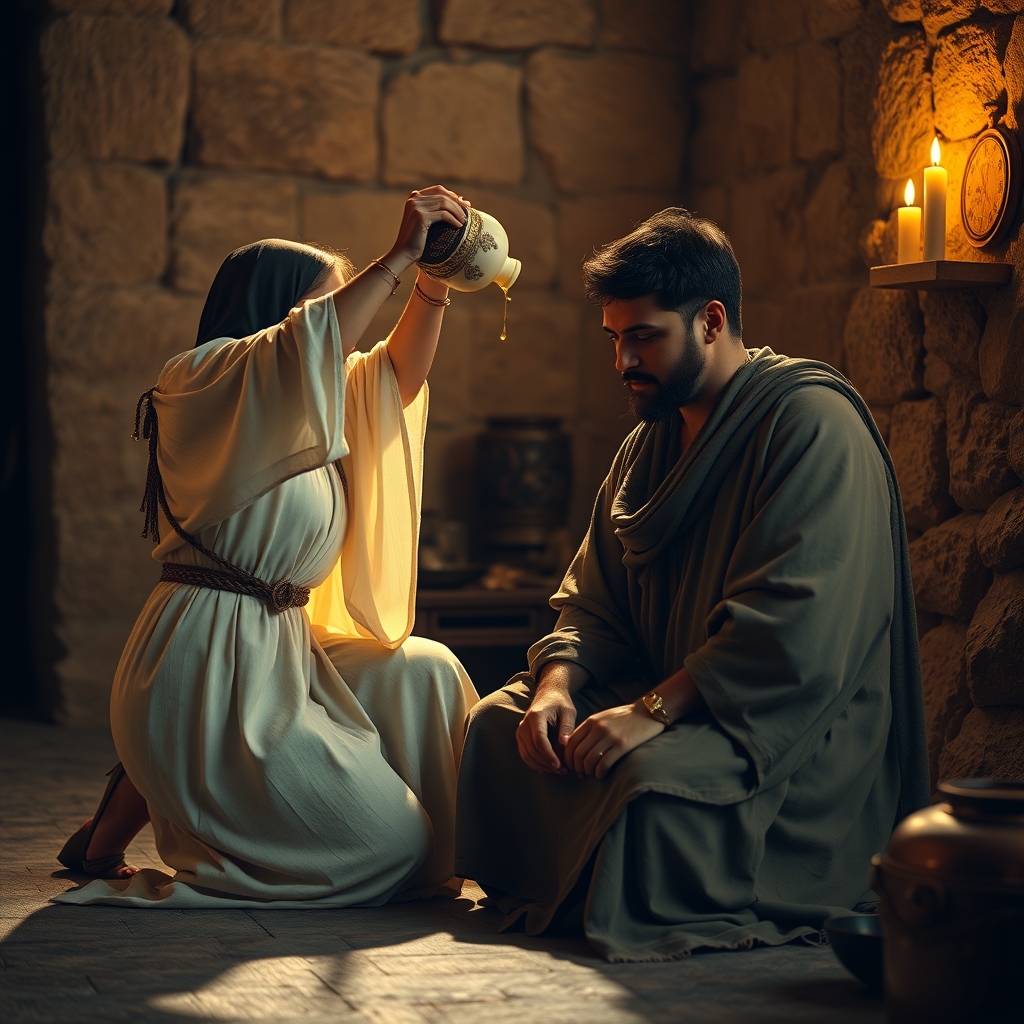
Mark 14:3-9 records a deeply moving event in which a woman — identified in John 12:3 as Mary of Bethany — anointed Jesus with costly perfume from an alabaster jar in an extraordinary act of worship and love shortly before His crucifixion. Jesus declared that wherever the Gospel is preached throughout the world, this woman’s act of devotion would be remembered, making it a timeless testimony to His deity, His impending sacrifice, and the beauty of wholehearted worship.
In the quiet moments before the storm of the crucifixion, a woman stepped forward with an act so bold, so costly, and so deeply personal that Jesus Himself declared it would be remembered wherever the Gospel is preached. Mark 14:3-9 captures one of the most beautiful and misunderstood scenes in all of Scripture — a moment where extravagant love met religious criticism, and where the true identity of Jesus was honored in a way no one else dared to attempt. What happened that evening at Simon the leper’s house reveals profound truths about worship, sacrifice, and the heart of the Gospel itself.
This passage invites us to look beyond the surface of a simple act of devotion and discover the rich, prophetic meaning behind a woman’s decision to break open an alabaster jar of costly perfume and pour it over Jesus. Whether you are a new believer seeking to understand the depths of Christ’s sacrifice or a mature Christian longing to deepen your walk with Him, the lessons found in Mark 14:3-9 will challenge you to examine your own heart. Let us explore what Scripture teaches about this remarkable moment — and why it still speaks powerfully to our lives today.
What Happened in Mark 14:3-9?
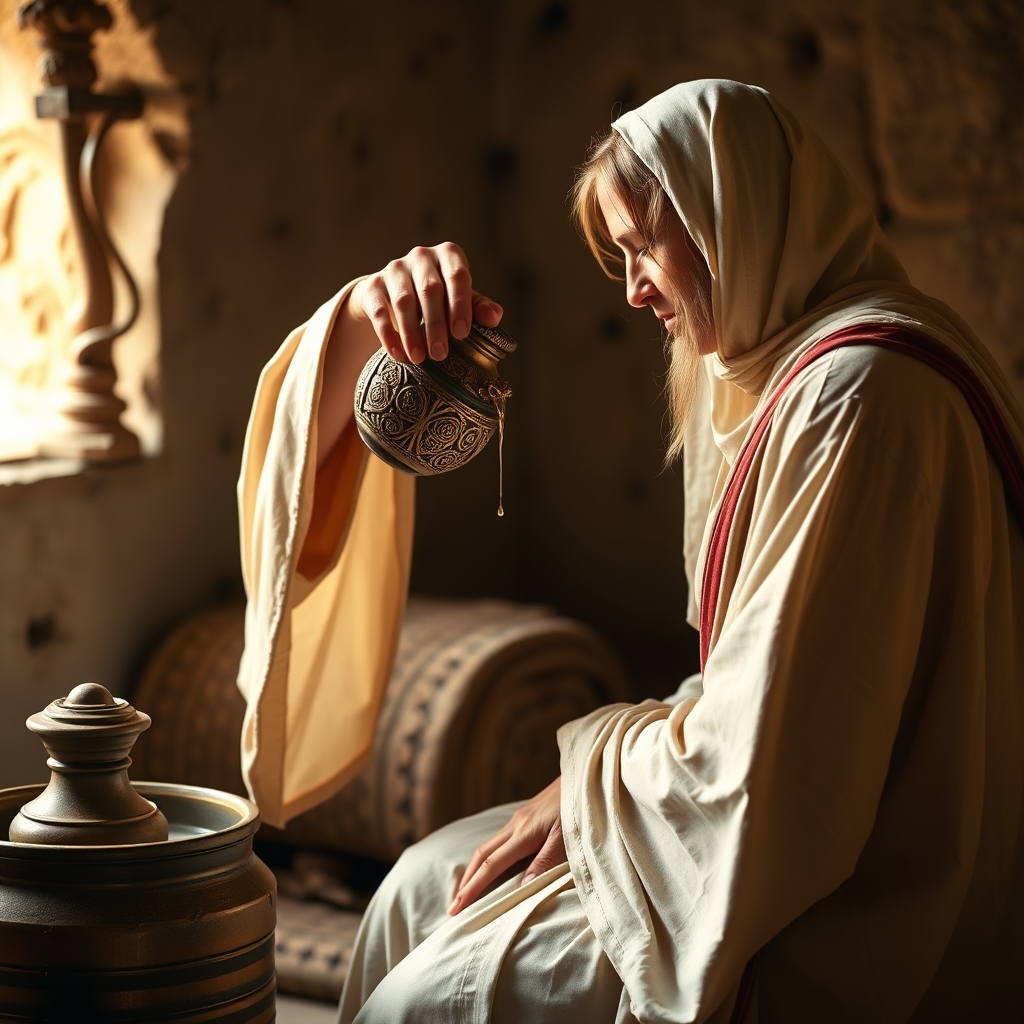
In the days leading up to His crucifixion, Jesus attended a special dinner in Bethany. This event, recorded in Mark 14:3-9, captures one of the most beautiful acts of worship in all of Scripture. Understanding what happened helps us see the heart of Jesus and the power of wholehearted devotion.
Setting the Scene: A Dinner at Simon the Leper’s House
Mark 14:3 tells us that Jesus was in the home of Simon the Leper. Simon was likely someone Jesus had healed, since lepers were typically isolated from society. [1] This dinner took place just two days before the Passover feast.
The setting was intimate. Jesus reclined at the table with His closest friends. The atmosphere should have been one of joy and fellowship. However, the religious leaders were actively plotting to kill Jesus at that very time. This contrast is striking. While enemies schemed, a woman chose to worship.
Consider the key details of this scene:
- Location: Bethany, a village on the Mount of Olives near Jerusalem
- Host: Simon the Leper, likely healed by Jesus
- Timing: Six days before the Passover celebration
- Attendees: Jesus, His disciples, and Lazarus, who had been raised from the dead
- Atmosphere: A mix of celebration and underlying tension
This dinner was more than a meal. It was a gathering of gratitude. Those present had witnessed miracles. They had seen Jesus raise Lazarus from the dead. They had experienced His teaching and love. Yet, not everyone in the room responded with the same heart.
The Woman’s Act of Worship with the Alabaster Jar
Into this scene, a woman arrived with an alabaster jar of perfume. Mark describes it as pure nard, an extremely expensive fragrant oil imported from the Himalayan region of India. [2] The value of this perfume was remarkable. It was worth more than three hundred denarii, nearly a full year’s wages for a common laborer.
Her actions were deliberate and reverent. She broke the seal of the alabaster flask. This was not a casual gesture. Breaking the jar meant it could never be used again. She poured the entire contents over Jesus’ head. Some accounts also mention she anointed His feet and wiped them with her hair.
This act carried deep meaning:
- Breaking the jar: A symbol of total surrender and irreversible commitment
- The perfume: Represented her most valuable possession, given freely
- The anointing: A prophetic act preparing Jesus for His burial
- The fragrance: Filled the entire room, a sensory reminder of her devotion
The woman did not speak a word. Her actions spoke louder than any sermon. She gave everything she had. She held nothing back. In a world that often calculates the cost of faith, she demonstrated that true worship is extravagant. It is not measured by what remains in our hands, but by what we lay at the feet of Jesus.
Jesus responded to her with profound affirmation. He defended her against criticism. He declared that wherever the Gospel is preached, her story would be told in memory of her. This promise has been fulfilled for over two thousand years. Her act of worship continues to inspire believers around the world.
The story in Mark 14:3-9 reminds us that Jesus values heartfelt worship above all else. He sees the motive behind our actions. He honors those who come to Him with genuine love and surrender. This woman’s example challenges every believer to ask: What am I willing to give to Jesus? What am I holding back?
What is the significance of Mark 14 3 9?
The passage of Mark 14:3-9 holds profound significance for every believer. It is a powerful moment that reveals the heart of true worship. Furthermore, it points directly to the mission of Jesus Christ. Understanding this passage deepens our appreciation for His sacrifice. It also challenges us to examine our own hearts.
A Prophetic Act Pointing to Jesus’ Death
The woman’s act of anointing Jesus was not a random gesture. It carried deep prophetic meaning. Jesus Himself declared this truth. He said, “She has done a beautiful thing to me” (Mark 14:6). Moreover, He explained the purpose behind her action.
Jesus stated that she had come to anoint His body for burial (Mark 14:8). This was a remarkable statement. At that time, His crucifixion had not yet occurred. However, Jesus knew what lay ahead. He understood that His death was imminent. Therefore, this woman’s act was a divine preparation.
Consider the timing of this event. It took place just days before Passover. Jesus would soon be crucified as the Lamb of God (John 1:29). In addition, the expensive perfume she poured out symbolized the preciousness of His sacrifice. Nothing was too costly for the Son of God.
This prophetic act also fulfilled a greater purpose. Jesus said, “Wherever the gospel is preached throughout the world, what she has done will also be told, in memory of her” (Mark 14:9). As a result, her story has been shared for over two thousand years. It continues to inspire believers today.
The Contrast Between Worship and Criticism
Mark 14:3-9 presents a striking contrast. On one side stands a woman of deep devotion. On the other side stand critics filled with indignation. This contrast teaches us an important lesson about the nature of true faith.
The disciples, particularly Judas Iscariot, were outraged by the woman’s gesture (John 12:4-5). They called it a waste. Furthermore, they argued the perfume could have been sold to help the poor. However, their criticism was misguided. Jesus defended her actions. He recognized the beauty of her worship.
This contrast reveals two very different heart postures:
- The heart of worship: The woman saw Jesus for who He truly is. She gave freely without holding back. Her focus was entirely on Christ.
- The heart of criticism: The disciples focused on practical concerns. They missed the spiritual significance of the moment. Their priorities were misplaced.
Jesus responded to the critics with grace and authority. He said, “Leave her alone… Why are you bothering her?” (Mark 14:6). In addition, He affirmed that the poor would always be present. However, He would not always be with them in bodily form. Therefore, her act of worship was both timely and appropriate.
This passage reminds us that genuine worship may not always make sense to others. It may appear extravagant or even wasteful by worldly standards. However, God sees the heart. He values wholehearted devotion above all else (1 Samuel 16:7).
Ultimately, Mark 14:3-9 calls us to a higher standard. It invites us to move beyond religious routine. It challenges us to offer Jesus our very best. When we worship Him with sincerity, we honor His name. We also declare His worth to the world around us.
Who is the woman in Mark 14 3 9?
Her Identity in Scripture
Mark 14:3-9 does not give the woman a name. However, the Gospel of John 12:1-8 identifies her as Mary, the sister of Martha and Lazarus. This is the same Mary who sat at Jesus’ feet to hear His teaching while Martha served (Luke 10:39-42). Furthermore, she is the sister of Lazarus, whom Jesus raised from the dead (John 11:1-44). While Mark simply calls her “a woman,” the broader scriptural context points to Mary of Bethany.
However, it is important to note that the focus of Mark 14:3-9 is not primarily on her identity, but on her act of worship. The woman remains unnamed in Mark’s account to keep the reader’s attention fixed on Jesus. Her anonymity serves a purpose: it highlights that her act of love was a response to who Jesus is, not who she is. The lesson is about the nature of true worship, not the worshipper’s fame.
- Mary of Bethany: Identified in John 12:1-8 as the woman who anointed Jesus.
- Mary Magdalene: A different woman who was present at the crucifixion and resurrection (Mark 15:40, Luke 8:2).
- Mary the mother of Jesus: Also present at the cross (John 19:25-27).
Scripture uses her story to illustrate a profound spiritual truth. Her identity is secondary to the object of her worship: Jesus Christ, the Son of God.
Her Story of Gratitude and Love for Jesus
Mary’s act of anointing Jesus was not a random gesture. It was the overflow of a heart transformed by Jesus. She had experienced His teaching. She had witnessed His power. Most importantly, she had seen her brother Lazarus raised from the dead (John 11:1-44). Her love for Jesus was born out of deep gratitude for what He had done for her family.
Furthermore, her act was a prophetic declaration. By anointing Jesus’ head with expensive perfume, she was unknowingly preparing Him for His burial (Mark 14:8). Jesus Himself said, “She has done a beautiful thing to me” (Mark 14:6). Her worship was not about the perfume’s value. It was about her heart’s posture toward Jesus.
As a result, her story teaches us that true worship is:
- Costly: She gave something of great value.
- Personal: She poured it out with her own hands.
- Prophetic: She prepared Jesus for His death before it happened.
In addition, her story shows that worship is not about the gift, but about the Giver. The disciples saw waste. Jesus saw worship. This is the heart of the Gospel: we bring our all to Jesus, not to earn His love, but because we have already received it. Her act of love pointed forward to the ultimate act of love—Jesus’ death and resurrection.
Ultimately, the woman in Mark 14:3-9 is a model for every believer. Her story reminds us that the most important thing we can do is love Jesus with everything we have. As Jesus said, “She has done what she could” (Mark 14:8). May we, like Mary, pour out our lives in worship to Him who first loved us (1 John 4:19).
Why did Mary break the alabaster jar?

An Act of Extravagant Love
Mary broke the alabaster jar because her love for Jesus knew no limits. The perfume she poured out was extraordinarily valuable. In fact, it was worth nearly a full year’s wages. [3]. Most people would have kept such a treasure for themselves. However, Mary saw something different. She saw Jesus. She saw the One who had changed her life forever.
Her act was not calculated. It was not measured. It was pure, wholehearted devotion. She gave everything she had. This is what true worship looks like. It is not about the amount we give. It is about the heart behind the gift. Mary’s love for Jesus was so deep that she held nothing back. She poured out her best for Him.
Jesus Himself affirmed her actions. He said, “She has done a beautiful thing to me” (Mark 14:6, NIV). In a room full of critics, Jesus saw her heart. He saw her faith. He saw her surrender. Her act of worship was not wasted. It was precious in His sight.
We can learn from Mary’s example. True worship is not about religious duty. It is about a relationship with Jesus Christ. It is about giving Him our very best. It is about loving Him with all our heart, soul, and mind (Matthew 22:37). When we worship Jesus, we are not performing a ritual. We are responding to His incredible love for us.
Preparing Jesus for Burial
There is a deeper, prophetic meaning behind Mary’s act. Jesus Himself explained it clearly. He said, “She poured perfume on my body beforehand to prepare for my burial” (Mark 14:8, NIV). Mary may not have fully understood the significance of her actions at that moment. However, the Holy Spirit was moving through her. Her act pointed directly to the cross.
Jesus was about to die. He was about to give His life as a ransom for many (Mark 10:45). No one else in that room understood this truth. The disciples were still arguing about who would be the greatest (Mark 10:35-45). Yet Mary, in her worship, was preparing His body for what was to come. She was anointing the King before His crucifixion.
This is the heart of the Gospel. Jesus Christ, the Son of God, came to die for sinners like you and me. He bore our sins on the cross (1 Peter 2:24). He rose again on the third day (1 Corinthians 15:4). Mary’s act of worship was a living picture of this truth. It was a prophetic declaration of His death and burial.
Furthermore, Jesus made a remarkable promise. He said, “Wherever the gospel is preached throughout the world, what she has done will also be told, in memory of her” (Mark 14:9, NIV). Her story would never be forgotten. It would be woven into the very fabric of the Gospel message. Every time we hear the good news of Jesus Christ, we remember Mary’s act of love.
So, why did Mary break the alabaster jar? She broke it out of extravagant love. She broke it in worship. And she broke it as a prophetic sign pointing to the death and burial of our Lord and Savior, Jesus Christ. Her story challenges us today. Are we willing to pour out our lives for Him? Are we willing to see Jesus above all else? Let us follow her example. Let us love Him with everything we have.
What is the meaning of Mark 14:3?
Breaking the Seal of the Alabaster Flask
Mark 14:3 tells us that a woman broke the alabaster flask of perfume before anointing Jesus. This small detail carries enormous spiritual weight. In the ancient world, alabaster flasks were sealed shut to preserve their precious contents. Once that seal was broken, the entire contents had to be used. There was no going back.
This act of breaking the seal was not casual. It was deliberate. The woman understood that true worship requires full commitment. She did not pour out a small portion and save the rest. Instead, she gave everything she had without holding anything back.
Consider what this flask likely represented to her. Alabaster perfume was extremely valuable. For many, it represented their life savings or a family heirloom. Breaking it meant surrendering something irreplaceable. Yet she did so willingly, because she recognized who Jesus truly is.
Scripture records this moment with precision. The Gospel of Mark writes:
“While he was in Bethany, reclining at the table in the home of Simon the Leper, a woman came with an alabaster jar of very expensive perfume, made of pure nard. She broke the jar and poured the perfume on his head.”
— Mark 14:3 (NIV)
The breaking of the jar symbolizes something profound. It represents the breaking of our own self-will before the Lord Jesus Christ. Just as the seal could not be reattached, the woman’s act of worship could not be undone. It was a one-time, irreversible offering of love and devotion.
A Gesture of Total Surrender and Giving
The woman’s act in Mark 14:3 was far more than a kind gesture. It was a profound declaration of total surrender to Jesus. She held nothing back. Every drop of that costly perfume was poured out as an offering to the Son of God.
This kind of giving stands in stark contrast to how we often approach God. We may give Him our leftovers. We may offer Him a portion of our time, our resources, or our attention. However, this woman gave her all. Her worship was extravagant, wholehearted, and unrestrained.
Jesus Himself affirmed the beauty of her action. In Mark 14:6, He said, “Leave her alone. Why are you bothering her? She has done a beautiful thing to me.” He saw her heart. He recognized that her act was not wasteful but worshipful. It flowed from a deep understanding of who He was and what He was about to do.
Furthermore, this act of surrender points us to the Gospel itself. Jesus would soon offer His own body and blood for the sins of the world. The woman’s total giving foreshadowed Christ’s total sacrifice on the cross. As the apostle Paul wrote in Romans 12:1, we are to offer our bodies as living sacrifices, holy and pleasing to God. This is our true and proper worship.
There are several key truths we can draw from this gesture of surrender:
- Worship costs something. Genuine devotion to Jesus is never cheap. It requires sacrifice, surrender, and a willingness to give our very best.
- Jesus is worthy of everything we have. No offering is too great for the One who gave His life for us. As Psalm 24:1 declares, “The earth is the Lord’s, and everything in it.”
- Total surrender is the only appropriate response to God’s grace. When we truly understand what Christ has done for us, holding back becomes unthinkable.
- God sees the heart behind the gift. The disciples saw waste. Jesus saw worship. God always looks at the motivation behind our actions.
In addition, this passage reminds us that our worship of Jesus should not be dictated by the opinions of others. The disciples were indignant. They questioned her motives. Yet Jesus defended her. He always honors those who honor Him, regardless of what the world may say.
Ultimately, Mark 14:3 invites each of us to examine our own hearts. Are we holding back from Jesus? Are we breaking the seal of our alabaster flasks and pouring out our lives in worship to Him? The woman in this story shows us what it looks like to love Jesus without reservation. Her example calls us to the same kind of wholehearted devotion.
Jesus Christ is Lord. He is the Son of the living God, who died for our sins and rose again on the third day. Every act of worship, every surrendered moment, and every broken vessel offered to Him declares this eternal truth. May we, like this woman, give Him everything we are and everything we have.
Key Lessons from Mark 14:3-9 for Christians Today

`xml
Wholehearted Worship Over Religious Criticism
In Mark 14:3-9, we see a powerful contrast. The woman poured out her most valuable possession as an act of pure worship. However, the disciples responded with criticism and judgment. Furthermore, they called her gift a waste. As a result, Jesus stepped in to defend her. He said, "Leave her alone. Why do you trouble her? She has done a beautiful thing to me" (Mark 14:6). This moment teaches us a vital lesson. True worship will not always be understood by those around us. In addition, religious people can sometimes miss the heart of worship entirely.
Today, Christians face similar pressures. Others may question the time, resources, or devotion we give to Jesus. Nevertheless, our calling is not to seek human approval. Instead, we are called to offer wholehearted worship, even when it seems extravagant or unnecessary in the eyes of others. Jesus sees the heart behind every act of love. Moreover, He honors sincere worship above all else.
- Do not let criticism silence your worship.
- Remember that Jesus values your heart more than your offering.
- Stand firm in your devotion, even when others misunderstand.
- Let your life be marked by beauty toward Christ.
Seeing Jesus Above All Else
The woman in Mark 14:3-9 understood something the disciples did not. She saw that Jesus was worthy of her very best. In a room full of people, her eyes were fixed on Him alone. As a result, her act of breaking the alabaster jar became one of the most memorable moments in all of Scripture. Jesus Himself declared, "She has done what she could; she has anointed my body beforehand for burial" (Mark 14:8). She recognized His identity and His mission before anyone else in that room.
For Christians today, this is a call to fix our eyes on Jesus. Hebrews 12:2 tells us to look "to Jesus, the founder and perfecter of our faith." When we see Jesus above all else, our priorities shift. Furthermore, our love for Him becomes the driving force behind every decision we make.
Consider the following truths:
- Jesus is worthy of our very best, not our leftovers.
- When we see Him clearly, nothing else compares.
- Our worship flows naturally from a heart that knows who He is.
- He is the Son of God, our Lord and Savior, and He alone deserves our total devotion.
Living with an Eternal Perspective
One of the most profound lessons from Mark 14:3-9 is the call to live with an eternal perspective. The woman's act was not about the moment. It was about what was to come. Jesus said she anointed His body for burial, pointing directly to His death on the cross. She could not have fully understood the weight of her actions. Nevertheless, God used her faithfulness to prepare for the most important event in human history.
Similarly, we are called to live with eternity in view. Colossians 3:2 instructs us to "set your minds on things that are above, not on things that are on earth." This means our choices today matter for tomorrow. Furthermore, every act of obedience, every moment of worship, and every sacrifice made in faith has eternal significance.
Here is how we can live with an eternal perspective:
- Invest in what lasts forever, not just what satisfies today.
- Trust that God is working, even when we cannot see the full picture.
- Remember that Jesus' death and resurrection are the foundation of our hope.
- Let the truth of the Gospel shape how you live each day.
In conclusion, Mark 14:3-9 is far more than a story about a woman and a jar of perfume. It is a picture of what it means to follow Jesus wholeheartedly. As Christians, we are invited to offer worship that transcends criticism, to keep our eyes fixed on Christ above all else, and to live each day with the eternal glory of God in view. May we, like this woman, be known for our extravagant love for Jesus, the One who gave everything for us.
`
FAQ: Understanding Mark 14:3-9
What does the perfume in Mark 14:3-9 represent?
The perfume in Mark 14:3-9 was an expensive fragrant oil made of pure nard. It was sealed in an alabaster jar. The woman broke the seal and poured it over Jesus’ head and feet. This act carried deep spiritual meaning.
The perfume represented her wholehearted devotion to Jesus. It was likely her most valuable possession. By pouring it out, she gave everything she had. Nothing was held back. This mirrors what Jesus asks of every believer. He desires our complete surrender. As Romans 12:1 says, we are to offer ourselves as living sacrifices to God.
Furthermore, the fragrance filled the entire room. In a similar way, genuine worship of Jesus fills our lives with His presence. It impacts everyone around us. The perfume also foreshadowed Jesus’ death. He Himself said she was preparing His body for burial. This pointed directly to His sacrifice on the cross.
Why did the disciples criticize the woman in Mark 14:3-9?
The disciples saw the woman’s act as a waste. They calculated the perfume’s value at a year’s wages. They argued the money could have helped the poor. Their criticism seemed logical and practical. However, they missed the deeper spiritual truth.
Their reaction reveals a common struggle. We often judge acts of worship by worldly standards. We value efficiency and practicality. Yet God values the heart behind the offering. The disciples focused on the cost. Jesus focused on her love and faith.
Jesus responded with strong words. He defended her actions. He said she had done a beautiful thing. He reminded them that the poor would always be present. But His time with them was short. This teaches us to see beyond the surface. True worship may not always make sense to others. Yet it is precious in God’s sight.
How does Mark 14:3-9 point to the Gospel?
Mark 14:3-9 is a powerful picture of the Gospel. Jesus told the disciples that wherever the Gospel is preached, her story would be told. Her act of worship was inseparable from the message of His death and resurrection.
Consider these Gospel truths found in this passage:
- Jesus’ impending death: He said she was anointing His body for burial. This pointed directly to the cross.
- Extravagant love: Just as she gave everything, God gave His only Son. John 3:16 tells us God so loved the world that He gave Jesus for our salvation.
- Total surrender: She held nothing back. In the same way, salvation requires us to surrender our lives fully to Christ.
- A lasting legacy: Her story has been told for over 2,000 years. The Gospel continues to transform lives today.
This passage reminds us that the Gospel is not just information. It calls for a response. The woman’s worship was her response to who Jesus is. Our response should be the same. We worship Him because He is Lord and Savior.
Was the woman in Mark 14:3-9 Mary of Bethany?
Many Bible scholars believe this woman was Mary of Bethany. She was the sister of Martha and Lazarus. In John 12:3, Mary anointed Jesus’ feet with perfume. The accounts in Mark 14 and John 12 share striking similarities.
However, Mark’s Gospel does not name her. Some details differ between the accounts. For example, Mark says she anointed His head. John says she anointed His feet. These differences may reflect different emphases by the Gospel writers.
Regardless of her identity, the focus remains on Jesus. The woman’s act of worship points to His worthiness. Whether she was Mary of Bethany or another devoted follower, her story teaches us about loving Jesus above all else. The important truth is that she recognized who Jesus was. She responded with everything she had.
How can I apply Mark 14:3-9 to my life today?
This passage challenges every believer to examine their heart. Here are practical ways to apply its truths:
- Worship Jesus wholeheartedly: Give Him your best, not your leftovers. This includes your time, resources, and talents.
- Don’t let criticism stop you: Others may not understand your devotion to Jesus. Stay faithful regardless of their opinions.
- See Jesus above all else: Like the woman, recognize His worth. He is more valuable than anything this world offers.
- Live with an eternal perspective: Invest in things that last forever. Matthew 6:19-20 teaches us to store up treasures in heaven.
- Share the Gospel: Just as her story spread, let your life point others to Jesus. Your worship and testimony can impact generations.
Ultimately, Mark 14:3-9 calls us to extravagant love for Jesus. He gave everything for us on the cross. He rose from the dead to give us eternal life. Our response should be to hold nothing back. As 1 John 4:19 says, “We love because He first loved us.” Let your life be a fragrant offering to our Lord and Savior, Jesus Christ.