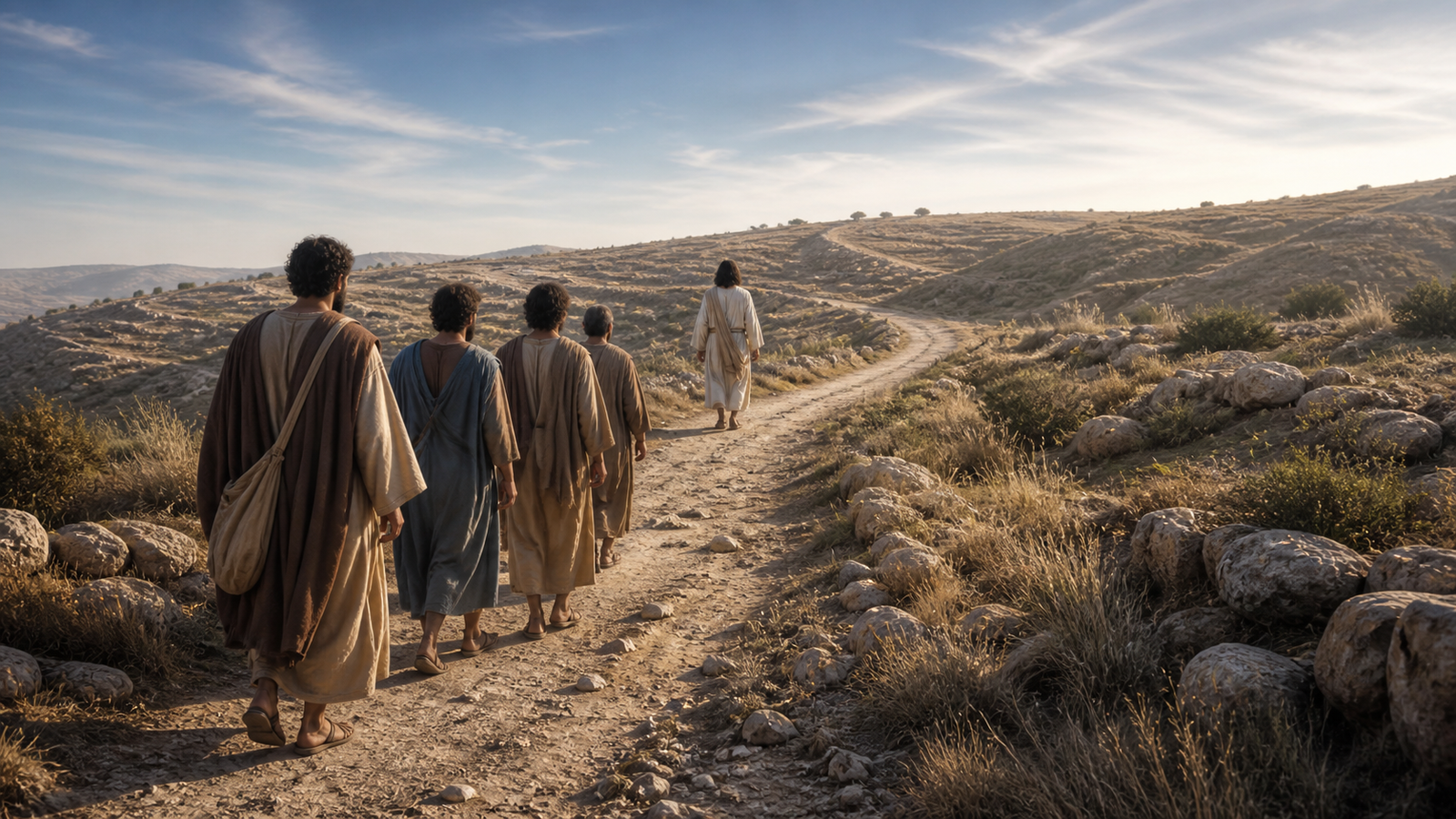
Luke 9:57-62 teaches that following Jesus requires a willing, focused heart. Jesus is worthy of first place, even when discipleship costs comfort, demands urgent obedience, or changes our plans.
Luke 9:57-62 records three short conversations between Jesus and people who wanted to follow Him. Each conversation raises a question about commitment. Will a person follow Jesus when the road is hard? Will he obey when family duties feel urgent? Will she move forward without looking back?
Jesus does not offer a comfortable life without a cross. He also does not call us to a cold or careless life. He calls us to Himself. He is the Son of God, the promised Savior, and the Lord who gave His life for sinners and rose again. Because He is worthy, He must come before every rival claim on our hearts.
This guide explains the meaning of Luke 9:57-62 in simple English. It also shows how this passage helps Christians obey Jesus today without misusing His words to neglect family, work, or wise responsibilities.
What happens in Luke 9:57-62?
As Jesus and His disciples travel, one man says he will follow Jesus wherever He goes. Jesus answers that foxes have holes and birds have nests, but the Son of Man has nowhere to lay His head. Jesus is warning the man that following Him will not be a path to earthly comfort or status.
Jesus then speaks to another person and says, “Follow me.” The man asks to bury his father first. Jesus answers, “Leave the dead to bury their own dead,” and tells him to proclaim the kingdom of God. The wording is strong because the kingdom cannot be treated as a task we will begin after every other plan is finished.
A third person promises to follow Jesus but first asks to say farewell at home. Jesus replies that no one who puts his hand to the plow and looks back is fit for the kingdom of God. The three scenes belong together. They show that discipleship is not a casual promise. It means trusting Jesus with the whole direction of life. You can read the passage in the English Standard Version at Bible Gateway.
The road to Jerusalem gives the passage urgency
Luke places this teaching just after Jesus sets His face toward Jerusalem. He knows that suffering, rejection, death, and resurrection stand before Him. Luke 9:51 begins a long journey that leads to the cross and the empty tomb.
This setting matters. Jesus is not speaking about an easy trip. He is moving toward the place where He will lay down His life. The call to follow Him is connected to His mission. He will not save His people by avoiding sacrifice. He will save them through His obedient death and victorious resurrection.
The BibleProject guide to Luke explains that Luke presents Jesus’ journey to Jerusalem as a major part of the Gospel story. Luke shows Jesus as the promised King who brings God’s kingdom, yet He is a King who suffers and dies to save. Anyone who follows Him must understand the kind of King He is.
Luke 9:57-58: Following Jesus may cost comfort
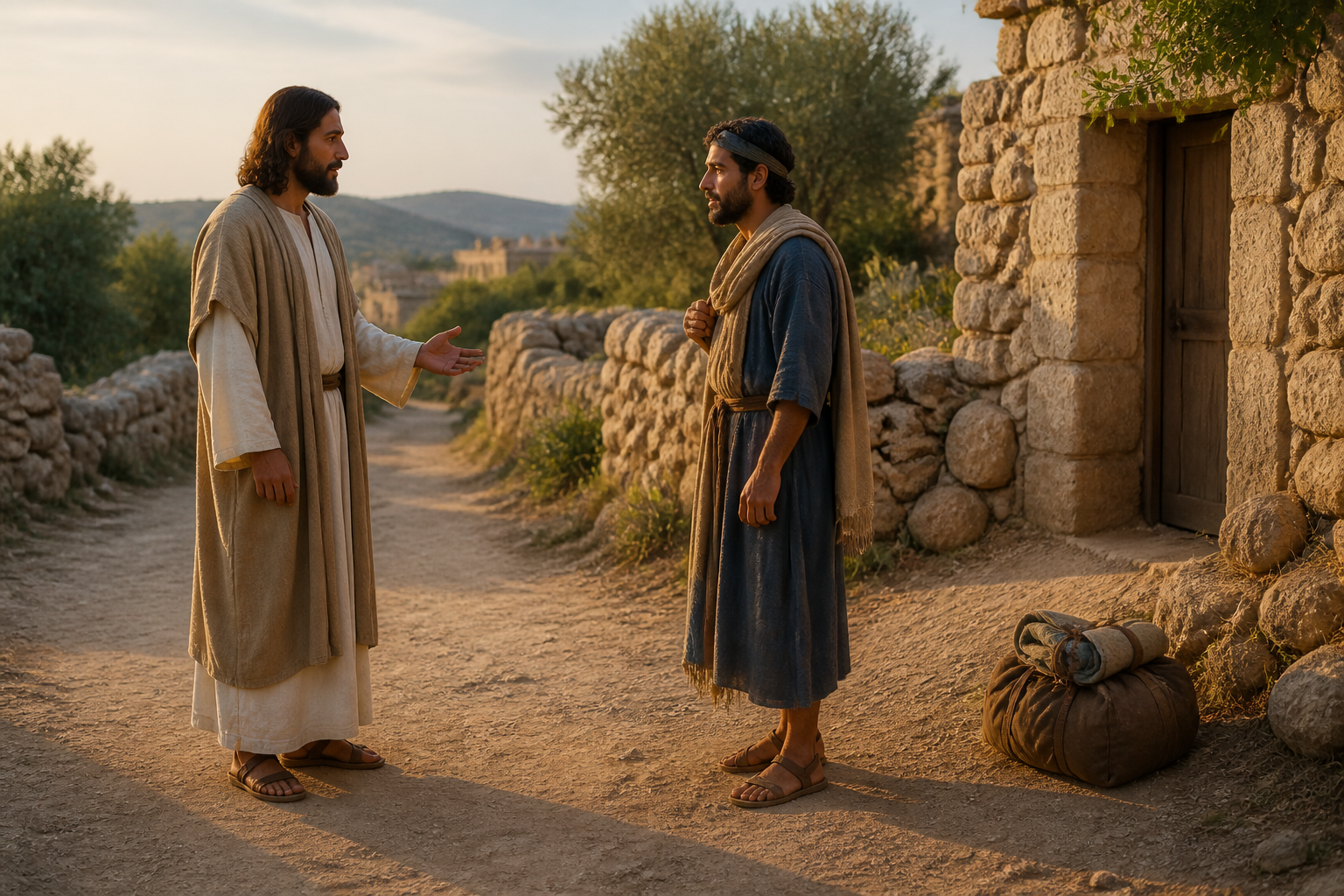
The first man sounds confident. He says he will follow Jesus wherever He goes. Jesus does not praise the promise or give him a list of earthly benefits. Instead, Jesus describes a life without a settled place to rest.
Foxes have holes. Birds have nests. Jesus points to ordinary places of shelter in creation. Then He says that the Son of Man has nowhere to lay His head. This does not mean Jesus was always homeless in the modern sense, or that every Christian must give away a home. It does mean that the disciple cannot make comfort the condition of obedience.
Many people are willing to follow Jesus when faith brings approval, ease, or answers on their schedule. Luke 9:57-62 asks a deeper question: Is Jesus still Lord when obedience is costly? A Christian may have a home, a family, and a job, yet still hold all of them under Jesus’ rule. The issue is not whether we possess ordinary gifts. The issue is whether those gifts possess us.
Jesus is not a tool for getting a safer life. He is the Lord who deserves our trust in every kind of life. He may lead one believer into hardship, another into quiet service, and another into a season of sacrifice. His call is personal, but His authority is absolute.
The Son of Man is worth following
Jesus calls Himself the Son of Man. In the Bible, this title points to the promised ruler in Daniel 7 who receives everlasting authority and a kingdom. Jesus is both truly human and the divine King. He knows weakness, hunger, rejection, and pain. He also has authority to forgive sins, judge the world, and give eternal life.
That truth keeps this teaching from becoming mere moral advice. Jesus is not simply telling us to try harder. He is calling us to trust Him. We follow Him because He first came for us. The cross shows His love and justice. The resurrection shows His victory over sin and death.
When comfort is lost, Jesus is still faithful. When plans change, Jesus is still wise. When obedience brings a hidden cost, Jesus is still worthy. A disciple does not follow an idea. A disciple follows the living Christ.
For a wider study of the Bible’s central testimony about Jesus, read this guide to essential biblical Scriptures and verses about Christian faith.
Luke 9:59-60: What does “let the dead bury their dead” mean?
The second person does not begin the conversation. Jesus says, “Follow me.” The call is direct. The man replies that he must first go and bury his father.
We should read this answer with care. The passage does not give every detail about the man’s family situation. It does not tell us that his father has just died. The request may mean that he wants to wait until his father dies at some future time. If so, the request could postpone obedience for years. We should not claim more than the text says.
Jesus’ reply uses the word “dead” in two related ways. The first refers to people who are physically dead. The second refers to people who are spiritually unresponsive to God’s kingdom. Jesus calls the man to proclaim the kingdom. He is saying that the kingdom mission is urgent and cannot always be pushed behind an open-ended delay.
Jesus is not teaching His followers to hate parents or ignore grieving families. The Bible commands children to honor their parents. Jesus also condemned religious excuses that allowed people to avoid caring for their family. Christians should show compassion, keep promises, attend to genuine responsibilities, and mourn with those who mourn.
The warning is against using a good duty as a permanent excuse. A good thing becomes a wrong thing when we use it to refuse the clear call of Christ. The right question is not, “Can I find a reason to delay?” It is, “Lord, how can I obey You faithfully in this responsibility?”
Jesus calls us to proclaim the kingdom of God
Jesus tells the man to go and proclaim the kingdom of God. The kingdom is not an abstract religious idea. It is God’s saving rule breaking into the world through Jesus Christ.
Jesus preached repentance, faith, mercy, holiness, forgiveness, and hope. He welcomed sinners who came to Him, confronted proud hearts, healed the suffering, and announced that God’s reign was near. You can explore a related study of what Jesus preached on Just Jesus Time.
To proclaim the kingdom is to point people to the King. Christians do not announce their own goodness. We announce that Jesus died for sins, rose from the dead, and calls all people to repent and believe the Gospel. We can share this message through words, prayer, acts of mercy, faithful work, and a life that obeys the Lord.
Proclamation does not mean that every Christian must leave family or employment. It means that every Christian belongs to Jesus and must be ready to speak and live as His servant. The kingdom becomes our highest loyalty, and our other duties are placed within that loyalty.
Luke 9:61-62: What does the plow picture teach?

The third person says he will follow Jesus, but he first wants to say farewell to those at home. Again, the words sound reasonable. Saying goodbye is not sinful. The problem is the divided condition revealed by the word “but.” He wants to follow Jesus, provided that he can keep control of the timing and conditions.
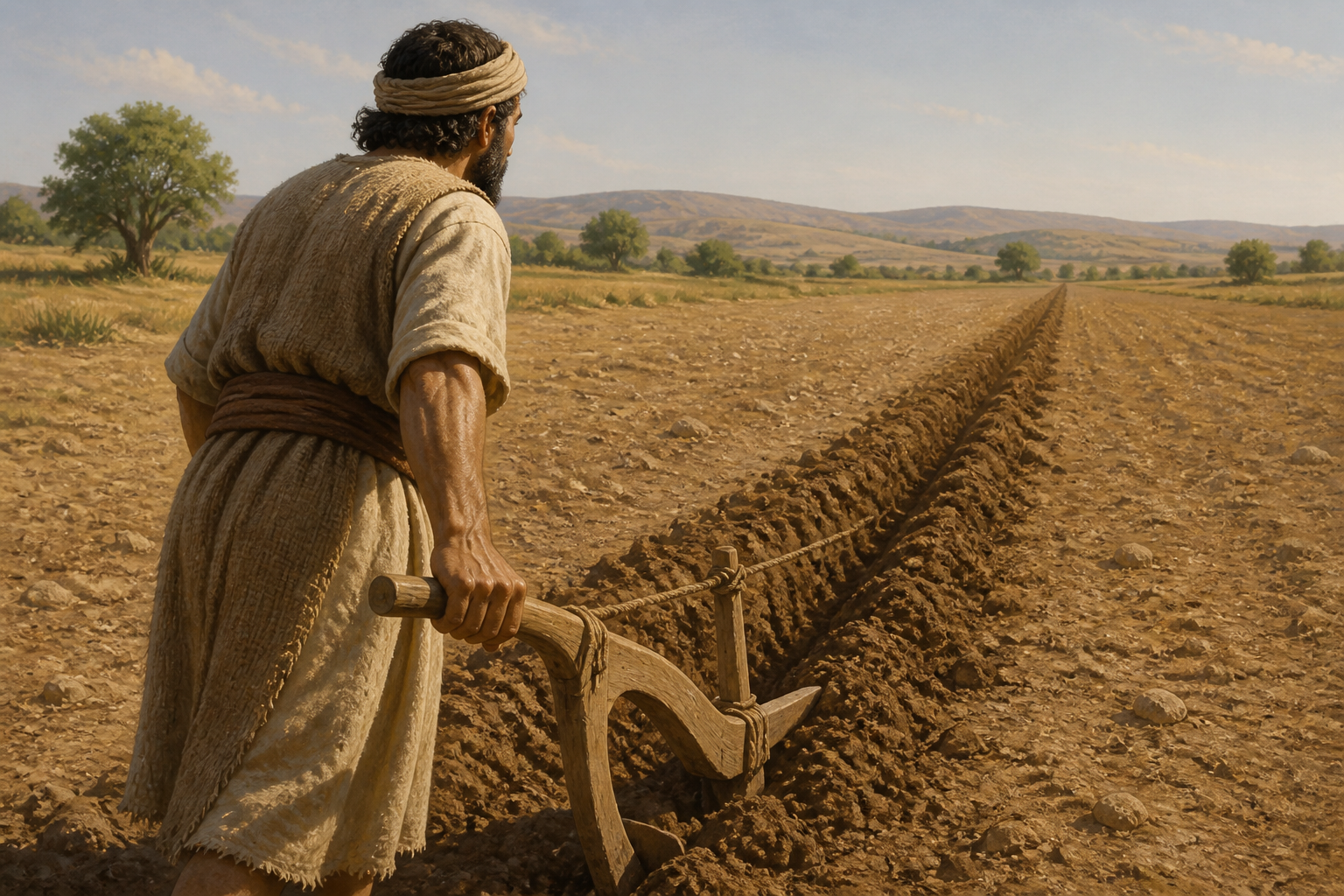
Jesus says that a person who puts his hand to the plow and looks back is not fit for the kingdom of God. A farmer who keeps turning around cannot guide a straight furrow. The picture is simple. The work requires attention to the direction ahead.
Jesus is not forbidding a loving farewell. He is exposing a heart that wants to start discipleship while keeping one foot in the old life. Following Jesus requires a settled direction. We may still love our family, remember our past, and care for our responsibilities. But we cannot keep treating Jesus as an option we will obey later.
The BibleProject discussion of Luke 9:57-62 notes that Luke brings these three short encounters together to make a larger point about Jesus’ call to discipleship. The plow image is the final picture in that group. It calls us to move forward with a whole heart.
Following Jesus is not salvation by human effort
Luke 9:57-62 is a serious call, but it must not be separated from the Gospel of grace. We do not earn forgiveness by making a brave promise or giving up enough comfort. Salvation is God’s gift through faith in Jesus Christ. We are saved because Jesus lived the righteous life we could not live, died in the place of sinners, and rose again.
Good works and obedience are the fruit of faith, not the price of buying salvation. A tree is known by its fruit, but the fruit does not create the root. In the same way, a disciple follows Jesus because grace has taken hold of the heart.
This passage also guards us from a shallow idea of faith. Jesus does not invite us to add Him to a life that remains ruled by self. He calls us to repent, trust Him, and receive Him as Lord. The Christian life includes daily repentance and daily dependence on the Holy Spirit.
When you fail, do not run from Jesus. Confess your sin and return to Him. The same Lord who calls you also gives mercy. He is patient with weak disciples, yet He lovingly leads them into deeper obedience.
Five ways to live out Luke 9:57-62 today
1. Ask Jesus to rule your plans
Bring your plans to the Lord before you make them final. Pray, read Scripture, seek wise counsel, and ask whether your choices help you obey Christ. A surrendered plan is safer than a successful plan that pushes Jesus aside.
2. Expect some cost
Following Jesus may cost popularity, money, time, comfort, or a preferred opportunity. These costs do not mean God has abandoned you. They may become places where you learn that Christ is enough.
3. Do not use delay as a refuge
There is a difference between wise preparation and endless delay. If Scripture makes a duty clear, take the next faithful step. You may not know every step after that. You can obey Jesus with the light He has given you.
4. Love your family under Jesus’ authority
Putting Jesus first does not make you careless. It teaches you to love family with truth, patience, forgiveness, and courage. Do not use family as an excuse to reject Christ, and do not use Christ as an excuse to neglect family.
5. Keep your eyes forward
Remember what Jesus has done. Let His cross shape your hope and His resurrection shape your courage. When the past calls you back into sin, look to Christ and continue walking with Him. Faithful progress may be slow, but it should be real.
Common misunderstandings about Luke 9:57-62
Does Jesus command every Christian to abandon home and family?
No. The passage teaches first loyalty to Jesus, not careless rejection of family. The Bible teaches honor, love, responsibility, and care. Jesus sometimes calls particular people to unusual sacrifice for a specific mission. We should not turn every personal decision into a command for all believers.
Does following Jesus mean Christians cannot own a home?
No. Jesus warns against making comfort our master. A home can become a place of hospitality, prayer, care, and Gospel witness. The question is whether we possess our resources with open hands under Christ’s rule.
Does Jesus forbid grief and funeral care?
No. Scripture gives room for mourning, compassion, and practical care. Jesus’ words confront delayed obedience that hides behind an indefinite excuse. They do not erase love or human sorrow.
Does the plow saying require perfect focus?
It calls for a real and undivided direction, not sinless performance. Christians still stumble. The answer to failure is repentance and faith, not pretending to be strong. Jesus keeps His people as they learn to follow Him.
Jesus Christ is worth your whole life
Luke 9:57-62 can make us feel the weight of Jesus’ call. That is good, but the passage should lead us to see Jesus more clearly, not only to inspect ourselves.
Jesus is the eternal Son of God who entered our world. He accepted rejection, poverty, suffering, and the cross. He did not ask us to walk a road He refused to walk. He went before us. He died for our sins and rose again in victory. He is not a harsh master asking for sacrifice while giving nothing. He is the Savior who gave Himself to rescue His people.
When Jesus asks for first place, He is asking for what belongs to Him. When He asks us to move forward, He is leading us toward life. When He removes a false comfort, He is teaching us to rest in a better comfort. His kingdom is worth more than the world’s approval, and His presence is better than every temporary possession.
As you study this passage, ask for grace to follow Jesus today. You can bring Him your fears, duties, hopes, and unfinished plans. Trust Him as Lord. Keep your hand to the plow. Walk forward with your eyes on Christ.
For a practical place to continue, read more Christian guidance on growing in biblical wisdom.
Frequently asked questions
What is the main message of Luke 9:57-62?
The main message is that following Jesus requires first loyalty, honest faith, and a focused heart. Jesus warns that discipleship may cost comfort and may require urgent obedience. He is worthy because He is the divine Son of God and the Savior who died and rose again.
What does Jesus mean when He says foxes have holes and birds have nests?
Jesus means that following Him may involve a loss of normal comfort and security. Foxes and birds have places to rest, but the Son of Man lived without a settled place during His mission. The saying warns us not to follow Jesus only for earthly benefits.
Does “let the dead bury their own dead” mean Christians should ignore their families?
No. The Bible teaches people to honor parents and care for family. Jesus is confronting an excuse that delays obedience without an end. His kingdom call is urgent, but Christian obedience should still include compassion, responsibility, and love.
What does putting your hand to the plow and looking back mean?
It means that a person who begins to follow Jesus must not keep a divided heart that treats obedience as conditional. Like a farmer guiding a furrow, a disciple must move forward toward the kingdom. This does not mean instant perfection, but it does mean a settled direction.
Does Luke 9:57-62 teach salvation by works?
No. Salvation is God’s gift through faith in Jesus Christ. Obedience is the fruit of saving faith, not a payment that earns forgiveness. Jesus calls forgiven people to follow Him with gratitude, repentance, and dependence on His grace.
Sources for this study
- Luke 9:57-62, English Standard Version, Bible Gateway.
- Book of Luke guide, BibleProject.
- Parables in Context discussion of Luke 9:57-62, BibleProject.
- Luke 9:51-56, English Standard Version, Bible Gateway.
- 1 Kings 19:19-21, English Standard Version, Bible Gateway.
- Ephesians 2:8-10, English Standard Version, Bible Gateway.