
In Luke 8:50, Jesus tells Jairus, ‘Do not be afraid; only believe, and she will be made well.’ This powerful statement is a direct command to have faith in the midst of fear and despair, affirming that Jesus has authority over sickness and death.
Imagine standing in the most desperate moment of your life — your child is dying, hope is slipping through your fingers, and the only One who can help is surrounded by a pressing crowd. This was the reality for Jairus, a synagogue leader who fell at the feet of Jesus and begged Him to come to his home. In the middle of that chaos, with devastating news arriving that his daughter had already died, Jesus turned to Jairus and spoke words that have echoed through the centuries: “Do not be afraid; only believe, and she will be made well“ (Luke 8:50, NKJV). These words were not spoken in a quiet room or a peaceful setting — they were spoken in the middle of interruption, grief, and impossibility.
In this article, we will explore the powerful meaning behind Luke 8:50 and what Jesus’ words to Jairus reveal about the nature of faith, the heart of God, and the authority of Christ over every circumstance we face. Whether you are walking through a season of fear, wrestling with doubt, or simply seeking to understand the depth of Jesus’ compassion, this passage holds a timeless message of hope. Together, we will walk through the context of this remarkable moment, uncover the lessons hidden within it, and discover how the same Jesus who spoke life into Jairus’s situation is speaking faith and courage into your life today.
What is the context of Luke 8:50?
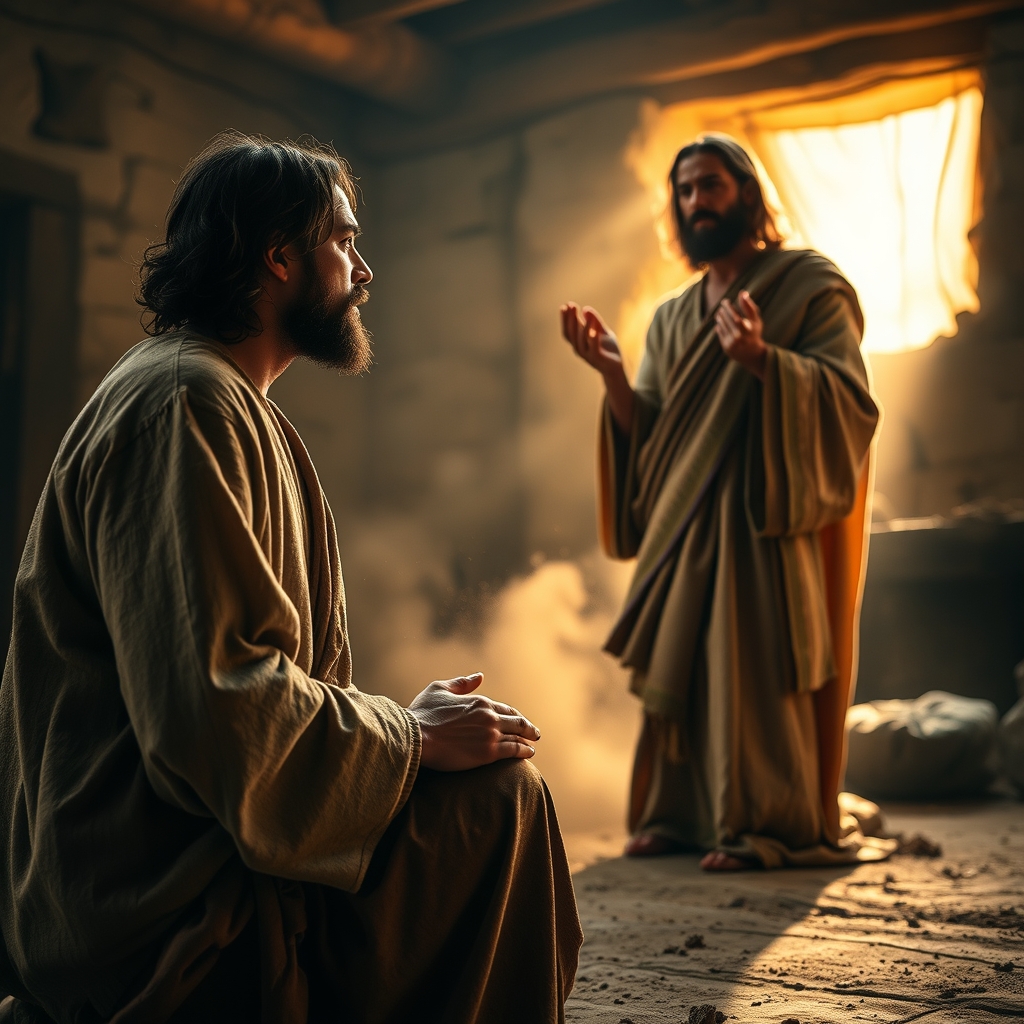
To understand what Jesus said in Luke 8:50, we must first understand the moment surrounding it. Jesus spoke this powerful command in the middle of a life-and-death crisis. A synagogue leader named Jairus had begged Jesus to come and save his dying daughter. Yet the situation took a dramatic turn before Jesus ever reached the home.
The Desperate Plea of Jairus
Jairus was not an ordinary man. He held a respected position of leadership in the synagogue. Yet his daughter’s illness brought him to his knees. Scripture tells us that he “fell at Jesus’ feet” and pleaded with Him to come to his house (Luke 8:41).
His daughter was only twelve years old, and she was at the point of death. Imagine the anguish this father felt. He had already exhausted every earthly option. Now, he turned to the only One who could truly help.
What is remarkable is Jairus’s faith. He did not come simply asking for sympathy. He came believing that Jesus could heal his daughter. Scripture records:
- He approached Jesus urgently, not casually.
- He humbled himself publicly by falling at the feet of Jesus.
- He did not let his social standing prevent him from seeking help.
- He trusted that the presence of Jesus alone could change everything.
Jairus’s desperation drove him beyond pride. His love for his daughter was stronger than any fear of what others might think. This is a powerful picture of what genuine faith looks like. Faith does not wait until the circumstances are ideal. Faith runs to Jesus in the middle of the storm.
Furthermore, Jairus models something essential for every believer. He did not come to Christ with his own solutions. He came completely dependent on the power and mercy of Jesus.
The Interruption on the Way to the Miracle
As Jesus began making His way toward Jairus’s house, the crowd pressed in from every side. Then an unexpected event occurred. A woman who had suffered from a bleeding condition for twelve years pushed through the crowd. She touched the edge of Jesus’s cloak, and immediately her bleeding stopped (Luke 8:43-44).
This woman’s condition created profound suffering on multiple levels.
- She had endured this illness for the entire twelve years of the dying girl’s life.
- under Jewish law, her condition made her ceremonially unclean.
- She was isolated from worship and community because of her uncleanness.
- she had spent all of her money on doctors, yet had only grown worse (Mark 5:26).
Despite her hopeless situation, she acted in extraordinary faith. She thought to herself, “If I only touch His clothes, I will be healed” (Mark 5:28). Her faith was simple, yet powerful. She did not demand Jesus stop the crowd. She did not insist on being the priority. She simply believed that even the smallest touch of His garment contained enough power to heal her.
Jesus stopped and asked, “Who touched me?” The disciples were bewildered. They pointed out that the crowd was pressing in from every direction. Yet Jesus knew that healing power had gone out from Him (Luke 8:46). This moment reveals that Jesus is always aware of individual faith, even in the midst of a chaotic crowd.
The woman came forward, trembling, and fell at His feet. Jesus responded with words of tender compassion: “Daughter, your faith has healed you. Go in peace“ (Luke 8:48). He did not rebuke her for interrupting the urgent mission. Instead, He affirmed her faith and gave her His blessing of peace.
Here is where the context becomes most heartbreaking. While Jesus was still speaking to the woman, messengers arrived from Jairus’s house with devastating news. They said, “Your daughter is dead. Why bother the teacher anymore??” (Luke 8:49).
Imagine the crushing blow of those words. All of Jairus’s hope seemed to collapse in an instant. The very delay caused by the woman’s healing now appeared to have cost the child her life. The timing could not have felt worse.
Yet this is precisely where Luke 8:50 enters the story. Jesus, overhearing the devastating news, turned to Jairus and spoke one of the most important statements in all of Scripture:
“Don’t be afraid; just believe, and she will be healed” (Luke 8:50, NIV).
The Greek word for “healed” in this verse can also be translated as “made whole” or “saved.” Jesus was not offering mere comfort. He was making a divine assurance. He was telling Jairus that death itself was not beyond His power.
This moment carries an eternal truth for every believer. When circumstances seem at their darkest, Jesus calls us to the same response. He calls us to believe. Not just to believe in Him theoretically, but to trust Him completely when every situation appears hopeless.
The combination of Jairus’s desperate plea and the woman’s quiet faith provides the full context for Luke 8:50. Both stories reveal that Jesus responds to faith regardless of a person’s social standing, desperation level, or timing. Whether a respected synagogue leader or an outcast woman, Jesus calls every soul to place their trust in Him and Him alone.
What happened next confirmed the power of those words. When Jesus arrived at the house, He told the grieving crowd, “Stop wailing. She is not dead but asleep“ (Luke 8:52). Taking the child by the hand, He called out, “My child, get up!” And she rose to her feet, alive and well (Luke 8:54-55).
This is the context from which Luke 8:50 rises with unshakable power. A father’s desperate love, a suffering woman’s quiet faith, and a world-shaking declaration from the Son of God come together to form one of the most powerful scenes in the entire Bible. Jesus demonstrated once again that nothing is impossible for those who believe. He is the Lord over sickness, over social stigma, and ultimately over death itself.
Luke 8:50 is therefore not just a comforting sentiment. It is a divine command rooted in the sovereign power of Jesus Christ. For every soul who hears His voice today, the message remains the same: Do not fear. Believe. And watch what Jesus will do in your life.
What did Jesus mean by ‘the stones will cry out?
The Meaning of the Stones Crying Out in Scripture
When Jesus said, “the stones will cry out,” He was making a profound declaration about the inevitability of praise. This statement appears in Luke 19:40 during His triumphal entry into Jerusalem. The Pharisees demanded that Jesus silence His disciples’ praise. His response was both powerful and prophetic.
Jesus declared that if His followers held their peace, the very stones would cry out. This was not merely a poetic expression. It was a theological truth about the nature of God and creation itself. Praise for the Creator is woven into the fabric of reality. It cannot be suppressed forever.
Throughout Scripture, creation testifies to God’s glory. Psalm 19:1 tells us, “The heavens declare the glory of God; and the firmament shows His handiwork.” Furthermore, Psalm 98 calls on the floods to clap their hands and the hills to be joyful together. The natural world was designed to glorify its Maker.
Jesus’ words also carried a warning. The religious leaders of His day rejected their Messiah. As a result, judgment was coming. Luke 19:41-44 records Jesus weeping over Jerusalem. He knew the city would be destroyed because it did not recognize the time of God’s visitation. The stones would indeed cry out because the people refused to.
This imagery connects to Habakkuk 2:11, which states, “For the stone shall cry out of the wall.” In its original context, this referred to judgment against greed and injustice. Jesus applied this principle to Himself. He is the cornerstone rejected by the builders, as stated in Psalm 118:22 and affirmed in Acts 4:11.
The stones crying out also point to the universal scope of Christ’s lordship. Philippians 2:10-11 declares that every knee shall bow and every tongue confess that Jesus Christ is Lord. Whether through human voices or through creation itself, the glory of Jesus will be acknowledged. His identity as the Son of God demands this response from all of creation.
How This Applies to Our Praise Today
The truth that the stones will cry out has deep implications for how we worship today. It reminds us that praise is not optional for believers. It is our purpose and our privilege. We were created to glorify God, as stated in Isaiah 43:7.
Consider how this truth transforms our daily lives:
- Praise is our identity. We are called to be a “royal priesthood” (1 Peter 2:9). Offering praise is central to who we are in Christ.
- Praise cannot be silenced. No circumstance, no opposition, and no hardship can remove our reason to praise. Jesus is Lord regardless of our situation.
- Praise is urgent. If we do not praise Him, creation itself will take our place. We should never take this calling lightly.
- Praise is prophetic. When we worship, we declare truths that the world needs to hear. Our praise testifies to God’s goodness and power.
In addition, this truth challenges us to examine our hearts. Do we praise Jesus freely and often? Or do we hold back our worship? The Pharisees wanted silence, but Jesus made clear that silence before the King of Kings is impossible in the grand scope of eternity.
Furthermore, our praise is an act of faith. Just as Jairus was told to “believe and she will be healed” (Luke 8:50), we are called to believe and respond with worship. Faith and praise go hand in hand. When we trust in Jesus, praise flows naturally from a grateful heart.
Colossians 3:16 encourages us to let the word of Christ dwell in us richly, teaching and admonishing one another in psalms and hymns. Our praise is both personal and communal. It builds up the body of Christ and strengthens our collective witness to the world.
Ultimately, the promise that the stones will cry out assures us that nothing can thwart God’s purposes. His glory will be revealed. His name will be praised. As believers, we have the incredible honor of joining our voices to that eternal chorus today. Let us never grow weary of magnifying the name of Jesus, our Lord and Savior.
Who is the woman in red in the Bible?
`html
The woman with the issue of blood in Luke 8
When we read Luke 8:50, we encounter one of the most powerful moments in all of Scripture. Jesus is on His way to heal Jairus’s daughter. Yet along the way, another miracle takes place. A woman reaches out to touch the hem of His garment. She is instantly healed.
This woman is often referred to as “the woman in red” in artistic depictions and popular culture. However, the Bible does not describe her clothing. The focus of the passage is not on her appearance. It is on her faith.
According to Luke 8:43, this woman had suffered from a bleeding condition for twelve long years. She had spent all her money on doctors. Yet no one could heal her. In Jewish law, her condition made her ceremonially unclean. This meant she was isolated from worship and community life. Her suffering was not only physical. It was deeply emotional and spiritual.
Despite all of this, she believed that Jesus could heal her. She pressed through a large crowd. She reached out and touched the edge of His cloak. Immediately, her bleeding stopped.
Jesus felt power go out from Him. He stopped and asked, “Who touched me?” The woman came forward, trembling. She fell at His feet and told Him the whole truth. Jesus responded with one of the most tender statements in the Gospels.
He said, “Daughter, your faith has healed you. Go in peace” (Luke 8:48, NIV).
Notice what Jesus did not do. He did not rebuke her. He did not call her unclean. He called her “daughter.” This single word restored her dignity. It welcomed her back into the family of God.
Her act of faith and what it teaches us
The story of this woman is not just a historical account. It is a living lesson for every believer today. Her faith teaches us several profound truths about approaching Jesus.
First, faith requires action. This woman did not simply think about Jesus. She moved toward Him. She pushed through obstacles. She reached out. James 2:17 reminds us that faith without works is dead. Her faith was active and bold.
Second, no one is too broken for Jesus. This woman had been rejected by society. She had exhausted every human solution. Yet Jesus welcomed her. He still welcomes all who come to Him. As Romans 8:1 declares, there is no condemnation for those who are in Christ Jesus.
Third, Jesus notices every individual. In the middle of a pressing crowd, He felt one person’s touch. He stopped everything to speak to her. This reveals the heart of our Savior. He is never too busy for you. Psalm 139:1-3 tells us that God is acquainted with all our ways. He knows each of us by name.
Fourth, faith brings wholeness. Jesus did not just stop her bleeding. He gave her peace. The Greek word for peace here is “eirene.” It speaks of completeness and well-being. True healing from Jesus goes beyond the body. It touches the soul.
Her story also connects directly to Luke 8:50. In that verse, Jesus tells Jairus, “Don’t be afraid; just believe, and she will be healed.” Both stories teach the same truth. Faith in Jesus unlocks the power of God. Whether you are a synagogue ruler or an outcast woman, the door is open to all who believe.
Today, you may feel like this woman. You may feel worn out, overlooked, or unworthy. But the same Jesus who healed her is alive right now. He is calling you by name. He is inviting you to reach out to Him in faith.
As Hebrews 4:16 encourages us, let us approach God’s throne of grace with confidence. We can receive mercy and find grace to help us in our time of need. Your faith, no matter how small it may seem, matters to Jesus. He is faithful to respond to every heart that truly seeks Him.
`
Is the kingdom of God here now?
Understanding the Kingdom in Luke’s Gospel
When we read Luke 8:50, we encounter a powerful moment. Jesus tells Jairus, “Don’t be afraid; just believe, and she will be healed.” This statement is deeply connected to the reality of God’s kingdom breaking into the world through Christ.
In Luke’s Gospel, the kingdom of God is not merely a future hope. It is a present reality. Jesus declared in Luke 17:21, “The kingdom of God is within you.” This means that wherever Jesus is reigning in a heart, the kingdom is active and alive.
Furthermore, Luke’s Gospel emphasizes that the kingdom arrived with Jesus’ ministry. Consider these key truths:
- Jesus inaugurated the kingdom through His teaching, miracles, and authority over sickness and death (Luke 4:18-21).
- The kingdom operates through faith, as demonstrated by both Jairus and the woman with the issue of blood in Luke 8.
- The kingdom reverses the world’s order, bringing life where there is death and hope where there is despair.
As a result, the kingdom of God is not something distant or abstract. It is the active rule and reign of Jesus Christ in the lives of those who trust Him. When Jairus chose to believe despite devastating news, he stepped into the reality of that kingdom.
Living in the Kingdom Today
If the kingdom of God is here now, how should that shape our daily lives? The answer is both simple and profound. We are called to live by faith, just as Jesus instructed Jairus in Luke 8:50.
Living in the kingdom today means recognizing that Jesus is not a distant ruler. He is present, active, and deeply involved in our circumstances. Here is what that looks like in practice:
- Trusting Jesus in crisis — When fear rises, we choose belief over panic, just as Jairus did.
- Approaching Jesus with bold faith — Like the woman who touched the hem of His garment, we come to Him knowing He has power to heal and restore.
- Declaring His lordship daily — We acknowledge Jesus as King over every area of our lives, including our health, relationships, and purpose.
- Sharing the good news — The kingdom expands as we tell others about the saving power of Jesus Christ (Matthew 28:19-20).
In addition, living in the kingdom means understanding that God’s power has not diminished. The same Jesus who raised Jairus’s daughter from the dead is alive today. Hebrews 13:8 reminds us, “Jesus Christ is the same yesterday and today and forever.”
Therefore, the kingdom of God is not only here now — it is available to every person who places their faith in Jesus. As Romans 14:17 tells us, “The kingdom of God is not a matter of eating and drinking, but of righteousness, peace and joy in the Holy Spirit.” This is the kingdom we are invited to walk in every single day.
So let us take Jesus at His word in Luke 8:50. Let us not be afraid. Let us believe. For the King is with us, and His kingdom is here.
Why is God so mindful of men?
God’s mindfulness in Luke 8
When we read Luke 8:50, we see something remarkable. Jesus speaks directly to Jairus, a man whose daughter had just died. He says, "Don’t be afraid; just believe, and she will be healed." This moment reveals a profound truth. God is deeply mindful of men. He is not distant or detached. He is intimately involved in our suffering.
Consider the context. Jairus had just received terrible news. His daughter was already dead. Yet Jesus still told him not to fear. Why? Because God’s mindfulness is not passive. It is active and purposeful. He sees our pain before we even speak. Psalm 34:18 affirms this: "The Lord is close to the brokenhearted and saves those who are crushed in spirit." [1]
Furthermore, Luke 8 shows us this mindfulness in action. Jesus stopped for the woman with the issue of blood. He was on His way to Jairus’s house. Yet He paused. He healed her. He called her "daughter." He asked her to share her testimony. This is the nature of our God. He is never too busy for us. He is always aware.
- God knows our names, as He knew Jairus by name.
- God knows our pain, as He knew the woman’s suffering.
- God knows our faith, as He knew Jairus’s desperate plea.
- God knows our need, as He knew the crowd’s hunger for truth.
In addition, Luke 8:50 is not just a historical account. It is a living promise. God is still mindful of men today. He is not a God who watches from afar. He is a God who draws near. As Hebrews 4:15 reminds us, "We do not have a high priest who is unable to empathize with our weaknesses." [1]
The personal nature of Jesus
Jesus did not just perform miracles. He engaged with people personally. In Luke 8, He called the woman "daughter." He took time to hear her story. He restored her dignity. This is the heart of our Savior. He does not see us as crowds. He sees us as individuals.
Moreover, Jesus’s mindfulness is rooted in His divine nature. He is the Son of God. He is fully God and fully man. Therefore, His care for us is not limited by human weakness. It is powered by divine love. John 3:16 declares, "For God so loved the world that He gave His one and only Son." [1]
As a result, we can trust Him completely. When life overwhelms us, He is there. When we feel forgotten, He remembers us. When we are afraid, He speaks peace. Luke 8:50 is not just a verse. It is an invitation. It is Jesus saying, "Don’t be afraid. Just believe."
In conclusion, God is mindful of men because He is personal. He is present. He is powerful. And He is loving. Let us hold fast to this truth. Let us live in the light of His mindfulness. And let us never forget: the same Jesus who spoke to Jairus speaks to us today.
Luke 8:50 in different translations
Looking at how different Bible translations render Luke 8:50 can deepen our understanding of this powerful verse. Each translation captures the heart of Jesus’ words to Jairus while offering slight variations in wording. Below, we break down the most widely trusted translations.
Luke 8:50 KJV
The King James Version reads:
“But Jesus heard him, and he answered him, saying, Fear not: believe only, and she shall be made whole.”
This beloved translation uses the phrase “Fear not,” a recurring theme throughout Scripture. Jesus calms Jairus before calling him to active faith. The word “whole” points to complete healing — not just physically, but entirely restored.
Luke 8:50 NIV
The New International Version translates it:
“Hear Jesus heard him, he said to Jairus, ‘Don’t be afraid; just believe, and she will be healed.'”
The NIV uses modern language here. “Don’t be afraid” connects directly to the moment of crisis. The word “healed” is clear and accessible, making this translation especially easy for new believers to understand.
Luke 8:50 NKJV
The New King James Version states:
“When Jesus heard it, He answered him, saying, ‘Do not be afraid; only believe, and she will be made well.'”
The NKJV bridges the traditional language of the KJV with updated clarity. “Do not be afraid” echoes the KJV while “made well” emphasizes the fullness of the restoration Jesus promises.
Luke 8:50 ESV
The English Standard Version reads:
“But Jesus on hearing this answered him, ‘Do not fear; only believe, and she will be well.'”
The ESV stays close to the original Greek structure. “Do not fear” carries a weight of divine calm. “She will be well” is simple, faithful, and reassuring.
A Side-by-Side Comparison
Seeing all four translations together highlights both their unity and their beauty:
| Translation | Key Phrase |
|---|---|
| KJV | Fear not: believe only, and she shall be made whole |
| NIV | Don’t be afraid; just believe, and she will be healed |
| NKJV | Do not be afraid; only believe, and she will be made well |
| ESV | Do not fear; only believe, and she will be well |
What Remains the Same Across All Translations
Despite the variations in wording, one unshakable truth runs through every version:
- Jesus responds with compassion. He hears our cries and answers.
- He commands us not to fear. Fear has no place when Jesus speaks.
- Faith is the only requirement. Jesus doesn’t ask for works, sacrifices, or proof. He asks for trust in Him.
- Healing is guaranteed by His word. Jesus’ promise is certain because He is the Son of God.
No matter which translation you read, the message is the same: Jesus calls us to trust Him completely. In every season of doubt or fear, His word stands firm. As Hebrews 13:8 reminds us, “Jesus Christ is the same yesterday and today and forever.” His promise to Jairus is His promise to you — believe, and watch Him move.
Luke 8:50 prayer

A Prayer Based on Luke 8:50
Luke 8:50 is one of the most powerful verses in all of Scripture. It captures the heart of Jesus in a single sentence. He speaks directly to fear. He offers faith as the pathway to miracles. Let us pray this verse back to Him and allow it to transform our hearts.
Below is a prayer inspired by the words of Jesus in Luke 8:50. Use it in your personal devotion time. Pray it over your family. Let it anchor your soul when fear threatens to overwhelm you.
The Prayer
Heavenly Father,
I come before You today with a heart that is honest about its fears. There are situations in my life that seem impossible. There are circumstances that feel beyond repair. Yet Your Word reminds me that nothing is too hard for You.
Lord Jesus, I hear Your voice speaking to me just as You spoke to Jairus:
“Do not be afraid; only believe, and she will be made well.” (Luke 8:50, NKJV)
I choose to lay my fear at Your feet. I choose to trust in Your power and Your love. You are the same Jesus who stopped for the woman with the issue of blood. You are the same Jesus who raised Jairus’s daughter from death. You have not changed. You are the same yesterday, today, and forever (Hebrews 13:8).
Father, I ask You to:
- Strengthen my faith when doubt creeps in
- Remind me that You are always working, even when I cannot see it
- Give me the courage to believe You in the middle of my storm
- Help me to fix my eyes on You and not on my circumstances (Hebrews 12:2)
I declare that I will not be afraid. I will only believe. I trust that You are faithful to complete the work You have started in my life (Philippians 1:6).
In the mighty and matchless name of Jesus Christ, I pray.
Amen.
How to Use This Prayer in Your Daily Life
This prayer is not just words on a screen. It is a living declaration of faith. Here are practical ways to make Luke 8:50 a part of your daily walk with Christ.
1. Pray It in the Morning
Start your day by surrendering your fears to Jesus. Before the worries of the day take root, plant your faith firmly in His Word. Ask Him to help you believe, not just intellectually, but with your whole heart.
2. Pray It Over Specific Situations
Jairus had a specific need. His daughter was dying. Whatever your specific need is today, bring it to Jesus by name. He is not distant. He is near. He cares about every detail of your life (1 Peter 5:7).
3. Pray It When Fear Feels Overwhelming
Fear is real. But it does not have to control you. When anxiety rises, speak Luke 8:50 out loud. Let the words of Jesus drown out the voice of fear. His Word is alive and powerful (Hebrews 4:12).
4. Pray It with Others
Jairus did not come to Jesus alone. He came in desperation, and others came with him. Find a brother or sister in Christ and pray this verse together. There is power in agreement (Matthew 18:19-20).
The Heart Behind the Prayer
When Jesus told Jairus, “Do only believe,” He was not being dismissive of Jairus’s pain. He was redirecting Jairus’s focus. The situation had gotten worse. Messengers had arrived to say his daughter had died. But Jesus was saying, “I am still in control. Keep trusting Me.”
This is the same message for us today. Our situations may look hopeless. The reports may be grim. But Jesus is still speaking. He is still calling us to believe. And He is still able to do exceedingly abundantly above all that we ask or think (Ephesians 3:20).
Faith is not the absence of fear. Faith is choosing to trust Jesus in the presence of fear. That is exactly what Jairus did. And that is exactly what we are called to do.
A Final Word of Encouragement
If you are reading this today and you are in a season of deep fear or uncertainty, hear the words of Jesus spoken directly to your heart:
“Do not be afraid. Only believe.”
He is with you. He has not forgotten you. He is working all things together for your good (Romans 8:28). Hold fast to Him. He is your anchor, your hope, and your salvation.
May the God of hope fill you with all joy and peace as you trust in Him, so that you may overflow with hope by the power of the Holy Spirit (Romans 15:13).
Frequently Asked Questions
What is the meaning of Luke 8:50?
Luke 8:50 is one of the most powerful verses in all of Scripture. Jesus says, “Don’t be afraid; just believe, and she will be healed.” He spoke these words to Jairus, a synagogue leader whose daughter had just died. The situation seemed hopeless. Yet Jesus cut through the fear with a simple command: believe.
The meaning of this verse is profound. Jesus was not asking Jairus to believe in a particular outcome. He was asking him to trust in Him. Faith, in this context, is not about mustering enough positive thinking. It is about placing complete confidence in the person and power of Jesus Christ.
Furthermore, this verse teaches us that fear and faith cannot coexist in the same moment. When fear rises, we must choose to fix our eyes on Jesus. As Hebrews 12:2 tells us, Jesus is the author and perfecter of our faith.
What did Jesus mean by ‘the stones will cry out’?
This phrase comes from Luke 19:40, not Luke 8:50, but it is a question many believers have. When Jesus entered Jerusalem, the Pharisees told Him to silence His disciples. Jesus replied, “I tell you, if they keep quiet, the stones will cry out.”
Jesus was declaring that His identity as the Messiah cannot be suppressed. If human voices fail to praise Him, creation itself will take up the song. This reveals a stunning truth: worship of Jesus is not optional. It is the very purpose for which all things were made.
In addition, this statement affirms the divinity of Christ. Only God deserves worship that is so essential, even stones would fulfill it. As believers, we are called to be voices of praise, declaring the glory of Jesus while we have the opportunity.
Who is the woman in red in the Bible?
The Bible does not specifically describe a “woman in red.” However, many people associate this image with the woman who had been bleeding for twelve years, found in Luke 8:43–48. She pressed through the crowd and touched the edge of Jesus’ cloak. Immediately, her bleeding stopped.
This woman’s story is a powerful example of faith in action. She believed that even touching Jesus’ garment would heal her. Jesus turned to her and said, “Daughter, your faith has healed you. Go in peace.” Her faith was not passive. It was bold, desperate, and directed entirely toward Jesus.
Here are key lessons from her story:
- Faith requires reaching out to Jesus personally, even when circumstances seem impossible.
- Jesus responds to faith with compassion and power, never turning away those who come to Him.
- Jesus calls us “daughter” or “son,” showing His intimate love for each of us.
Some traditions also associate the “woman in red” with the imagery in Revelation 17, which describes a symbolic figure representing false religious systems. However, the woman in Luke 8 is a real historical person whose faith Jesus honored. Her story continues to inspire believers today.
Is the kingdom of God here now?
This is a question that has been discussed throughout church history. The answer, according to Scripture, is both yes and not yet. Jesus declared in Luke 17:21, “The kingdom of God is in your midst.” When Jesus walked the earth, the kingdom arrived with Him. Every miracle, every act of healing, and every demon cast out was evidence that God’s kingdom was breaking into the world.
Today, the kingdom of God is present wherever Jesus Christ is Lord. When we surrender our lives to Him, we become citizens of His kingdom. We experience His peace, His righteousness, and His power in our daily lives. Romans 14:17 tells us that the kingdom of God is “righteousness, peace and joy in the Holy Spirit.”
However, the kingdom has not yet been fully realized. We still live in a broken world marked by sin and suffering. One day, Jesus will return to establish His kingdom in fullness. Until then, we live as ambassadors of that kingdom, pointing others to the hope found in Christ alone.
Why is God so mindful of men?
Luke 8 reveals a God who is deeply attentive to human need. Jesus noticed the woman who touched His garment in a crowded street. He responded to Jairus’ desperate plea. He calmed the storm that terrified His disciples. In every case, Jesus demonstrated that God is not distant or indifferent. He is personally involved in the lives of His people.
Psalm 8:4 asks, “What is mankind that you are mindful of them, human beings that you care for them?” The answer is found in the character of God Himself. He is love (1 John 4:8). He created humanity in His image and desires a relationship with each person.
Consider these truths about God’s mindfulness toward us:
- He knows the number of hairs on our heads (Matthew 10:30).
- He collects our tears in a bottle (Psalm 56:8).
- He has plans to prosper us and give us hope (Jeremiah 29:11).
- He sent His only Son so that we might have eternal life (John 3:16).
God’s mindfulness is not based on our worthiness. It is rooted in His grace. Ephesians 2:4–5 reminds us that because of His great love, God made us alive with Christ even when we were dead in our sins. This is the heart of the Gospel. Jesus Christ, the Son of God, died on the cross and rose again so that every person could know the mindful, loving, saving grace of God.
No matter what you face today, hear the words of Jesus spoken through Luke 8:50: “Don’t be afraid; just believe.” He is with you. He is for you. And He is mighty to save.
`