What Happens in Luke 5:1-11?
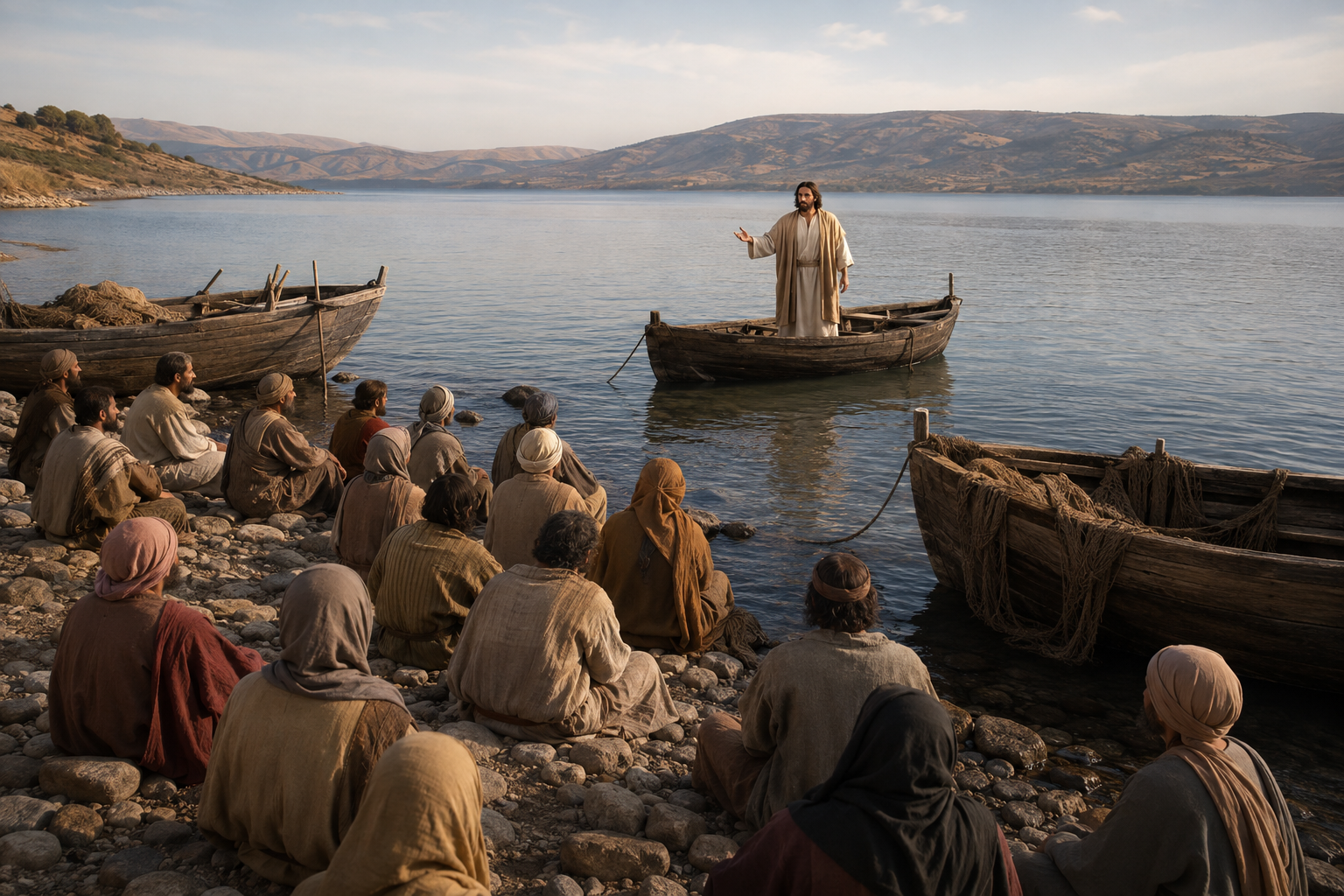
Luke 5:1-11 tells how Jesus called Simon Peter, James, and John to follow Him. The story begins beside the Lake of Gennesaret, also called the Sea of Galilee. A crowd gathers around Jesus to hear the word of God.
Jesus gets into Simon’s boat and asks him to move a short distance from the shore. From the boat, Jesus teaches the people. When He finishes speaking, He tells Simon to go into deeper water and let down the nets.
Simon has worked all night and caught nothing. Still, he obeys Jesus. The nets then fill with so many fish that they begin to break. Simon calls for help from James and John, and both boats become so full that they begin to sink.
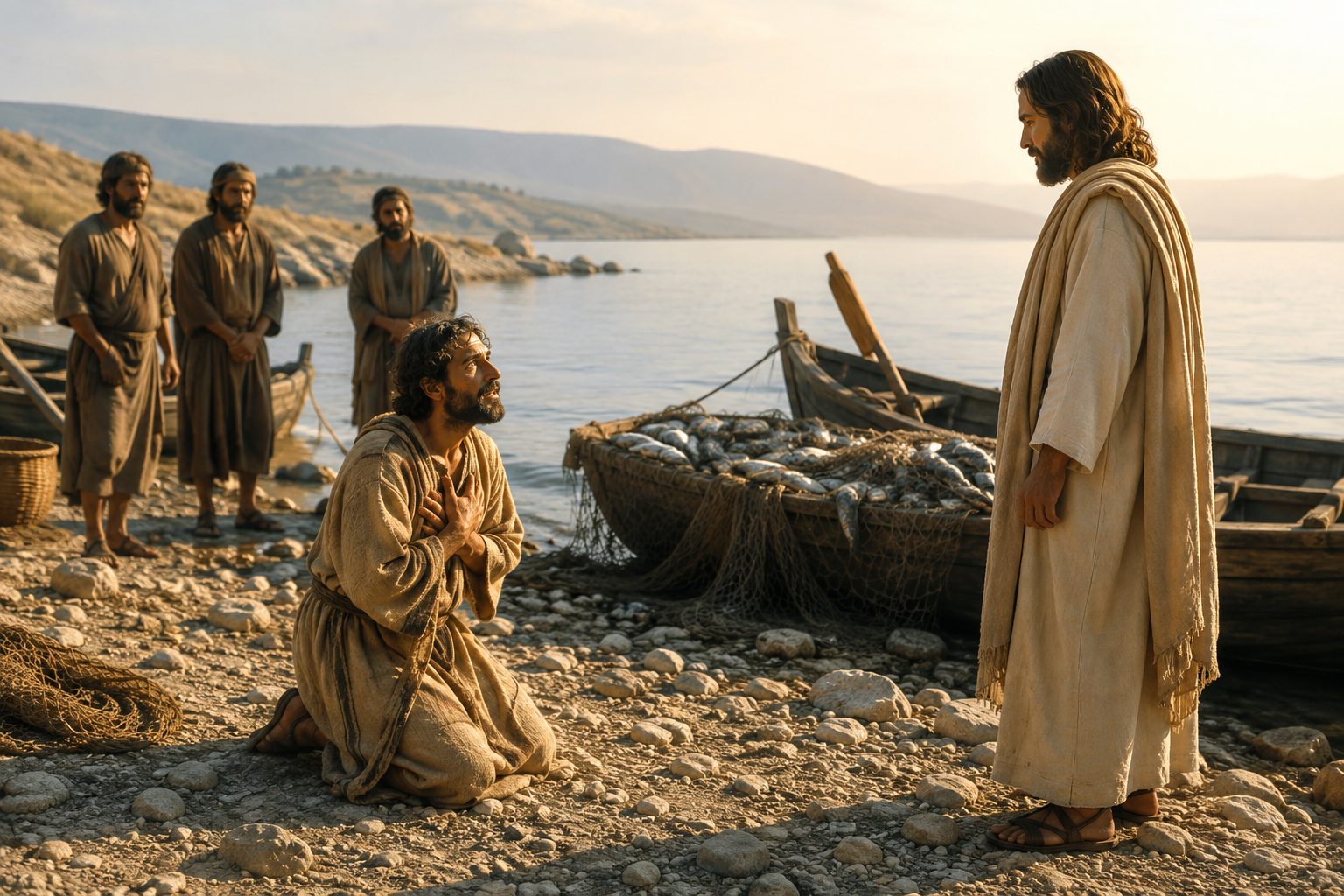
Simon falls before Jesus and confesses that he is a sinful man. Jesus tells him not to be afraid. He gives Simon a new future: from that time forward, he will catch people. The three fishermen bring their boats to land, leave everything, and follow Jesus. You can read the full passage in this Bible Gateway account of Luke 5:1-11.
To place this passage in the larger story, read the wider guide to essential Biblical Scriptures and verses.
Where Did Jesus Meet the Fishermen?
Jesus met these fishermen beside the Lake of Gennesaret. This is another name for the Sea of Galilee. Luke places the story in a real working setting. The men are not sitting in a classroom waiting for a religious lesson. They are cleaning their nets after a long night on the water.
Fishing on the lake demanded skill, patience, and hard work. Nets had to be washed and cared for after use. A Bible encyclopedia describes net washing and drying as part of the fishermen’s regular work. This background helps us understand why Simon was tired and why the empty nets felt so discouraging.
The setting also matters because Jesus brings His call into ordinary work. He does not wait for Simon to become impressive. He speaks to him at the shore, in the middle of his daily responsibilities. The Lord still meets people in ordinary places and calls them to hear His word.
For helpful background on the fishing setting, see the Bible Gateway Bible encyclopedia entry on fish and fishing. The details support the setting, but the authority of this passage rests in Scripture itself.

Why Did Jesus Teach from Simon’s Boat?
Jesus used Simon’s boat as a place from which to teach the crowd. Luke does not give a technical explanation for this choice. We should not add one. The clear point is that Jesus was teaching the word of God, and Simon’s boat became a place of service.
This small detail shows Jesus’ authority and kindness. He teaches the crowd, but He also draws Simon into the moment. Simon is not only watching from a distance. His boat carries Jesus, and his work becomes connected with the ministry of the Lord.
Jesus often uses ordinary people and ordinary things for His purposes. A boat, a net, a meal, or a home can become a place where people hear truth and see grace. The value is not in the object itself. The value is in the Lord who uses it.
The wider Gospel of Luke presents Jesus as the promised King who brings God’s good news to people in real places and difficult circumstances. The BibleProject guide to Luke gives a useful overview of this Gospel’s movement through Jesus’ ministry, death, and resurrection.
Why Did Jesus Tell Simon to Let Down the Nets?
After teaching, Jesus tells Simon to move into deeper water and let down the nets for a catch. Simon answers honestly. He and the others have worked hard all night and have caught nothing. He knows the work. He knows the disappointment. Yet he says, “But at your word I will let down the nets.”
Simon’s obedience is important because he obeys before he sees the result. He does not have a guarantee from experience. He has the word of Jesus. Faith often begins in the same place. We listen to what the Lord has said, even when our past results make us tired or doubtful.
This does not mean Christians should make careless choices or expect every command to produce material success. Luke 5 is a unique sign in the calling of the disciples. It reveals Jesus’ authority. The lesson is not that every believer will receive a boat full of fish. The lesson is that Jesus is worthy of trust.
When Jesus speaks, Simon’s expertise must take its proper place. Skill matters, but skill is not Lord. The hands that have failed through the night are still invited to obey Jesus in the morning.

What Does the Great Catch of Fish Mean?
The great catch shows that Jesus has authority over the lake, the fish, and the work of the fishermen. Simon and his partners cannot create this result by effort. The catch comes when they obey Jesus’ command.
The miracle is also a sign pointing beyond fish. Jesus is preparing the fishermen for a larger calling. Their future work will involve people hearing the Gospel and being gathered into the life of God’s kingdom. The overflowing nets give a picture of the abundance of Christ’s mission.
We should still read the scene carefully. Jesus does not promise His disciples an easy life. He will later send them into opposition, suffering, and service. The full Gospel shows that Jesus Himself will die on the cross and rise again. His power is not used for comfort alone. It is used to accomplish salvation.
After His resurrection, Jesus meets disciples beside the Sea of Galilee in another fishing scene. The account in John 21 helps readers see a later moment of restoration, but it should not be confused with the calling in Luke 5.
Why Did Simon Peter Fall at Jesus’ Knees?
Simon Peter sees the catch and falls at Jesus’ knees. He says, “Depart from me, for I am a sinful man, O Lord.” This is not a proud response to a successful business day. Simon sees something about Jesus that exposes his own unworthiness.
Throughout the Bible, people respond with humility when they become aware of God’s holiness. Isaiah cries out that he is a man of unclean lips when he sees the Lord’s glory. The vision of Isaiah 6 provides another example of a sinner becoming aware of the holy God.
Simon’s confession is healthy because it is honest. He does not hide his sin, defend himself, or compare himself with someone else. He speaks to Jesus. True repentance begins when we stop pretending that we are good enough to stand before God on our own.
Yet Simon’s sin is not the end of the story. Jesus does not say, “You are right, leave me.” He says, “Do not be afraid.” The holy Lord is also the gracious Savior. He brings sinners near so that He can change them.
Who Were James and John?
James and John were the sons of Zebedee and Simon’s partners in the fishing work. Luke says that they were astonished at the catch. They shared the same experience of Jesus’ power, and they were included in the call to follow Him.
The shorter accounts in Matthew and Mark also describe Jesus calling fishermen by the Sea of Galilee. In Matthew, Jesus says He will make them fishers of men. In Mark, the brothers leave their father Zebedee in the boat with the hired servants and follow Jesus. Read the Matthew account and the Mark account together with Luke.
These men were not chosen because they had perfect character. James and John would later need correction. Peter would deny Jesus and then be restored. Their hope was not their own strength. Their hope was the patience and power of Jesus.
What Does “Fish for People” Mean?
Jesus tells Simon, “From now on you will be catching men.” The image connects the disciples’ old work with their new mission. They know how to cast nets and bring a catch to shore. Now Jesus will teach them to proclaim the good news so that people can hear, repent, believe, and enter His kingdom.
“Fish for people” does not mean manipulating people or treating them as numbers. Jesus’ mission is not a sales technique. The disciples will speak about the true King, call people to turn from sin, and invite them to receive forgiveness through Him.
After Jesus dies and rises again, He sends His followers to make disciples of all nations. Their message is centered on Jesus Christ, not on themselves. They announce His death for sinners, His resurrection, and His authority as Lord.
This calling belongs to the church as a whole, though Christians serve in different ways. Some preach, some teach, some show mercy, and some quietly support the work. Every gift must remain faithful to the truth Jesus gave. You can read more about what Jesus preached, including repentance, the kingdom of God, faith, and eternal life.
What Does Luke 5:1-11 Reveal About Jesus?
Luke 5:1-11 reveals that Jesus is not merely a wise teacher. He teaches with authority, commands Simon’s work, knows what the lake will provide, and calls sinners into His service. The miracle reveals His divine authority over creation.
Jesus is also the Lord who sees people clearly. He knows Simon’s failure, fear, and sin. He does not flatter Simon, but He does not crush him either. Jesus speaks truth and grace together. He tells Simon not to be afraid and then gives him a holy purpose.
The passage also points to the larger Gospel. Jesus came to save sinners, not to recruit impressive people. He will live the obedient life we have not lived, die in the place of sinners, and rise from the dead. His call to follow Him rests on who He is and what He will do.
The story therefore leads us to worship. The boat, the nets, and the fish are not the final focus. Jesus is the focus. The child of Bethlehem, the teacher by the lake, the crucified Savior, and the risen Lord are one and the same Jesus Christ.
How Does This Passage Show Grace and Holiness?
Grace and holiness meet in Simon’s response. Simon sees the holy power of Jesus and confesses his sin. Jesus does not pretend that sin does not matter. He answers Simon with grace and calls him into a changed life.
Christian grace is not permission to remain unchanged. Jesus forgives sinners so that they can belong to Him and learn to obey Him. His mercy is kind, but it is never shallow. He brings people into the light and then teaches them to walk in the light.
This protects us from two errors. We should not treat sin lightly, because God is holy. We should not treat repentant sinners as beyond hope, because Jesus is merciful. Peter’s story gives courage to anyone who knows that he or she has failed.
If you feel unworthy to come to Christ, remember Jesus’ words to Simon: “Do not be afraid.” Come honestly. Confess your sin. Trust the Savior who died and rose again. He calls His people by grace, then teaches them to follow Him.
What Does Leaving Everything Mean?
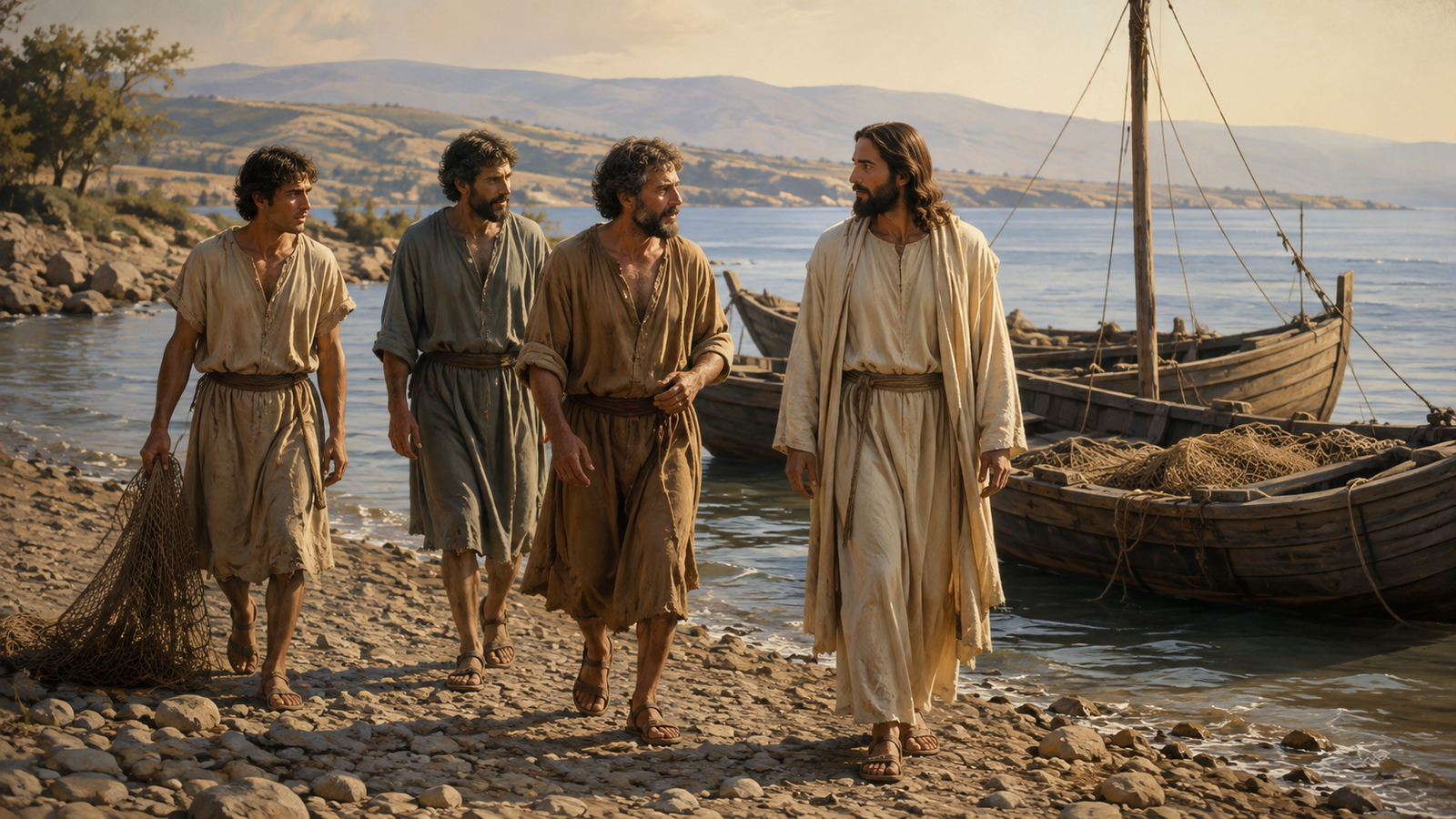
Luke says that Simon, James, and John brought their boats to land, left everything, and followed Jesus. This is a serious response. They did not add Jesus as a small part of an unchanged life. They placed their future under His authority.
Leaving everything does not mean that every Christian must abandon a job, family, or home in the same outward way. Other parts of the New Testament show believers serving Christ in homes and workplaces. The heart of discipleship is that Jesus becomes Lord over everything.
For these fishermen, the call meant a clear change in direction. Their boats and nets could not remain the center of their lives. Their work had value, but Jesus’ mission came first. They were willing to release control and follow where He led.
Following Jesus may involve sacrifice. It may change our plans, use our money, shape our relationships, or call us to serve when it is costly. But we do not give ourselves to a stranger. We follow the Son of God who loved us and gave Himself for us. The final image in this section shows the fishermen walking away from the boats because Jesus is worthy of their trust.
How Does Luke 5:1-11 Connect with the Gospel?
Luke 5:1-11 is an early calling story, but it already carries the shape of the Gospel. Jesus comes with good news. He meets people in their failure. He reveals His authority. He calls sinners to follow Him. These themes continue through the whole book.
The disciples will not understand everything at once. They will learn as they walk with Jesus. They will see His compassion, hear His teaching, watch Him confront evil, and witness His death and resurrection. Their mission will make sense because Jesus Himself is the center of the story.
The Gospel of Luke moves from Galilee toward Jerusalem and then toward the nations through the book of Acts. The risen Jesus sends His followers to proclaim repentance and forgiveness in His name. The call beside the lake becomes part of a worldwide witness.
For Christians today, this means discipleship is a journey of listening and obedience. We do not need to know every future step before we follow Christ. We need to trust the Lord who calls us and keep returning to His word.
How Can Christians Obey Jesus Today?
Luke 5:1-11 gives several clear ways to respond to Jesus. First, listen to His word. Simon’s life changes because he hears Jesus and takes His command seriously. The Bible remains the authority for the Christian life.
Second, obey Jesus in ordinary responsibilities. Simon obeys while tired and disappointed. Faithfulness often begins with the next clear step, not with a dramatic feeling. We can pray, tell the truth, serve our family, forgive others, and gather with the church because Jesus is Lord.
Third, confess sin instead of hiding it. Simon’s honest words are not a reason for despair. They become the doorway to grace. We can come to Christ because He is the Savior, not because we have made ourselves worthy.
Fourth, help others hear the Gospel. We can speak about Jesus with courage and gentleness. We can also support the teaching of Scripture and care for people who are hurting. A life directed by Christ becomes a witness to His mercy.
For more guidance as you grow in faithful living, explore Christian wisdom and the wider life and ministry of Jesus.
Common Questions About Luke 5:1-11
What is the main message of Luke 5:1-11?
The passage shows that Jesus has authority over creation and calls sinful people to follow Him. Simon sees Jesus’ holiness, receives grace, and begins a new life of discipleship.
What does Jesus mean by “you will be catching men”?
Jesus gives Simon and the other disciples a mission to proclaim the good news. They will call people to repentance, faith, and life under the rule of Jesus.
Why did Simon Peter say, “Depart from me, for I am a sinful man”?
Simon recognized Jesus’ power and became aware of his own sin. Jesus answered his humble confession with mercy, saying, “Do not be afraid.”
Is Luke 5:1-11 the same event as Matthew 4:18-22?
The Gospel accounts describe the early call of the fishermen with different details. Luke emphasizes the miraculous catch and Simon’s response. Matthew and Mark give shorter descriptions of the call.
How can Christians apply Luke 5:1-11 today?
Christians can hear Jesus, obey His word, confess sin, receive grace, and serve His mission. We follow Him because He is the divine Savior who died and rose again.
A Prayer for Trusting Jesus
Lord Jesus, thank You for speaking truth and calling sinners with mercy. We confess that we often rely on our own strength and become discouraged when our work seems empty. Teach us to trust Your word as Simon did.
Give us humble hearts that confess sin and receive Your grace. Help us follow You in our homes, work, churches, and communities. Make us faithful witnesses to Your death and resurrection. Keep us from treating people as numbers, and teach us to speak about Your kingdom with love and truth.
You are the Son of God, Lord and Savior. We worship You because You are holy, compassionate, and worthy of our whole lives. Amen.