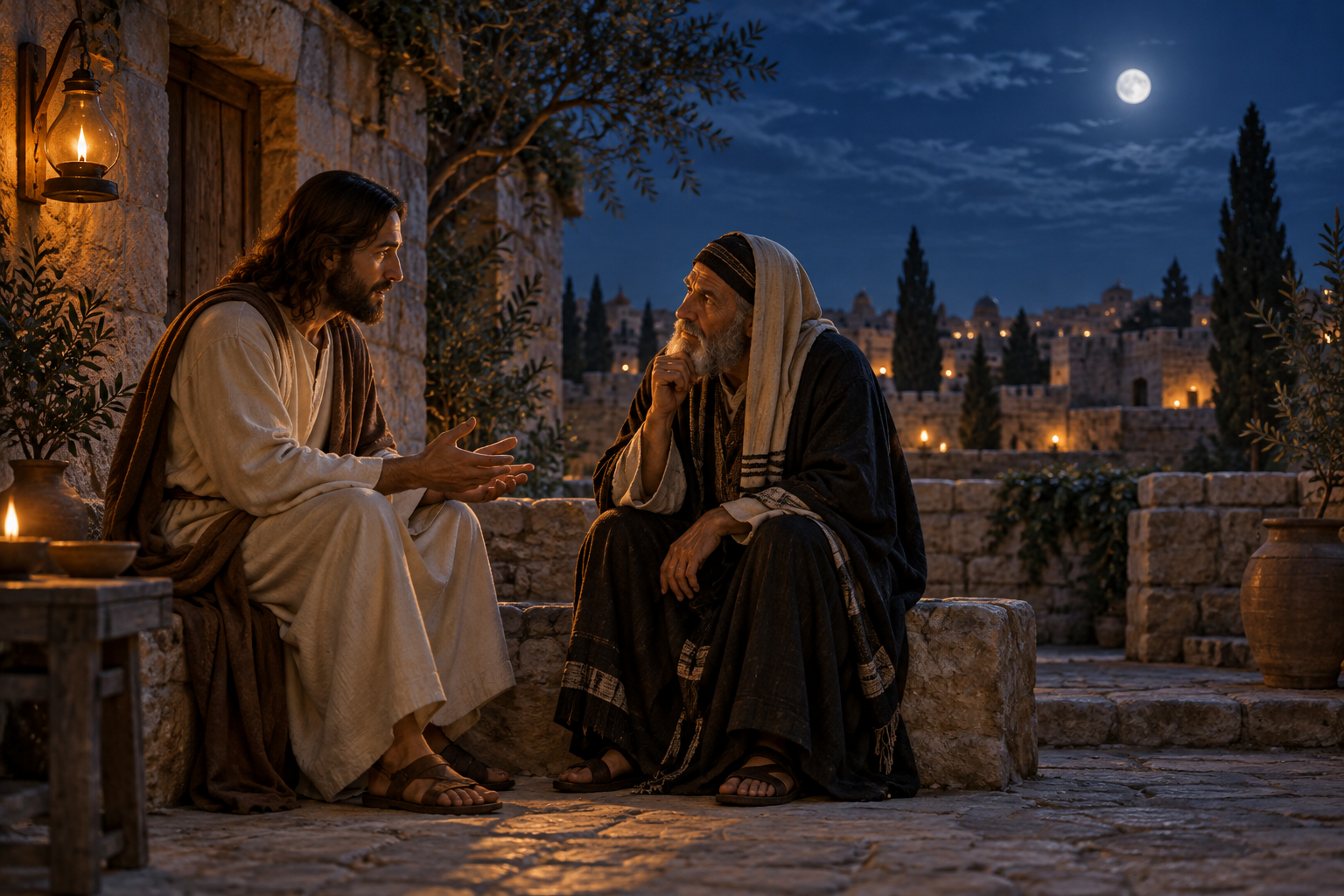
John 3:1-21 in Context
John 3:1-21 is one of the clearest passages in the Bible about the new birth and God’s plan of salvation. Jesus speaks with Nicodemus, a respected Jewish teacher, about what it means to enter the kingdom of God. The conversation moves from human religion to God’s renewing work, from confusion to faith, and from darkness to light.
This passage includes some of the best-known words of Jesus, including the promise that God loved the world and gave His only Son. Yet John 3:16 becomes even clearer when we read it with the verses around it. Jesus is not offering a vague message of kindness. He is calling people to trust Him, the Son of God, who came to save sinners and give eternal life.
If you are studying this passage with other important Bible texts, you can also use our guide to essential Biblical Scriptures and verses. John 3:1-21 deserves slow reading because every part points to the identity and saving work of Jesus.
Nicodemus Comes to Jesus at Night
Nicodemus was a Pharisee and a ruler of the Jews. He was not an uneducated man. He knew the Old Testament, taught others, and belonged to an influential group. He came to Jesus at night and began by saying that Jesus was a teacher who had come from God. The signs Jesus performed had made a strong impression on him.
Coming at night may show caution, fear, or a desire for a private conversation. John does not make us guess every reason. He simply shows us a man who had knowledge but still needed to understand who Jesus truly was. Nicodemus could see that Jesus had God’s authority, but he had not yet grasped the spiritual truth Jesus was about to teach.
His visit is encouraging for anyone who has honest questions. Jesus does not turn away a serious seeker. He speaks truthfully and patiently, even when Nicodemus does not understand at first. The Lord meets people where they are, but He lovingly leads them beyond incomplete ideas.
What Does “Born Again” Mean?
Jesus tells Nicodemus that unless a person is born again, or born from above, he cannot see the kingdom of God. The phrase means that a person needs new life from God. It is not simply a call to become more disciplined, more religious, or more respectable. It is a work that only God can begin and complete.
Nicodemus first hears the words in a physical way. He asks how an adult can be born again. Jesus is speaking about a spiritual birth. Sin has left every person unable to make himself spiritually alive. We need forgiveness, a new heart, and the Holy Spirit’s work within us.
The new birth does not mean that a Christian stops being a real human being or becomes perfect at once. It means that God gives a new direction and a new relationship with Him. A person begins to turn from sin, trust Jesus, love God’s truth, and desire to obey the Lord. These changes do not earn salvation. They show the life God has given.
Born of Water and the Spirit
Jesus says that a person must be born of water and the Spirit. Christians have discussed the meaning of “water” in this verse, but the central point is plain. Entrance into God’s kingdom requires God’s cleansing and the life-giving work of the Holy Spirit.
The Old Testament had already promised that God would cleanse His people and give them a new heart and a new spirit. Ezekiel 36:25-27 connects cleansing with the Spirit’s work and with a life of obedience. Jesus is showing Nicodemus that these promises find their fulfilment in Him.
Water can also remind us of baptism, which is a commanded and meaningful sign of repentance, faith, and union with Christ. But no outward ceremony can replace the inward work of God. Baptism points to the gospel. The Holy Spirit makes a sinner spiritually alive and joins that believer to Christ by faith.

Flesh and Spirit Are Different
Jesus explains that what is born of the flesh is flesh, and what is born of the Spirit is spirit. He is not saying that the human body is evil. God created human beings as embodied creatures, and Jesus Himself became truly human.
Jesus is making a distinction between natural life and spiritual life. Human birth gives us physical life, family identity, abilities, and a place in the world. It does not give us the new life needed to know God. Religious background, good manners, and knowledge cannot substitute for the Spirit’s renewing work.
This is why the gospel is good news for every person. No one is saved by heritage, achievement, or social position. The same Saviour is needed by the respected teacher, the struggling believer, and the person who has never opened a Bible. Jesus gives life to those who come to Him in faith.
The Wind and the Work of the Holy Spirit
Jesus compares the Spirit’s work to the wind. We hear or feel the wind, and we see what it does, but we cannot control it or see it directly. In the same way, the Holy Spirit is not a force that people manage. He is the divine Spirit who gives life according to God’s will.
A changed life does not make the Spirit visible in a physical sense, but it can show His effects. A believer begins to confess sin, trust Christ, forgive others, love holiness, and serve people with humility. These changes may grow slowly, and Christians still struggle, but the direction of life begins to change.
We should not reduce the Spirit’s work to an emotional moment. The Spirit always works in agreement with the Word He inspired. He leads people to honour Jesus, understand Scripture, and walk in truth. This is why the church must test every spiritual claim by the Bible.

Why Nicodemus Struggled to Understand
Nicodemus asks, “How can these things be?” His question is honest, but it also shows the limits of his understanding. He was a teacher of Israel, yet he needed Jesus to open the meaning of God’s promises. Information about the Bible is valuable, but information alone does not create faith.
We can make the same mistake. We may know Christian words, attend church, or understand some doctrine while still keeping Jesus at a distance. The Lord does not call us merely to collect religious facts. He calls us to believe Him, receive His grace, and follow Him as Lord.
Jesus does not shame Nicodemus for asking. He moves the conversation forward. The passage invites us to bring our questions to Christ while remaining willing to receive His answer. A humble question can become the doorway to deeper faith.
Jesus Speaks With Heaven’s Authority
Jesus tells Nicodemus that He speaks about what He knows and testifies to what He has seen. He is not guessing about God. He has come from the Father and speaks with heavenly authority. John’s Gospel presents Jesus as the eternal Word who became flesh, not merely as another religious teacher.
Jesus also refers to the Son of Man who came down from heaven. This points to His unique identity. He is truly human, yet He is the divine Son who came from the Father. He is qualified to reveal God because He knows God perfectly.
For this reason, faith in Jesus is not blind optimism. It is trust in the One who tells the truth about the Father, sin, judgment, salvation, and eternal life. To learn more about His earthly work, read our guide to the life and ministry of Jesus.
The Bronze Serpent Points to Jesus
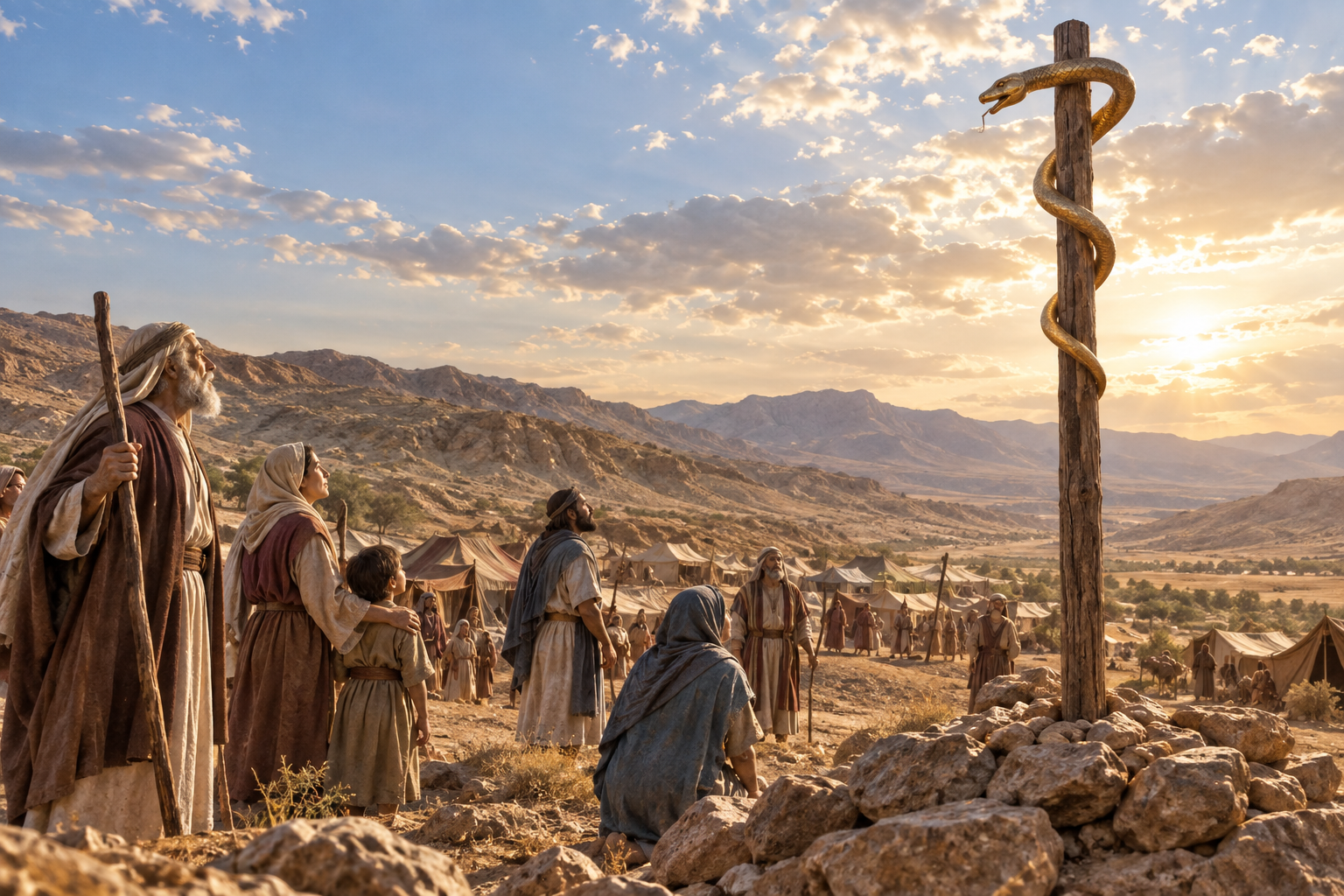
Jesus then recalls an event from Israel’s wilderness journey. In Numbers 21, the people sinned and were bitten by poisonous snakes. God told Moses to place a bronze serpent on a pole. Those who looked at it lived. The object had no power as a magical image. God gave the promise, and faith took Him at His word.
Jesus says that the Son of Man must be lifted up in the same way. He is pointing ahead to His crucifixion. Jesus would be lifted up on the cross and bear the judgment sinners deserve. The cross is not a tragic accident. It is the saving purpose of God.
The people in Numbers had to look. They could not heal themselves, argue themselves well, or rely on their own record. In the same way, sinners must look to Jesus in faith. He died for our sins, truly rose from the dead, and gives life to those who trust Him. The living Christ, not an image or religious object, is our Saviour.
God’s Love and the Gift of His Son
John 3:16 explains why Jesus would be lifted up. God loved the world. This love is not a sentimental approval of everything people do. It is holy mercy toward sinners who deserve judgment. God’s love moved Him to give His only Son.
The Father gave Jesus so that whoever believes in Him should not perish but have eternal life. The promise is wide enough for people from every nation, but it is received through faith in Jesus. The verse does not say that every person is saved without repentance or belief. It calls every person to trust the Son.
Eternal life is more than living forever. It is life with God, beginning now and continuing beyond death. Because Jesus is the divine Son, His death is sufficient to save, and because He rose again, His promise is certain. This is the heart of the Gospel described in John’s Gospel.
Jesus Came to Save, Not to Condemn
Jesus says that God did not send the Son into the world to condemn the world, but so that the world might be saved through Him. This does not mean that God ignores sin or that judgment will never come. Earlier in the passage, Jesus has already spoken about perishing and eternal life.
The point is that Jesus’ first coming had a saving mission. He came to seek and save the lost. He came to offer forgiveness through His death and to bring people into peace with God. The cross shows both the seriousness of sin and the greatness of mercy.
This gives Christians a loving way to speak about the gospel. We should not hide the truth about sin, but we should not speak as if sinners are beyond hope. Jesus receives repentant people. He saves those who trust Him and brings them into a new relationship with God.
Belief and the Seriousness of Unbelief
John 3:18 says that whoever believes in Jesus is not condemned, while whoever does not believe is condemned already because he has not believed in the name of God’s only Son. This is a serious word, but it is also a clear invitation.
Unbelief is not a harmless neutral position. It refuses the One whom God has sent. Jesus is not one option among many equal paths to God. He is the Son, the Saviour, and the only mediator between God and sinners. To reject Him is to remain under condemnation.
At the same time, the passage puts the door of mercy in front of us. The one who believes is not condemned. Faith means relying on Jesus, not merely agreeing that He existed. It means trusting His promise, turning from sin, and receiving Him as Lord and Saviour.
Light and Darkness in John 3
Jesus explains that light has come into the world, but people loved darkness because their works were evil. Light exposes what we would rather hide. Darkness allows a person to protect sin, control appearances, and avoid the truth about God.
Coming to the light does not mean claiming to have no sin. It means bringing sin into God’s truth instead of defending it. A Christian confesses sin and trusts the cleansing work of Jesus. The light can be painful, but it is also where healing and freedom begin.
Those who practise truth come to the light so that it may be clearly seen that their works have been carried out in God. Good works do not purchase salvation. They are evidence that God is working in a person who has trusted Christ. For practical help in walking wisely, see our guide to Christian wisdom for daily life.
How John 3:1-21 Calls Us to Respond
John 3:1-21 calls us to respond to Jesus, not merely to admire the passage. First, we should come honestly. Nicodemus came with questions. We can bring our confusion, guilt, and need to Christ.
Second, we should listen to Jesus’ authority. He tells us that we need new life from the Spirit. We cannot save ourselves by religion, morality, or effort. We need the mercy that God gives through His Son.
Third, we should look to the crucified and risen Jesus in faith. The bronze serpent points us away from self-reliance and toward the Saviour. The cross shows that Jesus died for sinners. His resurrection shows that He has conquered death.
Finally, we should come into the light. Jesus calls us to repent, believe, and live openly before God. You can read more about this call in our guide to what Jesus preached. We will still need daily grace, but we do not need to hide. The One who gives the new birth also keeps and grows His people.

John 3:1-21 Frequently Asked Questions
What is John 3:1-21 about?
John 3:1-21 records Jesus speaking with Nicodemus about the new birth, the work of the Holy Spirit, God’s love, faith in the Son, salvation, judgment, and coming into the light.
What does born again mean in John 3?
To be born again means to receive new spiritual life from God. It is the work of the Holy Spirit, not a person improving himself by human effort. The new birth leads to faith, repentance, and a changed life.
What does water and Spirit mean in John 3:5?
Jesus teaches that entering God’s kingdom requires God’s cleansing and the life-giving work of the Holy Spirit. Christians explain the water in this verse in different ways, but the central message is that salvation comes from God’s renewing work.
Why does Jesus mention the bronze serpent?
Jesus refers to the bronze serpent in Numbers 21 to show that He would be lifted up for sinners. Those who look to Him in faith receive life, just as the Israelites who looked at the serpent were spared.
What does John 3:16 teach about salvation?
John 3:16 teaches that God loved the world by giving His only Son, Jesus Christ. Everyone who believes in Him will not perish but will have eternal life. Salvation is God’s gift received through faith in Jesus.
Sources for Further Study
Read the passage and its Biblical connections carefully. These sources provide the primary Scripture texts and a helpful overview of John’s Gospel.
- John 3:1-21, the conversation between Jesus and Nicodemus.
- Numbers 21:4-9, the account of the bronze serpent.
- Ezekiel 36:25-27, God’s promise of cleansing and a new spirit.
- John 1:1-18, the identity of Jesus as the eternal Word who became flesh.
- John 20:30-31, John’s purpose in recording the signs of Jesus.
- BibleProject’s guide to the Gospel of John, an educational overview of the book’s message.
Jesus Christ is the eternal Son of God, the promised Saviour, and the risen Lord. Whoever believes in Him has eternal life. May this passage lead you to trust Him, worship Him, and walk in His light.