
John 20 records the resurrection of Jesus Christ, His appearances to Mary Magdalene and the disciples, and His commissioning of the Church. It affirms that Jesus is alive, victorious over death, and calls all people to believe in Him.
What really happened that first Easter morning? For nearly two thousand years, the resurrection of Jesus Christ has stood as the cornerstone of the Christian faith — not as a myth, not as a legend, but as a historical, life-changing reality. John 20 captures this breathtaking moment in vivid detail: the empty tomb, the grief-stricken Mary Magdalene, the fearful disciples hiding behind locked doors, and the risen Jesus standing among them, speaking peace. This chapter is more than an ancient account; it is the testimony of eyewitnesses who encountered the living Son of God after He conquered death itself.
In this article, we will walk through John 20 verse by verse, exploring the empty tomb, the appearances of the risen Christ, and the powerful encounter with Thomas — the disciple who doubted and then believed. Whether you are a new believer seeking to understand the Gospel or a mature Christian longing to deepen your faith, the message of John 20 speaks directly to your heart. As Jesus declared in John 11:25, “I am the resurrection and the life. He who believes in Me, though he may die, he shall live.” Let us open God’s Word together and discover what this chapter means for your faith today.
What is the main message of John 20?
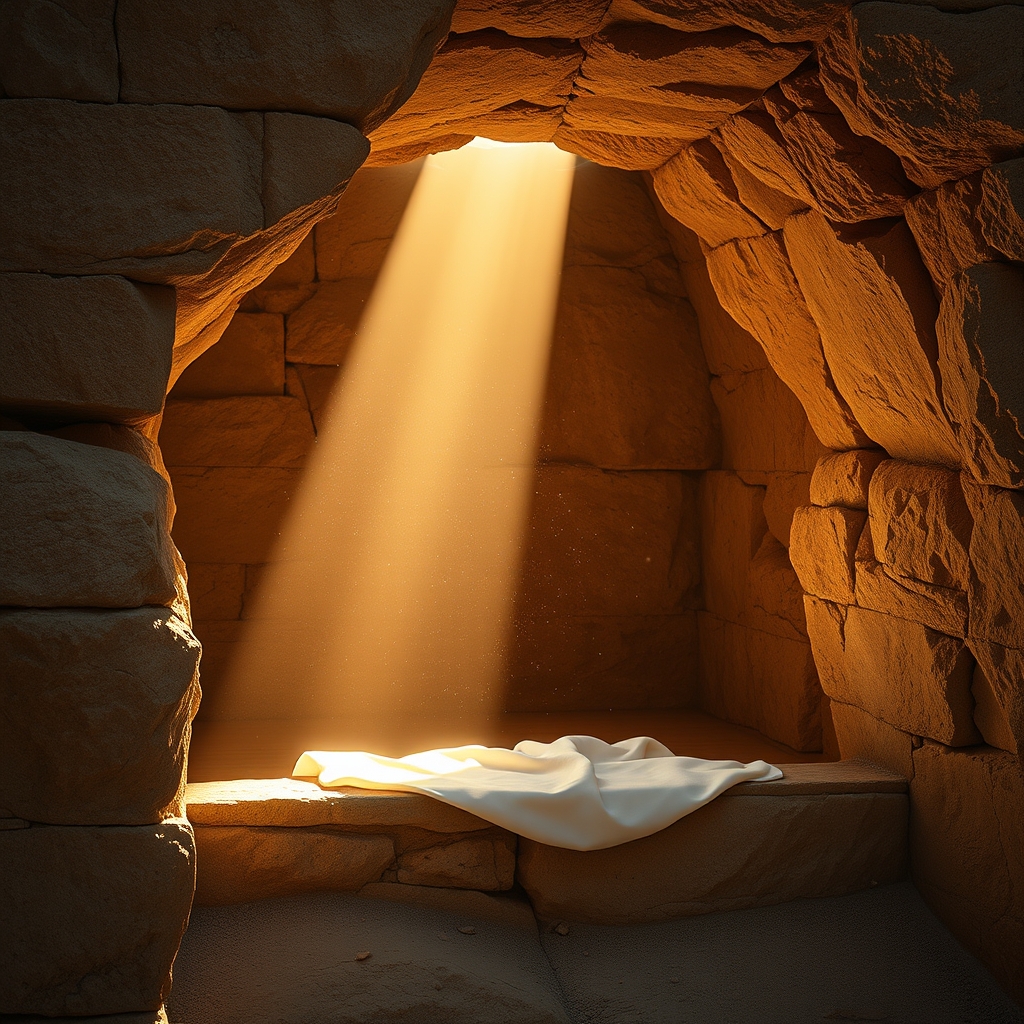
The Empty Tomb: The First Sign of Victory
John 20 opens at the tomb where Jesus was buried. It is early Sunday morning. The stone has been rolled away. Mary Magdalene arrives first and finds it empty. She runs to Peter and John with alarming news: “They have taken the Lord out of the tomb, and we do not know where they have laid Him” (John 20:2).
Peter and John rush to the tomb. John outruns Peter but waits for him to enter first. Inside they see:
- the linen cloths lying there
- The face cloth folded and placed separately
- No sign of a hurried removal by grave robbers
John records his own response: “Then the other disciple, who came to the tomb first, went in also; and he saw and believed” (John 20:8).
This empty tomb is more than an absence. It is the first sign of victory. Death could not hold Jesus. The grave clothes left behind point to a supernatural, bodily resurrection. Furthermore, Jesus did not simply return to life. He conquered death itself (Romans 6:9).
Jesus Appears to Mary Magdalene
After the disciples leave, Mary remains weeping at the tomb. She sees two angels in white where Jesus’ body had been laid. They ask, “Woman, why are you weeping?” She answers, “Because they have taken away my Lord, and I do not know where they have laid Him” (John 20:13).
Then she turns and sees a man she assumes to be the gardener. He asks her the same question. She pleads for information about where Jesus’ body has been taken.
In that moment, Jesus speaks her name:
“Jesus said to her, “Mary!”” (John 20:16)
She instantly recognizes Him and cries out, “Rabboni!” Jesus then commissions her with a powerful task: “Go to My brethren and say to them, ‘I am ascending to My Father and your Father, and to My God and your God’” (John 20:17).
Mary becomes the first witness of the risen Christ. The personal way Jesus calls her name reveals His intimate care. He knows each of us personally (John 10:3). As a result, she carries the first resurrection message to the disciples.
Jesus Appears to the Disciples
That same evening, the disciples gather behind locked doors. They are afraid of the authorities. Suddenly, Jesus stands among them and says, “Peace be with you” (John 20:19).
He shows them His hands and His side. His resurrection body still bears the marks of the cross. These wounds are not signs of defeat. They are signs of victory and grace. The disciples “were glad when they saw the Lord” (John 20:20).
Jesus repeats His greeting of peace and then breathes the Holy Spirit upon them:
“And when He had said this, He breathed on them, and said to them, ‘Receive the Holy Spirit. If you forgive the sins of any, they are forgiven them; if you retain the sins of any, they are retained.’” (John 20:22–23)
This moment carries deep meaning:
- Peace: Jesus gives His own peace, not as the world gives (John 14:27).
- Presence: The risen Christ is not distant. He stands with His people.
- Power: Through the Holy Spirit, He empowers them for mission.
- Authority: He entrusts them to carry the message of forgiveness.
John 20 thus shows that the resurrection is not only an event. It also marks a new beginning for the community of believers.
Jesus and Thomas: Faith Beyond Sight
“Doubting” Thomas was not present when Jesus first appeared. The other disciples tell him, “We have seen the Lord.” Thomas responds with a condition: “Unless I see in His hands the print of the nails, and put my finger into the print of the nails, and put my hand into His side, I will not believe” (John 20:25).
A week later, Jesus appears again. The doors are still locked. He stands among them and says, “Peace to you!” Then He turns to Thomas:
“Reach your finger here, and look at My hands; and reach your hand here, and put it into My side. Do not be unbelieving, but believing.” (John 20:27)
Thomas responds with one of the greatest confessions of faith: “My Lord and my God!” (John 20:28).
Jesus then speaks words that reach far beyond Thomas:
“Thomas, because you have seen Me, you have believed. Blessed are those who have not seen and yet have believed.” (John 20:29)
This exchange in John 20 shows several truths:
- Jesus meets us in our doubts. He does not condemn Thomas. He invites him closer.
- Faith rests on who Jesus is. Thomas confesses Him as Lord and God.
- Believing without seeing is honored. Jesus blesses all who trust Him by faith.
Therefore, John 20 points directly to the risen Jesus Christ. His resurrection proves Lordship, brings peace, sends the Spirit, and calls us to faith.
John 20 KJV – Key Verses and Their Meaning

the Gospel of John, chapter 20, stands as one of the most powerful chapters in all of Scripture. It records the most important event in human history: the resurrection of Jesus Christ. Let us walk through its key verses and discover the life-changing truth within them.
John 20:1–10 – The Empty Tomb
“The first day of the week cometh Mary Magdalene early, when it was yet dark, unto the sepulchre, and seeth the stone taken away from the sepulchre.” (John 20:1, KJV)
The resurrection story begins at dawn on the first day of the week. Mary Magdalene, a devoted follower of Jesus, came to the tomb while it was still dark. She expected to find a sealed grave. Instead, she found the stone rolled away.
What Happened at the Tomb
- The stone was removed. It was not moved to let Jesus out. It was moved so everyone could see He was already gone. The empty tomb is central to the Gospel.
- Peter and the Beloved Disciple ran to see. They found the grave clothes lying folded. This was no hurried robbery. The orderly scene pointed to a miraculous, sovereign act of God.
- They believed not yet. Even seeing the empty tomb, the disciples did not yet fully understand. The resurrection truth had to be revealed by the Holy Spirit.
The empty tomb is not a symbol of a spiritual idea. It is a real, historical event. If Jesus had not been bodily raised from the dead, the entire Christian faith would collapse. As Paul wrote in 1 Corinthians 15:14, “And if Christ be not risen, then is our preaching vain, and your faith is also vain.” [1]
The Facts Point to One Truth
Consider these historical points:
- The tomb was empty on the third day after Jesus’ death and burial.
- The Roman guards had sealed and guarded the tomb (Matthew 27:62–66). [1]
- The Jewish leaders had every reason to produce a dead body to silence the Gospel, but they never did.
- The disciples were transformed from fearful men hiding in a room to bold witnesses willing to die for the truth.
Only one explanation accounts for all the evidence: Jesus Christ is risen from the dead.
John 20:11–18 – Jesus Appears to Mary Magdalene
“Jesus saith unto her, Woman, why weepest thou? whom seekest thou?” (John 20:15, KJV)
Mary Magdalene stands outside the empty tomb, weeping. She does not yet understand what has happened. Angels ask her why she weeps. She thinks someone has taken the Lord’s body. Then Jesus Himself appears to her.
Mary’s Mistake and Jesus’ Correction
Mary mistakes Jesus for a gardener. How can this be? Her grief and tears likely clouded her eyes. More importantly, her expectation was wrong. She went to a tomb to mourn a dead Messiah. She did not yet grasp that her Messiah was alive and conqueror over death itself.
Then Jesus spoke one word: “Mary.”
At the sound of her name spoken by her Lord, everything changed. Jesus said:
- “Touch me not; for I am not yet ascended to my Father.” Jesus had a mission first — He must ascend to the Father.
- “Go to my brethren, and say unto them, I ascend unto my Father, and your Father; and to my God, and your God.” What stunning words! He calls His disciples “brethren.” The resurrected Christ identifies with His people. He shares His Father with us.
Why This Appearance Matters
Mary Magdalene was the first witness of the risen Christ. This is deeply significant. In the first century, women’s testimony was not valued in a court of law. Yet God chose a woman as the first herald of the resurrection. This tells us God’s ways are not man’s ways. The Gospel breaks every barrier — gender, race, social status. The Good News belongs to all.
- Jesus appeared first to Mary — a woman delivered from seven demons (Luke 8:2). [1]
- Jesus sent her — a formerly broken woman — to preach the greatest news ever told.
- Mary obeyed. She told the disciples, “I have seen the Lord.” (John 20:18)
Every person Jesus touches, He sends. Mary’s story is our story. He calls us by name. He transforms our grief into purpose.
John 20:19–23 – Jesus Appears to the Disciples
“Then the same day at evening, being the first day of the week, when the doors were shut where the disciples were assembled for fear of the Jews, came Jesus and stood in the midst, and saith unto them, Peace be unto you.” (John 20:19, KJV)
The disciples were locked behind closed doors. They were afraid. Their Lord had been crucified just days earlier. Then Jesus appeared in the midst of them — through locked doors — in His resurrected, glorified body.
Peace from the Risen Lord
- “Peace be unto you.” The first word from the risen Christ is Peace. Not rebuke for their fear. Not condemnation for their denial or abandonment. Peace.
- He showed them His hands and His side. The wounds were still visible — glorified, but present. The risen Jesus bears the marks of the cross forever. His scars are the proof of His sacrifice and the evidence of His identity.
- “Peace be unto you: as my Father hath sent me, even so send I you.” He sends them with the same mission He received. He then breathed on them and said, “Receive ye the Holy Ghost.”
The Gift of the Holy Spirit
This is a moment of staggering importance. Jesus breathed on His disciples. He commissioned them. He gave them the Holy Spirit for their mission. Furthermore, He gave them the authority to declare forgiveness of sins:
“Whose soever sins ye remit, they are remitted unto them; and whose soever sins ye retain, they are retained.” (John 20:23, KJV)
This is not about human authority to grant or withhold salvation. The Greek text points to preaching and proclamation. When the Church proclaims the Gospel faithfully, God honors that declaration. Those who receive Christ receive forgiveness. Those who reject Christ remain in their sins.
The resurrection is not merely a historical fact to be studied. It is a living power. The resurrection gave birth to the Church. It filled believers with the Spirit. It launched the greatest mission the world has ever known.
John 20:24–29 – Jesus and Thomas
“Then saith he to Thomas, Reach hither thy finger, and behold my hands; and reach hither thy hand, and thrust it into my side: and be not faithless, but believing.” (John 20:27, KJV)
Thomas was not present when Jesus first appeared. He refused to believe without seeing for himself. Eight days later, Jesus appeared again — this time with Thomas present.
The Honest Doubt of Thomas
Thomas has been unfairly nicknamed “Doubting Thomas.” Yet his honesty is something many believers can relate to. He had lost everything. His Lord was crucified. The other disciples told him they had seen Jesus. But Thomas needed to know for himself.
Jesus did not avoid Thomas. He met Thomas exactly where he was.
- Jesus invited Thomas to touch His wounds. The risen Christ did not say, “Stop doubting.” He said, “Here I am. See for yourself.”
- Thomas responded with the greatest confession in the Gospel of John: “My Lord and my God.” (John 20:28)
Faith Beyond Sight
Jesus then said words that echo across the centuries to every believer who reads the Gospel:
“Thomas, because thou hast seen me, thou hast believed: blessed are they that have not seen, and yet have believed.” (John 20:29, KJV)
This is Jesus’ word to you and me. We were not there. We did not see the empty tomb. We did not touch His wounds. Yet we believe — and Jesus calls us blessed.
What the Thomas Story Teaches Us
- Jesus meets honest questions with grace. He rebukes unbelief, but He does not reject honest seekers.
- The resurrection is not a myth or a fairy tale. Jesus invited physical, tangible proof. The resurrected Christ is real, not symbolic.
- Faith is a gift. Thomas came to belief not by his own effort but by the sovereign revelation of Christ.
- We are more blessed than we realize. Every believer who trusts in the risen Christ receives the same blessing Thomas received — salvation, peace, and eternal life.
The Heart of John 20
When we read John 20, we are not reading a religious story. We are reading the account of the most momentous event in history. Jesus Christ died for our sins. He was buried. And on the third day, He rose again.
Every scene in this chapter — the empty tomb, Mary Magdalene, the disciples behind locked doors, and doubting Thomas — all point to one glorious truth:
Jesus Christ is alive. He is Lord. He is God. And He saves all who come to Him in faith.
As Jesus declared earlier in John 11:25, “I am the resurrection, and the life: he that believeth in me, though he were dead, yet shall he live.” Are you trusting in Him today?
John 20 NKJV – A Clear, Faithful Translation
The New King James Version (NKJV) offers readers a clear, modern rendering of John 20 that stays faithful to the original Greek text. It preserves the beauty of traditional language while improving readability for today’s believers.
Below is John 20 in the NKJV, along with brief notes on key verses to help you understand what really happened that resurrection morning.
John 20:1–10 – The Empty Tomb
On the first day of the week, Mary Magdalene came to the tomb early. She found the stone rolled away and ran to tell Peter and the other disciple that the Lord’s body was gone.
John 20:9 records an important statement: “For as yet they did not know the Scripture, that He must rise again from the dead.” The disciples saw the empty tomb, but its full meaning was still hidden from them.
John 20:10 shows the urgency of the moment: “Then the disciples went away again to their own homes.” At this point, they had witnessed evidence—but not yet faith.
John 20:11–18 – Jesus Appears to Mary Magdalene
Mary stood outside the tomb weeping. She saw two angels and then Jesus Himself. At first she did not recognize Him.
John 20:16 is one of the tenderest moments in Scripture. When Jesus said, “Mary!”, she turned and cried out, “Rabboni!” (which is to say, Teacher). His voice opened her eyes to the truth.
Jesus then gave her a mission. John 20:17–18 shows her obedience. She went and told the disciples, “I have seen the Lord.”
John 20:19–23 – Jesus Appears to the Disciples
That same evening, the disciples were gathered behind locked doors. Jesus came and stood among them.
John 20:19 records His words: “Peace be with you.” He showed them His hands and side. Their fear turned to joy.
In John 20:21–23, Jesus repeated the commission: “As the Father has sent Me, I also send you.” Then He breathed on them and gave them authority to forgive sins.
John 20:24–29 – Jesus and Thomas
Thomas was absent when Jesus first appeared. He refused to believe without seeing. John 20:25 records his doubt: “Unless I see in His hands the print of the nails… I will not believe.”
Eight days later, Jesus appeared again and invited Thomas to touch His wounds. John 20:27 shows His patience: “Do not be unbelieving, but believing.”
Thomas responded with one of the greatest confessions in the Bible. John 20:28: “My Lord and my God!”
Then Jesus made a timeless pronouncement. John 20:29: “Blessed are those who have not seen and yet have believed.” This includes every believer today.
Full Text: John 20 NKJV
For easy reference, here is the complete text of John 20 in the NKJV. You can also read it in full at Bible Gateway, a trusted online Bible resource. [1]
| Verse Range | Event |
|---|---|
| John 20:1–2 | Mary finds the empty tomb and tells Peter and John |
| John 20:3–10 | Peter and John run to the tomb and see the linen clothes |
| John 20:11–18 | Jesus appears to Mary Magdalene |
| John 20:19–23 | Jesus appears to the disciples and commissions them |
| John 20:24–29 | Jesus appears to Thomas and calls believers to faith |
| John 20:30–31 | The purpose of the Gospel: that you may believe Jesus is the Christ |
The NKJV rendering of John 20 captures both the historical reality and spiritual power of the resurrection. It invites every reader to encounter the risen Christ—just as Mary, Peter, John, and Thomas did on that first Easter morning.
John 20 ESV – What Does It Say About the Resurrection?
The English Standard Version (ESV) is one of the most widely trusted translations among evangelical Christians today. It aims to balance word-for-word accuracy with readability, making it a powerful tool for studying Scripture. When we read John 20 in the ESV, the resurrection account comes alive with clarity and precision. Every detail matters. Every word points to the risen Jesus Christ.
The ESV Rendering of the Empty Tomb
In John 20:1–10, the ESV presents the discovery of the empty tomb with striking simplicity. Mary Magdalene arrives early, while it is still dark, and sees the stone removed. She runs to Peter and the beloved disciple. They rush to the tomb. The burial cloths are lying there, but Jesus’ body is gone. The ESV captures the urgency and confusion of that moment. The disciples see and believe — though they do not yet fully understand the Scripture that He must rise again. This passage affirms a physical, bodily resurrection. The empty tomb is not a metaphor. It is historical reality. [2]
Jesus Appears to Mary Magdalene in the ESV
John 20:11–18 in the ESV is one of the most tender passages in all of Scripture. Mary stands weeping outside the tomb. Jesus appears to her, but she does not recognize Him at first. When He calls her by name — “Mary” — she responds, “Rabboni!” The ESV renders this exchange with emotional depth. Jesus then commissions her to go and tell the disciples. She becomes the first witness of the risen Christ. This is profound. In a culture where women’s testimony was often dismissed, Jesus chose Mary as the first messenger of the resurrection. The ESV makes this truth unmistakable.
The ESV and the Appearance to the Disciples
John 20:19–23 records Jesus appearing to His disciples behind locked doors. The ESV translates His words with authority: “Peace be with you.” He shows them His hands and His side. The wounds are real. The resurrection is not a ghost story. It is the same Jesus who was crucified, now alive forevermore. Furthermore, He breathes on them and says, “Receive the Holy Spirit.” The ESV makes clear that this moment is the birth of the Church’s mission. Jesus empowers His followers to carry His message of forgiveness to the world.
Thomas and the ESV’s Faithful Testimony
The ESV rendering of John 20:24–29 is especially powerful. Thomas refuses to believe unless he sees and touches Jesus’ wounds. Jesus appears and invites him to do exactly that. Thomas responds with the greatest confession in the Gospels: “My Lord and my God!” The ESV does not soften this declaration. It is a direct affirmation of the divinity of Jesus Christ. Jesus then blesses all who will believe without seeing. This includes every reader of John 20 today. We believe because of His faithful testimony.
Key ESV Passages at a Glance
| ESV Reference | Key Verse | Significance |
|---|---|---|
| John 20:1 | “Now on the first day of the week Mary Magdalene came to the tomb early…” | The resurrection morning begins in darkness, symbolizing the transition from despair to hope. |
| John 20:17 | “Jesus said to her, ‘Do not cling to me, for I have not yet ascended to the Father…’ | Jesus’ mission continues beyond the tomb. He ascends to the Father. |
| John 20:22 | “He breathed on them and said to them, ‘Receive the Holy Spirit.'” | The Holy Spirit is given to empower the Church. |
| John 20:29 | “Blessed are those who have not seen and yet have believed.” | A promise for all future believers, including us today. |
| John 20:31 | “These are written so that you may believe that Jesus is the Christ, the Son of God…” | The entire purpose of John’s Gospel is stated here. |
Why the ESV Matters for Studying the Resurrection
The ESV’s commitment to literal translation means that when you read John 20, you are as close to the original Greek text as possible in modern English. This is essential for understanding the resurrection. The ESV does not paraphrase away difficult truths. It presents them clearly. The bodily resurrection of Jesus Christ is not a secondary doctrine. It is the foundation of the Christian faith. As Paul writes in 1 Corinthians 15:17, “If Christ has not been raised, your faith is futile.” The ESV helps us see this truth with fresh eyes every time we open its pages.
The resurrection is not a myth. It is not a legend. It is the historical, bodily rising of Jesus Christ from the dead. John 20 in the ESV makes this undeniable. And because He lives, we too shall live.
John 20 NIV – Understanding the Resurrection Account
The New International Version (NIV) of John 20 offers a clear, modern translation of the resurrection account. It helps readers today grasp the power and beauty of that first Easter morning. The NIV balances accuracy with readability, making it one of the most widely used Bible translations among Christians worldwide. [3]
This translation brings the events of John 20 to life in language that speaks directly to the heart. Let us walk through the key moments.
The Empty Tomb in the NIV
The NIV opens John 20 with Mary Magdalene discovering the stone rolled away. The text reads with urgency and emotion. Mary runs to tell Peter and the beloved disciple. The NIV captures their race to the tomb with vivid, accessible language. The empty tomb stands as the first undeniable sign that something miraculous had occurred.
Jesus Speaks Mary’s Name
One of the most tender moments in the NIV appears in John 20:16. Jesus calls Mary Magdalene by name. The simplicity of that single word — “Mary” — transforms her grief into joy. The NIV renders this scene with deep pastoral warmth. It shows us that the risen Christ knows each of us personally. He calls us by name, just as He called hers.
Peace Be With You
When Jesus appears to His disciples in John 20:19–21, the NIV records His words clearly: “Peace be with you!” He repeats this greeting for emphasis. Furthermore, He shows them His hands and side. The NIV makes it evident that this was no ghost or vision. The risen Jesus bore the marks of His sacrifice. He carried His wounds as proof of His victory.
Thomas Believes
The NIV handles the Thomas narrative with remarkable clarity. Thomas declares he will not believe unless he sees for himself. Eight days later, Jesus appears and invites Thomas to touch His wounds. Thomas responds with one of the greatest confessions in all of Scripture: “My Lord and my God!” (John 20:28, NIV). The NIV preserves the full weight of this declaration. It affirms without question that Thomas recognized Jesus as divine.
Why the NIV Matters for Studying John 20
The NIV translation serves as a powerful tool for understanding the resurrection. Here are several reasons why:
- Clarity: The NIV uses modern English that is easy to understand without losing theological depth.
- Accuracy: It is based on the best available Hebrew, Aramaic, and Greek manuscripts. [4]
- Accessibility: New believers can read John 20 in the NIV and grasp its core message immediately.
- Faithfulness: The NIV upholds the divinity of Christ, the reality of His resurrection, and the authority of Scripture.
Whether you are reading John 20 for the first time or the hundredth time, the NIV invites you to encounter the risen Jesus. It draws you into the story. It asks you the same question it asked Thomas: Will you believe? The resurrection is not merely a historical event to study. It is a living truth to embrace. Jesus Christ is risen, and He calls each of us to respond with faith.
John 20 NLT – A Pastoral Look at the Risen Christ
The New Living Translation (NLT) brings John 20 to life in a way that deeply honors the heart of the passage. It prioritizes clarity and faith impact. Let’s walk through John chapter 20 in the NLT to understand the resurrection narrative and its meaning for us today.
The Empty Tomb and the Risen Jesus
From the very first verse, John 20 NLT confronts us with the reality: the tomb was empty. Mary Magdalene saw it. Peter and the beloved disciple saw it. Their hearts began to run. Their minds began to race.
The NLT emphasizes that Jesus was not stolen. Jesus was gone. He had risen. This is not a hidden truth. It is an open, victorious declaration.
Jesus Meets Mary Magdalene
Mary did not recognize Him at first. Then, Jesus spoke her name: “Mary.”
John 20 NLT (vv. 16–17) captures the moment of recognition:
- Mary turned.
- She cried out, “Rabboni!” (which means “Teacher!”).
- Jesus told her not to hold on to Him in the way she once had, because He was ascending to the Father.
- He sent her to bear witness to the disciples.
Jesus chose Mary as the first witness of the resurrection. That choice shows God’s heart. It reveals His honor for the faithful. It reveals His use of the humble.
Jesus Appears to the Disciples
Later that evening, the disciples gathered behind locked doors. They were afraid. They were confused. They were grieving.
Then Jesus came.
John 20 NLT (vv. 19–20) records:
- Jesus stood among them.
- He said, “Peace be with you.”
- He showed them His hands and His side.
The scars were still there. He was not a ghost. He was Jesus in bodily resurrection. He was real.
After this, Jesus gave them a mission:
- “As the Father has sent me, so I am sending you.” (John 20:21, NLT)
- He breathed on them the Holy Spirit.
- He gave them authority to forgive or retain sins, reflecting obedience to the Gospel.
Thomas Believes
Thomas was absent when Jesus appeared. He responded with doubt:
“Unless I see the nail marks… I will not believe.” (John 20:25, NLT)
Jesus later appeared to him. He invited Thomas to touch His wounds. Thomas responded with one of the greatest confessions in Scripture:
“My Lord and my God!” (John 20:28, NLT)
Jesus then blessed those who believe without seeing.
That includes us.
The Purpose of John’s Chapter 20
John 20 ends with a theological anchor:
“These are written so that you may believe that Jesus is the Christ, the Son of God, and that by believing you may have life in His name.” (John 20:31, NLT)
It is historical. It is theological. It is deeply personal.
Jesus really died. Jesus really rose. Jesus really invites you to believe.
The NLT brings John 20 to a faithful summary. Jesus is alive. Jesus is Lord. Jesus is calling you to Himself.
John 20 Commentary – What Scholars and Pastors Say

The Historical Reliability of John 20
Scholars and pastors alike have long examined the historical trustworthiness of John 20. Many agree that this chapter provides one of the most detailed and compelling accounts of the resurrection. The careful attention to names, places, and specific details strengthens the case for its reliability. For instance, John names Mary Magdalene specifically as the first witness of the empty tomb (John 20:1). This is significant because women’s testimony was not highly regarded in first-century courts. If the account were fabricated, the writer would likely not choose a woman as the primary witness. This detail actually points to authenticity rather than invention. [5]
Furthermore, the Gospel of John demonstrates intimate knowledge of Jerusalem. The author describes the garden where Jesus was buried (John 19:41). He mentions the stone that had been rolled away (John 20:1). He also notes the linen cloths left behind in a particular arrangement (John 20:6–7). These specifics suggest an eyewitness account or a source very close to the events.
Many conservative scholars point to the early dating of the Gospel of John. They argue it was written within decades of the resurrection itself. This would mean the author could consult eyewitnesses or draw from direct testimony. The late Norman Geisler, a prominent Christian apologist, noted that the Gospel of John contains numerous references to places and customs that have been confirmed by archaeology. [6]
Pastors frequently emphasize that John 20 reads like a real testimony. The emotions are raw. Mary Magdalene weeps at the tomb (John 20:11). Thomas openly doubts what he has been told (John 20:25). The disciples hide behind locked doors, gripped by fear (John 20:19). These are not the marks of a polished legend. They are the marks of a true story.
Theological Themes in John 20
John 20 is rich with theological meaning. Several key themes emerge that pastors and scholars highlight regularly. These themes deepen our understanding of who Jesus is and what His resurrection means for all believers.
The Fulfillment of Jesus’ Promises
Throughout His ministry, Jesus told His followers that He would rise from the dead. In John 2:19, He declared, “Destroy this temple, and in three days I will raise it up.” Again in Matthew 16:21, He foretold His death and resurrection. Therefore, John 20 is not a surprise ending. It is the fulfillment of everything Jesus said He would do. The empty tomb proves that Jesus keeps His word. As Hebrews 10:23 reminds us, “Let us hold fast the profession of our faith without wavering; for He is faithful that promised.”
Peace Through the Risen Christ
When Jesus appeared to His disciples, His first words were, “Peace be with you” (John 20:19). This was not merely a greeting. It was a declaration. The disciples were terrified. They feared the same fate had awaited them. However, Jesus entered the room and offered something no earthly leader could provide—true, lasting peace. He showed them His hands and His side as proof that He was the same Jesus who had died. Yet now He was alive, and His wounds were signs of victory, not defeat. This peace is available to every believer today. As Jesus said in John 14:27, “Peace I leave with you; my peace I give to you. Not as the world gives do I give to you.”
Recognition of Jesus by His Own
A striking theme in John 20 is that Jesus reveals Himself to those who belong to Him. Mary Magdalene did not recognize Jesus at first. However, when He spoke her name, she immediately knew it was Him (John 20:16). Jesus said in John 10:27, “My sheep hear my voice, and I know them, and they follow me.” This beautifully illustrates that the risen Lord calls His children personally. No one stumbles upon the resurrection by accident. God opens hearts to recognize Jesus as Lord and Savior.
From Doubt to Declaration: The Story of Thomas
Thomas refused to believe unless he could see and touch Jesus’ wounds (John 20:25). This was not faithlessness. It was honest struggle. Jesus did not rebuke Thomas harshly. Instead, He graciously invited Thomas to do exactly what he needed. Thomas then made one of the greatest confessions in all of Scripture: “My Lord and my God!” (John 20:28). As a result of this encounter, Jesus made a timeless promise: “Blessed are those who have not seen and yet have believed” (John 20:29). This blessing rests on every person who trusts in the risen Christ without physical proof.
How John 20 Points to Jesus as Lord
Every section of John 20 builds one central truth: Jesus Christ is Lord over death, Lord over fear, and Lord over doubt. Let us consider how this chapter makes that case.
- Jesus conquered the grave. The empty tomb is not just an empty hole in a hillside. It is the proof that death itself has been defeated. Romans 6:9 declares, “Christ, being raised from the dead, dies no more. Death no longer has dominion over Him.”
- Jesus appeared in bodily form. He was not a ghost or a spirit. He ate fish (Luke 24:42–43). He invited Thomas to touch His wounds. Therefore, the resurrection was physical and real.
- Jesus commissioned His followers. In John 20:21, Jesus said, “As the Father has sent Me, I also send you.” He breathed on them and gave them the Holy Spirit (John 20:22). This was not a suggestion. It was a divine commissioning. Jesus is Lord, and He sends His people into the world with His authority and His Spirit.
- Jesus received worship. Thomas called Jesus “My Lord and my God!” Jesus did not correct him. He accepted the worship. Only God deserves worship. Therefore, Jesus’ acceptance of Thomas’ declaration affirms His full divinity.
In conclusion, John 20 is far more than a historical record. It is a declaration of the lordship of Jesus Christ. He is the risen Savior who calls His sheep by name. He is the conquering King who has defeated death. He is the faithful God who keeps every promise. For anyone seeking truth, this chapter offers a clear and compelling answer: Jesus Christ is Lord, and He is alive forevermore.
John 20 Enduring Word – A Verse-by-Verse Study
John 20 – Verses 1–10: The Empty Tomb
Early on the first day of the week, Mary Magdalene came to the tomb. It was still dark. She saw that the stone had been rolled away. She ran to tell Peter and John. Peter and the other disciple ran to the tomb. The other disciple arrived first and looked in. He saw the linen cloths but did not enter. Peter went in and saw the cloths lying there. The face cloth was folded separately. The other disciple then entered and saw. The Scripture says, “they did not yet understand” that Jesus must rise from the dead. This empty tomb is the first sign of victory. The grave could not hold Him. As John 2:19 foretold, Jesus would raise His own body. The folded cloths show this was not a hurried escape. The resurrection was orderly and sovereign.
John 20 – Verses 11–18: Jesus Appears to Mary Magdalene
Mary stood weeping outside the tomb. She looked in and saw two angels in white. They asked, “Woman, why are you weeping?” She said, “They have taken my Lord.” Then she turned and saw a man she thought was the gardener. Jesus said, “Mary.” When she recognized Him, she cried out, “Rabboni!” Jesus told her not to cling to Him. He had not yet ascended to the Father. He sent her to tell the disciples. Mary obeyed. She became the first to announce the risen Christ. This appearance is full of compassion. Jesus speaks Mary’s name. Personal knowledge brings trust. Mary moved from sorrow to joy. She became the first messenger of the resurrection. The message is clear. Jesus is alive.
John 20 – Verses 19–23: Jesus Appears to the Disciples
On that same evening, the disciples were gathered. The doors were shut. Jesus stood among them. He said, “Peace be with you.” He showed them His hands and side. The disciples were filled with joy. Jesus said, “As the Father has sent Me, I send you.” He breathed on them. He said, “Receive the Holy Spirit.” He gave them authority: “If you forgive sins, they are forgiven; if you retain, they are retained.” This passage shows the risen Christ renews His people. He grants peace and purpose through the Spirit.
John 20 – Verses 24–29: Jesus Appears to Thomas
Thomas was not with the disciples that night. He later said, “Unless I see and touch, I will not believe.” Eight days later Jesus returned. He said, “Peace be with you” and told Thomas to see and touch His wounds. Thomas cried, “My Lord and my God!” Jesus replied, “Blessed are those who have not seen and yet have believed.” This encounter moved Thomas from doubt to worship. Jesus met him personally and patiently. Faith here is not blind. Faith is grounded in the risen Christ.
The Reliability of John 20
John 20 gives exact details. Specific women are named. Specific disciples are named. Specific wounds are shown. The folded cloths are mentioned. Even Thomas’ specific doubt is recorded. These details show true witness, not legend. Luke 24, Mark 16, and Matthew 28 all share these patterns. Early believers proclaimed this message, even unto death. People do not die for known lies. John 20 stands as strong testimony to the risen Christ. Archaeologists have confirmed details consistent with first-century burial practices in Jerusalem. [7]
Key Themes in John 20
Here are some central themes:
- victory over death: The empty tomb proves that death could not hold Jesus.
- Personal Knowledge: Jesus calls Mary by name and invites Thomas to touch His wounds.
- Peace and Mission: “Peace be with you” and “As the Father sent Me, I send you.”
- The Holy Spirit: Jesus breathes the Spirit and grants authority to forgive sins.
- Blessed Faith: “Blessed are those who have not seen and yet have believed.”
Jesus Is Lord in John 20
In this chapter, Mary worships Jesus as “Rabboni.” Thomas confesses, “My Lord and my God.” Jesus forgive sins by His own authority, not by another’s. He grants the Spirit from Himself. In John 20, Jesus stands as risen Lord. The disciples saw Him, yet many would never see. Jesus pronounces blessing on later believers. Today, countless have trusted without seeing. They do so because the promises of John 20 endure. They are built on the risen Christ who calls by name.
1 John 20 – Is There a Chapter 20 in 1 John?
When searching for information about the Bible, it’s not uncommon to come across a reference like “1 John 20.” This leads many readers to wonder: Is there really a chapter 20 in the First Epistle of John? The answer is an important one to understand, because confusing these books can lead to confusion about God’s Word.
How Many Chapters Are in 1 John?
The First Epistle of John—often called “1 John”—is a short book consisting of only five chapters. There is no chapter 20 in 1 John. This book is a deeply personal letter written by the Apostle John to early believers, offering them assurance of eternal life through faith in Jesus Christ.
1 John is part of a group of letters near the end of the New Testament, written after the Gospels and many of Paul’s epistles. Its focus is relatively narrow but incredibly profound:
- Walking in the light of God
- Knowing that you have eternal life
- Distinguishing truth from error
- Living out genuine love for others
- Abiding in Christ through faith
These themes are spread across just five chapters—nowhere near 20. When someone searches for “1 John 20,” they are almost always looking for information about a verse in the Gospel of John, chapter 20.
The Gospel of John vs. the First Epistle of John
The confusion often comes from the fact that the Gospel of John and the First Epistle of John share the same author. Both were written by the Apostle John—the disciple whom Jesus loved. However, they are two very different books with distinct purposes.
The Gospel of John is one of the four Gospel accounts of Jesus’ life, ministry, death, and resurrection. The Gospel of John has 21 chapters, and its purpose is clearly stated in John 20:31:
“But these are written, that ye might believe that Jesus is the Christ, the Son of God; and that believing ye might have life through his name.” (John 20:31, KJV)
The First Epistle of John, on the other hand, is a letter—an epistle—written to encourage believers who already know the truth of the Gospel. It offers assurance, correction, and exhortation. Its purpose is internal, aimed at strengthening the faith of the community of believers.
Why This Matters for Understanding Scripture
Understanding the difference between these two books is not just about organization. It’s about grasping the full message of Scripture. The Gospel of John gives us the historical account of Jesus’ life and resurrection. The First Epistle of John gives us the theological reflection on what that life and resurrection mean for us today.
When you read John 20, you are reading the powerful account of the resurrection of Jesus Christ. When you read 1 John, you are reading a letter that helps you understand what it means to live as a child of God because of that resurrection.
Both books point to the same truth: Jesus Christ is Lord, He is risen, and through Him we have eternal life. Whether you are reading the Gospel account of the empty tomb or the epistle’s assurance of salvation, every word of Scripture testifies to the same Savior.
So the next time you encounter a reference to “1 John 20,” remember that the chapter you are looking for is in the Gospel of John. And as you read, let the truth of the risen Christ fill your heart with faith and hope.
Frequently Asked Questions
What is the main message of John 20?
The main message of John 20 is the resurrection of Jesus Christ. Our Lord conquered death. This chapter shows us the empty tomb, the risen Jesus appearing to His followers, and the gift of the Holy Spirit.
John 20 reveals several key truths:
- Jesus truly rose from the dead. The tomb was empty. Mary Magdalene and the disciples saw proof (John 20:1–10).
- The risen Jesus is personal and real. He called Mary by name. He spoke directly to His disciples (John 20:16–19).
- Jesus is Lord over fear. He stood among His terrified followers and said, “Peace be with you” (John 20:19).
- Jesus commissions His people. He breathed the Holy Spirit on them and sent them forth (John 20:21–23).
- Faith in Jesus brings blessing. Jesus said, “Blessed are those who have not seen and yet have believed” (John 20:29).
John 20 is not a myth. It is the eyewitness account of the most important event in history. Jesus Christ is alive. He is our risen Savior. Therefore, our faith is not in vain (1 Corinthians 15:14). His resurrection guarantees our own future hope.
What generation will not pass away?
This question comes from Jesus’ words in Matthew 24:34, not directly from John 20. However, it relates to end-times prophecy. Jesus said, “Truly I tell you, this generation will certainly not pass away until all these things have happened.”
Scholars have offered several views on this:
- The generation that sees the signs. Some believe Jesus meant the generation alive when end-times signs begin.
- The Jewish people. Others interpret “generation” as a reference to the nation of Israel, which would endure until Christ returns.
- The generation witnessing the events. Still others see it as the specific generation alive during the final tribulation period.
Regardless of which view one holds, the truth remains clear. Jesus will return. His words will not fail. Furthermore, John 20 reminds us that the same Jesus who ascended (John 20:17) will come again. We should live in readiness every day.
Who was the only disciple that was not killed?
The Apostle John is traditionally believed to be the only disciple who died a natural death. All other apostles faced martyrdom for their faith in Jesus Christ.
John was the “disciple whom Jesus loved” (John 20:2). He authored the Gospel of John and several letters. He also received the book of Revelation. Church tradition holds that John lived in Ephesus in his later years. He died of old age around 100 AD.
All eleven remaining apostles, along with Paul, were martyred. Here are the biblical accounts:
| Apostle | How He Died (Tradition & Scripture) |
|---|---|
| James (son of Zebedee) | Beheaded by King Herod (Acts 12:2) |
| Peter | Crucified upside down in Rome (John 21:18–19) |
| Andrew | Crucified on an X-shaped cross |
| Thomas | Speared to death in India |
| Philip | Crucified in Hierapolis |
| Bartholomew | Flayed alive and beheaded |
| Matthew | Killed by sword in Ethiopia |
| James (son of Alphaeus) | Clubbed to death in Jerusalem |
| Jude (Thaddeus) | Killed with arrows |
| Simon the Zealot | Crucified in Persia |
| Matthias | Stoned and beheaded |
| Paul | Beheaded in Rome under Emperor Nero |
These men willingly gave their lives. Why? Because they had seen the risen Christ. John 20 records this exact reality — Jesus appeared to them in the flesh. They knew He was alive. As a result, no amount of suffering could silence their testimony. Their faith was not built on stories. It was built on the risen Lord Himself.
How soon after death do you go to heaven?
The Bible teaches that believers in Jesus Christ go to be with the Lord immediately after death. This is a glorious and comforting truth.
Jesus told the thief on the cross, “Today you will be with me in paradise” (Luke 23:43). Paul echoed this truth. He said, “to be absent from the body is to be present with the Lord” (2 Corinthians 5:8). He also wrote that he desired “to depart and be with Christ, which is far better” (Philippians 1:23).
So the answer is clear. For those who trust in Jesus, there is no waiting period. The moment you breathe your last breath on earth, you are in the presence of your Savior.
However, this promise is only for those who belong to Christ. Jesus said, “I am the resurrection and the life. The one who believes in me will live, even though they die” (John 11:25). Furthermore, He declared, “whoever lives by believing in me will never die” (John 11:26).
Here is the difference:
- For believers: Death is a doorway into the presence of Jesus. You are instantly with Him. There is perfect peace, no pain, and great joy.
- For those who reject Christ: Death leads to judgment. The Bible warns, “It is appointed for man to die once, and after that comes judgment” (Hebrews 9:27).
This truth matters greatly. It shows us why the resurrection of Jesus in John 20 is so central. He conquered death so that we never have to fear it. He rose from the grave so that we too will rise. That is the hope of every believer. Therefore, if you have placed your trust in Jesus Christ, you can face death with confidence. Your eternity is secure. You will be with the Lord — today, tomorrow, and forever.
Sources
- https://www.biblegateway.com
- https://www.esv.org/
- https://www.biblica.com/resources/bible-faqs/what-is-the-niv-bible/
- https://www.biblica.com/resources/bible-faqs/how-was-the-niv-bible-translated/
- https://carm.org/is-the-bible-reliable/
- https://www.biblicalarchaeology.org/
- https://www.bibleodyssey.org/articles/burial-practices-in-jesus-time/