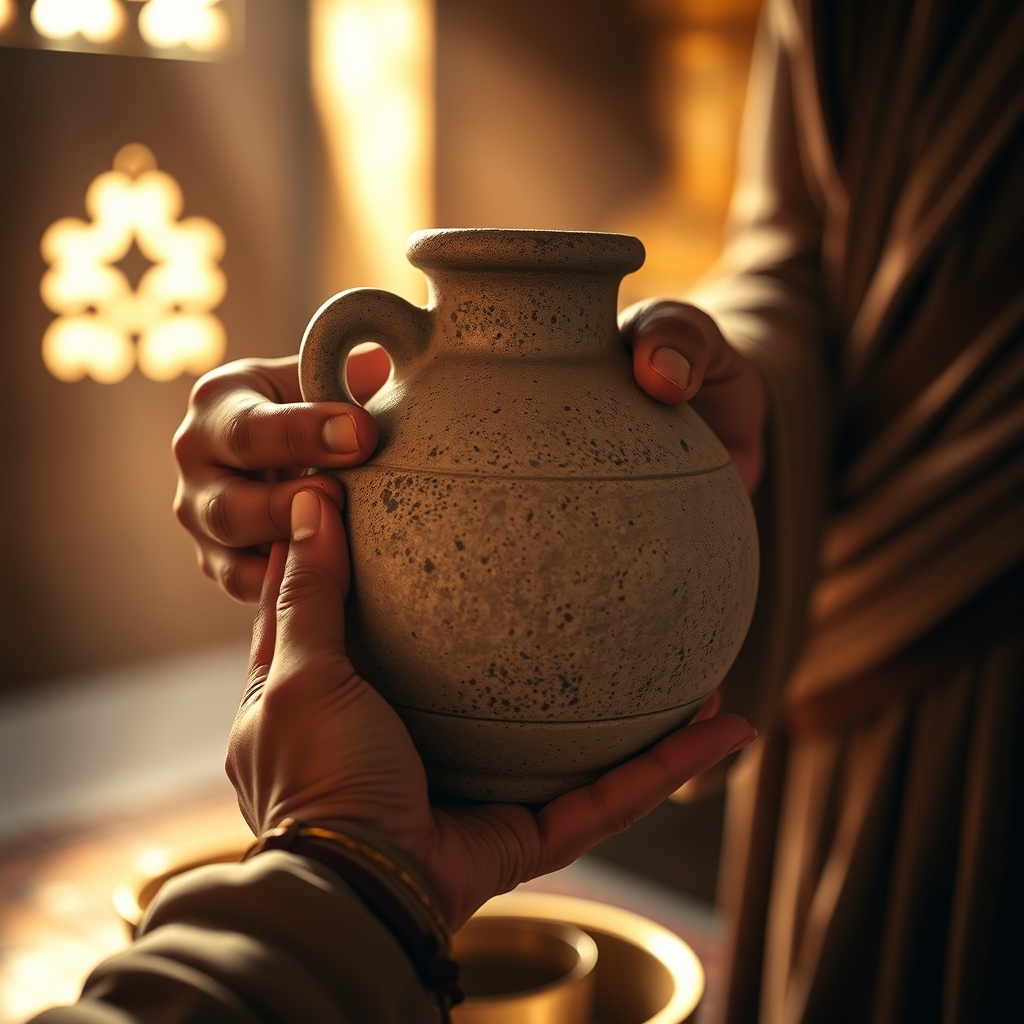
John 2:1-11 recounts the first miracle Jesus performed, turning water into wine at a wedding in Cana of Galilee. This sign revealed His divine glory and caused His disciples to believe in Him, demonstrating that Jesus is the Son of God who cares deeply about the needs of His people.
In the quiet village of Cana in Galilee, an unassuming wedding celebration became the setting for something extraordinary. When the wine ran out—a moment of real human need and potential embarrassment—Mary, the mother of Jesus, looked to her Son for help. What happened next would mark the beginning of something far beyond a party miracle. In John 2:1-11, we encounter the very first sign Jesus performed publicly, a powerful act that revealed not only His divine authority over all creation but also the depths of His compassion for ordinary people in the ordinary moments of life.
Have you ever wondered what it truly means when Scripture says Jesus “manifested His glory” at that wedding? What can we learn from a story that, on the surface, appears to be about saving a wedding reception from running out of wine? As we walk through John 2:1-11, you’ll discover layers of meaning woven into this beautiful account—meaning that speaks directly to the identity of Jesus Christ, the power of obedience, and an invitation still extended to every heart today. Whether you’re a new believer exploring the Gospel of John or a mature Christian seeking fresh insight, this passage holds truths that will deepen your understanding of who Jesus is and why He came.
What Happened at the Wedding at Cana in John 2:1-11?
The Setting: A Wedding in Cana of Galilee
The Gospel of John opens its account of Jesus’ public ministry with a remarkable event. John 2:1-11 records the very first miracle Jesus performed. It took place at a wedding feast in the small village of Cana of Galilee. This was not a grand palace event. It was a humble, local celebration. Yet, it became the stage for the glory of God to be revealed.
Weddings in first-century Jewish culture were deeply significant occasions. They often lasted several days. Family and friends gathered to celebrate the union of a bride and groom. Running out of wine at such an event would have been a serious social embarrassment. It would have brought shame upon the host family. Into this very human moment of need, Jesus stepped forward.
Jesus’ mother, Mary, was present at the wedding. So were Jesus and His newly called disciples. The fact that Jesus attended this celebration is meaningful. He did not avoid ordinary life. Instead, He entered into it fully. He shared in the joy of the people around Him. This tells us something beautiful about our Savior. He cares about the details of our lives.
Mary’s Request and Jesus’ Response
When the wine ran out, Mary noticed the problem. She turned to Jesus and told Him, “They have no wine” (John 2:3). This simple statement carried deep faith. Mary knew who her Son was. She had carried Him in her womb. She had watched Him grow. And now she trusted Him to act.
Jesus’ response at first may seem surprising. He said, “Woman, what does this have to do with Me? My hour has not yet come” (John 2:4). This was not a harsh rebuke. In fact, the term “Woman” was a respectful form of address in that culture. Jesus was pointing to the fact that His mission would unfold according to the Father’s perfect timing. He was not acting on human prompting alone. He was following the divine plan of God.
Nevertheless, Mary did not waver in her faith. She turned to the servants and gave a powerful instruction. She said, “Do whatever He tells you” (John 2:5). These words are among the most important in this entire passage. They are words for every believer to carry in their hearts. The key to experiencing the power of Jesus is simple obedience. When we do whatever He tells us, amazing things happen.
The Miracle of Turning Water into Wine
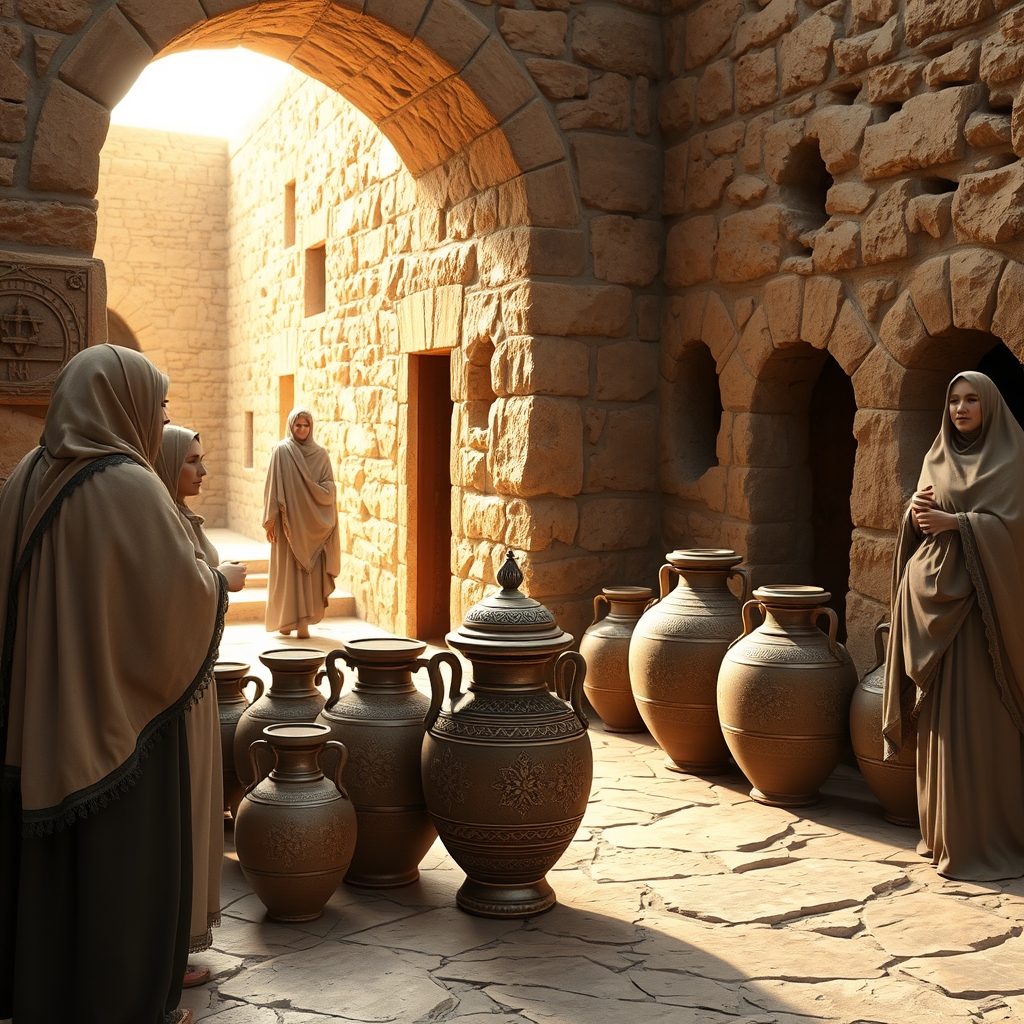
Nearby stood six stone water jars. These were used for Jewish ceremonial washing. Each jar held twenty to thirty gallons. Jesus told the servants to fill the jars with water. They filled them to the very top. Then He told them to draw some out and take it to the master of the feast.
What happened next was extraordinary. The water had become wine. Not just any wine, but the finest wine the master of the feast had ever tasted. He called the bridegroom and said, “Every man serves the good wine first. Then the cheap wine after the guests have had too much to drink. But you have saved the best for last” (John 2:10).
This miracle was not a magic trick. It was a divine sign. John makes this clear in verse 11. He writes, “This, the first of His signs, Jesus did at Cana in Galilee, and manifested His glory. And His disciples believed in Him” (John 2:11). The word “sign” is important. It means this miracle pointed to something far greater than itself. It pointed to the identity and power of Jesus Christ.
Consider the details of this miracle:
- Jesus created something from nothing. Water does not naturally become wine. Only the Creator of all things could accomplish this.
- He did it instantly. There was no process or delay. His word alone brought about the transformation.
- The quality was unmatched. The wine Jesus made was the best. This reflects the abundance of God’s grace. He always gives His best to those who trust Him.
- He used ordinary jars. The vessels were simple stone containers. God delights in using ordinary things for His extraordinary purposes.
This miracle at Cana was the beginning of Jesus’ public signs. It set the stage for everything that would follow. Through this one act, Jesus revealed His divine authority over creation. He showed that He is Lord over the natural world. And He invited His disciples, and all who would hear this account, to place their faith in Him.
The story of the wedding at Cana is not just a historical event. It is a living testimony to who Jesus is. He is the Son of God. He is the Creator. He is the One who brings joy, abundance, and glory into the ordinary moments of our lives. When we bring our needs to Him and obey His Word, He is faithful to act beyond anything we could ask or imagine (Ephesians 3:20).
What is the meaning of John 2:1-11?
The passage of John 2:1-11 holds profound meaning for every believer. At its core, it reveals the identity, power, and compassion of Jesus Christ. Furthermore, this miracle teaches us about His Kingdom and His desire to bring joy and transformation into our lives. Let us explore the deep truths contained in this beautiful account.
A Sign of Jesus’ Divine Power
First and foremost, the miracle at Cana was a powerful demonstration of Jesus’ divine authority. He did not use any special tools or rituals. He simply spoke, and the water became wine. This was the first public sign that He was far more than a teacher or a prophet.
Consider the details of this miracle:
- Instantaneous Transformation: The change happened at Jesus’ command.
- Unseen by the Crowd: Only the servants knew what had truly happened.
- Superior Quality: The master of the feast declared the new wine to be the best.
- Abundance: There was more than enough for everyone at the wedding.
As a result, His disciples saw His glory and believed in Him. This miracle was a clear sign that Jesus is the Son of God, the Creator of all things. He has power over the very elements of creation.
The Symbolism of the New Wine
In addition to demonstrating His power, the new wine carries deep spiritual symbolism. Throughout the Bible, wine often represents joy, blessing, and the goodness of God. Therefore, the transformation of water into wine points to the new life and abundant joy that Jesus brings.
Consider these symbolic connections:
- Water for Purification: The stone jars were used for Jewish ceremonial washing. This represented the old law.
- New Wine: The wine Jesus created represents the new covenant through His blood.
- Abundance: Jesus did not provide just enough. He provided an overflowing abundance of the best wine.
- Joy and Celebration: Wine is associated with feasts and gladness. Jesus came to restore joy.
Furthermore, this miracle foreshadowed the ultimate gift of salvation. Just as He transformed water into wine, He transforms our lives through His death and resurrection. He takes what is ordinary and makes it extraordinary by His grace.
The Beginning of Jesus’ Signs
John specifically notes that this was the first of Jesus’ signs. It marked the beginning of His public ministry. From this moment, His mission to reveal the Father’s love and bring salvation to the world was set in motion.
This initial sign established a pattern for all that would follow:
- Revelation of Glory: Each sign pointed to His divine nature.
- Deepening Faith: The disciples’ belief grew with each miracle.
- Compassion in Action: Jesus responded to a real human need.
- Pointing to the Cross: Every miracle ultimately pointed to His sacrifice for our sins.
As John 2:11 states, “This, the first of his signs, Jesus did at Cana in Galilee, and manifested his glory. And his disciples believed in him.” The meaning of this passage is clear. Jesus is Lord. He cares for us. And He invites us to trust Him with every detail of our lives.
What is the lesson learned in John 2:1-11?
Obedience to Jesus Brings Blessing
One of the clearest lessons from John 2:1-11 is the power of simple, trusting obedience. When Jesus instructed the servants to fill the jars with water, He gave an unusual command. Yet the servants obeyed without hesitation. Consequently, they witnessed something miraculous. Jesus turned ordinary water into the finest wine imaginable.
Furthermore, this pattern runs throughout the entire Bible. God often asks us to do things that do not make immediate sense. However, when we obey, He moves on our behalf. James 1:22 reminds us to “be doers of the word, and not hearers only.”
- The servants obeyed even when the task seemed pointless.
- Jesus rewards faithful obedience with abundant blessing.
- Our role is to trust and act on His Word.
Jesus Cares About Our Everyday Needs
This miracle reveals something deeply personal about Jesus. He did not perform this sign to impress religious leaders or political figures. He acted at a family wedding, in a small village, to solve a practical problem. A family faced potential embarrassment. Jesus stepped in out of compassion.
In addition, He was not bothered by His mother’s request. Even though His time had not fully come yet, He responded to her concern. This shows us that Jesus is not distant or disconnected from daily life. Rather, He cares about celebrations, family, and even small inconveniences.
Philippians 4:19 promises that “my God will supply every need of yours according to His riches in glory in Christ Jesus.”
Trusting God’s Timing
Mary approached Jesus and said, “They have no wine.” Her concern was real and urgent. Jesus initially responded in a way that might have seemed dismissive. Yet Mary did not argue. She simply instructed the servants to do whatever He said.
As a result, Jesus acted precisely when the time was right. He did not rush ahead. Likewise, He did not refuse entirely. He moved in His perfect timing and provided more than enough.
Trusting God’s timing requires patience and surrender. Ecclesiastes 3:1 states, “To everything there is a season, and a time to every purpose under heaven.” [1]
When we wait on Jesus, we discover that His timing is always perfect. The water became wine at exactly the right moment. Similarly, He ministers in our lives at the right moment for His glory.
What two lessons can we learn from the wedding at Cana?

The miracle at the wedding in Cana is rich with meaning for every believer. From this single passage, we can draw powerful truths about who Jesus is and how He wants to be part of our daily lives. Here are two foundational lessons we can learn from John 2:1–11.
Lesson 1: Jesus Is Lord Over All Creation
At the heart of the miracle is a stunning declaration of divine authority. Jesus did not use magic tricks or human bargaining to fix the wine shortage. Instead, He spoke, and the laws of nature obeyed Him completely.
This was not a small gesture. The water pots held roughly 120 to 180 gallons of water. With a single word, Jesus transformed every drop into the finest wine—water heater-sized jars becoming the source for the best-quality drink at the wedding feast. [2]
What does this reveal to us?
- Jesus is sovereign over the physical world.
- He created every molecule in those water pots and holds them together by His word.
- Nothing is impossible for Him, including the situations we bring to Him.
- He is not limited by shortages, deadlines, or human impossibility.
No human hands reshaped those clay jars. Only the Creator of all things could command water to become wine instantly. This sign confirmed that Jesus is not just a teacher or prophet. He is the Son of God, and in Him the fullness of deity dwells bodily (Colossians 2:9).
Lesson 2: Invite Jesus Into Every Area of Your Life
This miracle did not happen in a temple or on a mountaintop. It took place at a family wedding—an everyday social event. Jesus and His disciples were guests, not the main speakers. Yet before the day was over, He was at the center of a miracle that changed everything.
This shows us something vital: Jesus wants to be part of every season and setting of our lives. Whether it is a wedding, a job loss, a family dispute, or a quiet morning at home, He is drawn to our deepest needs and joyful celebrations alike.
Consider how Mary responded when the family ran out of wine. She brought the problem straight to Jesus. She did not wait until everything was perfect. She simply said, “They have no wine,” and then told the servants to obey whatever He said (John 2:3–5).
From her example we learn to:
- Bring our concerns to Jesus early, not as a last resort.
- Present the need without demanding a specific outcome.
- Step back and let Him work in His own way and timing.
- Notice how His response often exceeds what we imagined.
The master of the feast did not know the wine had been water minutes earlier. Yet he tasted the best—and newest—quality at the celebration. Jesus still works in ways that amaze those around us, often without anyone knowing except those who have placed their trust in Him.
Both of these lessons from Cana point us to a bigger truth. If Jesus is Lord over all creation and invites Himself into our daily affairs, then our response is simply to believe and obey. The servants filled the jars at His word. The disciples saw His glory and believed (John 2:11).
Today, He calls us to do the same:
- Trust His power over every impossible circumstance.
- Welcome Him into every corner of your life.
- Obey His commands, even when you do not fully understand.
- Watch for His glory to be revealed in and through your story.
The wedding at Cana reminds us that following Jesus is not reserved for Sunday mornings. It is a daily walk with the Lord of creation who delights in meeting us right where we are.
How Does John 2:1-11 Reveal the Identity of Jesus?
The passage of John 2:1-11 is far more than a heartwarming story about a wedding. It is a carefully crafted revelation of who Jesus truly is. John, the beloved disciple, calls this miracle the “first of his signs” (John 2:11). This purposeful declaration sets the stage for the entire Gospel: to reveal the identity of Jesus Christ.
Jesus Is the Son of God
This miracle is a powerful, public declaration of Jesus’ divine identity. The Gospel of John states that through this sign, Jesus “manifested his glory” (John 2:11). His glory is not a human achievement. It is an attribute of His divine nature, visible only to those with eyes to see.
The very act of commanding the jars and transforming the water demonstrates His absolute authority over creation. He does not simply provide wine; He creates it. He transforms the fundamental properties of matter with a word. This is the prerogative of God alone.
- He is not merely a teacher. He is the Creator, who spoke the universe into existence (John 1:3).
- He is not merely a prophet. He is the living Word of God, full of grace and truth.
- He is not merely a good man. “He was in the beginning with God. All things were made through him, and without him was not any thing made that was made” (John 1:2-3).
Therefore, by turning water into wine, Jesus reveals Himself as the Son of God, vested with the full power and authority of the Father. The word used for “manifested” in Greek is ephanērōsen. It signifies the making visible of what was previously hidden. This miracle unveiled His divine glory for the first time in His public ministry.
Glory Manifested Through Miracles
The miracles of Jesus are not random acts of kindness. In the Gospel of John, they are called “signs.” A sign points to something beyond itself. Every miracle is a window into the person and mission of Christ. John 20:30-31 explains this clearly: “Now Jesus did many other signs in the presence of the disciples… these are written so that you may believe that Jesus is the Christ, the Son of God.”
Furthermore, the specific nature of this sign at Cana is deeply symbolic. The transformation of water into wine is an act of new creation. During the Jewish Feast of Purification, the six stone jars were used for ceremonial washing. By transforming the water of the old covenant into the new wine of the kingdom, Jesus prophetically reveals His mission.
He is the one who brings the new covenant of grace. As He stated later, “No one puts new wine into old wineskins… but new wine is put into fresh wineskins” (Mark 2:22). In this way, the sign at Cana foreshadows the abundant, joyful, and transformative life found only in Him. His glory is the glory of the one and only Son from the Father.
The Servants’ Faith and the Reaction of the Master
The servants who obeyed Jesus offer a powerful lesson. They had no idea what would happen. Yet, they filled the jars to the brim (John 2:7). Their action required faith in Jesus’ word. They trusted His command, even when the outcome seemed impossible.
Moreover, the reaction of the master of the feast is significant. He is unaware of the miracle. He simply tastes the best wine of the night. He remarks to the bridegroom, “Every man serves the good wine first… you have kept the good wine until now” (John 2:10).
This statement is profoundly true in a spiritual sense. God saves His best for last. In Jesus, the “good wine” has finally arrived. He is the culmination of God’s plan. He is the living water and the true vine (John 4:10-14, John 15:1). The miracle at Cana invites all who witness His glory and believe. As the scripture says, “His manifest glory was revealed, and his disciples believed in him” (John 2:11).
Consequently, this event is a call to faith. It reveals a Jesus who is Lord of creation, source of new life, and worthy of all belief. The identity of Jesus as the Son of God is the central truth unveiled at the wedding in Cana.
How to Apply the Message of John 2:1-11 to Your Life Today

Bring Your Needs to Jesus
One of the most beautiful truths found in John 2:1-11 is that Jesus cares about your everyday difficulties. The wedding in Cana ran out of wine. This would have caused great embarrassment for the family. Mary, the mother of Jesus, brought this seemingly small problem directly to her Son (John 2:3).
Whatever you are facing today, Jesus wants you to bring it to Him. Nothing in your life is too small for His attention. Consider these promises from Scripture:
- “Cast all your anxiety on Him because He cares for you.” — 1 Peter 5:7
- “Do not be anxious about anything, but in every situation, by prayer and petition, with thanksgiving, present your requests to God.” — Philippians 4:6
- “The Lord is near to all who call on Him, to all who call on Him in truth.” — Psalm 145:18
Just as Mary did not keep the problem to herself, you are invited to approach Jesus with confidence. He is your Savior, and He is also your closest friend. Whether your need is financial, relational, spiritual, or emotional, bring it before Him in prayer today. He already knows what you need before you ask, and He delights in meeting those needs in His perfect way and perfect timing.
Obey Whatever He Tells You
In John 2:5, Mary gave the servants one of the most powerful instructions in all of Scripture. She said, “Do whatever He tells you.” This simple statement holds the key to experiencing God’s miraculous work in your life. Before Jesus performed the miracle at Cana, the servants were told to fill six large stone jars with water — jars meant for Jewish purification rituals. There was nothing magical about filling those jars. Yet obedience came first.
Strong>Jesus often calls you to step in faith before the miracle is visible. The servants had no idea what would happen next. They simply obeyed. As a result, they got to witness something extraordinary — water transformed into the finest wine anyone had ever tasted.
Applying this truth to your daily life means:
- Follow Jesus’ command to love others, even when it is difficult (John 13:34-35).
- Trust His Word, even when circumstances seem impossible (Proverbs 3:5-6).
- Step out in faith, even when you cannot see the full picture (Hebrews 11:1).
Furthermore, Jesus said in John 14:15, “If you love Me, keep My commands.” Obedience is not about earning God’s favor — it is about opening the door for His glory to flow freely in your life. When you follow His instructions, even in the ordinary tasks, He can turn your ordinary into something miraculous.
Witness His Glory and Believe
John 2:11 tells us that through this first miracle, Jesus “revealed His glory, and His disciples believed in Him.” The transformation of water into wine was not merely about saving a wedding party from embarrassment. It was a divine declaration — a visible sign that the Son of God had come to bring something entirely new into the world.
The symbolism of the new wine points directly to the new covenant that Jesus would establish through His death and resurrection. In the Old Testament, wine often symbolized joy, blessing, and the promised Messianic age. Through this miracle, Jesus was revealing that the fulfillment of all of God’s promises was now present in Him.
Today, you can witness His glory in many ways:
- In creation — The heavens declare the glory of God (Psalm 19:1).
- In His Word — The Bible reveals who Jesus is and what He has done for you (John 5:39).
- In answered prayer — When God moves in your life, take notice and give Him praise.
- In the lives of believers — The transformed lives of those who follow Jesus testify to His power (2 Corinthians 5:17).
Just as the disciples believed after witnessing the miracle at Cana, God is inviting you to place your full trust in Jesus Christ today. Romans 10:9 promises, “If you declare with your mouth, ‘Jesus is Lord,’ and believe in your heart that God raised Him from the dead, you will be saved.” His glory is not something hidden or distant — it is real, it is available, and it is meant to transform your life completely.
The miracle at the wedding in Cana, recorded in John 2:1-11, reminds us that Jesus is Lord over every area of life — from the greatest crisis to the smallest need. Furthermore, it invites you to walk in obedience, to bring every concern before Him boldly, and to watch for His glory to be revealed in your life. He is the same yesterday, today, and forever (Hebrews 13:8). Trust Him, obey Him, and believe in Him — and He will do what only God can do.
Frequently Asked Questions
What is the meaning of John 2:1-11?
John 2:1-11 records the very first miracle Jesus performed. At a wedding in Cana of Galilee, the wine ran out. Mary, Jesus’ mother, told Him about the problem. Jesus then turned six large stone jars of water into the finest wine imaginable. This passage is far more than a nice story about solving a social problem. It is a profound declaration of who Jesus truly is.
The deeper meaning is threefold:
- It reveals Jesus’ divine power over creation. Only the Creator of the universe can transform the basic elements of water into wine instantly and completely.
- It symbolizes the New Covenant Jesus would establish. The old water pots used for Jewish purification rituals represented the old law. The new, overflowing wine points to the grace and abundance found in Christ. As Jesus later declares in John 6:35, “I am the bread of life.” Everything He does reveals His role as the fulfillment of God’s promises.
- It is the beginning of Jesus’ public signs. The Gospel of John carefully records seven miracles called “signs.” Each one points to a specific truth about Jesus’ identity. This first sign opens the door to everything that follows.
John himself tells us the purpose: “This, the first of his signs, Jesus did at Cana in Galilee, and manifested his glory. And his disciples believed in him” (John 2:11). The meaning is ultimately about seeing the glory of God in Jesus Christ.
For those exploring faith, this passage invites a powerful question: Who is Jesus to you? He is not merely a moral teacher or a good man. He is the Lord of all creation, able to meet every human need with supernatural sufficiency.
What is the lesson learned in John 2:1-11?
The wedding at Cana teaches several central lessons that apply directly to our walk with Jesus today.
The most important lesson is that obedience to Jesus brings blessing. The servants did exactly what Jesus told them to do. They filled the jars, and they drew out the wine. They did not question. They did not doubt. They simply obeyed. As a result, they witnessed a miracle.
Consider these key lessons:
- Jesus cares about our everyday needs. A wedding celebration is not a life-or-death crisis. Yet Jesus chose to act. This shows us that no concern is too small to bring to Him (Philippians 4:6).
- Trusting God’s timing is essential. Mary said to the servants, “Do whatever he tells you” (John 2:5). She knew the answer was coming, but she waited for Jesus to act in His timing. God’s timing is always perfect (Isaiah 55:8-9).
- The best comes last. Jesus saved the finest wine for last. This reveals that God’s blessings often surpass our expectations. His gifts are always better than anything we could provide ourselves.
The lesson ultimately leads us back to trust itself. When we bring our needs to Jesus and obey His Word, we position ourselves to receive His best.
What two lessons can we learn from the wedding at Cana?
While John 2:1-11 teaches us many truths, two central lessons stand above the rest.
Lesson 1: Jesus is Lord over all creation. Water does not become wine on its own. Natural laws do not suddenly reverse. Yet Jesus spoke, and it was done. He is not bound by the physical world because He created it (Colossians 1:16). The God who spans the galaxies also holds every detail of your life in His hands.
Lesson 2: Invite Jesus into every area of your life. He attended a simple wedding celebration. He was not too important or too busy to be present. When we invite Jesus into our daily moments — our work, our relationships, our celebrations, and our struggles — He transforms the ordinary into something extraordinary.
These two lessons work together. When we recognize Jesus as Lord, we naturally welcome Him into every part of our lives. And when He is present, His glory is revealed.
What generation will not pass away?
This question is often raised alongside discussions of John 2:1-11, though the specific reference comes from Jesus’ words in the context of end-times teaching. In Matthew 24:34, Jesus declared, “Truly, I say to you, this generation will not pass away until all these things take place.”
Some readers interpret “this generation” as referring to the generation alive when Jesus spoke. Others see it as the generation that witnesses the signs preceding His return. There are also scholars who understand “generation” as referring to a type of people, such as the Jewish people, who will endure until fulfillment comes.
Regardless of the interpretive view, the core message is the same. Jesus’ words will never pass away (Matthew 24:35). His promises are eternal. Every generation lives under the reality that His return is certain.
For believers today, this truth is not meant to produce fear. Rather, it should produce readiness and hope. We serve a God who keeps every promise. His kingdom is coming, and those who place their faith in Him have nothing to fear (1 John 4:18).
As you study passages like John 2:1-11, let them build your confidence in Christ. He is the same yesterday, today, and forever (Hebrews 13:8).
What is the main message of John 2:1-11?
The main message of John 2:1-11 is this: Jesus Christ is the Son of God, and through Him, God’s glory is revealed.
John structured his entire Gospel around this point. He wrote, “These are written so that you may believe that Jesus is the Christ, the Son of God, and that by believing you may have life in his name” (John 20:31). Every miracle, every conversation, every act recorded in his Gospel serves this single purpose.
At Cana, the disciples saw Jesus’ glory for the first time. They witnessed water become wine. But this was only a glimpse of the greater glory to come — the glory of the cross, the resurrection, and the promise of eternal life for all who believe.
Scripture is clear about who Jesus is:
- He is “the way, and the truth, and the life” (John 14:6).
- He is the Lamb of God who takes away the sin of the world (John 1:29).
- He offers salvation to all who call on His name (Romans 10:13).
Jesus is not a myth. He is not a legend. He is the risen Son of God, fully divine and fully alive. The miracle at Cana was the first sign in a life that would change everything.
If you are searching for truth about Jesus, we invite you to keep reading His Word. The Bible is not merely a historical document. It is the living, inspired Word of God (2 Timothy 3:16). As you read, ask the Holy Spirit to open your heart. The same Jesus who turned water into wine is ready to transform your life today.
“If you confess with your mouth that Jesus is Lord and believe in your heart that God raised him from the dead, you will be saved” (Romans 10:9).