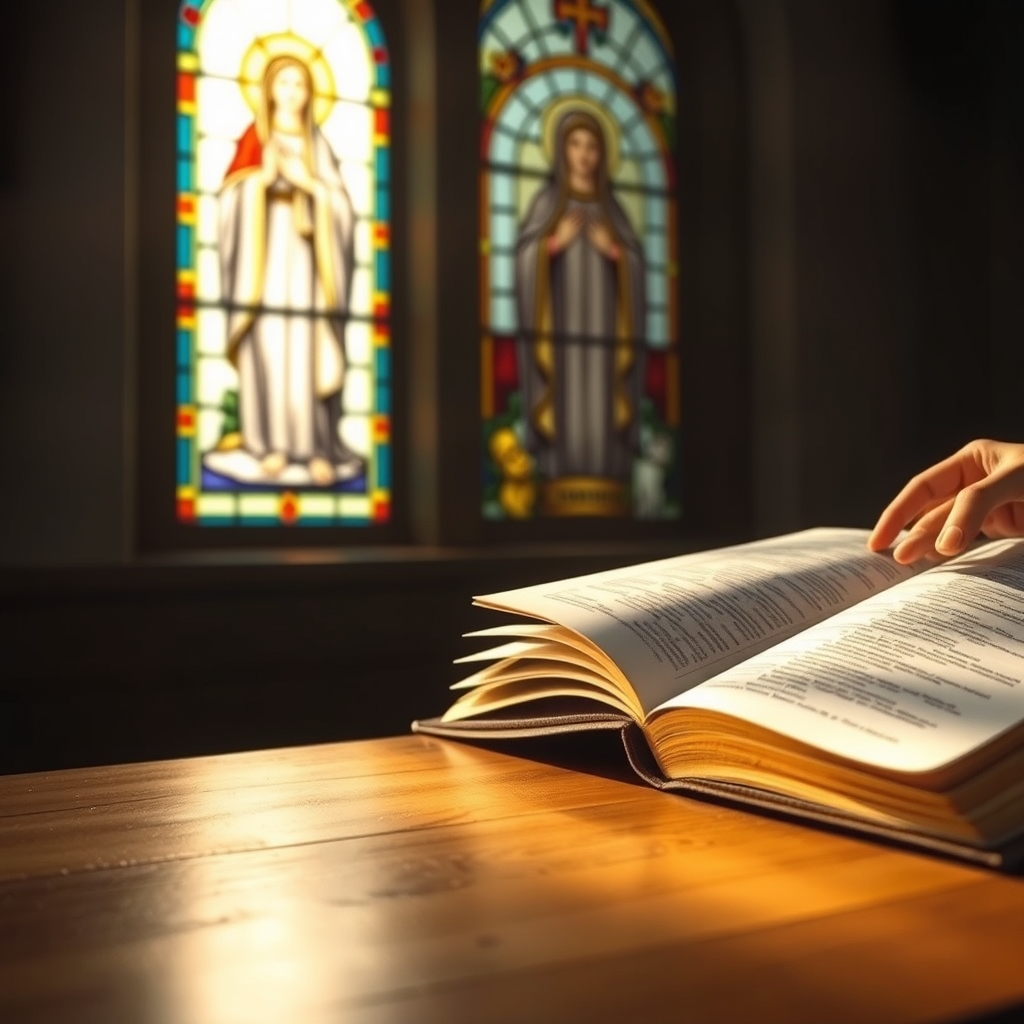
Jesus and Mary (often searched as ‘Jesus Marie’) were mother and son according to the Bible. Mary, also known as the Virgin Mary, was chosen by God to give birth to Jesus Christ, the Son of God and Savior of the world, as foretold by the prophets and recorded in the Gospels of Matthew, Mark, Luke, and John.
Throughout history, the relationship between Jesus and Mary has been the subject of intense curiosity, speculation, and even controversy. From Hollywood novels to internet theories, countless claims have circulated — some suggesting that Jesus had a wife named Marie, others elevating Mary to a place that Scripture never intended. For those searching for the truth about Jesus Marie, it is essential to turn not to popular culture or extra-biblical myths, but to the authoritative Word of God. The Bible presents a clear and beautiful picture of who Mary was, what her role was in God’s plan of salvation, and why Jesus Christ — not Mary — stands alone as the center of the Gospel.
In this article, we will explore the biblical truth about Mary, the mother of Jesus, and address the claims that have confused many believers and seekers alike. We will examine what Scripture actually says about Mary’s identity, her faithfulness, and her place in God’s redemptive plan — a plan that finds its fulfillment not in any human relationship, but in the death and resurrection of Jesus Christ, the Son of God. Whether you are a new believer or a mature Christian seeking clarity, this article is designed to ground you in the unchanging truth of God’s Word.
Who Was Mary, the Mother of Jesus?

Mary’s Full Name and Background in the Bible
Mary, the mother of Jesus, is one of the most honored women in all of Scripture. Her full name in the original biblical texts is Miriam (Μαριάμ in Greek), the same name as Moses’ sister in the Old Testament. She was a young Jewish woman from Nazareth, a small town in Galilee. Furthermore, she was betrothed to Joseph, a carpenter and a righteous man from the lineage of King David.
Mary’s background was humble. She came from an ordinary family in an overlooked town. Yet God chose her for the most extraordinary role in human history. The Bible describes her as a woman of deep faith and quiet strength. When the angel Gabriel appeared to her, she was likely a teenager, living a simple life of devotion to God.
Here are key facts about Mary’s background:
- Her name: Miriam (Mary) means “beloved” or “wished-for child.”
- Her hometown: Nazareth in Galilee (Luke 1:26).
- Her family: Descendant of King David’s line through Joseph (Luke 3:23-38).
- Her character: Described as “highly favored” by God (Luke 1:28).
- Her faith: She believed God’s promises even when they seemed impossible (Luke 1:45).
Mary’s story reminds us that God often chooses the humble and the faithful for His greatest works. As the apostle Paul wrote, “God chose the foolish things of the world to shame the wise” (1 Corinthians 1:27).
Mary’s Role in God’s Plan of Salvation
Mary played a unique and irreplaceable role in God’s plan of salvation. She was chosen to be the mother of Jesus Christ, the Son of God. This was not an accident or a coincidence. It was part of God’s eternal plan to redeem humanity from sin.
From the very beginning, Scripture pointed to this moment. In Genesis 3:15, God promised that a descendant of Eve would crush the serpent’s head. Mary was the woman through whom that promise was fulfilled. When the angel Gabriel announced that she would conceive by the Holy Spirit, Mary responded with beautiful faith: “I am the Lord’s servant. May your word to me be fulfilled” (Luke 1:38).
Mary’s role can be understood in several important ways:
- The New Eve: Just as Eve’s disobedience brought sin, Mary’s obedience brought the Savior into the world.
- The Ark of the New Covenant: Just as the ark carried God’s presence in the Old Testament, Mary carried God Himself in her womb.
- A Model of Faith: Her willingness to surrender to God’s will inspires believers to trust Him completely.
- A Witness to Christ: She testified to Jesus’ identity throughout her life, from the manger to the cross.
However, it is essential to understand that Mary was not the source of salvation. She was the vessel God used. Salvation comes only through Jesus Christ, her Son. As Jesus Himself said, “Whoever does the will of my Father in heaven is my brother and sister and mother” (Matthew 12:50). Mary’s greatest honor was pointing others to her Son.
The phrase “Jesus Marie” sometimes appears in searches, but it is important to clarify: Jesus and Mary were not a couple. Mary was His mother, and her entire life was devoted to fulfilling God’s plan through Him. The Bible makes this relationship clear and sacred. Mary’s faithfulness reminds us that true greatness comes from serving the Lord, no matter how humble the task may seem.
In the end, Mary’s story is not about her alone. It is about the God who chose her, the Son she bore, and the salvation He brought to the world. As we study her life, we are drawn closer to Jesus, the true center of our faith.
Was Jesus and Marie a Couple? Addressing the Claim That Mary Magdalene Was Jesus’ Wife

What Does the Bible Actually Say?
One of the most persistent and misleading claims in modern popular culture is the idea that Jesus and Mary Magdalene were married. This theory has been promoted by fictional works like The Da Vinci Code, but it has absolutely no basis in the Bible or in credible historical scholarship. In fact, the Bible never once mentions Jesus having a wife.
The complete silence of Scripture on this matter is deeply significant. Consider the following facts directly from God’s Word:
- The Gospels never record Jesus marrying. Matthew, Mark, Luke, and John all document Jesus’ ministry, teachings, death, and resurrection without ever mentioning a spouse [1]
- Mary Magdalene is mentioned by name 12 times in the Gospels, and in every instance she is portrayed as a devoted follower of Jesus, never as His wife [1]
- At the crucifixion, Jesus entrusts His mother Mary to the care of the apostle John (John 19:26-27), which strongly suggests that Jesus had no wife to care for her mother in His absence
- Mary Magdalene is the first witness to the empty tomb (John 20:1-2) and the first person Jesus appeared to after His resurrection (John 20:14-18), a role consistent with devoted discipleship, not marriage
The term often used, “Jesus Marie,” appears in some cultural and fictional contexts, but it finds no support whatsoever in Scripture. The Bible presents Jesus as the sinless Son of God who came to fulfill a divine mission. That mission was to seek and save the lost (Luke 19:10) and to lay down His life as a ransom for many (Mark 10:45).
Why the ‘Jesus’ Wife Name’ Theory Contradicts Scripture
The claim that Jesus had a wife is not merely an innocent question. It fundamentally undermines the core message of the Gospel. Let us examine why:
| The Claim | What Scripture Teaches |
|---|---|
| Jesus and Mary Magdalene were a couple | Jesus was sinless (2 Corinthians 5:21, Hebrews 4:15). Marriage was God’s good design for humanity, but Jesus’ mission required total, undivided devotion to His Father’s will (Luke 22:42). |
| Church leadership suppressed their relationship | There is no historical, archaeological, or textual evidence for this claim. Early Christian writings never hint at such a conspiracy. The apostles wrote extensively about Jesus’ teachings and resurrection without ever referencing a marriage [1] |
| The early Church erased Mary Magdalene’s true role | Mary Magdalene is honored in Scripture as the first witness of the resurrection, regardless of denomination. Her role stands unaltered across all biblical manuscripts dating back to the first centuries of Christianity [1] |
Furthermore, the entire biblical narrative presents Jesus as wholly devoted to His redemptive mission. His sacrifice on the cross required singular focus. As Paul wrote: “For you know the grace of our Lord Jesus Christ, that though He was rich, yet for your sake He became poor, so that you through His poverty might become rich” (2 Corinthians 8:9). His life was poured out entirely for our salvation.
In addition, the Gospels record moments where Jesus refers to His followers as His family rather than speaking of any earthly spouse (Mark 3:33-35), further affirming that His primary purpose was to fulfill the will of His Father.
Mary Magdalene’s True Legacy
Rather than reducing Mary Magdalene to a fictional romantic partner, the Bible presents her as a powerful example of faith and devotion. Consider what Scripture actually says about her:
- Jesus cast seven demons out of Mary Magdalene (Mark 16:9), transforming her life completely
- She supported Jesus’ ministry along with other women who traveled with Him and the apostles (Luke 8:1-3)
- She stood faithfully at the cross when most of the male disciples had fled (Matthew 27:55-56)
- She was commissioned by the risen Christ to proclaim the resurrection to the disciples (John 20:17-18), earning her the title “Apostle to the Apostles” in early Church tradition
In conclusion, the “Jesus Marie” narrative is a modern fabrication that contradicts the clear testimony of Scripture. The Bible reveals Jesus as the divine Son of God who lived a sinless life and died a sacrificial death so that anyone who believes in Him would not perish but have eternal life (John 3:16). Mary Magdalene’s true story is one of redemption and faithful witness to the risen Lord, and it deserves to be celebrated as the Gospel presents it.
Mary, Mother of Jesus in the Bible: Key Scriptures and Events

The Annunciation: Mary Hears the Good News (Luke 1:26-38)
In the grand story of God’s salvation, few moments are as breathtaking as the Annunciation. In Luke chapter 1, a young Jewish woman named Mary had an encounter that would change the course of history forever. Nothing prompted this visit. No one predicted it. God Himself chose her for a purpose beyond human imagination. The angel Gabriel was sent from God to a small town called Nazareth. He came to a virgin pledged to be married to a man named Joseph, from the house of David. And her name was Mary.
Gabriel greeted her with words that have echoed down through the centuries: “Greetings, you who are highly favored! The Lord is with you” (Luke 1:28, NIV). Mary was greatly troubled. She wondered what kind of greeting this was. She had no way of knowing that God Himself had looked upon her with grace. Furthermore, the angel moved quickly to calm her fears: “Do not be afraid, Mary; you have found favor with God” (Luke 1:30, NIV).
Then Gabriel shared the astonishing news. Mary would conceive and give birth to a Son.
- His name would be Jesus.
- He would be great and called the Son of the Most High.
- The Lord would give Him the throne of His father David.
- He would reign forever. His kingdom would never end.
Mary’s response was humble and honest. She asked, “How will this be, since I am a virgin?” (Luke 1:34, NIV). Gabriel explained that the Holy Spirit would come upon her. The power of the Most High would overshadow her. Therefore, the child born to her would be called holy, the Son of God. In addition, Gabriel confirmed that nothing is impossible for God. He reminded Mary that her relative Elizabeth, who was said to be barren, was already six months pregnant by God’s miraculous power.
Most importantly, look at Mary’s response. It is one of the most beautiful acts of faith ever recorded: “I am the Lord’s servant. May your word to me be fulfilled” (Luke 1:38, NIV). She did not demand more proof. She did not hold back. She surrendered her entire life to God’s will. As a result, through her willing obedience, God entered the world as a helpless baby. This moment is why the phrase “Jesus Marie” points to something sacred: God chose a human vessel to bring His Son into the world.
Mary did not seek greatness. She did not demand honor. She simply said yes to God. That single act of faith opened the door for the Savior to walk among us.
Mary at the Cross: A Mother’s Faithfulness (John 19:25-27)
If the Annunciation was the beginning of Mary’s journey with Jesus, then the cross was its most painful peak. She watched her Son die. Even so, her faithfulness never wavered. She stood at the foot of the cross when most of the other disciples had fled.
John 19:25 tells us that Mary was standing near the cross, along with her sister, Mary the wife of Clopas, and Mary Magdalene. Imagine the anguish. A mother should never have to watch her child suffer like this. Jesus was mocked. He was beaten. He was nailed to a wooden cross. Yet Mary was there. She did not look away. Her presence was a silent testimony of loyalty and love.
From the cross, Jesus saw His mother. He also saw His beloved disciple John. In that agonizing moment, Jesus did not think of His own pain. He looked ahead to Mary’s future. He said to her, “Woman, here is your son”, and to John, “Here is your mother” (John 19:26-27, NIV).
In this act, Jesus fulfilled one of the last things He could do in His earthly body. He provided for His mother’s care. He entrusted her into the hands of a faithful follower. This shows us that Jesus valued family. He honored Mary even in the worst suffering ever endured. Furthermore, the Scripture tells us that from that hour, John took Mary into his own home. He cared for her as his own mother.
There is something deeply moving about this scene. Mary had said yes to God at the Annunciation. Now, at the cross, she remained in that yes. She did not abandon Jesus. She did not deny Him. She simply stood and watched, and waited, trusting that God’s plan was still being fulfilled. Her faithfulness reminds all believers that standing by Christ, even in suffering, is an act of profound devotion.
Mary After Jesus’ Resurrection: Continuing in Prayer (Acts 1:14)
After Jesus’ death and resurrection, and after His ascension into heaven, Mary did not disappear from the story of faith. The Bible tells us clearly what she did next. She went home and prayed with the believers. She waited with them for the promise of the Holy Spirit.
Acts 1:14 gives us a simple but powerful image: All these were constantly in prayer, together with the women and Mary the mother of Jesus, and his brothers (NIV). Mary joined the early church in prayer. She gathered in the Upper Room alongside the apostles and other devoted followers of Jesus. She was not asking for a title. She was not seeking prominence. She was simply obeying the last instruction her Son had given.
Jesus had told His followers to wait in Jerusalem for the gift of the Holy Spirit (Acts 1:4-5). Mary, who had carried Jesus in her womb and raised Him from infancy, now waited with the body of Christ for the next move of God. What a witness this is. A woman who had been at the very beginning of Jesus’ life was also present at the very beginning of the church.
This moment reveals a vital truth about Mary. She was not simply the mother of Jesus in a biological sense. She was a devoted disciple. She loved her Son. She had obeyed God’s call at the Annunciation. She had stood beside Him at the cross. Now, in the Upper Room, she waited for the Holy Spirit. Her life was one continuous act of surrender to God’s plan.
Mary’s presence in the early church should encourage every believer. Obedience is not a one-time event. It is a daily posture. Mary’s story invites us to follow the example of one who heard God’s word and did not let go. She trusted God to the very end. And the God she trusted fulfilled every promise. The Holy Spirit came upon the church at Pentecost. The gospel spread across the world. Jesus Christ, the Son born to Mary, is Lord of all.
What Happened to Mary Magdalene After Jesus Died?
Her Witness to the Resurrection
Mary Magdalene holds a place of extraordinary honor in all of Scripture. After Jesus died on the cross, she did not disappear. Instead, she became the very first person to witness the risen Christ. This is not a minor detail. It is a profound truth that reveals the heart of God.
Early on the first day of the week, while it was still dark, Mary Magdalene went to the tomb where Jesus had been laid. When she arrived, she found the stone rolled away. She ran to tell Peter and John, saying, “They have taken the Lord out of the tomb, and we do not know where they have laid Him” (John 20:2, NKJV). Her grief was real. Her love for Jesus was unwavering, even in the face of death.
After the other disciples left, Mary remained at the tomb, weeping. Then she looked inside and saw two angels in white. They asked her why she was crying. She replied, “Because they have taken away my Lord, and I do not know where they have laid Him” (John 20:13). In that very moment, Jesus Himself appeared to her. At first, she did not recognize Him. She thought He was the gardener. But when He spoke her name — “Mary” — she knew. She cried out, “Rabboni!” which means Teacher (John 20:16).
Jesus then gave her a sacred commission. He said, “Go to My brethren and say to them, ‘I am ascending to My Father and your Father, and to My God and your God'” (John 20:17). Mary Magdalene became the first evangelist of the resurrection. She carried the most important news in human history — that Jesus is alive. The Gospel of Mark confirms this: “Now when He rose early on the first day of the week, He appeared first to Mary Magdalene, out of whom He had cast seven demons” (Mark 16:9).
This moment is deeply significant. In the ancient world, a woman’s testimony was often dismissed. Yet God chose Mary Magdalene to be the first witness. This shows that in Christ, there is neither male nor female (Galatians 3:28). God’s grace reaches everyone who believes.
Mary Magdalene’s Legacy of Faith
Mary Magdalene’s story does not end at the empty tomb. Her legacy of faith continues to inspire believers today. She was a woman whom Jesus had delivered from seven demons (Luke 8:2). That deliverance transformed her life completely. She became one of the most devoted followers of Jesus.
Her faithfulness is seen in several powerful ways:
- She followed Jesus to the cross. While many fled, Mary Magdalene stood near the cross with Jesus’ mother and other faithful women (John 19:25). Her courage in that moment was remarkable.
- She came to the tomb to anoint His body. Even after death, she wanted to honor Jesus. Her love was not conditional on His being alive. It was rooted in who He was and what He had done for her.
- She obeyed Jesus’ command to share the good news. She did not keep the resurrection to herself. She went and told the disciples. Her obedience changed the course of history.
- She is remembered in all four Gospels. Matthew, Mark, Luke, and John all record her presence at the crucifixion and the resurrection. This is a testament to her importance in God’s redemptive plan.
Some have tried to distort Mary Magdalene’s story. Claims about “Jesus Marie” being His wife have circulated in popular culture. However, these claims have no basis in Scripture. The Bible never suggests any romantic relationship between Jesus and Mary Magdalene. Such theories contradict the clear teaching of God’s Word and diminish the true beauty of her story.
Mary Magdalene’s real legacy is one of redemption, devotion, and bold witness. She was a woman set free by Jesus. She loved Him deeply. And she proclaimed His resurrection to the world. Her life reminds us that no one is beyond the reach of God’s grace. As Jesus said, “For God so loved the world that He gave His only begotten Son, that whoever believes in Him should not perish but have everlasting life” (John 3:16).
Today, Mary Magdalene stands as a powerful example for every believer. She shows us that faithfulness in suffering leads to joy. She teaches us that encountering the risen Christ changes everything. And she reminds us that the good news of Jesus is meant to be shared with everyone, everywhere.
Jesus Marie Wikipedia vs. Biblical Truth: What’s the Difference?
When searching for information about Jesus Marie online, you may come across various sources, including Wikipedia. While Wikipedia can be a helpful starting point for general knowledge, it is essential to understand its limitations when it comes to matters of faith and biblical truth.
Why Extra-Biblical Sources Cannot Override Scripture
Wikipedia and similar platforms are built on human research and editorial consensus. They often include perspectives from scholars, historians, and theologians. However, these sources frequently rely on extra-biblical texts, historical speculation, and cultural interpretations that do not always align with the Word of God.
Consider the following key differences:
- Wikipedia reflects human opinion: Articles are written and edited by people with varying beliefs, biases, and levels of biblical understanding. The content may include theories that contradict Scripture.
- Scripture is divinely inspired: The Bible is the inspired, authoritative Word of God. As 2 Timothy 3:16 tells us, “All Scripture is God-breathed and is useful for teaching, rebuking, correcting and training in righteousness.”
- Extra-biblical sources lack spiritual authority: Documents written outside the Bible, no matter how historically interesting, do not carry the same weight as God’s revealed Word.
- Historical context matters: Many claims found on Wikipedia about Jesus and Mary come from sources written decades or even centuries after the events they describe. The biblical accounts were written by eyewitnesses or close associates of eyewitnesses.
Furthermore, Wikipedia articles on religious topics often present multiple viewpoints side by side, including skeptical or secular perspectives. While this approach may seem balanced, it can inadvertently give equal weight to claims that directly contradict the Bible. For believers, this can be confusing and even misleading.
For example, some articles may present theories about Jesus and Mary Magdalene’s relationship that have no basis in Scripture. These theories often stem from fictional works or misinterpreted ancient texts. The Bible, however, is clear and consistent in its portrayal of Jesus Christ as the sinless Son of God and Mary as His faithful mother.
Sticking to the Authority of God’s Word
As Christians, our foundation must always be the Bible. God’s Word does not change with cultural trends or scholarly debates. Hebrews 13:8 declares, “Jesus Christ is the same yesterday and today and forever.” This means the truth about who Jesus is remains constant, regardless of what any outside source claims.
Here are practical ways to ensure you stay grounded in biblical truth:
- Read Scripture first: Before consulting any outside source, go directly to the Bible. Let God’s Word be your primary guide.
- Test everything against the Bible: When you encounter a claim about Jesus or Mary, compare it with what Scripture says. If it contradicts the Bible, reject it.
- Be aware of source bias: Understand that secular sources may not share a Christian worldview. Their conclusions may reflect skepticism rather than faith.
- Seek the Holy Spirit’s guidance: John 16:13 promises that the Spirit of truth will guide us into all truth. Pray for discernment as you study.
- Trust in God’s sovereignty: God’s Word has endured for thousands of years. It does not need human validation to remain true and powerful.
In addition, it is worth noting that the Bible itself warns us about false teachings and misleading information. In 1 Timothy 4:1, the Apostle Paul writes, “The Spirit clearly says that in later times some will abandon the faith and follow deceiving spirits and things taught by demons.” This is a sobering reminder to hold fast to Scripture.
Ultimately, the difference between Wikipedia and biblical truth comes down to authority. Wikipedia represents human understanding, which is limited and fallible. The Bible represents divine revelation, which is perfect and eternal. When we choose to anchor our faith in God’s Word, we stand on a foundation that will never shift or fail.
Jesus Christ is not a figure to be reinterpreted by every generation. He is the risen Lord, the Savior of the world, and the fulfillment of God’s promise. As Acts 4:12 states, “Salvation is found in no one else, for there is no other name under heaven given to mankind by which we must be saved.” Let us hold firmly to this truth, no matter what the world may say.
10 Fun Facts About Mary, Mother of Jesus
While the term “jesus marie” often appears in online searches, the Bible never presents Mary Magdalene as Jesus’ wife. Furthermore, Scripture consistently portrays Mary, the mother of Jesus, and Mary Magdalene as distinct individuals. Mary, the mother of Jesus, held a unique and sacred place in God’s plan of salvation.
Here are 10 fun facts about Mary, the mother of Jesus, drawn directly from Scripture:
- Her name was simply Mary. The most common form of her name in the New Testament is Μαριάμ (Mariam), appearing 12 times, and Μαρία (Maria), appearing 18 times.
- She was a descendant of King David. Both Matthew and Luke trace her lineage back to King David (Matthew 1:1-16; Luke 3:23-38).
- She was visited by the angel Gabriel. Gabriel announced she would conceive a son by the Holy Spirit (Luke 1:26-38).
- Her son is called Son of the Most High. The angel told her Jesus would reign over Jacob’s house forever (Luke 1:32-33).
- She sang a powerful song of praise. Known as the Magnificat, Mary’s song celebrates God’s mercy and faithfulness (Luke 1:46-55).
- She treasured things in her heart. After angels told shepherds about Jesus, “Mary treasured up all these things” (Luke 2:19).
- She was present at Jesus’ first miracle. John 2:1-11 records her role at the wedding at Cana.
- She stood near the cross. John 19:25 confirms Mary was present at the crucifixion.
- Jesus entrusted her to John’s care. From the cross, Jesus gave this final instruction (John 19:26-27).
- She prayed with the disciples after Jesus ascended. Acts 1:14 confirms Mary’s continued devotion in the early church.
Mary’s story inspires believers through her humility, faithfulness, and obedience to God.
While the “jesus marie” concept is popular in fiction and controversial theories, Scripture reveals a different truth. Mary, the mother of Jesus, was a devoted servant of God. Her faithfulness led to the birth of our Lord and Savior, Jesus Christ. Furthermore, her life continues to point believers toward Him as the only way to salvation (John 14:6).
Jesus Marie Breaking Bad: A TV Reference Explained
When searching online for information about Jesus and Mary, you may come across an unusual search term: “Jesus Marie Breaking Bad.” This phrase can be confusing for anyone seeking biblical truth. However, there is a straightforward explanation. It has nothing to do with Scripture. Instead, it refers to a memorable character from a popular television show.
Who Is Marie Schrader from “Breaking Bad”?
Marie Schrader is a fictional character from the award-winning AMC television series Breaking Bad. [2]. She is the wife of Hank Schrader, a DEA agent. Furthermore, she is the sister-in-law of the show’s main character, Walter White.
The show is a drama about a chemistry teacher who turns to making drugs. Marie’s storyline is a subplot within this larger narrative. Additionally, the show explores themes of morality, consequences, and family. However, none of this is related to the Bible.
How Does This Relate to Jesus and Mary?
At first glance, the names “Jesus” and “Marie” might seem to connect to the Bible. In the show, one main character is named Jesse Pinkman. Therefore, a search combining “Jesus” (a common name) and “Marie” could lead to this pop culture reference.
However, this connection is purely coincidental. The show’s creators did not design these characters to represent biblical figures. As a result, any attempt to find a spiritual link between “Breaking Bad” and the Gospel of Jesus Christ will be unsuccessful.
Staying Focused on Biblical Truth
For believers, it is important to distinguish between entertainment and Scripture. While television can be engaging, our faith must remain grounded in the Word of God. Pop culture references often distract from the real message of salvation.
In contrast, the Bible provides clear information about Jesus and His mother, Mary. Their lives are documented in the Gospels. Consequently, we must turn to the Bible, not television, for spiritual understanding.
Remember, Jesus Christ is the Son of God, as declared in Scripture.
- His birth is recorded in Matthew and Luke.
- His resurrection is the foundation of our faith (1 Corinthians 15:3-4).
- Mary was a faithful servant of God (Luke 1:38).
Ultimately, our focus should remain on Jesus. Television references, while interesting, hold no spiritual authority. Therefore, always prioritize studying the Bible to learn about the true Jesus and His mother, Mary.
Frequently Asked Questions
What color will we wear in heaven?
The Bible describes believers wearing white garments in the presence of God.
These robes symbolize purity, victory, and the cleansing of the soul.
Scripture explicitly states that our clothes come from the Lamb of God.
- Revelation 7:9: Describes a multitude in white robes.
- Revelation 3:18: Advises washing garments white in the blood of Christ.
- Isaiah 1:18: Promises that sins shall be made white as snow.
This imagery represents the righteousness of Jesus Christ covering our lives.
We do not choose our attire, for we are washed by His grace.
Ultimately, the color signifies our full redemption through the finished work of Jesus.
Which sin can God never forgive?
Jesus warns specifically against one sin in the Gospels.
Matthew 12:31-32 identifies this as the blasphemy against the Holy Spirit.
This is not a careless slip of the tongue or a momentary doubt.
It is a persistent, deliberate rejection of God’s testimony about Jesus.
- This sin involves attributing the Spirit’s work to an evil spirit.
- It hardens the heart until repentance becomes impossible.
- It represents a total refusal of the Gospel’s truth.
However, if you are worried about committing this sin, you have likely not.
A heart that fears offending God is far from hardened.
Therefore, the focus should be on repentance and faith in Christ.
What generation will not pass away?
This question comes from Jesus’ words regarding the End Times.
In Matthew 24:34, He assures us that His word will not fail.
The term “generation” implies a specific timeframe of prophecy fulfillment.
Most scholars agree this refers to the signs leading to His return.
- War and rumors of war: Signs of the times.
- Natural disasters: The beginning of birth pains.
- Persecution: The witness to the Gentiles.
While dates are unknown, the truth remains that He will come back.
We must remain vigilant and faithful in our daily walk.
Jesus encourages us to watch for His signs rather than fear the date.
Do Elon Musk believe in God?
Public figures often have private views that are not fully known.
However, the existence of God does not rely on any celebrity.
The Bible demands faith from every individual, regardless of their status.
Your personal relationship with Christ is the only thing that matters.
| Focus Area | Biblical Priority |
|---|---|
| Celebrity Beliefs | Variable; not saving faith. |
| Human Condition | All have sinned (Romans 3:23). |
| Personal Response | Believe in Jesus Christ. |
We should not look to world leaders for spiritual direction.
Instead, look to the Scriptures as the ultimate authority on truth.
God is the Creator of all men, rich or influential alike.
Mary, mother of Jesus full name
The Bible identifies the mother of Jesus simply as Mary.
Some translations or languages may use the name “Marie.”
This spelling is a variant, but the scriptural focus remains on Mary.
She is revered for her role in God’s plan of salvation.
Yet, our worship is directed solely toward Jesus Christ.
- Biblical Name: Mary (Greek: Maria).
- Key Role: The vessel for the Incarnation.
- Scriptural Emphasis: Her faith in the Gospel.
We must distinguish between historical fact and extra-biblical tradition.
The Gospels honor her faith, but Christ is the Savior.
We honor her story, but we trust in Him alone.
Sources
- https://www.biblegateway.com
- https://www.imdb.com/title/tt0903747/
- https://www.biblegateway.com/passage/?search=Revelation+7:9&version=NIV
- https://www.biblegateway.com/passage/?search=Matthew+12:31-32&version=NIV
- https://www.biblegateway.com/passage/?search=Matthew+24:34&version=NIV
- https://www.biblegateway.com/passage/?search=Romans+3:23&version=NIV
- https://www.biblegateway.com/passage/?search=Luke+1:26-38&version=NIV