
Jairus in the Bible was a synagogue ruler who desperately approached Jesus, pleading for Him to heal his dying daughter. Despite devastating news that she had already died, Jesus encouraged Jairus to believe, arrived at his home, and miraculously raised his daughter back to life, demonstrating His absolute authority over death and the power of faith.
In the bustling streets of Capernaum, one father understood something that many still struggle to grasp today — when all hope is gone, the only place to turn is toward Jesus. His name was Jairus in the Bible, and his desperate plea for his dying daughter would set in motion one of the most powerful miracle accounts recorded in Scripture. His story is not merely an ancient tale; it is a vivid, transformative encounter with the living Christ that speaks directly to the human heart.
Whether you have walked with the Lord for decades or you are just beginning to seek truth, the account of Jairus and his daughter will stir your faith and challenge you to believe that nothing — not death, not despair, not impossible circumstances — is beyond the reach of Jesus. In this article, we will explore who Jairus was in the Bible, the meaning of his name, the remarkable details of his encounter with Christ found in Mark, Matthew, and Luke, and what his story teaches us about faith, humility, and the unwavering power of Jesus to intervene in our darkest hour.
Who Was Jairus in the Bible?
One of the most powerful stories of faith in the entire Bible involves a man most people have never heard of until they come to know Jesus. His name was Jairus. The Jairus in the Bible narrative is one of the most compelling figures in all of Scripture. His encounter with Jesus Christ is recorded in three of the four Gospels, which shows just how important his story is for every believer to understand.
In this article, we will take a thorough look at Jairus in the Bible and his extraordinary encounter with the Son of God. We believe that every word of the Bible is inspired by God. It is the living, breathing Word of the Lord, and the account of Jairus is no exception.
Jairus Was a synagogue leader
Jairus held an important position in his community. He was a ruler of the synagogue, which means he was responsible for overseeing the worship services and the reading of God’s Word in the local gathering place of the Jewish people. This was no small role. Ruler of the synagogue was a position of great honor and trust within a Jewish community.[1]
As a synagogue leader, Jairus would have been:
- A respected and well-known man in Capernaum and the surrounding region
- Responsible for organizing the readings of the Torah and the Prophets
- Someone entrusted with maintaining order during worship gatherings
- A person looked up to by the entire community
- A man who had devoted his life to the service of God under the Old Covenant
A Father in Desperate Need
Despite his position and influence, Jairus faced every parent’s worst nightmare. His beloved daughter was dying. She was just twelve years old. This was every parent’s worst nightmare realized. The Bible tells us she was at the point of death.
Here is the most remarkable part of the story. When Jairus heard that Jesus was nearby, he did not send a servant. He did not wait for a more convenient time. Instead, he fell at the feet of Jesus and begged Him to come to his house. Mark 5:22-23 says:
“Then came one of the rulers of the synagogue, Jairus by name, and seeing him he fell at his feet and implored him earnestly, saying, ‘My little daughter is at the point of death. Come and lay your hands on her, so that she may be made well and live.'” (ESV)
Can you imagine this scene in your mind? One of the most respected religious leaders in the region publicly humbled himself before Jesus. He prostrated himself before the carpenter from Nazareth. For a man of his status, this act required extraordinary courage.
Why Jairus’ Story Matters for Us Today
The story of Jairus in the Bible matters because it reveals something profound about the nature of God, the character of genuine faith, and the limitless power of Jesus Christ. Furthermore, as we explore who Jairus was, we discover a mirror for our own spiritual lives.
Jairus’ story teaches us that:
- Social status means nothing in the face of crisis. No amount of wealth, reputation, or religious standing can shield us from suffering.
- Jesus responds to desperate faith. Christ did not turn Jairus away because of who he was. Instead, He went with him immediately.
- God uses interruptions for His glory. On the way to Jairus’ house, Jesus stopped to heal a woman who had been suffering for twelve years. What seemed like a delay was actually a divine appointment.
- Jesus has power over death itself. When messengers arrived to tell Jairus his daughter had already died, Jesus told him, “Do not fear; only believe” (Mark 5:36, ESV).
Jairus’ Faith Changed Everything
The Jairus in the Bible story is ultimately not just about a father and his dying daughter. Rather, it is about the unstoppable power of Jesus Christ. As the only begotten Son of God, Jesus demonstrated that He holds authority over sickness, death, and every circumstance we will ever face.
Jairus walked away from that encounter a transformed man. He came to Jesus as a desperate father. He would leave as a witness to the resurrection power of the Messiah.
“Death is no longer the final word for those who trust in the Lord Jesus Christ. Through His death on the cross and His glorious resurrection, Jesus conquered death once and for all. As Paul writes: ‘O death, where is your sting? O grave, where is your victory?’ (1 Corinthians 15:55, KJV).”[2]
If you are facing an impossible situation today, the story of Jairus in the Bible offers you something priceless: hope. The same Jesus who raised Jairus’ daughter from the dead is alive today. He is the same yesterday, today, and forever (Hebrews 13:8). Therefore, come to Him just as Jairus did. Fall at His feet. Bring your desperation, your grief, your fear. He is not too busy for you. He will never turn you away. Amen!
Meaning of Jairus in the Bible
`html
Every name in Scripture carries weight and purpose. The name Jairus is no exception. When we explore the meaning of Jairus in the Bible, we uncover more than just a historical label. We find a name that points to the very heart of who Jesus Christ is and what He came to do.
The Hebrew Meaning Behind the Name
The name Jairus (Greek: Ἰάειρος, transliterated from the Hebrew יָאִיר, “Yair”) means “He will awaken” or “He will enlighten.” This name derives from the Hebrew root word ‘or (אוֹר), meaning “light.” In its fullest sense, Jairus means “God will enlighten” or “He will give light.” This meaning is profoundly significant in light of the story that bears his name. [3]
Furthermore, the name speaks directly to the mission of Jesus Christ. Throughout Scripture, Jesus is consistently identified as the Light of the world. In John 8:12, Jesus declared, “I am the light of the world. Whoever follows me will never walk in darkness, but will have the light of life.”
Symbolic Significance of Jairus’ Name
The meaning of Jairus in the Bible extends beyond mere etymology. Consider the following symbolic connections:
- Light over darkness: Jesus brought spiritual light to Jairus’ darkest moment — the death of his daughter.
- Awakening from death: Jairus’ daughter was raised from the dead, fulfilling the meaning of his name — “He will awaken.”
- Revelation of Christ’s power: The story reveals that Jesus holds absolute authority over death itself.
- Hope in despair: Just as the name promises enlightenment, Jesus provided hope when all seemed lost.
In addition, the name Jairus reminds us that God often places meaning in the details of His Word. nothing in Scripture is accidental. The Holy Spirit inspired the authors of the Gospels to record this name and this story for a reason. As Romans 15:4 tells us, “For everything that was written in the past was written to teach us, so that through the endurance taught in the Scriptures and the encouragement they provide we might have hope.”
Jairus and the Biblical Theme of Light
Light is one of the most powerful themes in the Bible. It begins in Genesis 1:3, where God said, “Let there be light,” and it culminates in Revelation 21:23, where the New Jerusalem needs no sun because “the glory of God gives it light, and the Lamb is its lamp.”
Jairus’ story fits beautifully into this grand narrative. A desperate father came to Jesus in the darkness of grief. Jesus responded with the light of resurrection. The parallel is unmistakable. Every person who turns to Christ in their moment of deepest need encounters this same light. As Psalm 119:105 promises, “your word is a lamp for my feet, a light on my path.”
How the Name Points to Jesus
Ultimately, the meaning of Jairus in the Bible points us not to Jairus himself, but to Jesus. The name declares that God awakens, that God gives light. These are things that only the Son of God can do fully and completely.
This is the beauty of studying biblical names. They repeatedly direct our attention to Christ. Whether it means “God will awaken,” “He will enlighten,” or “God gives light,” the name Jairus proclaims the very mission Jesus fulfilled on this earth — to destroy the power of death and bring eternal life to all who believe (Hebrews 2:14–15).
As you continue reading about the story of Jairus, keep this meaningful truth in mind: God’s Word is filled with purpose, and even a name can lead us to a deeper understanding of His Son, Jesus Christ, our Lord and Savior.
`
What is the biblical story of Jairus?
The Encounter at the Synagogue (Mark 5:21–24)
The story of Jairus in the Bible begins with one of the most desperate, faith-filled encounters recorded in the Gospels. After crossing the Sea of Galilee, Jesus arrived on the western shore and was met by a large crowd. Among the people pressing toward Him was a man whose heart was broken and whose world was falling apart.
Jairus was not just any man. He was a ruler of the synagogue — a respected Jewish leader responsible for the oversight of worship, Scripture reading, and synagogue order (Mark 5:22). His position carried great authority and social standing. Yet none of that mattered now. Nothing could comfort him except one person: Jesus.
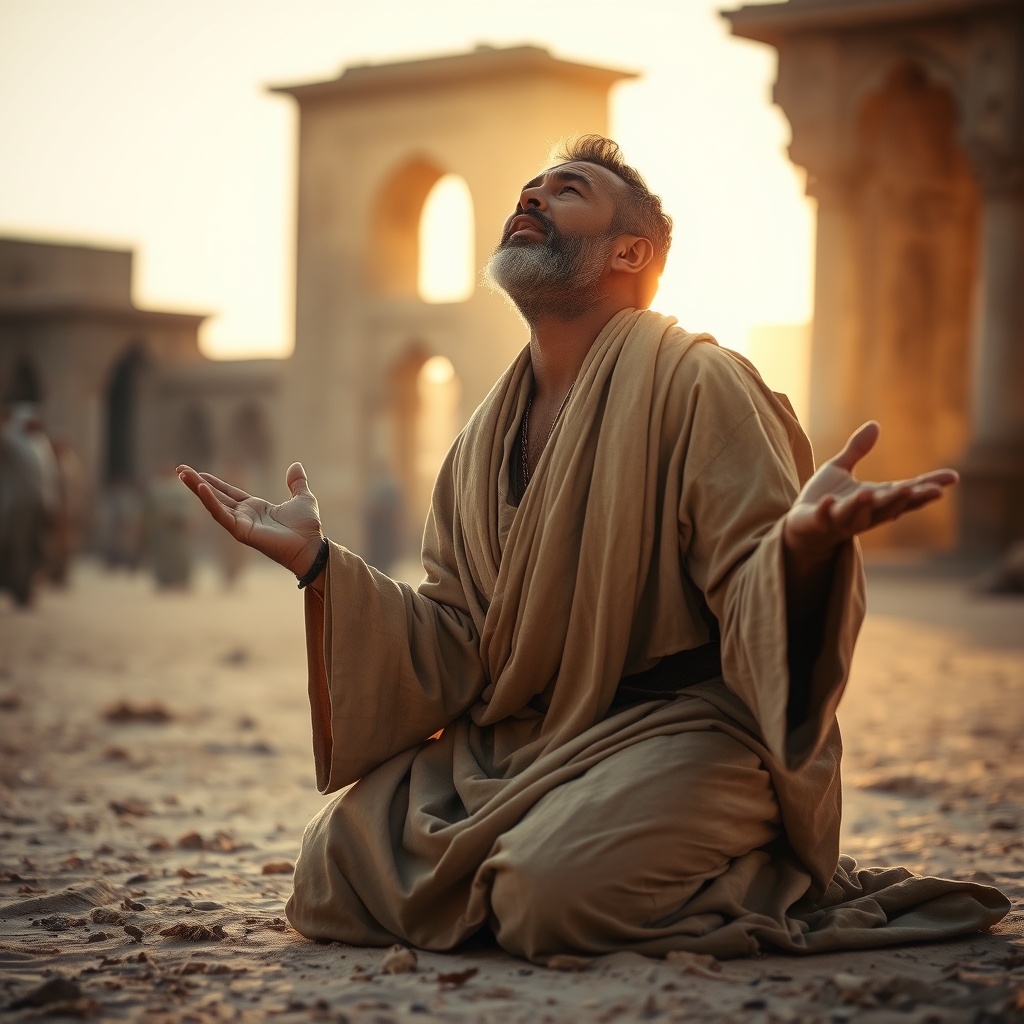
When Jairus saw Jesus, he did what no proud synagogue leader normally would do. He fell at Jesus’ feet. He humbled himself completely before the Son of God. His plea was desperate and specific.
“My little daughter is at the point of death. Come and lay Your hands on her, that she may be healed, and she will live.” — Mark 5:23 (NKJV)
Consider the faith behind these words. Jairus did not merely ask Jesus to pray for his daughter. He believed Jesus could actually heal her and raise her to life. He could have stayed home. He could have called a physician. Instead, he went straight to Jesus.
Scripture tells us that Jesus went with him immediately (Mark 5:24). He did not hesitate. He did not demand an explanation. He did not require Jairus to first clean up his reputation. Jesus simply responded to the cry of a desperate father’s heart.
This is a powerful reminder for every believer today. No matter how great your need, Jesus is willing to come to you. He does not turn away those who come to Him in genuine faith.
As the crowds followed and pressed against Jesus, they had no idea that the greatest miracle of that day had not yet even begun — and that the journey itself would become part of God’s plan.
The Interruption Along the Way (Mark 5:25–34)
As Jesus traveled toward Jairus’ home, the crowd became thick and chaotic. Among the throng of people was a woman who had been suffering from a chronic bleeding condition for twelve long years (Mark 5:25). She had spent all her money on doctors, yet her condition had only grown worse.
Under Jewish law, her condition made her ceremonially unclean. She was isolated, shunned, and marginalized by society. For twelve years, she lived on the fringes, unable to worship freely or enjoy normal relationships. Yet she carried a quiet, powerful faith.
She believed that if she could only touch the hem of Jesus’ garment, she would be healed (Mark 5:28). So she pressed through the crowd. She reached out her trembling hand. And the moment she touched His clothing, something supernatural happened.
“Immediately the fountain of her blood was dried up, and she felt in her body that she was healed of the affliction.” — Mark 5:29 (NKJV)
This is one of the most remarkable moments in all of Scripture. The woman received her healing the instant she touched Jesus. However, Jesus did not let the moment pass quietly. He stopped. He turned. He asked a question that seemed obvious.
“Who touched My clothes?” — Mark 5:30 (NKJV)
Why did Jesus ask this? Surely, He already knew who had touched Him. The answer is beautiful. Jesus wanted to draw her into a public declaration of faith. He wanted to restore not only her body but her dignity. He wanted the whole crowd — and the entire Church throughout history — to witness what faith accomplishes.
Trembling and afraid, the woman came forward and fell down before Jesus. She told Him the whole truth — her suffering, her hopelessness, and her healing. And Jesus spoke words that would echo for all eternity.
“Daughter, your faith has made you well. Go in peace, and be healed of your affliction.” — Mark 5:34 (NKJV)
He called her “Daughter” — a tender, loving word that revealed the heart of God. This outcast, this forgotten woman, was welcomed into the family of God by the Son of Himself.
Now, some might wonder: did this delay hurt Jairus? The answer is no. God’s timing is always perfect. This interruption was not a distraction from Jairus’ need. It was a divine setup to deepen his faith. What Jairus witnessed that day — the power of Jesus flowing from Him — would prepare him for the even greater miracle that lay ahead.
The Tragic News and Jesus’ Response (Mark 5:35–36)
Just as Jesus finished speaking to the healed woman, messengers arrived from Jairus’ house. The news they brought was devastating.
“Your daughter is dead. Why bother the Teacher any further?” — Mark 5:35 (NKJV)
Those words must have crushed Jairus. His worst fear had come true. His little girl had died. Every hope he had carried while running to find Jesus now seemed extinguished. The situation appeared hopeless by every human measure.
Yet Jesus immediately turned to Jairus with words of extraordinary power and comfort.
“Do not be afraid; only believe.” — Mark 5:36 (NKJV)
This simple command carries profound theological weight. Jesus did not say, “It’s too late.” He did not say, “I’m sorry.” He told Jairus to replace his fear with faith. He was pointing Jairus beyond the grave to the resurrection power that only God possesses.
What does this teach us? There is no situation too far gone for Jesus — not death itself, not the deepest despair, not the most impossible circumstance. Jesus’ power is not limited by time, biology, or human opinion.
Fear and faith cannot coexist in the same heart at the same moment. Jesus was inviting Jairus to choose faith — not based on circumstances, but based on who Christ is.
For every believer facing seemingly impossible news, this moment stands as an eternal reminder: Do not fear. Only believe.
The Miracle at Jairus’ House (Mark 5:37–43)
When Jesus arrived at Jairus’ house, chaos and grief filled the air. Professional mourners wailed loudly. Family members wept. Everyone assumed it was over. The little girl was dead, and nothing more could be done.
But Jesus spoke with divine authority.
“Why make this commotion and weep? The child is not dead, but sleeping.” — Mark 5:39 (NKJV)
The mourners laughed Him to scorn. They thought He was naive. They thought He did not understand the situation. But they did not understand who was standing in that room. This was no ordinary teacher. This was the Author of Life Himself.
Jesus put all the mockers outside. He would not allow unbelief to witness what He was about to do. Then He took only Peter, James, and John — along with the child’s parents — and entered the room where the girl lay.
He took the little girl by the hand and spoke two words in Aramaic that have echoed through the centuries.
“Talitha, cumi” — which is translated, “Little girl, I say to you, arise.” — Mark 5:41 (NKJV)
Notice the tenderness in His words. He did not shout a command like a military general. He spoke gently, as a father would speak to a sleeping child. And at His voice, death itself released its grip.
“And immediately the girl arose and walked, for she was twelve years of age. And they were overcome with great amazement.” — Mark 5:42 (NKJV)
The little girl who had been dead stood up and walked. Her body was fully restored. Her strength was fully returned. Jesus did not merely resuscitate her. He gave her life in its fullness.
Twelve years — she had lived for twelve years, and she had bled for twelve years. Both numbers point to divine completeness. God’s timing in this story is flawless and purposeful.
Before leaving, Jesus gave one final instruction. He told the family to give her something to eat (Mark 5:43). This small detail is remarkably human. It reminds us that the risen child was hungry, real, and fully alive. It grounds this supernatural miracle in everyday reality.
Jesus also told them not to tell anyone what had happened. Not because He was hiding His power, but because His mission on earth was not driven by publicity. He came to fulfill the Father’s purpose — to die and rise again for the sins of the world.
The story of Jairus in the Bible is far more than an ancient historical account. It reveals the heart of Jesus Christ — a Savior who responds to desperate faith, who is never too busy for the broken, and who has absolute authority over death itself.
If you are carrying a burden that feels too heavy today, if your situation seems too far gone, remember Jairus. Remember that Jesus is never too late. He stands ready to speak life into your darkest moment — if you will only believe.
Jairus in the Bible Across Matthew, Mark, and Luke
Jairus in the Bible Mark
The Gospel of Mark provides the most detailed account of Jairus in the Bible. Mark devotes the most space to this powerful story. He gives us the deepest look at Jairus’ emotional journey from start to finish.
In Mark 5:21–43, we encounter Jairus for the first time by name. Mark tells us he was a ruler of the synagogue. This was a position of great honor and responsibility. He oversaw the worship and order of the local synagogue. [4]
Mark’s account stands out for several important reasons:
- He names Jairus directly — In Mark’s Gospel, we learn his name was Jairus (Greek: Ἰάϊρος).
- He records the daughter’s condition explicitly — Mark states she was “at the point of death” when Jairus first approached Jesus (Mark 5:23).
- He includes the interruption narrative — Only Mark tells us about the woman with the issue of blood in the crowd (Mark 5:25–34).
- He preserves Jesus’ exact Aramaic words — Mark records Jesus saying “Talitha koum,” meaning “Little girl, I say to you, arise” (Mark 5:41).
This Aramaic phrase is particularly significant. It shows that Mark wanted his readers to hear the very words Jesus spoke. The tenderness of Christ shines through this intimate moment. He spoke to the girl as a loving Father would speak to His child.
Jairus in the Bible Luke
The Gospel of Luke also records the story of Jairus in the Bible. Luke’s account appears in Luke 8:40–56. While shorter than Mark’s version, Luke adds important details that deepen our understanding.
Luke tells us that Jairus’ daughter was his only child. She was twelve years old (Luke 8:42). This detail adds tremendous emotional weight to the story. In Jewish culture, an only child represented the full hope of a family’s future. [5]
Luke also specifies that the girl was dying as Jairus went to find Jesus. However, she had died by the time they returned. Luke records that Jesus told Jairus, “Do not fear; only believe, and she will be made well” (Luke 8:50, ESV). [6]
Luke, writing as a physician and careful historian, emphasizes the reality of the girl’s death. He wants readers to understand that Jesus did not merely heal a sick child. He raised the dead. This distinction matters greatly. Healing sickness is miraculous. Raising the dead demonstrates absolute divine authority over death itself.
Jairus in the Bible Matthew
Matthew’s Gospel includes the story of Jairus in the Bible as well. It appears in Matthew 9:18–26. However, Matthew’s account is notably shorter and differs in key ways.
In Matthew’s version, Jairus does not come while Jesus is still at the synagogue. Instead, he approaches Jesus directly. Matthew also uses a slightly different phrase for Jesus’ words to Jairus. He records Jesus saying, “The girl is not dead but sleeping” (Matthew 9:24, ESV). [7]
Matthew also uniquely notes that Jairus said his daughter had already died. He asked Jesus to come and lay His hand on her (Matthew 9:18). This shows Jairus believed Jesus could raise the dead. His faith was already extraordinary.
Furthermore, Matthew omits the woman with the issue of blood. He focuses entirely on Jairus’ faith and the resurrection miracle. This keeps the reader’s attention on one central truth: Jesus is the resurrection and the life (John 11:25).
Taken together, all three Gospel accounts paint a fuller picture of this miracle. Each writer, guided by the Holy Spirit, emphasizes different facets of the same glorious event. Mark gives us the most detail. Luke adds the physician’s precision. Matthew highlights the power of faith. Yet every account affirms the same truth — Jesus Christ is Lord over death.
Was Jairus a Pharisee or Sadducee?
The Bible never directly states whether Jairus was a Pharisee or a Sadducee. In fact, neither Gospel account labels him as belonging to either group. However, understanding these two religious sects helps us better appreciate the significance of Jairus in the Bible and what his approach to Jesus reveals about genuine faith.
The Pharisees and Sadducees: A Brief Overview
To place Jairus in context, it helps to understand the defining characteristics of each group.
| Feature | Pharisees | Sadducees |
|---|---|---|
| Resurrection of the dead | Believed in the resurrection | Denied the resurrection |
| Authority of Scripture | Accepted the Torah and oral traditions | Accepted only the Torah (first five books) |
| Supernatural realm | Believed in angels and demons | Denied the existence of angels and spirits |
| Approach to Jesus | Often hostile and questioning | Generally antagonistic |
| Social base | Common people and local religious leaders | Wealthy priestly and aristocratic class |
As you can see, both groups had significant theological differences. Yet one thing united them in Jesus’ day: they frequently opposed the Lord’s teaching and ministry. In fact, Jesus warned His disciples, “Be on your guard against the yeast of the Pharisees and Sadducees” (Matthew 16:6, NIV). This common hostility toward Christ is critical when considering the identity of Jairus.
Why Jairus Was Likely Neither
Several clues in the biblical narrative suggest Jairus in the Bible was not formally aligned with either sect.
- His position as synagogue leader: Jairus was a “ruler of the synagogue” (Mark 5:22). Synagogue leaders were local religious officials responsible for overseeing worship services and Scripture reading. They were typically respected members of the community, not necessarily tied to the formal Theology of the Pharisees or Sadducees.
- His desperate humility: Both the Pharisees and Sadducees often approached Jesus with pride, challenge, or skepticism. Jairus, by contrast, “fell at Jesus’ feet” (Mark 5:22). His posture was one of complete desperation and surrender, not religious posturing.
- His simple faith: Jesus told him, “Do not fear; only believe” (Mark 5:36). Jairus did not demand signs, debate theology, or question Jesus’ authority. He simply trusted. This kind of raw, authentic faith is rarely on display among the Pharisees or Sadducees in the Gospels.
- No recorded affiliation: The Holy Spirit, through the Gospel writers, never identifies Jairus with either group. Had he been a prominent Pharisee or Sadducee, it would likely have been noted, just as Nicodemus’ Pharisaic identity is mentioned in John 3:1.
What Jairus’ Identity Teaches Us About True Faith
The story of Jairus in the Bible is ultimately not about religious labels. It is about a father’s broken heart leading him straight to Jesus. Jairus did not care about his reputation among the religious elite. He did not concern himself with denominational affiliation or theological debate. He simply knew that his daughter was dying, and he believed Jesus could save her.
In this way, Jairus models the kind of faith that the Lord honors. Jesus said, “The Son of Man came to seek and to save the lost” (Luke 19:10, NIV). He did not come for the religiously impressive. He came for the desperate, the broken, and the humble.
Whether Jairus was a Pharisee, a Sadducee, or a simple synagogue leader matters far less than the truth the Gospel reveals: he was a man who ran to Jesus when nothing and no one else could help. And Jesus responded to his faith with miraculous power, raising his daughter from the dead (Mark 5:41–42).
No matter your background or religious upbringing, the invitation of Christ remains the same. “Come to me, all you who are weary and burdened, and I will give you rest” (Matthew 11:28, NIV). Like Jairus, we are called to lay aside our pride, approach Jesus in humility, and trust Him completely with our deepest needs. That is the faith that moves the heart of God and changes everything.
Characteristics of Jairus in the Bible
Humility Before Jesus
One of the most striking characteristics of Jairus in the Bible is his profound humility. As a ruler of the synagogue, Jairus held a position of honor and authority in his community. Religious leaders of his stature rarely bowed before anyone. Yet when his daughter lay dying, he did something extraordinary. He fell at the feet of Jesus.
Mark 5:22 records this powerful moment: “And behold, there came one of the rulers of the synagogue, Jairus by name, and seeing him, he fell at his feet.” This act was remarkable. In the culture of first-century Judaism, a synagogue leader bowing before a traveling teacher was virtually unheard of. Pride would have prevented most men of his standing from such a posture.
However, Jairus’ desperation drove him past every social barrier. He did not care what others thought. He did not hesitate because of his reputation. He simply came to Jesus with empty hands and a broken heart. There was no bargaining, no demands—only a father’s plea for mercy.
This teaches us something essential about approaching Christ. Jesus invites us to come just as we are—humbled, needy, and without pretense. As James 4:10 reminds us, “Humble yourselves before the Lord, and he will exalt you.” Jairus modeled this beautifully. His humility opened the door for God’s power to move in his family’s life.
- Jairus set aside his social status to seek help
- He physically bowed before Jesus, showing complete surrender
- He made no demands—he simply asked for mercy
- His humility reflected a heart that recognized Jesus’ authority
For believers today, Jairus’ example challenges us. Are we willing to lay down our pride before the Lord? True humility is not weakness. It is the doorway through which God’s grace flows most freely.
Desperate Faith
Another defining characteristic of Jairus in the Bible is his desperate faith. Mark 5:23 records his urgent plea: “My little daughter is at the point of death. Come and lay your hands on her, so that she may be made well and live.” Every word carried the weight of a father who had exhausted every other option.
Jairus did not come to Jesus casually. He came with the kind of faith that only desperation can produce. He believed Jesus could do what no physician, no ritual, and no amount of money could accomplish. His faith was not theoretical—it was a lifeline thrown across an ocean of hopelessness.
Furthermore, Jairus’ faith was specific. He did not ask Jesus to simply visit his home. He asked Him to lay hands on his daughter so she would heal and live. This reveals a man who understood that Jesus’ touch carried divine power. He had likely witnessed or heard of other miracles. As a result, he approached Christ with confident expectation.
Desperate faith is not the absence of doubt. It is faith that moves forward even while hearts tremble. Jairus did not wait until he felt certain enough to come. He came exactly where he was—frightened, grieving, and clinging to the only hope he had left.
Hebrews 11:6 tells us, “Without faith it is impossible to please God, for whoever would draw near to God must believe that he exists and that he rewards those who seek him.” Jairus believed. And Jesus honored that belief.
Worship as a Response to Crisis
Worship is not always born in moments of joy. Sometimes, it emerges from the deepest valleys of human suffering. Jairus demonstrated this truth when he fell down before Jesus in the midst of his crisis.
Mark 5:22 uses language that goes beyond mere respect. The act of falling at someone’s feet in Scripture often signifies worship. Jairus was not simply making a formal request. He was prostrating himself before the One he believed held his daughter’s life in His hands.
This is a powerful pattern throughout Scripture. Worship in crisis is one of the most authentic forms of devotion. When everything is falling apart and we cry out to God, that cry itself becomes an act of worship. It declares: “You are greater than my circumstances.”
Consider the many biblical figures who worshipped in their darkest hours:
- Job — After losing everything, he fell on the ground and worshipped, saying, “The Lord gave, and the Lord has taken away” (Job 1:21)
- The disciples in the storm — Though terrified, they cried out to Jesus, who was divine (Matthew 8:25–26)
- Paul and Silas in prison — They sang hymns at midnight, in chains (Acts 16:25)
Jairus worshipped before he saw the miracle. He honored Jesus before the answer arrived. This teaches us that worship is not merely a response to blessing—it is a weapon in battle. When we worship in our darkest moments, we shift our focus from the size of our problem to the size of our God.
Romans 8:28 assures us, “And we know that for those who love God all things work together for good, for those who are called according to his purpose.” Jairus worshipped in faith that God was working—even when the outcome was still hidden.
Perseverance Despite Circumstances
Perhaps the most underappreciated characteristic of Jairus in the Bible is his perseverance. On the way to his home, tragedy struck. Messengers arrived with devastating news: “Your daughter is dead. Why trouble the Teacher any further?” (Mark 5:35).
Imagine the crushing weight of those words. Jairus had left his dying daughter behind to find Jesus. He had summoned the courage to approach a public figure. He had pushed through a massive crowd. And now, the very outcome he feared had arrived.
In that moment, every logical voice within him could have said, “It’s over. Go home.” Yet Jesus immediately spoke life into the situation. Mark 5:36 records: “Overhearing what they said, Jesus said to the ruler of the synagogue, ‘Do not fear; only believe.'”
Jesus’ words were not empty comfort. They were a divine command wrapped in grace. He was asking Jairus to do the hardest thing any person can do—keep believing when every circumstance says belief is pointless.
This is the perseverance that Scripture celebrates throughout. Galatians 6:9 encourages us: “Let us not become weary in doing good, for at the proper time we will reap a harvest if we do not give up.” Jairus did not give up. He took the next step toward his house, even with death behind him.
Moreover, perseverance in faith is not passive. It is an active choice to trust God’s character when His timing does not make sense. Jairus did not know that Jesus would raise his daughter from the dead. He only knew that Jesus had told him to believe. And that was enough.
| Jairus’ Challenge | His Response | The Outcome |
|---|---|---|
| His daughter was dying | He humbled himself and sought Jesus | Jesus agreed to come |
| The crowd delayed them | He continued pressing forward | Jesus stopped to heal another along the way |
| Messengers said his daughter was dead | He chose to believe Jesus’ words | Jesus raised his daughter to life |
>
Jairus’ story reminds us that faith is not a single moment. It is a journey. There are delays, interruptions, and devastating news along the way. Yet Jesus’ word to Jairus is His word to every believer who feels like giving up: “Do not fear; only believe.”
The characteristics of Jairus in the Bible—humility, desperate faith, worship in crisis, and perseverance—combine to paint the portrait of a man whose faith truly changed everything. His story is not ancient history. It is an invitation. It asks every reader the same question Jesus asked Jairus: “Will you believe?”
Why did Jesus tell Jairus not to fear?
Why did Jesus tell Jairus not to fear?
When messengers arrived at Jairus’ side with devastating, news—”Your daughter is dead. Why trouble the Teacher any further?”—Jesus immediately turned to the grieving father and spoke words that have echoed through every century of human sorrow: “Do not fear; only believe” (Mark 5:36, ESV).
These words were not a casual reassurance. They were a divine command spoken at the exact moment when every logical reason to fear had just arrived. To understand why Jesus said them, we need to look at what was happening in that moment, what fear does to faith, and what Jesus was about to reveal about His very nature.
Fear Arrived at the Worst Possible Moment
Jairus had been walking with Jesus toward his home. His daughter’s life hung in the balance. Every step mattered. And then the interruption came—not from a crowd this time, but from his own household. The worst news a parent can hear. She was gone.
Fear in that moment was not only natural; it was reasonable. Fear whispered: It’s too late. The opportunity has passed. Even Jesus can’t help now.
But Jesus would not let fear have the final word. Before the messengers could finish their report, before Jairus’ heart could fully collapse under the weight of grief, Jesus spoke. He intercepted fear with faith. He replaced despair with a command rooted in His own authority.
Jesus Knew What He Was About to Do
Here is the key truth: Jesus told Jairus not to fear because Jesus knew what He was about to do. He was not merely offering comforting words. He was the Son of God, the One who spoke the universe into existence (John 1:3). Death itself was about to answer to Him.
For Jesus, this was not a desperate situation. It was an opportunity to demonstrate that He has power over death. The God who created life in the first womb, who parted the Red Sea, who shut the mouths of lions for Daniel—that same God was standing in front of Jairus, telling Him to hold onto faith.
Notice the two commands Jesus gave:
- “Do not fear”} — Because fear is the enemy of faith
- “Only believe” — Because faith is the pathway to seeing God move
Fear Paralyzes Faith—Faith Releases the Power of God
Throughout Scripture, we see a consistent pattern: fear and faith cannot occupy the same space at the same time. When Peter walked on water toward Jesus, the moment he focused on the wind and waves, he began to sink (Matthew 14:30). It wasn’t the storm that drowned his faith—it was his fear.
Jesus was teaching Jairus the same lesson in that critical moment. The question was never whether Jairus had faith. He had already demonstrated that when he fell at Jesus’ feet in front of the entire synagogue. The question now was whether that faith could survive updated information. Could his faith survive the worst news imaginable?
This is the deepest test of faith—not believing when things look hopeful, but believing when everything appears hopeless. Jesus was inviting Jairus into a deeper level of trust. A trust not based on circumstances, but on the character of God Himself.
Jesus Was Pointing to a Greater Victory
What happened in Jairus’ house that day was real, miraculous, and deeply personal. His twelve-year-old daughter lived again. But it was also a preview of something far greater.
Jesus would one day walk toward His own death. He would face the tomb. And He would rise again—conquering death once and for all (1 Corinthians 15:54-57). Every miracle Jesus performed was a sign pointing to this ultimate victory. When He told Jairus, “Do not fear; only believe,” He was speaking a word that would one day apply to every person who has ever faced the grave.
Because of Jesus’ resurrection, the apostle Paul could write with confidence: “O death, where is your sting? O grave, where is your victory?” (1 Corinthians 15:55, KJV). The same power that raised Jairus’ daughter from her bed is the power that raised Jesus from His tomb. And it is the same power available to every person who believes.
What This Means for Us Today
Many of us face moments that feel like Jairus’ worst moment. A diagnosis. A loss. A situation so far gone that even prayer feels like too little, too late. In those moments, Jesus speaks the same words to us:
“Do not fear; only believe.”
This does not mean we pretend everything is fine. It does not mean grief is wrong. It means we anchor our hope not in our circumstances, but in the One who defeated the grave. Jairus’ story reminds us that Jesus is never too late. He is never too far away. And no situation—no matter how final it appears—is beyond His sovereign power.
Father God, thank You that You are the God who sees us in our most desperate moments. Help us to hear Your voice above the noise of fear and despair. Give us the faith of Jairus—a faith that kneeps before Your Son, that trusts even when the news is heartbreaking, and that witnesses the impossible because Jesus is Lord. In the mighty name of Jesus Christ we pray, Amen.
Jairus’ Daughter: A Story of Death Defeated

The story of Jairus in the Bible reaches its most powerful moment at his home. There, death itself met its match. Jesus stepped into a house filled with grief and turned it into a place of resurrection glory.
The Scene of Sorrow
When Jesus arrived at Jairus’ house, chaos had already taken over. Professional mourners filled the air with wailing. The family was shattered. Everyone believed it was too late. The little girl was gone.
Yet Jesus looked at the weeping crowd and said something startling. “Why all this commotion and wailing? The child is not dead but asleep” (Mark 5:39, NIV). The mourners laughed at Him. They thought He did not understand. But Jesus understood perfectly. He knew death was about to bow to His authority.
Jesus Enters the Room
Jesus did not let the crowd follow Him inside. He took only Peter, James, and John. He also allowed the child’s mother and father to enter. This was intimate. This was sacred. Only those closest to the girl would witness what happened next.
Inside that quiet room, Jesus took the girl by the hand. Then He spoke two simple words in Aramaic: “Talitha koum!” which means “Little girl, I say to you, get up!” (Mark 5:41, NIV).
And she did.
Immediately, the twelve-year-old girl stood up and began to walk around. The room that had been filled with death was now filled with life. The parents were absolutely astonished. Their daughter, who had been dead, was now alive and walking.
Why This Miracle Matters
This story is not just about one family’s joy. It reveals something profound about who Jesus is. Consider what this miracle teaches us:
- Jesus has authority over death itself. He did not pray for healing. He spoke, and death obeyed. Only God holds that kind of power.
- Jesus cares about individual suffering. In the middle of a massive crowd, He stopped for one father and one little girl. He sees every person by name.
- Faith is rewarded, even when hope seems lost. Jairus had every reason to give up. But he came to Jesus anyway. And Jesus honored that faith.
- Death is not the final word for those who trust in Christ. This miracle foreshadows the resurrection. Jesus would one day conquer death for all who believe in Him (1 Corinthians 15:54-57).
A Foreshadowing of the Resurrection
The raising of Jairus’ daughter points forward to the greatest event in human history. Jesus Himself would die on a cross. He would be placed in a tomb. And on the third day, He would rise again.
Just as He told that little girl to get up, He would defeat death permanently. “Where, O death, is your victory? Where, O death, is your sting?” (1 Corinthians 15:55, NIV). Because of Jesus, death has lost its power over everyone who places their faith in Him.
The story of Jairus in the Bible reminds us that no situation is beyond Jesus’ reach. Whether the need is healing, restoration, or resurrection, He is Lord over all. If you are facing a situation that feels hopeless today, take heart. The same Jesus who raised Jairus’ daughter is alive and powerful right now.
He is not too busy for you. He is not too far away. And He is never, ever too late.
Jairus in the Bible KJV: Key Passages
The story of Jairus in the Bible KJV brings this powerful narrative to life through the beautiful, time-honored language of the King James Version. For centuries, believers have found comfort and inspiration in these very words. When we read the account of Jairus in the KJV, we encounter the same Jesus who still moves with compassion today. Let us walk through the key passages that tell this remarkable story of faith, desperation, and miraculous power.
Jesus Moves at Jairus’ Plea (Mark 5:23 KJV)
The KJV captures the raw desperation of a father’s heart in Mark 5:23:
“And besought him greatly, saying, My little daughter lieth at the point of death: I pray thee, come and lay thy hands on her, that she may be healed; and she shall live.”
This verse reveals the depth of Jairus’ faith. He did not merely ask Jesus to visit his daughter. Instead, he believed that Jesus’ touch alone could raise her from the brink of death. The phrase “she shall live” shows absolute confidence in Jesus’ healing power. Jairus came seeking nothing less than resurrection life for his beloved child.
Jesus Responds with Immediate Action (Mark 5:24 KJV)
The next verse shows that Jesus never delays when a broken heart cries out to Him:
“And Jesus went with him; and much people followed him, and thronged him.”
Notice the simplicity of this verse. There was no negotiation. There was no hesitation. Jesus simply went with Jairus. Furthermore, the Holy Spirit pressing through the crowds could not stop Him from reaching a desperate father. This is a profound reminder that when we call upon the Lord, He answers.
The Interruption Does Not Stop Jesus (Mark 5:30 KJV)
Along the way, a woman with an issue of blood touched the hem of Jesus’ garment and was healed. Then Jesus stopped and asked, “Who touched my clothes?” Many would have seen this as a delay. However, this moment demonstrated something greater. Jesus cares about every single person who reaches out to Him in faith. As a result, this interruption became a powerful testimony that unfolded alongside Jairus’ story.
The KJV records in Mark 5:30:
“And Jesus, immediately knowing in himself that virtue had gone out of him, turned him about in the press, and said, Who touched my clothes?”
The word “virtue” in the KJV refers to power. Divine healing power flowed from Jesus at the moment of faith. This same power would soon raise Jairus’ daughter from the dead.
Fear Not: The Most Powerful Command in Scripture (Mark 5:36 KJV)
While Jesus was still speaking to the healed woman, messengers arrived with devastating news. They told Jairus that his daughter had died. This is when Jesus spoke some of the most comforting words ever recorded:
“As soon as Jesus heard the word that was spoken, he saith unto the ruler of the synagogue, Fear not, believe only.” (Mark 5:36 KJV)
This command is breathtaking in its simplicity. Jesus did not say, “I am sorry it is too late.” Instead, He said, “Fear not, believe only.” In other words, Jairus’ faith was being tested at the deepest level. Yet Jesus offered the only response worthy of God: trust completely, regardless of what your eyes can see.
Jesus Enters the House of Mourning (Mark 5:38-39 KJV)
When Jesus arrived at Jairus’ home, He found chaos and grief. The KJV reads:
“And he cometh to the house of the ruler of the synagogue, and seeth the tumult, and them that wept and wailed greatly. And when he was come in, he saith unto them, Why make ye this ado, and weep? the damsel is not dead, but sleepeth.” (Mark 5:38-39 KJV)
The mourners had already given up. Professional mourners filled the house with their cries. Nevertheless, Jesus declared that death was not the final word. From His perspective, death was merely sleep. This is a truth that every believer must cling to today. For those who trust in Christ, death is not the end. It is a temporary sleep before the resurrection.
The Miracle of Raising Jairus’ Daughter (Mark 5:41-42 KJV)
The climax of this story is one of the most awe-inspiring moments in all of Scripture. The KJV records it with stunning simplicity:
“And he took the damsel by the hand, and said unto her, Talitha cumi; which is, being interpreted, Damsel, I say unto thee, arise. And straightway the damsel arose, and walked; for she was of the age of twelve years. And they were astonished with a great astonishment.” (Mark 5:41-42 KJV)
Let us pause and reflect on what just happened here. The phrase “Talitha cumi” preserves Jesus’ actual Aramaic words. These are the gentle, tender words of Jesus spoken directly to a dead child. He took her by the hand. Death did not repel Him. Sorrow did not diminish Him. With a single command, life returned to her body, and she rose and walked.
This miracle is one of three recorded instances where Jesus raised someone from the dead. This underscores His absolute authority over death itself. [8] Every believer can find hope in this truth. The same Jesus who raised Jairus’ daughter conquered the grave through His own resurrection. As Romans 8:11 declares, “the Spirit of him that raised up Jesus from the dead shall also quicken your mortal bodies.”
Key KJV Passages at a Glance
Here is a summary of the essential KJV passages that tell the story of Jairus:
| Reference | Event | Key Verse (KJV) |
|---|---|---|
| Mark 5:23 | Jairus begs Jesus to heal his daughter | “My little daughter lieth at the point of death” |
| Mark 5:24 | Jesus goes with Jairus | “And Jesus went with him” |
| Mark 5:36 | Jesus tells Jairus not to fear | “Fear not, believe only” |
| Mark 5:39 | Jesus declares the girl is sleeping | “The damsel is not dead, but sleepeth” |
| Mark 5:41 | Jesus raises the girl from the dead | “Damsel, I say unto thee, arise” |
| Luke 8:49-50 | The message arrives that she has died | “Fear not: believe only, and she shall be made whole” |
| Matthew 9:24 | Jesus speaks to the mourners | “Give place: for the maid is not dead, but sleepeth” |
The Living Jesus in Every Verse
When we read the story of Jairus in the KJV, we are not simply reading a historical account. We are encountering the living Christ. He is the same yesterday, today, and forever (Hebrews 13:8). The Jesus who stopped for Jairus in a crowded street is the same Jesus who stops for you today.
Every verse in this story points to one glorious truth: Jesus Christ has power over death, over fear, and over every impossible situation you face. The King James Version preserves this narrative with dignity and power so that every generation can hear the voice of Jesus saying, “Fear not, believe only.” That invitation stands open to this very moment. Will you trust Him today?
What Can We Learn from Jairus Today?

The story of Jairus in the Bible is far more than ancient history. It is a living testimony that speaks directly to our hearts today. Through Jairus, Jesus shows us what authentic faith looks like in the middle of life’s most desperate moments. The lessons from his encounter with Christ are timeless, practical, and profoundly transforming. Whether you are a new believer or have walked with the Lord for decades, the example of Jairus offers encouragement and instruction for your own journey of faith.
Bring Your Deepest Need to Jesus Without Hesitation
Jairus did not wait until his situation improved. He did not try to fix things on his own first. Instead, he came to Jesus at the very moment his daughter was at the point of death. His example teaches us that there is no wrong time to approach the Lord. You do not need to have your life together before you fall at His feet. As the writer of Hebrews encourages, “Let us then approach God’s throne of grace with confidence, so that we may receive mercy and find grace to help us in our time of need” (Hebrews 4:16, NIV).
Jairus modeled urgency without panic. He recognized that Jesus was his only hope. In our own lives, we may be tempted to exhaust every other option before turning to Christ. Yet the story of Jairus in the Bible reminds us that Jesus should be our first refuge, not our last resort.
Approach Jesus with Humility, Regardless of Your Status
Jairus was a leader of the synagogue. He held a position of honor and influence in his community. Yet none of that pride stood in the way when his daughter needed a miracle. The Scriptures tell us, “He fell at Jesus’ feet and pleaded earnestly with Him” (Mark 5:22, NKJV). A man of great social standing humbled himself publicly before the Carpenter from Nazareth.
This is a powerful lesson for all of us. Whether you are a CEO, a pastor, a student, or a stay-at-home parent, everyone stands on equal ground before Jesus Christ. Pride is the enemy of faith. Humility opens the door to God’s grace. As James 4:6 declares, “God opposes the proud but shows favor to the humble.” When we lay down our titles, our reputations, and our self-sufficiency, we position ourselves to receive what only Jesus can give.
Hold Onto Faith Even When Circumstances Get Worse
One of the most striking lessons from Jairus in the Bible is his perseverance in faith. While Jesus was on the way to his home, Jairus received the devastating news: “Your daughter is dead. Why bother the teacher anymore?” (Mark 5:35, NIV). In that moment, every natural hope collapsed. Yet Jesus immediately spoke to the core of Jairus’ fear: “Don’t be afraid; just believe” (Mark 5:36, NIV).
Sometimes God allows delays that test the sincerity of our faith. The delay was not a denial. In fact, God used that very interruption to heal the woman with the issue of blood, displaying His power and deepening Jairus’ trust. Setbacks are not signals to stop believing. They are invitations to believe even more deeply. As Romans 8:28 assures us, “And we know that in all things God works for the good of those who love Him, who have been called according to His purpose.”
Here are practical ways to hold onto faith during impossible seasons:
- Remember God’s past faithfulness. Recall times when the Lord answered prayer or carried you through difficulty. His track record is perfect.
- Speak God’s Word over your situation. Jesus responded to fear with a command rooted in truth. Scripture is your weapon against discouragement.
- Surround yourself with faith-filled believers. Jesus allowed only Peter, James, and John to accompany Jairus. Community sustains faith when emotions waver.
- Refuse to let words of death drown out words of life. The messengers told Jairus to stop bothering Jesus. Do not let negativity silence your prayers.
- Keep coming to Jesus even when you feel nothing. Faith is not based on feelings. It is anchored in the character and promises of God.
Jesus Has Authority Over Death Itself
When Jesus arrived at Jairus’ house, He declared, “The child is not dead but asleep” (Mark 5:39, NIV). Then, taking her by the hand, He said, “Talitha koum!” which means “Little girl, I say to you, get up!” (Mark 5:41, NIV). And immediately, the girl rose and began to walk. The mourners laughed at Jesus, but their laughter turned to amazement in an instant.
This miracle points to the ultimate victory of Jesus Christ over death. On the cross, Jesus bore the penalty for our sins. On the third day, He rose from the grave, conquering death once and for all. Paul proclaims this triumph in 1 Corinthians 15:55-57: “Where, O death, is your victory? Where, O death, is your sting? … But thanks be to God! He gives us the victory through our Lord Jesus Christ.” No situation is beyond His reach. No death He cannot reverse. No darkness He cannot overcome.
Your Faith Matters to Jesus
Throughout the story, Jesus repeatedly honored the faith of Jairus. He responded to the father’s plea. He encouraged him not to fear. He reminded him that belief was the only requirement. Jesus did not say, “Your works have earned this.” He said, “Just believe.” This is the heart of the Gospel: salvation and breakthrough come through faith in Jesus Christ alone.
Ephesians 2:8-9 makes this crystal clear: “For it is by grace you have been saved, through faith — and this is not from yourselves, it is the gift of God — not by works, so that no one can boast.” Jairus could not earn his daughter’s healing. He could only trust in the One who had the power to give it. Likewise, we cannot earn God’s love, His forgiveness, or His salvation. We receive them by placing our faith in the finished work of Jesus Christ on the cross.
Respond to Jesus with Worship and Obedience
While the Gospels do not record Jairus’ exact words after the miracle, his actions before and after reveal a heart transformed by encountering Jesus. He came in desperation. He fell in worship. And after receiving the miracle, it is reasonable to believe he walked in grateful obedience. Worship is the natural response to experiencing the power and love of God.
A genuine encounter with the living Christ always produces a change in the way we live. First John 5:11-12 tells us, “And this is the testimony: God has given us eternal life, and this life is in His Son. Whoever has the Son has life; whoever does not have the Son of God does not have life.” When we truly understand who Jesus is and what He has done, worship becomes our lifestyle, not just a Sunday activity.
Trust Jesus’ Timing, Even When It Feels Like a Delay
God’s delays are not God’s denials. The interruption of the woman with the bleeding must have tested Jairus’ patience. His daughter was dying, and Jesus stopped to speak to someone else. Yet that “delay” was woven into a greater display of God’s glory and power. Jesus was never too slow for Jairus, and He is never too slow for you.
Isaiah 40:31 gives us this beautiful promise: “But those who hope in the Lord will renew their strength. They will soar on wings like eagles; they will run and not grow weary; they will walk and not be faint.” As we wait on the Lord, we do not wait in vain. We wait with confident expectation that He who promised is faithful (Hebrews 10:23).
The Ultimate Lesson: Jesus Christ Is the Same Yesterday, Today, and Forever
Hebrews 13:8 declares, “Jesus Christ is the same yesterday and today and forever.” The Jesus who stopped for a desperate synagogue leader two thousand years ago is the same Jesus who hears your prayers right now. He is not distant. He is not indifferent. He is not unable. He is seated at the right hand of the Father, interceding for you (Romans 8:34), and He is closer than your very breath.
The story of Jairus in the Bible is ultimately a story about the character of Jesus Christ. He is compassionate toward the broken. He is patient with the doubtful. He is powerful over death, disease, and despair. And He is calling you today to come to Him in faith, just as Jairus did. No matter what you are facing, bring it to Jesus. He is able. He is willing. He is Lord.
If you have never placed your faith in Jesus Christ, today is the day of salvation. Romans 10:9 offers this beautiful invitation: “If you declare with your mouth, ‘Jesus is Lord,’ and believe in your heart that God raised Him from the dead, you will be saved.” Your miracle begins not with your effort, but with your belief. Come to Jesus today, just as you are. He is ready to meet you, just as He met Jairus on that dusty road so long ago. Heaven and earth will pass away, but His Word and His love will endure forever.
How to Pronounce Jairus in the Bible
When reading about Jairus in the Bible, many people wonder how to say his name correctly. The pronunciation can feel uncertain, especially for new readers of the Scriptures. Fortunately, it is simpler than it may seem at first.
The name Jairus comes from the Greek form of the Hebrew name Jair, which means “he will enlighten” or “God gives light.” [9]
In modern English, Jairus is most commonly pronounced:
- JAY-uhrus — with emphasis on the first syllable
- Sometimes rendered as JAI-rus — similar, with a longer “ai” sound
Why the Pronunciation Matters
While the exact sound may vary slightly between traditions and translations, what truly matters is the man behind the name. Jairus was a synagogue ruler — a man of position and influence — who humbly fell at the feet of Jesus Christ, begging Him to heal his dying daughter (Mark 5:22–23).
His story reminds us that no matter our status, we all need the living Christ. As Jesus declared, “I am the light of the world” (John 8:12) — the very light embodied in Jairus’ name found its fulfillment in the Savior who answered a desperate father’s call with power over death itself.
Frequently Asked Questions
What Does the Name Jairus Mean in the Bible?
The name Jairus comes from the Hebrew name “Yair,” which means “He will enlighten” or “He will awaken.” This meaning is deeply fitting. Jairus’ encounter with Jesus literally brought light into his darkest moment. The name also carries the idea of God stirring or awakening someone to action. In Jairus’ case, he was moved to action by his desperate love for his daughter. Scripture records his story in Mark 5:21–43, Luke 8:40–56, and Matthew 9:18–26. His name reminds us that Jesus brings light into every shadow of our lives.
Was Jairus a Pharisee or Sadducee?
The Bible does not explicitly say that Jairus was a Pharisee or a Sadducee. However, we do know he was a ruler of a synagogue (Luke 8:41). This means he held a respected leadership position in his local Jewish congregation. As a synagogue ruler, he would have been responsible for overseeing worship services and synagogue operations.
What matters most is not Jairus’ religious title. What matters is his posture of faith. He humbled himself before Jesus. He fell at Jesus’ feet (Mark 5:22). This act of worship was remarkable. Many religious leaders of that time refused to bow before Jesus. Jairus set aside his status. He set aside his pride. He came to Jesus as a desperate father, not as a religious authority. His story teaches us that no title or position can save us. Only faith in Jesus Christ can.
Today, Pharisees and Sadducees are not active religious groups. The Sadducees faded after the destruction of the Temple in AD 70. The Pharisees evolved into what became Rabbinic Judaism. However, Jairus’ encounter with Jesus transcends those categories entirely. His story points us to one truth: Jesus is Lord over every human institution.
Why Did Jesus Tell Jairus Not to Fear?
Jesus told Jairus, “Do not fear; only believe” (Mark 5:36, KJV). He said this at the worst possible moment. Messengers had just arrived to tell Jairus his daughter had died. Everything seemed hopeless. Yet Jesus spoke these words with absolute authority.
Jesus told Jairus not to fear for several important reasons:
- Fear and faith cannot coexist fully. Jesus was calling Jairus to trust completely. Complete trust leaves no room for paralyzing fear.
- Jesus was about to do the impossible. Death had arrived, but Jesus had not finished His work. The situation looked final, but Jesus holds all authority over life and death.
- Jesus wanted to strengthen Jairus’ faith. God often allows us to face impossible circumstances. This is so our faith can grow and His power can be displayed.
- Jesus was pointing to a greater truth. Death is not the end for those who believe. Jesus declared, “I am the resurrection and the life” (John 11:25). Jairus was about to witness this truth firsthand.
For us today, these same words still ring true. Jesus calls us not to fear. He calls us to believe. No matter how dark your situation seems, Jesus is not finished. He still speaks life into dead places. He still brings hope where there is none. “For God hath not given us the spirit of fear; but of power, and of love, and of a sound mind” (2 Timothy 1:7, KJV).
How Old Was Jairus’ Daughter in the Bible?
Scripture provides a specific detail about Jairus’ daughter. According to Luke 8:42, she was about twelve years old. Mark’s Gospel adds another detail. Mark 5:42 tells us she was twelve years of age. The Gospels are consistent on this point.
This detail carries significant meaning. Consider what twelve years represents:
- She had just reached the age of significance in Jewish culture. At twelve, a girl was approaching the age of maturity. For Jairus, she was his only daughter.
- “Only daughter” echoes other miraculous accounts. Jesus also raised the widow’s only son at Nain (Luke 7:11–17). God’s compassion for parents of only children is a beautiful theme in Scripture.
- Twelve is also a number of God’s people. Israel had twelve tribes. Jesus would choose twelve apostles. The age of Jairus’ daughter quietly connects to God’s larger plan of redemption.
The death of a child is one of the most painful experiences imaginable. Jairus knew this pain. Yet Jesus entered that pain. He took the girl by the hand and said, “Talitha cumi,” which means “Little girl, I say to you, arise” (Mark 5:41). And she stood up and walked. The same Jesus who raised Jairus’ daughter is alive today. He still brings life from death. He still speaks mercy into impossible situations.
What Can We Learn from Jairus’ Faith?
Jairus’ story is one of the most instructive accounts of faith in all of Scripture. His example speaks powerfully to believers today. Here are the key lessons we can draw from his encounter with Jesus:
- Humble yourself before Jesus. Jairus was a man of authority and respect. Yet he fell at Jesus’ feet and begged Him earnestly (Mark 5:22–23). He did not let pride stand between him and Christ.
- Bring your most desperate need to Jesus. Jairus did not downplay his daughter’s condition. He was honest about the severity of his request. Jesus honors honest, heartfelt prayers (Psalm 51:17).
- Persevere through interruptions. On the way to Jairus’ house, Jesus stopped to heal a woman with a bleeding condition. This delay must have been agonizing. Yet Jairus did not turn away. Even when circumstances seem to worsen, do not let go of Jesus.
- Do not fear — only believe. Jesus’ command to Jairus is His command to us. Fear is natural, but faith is supernatural. Choose to trust the character of Jesus even when you cannot see the outcome.
- Death is not the final word. Jesus proved this when He raised Jairus’ daughter. For all who trust in Christ, death has been conquered. “O death, where is thy sting? O grave, where is thy victory?” (1 Corinthians 15:55, KJV).
Jairus’ faith changed everything. Not because his faith was perfect but because his faith was placed in the perfect Savior. The Lord Jesus Christ is the same yesterday, today, and forever (Hebrews 13:8). Whatever you are facing today, bring it to Him. Fall at His feet as Jairus did. He hears you. He loves you. And He has the power to do far more than you could ever imagine (Ephesians 3:20). If you have never placed your trust in Jesus, today is the day. “For whosoever shall call upon the name of the Lord shall be saved” (Romans 10:13, KJV).
Sources
- https://www.biblehub.com/topical/s/synagogue.htm
- https://www.biblegateway.com/passage/?search=1+Corinthians+15&version=KJV
- https://www.biblestudytools.com/dictionary/jairus/
- https://www.biblegateway.com/resources/encyclopedia-of-the-bible/Synagogue-Rulers
- https://www.biblegateway.com/resources/encyclopedia-of-the-bible/Only-Child
- https://www.biblegateway.com/passage/?search=Luke+8:50&version=ESV
- https://www.biblegateway.com/passage/?search=Matthew+9:24&version=ESV
- https://www.biblegateway.com/resources/encyclopedia-of-the-bible/Resurrection
- https://www.behindthename.com/name/jairus