What Is Homeless Jesus?
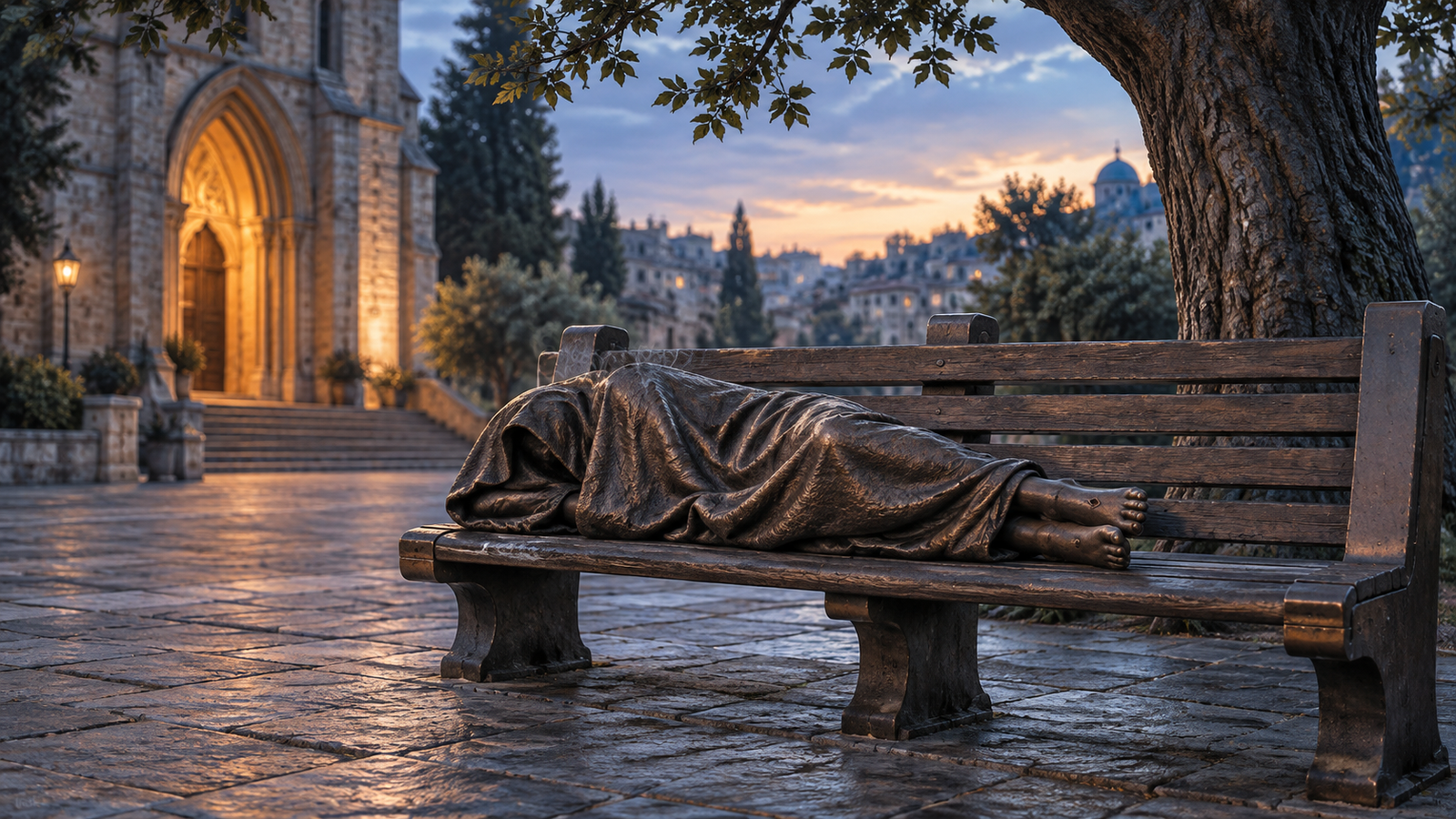
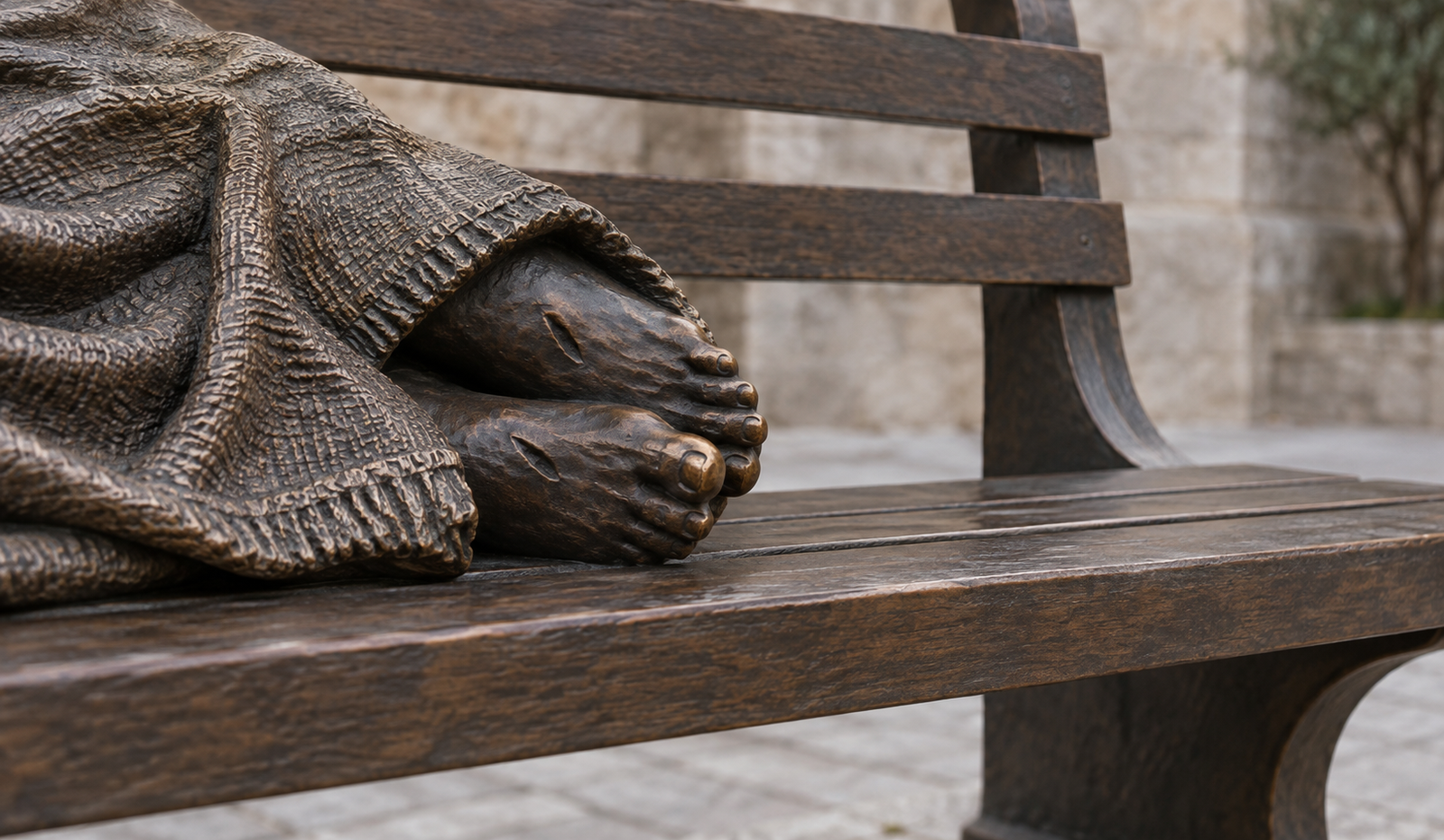
Homeless Jesus is a modern bronze sculpture that shows a person sleeping under a blanket on a park bench. The face is hidden. The feet are visible, and the wounds on them point to the crucifixion of Jesus. The work was made by Canadian sculptor Timothy P. Schmalz. A Christian charity describes it as a visual reminder of Jesus’ teaching about people who are poor, vulnerable, and without shelter. See the background of the work at St. Elizabeth Catholic Charities. The sculpture is designed to make a passerby stop and look again. At first, someone may see only a covered person on a bench. Then the wounds change the question: will I see a problem to avoid, or a person who deserves attention and care? That question fits the wider work of understanding Jesus in culture and media.
How the Sculpture Reveals Jesus
The most striking detail is the hidden face. The figure does not look like the bright, powerful images many people expect when they think about Jesus. Only the feet identify Him. This design makes the viewer look closely at a person who could easily be ignored. It does not say that every homeless person is literally Jesus. It asks whether we will remember that the Lord cares about the vulnerable. The artist’s work is not Scripture, and Christians should not treat a sculpture as if it were a new revelation. It is a visual prompt. Its value depends on whether it points us toward truths already taught in the Bible. The wounds on the feet can remind us that Jesus gave Himself for sinners, and the bench can remind us that He calls His people to notice those who suffer.
Jesus Had Nowhere to Lay His Head
In Luke 9:57-58, a man says that he will follow Jesus wherever He goes. Jesus answers that foxes have holes and birds have nests, but the Son of Man has nowhere to lay His head. Jesus is not making a slogan about poverty. He is warning the man that following Him is costly. The Messiah did not promise comfort, status, or an easy road. This verse also shows the humility of the Lord Jesus. The eternal Son of God entered our world and accepted a life of service, rejection, and suffering. He was never helpless or sinful, but He chose the path of obedience. He died on the cross for sinners and rose again in victory. His humble life does not reduce His divinity. It reveals the love of the divine Savior who came to save.
What Matthew 25 Teaches About the Vulnerable
In Matthew 25:31-46, Jesus describes the final judgment. He speaks about people who are hungry, thirsty, strangers, naked, sick, or in prison. The King says that what was done for the least of His brothers was done for Him. The passage gives a serious call to mercy. It also shows that Jesus is the final King and Judge, not merely a moral teacher. The sculpture draws on this passage, but the Bible gives the full meaning. Jesus is not asking for kind feelings alone. He calls for action shaped by truth. We must see real needs, refuse contempt, and do good with wisdom. Mercy does not erase accountability, and help should not be careless. It means treating a suffering neighbour as a person made by God and worthy of honest attention.
See People With Mercy and Dignity
A person experiencing homelessness is not a label, a lesson, or a prop. He or she is a neighbour. Many situations can lead to homelessness, and we should not pretend to know every story from a distance. Some people need emergency safety. Others need housing support, health care, employment help, protection from abuse, or patient friendship. A wise Christian listens before making assumptions. Dignity also means using careful language. We can speak about homelessness without turning people into frightening objects or romantic heroes. Jesus did not overlook the poor, but He also did not use them to create a dramatic moment. He met people with truth, compassion, and personal attention. His followers should do the same as they learn what Jesus preached.
Homeless Jesus Is Not a Portrait of Christ
The sculpture should not be used to claim that Jesus looked exactly like the covered figure. The Bible does not give us a detailed physical portrait of Him. Nor does the sculpture prove that every person without a home has the identity of Christ. It is an artistic interpretation. Its message must remain under the authority of the Bible. This boundary matters because Christians worship the living Lord, not an object. The bronze can weather, be moved, or be misunderstood. Jesus Christ is risen and reigning. He is not trapped in a bench, a statue, or a human idea. A good work of art should send us back to Scripture, prayer, repentance, and love rather than replacing the Gospel.
Jesus Became Poor for Our Salvation
The New Testament teaches that Jesus accepted a lowly place for our sake. He was born in humble circumstances, served ordinary people, and was rejected by many leaders. He chose obedience to the Father and went to the cross. The cross is not only an example of kindness. It is the place where the sinless Son of God bore judgment for sinners. Jesus became poor in the path of His earthly mission, but His deepest work was to save. He did not come only to improve social conditions. He came to reconcile sinners to God through His blood and resurrection. Therefore Christian care must hold together mercy and the Gospel. We offer practical help because love is real, and we speak of Christ because eternal hope is real.
The Cross Changes Christian Compassion
The cross removes pride from Christian service. We do not help others because we are better people. We need grace as much as anyone else. Jesus died for sinners, including proud and comfortable sinners who ignore suffering. When we remember our own need for mercy, we can serve without looking down on a neighbour. The cross also gives courage. Compassion can be tiring, and some situations are complex. Christians should use wise boundaries and work with trustworthy organisations, but we should not let difficulty become an excuse for indifference. Jesus is Lord over the whole person. His resurrection gives hope that faithful love is never wasted, even when we cannot solve every problem.
Love Must Become Practical
In 1 John 3:16-18, John connects the love of Christ with action. If a believer has this world’s goods and sees a brother or sister in need, closing the heart is a serious problem. John does not tell us to love only with words. He calls us to love in deed and truth. Practical love may be simple. We can offer a meal, give clean clothing, support a shelter, listen without rushing, or help someone find a safe service. We can pray with a person who wants prayer. We can learn the needs in our own town. We should not promise what we cannot provide, but we can take one honest step. Christian wisdom helps us turn concern into safe and useful care.
How Churches Can Respond Wisely
A church can respond through prayer, welcome, trained volunteers, practical partnerships, and clear safeguarding. It can keep a list of local services for housing, food, health care, and emergency support. It can create a place where a person is greeted by name rather than treated as a problem. Churches should also make sure that volunteers understand safety, consent, confidentiality, and the limits of what they can do. The church must keep Jesus at the centre. Service is not a replacement for worship or the message of salvation. It is one way a church lives out the love it has received from Christ. Leaders should teach the Bible, protect vulnerable people, and refuse both neglect and careless promises. Good service is patient, accountable, and connected to the wider body of believers.

Small Steps for a Christian Reader
If you see a person sleeping outside, begin with prayer and respect. Do not photograph the person or make a public story out of his or her pain. If the person is in immediate danger, contact the right emergency service. If the situation is safe, ask whether help is wanted. A small question asked with kindness is better than an assumption made from a distance. You can also support a local ministry that has clear policies and a good record of care. Give useful items rather than random clutter. Offer time if you can serve safely. Learn the names of shelters and outreach services in your area. Above all, remember that no act of kindness earns salvation. We serve because Jesus Christ is Lord, because He first loved us, and because His Word commands love.
Remember the Stranger Without Losing Truth
Hebrews 13:1-3 tells Christians to let brotherly love continue, show hospitality to strangers, and remember people who are mistreated. Read the passage at Hebrews 13:1-3. Hospitality in the Bible is not careless trust. It is a willing heart that refuses to treat every outsider as invisible. Truth and mercy belong together. We do not help by approving sin, hiding abuse, or ignoring danger. We also do not honour truth by becoming hard-hearted. Jesus was full of grace and truth. His people should ask for the same balance. Christian wisdom for daily life helps us seek practical choices that protect people while keeping love warm.
Jesus Is Lord of the Person We Overlook
The deepest message of Homeless Jesus is not that Christians should admire a sculpture. It is that we should look again. The person who is easy to ignore is still a neighbour under God’s care. The Christian does not need to pretend that every need can be fixed in one conversation. But the Christian can refuse contempt, offer honest help, and pray for the person’s good. The Jesuits’ account of the sculpture’s arrival near the Vatican describes how the work was placed near a ministry that served people in need. That setting makes the point clear: Christian reflection should move toward Christian action. Art can open our eyes, but Jesus Christ commands the life of love.
Our Hope Is in the Risen Jesus
Homeless Jesus points toward suffering, but Christian hope does not end on a bench. Jesus Christ was crucified, buried, and raised bodily from the dead. He is the divine Son of God, the Savior of all who repent and believe. He will return as King and judge with perfect justice. His resurrection promises that evil, shame, poverty, and death will not have the final word. Read more about the life and ministry of Jesus, then ask what faithful love should look like today. Let the sculpture remind you to see. Let Scripture teach you how to think. Let the Gospel lead you to Christ. And let the risen Lord make you ready to love your neighbour with truth, humility, courage, and hope.
Frequently Asked Questions About Homeless Jesus
What is Homeless Jesus?
Homeless Jesus is a bronze sculpture by Timothy Schmalz that shows a blanket-covered figure sleeping on a bench. The wounds on the feet identify the figure as Jesus and invite reflection on His teaching about serving people in need.
Who created the Homeless Jesus sculpture?
Canadian sculptor Timothy P. Schmalz created Homeless Jesus. The work was inspired by seeing a person experiencing homelessness asleep on a bench, and it has been placed in different Christian and public settings.
Is Homeless Jesus a picture from the Bible?
No. It is a modern work of art, not a biblical record or an exact portrait of Jesus. Its meaning should be tested by Scripture, especially Jesus’ teaching about mercy, welcome, and care for people who are vulnerable.
What does Matthew 25 teach about people in need?
Matthew 25:31-46 teaches that the King takes seriously how people treat the hungry, thirsty, stranger, naked, sick, and imprisoned. Christians should respond with mercy because Jesus is Lord and calls His people to love in action.
How should Christians respond to homelessness?
Christians should pray, listen, protect dignity, offer wise practical help, support trustworthy services, and speak about Jesus with humility. Help should be truthful and safe, not a way to control or shame a neighbour.