
Saying ‘Happy Easter, Jesus’ is a personal expression of joy and gratitude directed to the risen Savior. It acknowledges that Easter is not just a holiday, but the celebration of Jesus Christ’s literal, bodily resurrection from the dead, which is the cornerstone of Christian faith, securing victory over death and offering the promise of eternal life to all who believe (1 Corinthians 15:17).
Easter is more than a springtime holiday; it is the culmination of God’s redemptive plan and the very heartbeat of the Christian faith. When we say the words “Happy Easter, Jesus,” we are not simply extending a cheerful greeting to a historical figure. Instead, we are proclaiming a profound truth—an act of worship directed to our living Lord and Savior. This declaration of joy is a testament to the greatest victory ever won: Jesus Christ’s triumph over sin and death, which forever changed the course of humanity and offered us eternal hope.
This sacred season invites us to look beyond traditions and reflect on the transformative power of the resurrection. To say “Happy Easter, Jesus” is to affirm the empty tomb, rejoice in His divine authority, and acknowledge the foundation of our salvation. It is an invitation to deepen our understanding of what His sacrifice and resurrection mean for our lives, both today and for eternity.
In this article, we will explore the deep significance of celebrating our Risen King. We will examine what it means to direct our Easter joy toward Jesus, how to genuinely honor Him during this season, and the scriptural truths that support His miraculous resurrection. Join us in celebrating the unwavering hope and eternal life secured by our Lord.
What is the True Meaning of ‘Happy Easter, Jesus’?

More Than a Holiday Greeting: An Act of Worship
Many people say “Happy Easter,” but when we add the name “Jesus,” we do more than offer a festive greeting. This simple phrase becomes a profound declaration of faith—a direct address to our risen Lord.
It transforms a cultural observance into a personal act of worship, allowing us to acknowledge His presence and honor His triumph. In essence, it becomes a heartfelt conversation with the One who conquered death.
Furthermore, this phrase elevates our celebration by shifting our focus from eggs and bunnies to the true King. Through it, we testify to His divine nature and affirm His role as our personal Savior. This act of personal address aligns with the words of Jesus Himself: “If anyone loves Me, he will keep My word; and My Father will love him, and We will come to him and make Our home with him” (John 14:23). Therefore, addressing Him directly on Easter is an expression of our love and obedience.
Celebrating Christ’s Victory Over Sin and Death (1 Corinthians 15:55-57)
The core meaning of Easter rests upon Jesus’ ultimate victory over the power of sin and death itself. When we proclaim “Happy Easter, Jesus,” we celebrate this unparalleled triumph.
The Apostle Paul powerfully articulates this victory:
“O Death, where is your sting? O Hades, where is your victory?”
The sting of death is sin, and the strength of sin is the law. But thanks be to God, who gives us the victory through our Lord Jesus Christ.
(1 Corinthians 15:55-57)
This passage reveals crucial truths: death no longer holds us captive, and sin’s power is broken. Because Jesus absorbed the full penalty for our sins on the cross, His resurrection confirms His complete victory. It offers us freedom from condemnation and secures our eternal hope.
Consequently, our greeting becomes a joyous shout that acknowledges His successful mission and declares His authority over all things.
The Foundation of Christian Hope and Salvation
The resurrection of Jesus Christ is the cornerstone of Christian faith. More than just a historical event, it forms the very foundation of our hope and guarantees our salvation.
Consider these vital points:
- Eternal Life: Because Jesus lives, we too shall live eternally (John 14:19). His resurrection provides the path to everlasting life with God.
- Justification: His rising from the dead proves His atoning sacrifice was accepted. We are declared righteous in God’s sight (Romans 4:25).
- Spiritual Rebirth: Through faith in His resurrection, we experience a new birth and gain a living hope (1 Peter 1:3).
- Future Resurrection: Jesus’ resurrection is a promise for all believers that we will also rise in glory (1 Corinthians 6:14).
Therefore, saying “Happy Easter, Jesus” is a powerful affirmation that acknowledges His work as our Redeemer and declares our trust in His promise. As Romans 10:9 states, “that if you confess with your mouth the Lord Jesus and believe in your heart that God has raised Him from the dead, you will be saved.” This is the glorious, saving truth we celebrate.
What do you say to Jesus on Easter?
Words of Praise and Thanksgiving in Prayer
Easter is a profound moment for direct communion with our Risen Lord and a time to offer heartfelt words to Jesus. You can approach Him with open gratitude, thanking Him for His ultimate sacrifice on the cross and praising Him for His glorious resurrection.
Consider these points for your Easter prayer:
- Adoration for His Deity: Acknowledge Jesus as the Son of God—fully divine and the one who conquered death itself.
- Gratitude for Salvation: Express deep thanks for the forgiveness of sins. His resurrection secures our eternal life. As Romans 10:9 states, “If you confess with your mouth that Jesus is Lord and believe in your heart that God raised him from the dead, you will be saved.”
- Thanksgiving for Hope: Recognize the new hope His resurrection brings: a victory over death and a promise of future glory.
- Commitment to Follow: Renew your commitment to live a life that honors Him and His teachings.
Praying on Easter deepens your personal relationship with Jesus and strengthens your faith in His power and love.
Singing Hymns of His Resurrection
Worship through song is a powerful way to celebrate Easter. Hymns of resurrection uplift our spirits and proclaim the truth of Jesus’ victory. Singing together also unites believers in joy and faith. The Bible encourages this expression of faith through music, as Ephesians 5:19 says, “addressing one another in psalms and hymns and spiritual songs, singing and making melody to the Lord with your heart.”
On Easter, select hymns that focus on:
- Christ’s Triumph: Songs that speak of Jesus overcoming the grave.
- The Empty Tomb: Hymns that describe the miraculous discovery.
- Our Redemption: Songs reflecting the grace and salvation we receive.
- Eternal Life: Hymns that affirm the hope of everlasting life through Him.
Singing these timeless truths reinforces the core message of Easter, filling your heart and home with joyous worship.
Sharing Your Testimony of His Grace
Easter is an ideal opportunity to share what Jesus has done for you. Your personal story, or testimony, is a powerful tool that demonstrates the living reality of Christ’s grace. Sharing your faith can encourage others by showing how His resurrection impacts lives today. As 1 Peter 3:15 advises, we should “always be prepared to make a defense to anyone who asks you for a reason for the hope that is in you.”
When sharing your testimony, consider these aspects:
- Before Christ: Briefly describe your life or understanding before knowing Jesus personally.
- How You Met Christ: Explain the moment or process of accepting Him.
- Life with Christ: Detail the changes and blessings He has brought.
- The Impact of His Resurrection: Connect your experience to the hope Easter represents.
Your testimony serves as a witness to His transforming power and points others to the Risen King.
Reading the Resurrection Accounts
Engaging directly with God’s Word is foundational to faith, and reading the biblical accounts of the resurrection is essential on Easter. These chapters provide eyewitness details that affirm the historical truth of Jesus’ triumph over death. Hearing them read aloud can bring the narrative to life, deepening your understanding and appreciation.
The key resurrection accounts are found in Matthew 28, Mark 16, Luke 24, and John 20. Each offers a unique perspective:
- Matthew 28: This chapter details the angel’s announcement and the women’s encounter with the risen Jesus.
- Mark 16: Here, you find the story of the empty tomb and Jesus’ great commission to the disciples.
- Luke 24: This account includes Jesus’ appearance on the road to Emmaus and His discourse with the disciples.
- John 20: This gospel offers Mary Magdalene’s personal encounter and recounts Thomas’s powerful confession of faith.
Immersing yourself in these scriptures builds your faith and reinforces the central truth of Christianity: The resurrection of Jesus Christ is the cornerstone of our hope. As 2 Timothy 3:16 reminds us, “All Scripture is breathed out by God and profitable for teaching, for reproof, for correction, and for training in righteousness.” Reading these passages aloud on Easter truly celebrates the Risen King.
Who discovered Jesus was missing from the tomb?
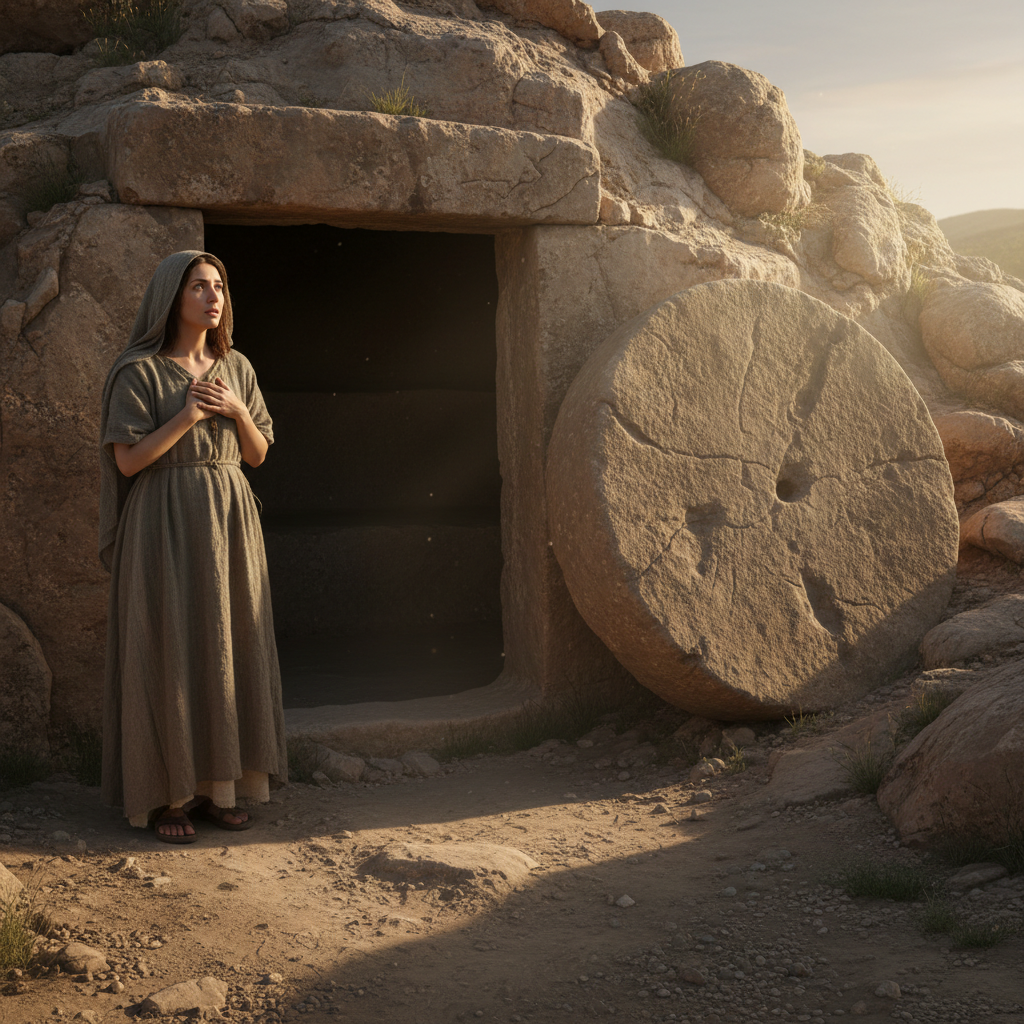
Mary Magdalene and the Other Women: The First Witnesses
On the dawn of the first day of the week, a group of devoted women set out on a somber task. Mary Magdalene, Mary the mother of James, and Salome planned to complete the traditional burial rites for Jesus. Carrying spices and perfumes with hearts heavy with grief, they approached the tomb, wondering who would roll away the heavy entrance stone for them.
When they arrived, a startling sight greeted them: the massive stone had already been moved. Gripped by fear and confusion, they peered inside to find the tomb empty. In that pivotal moment, these faithful women became the first witnesses of the empty tomb. Mary Magdalene immediately ran to inform Peter and John of what they had seen.
The Angel’s Astonishing Message: ‘He is not here; He has risen!’ (Matthew 28:6)
As the women lingered near the tomb, a glorious angel of the Lord descended before them. His appearance was like lightning and his clothing as white as snow. At his presence, the guards at the tomb trembled and became like dead men. The angel then spoke to the women, calming their fears with an earth-shattering message.
He declared, “Do not be afraid, for I know that you seek Jesus who was crucified. He is not here; for He has risen, just as He said. Come, see the place where the Lord lay” (Matthew 28:5-6). This divine announcement confirmed that Jesus’ body had not been stolen but that His resurrection was the glorious fulfillment of prophecy. Jesus had triumphed over death. Following the angel’s command to spread the good news, the women departed quickly, running to share the incredible message with the disciples in a mixture of fear and great joy.
Peter and John’s Race to the Empty Tomb
After finding the tomb empty, Mary Magdalene rushed to the disciples and breathlessly reported, “They have taken the Lord out of the tomb, and we do not know where they have laid Him!” (John 20:2). Spurred to action, Peter and John ran towards the tomb together. John, being younger, outran Peter and arrived first. Stooping to look in, he saw the linen cloths lying there but did not go inside.
When Simon Peter arrived, he went straight into the tomb. He saw the linen cloths lying by themselves and, crucially, the burial cloth from Jesus’ head folded neatly in a separate place (John 20:6-7). This detail suggested an orderly departure, not a hasty theft. John then entered the tomb, and seeing the evidence for himself, he believed. This miraculous resurrection, confirmed by the empty tomb, remains the cornerstone of Christian faith. It unequivocally proclaims Jesus Christ as Lord, the Son of God, who conquered sin and death for us all.
Frequently Asked Questions About Easter
What should Christians say instead of ‘Happy Easter’?
While “Happy Easter” is a common greeting, many Christians seek words that better express the profound meaning of this sacred day. Easter is a day of immense joy and triumph, celebrating the greatest miracle in history: the resurrection of Jesus Christ from the dead.
Instead of a simple greeting, many believers prefer phrases that give direct glory to the Risen Lord, deepening their focus on His victory and our salvation.
Consider these faith-affirming alternatives:
- “He is Risen!” This powerful declaration comes from the angel’s message at the empty tomb (Matthew 28:6) and is often met with the response, “He is Risen indeed!” This tradition powerfully affirms Christ’s triumph over death.
- “Christ is Risen!” This variation highlights Jesus’ identity as the Son of God by emphasizing His divine title as the Christ, or Messiah.
- “Praise the Lord, He is Risen!” By adding an element of worship and thanksgiving, this greeting praises God for His incredible power and grace.
- “Blessed Resurrection Day!” This greeting blesses the day itself, acknowledging the holy significance of the event.
Ultimately, the heart behind your words matters most. Any of these greetings helps us celebrate Jesus Christ’s victory over sin and death (1 Corinthians 15:55-57), remember the foundation of our hope, and offer heartfelt worship to our Savior.
How long did Mary live after Jesus died?
The Bible does not state how long Mary, the mother of Jesus, lived after His crucifixion and resurrection. However, Scripture does record her presence during several pivotal moments.
Mary was present at the foot of the cross, where Jesus entrusted her care to His beloved disciple, John (John 19:26-27). This act reveals Jesus’ compassion in His final moments and underscores John’s commitment to Christ’s family.
Mary is also mentioned among the disciples in Jerusalem after Jesus’ ascension. She joined them in prayer while they awaited the Holy Spirit (Acts 1:14), demonstrating her continued fellowship with the early Christian community and her unwavering faith.
Beyond these accounts, the Bible provides no further details about Mary’s life. The Scriptures focus intently on Jesus Christ—His life, death, and glorious resurrection. For Christians, this divine narrative remains paramount.
Why is Jesus’ resurrection the most important event in history?
Jesus’ resurrection is not just an important event; it is the cornerstone of the Christian faith. Without it, faith is meaningless (1 Corinthians 15:14), for this moment forever altered the course of eternity for all who believe.
Here are several reasons why the resurrection holds such supreme importance:
- It Validates Jesus’ Identity: The resurrection proves Jesus is truly the Son of God and the Messiah, validating His claims to divinity through His triumph over death (Romans 1:4).
- It Secures Our Salvation: While Christ’s death paid the penalty for sin, His resurrection secures our justification and promises new life in Him (Romans 4:25). Because He lives, we are declared righteous before God.
- It Conquers Sin and Death: The resurrection is Jesus’ ultimate victory over the power of sin and the sting of death (1 Corinthians 15:54-57). This triumph offers eternal freedom to all who believe.
- It Promises Our Own Resurrection: Because Jesus was resurrected, believers have the blessed hope that they, too, will be resurrected with new, glorified bodies (1 Corinthians 15:20-23).
- It Empowers the Christian Life: The same Spirit that raised Jesus from the dead now indwells believers, empowering us to live a life that is pleasing to God (Romans 8:11).
- It Establishes God’s Power: The resurrection is the ultimate display of God’s omnipotence, for He raised Jesus from the dead (Ephesians 1:19-20), reminding us that nothing is impossible for Him.
In conclusion, the resurrection is the ultimate proof that verifies Jesus’ identity, validates His mission, and secures our eternal hope. It is the defining moment in history that reveals Him as our living Lord and Savior.