What Is the Church of Gesu?
The Church of Gesu is the Church of the Most Holy Name of Jesus in Rome, Italy. In Italian, “Gesu” means “Jesus.” The church is closely connected with the Society of Jesus, commonly called the Jesuits. The official church website describes it as the mother church of the Society of Jesus and the place where the tomb of its founder, Saint Ignatius of Loyola, is kept.
The building is known for its large nave, side chapels, dome, dramatic paintings, and richly decorated altars. It is also a working place of Christian worship, prayer, confession, and the celebration of Mass. It is not only a museum or an art gallery.
That difference matters. A Christian church building can teach us through its history and beauty, but the building itself cannot save anyone. Salvation is found in Jesus Christ, the Son of God, who died for sinners and rose again. As you read this guide, keep the name of Jesus at the centre. For wider background, you can also read our guide to Christian churches and denominations.
Where Is the Church of Gesu?
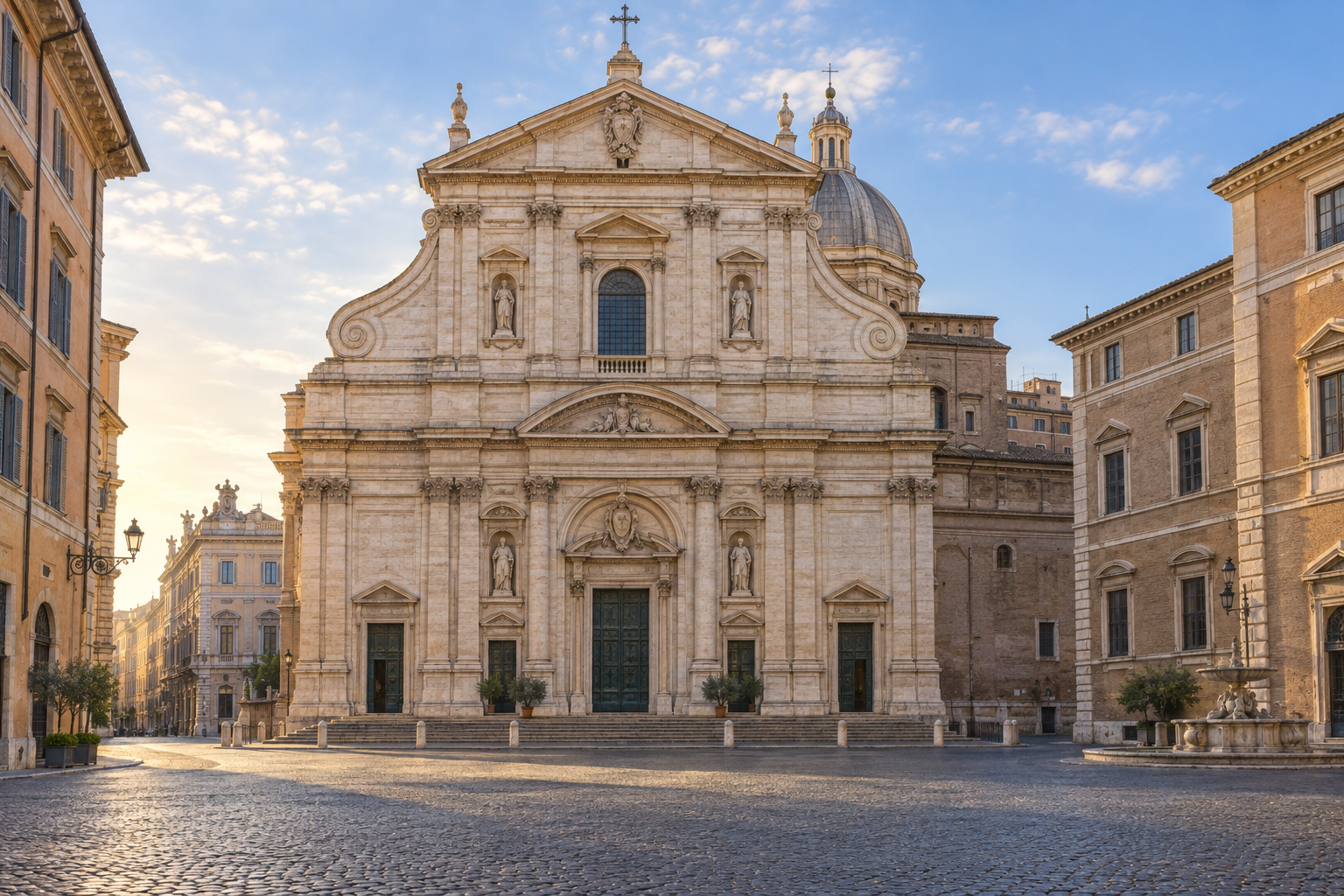
The Church of Gesu stands in Piazza del Gesu in the historic centre of Rome. It is near important streets and landmarks in the heart of the city. The official Rome tourism page lists the church at Piazza del Gesu and identifies the building as the Chiesa del Gesu.
The setting helps explain why the church has been noticed by so many visitors. Its facade rises from a relatively small square and faces the surrounding streets like a large doorway. The position invites people to pause, enter, and consider the Christian message represented by the building.
Location, however, is not the same as spiritual importance. Jesus told His disciples that His people would be a light in the world. A church can stand in a famous city and still fail to honour Christ if it abandons the truth. A humble congregation in an ordinary place can be faithful if it trusts Jesus and obeys His Word.
A Short History of the Church
The story of the Church of Gesu began with Saint Ignatius of Loyola and the early Society of Jesus. The official church history says that Ignatius commissioned an early design in 1551. Michelangelo later prepared another design, but that project was not built.
Cardinal Alessandro Farnese provided important financial support and appointed Jacopo Barozzi, known as Vignola, to design the church. Construction began in 1568. Giacomo della Porta later completed the work, including the facade. The church was dedicated in 1584.
In the seventeenth century, the interior received major decoration. Giovanni Battista Gaulli, also called Baciccia, painted the famous ceiling work known as the Triumph of the Name of Jesus. Andrea Pozzo created the grand Chapel of Saint Ignatius. The building has therefore carried several layers of history, art, worship, and Jesuit memory.
The church also passed through a difficult period after the suppression of the Jesuit order in 1773. The official history records that it was returned to the Jesuits in 1814. This history reminds us that Christian institutions can experience change and suffering. Jesus remains the faithful Lord of His church in every generation.
The Church’s Shape Serves Its Mission
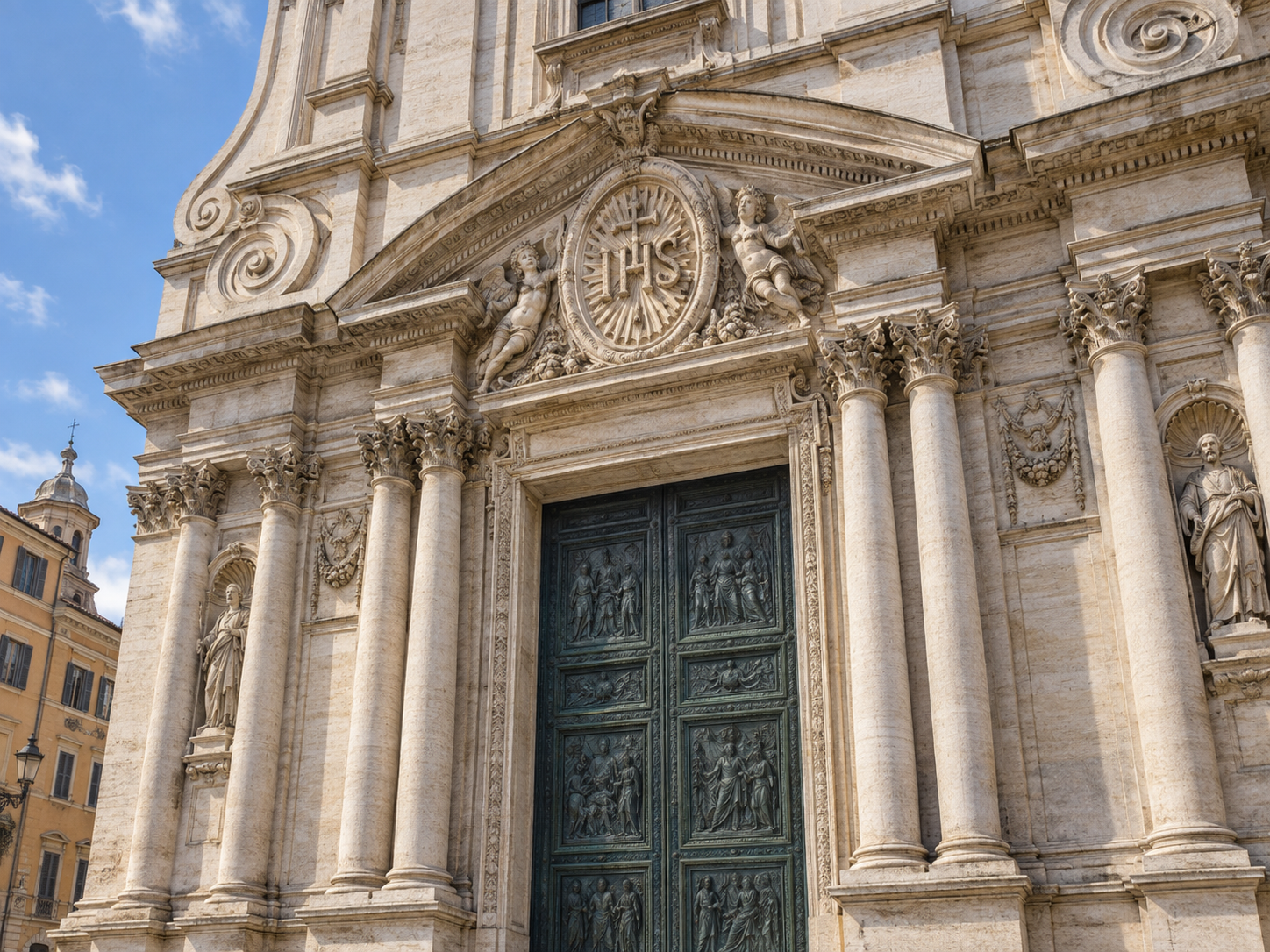
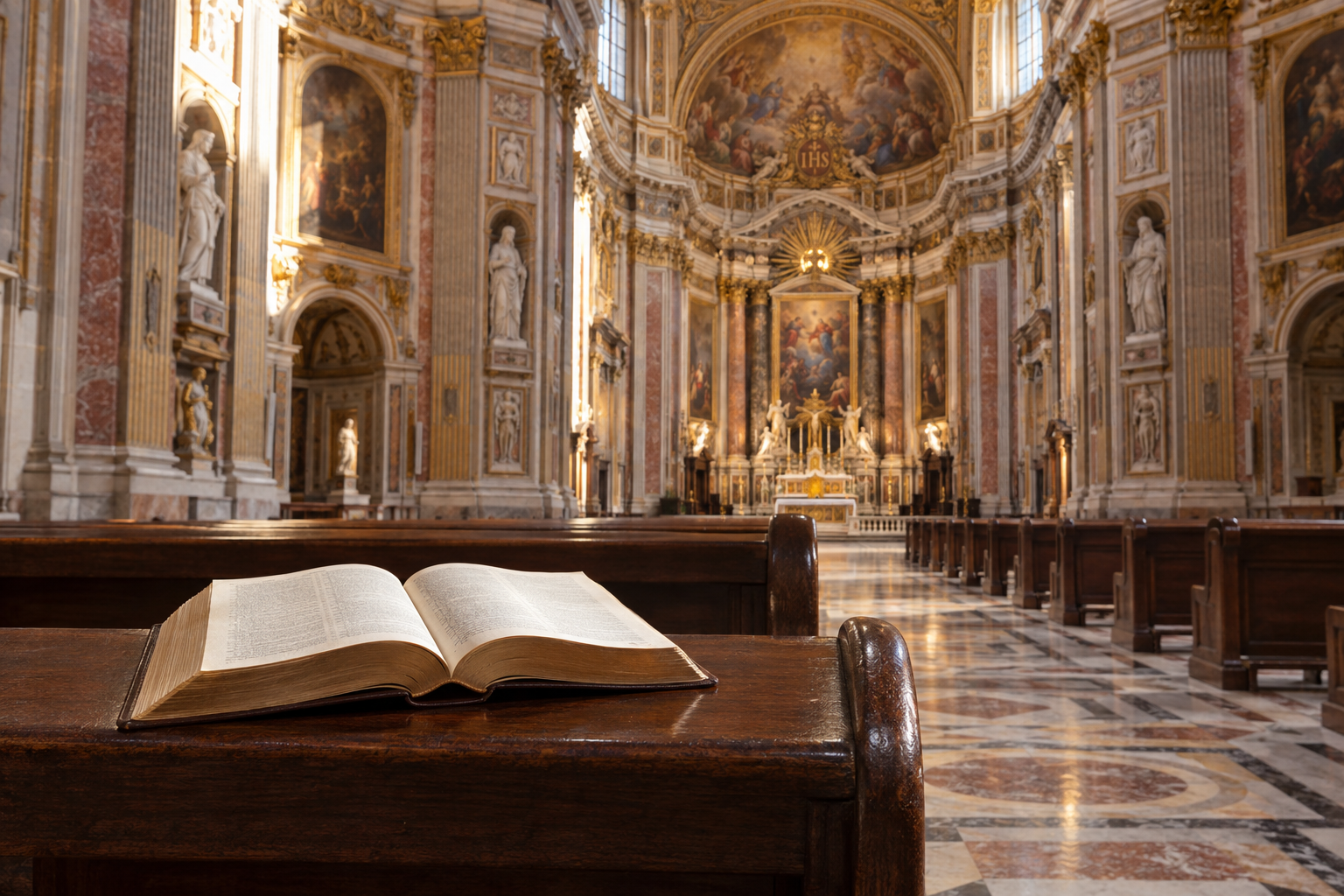
The Church of Gesu has a broad central nave with side chapels and a strong visual line toward the sanctuary. The official descriptions explain that this kind of plan helped focus attention on the altar and the preaching of the Word. It also became an important model for later Jesuit churches.
Architecture can support a church’s mission. A room can help people hear, see, gather, and pray. In this case, the long nave and side chapels create a sense of movement toward the centre. The visual message is that worship is not meant to be scattered around many competing interests.
Still, a good plan is not enough. The church must proclaim the true gospel. The New Testament describes believers as a people who gather around the apostles’ teaching, fellowship, breaking of bread, and prayers. A building may help that gathering, but it cannot replace faithful discipleship.
The Holy Name of Jesus Is the Centre
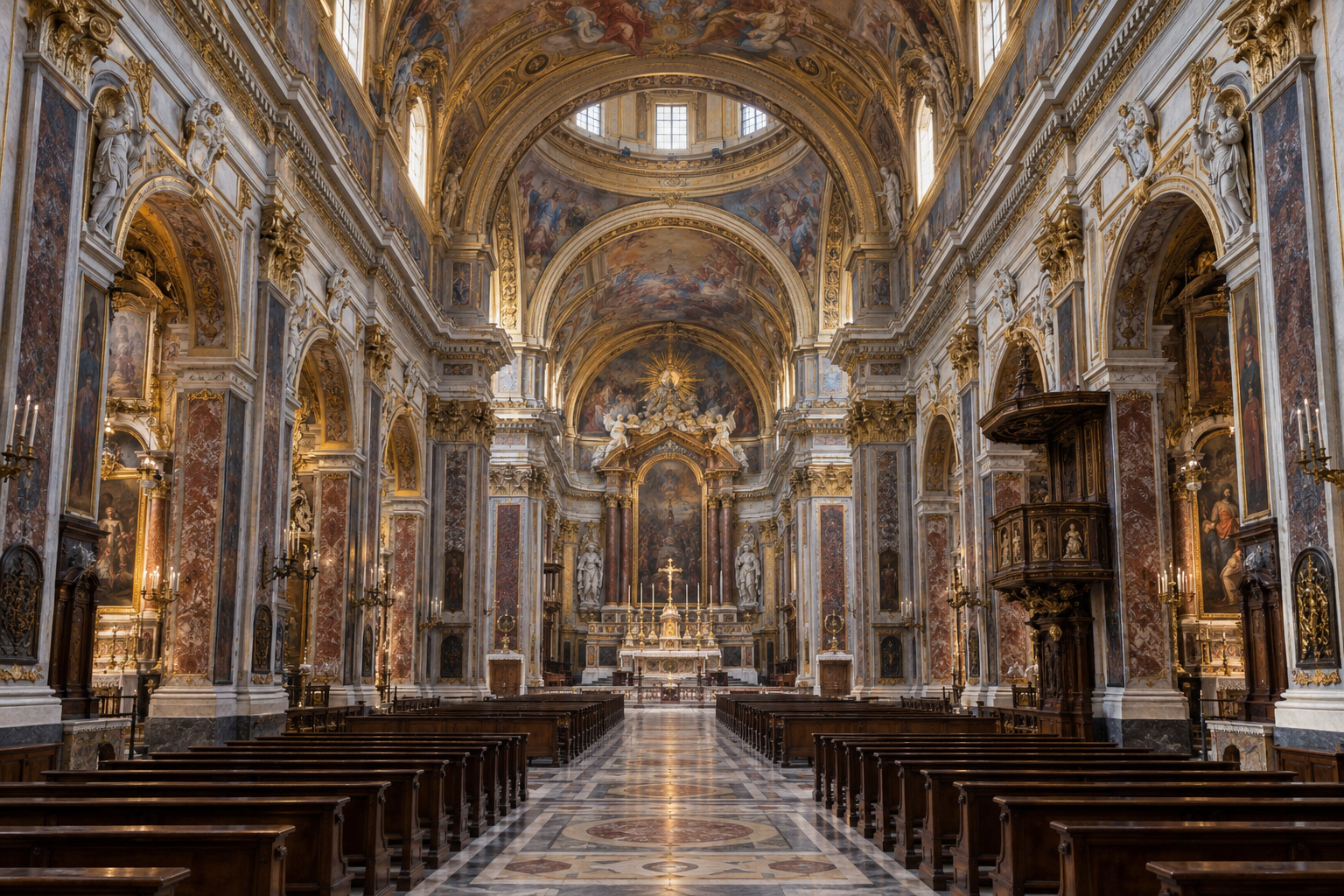
The name of the church gives the most important lesson. It is dedicated to the Most Holy Name of Jesus. The name above the entrance is not meant to point visitors to human achievement. It calls attention to the Person Christians worship.
The Bible teaches that Jesus is not merely a wise teacher from the past. He is the eternal Son of God who became truly human. He is the image of the invisible God, the Creator, the Saviour, and the risen Lord. His name is worthy of trust because of who He is and what He has done.
When Christians say the name of Jesus, they should not use it as a charm or empty phrase. His name calls for faith, worship, repentance, and obedience. Every church tradition should be tested by the question, “Does this help people know, love, and obey Jesus according to Scripture?”
The Beauty of the Interior
The interior of the Church of Gesu is filled with marble, paintings, carved details, gilded decoration, and strong contrasts of light and shadow. The official church description highlights the central nave, the dome, the six side chapels, and the ceiling fresco painted by Baciccia.
Beauty can awaken wonder. It can remind us that God deserves honour and that human beings can use their skills to serve a serious purpose. Art can also help people remember the Bible’s stories and the lives of earlier Christians.
At the same time, beauty can become a distraction. A visitor may admire the building and never ask what the gospel says. Jesus warned against outward religion that hides an unchanged heart. The right response to Christian art is not worship of the object. It is gratitude to God, careful thought, and a return to His Word.
Read more about the life and ministry of Jesus as you look at the church. He is more important than every painting, altar, or architectural achievement.
The Chapel of Saint Ignatius
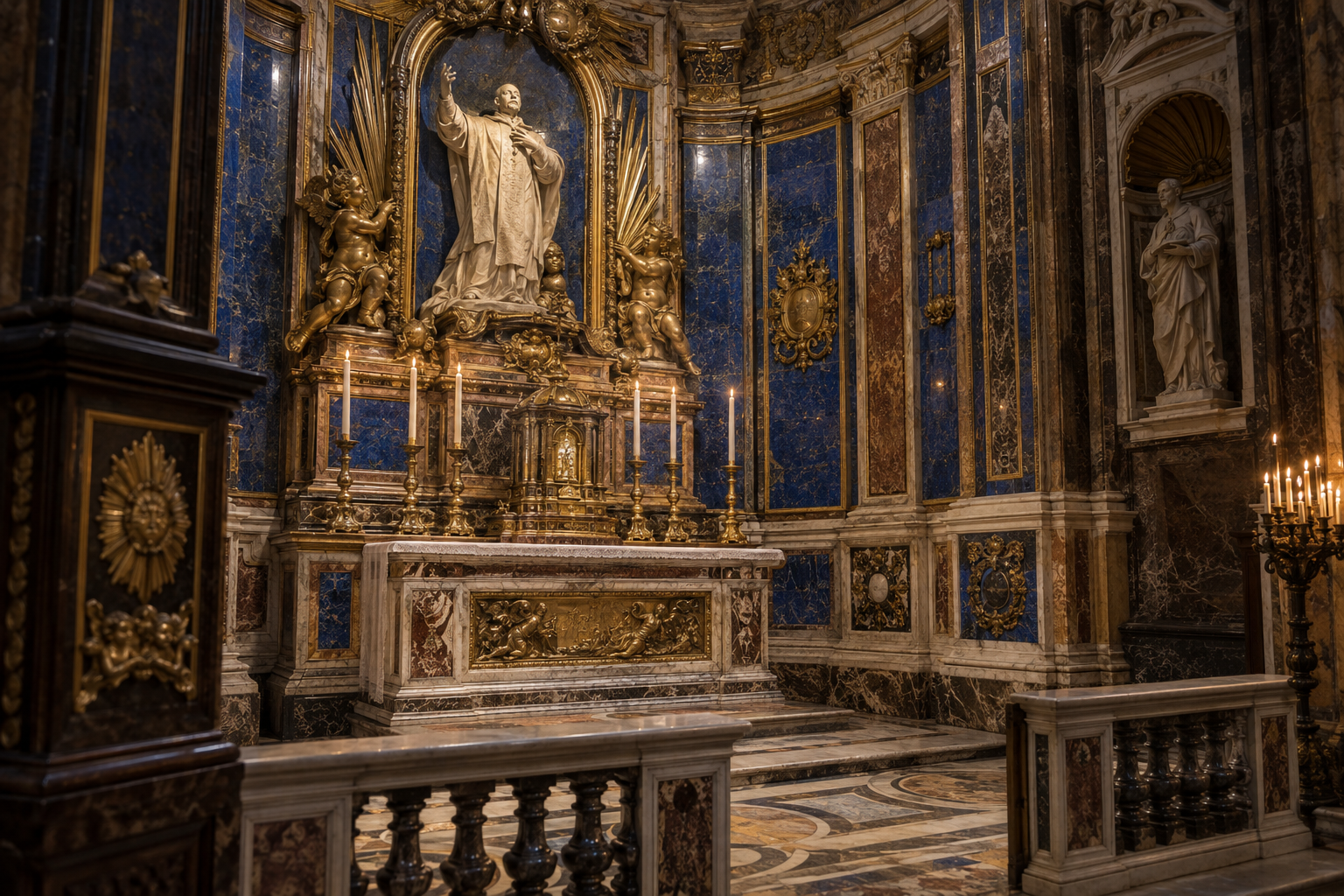
The Chapel of Saint Ignatius is one of the most striking parts of the church. The official Rome tourism description records that Saint Ignatius is buried there and that Andrea Pozzo created the chapel with rich lapis lazuli and gilded bronze decoration.
Saint Ignatius was the founder of the Society of Jesus. Remembering his life can encourage Christians to take prayer, Scripture, mission, and obedience seriously. His story also shows that God can use a person’s gifts and suffering for the good of the church.
Yet Ignatius must never replace Jesus. The saints are not saviours and cannot stand between believers and Christ. Christians can thank God for faithful servants while keeping worship and trust directed to the Lord alone.
The nearby rooms associated with Ignatius also remind visitors that Christian service is often carried out in ordinary spaces. A person can pray, write, teach, and serve without fame. Faithfulness is measured by love for Christ and obedience to God, not by the size of a monument.
Jesus and the Meaning of Christian Church
The word “church” can mean a building, but in the New Testament it most deeply means the people called together by God. Believers are united to Christ and to one another. They hear the gospel, receive teaching, pray, serve, and encourage each other.
The Church of Gesu is a historic building used by a Christian community. It can help us think about the visible life of a church, but it should also push us toward the Bible’s fuller picture. The church is not finally defined by stone, marble, art, or age.
Jesus is the Head of His church. He builds His people through the gospel, and He calls them to love God and love their neighbours. A congregation should therefore be known for truth, holiness, mercy, prayer, and care for the weak. A beautiful building is a gift only when it serves that calling.
To understand more about Jesus’ own message, read our guide to what Jesus preached. His teaching gives the church its foundation.
A Building Must Point Us to Christ
Every Christian building should point beyond itself. The Church of Gesu can point visitors to the name of Jesus, the history of Christian mission, and the need for worship. But Scripture must judge every message we take from the building.
The Bible says that Christ’s people are like living stones being built into a spiritual house. That image changes the way we think about sacred places. The church is not alive because its stones are old or its art is beautiful. It is alive because the risen Jesus gives life to His people.
Ask these questions when visiting any historic church. Is Jesus honoured as Lord? Is the Bible treated as God’s authoritative Word? Is the gospel of His death and resurrection clear? Are people called to repent and believe? These questions matter more than the age or fame of the building.
A Christian visitor can enjoy the art while keeping the heart fixed on Christ. Pray for the people who worship there. Give thanks for every true witness to Jesus. Ask God to make you part of a faithful church community, not merely a person who visits religious places.
What Christians Can Learn from the Church of Gesu
First, Christians can learn that the name of Jesus must remain central. Institutions, designs, programmes, and traditions are useful only when they serve Christ. The church should never become a monument to human skill.
Second, Christians can learn to value clear teaching. The Church of Gesu was designed to support preaching and public worship. In every setting, believers need the Bible explained faithfully and applied carefully. Christian faith grows through hearing the truth about Jesus.
Third, Christians can learn that beauty should serve truth. Art can move the heart, but it must not replace Scripture. The best response to beauty is to let it lead us to worship God, love His Word, and live with humility.
Fourth, Christians can learn to remember faithful servants without making them rivals to the Saviour. Saint Ignatius, like every Christian leader, was a sinner saved by grace. His life can encourage service, but Jesus alone is Lord and Redeemer.
Finally, Christians can learn to welcome honest visitors. Many people enter a church with questions. We should answer gently, speak truthfully, and invite people to meet Jesus in the Bible. Christian wisdom for daily life should help us live this welcome with both courage and love.
How to Visit with Faith and Respect
If you visit the Church of Gesu, remember that it is a place of active worship. The official church website publishes opening hours and says that tourist visits pause during religious services. Check the official schedule before you go because hours can change.
Dress and behave in a way that respects prayer. Speak quietly, follow any instructions, and do not treat worshippers as part of a tourist display. Do not take photographs where they are not permitted. Give space to people who are praying or attending a service.
Use the visit as an opportunity for thoughtful reflection. Look at the architecture, but also read a Gospel passage. Pray for Christians in Rome and around the world. Ask what the name of Jesus means in your own life. If you do not yet believe, ask God to help you seek truth with humility.
The official hours page is the best place to check practical details. It explains that visitor access can end before Mass and that the schedule changes between winter and summer. Respecting these details is part of respecting the church as a living place of worship.
The Church of Gesu and the Gospel
The deepest question is not whether the Church of Gesu is beautiful or historically important. The deepest question is whether we will listen to the gospel of Jesus Christ.
Jesus Christ is the eternal Son of God. He entered our world, lived without sin, died on the cross for sinners, and rose bodily from the dead. He is not only part of church history. He is alive and reigns as Lord.
He calls us to repent and believe. We cannot be saved by visiting a building, admiring art, joining an institution, or trusting our own goodness. We need forgiveness and new life from God. Whoever turns to Jesus in faith receives mercy, peace with God, and the hope of eternal life.
May the name written above the door of the Church of Gesu remind every visitor of the name above every name. Jesus is the way, the truth, and the life. He alone brings sinners to the Father.
Church of Gesu Frequently Asked Questions
What is the Church of Gesu?
The Church of Gesu is the Church of the Most Holy Name of Jesus in Rome. It is the mother church of the Society of Jesus, also called the Jesuits, and it contains the tomb of Saint Ignatius of Loyola.
What does Gesu mean?
Gesu is the Italian word for Jesus. The full name of the church means the Church of the Most Holy Name of Jesus. Its name points Christians beyond the building to the living Lord Jesus Christ.
Why is the Church of Gesu important?
It is important because of its place in Jesuit history, its influence on church architecture, its artwork, and its connection with Saint Ignatius. For Christians, its greatest value is the reminder that worship must honour Jesus and agree with Scripture.
Is the Church of Gesu in Rome open to visitors?
The official Church of the Gesu website publishes opening hours and warns that tourist visits pause during religious services. Visitors should check the official schedule before going and enter with respect for worship and prayer.
What can Christians learn from the Church of Gesu?
Christians can learn to value faithful teaching, remember the church as a people who belong to Christ, use art carefully, and keep Jesus as the centre of worship. A beautiful building cannot replace repentance, faith, love, and obedience to God’s Word.
Sources for Further Study
This guide uses the official Church of the Gesu pages, Rome’s tourism information, the Vatican Jubilee pilgrimage page, and the Bible passages linked below. Read the Scriptures for yourself and test every Christian claim by the Word of God.
- Official history of the Church of the Gesu.
- Official description of the church and its interior.
- Official opening hours and visitor guidance.
- Turismo Roma information about the Church of Jesus.
- Vatican Jubilee pilgrimage page about the Church of the Gesu.
- Matthew 5:14-16, Jesus teaches about His people as light.
- Ephesians 2:19-22, believers are built together in Christ.
- 1 Peter 2:4-10, Christians are living stones and a people belonging to God.
- Acts 2:42-47, a picture of the early church’s shared life.
- John 14:6, Jesus is the way, the truth, and the life.
- Colossians 1:15-20, the Bible presents Jesus as supreme over creation and the church.
The Church of Gesu can teach us about history, mission, art, and Christian memory. May it also direct our eyes to Jesus Christ, who is Lord over His church and the only Saviour of sinners.