
What Does Christ the Good Shepherd Mean?
Christ the Good Shepherd is one of the most comforting names for Jesus in the Bible. A shepherd leads sheep to food and water, guards them from danger, and searches for them when they wander. Jesus says that He is the Good Shepherd because He does all of this for His people, and He does it perfectly.
Jesus is not only a helpful guide. He is the Son of God, Lord, and Savior. He knows His sheep, calls them to Himself, and gives them eternal life. He also laid down His life for sinners and rose again. The Shepherd who comforts us is the same Lord who conquered death.
This article belongs with the wider guide to Christian theology and beliefs. It also connects with the wider guide to the life and ministry of Jesus, because the whole life of Jesus reveals the heart of the Shepherd.
Where Does the Bible Call Jesus the Good Shepherd?
Jesus clearly calls Himself the Good Shepherd in John 10. He says, “I am the good shepherd.” He then explains what makes His shepherding different. The Good Shepherd knows His sheep, and the sheep know Him. He does not run away when danger comes.
John 10 is part of Jesus’ teaching about the sheepfold, the gate, and the shepherd. Jesus also says that He is the door of the sheep. This means that salvation and safety are found through Him. He is not one option among many spiritual guides. He is the way God has provided for sinners to be saved.
The Gospel of John presents Jesus as the eternal Word who became flesh, the giver of life, and the light of the world. A helpful educational overview is the BibleProject guide to the Gospel of John. We should read every overview under the authority of the Bible itself.
Jesus is therefore more than a picture of kindness. He is the true Shepherd sent by the Father, and He leads His people into life because He has authority to save.
Why Is Jesus the Good Shepherd?
Jesus is good because He is holy, true, and completely faithful. Human leaders can be sincere and still fail. Jesus never sins, never lies, and never abandons His people. His goodness is not a pleasant personality only. It is the goodness of the divine Son who always does the will of the Father.
Jesus also proves His goodness by giving Himself. In John 10, He says that the Good Shepherd lays down His life for the sheep. He does not save people from a safe distance. He enters our world, bears suffering, and goes to the cross for our sins.
The cross shows both the seriousness of sin and the depth of Christ’s love. Sin brings guilt and death. Jesus took the place of sinners so that everyone who turns to Him in faith can receive forgiveness. His death was not an accident or a tragic defeat. He willingly gave His life.
Jesus then rose from the dead. His resurrection shows that His sacrifice was accepted and that death does not have the final word over those who belong to Him. The Good Shepherd is alive and reigns as Lord.
How Is Jesus Different From False Shepherds?
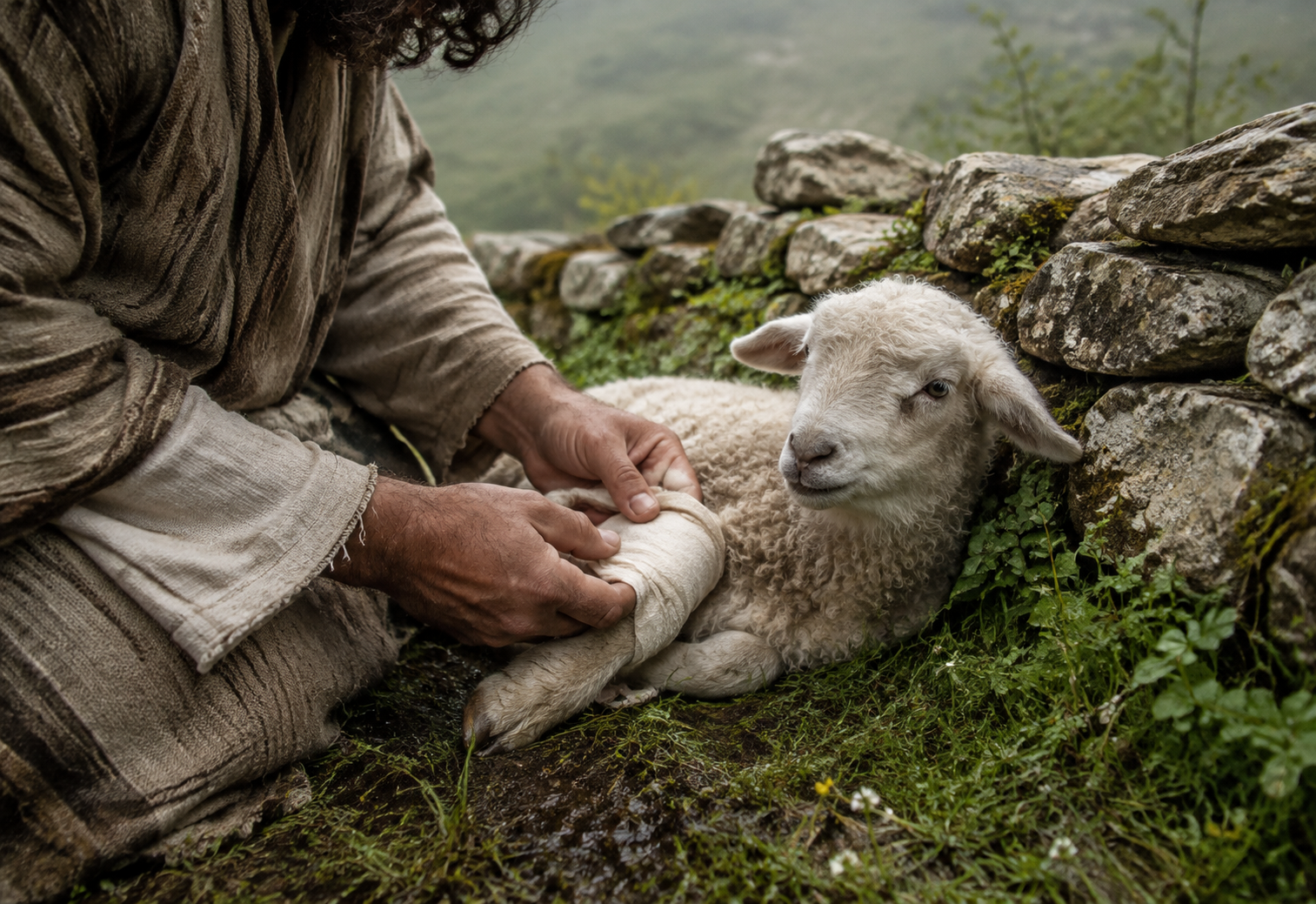
Ezekiel 34 speaks against shepherds who fed themselves instead of caring for God’s flock. They did not strengthen the weak, heal the sick, bind the injured, or search for the lost. Their leadership became selfish and harsh. This passage warns us that spiritual authority can be abused.
Jesus is different. He does not use His sheep to build His own reputation. He serves them, teaches them, protects them, and gives Himself for them. His authority is strong, but it is never cruel. His truth is clear, but His care is never cold.
This does not mean that Christians should distrust every pastor, elder, or teacher. God gives faithful shepherds to care for His church. But every human leader remains under Christ. First Peter 5 tells elders to shepherd God’s flock willingly and humbly while looking to Jesus, the Chief Shepherd.
A church is healthy when its leaders point people to Jesus and Scripture, not to themselves. When a leader contradicts the Bible, controls people through fear, or treats the weak as disposable, that leader is not showing the pattern of Christ.
What Does Psalm 23 Teach About the Lord?
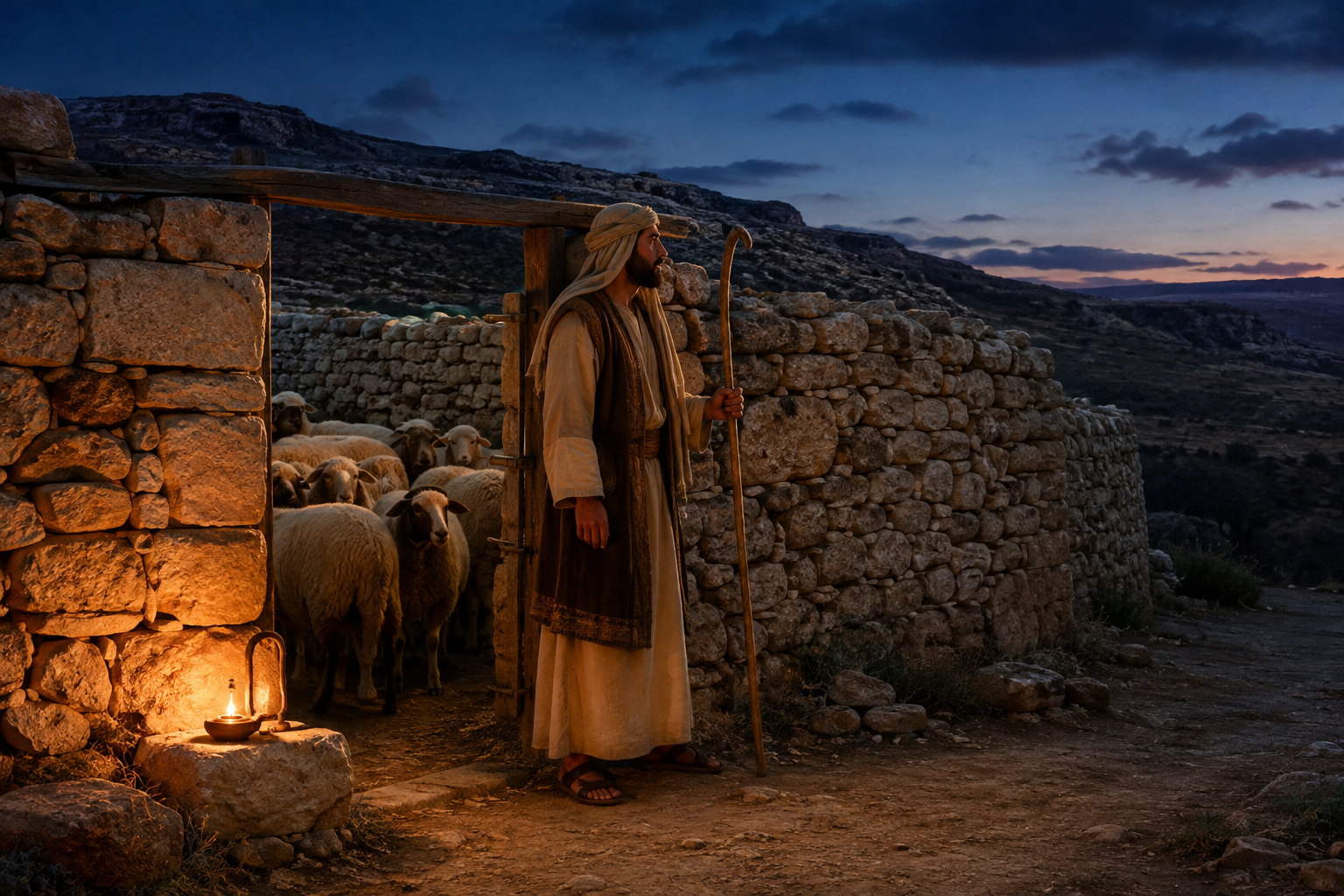
Psalm 23 begins with the words, “The LORD is my shepherd.” David describes the Lord as the One who provides, leads, restores, and stays near. The sheep have green pastures and quiet waters because the Shepherd knows what they need.
The psalm does not promise a life without trouble. It speaks about the valley of the shadow of death. Yet the believer does not walk that valley alone. The Lord is present, and His rod and staff bring comfort. His care is not removed when the path becomes dark.
Read Psalm 23 beside John 10. Psalm 23 gives the language of trust, while Jesus identifies Himself as the Good Shepherd who fulfills that hope. Christians can rest in the Lord’s care without pretending that pain is small.
Psalm 23 directs our attention away from gifts and toward the Giver. The Shepherd Himself is the believer’s comfort and hope.

How Does Ezekiel 34 Point to Christ?
Ezekiel 34 describes a flock harmed by leaders who cared only for themselves. God promises to act. He says that He will search for His sheep, gather them, feed them, and bind up the injured. He will judge between the sheep and place one shepherd over them.
The chapter names this promised shepherd as God’s servant David. This points to the promised King from David’s line. Jesus is the Son of David, but He is more than a human ruler. He is the divine Shepherd who comes to seek and save the lost.
Read the whole promise in Ezekiel 34:1-31. The chapter helps us understand why Jesus’ shepherd language matters. He is not borrowing a random picture. He is presenting Himself as the Shepherd promised by God.
This promise gives hope to people who have been neglected or wounded. The Lord sees them. He is not blind to unjust leadership, loneliness, or spiritual confusion. In Christ, God comes near to gather His people and bring them home.
How Does Jesus Know His Sheep?
Jesus says that He knows His sheep, and His sheep know Him. This is personal knowledge, not a distant record in heaven. Jesus knows the real condition of His people. He knows their fears, sins, questions, wounds, and hopes.
To be known by Jesus does not mean that He approves of everything we do. His knowledge includes loving correction. A good shepherd does not leave a sick sheep untreated. Jesus calls His people away from sin because He wants them to live in the truth.
Jesus’ knowledge also gives strong comfort. A believer may feel unseen by family, church, or society, but the Lord does not lose sight of His own. He knows every person who trusts Him. He knows when faith feels weak, and He is able to keep His people.
This relationship is not built on a vague spiritual feeling. It is built through faith in the real Jesus revealed in Scripture. We know Him as we listen to His Word, believe His promises, confess our sins, and follow His teaching.
What Does It Mean to Hear Jesus’ Voice?
Jesus says that His sheep hear His voice and follow Him. The first meaning is that His people receive Him as the true Shepherd. They do not treat His words as one opinion among many. They trust Him because He is Lord.
Today, we hear Jesus first through the Bible. Any thought, message, dream, or teaching that contradicts Scripture is not the voice of the Good Shepherd. Jesus leads His people into truth, holiness, repentance, mercy, and faith. He never leads us to worship another god or to excuse sin.
Hearing Jesus also requires a willing heart. We can read the Bible and still resist its call. The sheep follow the Shepherd. Christian faith is not only agreement with facts. It is repentance and obedience flowing from trust.
Following Jesus is not a promise that we will understand every step. It is a promise that the Shepherd knows the way. See what Jesus preached to consider His call to repentance, faith, the kingdom of God, and eternal life.

How Does Jesus Care for the Weak and Lost?
Jesus cares for the weak and lost because His heart is full of mercy. He does not measure a person’s value by strength, success, health, or public honour. He sees people who are pushed aside, confused, ashamed, or exhausted.
In Luke 15, Jesus tells a story about a shepherd who searches for one lost sheep. The shepherd rejoices when he finds it. The point is not that the sheep earned its rescue. The shepherd went after it because it mattered.
Read Luke 15:1-7. This does not make sin unimportant. It shows the grace of God toward sinners who need to be found. Jesus calls people to repentance, and He receives those who come to Him.
Christians should reflect this care. We should not become another source of harshness for people who are already hurt. We speak truth because Jesus is truthful, and we show compassion because Jesus is compassionate. We invite people to the Shepherd who can truly save.
How Does the Good Shepherd Lay Down His Life?
John 10 says that the Good Shepherd lays down His life for the sheep. Jesus is speaking about His death on the cross. He did not die because He was powerless or because His mission failed. He gave Himself willingly to save His people.
Jesus’ death is necessary because sin is real. We have all turned away from God in our hearts and actions. We need more than advice or a new routine. We need forgiveness and a new standing before God. The sinless Savior took the judgment that sinners deserve.
Jesus says that He has authority to lay down His life and authority to take it up again. His death and resurrection belong together. The cross is not the end of the story. The risen Christ is the Shepherd who now gives life to His sheep.
Hebrews calls Him the great Shepherd of the sheep through the blood of the eternal covenant. Read Hebrews 13:20-21. The risen Shepherd is still working in believers, making them ready to do God’s will.
What Does Jesus’ Resurrection Mean for His Sheep?
The resurrection means that Jesus is alive. The Good Shepherd who died for His sheep was raised from the dead by the power of God. This is the centre of Christian hope. Our faith rests on a living Savior, not only on a memory of a teacher.
Because Jesus rose, His sacrifice truly brings forgiveness. Because He rose, death will not have the last word for those who belong to Him. Because He rose, Christians can follow Him with courage even when life is painful.
The resurrection also guards the truth about Jesus’ identity. He is not merely an inspiring example. He is the Son of God who has authority over life and death. His words are trustworthy, and His promise of eternal life is sure.
A believer may still experience grief, sickness, and danger. The Shepherd does not promise that His sheep will never enter a dark valley. He promises His presence, His saving power, and the final resurrection of His people.
How Does Jesus Give His Sheep Life?
Jesus says that He came so His sheep may have life and have it abundantly. This life is not a promise of luxury or constant comfort. It is reconciliation with God, forgiveness of sins, a new heart, and the hope of eternal life.
Jesus gives this life through the Gospel. We hear that He died for sins and rose again. We turn from sin and trust Him. We do not earn salvation by becoming impressive. We receive it as a gift of grace, and then we learn to live as followers of Christ.
Abundant life includes a new direction. The Shepherd leads His people into truth and holiness. He teaches them to love God, love their neighbours, forgive, pray, and serve. These actions do not purchase salvation. They show the life that Jesus is growing in His people.
His life is also stronger than our weakness. A Christian can fall and need correction, but the answer is not to run from Jesus. It is to confess sin, receive His mercy, and return to His path.
How Does Jesus Gather One Flock?
In John 10, Jesus speaks about other sheep who are not yet in the fold. He says that they will hear His voice, and there will be one flock and one shepherd. The Gospel reaches beyond one nation, language, or culture.
This does not erase the history of Israel or replace the Bible’s teaching about God’s promises. It shows that Jesus is the Savior for the nations. People from every background are brought into one people through faith in Him.
Our unity must therefore be shaped by Jesus, not by pride. His flock is diverse, but its life comes from the same Lord.
What Does Shepherd Care Look Like Today?
Jesus alone is the Good Shepherd who saves. Still, He calls Christians to care for one another. A mature church should help people know the Bible, pray through hardship, resist sin, and grow in love for Christ.
Shepherd care can look ordinary. It may be a patient conversation, a meal for a grieving family, prayer with someone who is afraid, or a gentle word that brings a wandering believer back to truth. These actions do not replace the Gospel. They help make the love of Christ visible.
First Peter 5:1-4 tells church elders to shepherd God’s flock willingly and humbly. Read the passage at 1 Peter 5:1-4. Human shepherds must never act as owners of Christ’s people. They serve under the Chief Shepherd.
We should also receive care with humility. Independence can sound strong, but Jesus often ministers to us through His church. Ask for prayer, listen to wise correction, and stay close to Scripture. The Shepherd uses faithful community to keep His people walking in the light.
How Can I Follow Jesus the Good Shepherd?
Following Jesus begins with hearing the Gospel and responding to Him. Admit your sin. Turn from it. Believe that Jesus Christ is the Son of God who died for sinners and rose again. Trust Him as Lord and Savior, not only as a source of comfort.
Read the Bible with a listening heart. Start with a Gospel such as John. Ask what the passage shows about Jesus, what sin it exposes, what promise it gives, and what obedience it calls for. Let Scripture correct your ideas about God and about yourself.
Pray honestly. Bring fear, temptation, grief, and thanksgiving to the Lord. Prayer is not a way to control Jesus. It is a way to depend on Him. The Shepherd is near to His people, and He welcomes those who come through Him.
Walk with other believers. Join a faithful church, receive teaching, worship, serve, and encourage others. For practical reflection, visit Christian wisdom for daily life. A Christian life is not lived by isolated strength. It is a daily walk behind the Shepherd.
When you fail, do not hide from Christ. Confess your sin and return to Him. His sheep are kept by His grace. The right response to His care is grateful obedience.
Frequently Asked Questions
What does Christ the Good Shepherd mean?
Christ the Good Shepherd means that Jesus is the true Savior and King who knows, leads, protects, and saves His people. He gives His life for His sheep and rose again in victory.
Where does the Bible call Jesus the Good Shepherd?
Jesus calls Himself the Good Shepherd in John 10:11 and John 10:14. Other passages also describe His shepherding work, including Hebrews 13:20, 1 Peter 5:4, and the promises in Ezekiel 34.
How do Christians hear the voice of Jesus?
Christians hear Jesus by receiving His teaching in the Bible and trusting Him through faith. His voice agrees with Scripture, leads us away from sin, and calls us to follow Him with obedience and hope.
What did the Good Shepherd do for His sheep?
Jesus lived without sin, laid down His life for sinners, took up His life again, and gives eternal life to those who repent and believe in Him. He also continues to guide and keep His people.
How can I follow Jesus the Good Shepherd?
Read the Bible, turn from sin, trust Jesus as Lord and Savior, pray, join faithful Christian fellowship, and obey what He teaches. Following Jesus is a lifelong walk of faith shaped by His Word.