Bethany Beyond the Jordan is the biblical site on the eastern bank of the Jordan River where John the Baptist baptized Jesus Christ, as recorded in John 1:28. This sacred location holds profound significance for Christians worldwide, marking the beginning of Jesus’ public ministry and serving as a powerful place of spiritual renewal and pilgrimage.
There are places on this earth where heaven drew near—where the eternal broke into the earthly, and time stood still before the glory of God. One such place is Bethany Beyond the Jordan, the sacred banks where Jesus Christ stepped into the waters of the Jordan River and was baptized by John the Baptist. It is here, in this humble and holy ground, that the Son of God identified with sinful humanity, inaugurating His public ministry and revealing Himself to all who would receive Him (Mark 1:9–11).
In this article, we will walk together through the biblical record and enduring significance of Bethany Beyond the Jordan—exploring what Scripture teaches about this site, why it matters for every follower of Jesus, and how visiting or studying this sacred place can deepen your walk with Christ. Whether you are a new believer or a lifelong disciple, the truths we uncover here will anchor your faith in the unchanging Word of God and remind you that the Jesus who entered the Jordan is the same Jesus who today invites you into new life.
What Is Bethany Beyond the Jordan?
The Biblical Record of Jesus’ Baptism
Bethany Beyond the Jordan holds a sacred place in Christianity. It is the site where Jesus Christ was baptized by John the Baptist. This powerful moment marked the beginning of Jesus’ public ministry on earth. The Gospel of Matthew records this event clearly. “Then Jesus came from Galilee to the Jordan to be baptized by John” (Matthew 3:13, NIV).
At this holy location, heaven itself bore witness to who Jesus truly is. After Jesus came up from the water, the heavens opened. The Spirit of God descended like a dove and landed on Him. Furthermore, a voice from heaven declared, “This is my Son, whom I love; with him I am well pleased” (Matthew 3:17, NIV). This event revealed Jesus as the Son of God in a profound and public way.
The baptism of Jesus was not a sign of repentance, as Jesus was sinless. Instead, it was an act of obedience to God’s divine plan. As Jesus told John, “Let it be so now; it is proper for us to do this to fulfill all righteousness” (Matthew 3:15, NIV). This act identified Jesus with humanity and set the stage for His saving work on the cross.
Biblical References to Bethany Beyond the Jordan
the Gospel of John specifically identifies the location: “This was at Bethany on the other side of the Jordan, where John was baptizing” (John 1:28, NIV). The Gospel of John mentions this site again in John 10:40, when Jesus returned there after facing opposition in Jerusalem. These scriptural references anchor this location firmly in biblical history.
- John 1:28 Identifies Bethany Beyond the Jordan as a key baptism site.
- John 10:40 Shows Jesus returned to this place of spiritual importance.
- Matthew 3:13-17 Records the eyewitness account of Jesus’ baptism.
- Mark 1:9 Confirms Jesus came from Nazareth to be baptized in the Jordan.
- Luke 3:3 Notes John came baptizing all the region around the Jordan.
It is important to note there are two locations named Bethany in the Bible. One is the Bethany near Jerusalem, home to Mary, Martha, and Lazarus. The other is Bethany Beyond the Jordan, located on the eastern bank of the Jordan River. This distinction matters because it points us to the precise location where the Son of God was revealed through water.
The Jordan River itself carries deep spiritual significance throughout Scripture. The Israelites crossed it to enter the Promised Land under Joshua’s leadership (Joshua 3:14-17). Prophet Elijah and Elisha crossed it as well (2 Kings 2:6-8). Therefore, when Jesus entered these same waters, He fulfilled and transcended all that had come before. Bethany Beyond the Jordan stands today as a testament to the reality of Jesus Christ and His earthly ministry.
What is the significance of the Bethany Beyond the Jordan?
The Baptism of Jesus Christ
The baptism of Jesus Christ is one of the most pivotal moments in all of Scripture. At Bethany Beyond the Jordan, Jesus stepped into the waters not because He needed forgiveness, but to fulfill all righteousness on our behalf. As John the Baptist said in Matthew 3:11, “I baptize you with water for repentance. But after me comes one who is more powerful than I, whose sandals I am not worthy to carry.” This event marked the full revelation of the Holy Trinity—God the Father spoke from heaven, the Son was raised from the water, and the Holy Spirit descended like a dove (Matthew 3:16-17). Standing at Bethany Beyond the Jordan, we are reminded that this sacred act was not merely symbolic; it was the inauguration of our salvation through Jesus Christ alone.
The Beginning of Jesus’ Public Ministry
Furthermore, the baptism at Bethany Beyond the Jordan signaled the official beginning of Jesus’ earthly ministry. Before entering those waters, Jesus lived a hidden life in Nazareth. However, once baptized, He was empowered by the Spirit to preach, heal, and cast out demons (Luke 4:14). Every miracle, every sermon, and ultimately every step toward Calvary flows from this defining moment. The world was forever changed when Jesus was anointed here. For believers today, Bethany Beyond the Jordan represents the power available through submission to God’s perfect will and the indwelling of the Holy Spirit.
A Place of New Birth and spiritual renewal
In addition, Bethany Beyond the Jordan carries profound symbolism for spiritual renewal. Just as Jesus emerged from the waters of the Jordan River, we are called to emerge from the waters of baptism into new life (Romans 6:4). This location serves as a powerful reminder that true transformation begins when we surrender our lives to Christ. Here, the promise of 2 Corinthians 5:17 is made visible: “Therefore, if anyone is in Christ, the new creation has come: The old has gone, the new is here!” Visiting or meditating on this site encourages us to rediscover the joy of our salvation and recommit our hearts to following Jesus without reservation.
Where Is Bethany Beyond the Jordan Located Today?
Bethany Beyond the Jordan in Jordan
Today, Bethany Beyond the Jordan (also known as Al-Maghtas, which means “baptism” in Arabic) is located on the Jordanian side of the Jordan River, approximately 40 kilometers east of Jericho. The site sits in the Jordan Valley, not far from where the Jordan River flows southward toward the Dead Sea.
In biblical times, this region was part of the ancient historical landscape that witnessed some of the most important moments in Scripture. Notably, it was here that Jesus Christ was baptized by John the Baptist, initiating His public ministry among the people of Israel.
The Jordanian government has preserved this holy site, recognizing its deep significance to Christians worldwide. In addition to being a place of prayer and reflection, the area has been carefully maintained to allow pilgrims to experience a tangible connection to the events described in the Gospels.
For those seeking to visit, the site offers:
- Accessible ruins of ancient baptismal pools used since the Byzantine period
- Churches and chapels built over the centuries in remembrance of Jesus’ baptism
- The flowing waters of the Jordan River, where you can witness the waters that John used for baptism
- Pilgrim trails and prayer spaces for personal devotion
- A visitor center providing historical and biblical context
The UNESCO World Heritage Site
In 2015, UNESCO officially recognized Bethany Beyond the Jordan (Al-Maghtas) as a World Heritage Site, acknowledging its outstanding universal value to humanity. [1]
The designation specifically cited the site’s connection to the ministry of John the Baptist and the baptism of Jesus Christ. Furthermore, the committee noted the site’s broader role as a destination of pilgrimage for centuries of Christians.
As a result of this recognition, the site now benefits from enhanced preservation efforts and international awareness. In addition, the UNESCO status has helped promote the area as a significant destination for religious tourism in Jordan. [source: [https://www.unesco.org/en/articles/bethany-beyond-jordan](https://www.unesco.org/en/articles/bethany-beyond-jordan)]
The protected area includes several key features:
| Feature | Description |
|---|---|
| Jabal Mar-Elias (Elijah’s Hill) | A hill traditionally associated with the prophet Elijah’s ascension to heaven (2 Kings 2:11), located east of the river |
| Remains of Byzantine Churches | Ruins of several churches dating from the 5th to 7th centuries, demonstrating centuries of Christian veneration |
| Baptism Pools | Ancient stone pools where pilgrims historically baptized and bathed in remembrance of Jesus’ baptism |
| Marshlands Along the Jordan | Riverside vegetation and mudflats reminiscent of the biblical landscape described in Scripture |
The recognition by UNESCO does not merely affirm the site’s historical or cultural significance. Rather, it also serves as a testimony to the enduring legacy of Jesus Christ’s ministry and His obedience to the Father through baptism in the Jordan River.
As Scripture records: “Then Jesus came from Galilee to the Jordan to be baptized by John” (Matthew 3:13). Today, standing at this very place, believers can reflect on the profound truth that the Son of God humbly submitted to baptism “to fulfill all righteousness” (Matthew 3:15).
Ultimately, the exact spot where the full revelation of the Trinity took place—where the Spirit descended like a dove and the Father’s voice proclaimed, “This is my Son, whom I love; with him I am well pleased” (Matthew 3:17)—remains the central draw of this sacred site. Whether or not visitors can pinpoint the precise baptismal location, the entire area serves as a powerful reminder of God’s plan of salvation unfolding in human history.
Is Bethany Beyond the Jordan worth visiting?
A Pilgrimage Destination for Christians Worldwide
Every year, countless believers from every corner of the globe travel to Bethany Beyond the Jordan. This sacred site draws visitors from many nations and church traditions. For Christian pilgrims, this destination carries a weight that few other places on earth can match.
Why? Because this is the very place where heaven touched earth. Here, the Holy Trinity was revealed in a way never seen before. The Son entered the water. The Holy Spirit descended like a dove. The Father spoke from heaven, saying:
“This is my beloved Son, with whom I am well pleased.” — Matthew 3:17 (NKJV)
This moment changed everything. Visiting this site allows believers to stand where that moment occurred. It is not merely a historical curiosity. It is a profound faith experience. Many visitors report that prayer at the Jordan River feels deeply personal. The air. The water. The surrounding wilderness. It all points back to Jesus.
Furthermore, pilgrimage to Bethany Beyond the Jordan is not limited to one denomination. Catholics, Protestants, Orthodox believers, and others all consider this holy ground. While traditions differ, the conviction remains the same: Jesus Christ is Lord. The baptism site unitesChristians around the central truth of who Jesus is and what He did.
What to Expect When You Visit
Visiting Bathany Beyond the Jordan requires some preparation. Here is a practical overview of what awaits you:
- The Setting: The site is located in the Jordanian desert, near the Dead Sea. The landscape is arid yet stunningly beautiful. Expect wide open skies and quiet, peaceful surroundings.
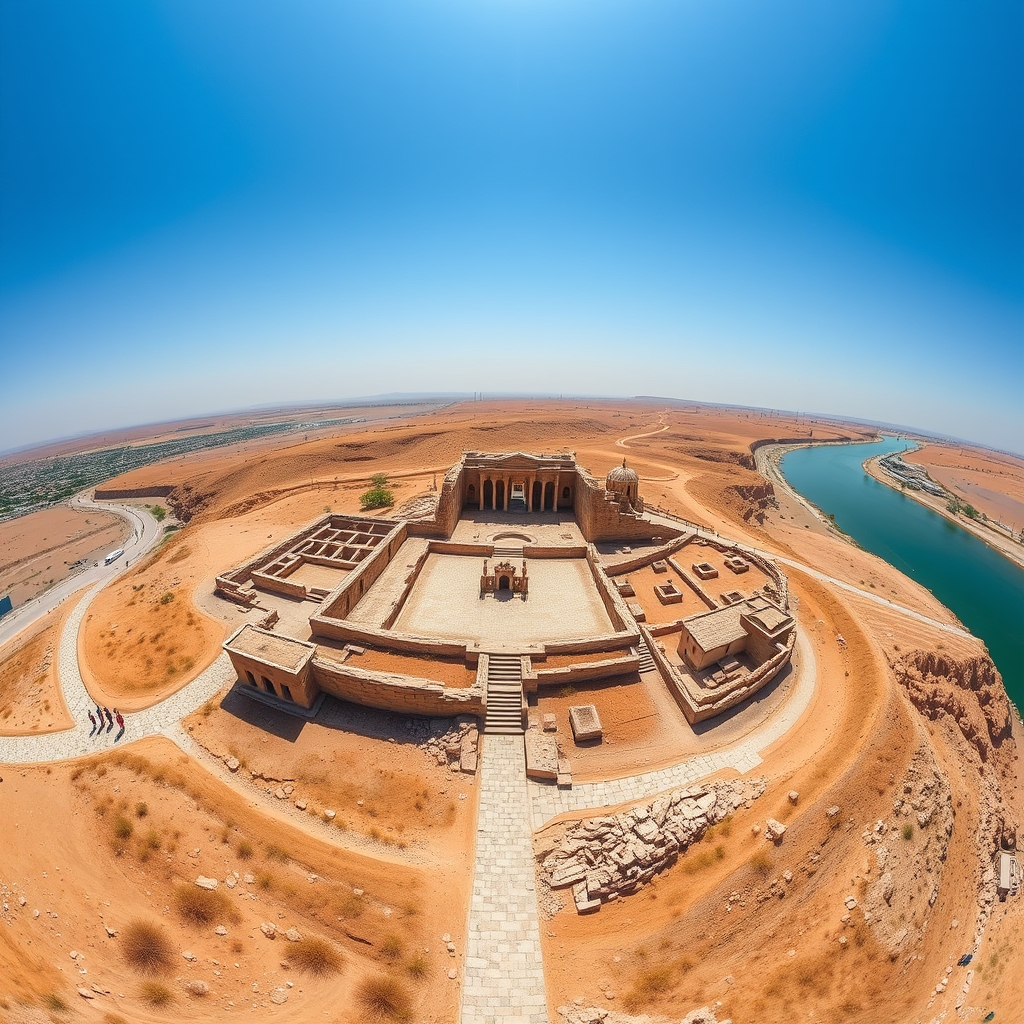
- The Baptism Pools: Archaeological excavations uncovered several baptism pools from the early church period. Walking among these ancient structures connects you physically to the earliest generations of believers.
- Churches Nearby: Several church buildings from the Byzantine era have been excavated at the site. Some stand in ruins, while others have been preserved with beautiful mosaics and architectural details.
- A Pilgrim Trail: A structured walking path guides visitors through the site. Along the trail, informational signs share biblical context and historical findings.
- Access to the River: Pilgrims can reach the actual Jordan River. Many choose to pray, meditate on scripture, or even be baptized or re-baptized in these sacred waters.
- Guided Tours: Knowledgeable guides help visitors understand the biblical and historical significance of each location within the site.
Additionally, the site has been officially recognized by Jordan as an important tourist destination. Facilities for visitors continue to improve. However, the spiritual power of this place has never required human improvement. Jerusalem approved the site for Christian pilgrimage in 2015. Catholic and Anglican bishops blessed it together, showing rare unity around the shared truth of Jesus’ baptism.[2]
Here is a quick reference table for practical planning:
| Practical Detail | Information |
|---|---|
| Location | Jordan, along the Jordan River near the Dead Sea |
| UNESCO Status | Listed as a World Heritage Site since 2015 |
| Best Time to Visit | Spring (March–May) and Autumn (September–November) for mild weather |
| What to Bring | Comfortable walking shoes, water, sunscreen, modest clothing for visiting holy sites |
| Spiritual Preparation | Read Matthew 3:1–17 before your visit to prepare your heart |
The question is not whether Bethany Beyond the Jordan is worth visiting. The question is: how could a believer not yearn to stand where Jesus was baptized? In that moment, the Father declared His love for the Son. The Spirit descended in visible power. Salvation history turned a decisive corner. Walking this ground brings the Gospels to life in our bones.
For the Christian who loves Jesus, this pilgrimage strengthens faith. It deepens worship. It connects us to the earliest church. Bethany Beyond the Jordan is not just worth visiting. It is a place where our hearts are redirected toward the One who was baptized there — Jesus Christ, the Son of the living God.
What country is Bethany Beyond the Jordan?
Bethany Beyond the Jordan is located in the country of Jordan. This sacred site sits on the eastern bank of the Jordan River. It is widely recognized as the place where Jesus Christ was baptized by John the Baptist.
Bethany Beyond the Jordan in the Holy Land
Bethany Beyond the Jordan holds a unique place in all of the Holy Land. While many holy sites are in Israel today, this site lies squarely within the modern borders of the Hashemite Kingdom of Jordan. Its location just east of the Jordan River places it in the region the Bible often calls “beyond the river.”
In Scripture, this designation served a clear purpose. It distinguished this Bethany from the more well-known Bethany near Jerusalem, where Mary, Martha, and Lazarus lived (John 11:1). The Gospel of John specifically notes “Bethany on the other side of the Jordan” to avoid confusion (John 1:28).
Today, the site is located near the Dead Sea. It sits approximately 50 kilometers east of Jerusalem and about nine kilometers north of the Dead Sea. The Jordanian government has preserved the area and opened it to pilgrims from around the world. In 2015, UNESCO designated it as a World Heritage Site due to its profound religious significance. [3]
This place matters to believers everywhere because it is where heaven touched earth. Here, the voice of God the Father declared of Jesus: “This is my Son, whom I love; with him I am well pleased” (Matthew 3:17, NIV). The Holy Spirit descended like a dove. The full Trinity revealed itself at this very spot.
When you stand at Bethany Beyond the Jordan, you stand where the Savior’s public ministry began. You stand where perfect humility met perfect grace. And you stand at a place that reminds every believer that following Jesus always starts with surrender.
The Connection Between Bethany Beyond the Jordan and Our Faith Today
Walking in the Footsteps of Jesus
Standing at Bethany Beyond the Jordan is a powerful spiritual moment. Many believers feel deeply connected to Jesus when they visit. You can actually walk where He walked. You can see the very waters where He was baptized by John.
This place is not just a historical site. It is a sacred reminder of what Jesus did for us. When we visit, we remember His humility. He didn’t need to be baptized. Yet He chose to obey the Father completely. He identified with us even though He was sinless.
Scripture tells us:
“Then Jesus came from Galilee to the Jordan to be baptized by John.” — Matthew 3:13 (NIV)
This invitation from Jesus shows us something important. He desires us to follow His example. When we walk in His steps, we learn obedience. We learn surrender. We learn what it means to say “yes” to God’s will.
Visiting Bethany Beyond the Jordan can renew your faith. It makes the Bible come alive. No longer are the words just on a page. They are real places with real purposes. Your belief becomes stronger when you connect the Scripture to the soil.
- Seeing the baptism site makes the Gospel story tangible
- Visiting reminds us of Jesus’ earthly ministry
- Walking where Jesus walked strengthens our trust in His word
- Fellowship with other believers at the site builds community
In addition, reflecting on Jesus’ baptism helps us appreciate our own. It shows us that baptism is not just ceremony. It is a declaration of faith. It is a public step of obedience. Just as Jesus stepped into those Jordan waters, so do we.
Renewing Your Own Baptismal Promises
Every Christian has made a commitment through baptism. When we renew those promises, we reconnect with God’s call on our lives. Bethany Beyond the Jordan is a perfect place to do this.
What are these baptismal promises? They include:
- Turning away from sin and living for Christ
- Putting our whole trust in Jesus as Lord
- Committing to follow Him daily, no matter the cost
- Identifying with His death and resurrection
Romans 6:4 captures the heart of this:
“We were therefore buried with him through baptism into death in order that, just as Christ was raised from the dead through the glory of the Father, we too may live a new life.” — Romans 6:4 (NIV)
Paul is teaching us here that baptism is more than water. It is a death to our old self. It is a resurrection into new life with Christ. When we renew these promises, we remember what God has already done. We declare that we are His.
The connection between Bethany Beyond the Jordan and our faith is clear:
- It roots us in the Gospel. Jesus’ baptism began His public ministry. We are reminded that His ministry brought salvation.
- It calls us to obedience. Jesus obeyed by being baptized. We obey by living out our baptism daily.
- It empowers our witness. The Father declared Jesus was His beloved Son. In Christ, we too are God’s beloved children (John 1:12).
In closing, Bethany Beyond the Jordan is not just a place on a map. It is a living reminder that Jesus Christ is Lord. He came to this earth. He was baptized for our sake. He died and rose again so that we might live. Our faith is not built on myths. It is built on the solid foundation of Christ. He is the same yesterday, today, and forever (Hebrews 13:8). May we walk in His footsteps with courage and hope.
Frequently Asked Questions
`html
Which Disciple Was Jesus’ Half Brother?
None of Jesus’ twelve disciples was His half brother. In fact, during His earthly ministry, His brothers did not fully believe in Him. Scripture tells us in John 7:5, “For even His brothers did not believe in Him.” However, the Bible does identify James as Jesus’ half brother. He is the son of Mary and Joseph, born after Jesus (Matthew 13:55). Furthermore, James later became a pillar of the church in Jerusalem (Galatians 1:19). This transformation happened because James encountered the risen Christ. As 1 Corinthians 15:7 records, “Then He appeared to James.” That personal meeting with the resurrected Lord changed everything. James went from skeptic to devoted servant of Jesus. He eventually led the Jerusalem church and authored the Book of James. Tragically, he was martyred for his faith around 62 AD. His story reminds us that transformative encounters with Jesus Christ even reach into His own family.
Can You Take Communion at Bethany Beyond the Jordan?
Bethany Beyond the Jordan is primarily a pilgrimage and heritage site today, rather than a functioning church with regularly scheduled communion services. The area is overseen by Jordan’s Hashemite Kingdom and managed as a UNESCO World Heritage Site. However, different Christian denominations occasionally hold special baptism and communion services at the location, depending on arrangements with local authorities.
What visitors should know:
- Communion is not a regularly scheduled public event at the site.
- Some organized pilgrim groups arrange for services in advance through tour operators or church groups.
- Baptism ceremonies are currently held on the eastern bank of the river, not exactly where Jesus was baptized, which is on the western bank in the West Bank region.
- Visitors are encouraged to connect with local churches in Amman or nearby areas to participate in communion during their time in Jordan.
- The spiritual significance of the site itself is present, whether or not a formal sacrament takes place during your visit.
Ultimately, communion is a sacred act of remembrance that Jesus instituted for His followers. As 1 Corinthians 11:26 says, “For whenever you eat this bread and drink this cup, you proclaim the Lord’s death until He comes.” The power of communion does not depend on the location. Rather, it depends on the faith of those who participate in the name of Jesus Christ.
We should note that the historical location of Jesus’ baptism on the western side of the Jordan River (in the West Bank near Qasr el-Yahud) is also accessible to pilgrims. This site currently holds baptismal services managed by the Israeli government. [4]
How Far Is Bethany Beyond the Jordan from Jerusalem?
Bethany Beyond the Jordan is approximately 25 miles (40 kilometers) northeast of Jerusalem. The journey involves crossing the Jordanian border, so travel time varies depending on which border crossing you use and current conditions. On average, the drive from Jerusalem takes roughly one to two hours, including border processing time.
Key distance facts:
- The site lies along the Jordan River, in the Hashemite Kingdom of Jordan.
- It is approximately 31 miles (50 km) south of Amman, Jordan’s capital city.
- From the Dead Sea, it is only about 7 miles (11 km) to the north.
- The companion baptism site on the Israeli side (Qasr el-Yahud) is closer to Jerusalem, roughly an hour’s drive without crossing into Jordan.
To put this into biblical perspective, John 1:28 tells us, “This all happened at Bethany on the other side of the Jordan, where John was baptizing.” The Gospel writer intentionally noted the location as “beyond the Jordan,” meaning east of the river. This geographical separation was significant. It underscored that Jesus traveled to this specific, humble place to be baptized. He was not seeking a grand, centralized location. Instead, He chose the waters where John the Baptist was calling the people of Israel to repentance. Today, Christians from around the world make this same journey as an act of devotion. The distance itself becomes part of the pilgrimage experience, reminding us of John the Baptist’s wilderness ministry and Jesus’ willingness to meet us wherever we are.
What Does the Bible Say About the Location of Jesus’ Baptism?
The Bible is clear about the location of Jesus’ baptism. John 1:28 explicitly states, “This all happened at Bethany on the other side of the Jordan, where John was baptizing.” This is the most direct biblical reference to the site. Additionally, John 10:40 mentions that Jesus went back “beyond the Jordan to the place where John had been baptizing earlier.” This confirms that Jesus had a meaningful connection to this location beyond just His baptism.
What Scripture tells us:
- Matthew 3:13 says, “Then Jesus came from Galilee to the Jordan to be baptized by John.” This shows the intentional journey Jesus made.
- Mark 1:9 adds, “At that time Jesus came from Nazareth in Galilee and was baptized by John in the Jordan.”
- John 1:28 gives us the most precise location: “Bethany on the other side of the Jordan.”
- John 10:40 records that Jesus returned to this region. Many people there believed in Him.
It is important to distinguish this Bethany from the other Bethany near Jerusalem. That was the village of Mary, Martha, and Lazarus (John 11:1). Bethany Beyond the Jordan is located east of the Jordan River, in modern day Jordan. The Gospel writers were careful to name this specific location. Archaeological evidence supports the biblical account. Excavations have uncovered churches, baptismal pools, and monasteries dating back centuries at the site. These findings confirm that Christians have revered this location since the earliest centuries of the faith. Joshua 3:14-17 also recounts how the Israelites crossed the Jordan at this general region to enter the Promised Land. This adds profound layers of biblical significance to the entire area.
Standing at Bethany Beyond the Jordan today, pilgrims can reflect on the full weight of Scripture. At this location, God the Father spoke from heaven, the Holy Spirit descended like a dove, and Jesus Christ humbly submitted to baptism. As Matthew 3:16-17 records: “As soon as Jesus was baptized, He went up out of the water. At that moment heaven was opened, and He saw the Spirit of God descending like a dove and alighting on Him. And a voice from heaven said, ‘This is my Son, whom I love; with Him I am well pleased.'” This sacred ground bears witness to the full revelation of the Trinity, the launch of Jesus’ public ministry, and the fulfillment of God’s redemptive plan for all humanity.
`