
What Are the Beatitudes in the Bible?
The Beatitudes are the blessings Jesus gives at the beginning of the Sermon on the Mount. They appear in Matthew 5:3-12. Jesus speaks about people who are poor in spirit, who mourn, who are meek, who hunger for righteousness, who show mercy, who are pure in heart, who make peace, and who suffer for doing what is right.
These sayings can sound surprising. The world often calls the strong, rich, admired, and powerful blessed. Jesus looks deeper. He describes people who know their need for God and trust His promises. The Beatitudes show what life looks like under the good rule of Jesus Christ.
They are not a list of ways to impress God. They are a portrait of people who receive grace and are being shaped by the King. The blessings point to God’s kingdom, God’s comfort, God’s mercy, and the hope that belongs to those who follow Jesus. To understand the wider setting, begin with the life and ministry of Jesus.
Where Are the Beatitudes in the Bible?
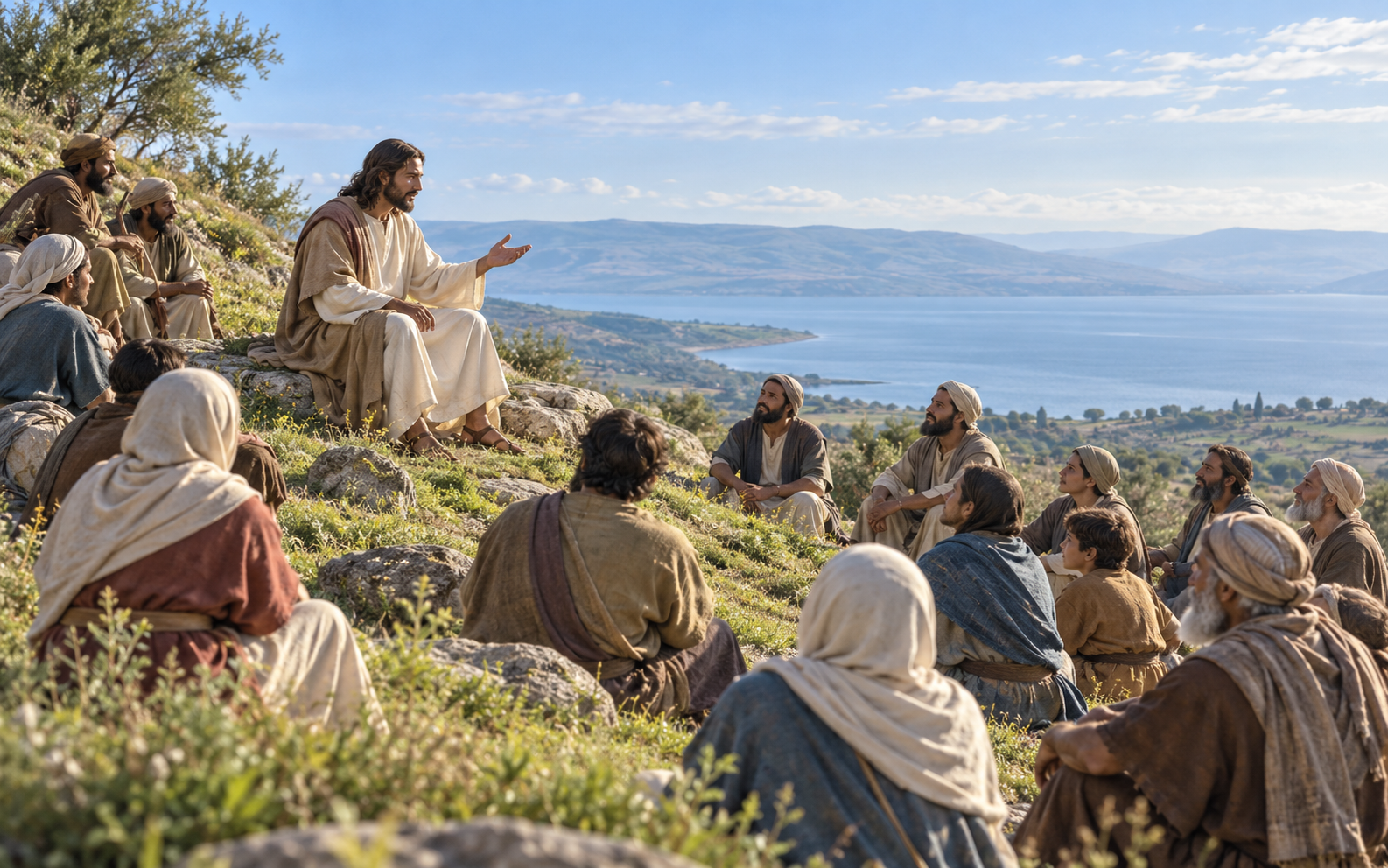
The main passage is Matthew 5:3-12. Matthew places it at the start of the Sermon on the Mount, after Jesus begins His public ministry and calls people to repent because the kingdom of heaven is near. Jesus sits on a hillside, His disciples come to Him, and He teaches them.
The Beatitudes are not isolated sayings. They introduce the kind of life Jesus explains throughout Matthew 5-7. He speaks about anger, purity, truthfulness, love for enemies, prayer, money, anxiety, judging others, and building life on His words. The opening blessings prepare us to hear the whole sermon as the teaching of the Son of God.
The Bible also records a related passage in Luke 6:20-23. Luke’s account speaks directly to Jesus’ disciples and highlights poverty, hunger, sorrow, and rejection for the sake of the Son of Man. Read Matthew 5:1-12 and compare it with the Beatitudes in Luke.

What Does Blessed Mean in the Beatitudes?
The word blessed describes a person who is under God’s favour and has a secure hope in Him. It does not simply mean cheerful, comfortable, or successful by ordinary standards. A person may weep and still be blessed. A disciple may be rejected and still be blessed. Jesus measures life by the truth of God’s kingdom, not by the praise of the crowd.
Each blessing has a promise. The poor in spirit receive the kingdom of heaven. Those who mourn will be comforted. The meek will inherit the earth. Those who hunger for righteousness will be satisfied. These promises show that God sees His people and will complete His saving work.
Blessing is therefore both present and future. God is with His people now, and the full joy of His kingdom is still coming. Christians do not pretend that suffering is pleasant. We trust Jesus when He says that suffering, loss, and faithful obedience cannot cancel God’s promise.
Blessed Are the Poor in Spirit
Jesus begins with the poor in spirit. This means people who know that they are spiritually needy. They do not approach God boasting about their goodness. They come with empty hands and ask for mercy. They know that forgiveness, holiness, and eternal life are gifts from God.
Being poor in spirit is not self-hatred. It is honest humility before the holy God. A Christian can recognise both sin and dignity. We are made in God’s image, yet we have turned away from Him. We need Jesus because our own effort cannot remove guilt or make the heart clean.
Jesus promises that the kingdom of heaven belongs to such people. The kingdom is not entered by proud self-reliance. It is received by faith in the King. The first Beatitude teaches us to begin every day by saying, “Lord, I need You.”
Blessed Are Those Who Mourn
Jesus says that those who mourn will be comforted. This includes people who grieve loss, but the setting also points to sorrow over sin and the brokenness of the world. God does not treat faithful tears as weakness. He sees them and promises comfort.
Biblical mourning is not hopeless despair. It brings pain into the presence of God. The Christian does not have to hide grief behind religious words. We can tell the Lord that we hurt, ask for help, and wait for His care. Jesus Himself wept at the tomb of Lazarus, even though He knew that resurrection was coming.
The promise of comfort reaches its fullness in God’s future. The Lord will wipe away tears, judge evil, and make all things new. Until then, Christians comfort one another with prayer, practical care, and the hope of the risen Christ.
Blessed Are the Meek
Meekness is not weakness, cowardice, or the absence of conviction. It is strength placed under God’s control. A meek person does not need to win every argument or use power to make others afraid. Meekness listens, speaks truth without cruelty, and trusts God to judge rightly.
Jesus is the clearest example. He is gentle and lowly in heart, yet He speaks with divine authority. He confronts hypocrisy, protects the vulnerable, and goes to the cross willingly. His meekness is active obedience, not passive surrender to evil.
Jesus says that the meek will inherit the earth. This promise reverses the world’s usual order. The future belongs not to those who seize everything through violence and pride, but to those who receive life from God and live under the rule of Christ.
Blessed Are Those Who Hunger and Thirst for Righteousness
Hunger and thirst are strong desires. Jesus uses them to describe a deep longing for righteousness. This means wanting God’s will to be honoured in our own lives and in the world. We want sin to be defeated, justice to be done, and people to be brought into right relationship with God.
This hunger is not a desire to appear religious. It begins with God’s truth and leads to practical obedience. We ask the Lord to expose our selfish motives, forgive our sin, and teach us to love what He loves. We also wait for the day when Jesus will make every wrong right.
Jesus promises that these people will be satisfied. He satisfies us first by giving Himself. He continues to feed us through Scripture, prayer, the Holy Spirit, and the fellowship of believers. Our longing may grow as we learn more of God’s holiness, but His grace is enough for the journey.
Blessed Are the Merciful
Mercy sees another person’s need and responds with compassion. It is not the same as calling evil good or refusing wise boundaries. Mercy tells the truth about sin while seeking the good of the sinner. God has shown mercy to us in Jesus, so Christians learn to show mercy to others.
A merciful person remembers that he or she lives by grace. This changes the way we respond when someone fails. We may need to correct, protect, report wrongdoing, or seek justice. But we do not feed hatred or take pleasure in another person’s ruin. We pray for repentance and restoration where that is possible.
Jesus promises mercy to the merciful. This is not a way to purchase God’s forgiveness. It is evidence that we have received it. People who understand the mercy of Christ become slower to boast and quicker to help, forgive, and bear with others.
Blessed Are the Pure in Heart
Purity of heart means an undivided inner life before God. It does not mean that a Christian has never sinned or never struggles with temptation. It means that the person wants God Himself, not merely the gifts that God can give. A pure heart is honest, teachable, and ready to turn from hidden sin.
Jesus sees motives that other people cannot see. We can perform good actions for praise, control, or reputation. The Lord calls us to love God for God’s sake and to serve others without making ourselves the centre. Purity grows as we bring our thoughts, desires, and choices under the light of Scripture.
Jesus says that the pure in heart will see God. This promise points to fellowship with God now and the joy of seeing Him fully in the age to come. The hope is not that we make ourselves perfect. It is that Jesus cleanses and keeps His people.
Blessed Are the Peacemakers
Peacemakers do more than avoid arguments. They actively seek truthful reconciliation. They listen carefully, speak honestly, refuse gossip, and take wise steps to repair what sin has broken. Peace is not pretending that harm did not happen. It is moving toward what is good, just, and whole under God.
Jesus calls peacemakers children of God because their work reflects the Father’s heart. God reconciles sinners to Himself through the death of Jesus. Those who receive this reconciliation should become people who pursue peace with humility. Sometimes peace requires a hard conversation, a boundary, or the help of wise leaders.
Peacemaking must remain faithful to truth. A false peace that protects abuse or hides evil is not the peace of Christ. Biblical peace joins love and holiness. It seeks the good of neighbours while remembering that Jesus is the final source of reconciliation.
Blessed Are Those Persecuted for Righteousness
The last Beatitude turns to people who suffer because they follow Jesus and seek righteousness. Jesus does not promise that obedience will always bring approval. Some people will reject, insult, exclude, or falsely accuse His disciples. He prepares His followers to remain faithful without returning evil for evil.
Peter teaches believers to honour Christ as Lord and to answer with gentleness and respect when asked about their hope. Read 1 Peter 3:14-16. Christian courage is not loud pride. It is steady trust in Jesus, even when faithfulness costs something.
Jesus tells persecuted disciples to rejoice because their reward is great in heaven. This does not make cruelty acceptable or mean that Christians should seek trouble. It means that no suffering for Christ is wasted. James also teaches believers to ask God for wisdom when trials test their faith in James 1:2-4. The same Lord who died and rose again will keep His people and judge every false charge.
What Do the Beatitudes Mean?
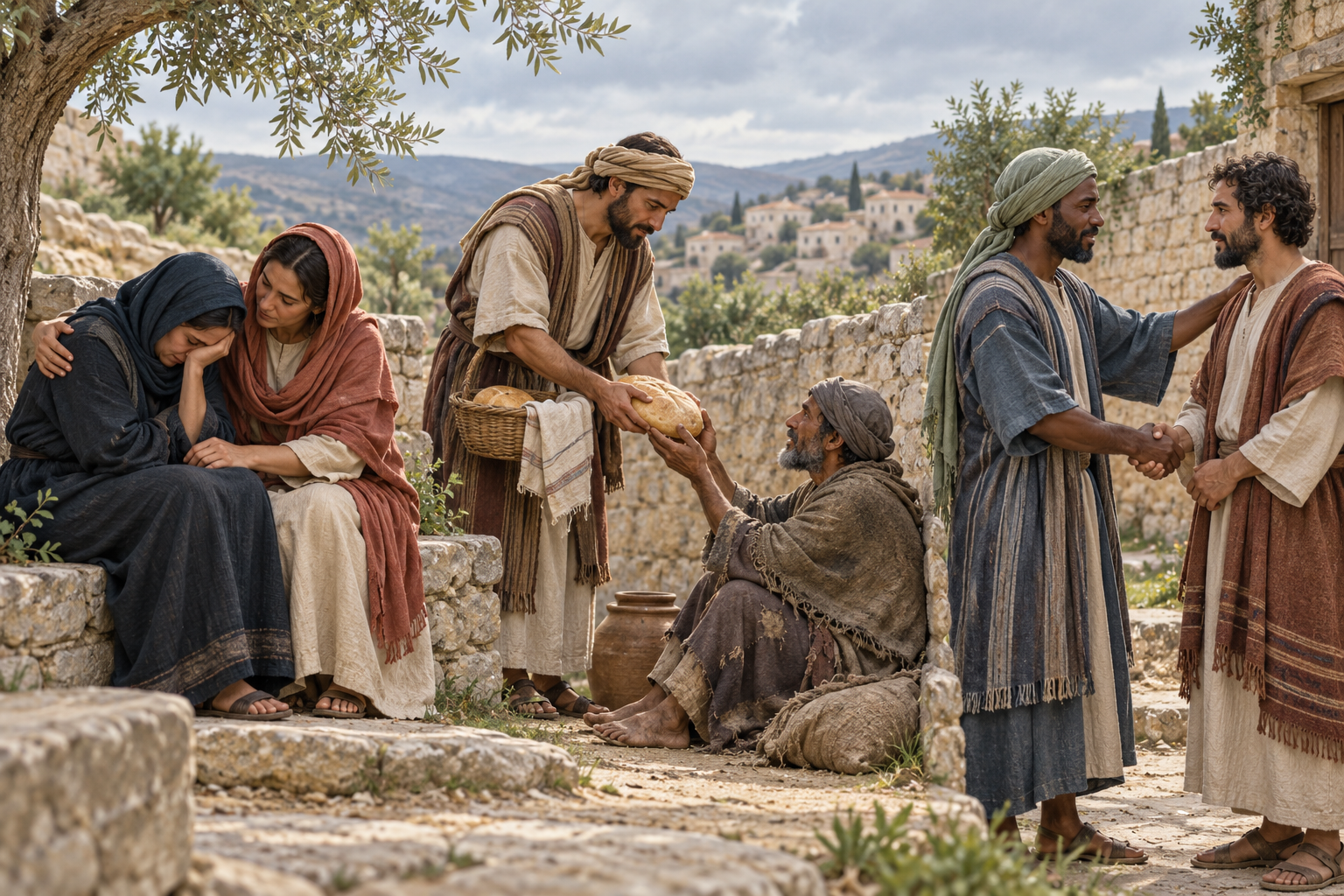
Taken together, the Beatitudes describe a people who depend on God, grieve over sin, reject pride, seek righteousness, show mercy, pursue purity, make peace, and remain faithful under pressure. These qualities are not separate personality types. They belong together in the life Jesus creates.
The Beatitudes also show the shape of Jesus’ own life. He is humble, compassionate, righteous, pure, peaceful, and willing to suffer for sinners. He does not teach a path that He refuses to walk. At the cross, Jesus bears rejection and judgment so that guilty people can receive forgiveness and new life.
For a helpful educational overview, see the BibleProject guide to the Beatitudes. Read it alongside Scripture and keep the Bible as the final authority. The central question is not only, “Which blessing sounds like me?” It is, “Am I trusting and following Jesus?”
How Are Matthew and Luke Different?
Matthew 5:3-12 and Luke 6:20-23 are related passages, but they are not identical. Matthew speaks of being poor in spirit and hungry for righteousness. Luke speaks of the poor and hungry. Matthew includes a fuller set of blessings and connects them with the Sermon on the Mount. Luke places Jesus’ teaching in a setting often called the Sermon on the Plain.
These differences do not make the Bible unreliable. The Gospel writers faithfully present Jesus’ teaching for their readers and purposes. The passages agree that God’s kingdom is good news for people who are needy, grieving, hungry, and rejected because of the Son of Man. They also agree that Jesus warns against trusting present wealth and comfort.
Read both passages with care. Do not force one account to erase the other. Together they help us see that Jesus speaks to the heart and to real social conditions. His kingdom changes inner desires and outward relationships.
How Do the Beatitudes Shape Christian Life?
The Beatitudes shape a Christian life from the inside out. We begin with dependence on God, then learn to mourn sin, receive comfort, seek righteousness, and extend mercy. We become people who listen before speaking, confess before blaming, and pursue peace without hiding truth.
This growth happens through union with Jesus, not willpower alone. The Holy Spirit uses the Bible to correct and renew us. Prayer turns the Beatitudes from ideas into daily requests: “Lord, make me humble. Help me show mercy. Give me courage to speak truth with love. Keep my heart pure.”
Study the Beatitudes with other believers when possible. A wise church community can help us notice blind spots, practise forgiveness, and serve people in need. Christians also need Christian wisdom for daily life so that Jesus’ teaching guides ordinary choices about speech, money, work, family, and conflict.

The Beatitudes and the Salt and Light Teaching
Immediately after the Beatitudes, Jesus calls His disciples the salt of the earth and the light of the world. He tells them to let their light shine so that people may see their good works and give glory to the Father. Read Matthew 5:13-16.
This shows that humble kingdom character is not meant to remain hidden. Christians are not blessed so that they can become proud or withdraw from neighbours. They receive grace so that their lives can point others to God. Mercy, peacemaking, truth, and faithful endurance make the goodness of Jesus visible.
Good works do not replace the Gospel. They support its witness when they flow from faith in Christ. The light belongs to the Father, and the goal is His glory. Christians serve in a way that makes people ask about the hope Jesus gives rather than admire the Christian as a hero. This is part of what Jesus preached about a visible, faithful kingdom life.
Common Mistakes When Reading the Beatitudes
One mistake is to treat the Beatitudes as a formula for earning heaven. Jesus is not saying that poverty, grief, or persecution automatically saves a person. Salvation is God’s grace through faith in Jesus Christ. The Beatitudes describe the people who receive and live under that grace.
Another mistake is to make the Beatitudes only about future comfort. Jesus announces that the kingdom is already breaking into the world through His ministry. Christians can know God’s presence, mercy, and comfort now, even while waiting for the complete renewal Jesus will bring.
A third mistake is to use the Beatitudes to judge everyone else. Jesus first calls His disciples to examine their own hearts. We should ask where pride, cruelty, impurity, or fear is growing in us. Then we should return to the cross, receive mercy, and take the next obedient step.
Hope for People Who Feel Far from God
The Beatitudes are good news for people who know they are not strong enough, clean enough, or wise enough to save themselves. Jesus does not tell the poor in spirit to become impressive before they come. He promises the kingdom to those who come in humility.
If you are grieving, Jesus sees you. If you are hungry for righteousness, Jesus can satisfy you. If you have failed and need mercy, Jesus is the Savior who died for sinners. If you are rejected because you belong to Him, Jesus knows your cost and promises a reward that cannot perish.
Come to Jesus in repentance and faith. He is not a distant moral teacher. He is the divine Son of God, crucified for our sins and raised from the dead. His authority is good, His mercy is real, and His words give life.
Frequently Asked Questions About the Beatitudes
What are the Beatitudes in the Bible?
The Beatitudes are blessings Jesus teaches at the beginning of the Sermon on the Mount in Matthew 5:3-12. They describe the humble, grieving, meek, hungry for righteousness, merciful, pure, peaceful, and persecuted people who belong to God’s kingdom.
How many Beatitudes are there?
Matthew 5 contains eight statements beginning with “Blessed are” in verses 3-10, followed by a personal blessing and encouragement for persecuted disciples in verses 11-12. Luke 6 records four blessings in Jesus’ teaching on the plain.
What does blessed mean in the Beatitudes?
Blessed means that a person is under God’s favour and has a secure place in His kingdom. It does not mean that life is always easy or that every earthly desire is fulfilled. Jesus points to God’s present care and future promises.
Are the Beatitudes a way to earn salvation?
No. The Beatitudes do not teach that people earn salvation by being humble or merciful. They describe the character of people who receive God’s grace and live under the rule of Jesus, the Lord and Savior.
How can Christians live out the Beatitudes?
Christians live them out by depending on God, grieving over sin, seeking righteousness, showing mercy, pursuing peace, keeping a sincere heart, and remaining faithful when obedience brings opposition. The Holy Spirit helps believers grow in these ways.
Bible passages and study resources:
- Matthew 5:1-12
- Luke 6:20-23
- Matthew 5:13-16
- James 1:2-4
- 1 Peter 3:14-16
- BibleProject guide to the Beatitudes
Jesus Is the Blessed King
The Beatitudes are not merely a list of admirable values. They are the words of Jesus, the blessed King who brings God’s kingdom near. He teaches us to depend on God, love righteousness, show mercy, make peace, and endure faithfully.
Jesus lived the righteousness He taught. He welcomed the humble, comforted the grieving, showed mercy to sinners, made peace through His blood, and accepted persecution without abandoning His mission. At the cross He died for our sins. In His resurrection He conquered death and opened the way to eternal life for all who trust Him.
Ask the Holy Spirit to make the Beatitudes true in your life. Keep your eyes on Jesus Christ as Lord and Savior. The authority of the Bible leads us to Him, and the grace of Jesus gives us hope to follow Him. The kingdom belongs to the King, and all who trust Him are blessed in Him.
