What Is Messianic Judaism?
Messianic Judaism is a movement of Jewish congregations and groups that confess Jesus, often called Yeshua, as the Messiah. The Union of Messianic Jewish Congregations describes it as Jewish life and identity lived in the light of the New Covenant and faith in Yeshua. The Messianic Jewish Alliance of America also connects its statement of faith to the Bible, the Messiah, and salvation through Him.
The phrase can sound confusing because it joins a Jewish identity with faith in Jesus. That is why we should not judge the movement by a short label. We should ask what a particular congregation believes about Jesus, the Bible, sin, salvation, worship, and the resurrection. The name alone is not a substitute for a clear confession of faith.
This guide gives a Biblical answer for Christians and for readers who are curious about the Gospel. It honours the Jewish setting of the Bible while making the central Christian claim plain: Jesus Christ is Lord and Savior. You can also read the guide to Christian churches and denominations for a wider look at local Christian communities.
Why the Word Messianic Matters
The word messianic comes from Messiah. In Hebrew, Messiah means anointed one. The Greek word Christ means the same thing. Christ is not Jesus’ surname. It is a title that tells us who He is and what God sent Him to do. He is the promised King, servant, Savior, and Lord.
A person can use the word messianic in a vague way, but the Bible does not leave the Messiah undefined. God promised a ruler from David’s line, a suffering servant, and a King whose reign would reach the nations. The New Testament identifies Jesus as the fulfilment of these promises. Faith must therefore rest on the real Jesus revealed in Scripture, not on a private idea of a spiritual teacher.
This matters for every reader. The question is not only whether a group uses Hebrew names or Jewish customs. The deeper question is whether it bows before Jesus as the Messiah who died and rose again. Christian worship begins there.
Jewish Roots of the Gospel
The Gospel did not begin as a religion detached from Israel’s story. Jesus was born into the Jewish people. The apostles were Jewish. The first disciples read the Hebrew Scriptures and announced that God had fulfilled His promises in Jesus. The Christian Bible keeps pointing back to creation, Abraham, Moses, David, the prophets, and the covenant promises.
This does not mean every Jewish custom is required of every Christian. It does mean Christians must reject pride and careless speech about Jewish people. The God who saves us through Jesus is the God who spoke through the prophets. The Messiah came through Israel, and the church must receive that truth with humility and gratitude.
A Jewish believer in Jesus is not an unusual footnote to the Gospel. Such faith reminds the church that Jesus is the promised Messiah of Israel and the Savior of the world. The Gospel is good news for Jewish people and for all nations.
How the Bible Tells One Story
The Bible is not a collection of unrelated religious sayings. It tells one story of God’s holiness, human sin, covenant promise, judgment, mercy, and redemption. The Hebrew Scriptures prepare us to understand the Messiah. The New Testament announces that He has come, explains His work, and calls people to follow Him.
Isaiah 53 describes a servant who suffers for the sins of others. Psalm 2 presents God’s anointed King. These passages should be read in their own setting, but Christians also read them in light of Jesus’ death and resurrection. The apostles did not invent a new hope. They proclaimed that God had acted as He promised.
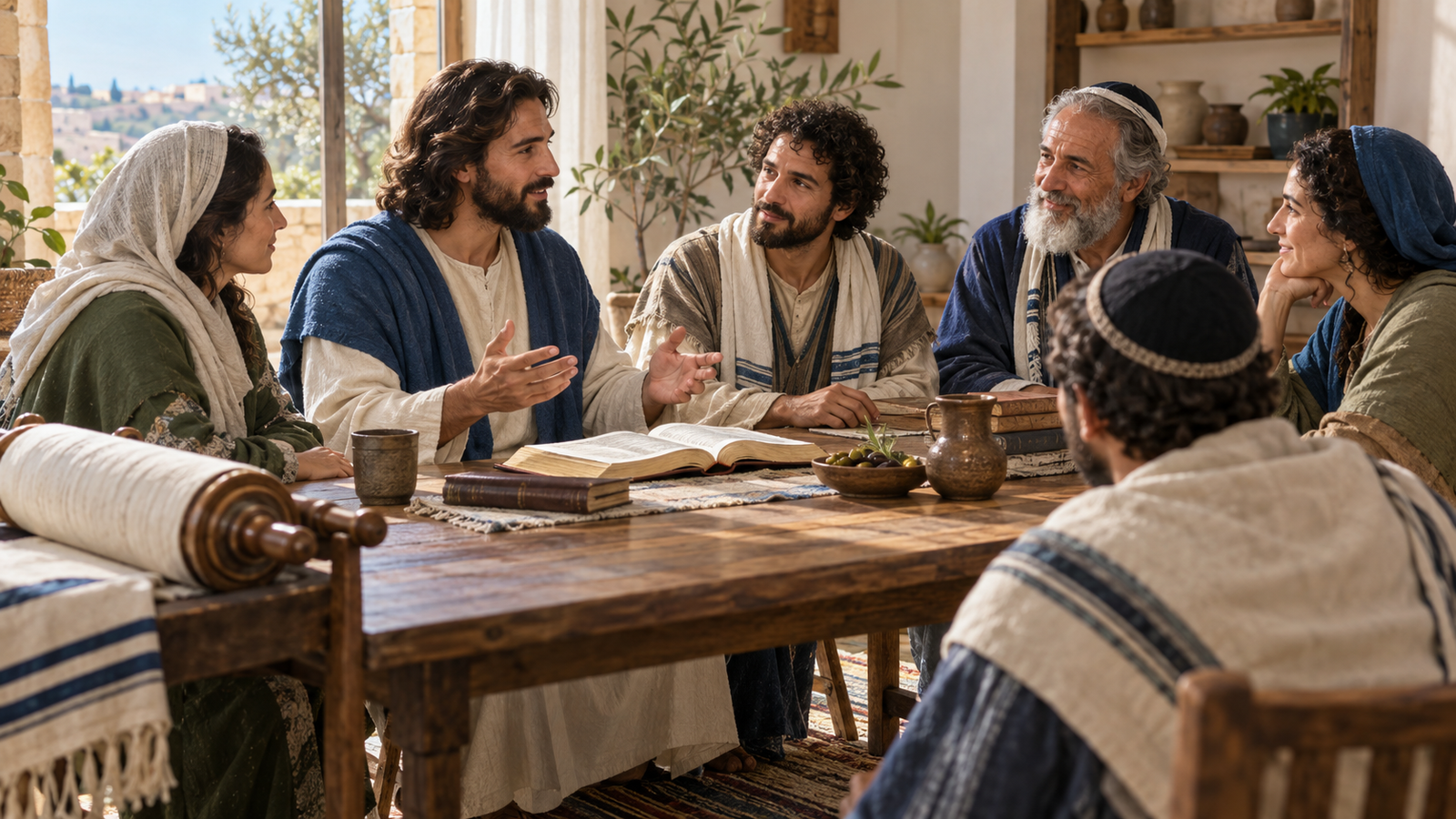
The objects pictured here point to that unity. The scrolls and Gospel book are not two competing stories. They remind us to read all Scripture carefully and to see how its promises find their centre in Jesus Christ. The Bible is the authority, not our cultural preference or personal imagination.

Jesus Came into a Jewish World
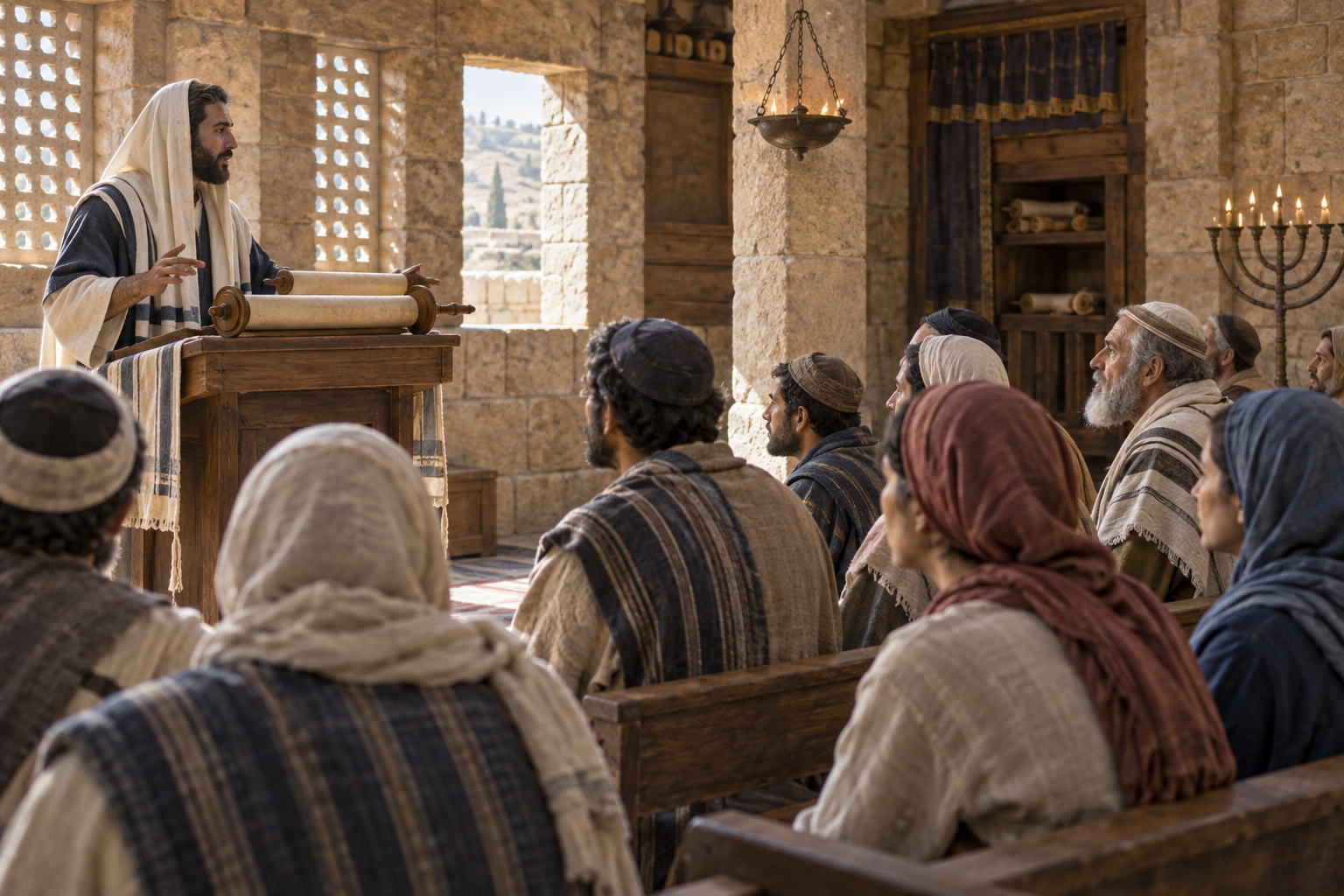
Jesus lived and taught among Jewish people in the land of Israel. He went to the synagogue, celebrated the feasts, quoted the Scriptures, prayed to the Father, and spoke about the kingdom of God. His Jewish setting was real, but His mission was greater than the preservation of a culture. He came to save sinners and gather a people for God.
Jesus did not treat Scripture as an empty tradition. He taught with authority and showed that the law and prophets pointed to Him. He confronted hypocrisy, called people to repentance, welcomed the needy, and promised forgiveness. His teaching was both deeply rooted in Israel’s Scriptures and full of divine authority.
Read more about the life and ministry of Jesus. A congregation that speaks about Jewish roots but does not lead people to the living Jesus has missed the centre of the story.
Jesus Is the Divine Messiah
The Christian confession is not merely that Jesus was a Jewish man who made helpful religious claims. Jesus is the eternal Son of God who became man. John begins his Gospel by saying that the Word was with God and was God, and then tells us that the Word became flesh. This is why Christians worship Jesus and trust Him for salvation.
Jesus is also truly human. He grew, became tired, suffered, prayed, and died. His humanity means He can represent His people. His divinity means His saving work has power and His authority is greater than any human teacher. A Biblical understanding of Messianic Judaism must never reduce Jesus to a political leader, a moral example, or a symbol of Jewish hope.
Every congregation should state clearly who Jesus is. He is the Christ, the Son of the living God, the Lord over the church, and the only Savior. This truth is not a later decoration. It is the heart of the Gospel.
The Cross and Resurrection Are Central
Jesus came to the cross willingly. His death was not an accident and not only an example of courage. He bore sin and gave His life for His people. The New Testament calls people to repent and believe because the cross deals with the guilt that separates sinners from a holy God.
The resurrection is just as important. God raised Jesus bodily from the dead. The empty tomb is not a metaphor for hope after tragedy. It is the foundation of Christian faith. The risen Jesus is alive, reigning, and able to save everyone who comes to Him in faith.
This is the dividing line for spiritual discernment. A movement can use Christian words and Jewish symbols, but the Gospel remains the message of the crucified and risen Lord. Any teaching that hides, denies, or replaces the cross and resurrection is not the Gospel of the Bible.
Israel, Gentiles, and One People in Christ
The New Testament gives careful teaching about Israel and the nations. Paul warns Gentile believers not to boast as though they created God’s saving plan. He uses an olive tree to show that believers share in God’s gracious root. This picture should produce humility, not superiority.
Ephesians 2 says that people from the nations who trust Christ are brought near by His blood. Jesus is our peace. He creates one new humanity in Himself, while the church does not erase the history or humanity of the people from whom the Messiah came. Unity in Christ is not a command to mock Jewish identity or force every believer into one culture.
The grafted branch in this image is a teaching aid, not a reason for pride. Salvation is by grace. No person is saved because of ancestry, ethnicity, a label, or religious performance. We are saved through faith in Jesus, and every believer stands by God’s mercy.

Torah, Grace, and Salvation
Some Messianic Jewish believers keep Sabbath patterns, dietary practices, feasts, or other Jewish customs. These practices can express family history, community identity, and a desire to honour the story of Scripture. Christians should ask what a practice means before criticising it. Culture and conscience require patience.
At the same time, the Bible is clear that sinners are not justified by ceremonies or law keeping. Romans 10 points to Christ as the righteousness of everyone who believes. The basis of salvation is the grace of God shown in the death and resurrection of Jesus. Good works and obedience matter, but they are the fruit of salvation, not its price.
The danger exists on both sides. A person can treat customs as a way to earn God’s favour, or another person can treat freedom as permission to ignore holiness. Jesus saves us from both self-righteousness and careless sin. He calls us to trust Him and to live as His people.
Jewish Customs and Christian Freedom
The New Testament gives room for believers to handle some days, foods, and cultural practices with conscience before the Lord. This freedom must not become a weapon. A believer who keeps a Jewish feast should do so to honour God, not to claim a higher rank. A believer who does not keep it should not despise the person who does.
Christian freedom is never freedom from love. It means we serve one another and refuse to make a cultural practice the basis of acceptance with God. The same warning applies to Gentile customs. A person is not more holy because of clothing, music, language, calendar, or food.
The clearest sign of faith is not a style. It is trust in Jesus, love for God, love for people, repentance, truth, and obedience. These are the marks that help a church welcome new believers without confusing them about the Gospel.
How Messianic Congregations May Worship
Messianic congregations may use Hebrew songs, Jewish melodies, biblical feasts, prayer shawls, Torah scrolls, or other cultural forms. These visible practices can help some Jewish believers express their identity as they follow Jesus. They can also help visitors understand the Jewish setting of the Bible when they are explained carefully.
Forms are not the same as truth. A congregation must still worship the one true God, proclaim the Gospel, teach the Bible, and honour Jesus as Lord. The use of a Hebrew word does not prove that a teaching is Biblical, and the use of a familiar Christian word does not prove it either.
Ask whether worship is centred on God or on performance. Are prayers shaped by Scripture? Does singing tell the truth about Jesus? Is the Lord’s Supper understood as a remembrance of Christ’s death? Does the gathering help people repent, believe, and love their neighbours? These questions matter more than appearance.
How Believers Live Together in Christ
The church is a people gathered around Jesus. Jewish and non-Jewish believers may have different histories, but they share one Savior. They should listen to one another, refuse contempt, and make room for honest questions. Unity is not pretending that differences do not exist. It is submitting those differences to the lordship of Christ.
The New Testament calls believers to bear one another’s burdens, speak truth, forgive, pray, and serve. A healthy congregation protects the vulnerable, handles money honestly, and receives correction. It does not use Jewish identity, Gentile identity, or church authority to manipulate people.
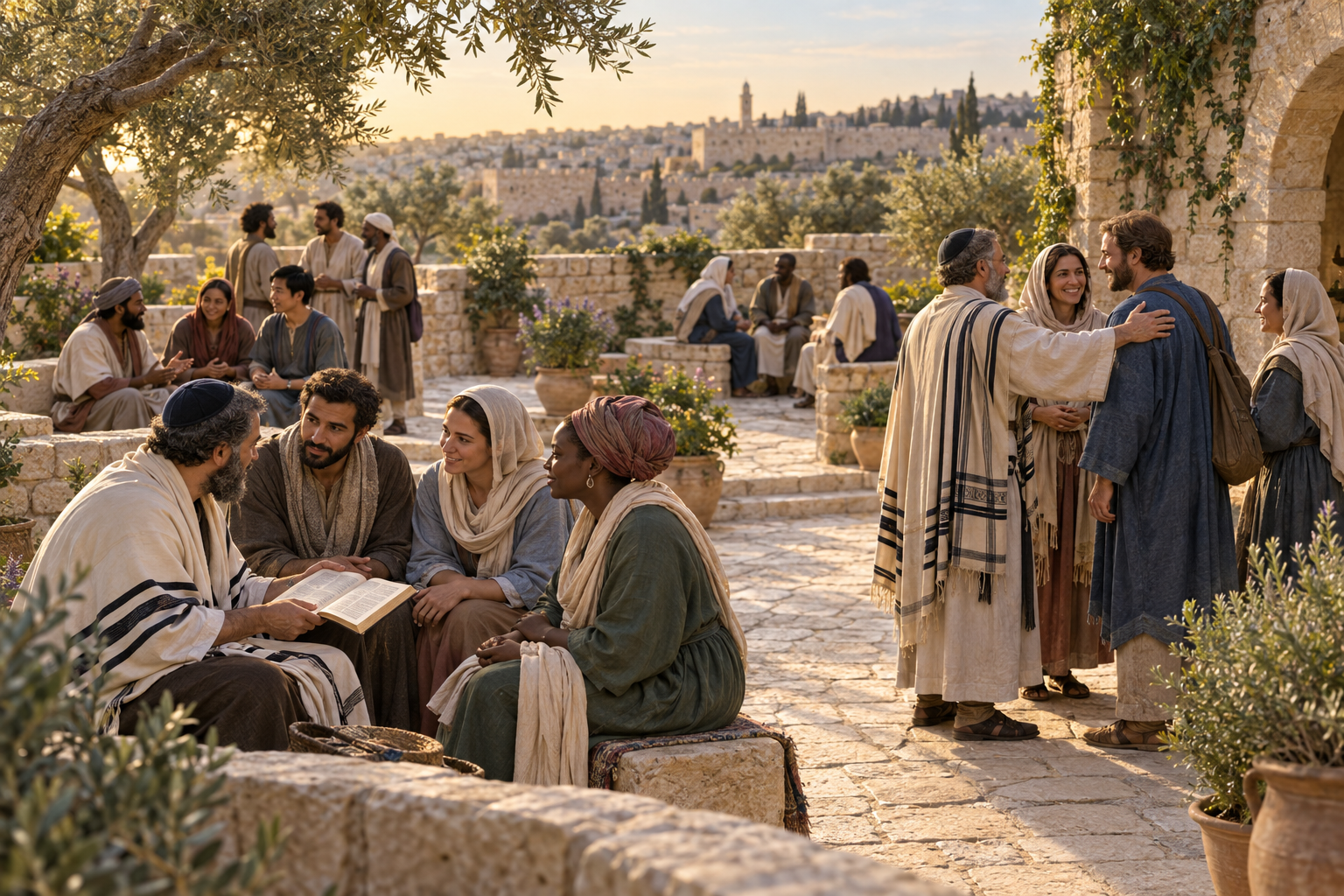
The courtyard scene shows the ordinary shape of Christian fellowship. People read Scripture, welcome one another, learn, and share life. For daily choices, you can also explore Christian wisdom for daily life. Following Jesus is not only a position on a chart. It is a life of faithful love.
How to Test Teaching by Scripture
The Bible tells believers to test teaching. Do not accept a claim because a speaker sounds confident, uses ancient words, or belongs to a respected organisation. Read the passage in context. Ask what it says about God, sin, Jesus, salvation, and the life of faith.
A trustworthy congregation will welcome careful questions. It will explain its statement of faith and show how its practice follows Scripture. It will not hide the cross, soften the call to repentance, or claim that a special group has a different way to God. The same Gospel applies to every nation and every generation.
Use Jesus’ own teaching as a guide. You can read more about what Jesus preached. His message included the kingdom of God, repentance, faith, mercy, judgment, eternal life, and the call to follow Him. Christian teaching should lead people to hear and obey that voice.
How Christians Should Speak About Jewish People
Christians should speak about Jewish people with truth, respect, and grief over the long history of antisemitic hatred carried out by people who claimed Christian names. The sins of Christians do not disprove Jesus. They show the need for repentance and for a church that lives under His command to love its neighbour.
Romans 10 records Paul’s sorrow and prayer for Israel. His words do not permit mockery or hatred. They show a missionary heart that desires people to know the righteousness of God in Christ. Christians should share the Gospel with humility, never with pressure, deception, contempt, or false claims about Jewish people.
The goal is not to win an argument about a label. The goal is to bear witness to Jesus, the Jewish Messiah and risen Lord, while treating every person as someone made in the image of God. Truth and love belong together.
What Should Someone Do if Curious?
If you are curious about Messianic Judaism, start with the Bible. Read one of the Gospels and ask what Jesus says about Himself, sin, forgiveness, worship, and eternal life. Then read Romans 10 and Ephesians 2 slowly. Ask God to show you the truth and give you a willing heart.
If you visit a congregation, ask for its statement of faith. Ask whether it believes Jesus is fully God and fully man, whether He died for sinners, whether He rose bodily, and whether salvation is by grace through faith in Him. Ask how the congregation treats Scripture, leaders, children, outsiders, and people who disagree.
Do not trust Jesus because of a label. Trust Him because God has revealed Him in the Bible. Jesus calls sinners to Himself, gives forgiveness, and makes them part of His people. He is the Messiah who saves.
Frequently Asked Questions
Is Messianic Judaism Christian?
Messianic Judaism is a movement whose congregations and groups confess Jesus, or Yeshua, as the Messiah. Many groups also affirm the New Testament, salvation through Jesus, and His divine identity. Because congregations differ, read the exact statement of faith and compare it with the Bible rather than relying on a label alone.
What do Messianic Jews believe about Jesus?
Messianic Jewish congregations generally believe that Jesus is the promised Jewish Messiah and Savior. Biblical Christianity also confesses that Jesus is the eternal Son of God who became man, died for sinners, rose bodily, and reigns as Lord. A congregation should state these truths clearly.
Is Messianic Judaism the same as Judaism?
The name is understood differently by different communities. The movement describes itself as Jewish life and identity renewed around faith in Jesus the Messiah, while many Jewish communities do not use the word Judaism for a movement that confesses Jesus. The wise response is to listen carefully to each group and test its teaching by Scripture.
Do Messianic Jews follow the Torah?
Some Messianic Jewish believers keep Jewish customs and Torah practices as part of their identity and worship. The New Testament teaches that salvation is received by grace through faith in Jesus, not earned by ceremonial observance. Customs may express identity, but they must never replace the finished work of Christ.
How can I evaluate a Messianic congregation?
Read its statement of faith, listen to its teaching, and ask what it believes about Jesus, the Bible, sin, salvation, the cross, and the resurrection. Look for humble leaders, clear Scripture, prayer, love, and a sincere call to follow Jesus. Do not judge a congregation by its music, clothing, or Hebrew vocabulary alone.
Scripture and Sources for Further Study
These sources were checked by direct GET requests before publication. Read the Scripture passages in context, and use organisational statements to understand how those groups describe themselves.
- Union of Messianic Jewish Congregations: What is Messianic Judaism?
- Union of Messianic Jewish Congregations: Defining Messianic Judaism
- Messianic Jewish Alliance of America Statement of Faith
- Isaiah 53:1-12
- Psalm 2:1-12
- Romans 10:1-13
- Romans 11:17-32
- Ephesians 2:11-22
- John 1:1-14
- Galatians 3:26-29
- Matthew 28:18-20
Messianic Judaism raises important questions about identity, Scripture, and the Messiah. The answer is not found in a label alone. Jesus Christ is the promised Messiah, the divine Son, the Savior who died for sinners, and the risen Lord. Read the Bible, look to Him, and trust His grace.