
What Does Jesus and Buddha Mean?
Many people search for Jesus and Buddha because they want to understand two important religious teachers. They may have heard that both taught compassion, self-control, or a better way to live. Those similarities can be a starting point for learning, but they do not make the two figures the same.
Jesus Christ and Buddha belong to different religious settings and make different claims. The Bible presents Jesus as the eternal Son of God who became man, died for sinners, and rose again. Buddhist traditions look to Siddhartha Gautama, known as the Buddha, and to teachings about suffering, desire, practice, and awakening.
This guide compares Jesus and Buddha from a Christian point of view. It aims to be honest about Buddhist beliefs, faithful to Scripture, and kind toward every person. You can also read our guide to Jesus in world religions for a wider Biblical framework.
A Careful Starting Point
Buddhism is not one single form of belief and practice. Different Buddhist communities have developed different teachings, texts, rituals, and views of the Buddha. A short article cannot describe every tradition. It is better to speak carefully than to make a broad statement about every Buddhist person.
The same care matters when discussing Christianity. Churches use different names and have different customs, but the historic Christian faith centres on the Bible’s testimony about Jesus Christ. Christians believe that He is Lord, that He died and rose again, and that He alone brings sinners to the Father.
The Stanford Encyclopedia of Philosophy describes the Buddha as the historical figure whose teachings form the basis of the Buddhist tradition. It explains that these teachings address suffering and the search for liberation. That summary gives us a fair starting point before we ask how the Bible’s message about Jesus differs.
Who Was Buddha?
The name Buddha means an awakened one. In common discussion, it often refers to Siddhartha Gautama, the historical teacher whose life and teachings became central to Buddhism. The Stanford Encyclopedia notes that Buddhist traditions understand the Buddha in more than one way, so the term should not be used carelessly.
At a basic level, Buddhist teaching examines suffering, its causes, the possibility of its ending, and a path of practice. It also gives an important place to ideas such as impermanence, craving, ignorance, and non-self. These ideas are part of a serious religious and philosophical tradition, not a simple slogan about being calm.
Christians should learn what Buddhists actually believe before answering a question. We should not mock Buddhist people or reduce their faith to a cartoon. At the same time, understanding another tradition does not require Christians to agree with it. Love listens carefully so that it can speak truthfully.
Who Is Jesus According to the Bible?
The Bible presents Jesus as more than a wise teacher. He is the Word who became flesh, the Son of God, the promised Messiah, and the Saviour of the world. He was born into the Jewish people, taught in the villages and towns of first-century Judea, was crucified under Roman authority, and rose from the dead.
Colossians 1:15-20 describes Jesus as the image of the invisible God and the one through whom all things were created. It also connects peace with God to the blood of His cross. These are claims about identity and salvation, not only about moral example.
Jesus calls people to repent, believe, follow Him, and receive eternal life. His message is personal because the gospel is about reconciliation with God through a living Lord. To compare Jesus and Buddha fairly, we must begin with what Jesus says about Himself.

Jesus Speaks with Divine Authority
Buddha is commonly understood as a teacher who discovered and taught a path toward awakening. Jesus speaks in a different way. In the Gospels, He forgives sins, commands the wind, receives worship, claims authority over life and judgment, and speaks of a unique relationship with the Father.
In John 14:6, Jesus says that He is the way, the truth, and the life, and that no one comes to the Father except through Him. This is not the language of one guide among many equal guides. It is a call to trust the person of Jesus.
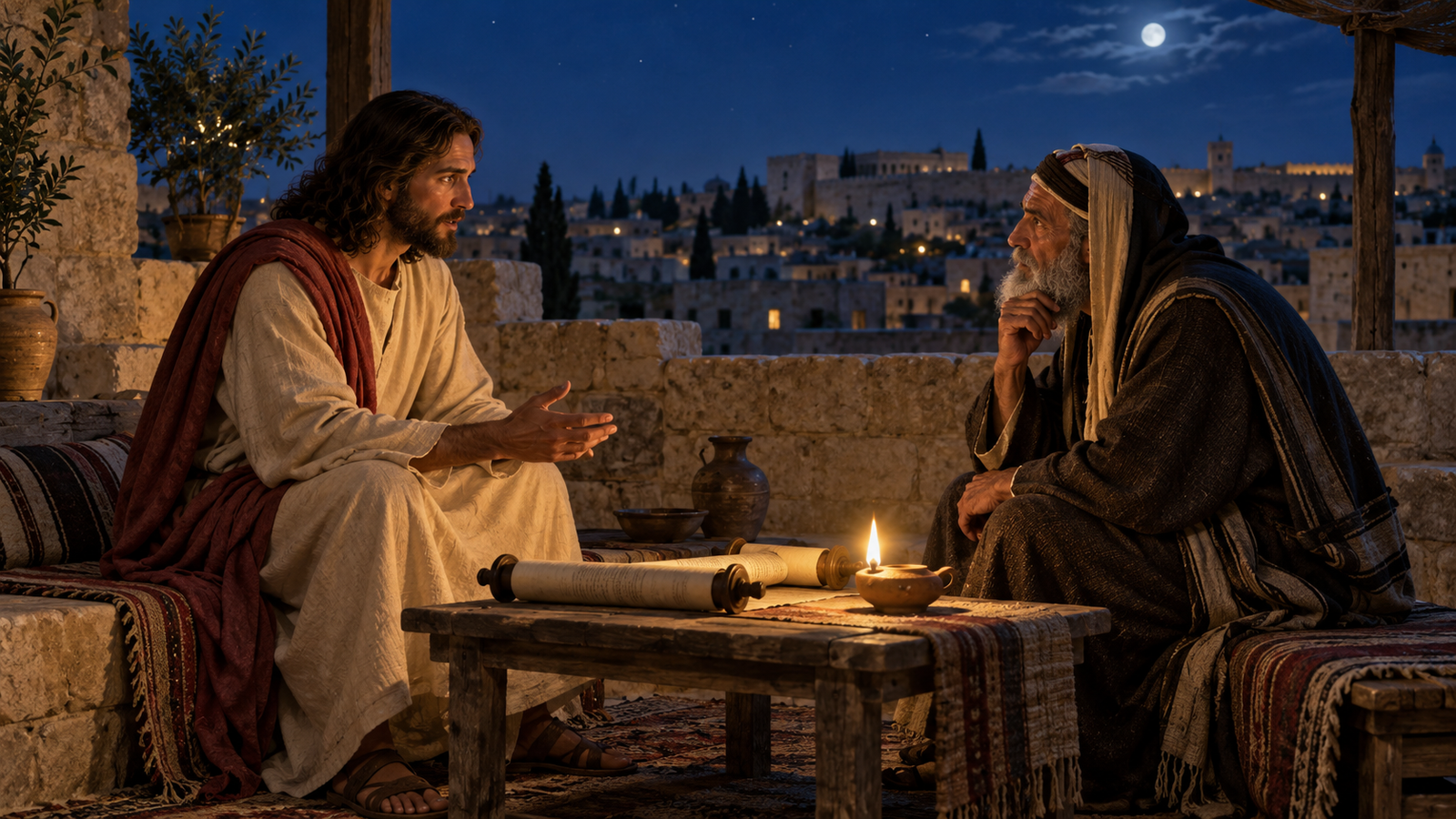
The places of Jesus’ ministry also matter. He taught among real communities in Galilee and Judea, and His followers announced what they had seen and heard. This map-like view of Galilee and Jerusalem helps us remember that the Gospel story is rooted in a real setting, not an abstract myth.
Different Views of the Human Problem
Jesus and Buddha both speak to the pain and disorder people experience, but they explain the deepest problem differently. Buddhist teaching often examines suffering, craving, ignorance, and attachment. The goal is connected with release from the causes of suffering.
The Bible names the deepest human problem as sin against the holy God. Sin is not only a lack of calm or a failure to manage desire. It is guilt, rebellion, and a broken relationship with our Creator. Romans 3:23 says that all have sinned and fall short of the glory of God.
This Biblical diagnosis is serious, but it is not hopeless. God does not expose sin to shame people without mercy. He reveals our need so that we will turn to Christ. Jesus came to save sinners, forgive the guilty, and bring people home to God.
Different Paths to Liberation and Salvation
When people compare Jesus and Buddha, they often say that both offer a path to peace. The word path can hide a major difference. In many Buddhist traditions, liberation is described through understanding, ethical discipline, meditation, and the ending of craving. Buddhist schools explain these matters in different ways.
Christian salvation is not a ladder that sinners climb by their own wisdom or effort. Ephesians 2:8-9 says that salvation is by grace through faith and not a result of works that allow a person to boast. Christians obey Jesus because they have received mercy, not to purchase a place with God.
The Christian hope is therefore centred on what Jesus has done. An open Bible and a quiet practice room can look peaceful in an image, but they should not be confused as one shared religious path. The gospel announces grace through Christ, His cross, and His resurrection.

Why the Cross Matters
The cross is central to Christianity because Jesus died for sins. He did not merely suffer as an example of patience. He gave His life as a willing sacrifice for His people. The apostles taught that the death of Christ stands at the heart of the good news.
Sin creates a debt and a judgment that human effort cannot remove. Jesus, the sinless Son of God, took the place of sinners. At the cross, God shows both the seriousness of sin and the greatness of His love. Forgiveness is not cheap, and it is not earned by spiritual performance.
The cross also changes Christian life. Those who trust Jesus are called to deny themselves, take up their cross, and follow Him. This does not mean trying to suffer in order to save ourselves. It means giving our lives to the Saviour who first gave Himself for us.
Why the Resurrection Is Central
Christian faith does not end at the cross. The apostles proclaimed that Christ died for our sins, was buried, and was raised on the third day. The resurrection is not a picture of inner calm or a metaphor for a fresh start. It is the central Christian claim that Jesus truly defeated death.
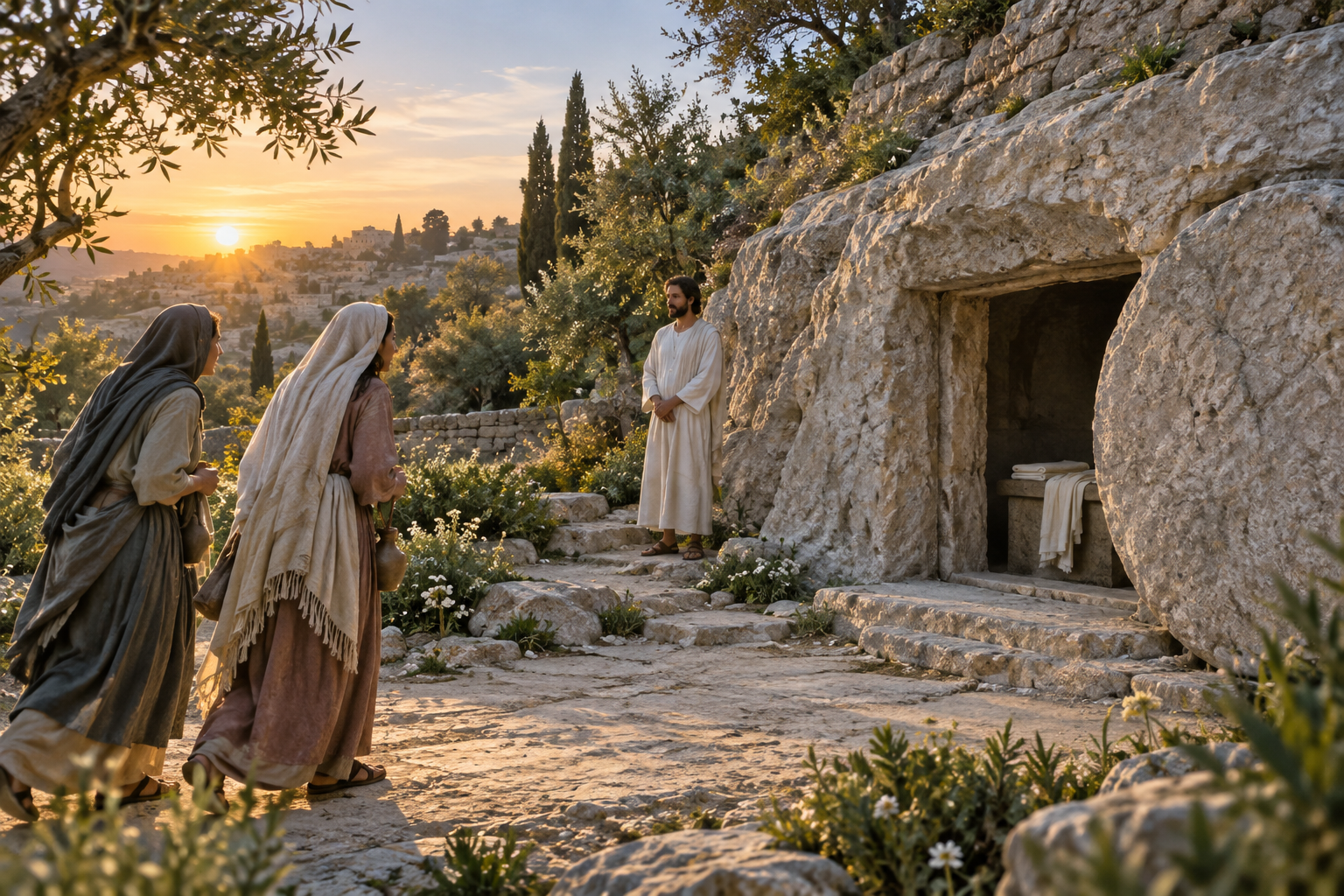
The open tomb at dawn gives a visible picture of the hope Christians confess. Jesus rose bodily and appeared to His disciples. Because He lives, believers have forgiveness, a living Lord, and the promise of resurrection. The future is not an escape into nothingness. It is life with God through Christ.
This is one of the clearest differences between Jesus and Buddha. The Christian message rests on the person and finished work of the risen Jesus. It does not rest only on following the example of a teacher or reaching a state through practice.
Are Jesus and Buddha the Same?
No. Jesus and Buddha are not the same person, and Christianity does not teach that they are two names for one spiritual reality. Jesus is the divine Son of God who became man, died for sinners, rose again, and reigns as Lord. Buddha refers to Gautama and, in Buddhist use, to an awakened teacher or ideal.
There may be surface similarities in moral teaching. Compassion, discipline, humility, and care for others matter in many religious traditions. But a shared moral word does not erase different beliefs about God, the self, sin, salvation, death, and the final hope.
Christians should not force a false agreement in order to sound kind. Real kindness tells the truth without contempt. We can honour the dignity of Buddhist neighbours while clearly confessing that Jesus is the one way to the Father.
What Can Christians Appreciate Without Confusion?
Christians can recognise that many Buddhists take compassion, discipline, and the problem of suffering seriously. These concerns can open a respectful conversation. A Christian may listen to a friend’s experience, ask what they mean by a word, and avoid assuming that every Buddhist community teaches the same thing.
Appreciation is not the same as agreement. Christians cannot adopt a teaching that denies the Bible’s account of creation, sin, the identity of Jesus, or the resurrection. We also should not borrow spiritual practices without understanding what they mean in their original religious setting.
The Bible calls believers to love their neighbours and speak the truth in love. Christian wisdom is patient and humble. Read our guide to Christian wisdom for daily life as you learn how to respond to difficult questions without losing either courage or kindness.
How to Speak with Buddhist Friends
Begin with genuine friendship. Ask what your friend believes about suffering, hope, God, death, and the Buddha. Listen to the answer instead of preparing a quick reply. Do not treat a conversation as a contest in which you must win every sentence.
Then explain the gospel simply. Tell your friend that the Bible reveals one holy and loving God, that all people have sinned, and that Jesus Christ died and rose again to save sinners. Explain that Christians trust Jesus, not their own goodness, to bring them to God.
You can ask whether your friend would read one Gospel with you. Look together at the words and actions of Jesus. A conversation about what Jesus preached can focus attention on His call to repentance, faith, love, and the kingdom of God.
Pray for your friend with humility. Only God opens a heart, and Christians are witnesses, not saviours. Let your conduct support your words through patience, honesty, purity, mercy, and practical care.
What Does Jesus Ask of a Seeker?
Jesus does not ask a seeker to admire Him from a distance. He calls people to repent and believe the good news. Repentance means turning from sin and self-rule toward God. Faith means trusting Jesus Christ as Lord and Saviour, not merely agreeing that He existed.
Read one of the Gospels slowly. Notice Jesus’ compassion, authority, purity, and courage. Notice how He welcomes the humble, confronts hypocrisy, forgives sinners, and teaches people to love God and neighbour. Ask God to show you the truth about Jesus.
The Christian response is not based on earning God’s favour. It is based on receiving grace. Call on Jesus in prayer. Confess your sin. Ask Him to forgive you and lead you. Then join faithful Christians who will help you learn the Bible and grow in obedience.
A Biblical Conclusion About Jesus and Buddha
Jesus and Buddha should be compared with honesty. Buddha’s teachings address suffering and a path toward liberation. Jesus addresses sin, judgment, mercy, and reconciliation with the living God. These are not interchangeable explanations of the human condition.
The Bible’s answer is Jesus Christ. He is fully God and truly man. He lived without sin, died on the cross, rose from the dead, and offers forgiveness and eternal life to those who trust Him. Acts 4:12 says that salvation is found in no one else.
Christians can speak this truth with tears, respect, and love. The goal is not to insult a neighbour. The goal is to point people to the Saviour. Learn more through the life and ministry of Jesus, and keep asking what it means to follow Him today.
Frequently Asked Questions
Are Jesus and Buddha the same person?
No. Jesus Christ is the divine Son of God, the Saviour who died and rose again. Buddha refers to Siddhartha Gautama and, in Buddhist tradition, to an awakened teacher. The Bible does not present them as the same person.
What is the main difference between Jesus and Buddha?
The central difference is identity and salvation. Jesus claims to be the way, truth, and life, and Christians trust His death and resurrection for salvation. Buddhist traditions look to the Buddha’s teaching and practice as a path toward liberation from suffering.
Did Jesus teach Buddhism?
There is no Biblical basis for saying that Jesus taught Buddhism. The Gospels place Jesus in the Jewish setting of first-century Judea and record His teaching about God, sin, repentance, the kingdom, His death, and His resurrection.
What does the Bible say about Buddha?
The Bible does not name Siddhartha Gautama. It teaches that every person should turn to the living God and that salvation is found in Jesus Christ. Christians should speak about this conviction with truth, humility, and love.
How should Christians talk with Buddhist friends?
Christians should listen carefully, avoid false claims, show genuine respect, and explain the gospel clearly. A loving conversation can include the Bible’s teaching about Jesus, His cross, His resurrection, and the hope of grace through faith.
Sources for Further Study
These sources support the comparison in this article. Read Scripture in context, and remember that the Stanford Encyclopedia describes Buddhist ideas for educational purposes rather than speaking for every Buddhist community.
- Stanford Encyclopedia of Philosophy: Buddha, an educational overview of Gautama and Buddhist philosophical teachings.
- John 14:6, Jesus’ claim to be the way, truth, and life.
- 1 Corinthians 15:3-4, the apostolic summary of Christ’s death, burial, and resurrection.
- Colossians 1:15-20, the Biblical teaching about Jesus’ identity and saving work.
- Romans 3:23, the Bible’s teaching that all people have sinned.
- Ephesians 2:8-9, salvation by grace through faith.
- Acts 4:12, the apostles’ confession that salvation is found in Jesus.
Jesus Christ is not one option among many equal saviours. He is the Lord who died and rose again. May every reader seek Him with an honest heart and find life through His grace.