
From Jesus to Christ: The First Christians is a two-part PBS FRONTLINE documentary about Jesus of Nazareth and the growth of the early Christian movement. PBS lists the original broadcasts on April 6 and 7, 1998, and describes the series as a four-hour historical account that draws on scholars, archaeology, and evidence from the ancient world. It asks how the first followers understood Jesus and how the church grew after His death.
That makes the series worth discussing, but a documentary is not the same thing as the Bible. Historical research can help us picture first-century life and examine how a television program builds its case. Christian faith also confesses truths that go beyond what historical methods can settle: Jesus is the divine Son of God and Lord, crucified for sinners and risen from the dead. This guide explains what the program covers, where its questions can help, and how to watch with Scripture open. For the wider story, see our guide to Jesus in culture and media.
What Is From Jesus to Christ?
From Jesus to Christ: The First Christians is a historical documentary series made for FRONTLINE, the PBS public-affairs program. It follows Jesus’ life and death and then looks at the people and communities who carried the Christian message into the wider Roman world. The title points to a central question in the series: how did belief about Jesus take shape and spread among His first followers?
PBS presents the work as a four-hour series, broadcast in two parts in April 1998. The official FRONTLINE listing describes its scope and lists both broadcasts. It uses interviews with historians, New Testament scholars, theologians, and archaeologists, along with maps, ancient texts, and other historical material. The series is therefore both a documentary about early Christianity and an example of how late-twentieth-century television told the story of Christian origins.
The program can be useful for viewers who want historical context, but it should not be treated as a replacement for reading the Gospels. It has producers, a point of view, a time limit, and choices about which evidence and voices to include. Those choices matter. We can listen carefully without assuming that every conclusion is settled or that historical reconstruction has the final word about Jesus.
What Does the Documentary Cover?
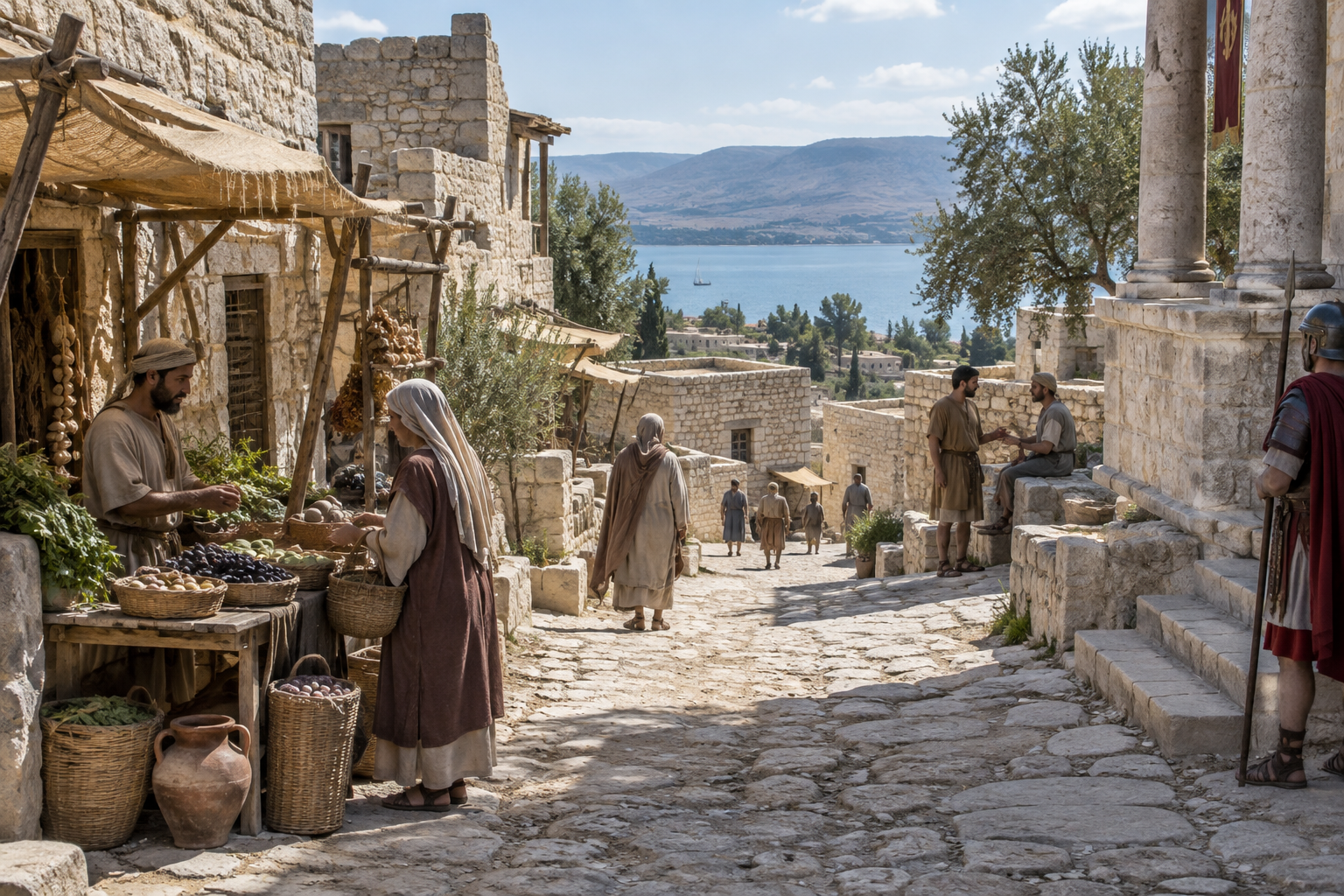
PBS’s program synopsis describes a story that begins with Jesus in first-century Judea and Galilee, then moves through the decades after His crucifixion. The first part examines His life, the message that drew followers, and the events surrounding His death. It then turns to the early movement, including the upheaval of the Jewish revolt against Rome. The second part follows the later development of the Gospels, the growth of Christian communities, and Christianity’s changing place in the Roman Empire.
The series does not only retell familiar scenes from Jesus’ ministry. It asks how people lived, what different communities believed, how the Gospels came to be written, and how Christians explained Jesus in changing settings. Its official synopsis says the scholars discuss the search for the historical Jesus and the kinds of questions that search raises. The archived transcripts let readers see the actual words used in each broadcast instead of relying only on a short summary.
That range can make the program engaging, but it can also feel dense. Viewers may hear claims about dates, sources, Jewish life, Roman rule, and the early church in quick succession. Keep a notebook nearby and pause when a statement seems important. Ask whether it is a fact about the program, an interpretation by a scholar, or a conclusion the viewer is being invited to draw.
What Does the Title Mean?
In the title, “Christ” is not Jesus’ last name. It is the Greek form of a title meaning “anointed one,” corresponding to the Hebrew word “Messiah.” The title names the hope that God would send His promised King. The documentary’s phrase “From Jesus to Christ” describes a historical question about how the first Christians spoke about Jesus and how their movement developed.
Christians should notice the difference between a historical question and a confession of faith. The New Testament does not teach that an ordinary man became divine because later followers changed the story. John 1:1-18 identifies the Word as God and says the Word became flesh. In Mark 8:27-30, Peter identifies Jesus as the Christ during Jesus’ own ministry. The New Testament presents Jesus’ identity as central to His life, not as a label added only after the church grew.
This does not mean a viewer must avoid the documentary. It means we should understand its title in context and compare its framing with the claims of Scripture. The series can ask how beliefs were expressed and communities formed. The Bible tells Christians who Jesus is and what His life, death, and resurrection mean. Those are connected questions, but they are not identical questions.
How Does FRONTLINE Build Its Historical Account?

The series builds its account by bringing together written sources, archaeological evidence, reconstructions of ancient settings, and interviews with specialists. Its archived website includes a synopsis, viewers’ guide, maps, source material, and transcripts. These pages are helpful because they let readers check what the broadcast says and follow some of the evidence behind it.
That method has strengths. It can remind modern viewers that Jesus lived as a Jewish man under Roman rule, not in a setting shaped by our own customs. It can also show why historians ask about the dates and settings of texts, the social world of early believers, and the way a movement spread from one region to another. A timeline and a map may make those questions easier to follow.
Historical methods also have limits. An artifact can help establish a place, custom, or political setting, but it cannot by itself tell us that Jesus forgave sins or rose from the grave. A historian may describe what a community believed; a Christian also asks whether that belief is true. The Cambridge Companion to Jesus offers a separate academic treatment of Jesus’ first-century life and aims. Reading more than one kind of source helps us ask careful questions without assuming that one method answers every theological question.
It is also wise to distinguish a primary source from a narrator’s summary. The PBS transcripts are primary evidence for what the program said. They are not first-century transcripts of Jesus’ words. The New Testament is the central written testimony Christians receive about Jesus, and it deserves to be read directly.
Why Do Historians Ask Questions About the Gospel Accounts?
Historians ask how a source was written, what earlier material it may use, who its first readers were, and what the writer wanted those readers to understand. Those are reasonable questions for any ancient writing. Asking them does not automatically show that the Gospels are false. It does mean we should read the books closely and notice both their shared witness and their distinct emphases.
Luke 1:1-4 begins with the author explaining that he investigated accounts handed down by eyewitnesses and wrote an orderly account so that his reader could have confidence in what he had been taught. That statement gives readers a clue about Luke’s purpose and process. It also reminds us that the Gospel writers intended to communicate truth about real events, not merely to offer abstract lessons.
The Gospels were written in the ancient world, with forms and conventions that are not identical to a modern documentary transcript. Scholars debate how to describe those forms and how to weigh the differences between accounts. A careful reader can study the literary shape of each Gospel while also reading the authors’ own claims about their testimony and purpose. That discussion is a useful starting point, not a shortcut that settles every question about reliability.
Christians can be honest about difficult passages and still trust God’s Word. Read a claim in its full context. Check the passage itself. Compare parallel accounts when appropriate. Avoid forcing the text to answer a question it does not address, and do not let a brief television summary stand in for careful reading.
What Does the Documentary Do Well?
A strong reason to watch is the historical setting. The series directs attention to the Jewish and Roman world in which Jesus lived, and to the variety of communities present in the first centuries. This can help a viewer notice things that are easy to miss when reading quickly: the political pressure around Jerusalem, the public nature of religion, and the cost of belonging to a small movement.
The series also encourages questions. What evidence supports a claim? Which parts come from an ancient text, and which parts are a modern scholar’s reconstruction? How did a message first shared among Jesus’ followers travel across language and culture? Those are worthwhile questions for a Bible study, provided the group treats the Bible as more than one historical artifact among many.
The archived transcripts are another strength. If a statement sounds surprising, readers can check the speaker’s wording and the surrounding discussion. The series’ own viewers’ guide offers questions for reflection, and the official program page provides the two-part broadcast information. Looking at these primary pages is better than repeating a vague summary from a third-party post.
Most of all, the program can prompt viewers to read Scripture with greater care. A documentary may raise a question that leads someone back to Mark, John, Luke, or Acts. That is a good outcome when the next step is patient Bible reading, prayer, and conversation rather than an instant conclusion based on one edited sequence.
What Should Christian Viewers Keep in Mind?
A documentary is edited storytelling. It chooses an opening, a sequence, an amount of time for each topic, and voices to include. That does not make it dishonest. It does mean viewers should ask what the film has space to show and what it leaves outside the frame. The program first aired in 1998, so it also represents a particular moment in public discussion and should not be mistaken for the final word on scholarship.
Historical study can describe the growth of early Christian belief, but it cannot make the resurrection a laboratory result. The New Testament tells of the resurrection as God’s act in history and the foundation of Christian hope. In 1 Corinthians 15:1-8, Paul says that Christ died for sins, was buried, was raised, and appeared to witnesses. Acts 2:22-36 presents the apostles publicly proclaiming Jesus’ death and resurrection. A viewer can ask how a historian evaluates these sources while also recognizing that Christian faith rests on their testimony.
One detail from the PBS follow-up symposium shows why this question mattered to viewers: the discussion included a question about why the resurrection did not receive more attention in the television series. That question should not be inflated into a claim that every viewer or scholar reached the same judgment. It is a useful reminder to notice what a program emphasizes and to compare that emphasis with the New Testament’s own center.
Christians do not need to fear honest questions. Jesus is not served by careless arguments or by pretending that historical study has no value. At the same time, Christian confidence should not be handed over to a television program. Scripture is our authority, and Jesus Christ remains the eternal Son, the crucified Savior, and the risen Lord.
Does the Series Show That Jesus Became the Christ Later?
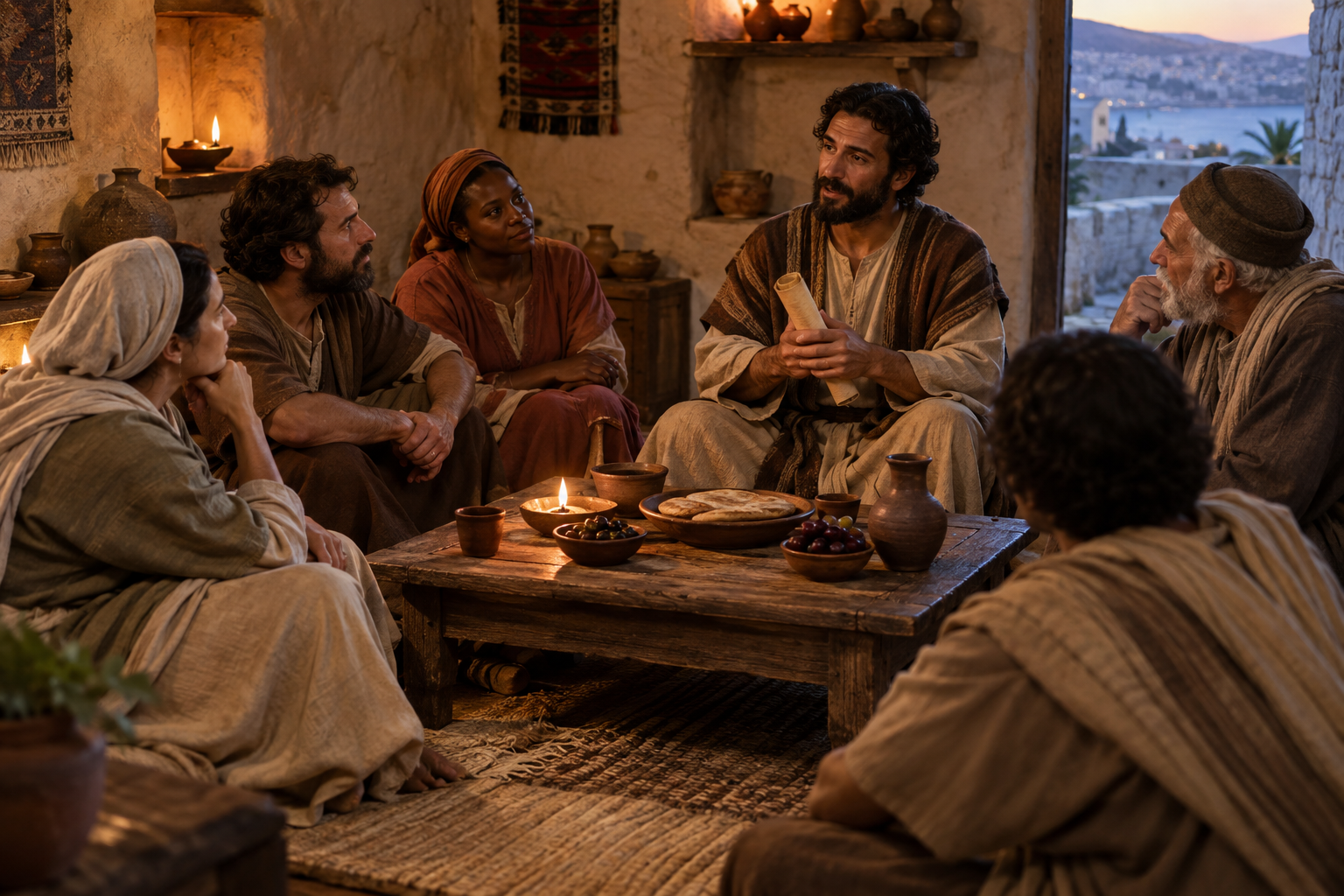
No documentary can establish that conclusion simply by tracing how later communities spoke about Jesus. The title From Jesus to Christ can sound as though Jesus began as one person and was turned into another by later belief. That is not the Christian confession of the New Testament. It is better to read the phrase as a description of the series’ historical subject: the life of Jesus and the development of the movement that confessed Him as Christ.
John’s Gospel says the Word was with God, was God, and became flesh. Mark records Peter confessing Jesus as the Christ before the crucifixion. The opening of Acts describes the apostles proclaiming Jesus as Lord and Messiah after His resurrection. These passages show that the identity of Jesus is not a minor detail added to an otherwise unrelated story.
Christians also recognize that the first churches grew in particular languages and places. The apostles explained the good news to different audiences, and the church learned how to live faithfully among its neighbors. Growth and the spread of Christian language are historical subjects. They do not mean that the truth about Jesus was invented by the growth itself.
When watching, listen for the difference between “the early community came to say this” and “this claim is true.” The first statement describes a historical development. The second asks a deeper question about the person of Jesus and God’s revelation. A documentary can report the first. The Christian answer to the second is given by Scripture.
How Can You Watch With an Open Bible?

Use a simple four-step habit. First, write down the exact statement made by the documentary. Second, note whether it is a date, an archaeological claim, a scholarly interpretation, or a theological conclusion. Third, look up the Bible passage being discussed and read the surrounding verses. Fourth, ask what can be known, what remains debated, and what Christians confess from Scripture.
For example, if the program discusses the first followers’ understanding of Jesus, read Mark 8:27-30 and Acts 2:22-36. If it discusses the resurrection, read 1 Corinthians 15:1-8 in context. If it raises a question about Luke’s sources, begin with Luke 1:1-4. These passages do not answer every detail a historian might ask, but they let readers hear the New Testament for themselves.
It can also help to keep two columns in your notes: “What the program says” and “What the text says.” Add a third column for “What I still need to check.” This keeps a question from turning into a conclusion before you have read the source. For a broader overview of Jesus’ ministry, continue with our biblical guide to the life and ministry of Jesus. For His teaching, see what Jesus preached.
Is the Series Helpful for a Church Group?
It can be useful for a church group that is ready to discuss history and interpretation with patience. Before watching, explain that the series is a historical documentary, not a devotional film or a church teaching resource. Invite people to bring questions without making the group feel that every question must be settled in one evening.
After each part, ask: Which claim was clearly supported by a source? Which claim depended on an interpretation? What did the program leave unanswered? Which Bible passage should we read next? If the group includes new believers, read the relevant Scripture aloud before debating what a narrator meant. Keep the tone kind, especially when people have different levels of background knowledge.
Leaders should also check the program’s content and age suitability for their own group before pressing play. The archived transcript lets a leader preview the themes and wording. Finish with the Christian center: Jesus is not merely an object of study. He is the Lord who calls people to repent, believe the good news, and follow Him. Ask God for wisdom as you discuss what you have seen; our guide to Christian wisdom may help frame that conversation.
What Should You Read Alongside It?
Start with the Gospel passage named in a particular scene, then read the full chapter. Luke 1:1-4 explains Luke’s aim; Mark 8:27-30 records Peter’s confession; John 1:1-18 introduces Jesus as the Word made flesh; Acts 2:22-36 shows the apostles proclaiming Him as Lord and Christ; and 1 Corinthians 15:1-8 summarizes the death and resurrection at the heart of the message.
For the program itself, the official PBS synopsis, viewers’ guide, and Part One transcript and Part Two transcript give readers a direct record of the series and its own framing. Read those sources alongside Scripture, not in place of it.
Frequently Asked Questions
What is From Jesus to Christ about?
It is a two-part PBS FRONTLINE documentary about Jesus’ life and the growth of early Christianity. It uses historical research, archaeology, interviews, and ancient sources to explore how the first Christian communities developed.
When did From Jesus to Christ first air?
PBS lists the original broadcasts on April 6 and 7, 1998. Its archived program pages provide the synopsis, viewers’ guide, and transcripts for both parts.
Is From Jesus to Christ a Bible study?
No. It is a historical documentary, not a church study guide or a substitute for reading the Bible. Christians can use it to raise questions, then examine the relevant passages directly.
Does the title mean Jesus became the Christ later?
No. The title describes the series’ historical subject, but the New Testament presents Jesus as the Christ during His earthly ministry and as the eternal Son of God. Read Mark 8:27-30 and John 1:1-18.
Can Christians watch the series?
Yes, Christians may watch it thoughtfully. Check the content for your group, notice how the program supports its claims, and weigh its interpretations beside Scripture, which is the Christian authority for who Jesus is.