What Is the Birth of Jesus?
The birth of Jesus is the true beginning of the Son of God’s earthly life. Christians call this event the nativity of Jesus. It is not only a sweet story about a baby. It is the announcement that God kept His promise to send a Savior.
Jesus was born to Mary in Bethlehem. He was conceived by the Holy Spirit and born as a real human child. At the same time, He is the eternal Son of God. The Bible holds both truths together. Jesus is fully God and fully human.
His birth points forward to everything He came to do. Jesus lived without sin, taught the truth, welcomed repentant sinners, died on the cross, and rose from the dead. The manger matters because the child in it is Christ the Lord.
If you want to see this birth in the larger story, read the wider guide to the life and ministry of Jesus. The story of Jesus does not end in Bethlehem. It leads to the cross, the empty tomb, and the reign of the risen King.
Where Is the Birth of Jesus Told in the Bible?
The two main birth accounts are Matthew 1-2 and Luke 1-2. They do not tell every detail in the same way. Matthew gives special attention to Joseph, the visit of the Magi, King Herod, and the family’s escape to Egypt. Luke gives special attention to Mary, the angels, the shepherds, and the manger.
These accounts work together. Matthew shows that Jesus is the promised King and Immanuel, which means God with us. Luke shows the good news reaching humble people and spreading through joyful praise. Both Gospels proclaim that Jesus is more than an ordinary child.
Luke begins by explaining that he investigated the events carefully so that his reader could have certainty about what had been taught. Matthew connects Jesus’ birth to the Old Testament story of Abraham, David, and God’s promises to Israel.
A careful reader should let Matthew and Luke speak in their own words. We should not add details that Scripture does not give. We can enjoy a nativity tradition while keeping the Bible’s account as our foundation. The BibleProject guide to Matthew and its guide to Luke are useful educational overviews of these Gospel themes.
What Happened Before Jesus Was Born?
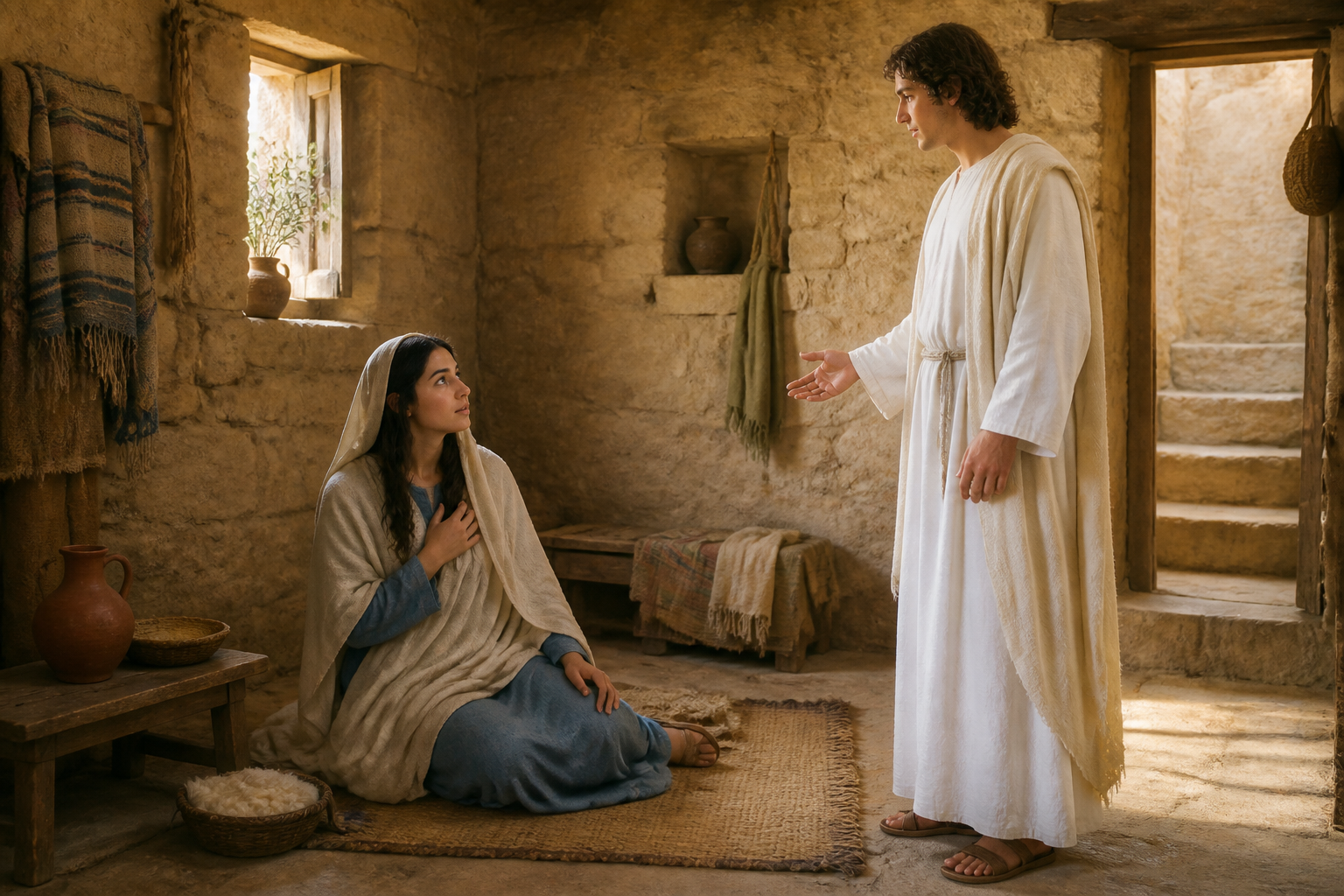
Before Jesus was born, the angel Gabriel came to Mary in Nazareth. Gabriel told her that she would conceive and bear a son. The child would be called Jesus, the Son of the Most High, and the Lord God would give Him the throne of David.
Mary asked how this could happen because she was a virgin. Gabriel answered that the Holy Spirit would come upon her and the power of the Most High would overshadow her. This is why the child would be called holy, the Son of God.
Mary responded with humble trust. She called herself the servant of the Lord and received God’s word. Her faith did not mean that the situation was easy. She faced confusion, shame, and uncertainty. Yet she trusted the God who had spoken.
The announcement also shows that Jesus’ birth was God’s work from the beginning. It was not a human plan that later received a religious meaning. God sent His Son into the world according to His promise. The Luke 1-2 birth account gives the full passage.
Why Was Jesus Born of a Virgin?
The virgin birth teaches that Jesus is truly human, yet His coming is from God. Mary was His mother, so Jesus entered the human family and shared our real human nature. He was not a spirit pretending to be a man.
At the same time, Jesus was conceived by the Holy Spirit. Joseph was not Jesus’ biological father. Joseph obeyed God’s message and took Mary as his wife, but Matthew makes the divine origin of the child clear.
This matters because the Gospel is about God’s rescue, not human effort. We cannot save ourselves from sin. Our Savior must come from God. Jesus is the holy Son who became flesh to bring sinners back to the Father.
The virgin birth also guards the truth about Jesus’ identity. He is not merely a good man who became important. He is the eternal Word who came into the world. John says that the Word was God and that the Word became flesh. Read John 1:1-18 beside Matthew 1. Together, these passages show the wonder of the incarnation.
Why Did Mary and Joseph Go to Bethlehem?
Mary and Joseph went to Bethlehem because the Roman government required a registration. Joseph belonged to the house and family line of David, and Bethlehem was David’s city. Mary went with him while she was expecting the child.
The journey was not a random detail. God had promised that a ruler would come from Bethlehem. Micah 5:2 speaks of Bethlehem Ephrathah as a small place in Judah, yet from it would come the ruler whose origins are from ancient days.
This shows how God works through ordinary events to keep His word. A government registration, a difficult journey, and a crowded town became part of the setting for the birth of the Messiah. Human rulers did not control the story. God remained faithful to His promise.
The birthplace also connects Jesus to David. Jesus is the Son of David, the promised King. Yet He did not arrive in a royal palace. He came in humility. Learn more about Micah’s promise about Bethlehem and see how it points to the shepherd King.
What Happened When Jesus Was Born?
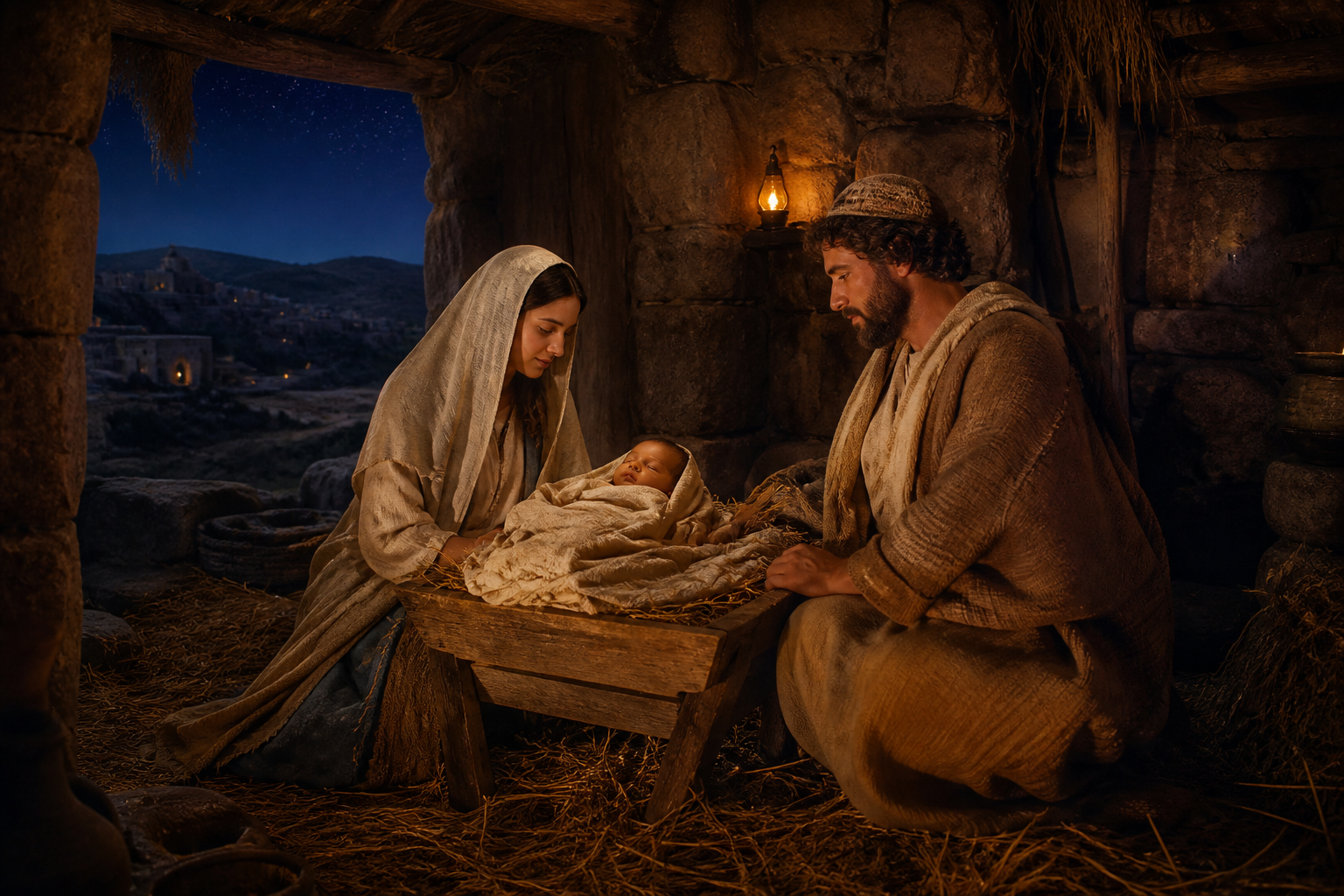
While Mary and Joseph were in Bethlehem, the time came for her to give birth. She gave birth to her firstborn son, wrapped Him in cloths, and laid Him in a manger because there was no place for them in the guest room.
Luke does not give a long description of the room. It is safer to say what the text says. Jesus was placed in a manger. A manger is a feeding box for animals. The humble setting stands in contrast to the greatness of the child.
The birth was quiet in one sense, but heaven did not treat it as unimportant. Angels praised God. Shepherds came to see the child. Mary treasured the events and pondered them in her heart.
Jesus’ humility began at His birth and continued through His life. He did not use His glory to avoid service. He came to save. The child in the manger would later give His life for sinners. His resurrection would prove that death could not hold Him.
Why Was Jesus Laid in a Manger?
The manger was a sign for the shepherds. The angel told them that they would find a baby wrapped in cloths and lying in a manger. This made the child easy to recognize. The sign was humble, clear, and unexpected.
Jesus was not born into wealth or public honor. He was placed where animals were fed. This does not mean that poverty is holy by itself, or that suffering is always good. It shows that God’s salvation does not depend on human status.
The manger also points to Jesus’ mission. He would later call Himself the bread of life and the Good Shepherd. He gives life to His people. He feeds them with truth and leads them with care. The humble beginning fits the servant King revealed throughout the Gospels.
Do not stop at the manger. Christian faith is not only about the birth of Jesus. The same Lord went to Jerusalem, died for our sins, and rose again. The resurrection is the proof that the baby born in Bethlehem is the living Lord.
Why Did Angels Announce Jesus to Shepherds?
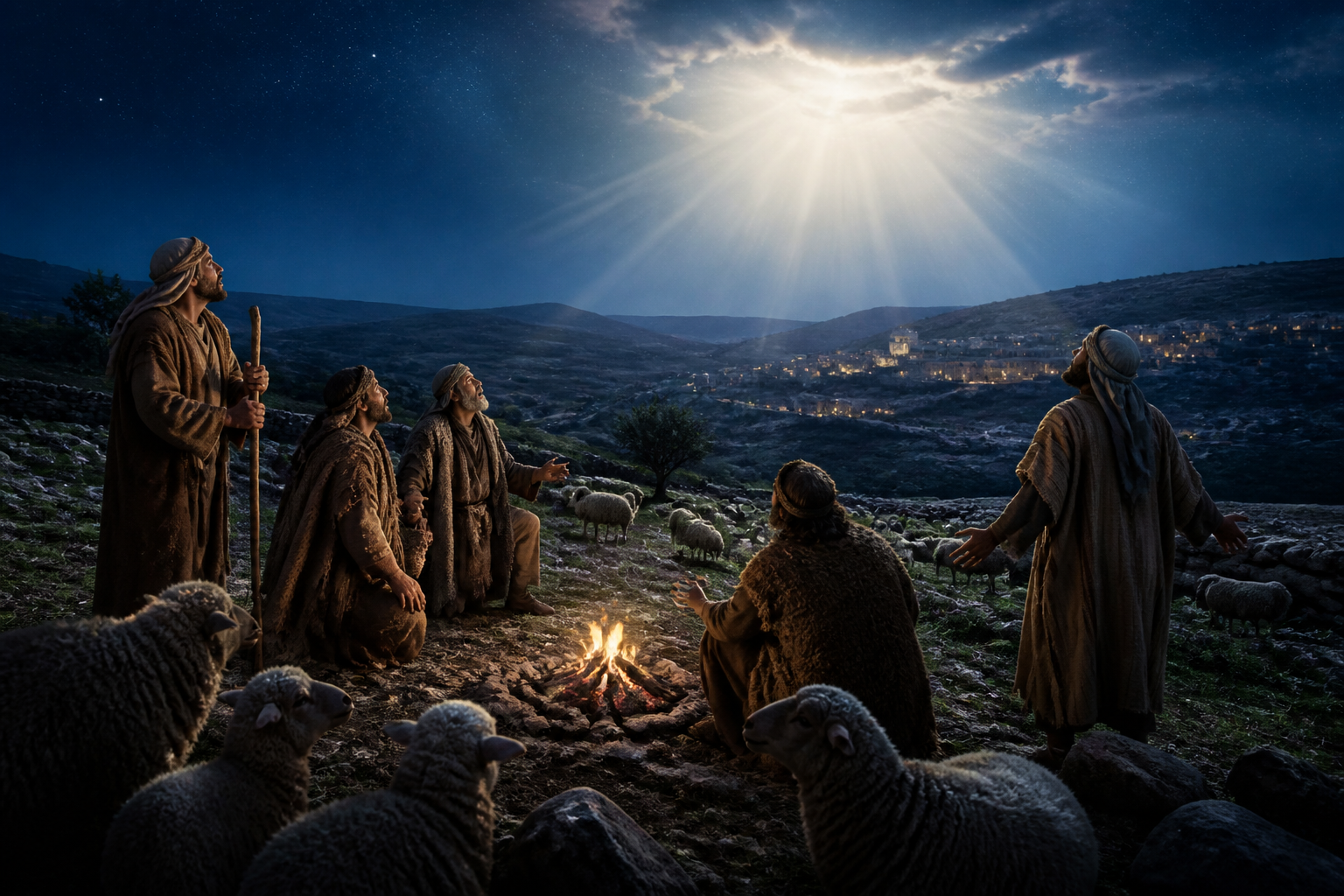
Luke says that shepherds were living in the fields near Bethlehem and keeping watch over their flock at night. An angel of the Lord appeared, and the glory of the Lord shone around them. They were afraid, but the angel told them not to fear.
The angel announced good news of great joy for all the people. A Savior had been born in the city of David. He was Christ the Lord. This short message gives the heart of the birth of Jesus. He is Savior, Messiah, and Lord.
Then a multitude of the heavenly host praised God and spoke of glory to God and peace on earth. The shepherds went quickly to Bethlehem. After seeing Jesus, they told others what they had heard and seen. They returned glorifying and praising God.
God did not first send the announcement to a palace or a group of powerful leaders. He invited working people to see the Savior. This does not erase the need for wise teachers or careful study. It shows that the Gospel is good news for ordinary people. The Luke account of the angels and shepherds records their response.
Who Were the Magi?
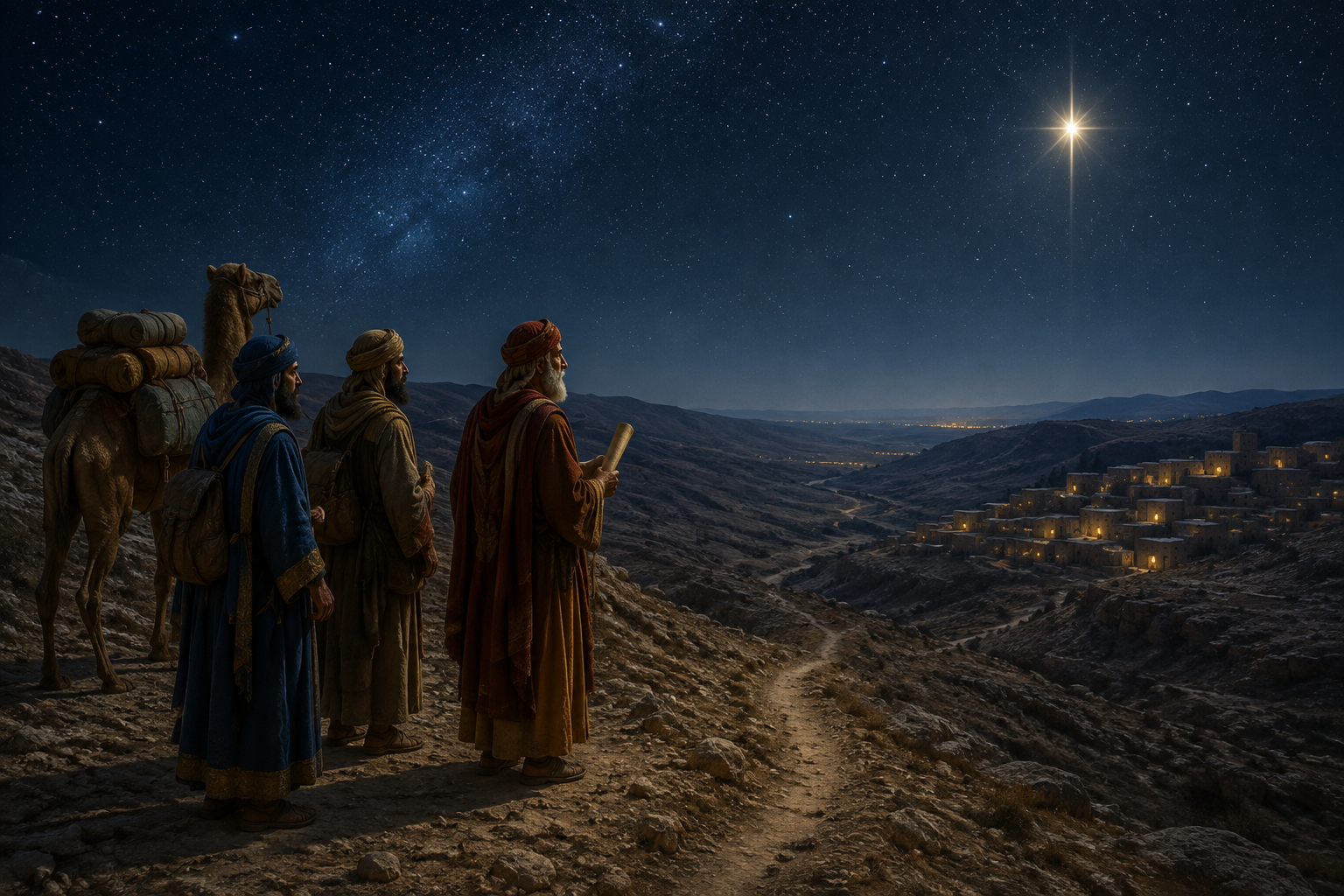
Matthew says that Magi came from the east to Jerusalem after Jesus was born. They asked where the newborn King of the Jews was. They had seen His star and came to worship Him.
The Bible does not say that there were three Magi. It names three gifts: gold, frankincense, and myrrh. It also does not say that they visited Jesus on the night of His birth. Matthew says that they entered a house and saw the child with Mary.
Their visit shows that Jesus is King beyond Israel. The nations are drawn to Him. Matthew’s Gospel connects this scene to the Old Testament hope that the Messiah would bring blessing to the nations.
The Magi also show the difference between worship and fear. They traveled to honor Jesus. Herod heard about the King and wanted to destroy Him. Everyone must respond to Jesus. We should not let cultural tradition replace the question Matthew asks: Will we worship the true King?
How Did Jesus’ Birth Fulfill God’s Promises?
The birth of Jesus is connected to promises made long before Bethlehem. God promised Abraham that blessing would reach all nations through his family. God promised David that his royal line would have an enduring kingdom. The prophets spoke of a ruler, a child, and a servant who would bring salvation.
Matthew points to Isaiah’s promise about a virgin bearing a son who would be called Immanuel. Matthew also points to Micah’s promise about Bethlehem. These are not loose references. They show that Jesus’ birth belongs inside the Bible’s unified story.
Luke’s opening chapters echo the Psalms and the prophets. Mary praises God for remembering His mercy and His promise to Abraham. Zechariah praises God for raising up salvation in the house of David. Simeon sees the infant Jesus and praises God for salvation prepared for all peoples.
God’s promises are fulfilled in Jesus, not in a date on a calendar or a religious decoration. Read Isaiah 7:14 with the Gospel accounts. The more we read Scripture, the more clearly we see that Jesus is the center of God’s saving plan.
What Does Immanuel Mean?
Immanuel means “God with us.” Matthew uses this name to explain what Jesus’ birth means. God did not remain distant from human suffering. In Jesus, the eternal Son came into the world and lived among us.
God with us does not mean that Jesus was only a symbol of God’s kindness. John says that the Word became flesh. Jesus showed God’s glory, spoke God’s truth, forgave sins, healed the broken, and accepted worship. His divine identity is part of the Gospel.
Immanuel also gives comfort to believers. Jesus knows what it is to be tired, rejected, tempted, and sorrowful, yet He never sinned. He is able to sympathize with His people. He is also strong enough to save them completely.
The promise of God with us continues beyond the manger. Jesus died and rose again. He promised to be with His disciples as they make disciples of all nations. His presence is not limited to a Christmas season. He is Lord every day.
Why Is the Birth of Jesus Good News?
The birth of Jesus is good news because the world needs a Savior. Sin is not a small mistake. It brings guilt, death, and separation from God. We cannot remove our guilt through good intentions or religious activity.
Jesus came to save His people from their sins. He lived the obedient life we have failed to live. He died in the place of sinners. He rose again so that everyone who turns from sin and trusts Him can receive forgiveness and new life.
The angel called Jesus Savior and Christ the Lord. These titles belong together. Jesus is not only a rescuer from trouble. He is the promised Messiah and rightful Lord. He calls us to repent, believe, follow Him, and receive His grace.
This is why Christians affirm the whole Gospel. The birth, death, and resurrection cannot be separated. The child born in Bethlehem is the same Jesus who conquered the grave. Read what Jesus preached about the kingdom, repentance, faith, and eternal life.
What Does Jesus’ Birth Teach Us Today?
Jesus’ birth teaches us to trust God’s promises. Mary had questions, Joseph faced fear, and the shepherds had to leave their fields. God met each person with His word. Faith listens to God and obeys even when the whole path is not visible.
His birth teaches us humility. Jesus did not enter the world with the status people expect from a king. He came as a servant. Christians should not measure spiritual importance by money, fame, or power.
His birth teaches us to welcome the good news. The shepherds heard, went, saw, and told others. We should also speak about Jesus with truth and love. The message is not our personal opinion. It is the Biblical announcement of the Savior.
His birth teaches us worship. The right response is not only to admire a scene. We should bow before Jesus as Lord, confess our sin, trust His saving work, and walk in obedience. Use Christian wisdom to apply the truth of Scripture to daily life.
Is Christmas in the Bible?
The Bible does not use the word Christmas, and it does not give the exact date of Jesus’ birth. It does give the events that Christians remember at Christmas: the promise of the Messiah, the virgin conception, the birth in Bethlehem, the manger, the angels, and the shepherds.
December 25 is a later date chosen by Christians for a yearly celebration. The date itself is not a command from Scripture. Christians may observe it with freedom and thankfulness, while remembering that the meaning must come from the Bible.
Christmas traditions can help families talk about Jesus, but traditions can also distract us. A nativity display is not the Gospel by itself. The Gospel says that the Son of God became human, lived without sin, died for sinners, rose again, and reigns as Lord.
Whether you celebrate Christmas or not, keep Jesus at the center. Read Matthew 1-2 and Luke 1-2. Pray with gratitude. Care for the vulnerable. Tell the truth about Christ. Most of all, trust the Savior who came into the world.
How Should We Respond to Jesus?
The birth of Jesus calls for a response. The shepherds responded by going to see Him and telling others. The Magi responded by worshiping Him. Mary responded with humble trust. Joseph responded with obedience. Herod responded with resistance.
We cannot remain neutral about Jesus forever. He is not only a character in a winter story. He is the Son of God, the Savior of sinners, and the Lord who will judge the living and the dead.
If you do not yet follow Jesus, turn to Him in repentance and faith. Admit your sin. Believe that He died and rose again. Ask Him to save you and lead you. Salvation is received by grace through faith, not earned by performance.
If you already believe, keep growing in the Word. Remember the humility of Christ. Share the good news with gentleness. Let His birth lead you to His cross and resurrection. The child born in Bethlehem is alive, and He is worthy of all worship.
For a simple next step, read the about page for Just Jesus Time, then open the Bible and pray over Matthew 1-2 and Luke 1-2.
Frequently Asked Questions
Where is the birth of Jesus recorded in the Bible?
The birth of Jesus is recorded mainly in Matthew 1-2 and Luke 1-2. Matthew highlights Joseph, the visit of the Magi, and the danger from Herod. Luke highlights Mary, the shepherds, and the manger in Bethlehem.
Why was Jesus born in Bethlehem?
Jesus was born in Bethlehem in fulfillment of Micah 5:2. Bethlehem was the city of David, and the promised Messiah would come from there. God used the circumstances of the census to bring Mary and Joseph to that town.
Was Jesus born on December 25?
The Bible does not give the exact day or month of Jesus’ birth. December 25 is a later Christian celebration date. The central truth is that the eternal Son of God truly became human, was born of Mary, died for sins, and rose again.
What does the name Jesus mean?
The name Jesus points to the Lord’s saving work. In Matthew 1:21, the angel says that He will save His people from their sins. Jesus is not only a teacher or example. He is the divine Savior and Lord.
Why is the birth of Jesus important for Christians?
The birth of Jesus is important because God the Son came into the world to save sinners. Jesus is Immanuel, God with us. His birth begins the earthly life that led to His sinless ministry, death on the cross, resurrection, and eternal reign.