
Many people ask what Jesus says about homosexuality. Some ask because they are curious about the Gospel. Others have been hurt by Christians. Some are trying to understand their own desires or support a friend. This question needs a careful answer from the Bible, not anger, jokes, or vague religious language.
Jesus did not use the modern word homosexuality in the recorded Gospels. He did speak clearly about God’s design for marriage, sexual holiness, repentance, love, and the value of every person. The apostles also spoke with His authority, and their teaching belongs to the same Bible that reveals Jesus as Lord.
This article explains the Christian answer in simple words. It will not treat anyone as a problem to be solved. Every person is made in God’s image. Every person is also a sinner who needs mercy. Jesus Christ died for sinners, rose again, and calls us to follow Him in truth and grace.
What Does Jesus Say About Homosexuality?
Jesus does not give a recorded speech that uses the modern term homosexuality. That does not mean He left His followers without an answer. Jesus taught from the authority of the Old Testament, and He gave His apostles authority to teach the church. The Bible must be read as one united witness to God’s truth.
When religious leaders asked Jesus about divorce, He took them back to Genesis. He said that the Creator made humanity male and female and that a man leaves his parents, holds fast to his wife, and becomes one flesh with her. Jesus was teaching about marriage, but He was also showing that God’s purpose in creation is the foundation for sexual ethics.
Jesus also spoke about sexual immorality as a sin that comes from the heart. In Mark 7:20-23, He teaches that evil actions come from within and defile a person. His concern is not only what people do in public. He calls us to offer our hearts, desires, bodies, and relationships to God.
For more context, read our guide to the life and ministry of Jesus. His words about sexuality cannot be separated from His wider call to holiness, mercy, and faithful discipleship.
Jesus’ Teaching Begins with God’s Design
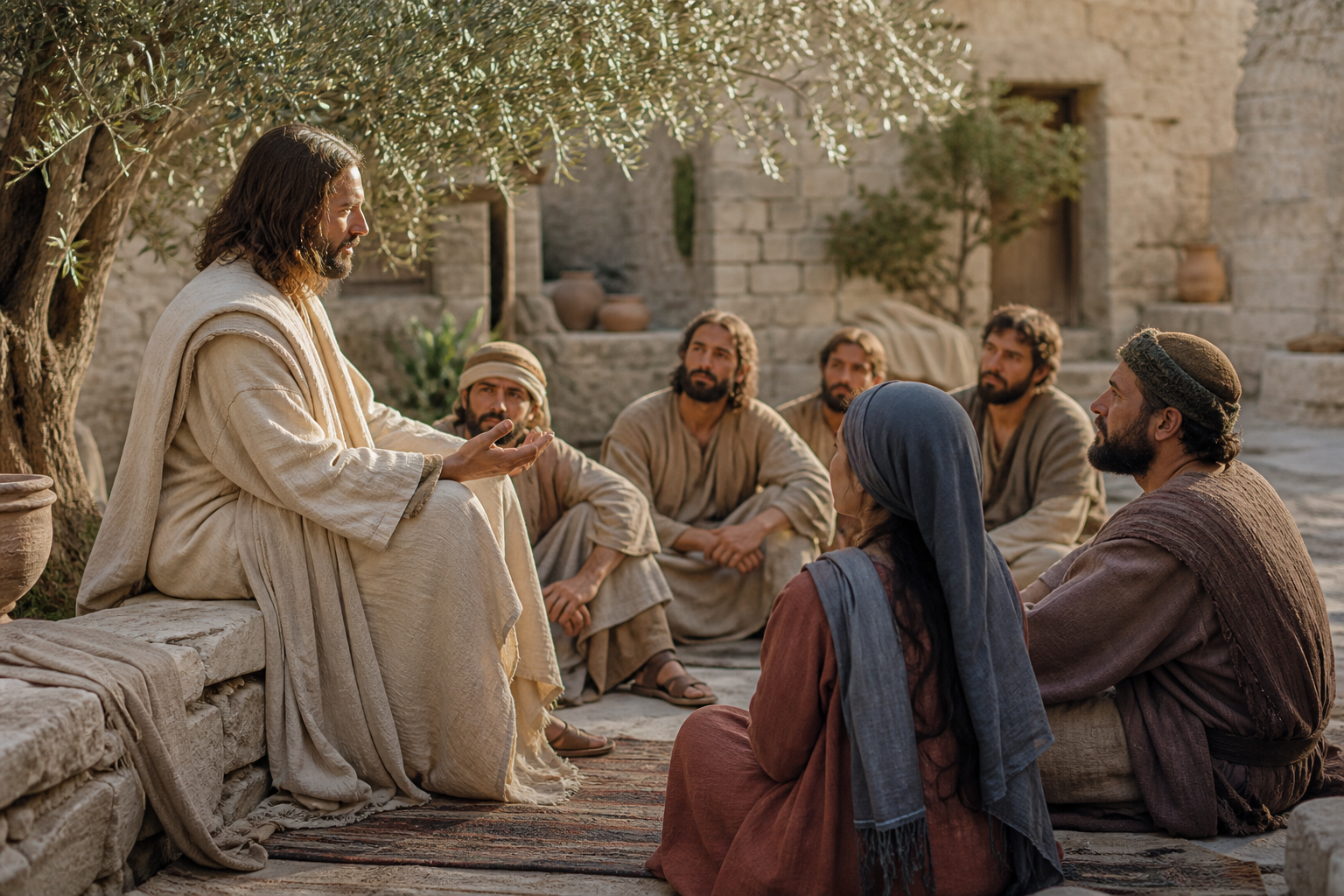
Jesus began His answer about marriage with God as Creator. This matters because Christian sexual ethics are not based on changing social fashion or personal preference. They begin with the Lord who made the body, created male and female, and gave marriage as a covenant.
In Matthew 19:4-6, Jesus joins the creation account to the meaning of marriage. He describes a lifelong one-flesh union between a man and a woman. He does not present marriage as something people may redefine whenever their desires change. He points to God’s good purpose from the beginning.
This teaching is not meant to say that married people are more valuable than single people. Jesus Himself lived as a single man. Paul also explains that singleness can be a faithful gift. The point is that both marriage and singleness should be lived under God’s Word, with bodies and relationships offered to the Lord.
The Bible’s design is high and costly for everyone. It calls married people to faithfulness. It calls single people to purity. It calls every disciple to deny himself, take up his cross, and follow Jesus. The same Lord who teaches about marriage also welcomes the weak and gives grace to those who turn to Him.
What the Bible Says About Sexual Sin

The Bible speaks about sexual sin in more than one passage. Romans 1:24-27 describes people exchanging the truth about God for a lie and turning away from the created order. Paul includes same-sex sexual acts in this account of human rebellion. In 1 Corinthians 6:9-11, he lists sexual sins among many other sins that do not fit the kingdom of God.
These passages should not be used as weapons against one group. The same chapter in 1 Corinthians names greed, drunkenness, slander, and theft. It does not allow proud people to stand above others. Scripture says that all have sinned and fall short of God’s glory. We all need the cross of Jesus.
The Bible also gives a positive vision. Sex is not dirty. The body is not a mistake. God made us as embodied people, and He calls us to honor Him with our bodies. Sexual intimacy is good within the covenant of marriage He established. Outside that covenant, sexual desires and actions are not allowed to rule us.
Faithful Christians should read these passages with humility. We should not soften what Scripture says, but we should also not ignore the full message. The Bible warns every sinner and offers mercy to every repentant sinner who comes to Jesus Christ.
Jesus Calls Every Person to Repent and Believe
Jesus did not come to create a group of people who could boast that they were morally clean. He came to save sinners. His first call was, “Repent and believe in the gospel” (Mark 1:15). Repentance means turning away from sin and turning toward God. It is not a performance that earns salvation. It is the response of a heart that has heard the King’s call.
That call is for every person. A heterosexual person must repent of lust, adultery, pornography, and sexual selfishness. A person who experiences same-sex attraction must also bring desires and actions under the rule of Christ. A religious person must repent of pride and harsh judgment. Nobody comes to Jesus with a record that makes grace unnecessary.
Jesus welcomed people who knew they were broken. He ate with sinners, but He did not tell them to remain unchanged. His friendship brought people into the light. He forgave sins and called people to a new way of life. His welcome was full of grace and full of truth.
God’s forgiveness is not a small change to our old life. In Christ, believers receive a new standing before God and a new direction. Some struggles may continue for a long time. Christians may face temptation until death. Yet the presence of a struggle does not cancel the promise that Jesus is able to keep His people and finish His work in them.
Is Sexual Orientation the Same as a Person’s Identity?
The Bible does not use the modern category of sexual orientation in the way people use it today. It speaks about creation, the body, desires, lust, sexual actions, marriage, and life in Christ. Therefore, Christians should be careful. We should not claim that one modern word answers every question Scripture asks.
At the same time, the Bible does not teach that our strongest desires must define us. A Christian’s deepest identity is not found in sexual desire, success, failure, pain, or approval from other people. Those things may describe part of our experience, but they do not have the final word. For those who trust Jesus, the central truth is that they belong to Christ.
This does not make a person’s experience unimportant. Christians should listen when someone describes loneliness, fear, rejection, or a long struggle. We should not pretend that obedience is easy. Jesus knows the cost of discipleship, and He gives compassion to people who come to Him honestly.
Our identity in Christ is not a demand to pretend that temptation never exists. It is an invitation to bring the whole truth of our lives into His care. Jesus is not ashamed of repentant sinners. He calls us to receive His forgiveness and let His Word shape our lives.
Every Person Bears God’s Image
A Biblical answer must begin with human dignity. Genesis 1 teaches that every man and woman is made in the image of God. That means every person deserves honesty, respect, and protection from cruelty. It means we must never use a person’s sexual history or identity as permission to mock, threaten, exploit, or dehumanize them.
Human dignity does not mean that every desire or action is morally good. The Bible can call an action sinful without calling a person less than human. Jesus treated people as responsible and valuable. He spoke hard truth because He loved them, and He gave Himself for sinners because their lives matter to God.
This also corrects a common Christian failure. Some people speak strongly about sexual sin but say little about gossip, greed, pride, abuse, or hypocrisy. That is not the way of Jesus. We must be honest about all sin, beginning with the sins we see in our own hearts.
To love someone is to seek their good. Christian love will not celebrate what God forbids, but it will refuse contempt. It will pray, listen, tell the truth, offer practical care, and point to Jesus as the only Savior who can forgive and transform. His teaching about mercy and purity also appears in the Beatitudes in Luke.
What Does Jesus on Homosexuality Mean for Christians?
For Christians, Jesus on homosexuality means that our lives belong to Him. We do not make moral decisions by asking only what feels natural, what receives applause, or what seems easiest. We ask what the Bible teaches and how we can honor the Lord.
Jesus’ teaching also means that Christians should refuse two opposite errors. One error changes God’s Word to fit the culture. The other error speaks about truth without the mercy and patience of Jesus. Both errors damage people. Truth without love becomes harsh. Love without truth becomes empty.
Christians must also remember that the church is not a museum for people who have never sinned. It is a family of forgiven sinners who are learning to obey Jesus. A local church should be a safe place to hear Scripture, confess sin, receive prayer, and grow in holiness. Safety does not mean that no one may speak truth. It means that truth is spoken without abuse or humiliation.
Read our article on what Jesus preached to see how repentance, faith, mercy, and the kingdom of God fit together. This subject must always lead us back to the person and work of Christ.
How Should Christians Speak with Truth and Love?

Christians should speak about this subject slowly and carefully. We should listen before answering. We should use a person’s chosen name. We should never tell jokes that make someone a target. We should not assume we know every detail of another person’s life. We should remember that online arguments involve real people made in God’s image.
Truth means saying what Scripture teaches. The Bible presents marriage as a covenant between a man and a woman, and it does not approve of same-sex sexual activity. Christians must not hide that teaching. But truth also includes the Bible’s teaching about our own sin, the mercy of God, and the call to love our neighbor.
Love means seeking the good of another person. It includes patience, kindness, self-control, and a willingness to bear discomfort. Love does not force a person to agree. It does not use fear as a substitute for the Gospel. It keeps the door open for honest conversation while remaining loyal to Jesus.
When Christians disagree with someone, our goal should not be to win a public fight. Our goal is to bear witness to Christ. The Lord can use a gentle answer, a faithful friendship, a meal, a prayer, or a clear explanation of Scripture. We should trust Him with the results.
What About Same-Sex Attraction and Temptation?
Many people ask whether experiencing same-sex attraction is itself a sin. The Bible does not use that exact modern phrase, so we should avoid pretending that Scripture gives a one-word answer to every part of the question. Scripture does teach that sinful desires can live in the human heart and that temptation must be resisted.
There is a difference between temptation and chosen action. Jesus was tempted, yet He never sinned. A Christian may experience a desire that he or she did not choose. The right response is not hopelessness. It is to bring that desire to the Lord, refuse to feed it, and ask for strength to obey God.
This principle applies to all Christians. Unwanted anger, sexual lust, envy, and pride may appear without invitation. We must not nurture them. We also should not confuse the presence of temptation with proof that God has abandoned us. The Holy Spirit helps believers put sin to death and grow in holiness.
Some believers experience change in their desires over time. Others may carry the same temptation for many years. Scripture does not promise that every struggle will disappear before we die. It does promise that Jesus is with His people and that our future hope is resurrection life with Him.
How Can the Church Offer Real Help?
The church should offer more than a position on a debate. It should offer the Gospel, prayer, friendship, wise teaching, and practical care. A person who is trying to follow Jesus should not be pushed into secrecy or left alone. Mature believers can help one another obey Scripture with patience.
Real help may include a trustworthy pastor, a small group, accountability with a same-sex Christian friend, counseling that respects Christian faith, and ordinary fellowship. It may mean helping someone find a safe home, work, or community when they face rejection. It always means pointing to Jesus instead of treating another person’s struggle as entertainment.
Church members should also protect people from abuse. Biblical teaching about sexual holiness never excuses manipulation, violence, coercion, or neglect. Leaders must act with wisdom and follow the law when someone is in danger. The holiness of Jesus makes His people more careful with the vulnerable, not less.
Christian community should be marked by both conviction and welcome. As you learn to walk in this balance, our guide to Christian wisdom can help you think about speech, relationships, patience, and faithful choices.
The Gospel Offers More Than a Rule
If all we say is “do not do that,” we have not yet given the Christian answer. The Gospel is not only a rule about sexual behavior. It is the good news that Jesus Christ came into the world to save sinners. He lived without sin, died on the cross for our guilt, and rose again in victory.
Because Jesus rose, forgiveness is not imaginary. His grace is not permission to keep sin as our master. Grace brings us into a new relationship with God. It teaches us to say no to ungodliness and to live with self-control, uprightness, and hope.
For a person who feels ashamed, Jesus offers cleansing. For a person who feels proud, Jesus offers a warning and a welcome to repent. For a person who feels lonely, Jesus offers His presence and a family of believers. For a person who has been hurt by the church, Jesus is the faithful Shepherd who never abuses His sheep.
The goal is not to build a public image of respectability. The goal is to know Christ. Every believer is called to love God, love neighbor, confess sin, receive forgiveness, and keep walking with Jesus. That is the Christian hope in every area of life.
A Simple Biblical Response

When someone asks about Jesus on homosexuality, a faithful answer can follow a simple path. Start with the Bible’s good creation. Explain Jesus’ teaching about marriage and sexual holiness. Acknowledge that every person has dignity and that every person needs grace. Then point clearly to the cross and resurrection of Jesus.
Do not make the conversation only about one group. Ask what it means for all of us to follow Jesus. Married people need faithfulness. Single people need purity. All believers need to turn from lust, pride, cruelty, and self-rule. The Christian life is not about choosing one sin to condemn while protecting our favorite sins.
If you are asking this question for yourself, you can come to Jesus now. Tell Him the truth. Ask Him to forgive you, lead you, and place you among faithful believers. Read the Gospels. Pray. Seek a mature pastor or Christian friend who will be both kind and honest. You do not have to hide from the Lord.
If you are asking for a friend, begin with love. Listen well. Do not promise what you cannot give. Do not treat the person as a project. Be clear about what you believe, and keep showing the patience of Christ. You can invite someone toward Jesus without pretending that His Word says something different.
Jesus is not one voice among many. He is the Son of God, the Savior of the world, and the risen Lord. His Word is good, His grace is sufficient, and His call to follow Him is for every person.
Frequently Asked Questions
Did Jesus ever speak about homosexuality directly?
Jesus did not use the modern word homosexuality in the recorded Gospels. He did teach about marriage, sexual sin, holiness, repentance, and love. His teaching in Matthew 19 points to the creation pattern of marriage, and His teaching remains consistent with the whole authority of Scripture.
What does the Bible say about same-sex sexual activity?
The Bible presents sexual intimacy as God’s good gift for the covenant of marriage between a man and a woman. Romans 1, 1 Corinthians 6, and 1 Timothy 1 treat same-sex sexual activity as outside that design. This teaching applies within a wider call for every person to turn from sin and trust Jesus.
Does a same-sex attraction make someone beyond God’s grace?
No. No sinner is beyond the mercy of Jesus Christ. Temptation and unwanted desire do not make a person worthless, and every Christian must bring desires to God. Jesus offers forgiveness, a new identity, and strength for faithful obedience to everyone who comes to Him.
How should Christians treat people who identify as gay?
Christians should treat every person with dignity, patience, honesty, and love because every person bears God’s image. Love does not require calling sin good, and truth does not permit cruelty. Christians should listen carefully, refuse mockery, speak about Jesus, and welcome people to hear the Gospel.
What should someone do if they are struggling with this issue?
Bring the struggle honestly to Jesus in prayer. Read Scripture, seek a mature and trustworthy Christian community, and ask for wise pastoral care. Do not hide in shame or face the struggle alone. The Christian hope is not self-perfection but the saving grace and transforming power of Jesus Christ.
Sources and Scripture
- Matthew 19:4-6, Jesus’ teaching on creation and marriage.
- Mark 7:20-23, Jesus’ teaching about the heart and sexual immorality.
- 1 Corinthians 6:9-11, sin, repentance, and washing in the name of Jesus.
- The Gospel Remedy for Homosexuality, Ligonier.
- Is the Bible’s Teaching about Homosexuality Offensive?, Crossway.
- A New Testament Perspective on Homosexuality, The Gospel Coalition.