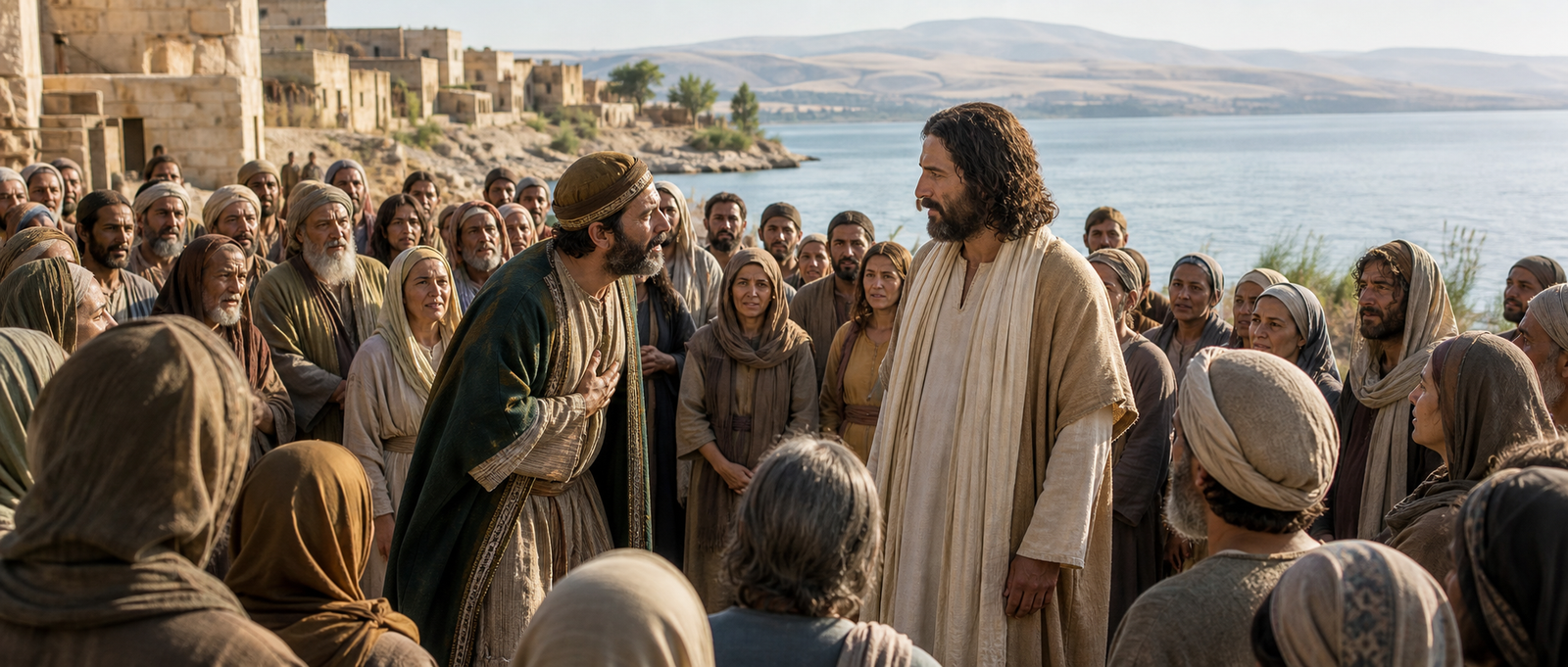
Mark 5:21-43 tells two miracles that are placed inside one another. Jairus, a ruler of the synagogue, asks Jesus to save his dying daughter. On the way to Jairus’s house, a woman who has suffered from bleeding for twelve years reaches through the crowd and touches Jesus’ garment. Jesus stops for her. Then He continues to the home and raises the girl.
This passage is more than a record of two surprising events. It shows the heart and authority of Jesus. He is not too busy for a suffering woman, and He is not too late for a grieving family. He speaks with compassion, acts with power, and calls fearful people to trust Him.
The Bible is our authority as we read this account. Mark presents Jesus as the Messiah and Son of God. He is the Lord and Savior who brings mercy to the broken, gives life where there is death, and later gives His own life on the cross before rising again. For a wider overview, see our guide to essential biblical Scriptures and verses.
What happens in Mark 5:21-43?
Jesus has crossed back to the other side of the Sea of Galilee. A large crowd gathers beside the sea. Jairus comes forward and falls at Jesus’ feet. He asks Jesus to come to his house and lay hands on his little daughter, who is near death.
Jesus goes with him, but the crowd presses around Him. In that crowd is a woman who has been ill for twelve years. She has spent all she has on doctors and has become worse. When she hears about Jesus, she comes from behind and touches His garment. Mark says she is healed immediately.
Jesus then goes to Jairus’s home. People are weeping because the child has died. Jesus takes the girl by the hand and tells her to rise. She gets up and walks. Mark ends the account with a small, caring detail: Jesus tells them to give her something to eat.
Jesus listens to Jairus’s desperate request
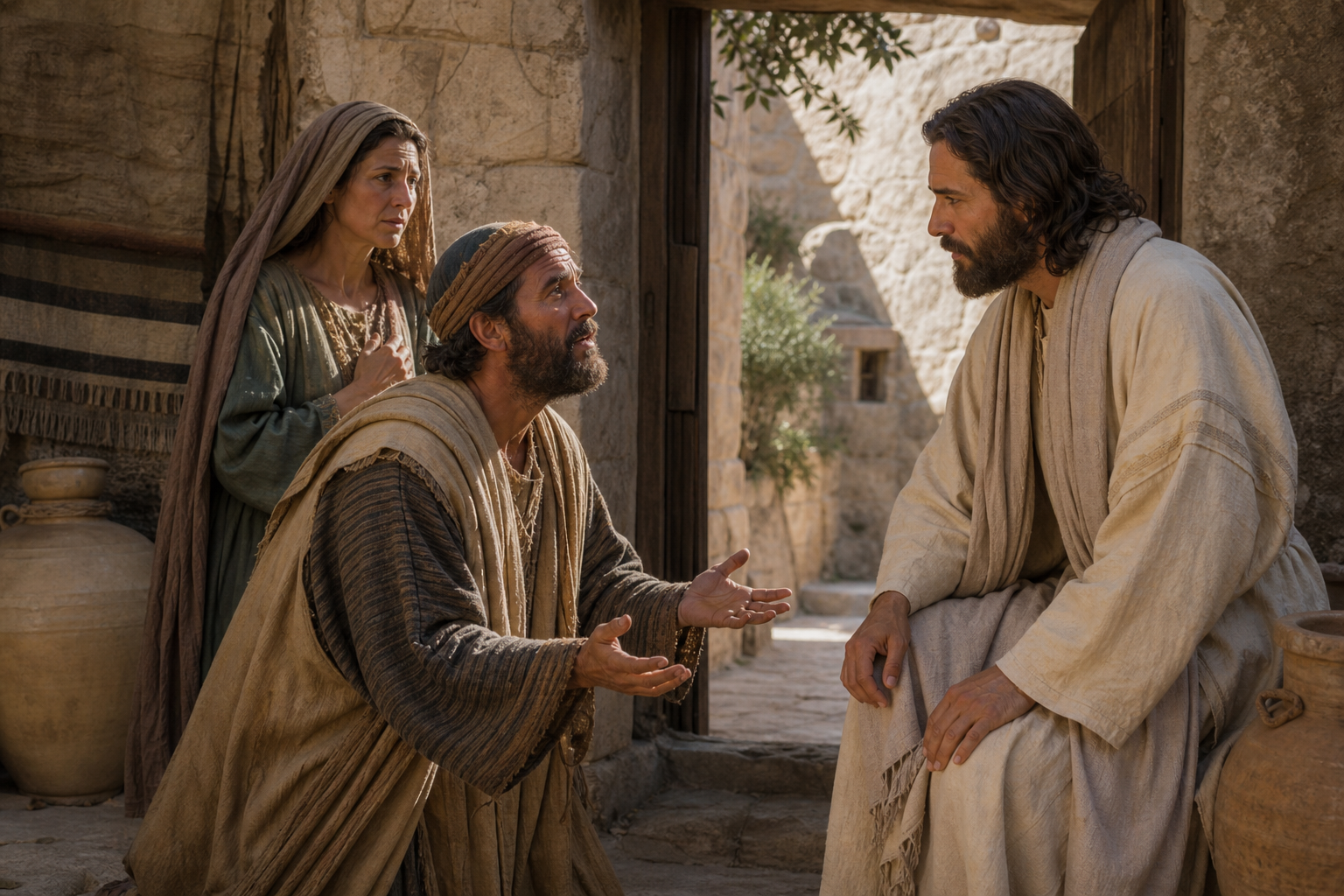
Jairus has a respected position in the synagogue, but his public role cannot protect his daughter. Sorrow brings him to his knees. He does not come to Jesus as a debate partner or as someone who has everything under control. He comes as a father who needs help.
His request is simple. He believes that Jesus can come, lay hands on his daughter, and save her. Jairus has enough faith to bring his need to Jesus, even though he does not yet know how the story will end. This is often where faith begins. We bring the truth of our need to the Lord instead of hiding behind our status.
Jesus does not dismiss Jairus. He goes with him. The movement of Jesus toward this suffering home shows His compassion. Jesus is willing to enter places of pain. He is not distant from people who are afraid.
The suffering woman reaches for Jesus

The woman in this story has endured twelve years of illness. Mark tells us that she suffered under many physicians, spent all her money, and grew worse. The passage does not make fun of her search for help. It shows the exhaustion of a person who has tried every answer available to her.
She has heard reports about Jesus. She believes that touching even His garments will make her well. Her faith is not a magic formula, and the cloth is not a charm. Her hope is directed toward Jesus Himself. She moves toward Him because she believes He has power to help.
Her approach is quiet at first. She does not demand a public place in the crowd. Yet Jesus sees her. The Lord notices people who feel invisible. He is able to receive a hidden cry and turn it into a meeting with Him.
Jesus calls her daughter and restores her
After the woman is healed, Jesus asks who touched His garments. The disciples are puzzled because the crowd is pressing around Him. Jesus is not asking because He lacks knowledge. He is bringing the woman into the light and giving her a personal meeting with Him.
The woman comes in fear and trembling. She tells Jesus the whole truth. He answers her with tenderness: “Daughter, your faith has made you well.” He tells her to go in peace. Jesus does not treat her as a problem to remove. He speaks to her as a person who has been welcomed.
Her healing is physical, but Jesus’ words also show the peace He gives. The passage does not promise that every Christian will receive the exact earthly healing they request. It does show that Jesus is compassionate, powerful, and worthy of trust. He can heal in this life, and He will finally defeat sickness and death when He makes all things new.
The news about the girl tests Jairus’s faith
While Jesus is still speaking to the woman, messengers arrive from Jairus’s house. They say his daughter has died and ask why he should trouble the Teacher any further. Their words sound final. They assume death has ended the request.
Jesus hears the message and speaks directly to Jairus: “Do not fear, only believe.” These words do not pretend that the situation is easy. Jesus knows that the child has died. He calls Jairus to keep trusting Him when the news seems to close every door.
Christian faith is not denial. It does not call evil good or pretend that grief is painless. Faith looks at the truth and still brings that truth to Jesus. Jairus must now trust the Lord’s character and power, not his own ability to understand the delay.
Jesus raises Jairus’s daughter

Jesus allows only Peter, James, and John to go with Him into the home. He sees the noise of mourning and tells the people that the child is sleeping. They laugh at Him. Their laughter shows that they do not expect life to return.
Jesus sends the mourners outside. He takes the child’s father and mother and enters the room. Then He takes the girl by the hand and speaks to her. Mark keeps the words in Aramaic, “Talitha cumi,” and explains that they mean, “Little girl, I say to you, arise.”
The girl gets up and walks. Everyone is amazed. Jesus then tells the parents to give her food. This final detail makes the miracle personal and concrete. The girl is not a symbol floating above real life. She is alive, hungry, and ready to be cared for.
Why Mark joins the two miracles
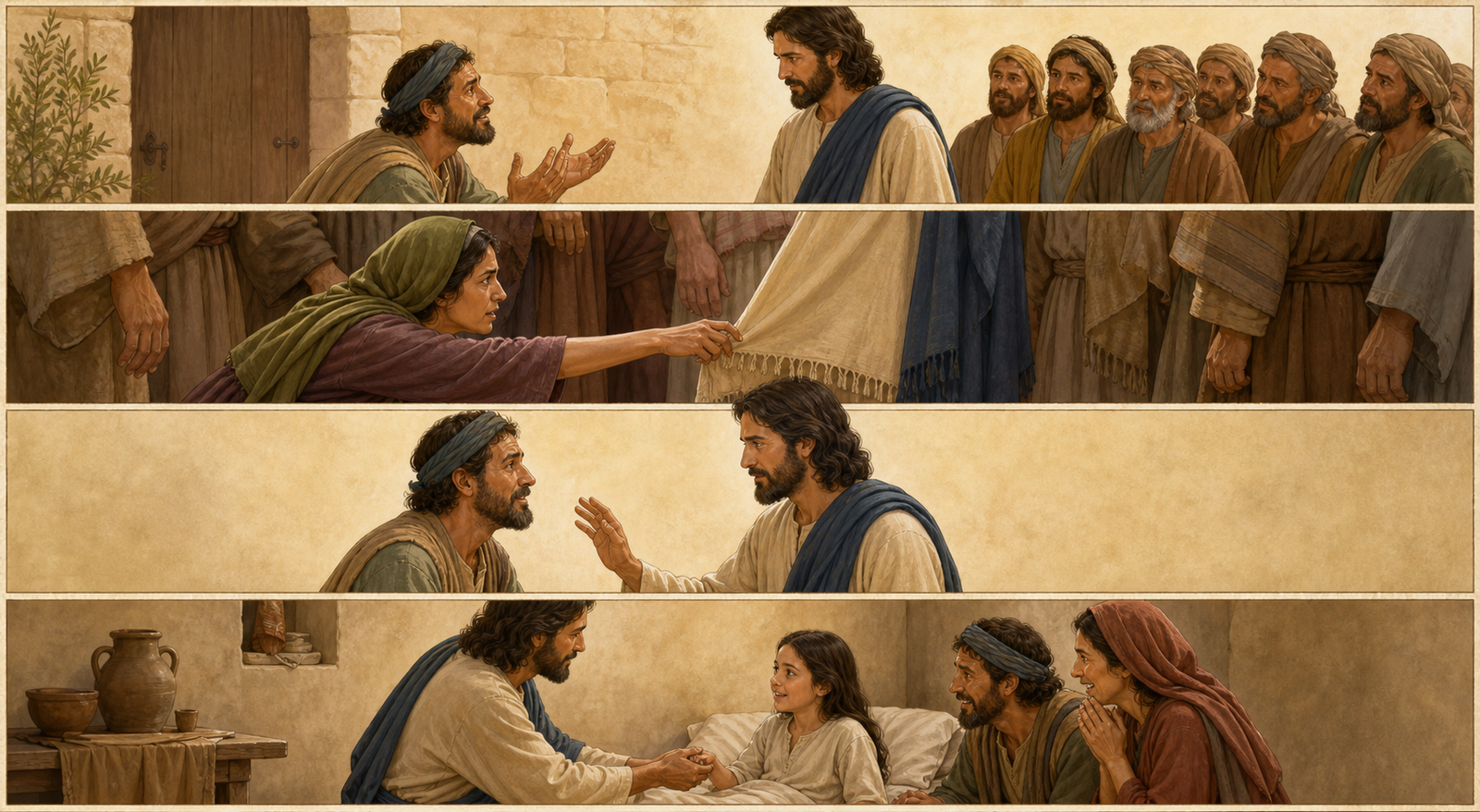
Mark could have told these miracles as two separate stories. Instead, he begins Jairus’s story, places the woman’s healing inside it, and then returns to Jairus’s daughter. Some Bible teachers call this a story within a story. The structure invites us to read the two people together.
Both people are in desperate need. The woman has suffered for twelve years. The girl is twelve years old. One approaches Jesus from behind, and the other is brought to Jesus by her father. One is healed in the crowd, and the other is restored in a private room. Jesus gives His attention to both.
The two stories also show that Jesus is Lord over different kinds of need. He has authority over a long illness, and He has authority over death. He is not limited by the size, length, or public visibility of a problem. For more background on the ministry of Jesus, read our guide to the life and ministry of Jesus.
What does this passage teach about faith?
First, faith comes to Jesus. The woman hears about Him and moves toward Him. Jairus falls before Him and asks for help. Faith is not confidence in our own strength. It is trust in the person and promise of Jesus.
Second, faith can be trembling faith. The woman is afraid when Jesus calls her forward. Jairus is told not to fear after he hears the worst news. Neither person has a calm and complete understanding of the future. Yet both are brought into contact with Jesus.
Third, faith waits for Jesus without trying to control Him. Jairus may have wondered why Jesus stopped for the woman. We are not told what he felt. We do know that the delay became part of the story, and Jesus remained faithful. God’s timing may test us, but delay does not mean that the Lord has forgotten us.
Finally, faith should be honest. The woman tells Jesus the whole truth. Christians do not need to perform strength before the Lord. We can confess fear, weakness, pain, and confusion. Jesus does not need a polished version of our lives before He can show mercy.
Jesus has authority over sickness and death
Mark 5:21-43 presents Jesus as more than a gifted healer. He speaks and acts with divine authority. The woman is healed immediately. The dead girl rises at His word. These signs reveal something about Jesus’ identity.
Mark begins his Gospel by calling Jesus the Son of God. As the Gospel continues, Jesus’ actions make that claim visible. He brings God’s kingdom near, defeats evil, forgives sins, heals the sick, and gives life. Mark’s Gospel later shows the same Jesus dying on the cross and rising from the grave.
That is why this passage belongs to the larger story of the Gospel. The One who raises Jairus’s daughter will give His own life for sinners. He will not remain in the tomb. Jesus is the divine Lord who entered our suffering, died in our place, and rose again so that all who trust Him may have eternal life.
How this passage points to the Gospel
The woman needs cleansing and healing. Jairus’s daughter needs life. These needs help us see the deeper human problem. Sin separates us from God and leaves us unable to rescue ourselves. We need more than advice. We need the Savior.
Jesus Christ came as the promised Messiah and Son of God. He lived in perfect obedience, died on the cross for sins, and rose bodily from the dead. His resurrection is not a small ending to the story. It is God’s declaration that Jesus is Lord and that His sacrifice is sufficient.
The miracles in Mark 5 are signs of the life Jesus gives. They do not tell us that Christians will never suffer or die in this present age. They point us to the final hope that Jesus will raise His people and wipe away every tear. Until then, we trust His wisdom, receive help from His people, and keep our eyes on Him.
How should Christians respond today?
Bring your need to Jesus. You may feel more like Jairus or more like the woman. You may have a public crisis, a private burden, or a long problem that has worn you down. The invitation is the same: come to Christ in prayer and trust.
Do not confuse faith with a promise that you control the result. Ask God for healing and help, while also receiving wise medical care, pastoral support, and the presence of trusted believers. The Lord can work through ordinary means. Waiting for Him is not the same as refusing help.
Listen to Jesus when fear speaks loudly. His command to Jairus still teaches us to look away from despair and toward Him. To learn more about the message Jesus preached, read our study of what Jesus preached.
Let the compassion of Jesus shape your care for others. Notice people who are overlooked. Make room for the sick, the grieving, and the ashamed. Pray with them, tell the truth gently, and help them find practical support. Biblical wisdom grows when faith becomes loving action. Our Christian wisdom guide can help you think through daily choices under Scripture.
Frequently asked questions about Mark 5:21-43
What is the main message of Mark 5:21-43?
The passage shows that Jesus has compassion for suffering people and authority over sickness and death. It calls us to bring our needs to Him, trust Him in fear, and see Him as the divine Son of God who gives life.
Why did Jesus stop for the woman before going to Jairus’s house?
Jesus stopped to bring the healed woman into a personal meeting with Him. The delay also tested Jairus’s faith and showed that Jesus was not limited by the news that the girl had died.
What does “Do not fear, only believe” mean?
Jesus calls Jairus to trust Him when the situation appears hopeless. Biblical faith does not deny grief or facts. It brings fear to Jesus and rests in His power and goodness.
Did Jesus heal every sick person in Mark 5?
Mark records these two specific miracles. The passage does not promise that every Christian will receive the exact earthly healing they request. It does show that Jesus is compassionate, powerful, and Lord over final resurrection life.
How does Mark 5:21-43 point to Jesus’ death and resurrection?
Jesus’ power to heal and raise the girl points to His authority over death. The same Jesus later died for sins and rose again. His resurrection gives believers the sure hope of forgiveness and eternal life.
Sources for this Bible study
Read the full biblical account in Mark 5:21-43 in the ESV and compare the passage at ESV.org. For context on Mark’s Gospel, see the BibleProject guide to Mark. For an educational discussion of the two connected stories, see the Yale Bible Study guide to the Gospel of Mark. These resources support the study, but Scripture remains the final authority for Christian faith and life.