The clearest Isaiah prophecies about Jesus present a promised child called Immanuel, a righteous king from David’s family, a voice preparing the Lord’s way, a gentle Spirit-filled servant, a suffering servant who bears sin, and an anointed messenger of good news. The New Testament applies these passages to Jesus and shows that they come together in Him. Jesus Christ is the eternal Son of God, Lord and Savior, who died for our sins, rose again, and will reign forever.
Long before the birth of Jesus in Bethlehem, the book of Isaiah gave God’s people hope. Isaiah spoke during times of fear, sin, injustice, war, and coming judgment. Yet his message did not end in darkness. He looked ahead to a child, a king, a servant, a sacrifice, and a kingdom of peace.
An Isaiah prophecy about Jesus should not be read as an isolated prediction pulled from its chapter. Each passage first belongs to Isaiah’s message to Israel and Judah. The New Testament then shows how its deepest hope reaches fulfillment in Jesus Christ.
This guide studies seven important passages. It explains their original setting, shows where the New Testament uses them, and asks what they reveal about the identity and saving work of Jesus.
How should Christians read Isaiah’s prophecies?
Isaiah is a large book. It contains warnings of judgment, calls to repentance, comfort for exiles, songs about God’s servant, and visions of a restored world. The BibleProject guide to Isaiah traces these themes from Jerusalem’s failure to the hope of a Spirit-filled king, a suffering servant, and a renewed creation.
Christians believe that the whole Bible tells one true story under the authority of Scripture. That does not mean every verse has only one simple meaning. A prophecy may speak to a real crisis in Isaiah’s day and also open a larger promise that God fulfills in Christ.
The safest method is to read the original chapter, notice its place in Isaiah, and then follow the New Testament’s own use of it. Start with the seven Isaiah passages gathered here. Then compare the New Testament passages that identify their fulfillment.
This keeps our confidence rooted in what the Bible actually says. It also helps us see that Jesus does not fulfill one loose clue. He brings Isaiah’s connected hopes of God’s presence, David’s king, justice, forgiveness, good news, and new creation into one saving mission.
1. Isaiah 7:14: Immanuel, God with us
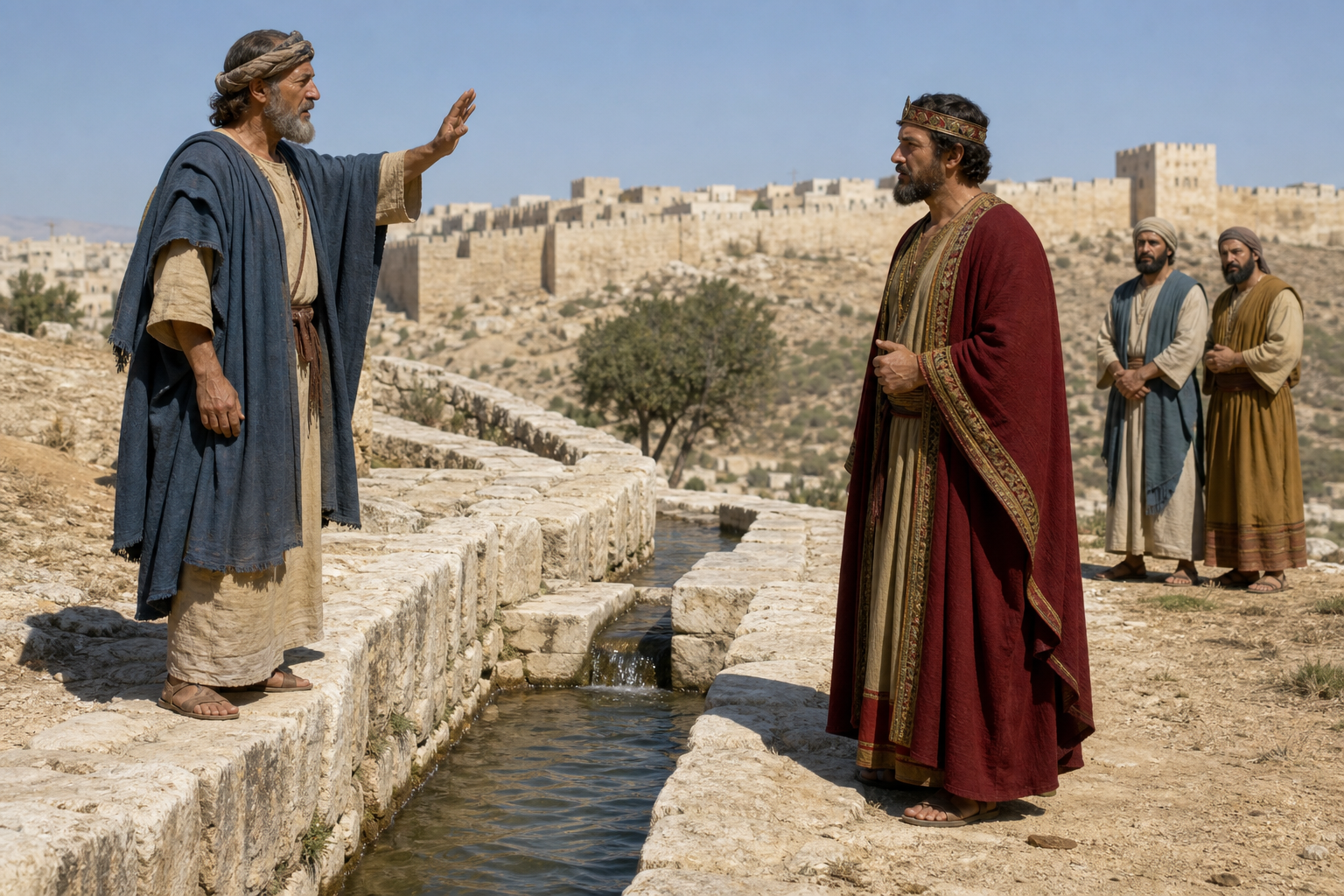
Isaiah 7 begins during a political and military crisis. King Ahaz of Judah hears that enemy kings are joining against Jerusalem. He and his people shake with fear. God sends Isaiah to tell Ahaz not to be afraid and offers him a sign.
The sign in Isaiah 7:14 is the birth of a son called Immanuel, a name that means “God with us.” The chapter has an immediate setting in Ahaz’s own troubled time. Readers should not hide that context. You can see the crisis, sign, and coming Assyrian judgment together in Isaiah 7.
Matthew 1:18-23 applies the Immanuel promise to the virgin conception and birth of Jesus. In Him, “God with us” reaches its fullest meaning. Jesus is not merely a child who reminds people that God is near. He is the divine Son who took on true human nature and lived among us.
The name also frames Matthew’s Gospel. Jesus is Immanuel at His birth, and the risen Lord promises to remain with His disciples as they make disciples of all nations. God’s presence has come personally and savingly in Christ.
2. Isaiah 9:1-7: the child who reigns in peace
Isaiah 9 speaks hope into deep darkness. Lands connected with Zebulun and Naphtali had known humiliation and invasion. Yet light would shine in Galilee, oppression would be broken, and joy would replace gloom.
The hope centers on a child and son who receives royal authority. His rule belongs to David’s throne. It is marked by justice, righteousness, peace, and no end. Isaiah gives this promised ruler titles that are far greater than ordinary political praise, including Mighty God and Prince of Peace.
Matthew 4:12-17 quotes the opening lines when Jesus begins preaching in Galilee. The location matters. Jesus announces that God’s kingdom has drawn near in the very region Isaiah connected with dawning light.
The Gospels do not present Jesus as a ruler who wins by cruelty. He teaches, heals, forgives, welcomes outsiders, confronts evil, and gives His life. His peace begins by reconciling sinners to God. It will be complete when He returns and makes all things right.
3. Isaiah 11:1-10: the shoot from Jesse

Isaiah compares David’s royal family to a tree cut down to a stump. Human pride and failed leadership seem to have ended the hope. Then a fresh shoot grows from Jesse, the father of David.
The coming ruler is filled with the Spirit of the Lord. He does not judge by appearance or rumor. He defends the poor with righteousness, confronts wickedness, and brings a peace so deep that Isaiah describes creation itself at rest. The nations seek Him.
Jesus is born in David’s family line. At His baptism, the Holy Spirit rests upon Him. His words and works show wise, righteous, and compassionate rule. Romans 15:12 quotes Isaiah 11 when explaining why the nations may hope in Christ.
The small shoot also teaches patience. God’s promise can appear buried, yet it is not dead. Jesus came in humility, not worldly display. His kingdom began like a seed and continues to gather people from every nation.
4. Isaiah 40:3-5: prepare the way of the Lord
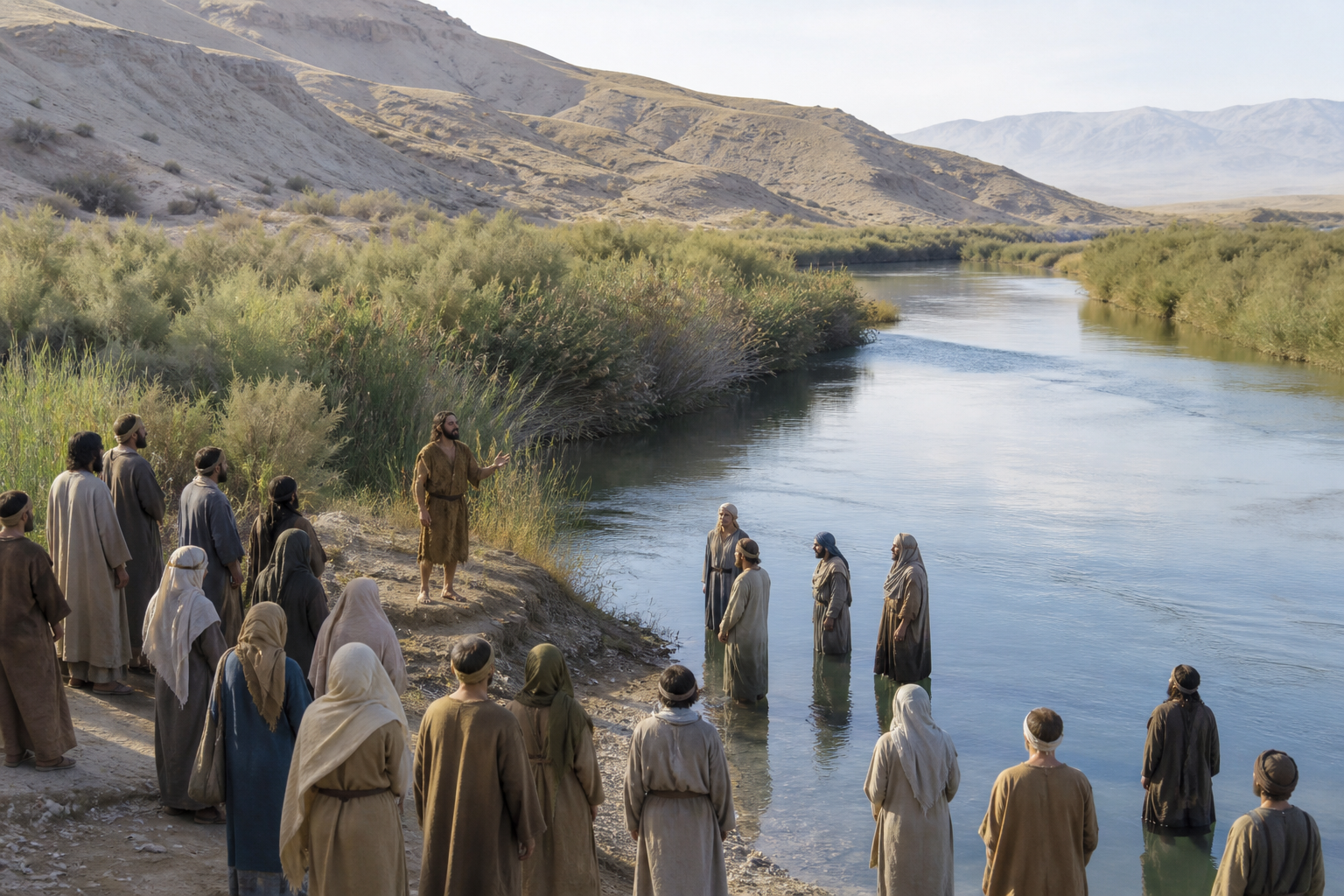
Isaiah 40 begins with comfort after judgment. A voice calls for a road to be prepared in the wilderness because the Lord is coming to reveal His glory. The picture recalls a royal arrival, but the arriving King is God Himself.
All four Gospels connect this voice with John the Baptist. Mark opens his account by joining Isaiah’s promise to John’s ministry. John calls people to repent and baptizes them in the Jordan as he prepares them to meet Jesus.
This connection makes a strong claim about Christ. Isaiah says to prepare the Lord’s way. The Gospels say John prepares the way for Jesus. They place Jesus within the identity and saving arrival of the Lord, not outside it.
Preparation still matters. We do not prepare for Jesus by making ourselves worthy. We turn from sin, believe the good news, and receive the King whom God has sent. The life and ministry of Jesus show what happened when the promised Lord came among His people.
5. Isaiah 42:1-4: the gentle, Spirit-filled servant
Isaiah 42 introduces God’s chosen servant. God’s Spirit rests on Him, and He brings justice to the nations. Yet He does not act like a loud or violent ruler. He will not crush a bruised reed or put out a weak flame.
Matthew 12:15-21 quotes this passage after Jesus heals many people and tells them not to make Him known. His quiet mercy fulfills the servant’s pattern. He has true authority, but He uses it to restore the weak and bring hope to the nations.
Gentleness does not mean weakness. Isaiah says the servant will faithfully establish justice. Jesus is patient with wounded people while remaining firm against sin, hypocrisy, and oppression. His compassion and holiness never compete.
This passage helps Christians follow Jesus more carefully. Ministry in His name should not crush vulnerable people for attention or power. It should speak truth with love, protect the weak, and point people to the servant King.
6. Isaiah 52:13-53:12: the suffering servant
Isaiah’s fourth servant song begins at Isaiah 52:13 and continues through chapter 53. The servant is rejected, suffers without deceit or violence, bears the sins of others, dies, is buried, and is afterward vindicated. The poem joins terrible suffering with God’s saving purpose.
A Yale Bible Study guide to Isaiah 52:13-55:13 places this song at the climax of Isaiah 40-55 and highlights the servant’s representative sacrifice. The witnesses finally understand that his suffering was for them.
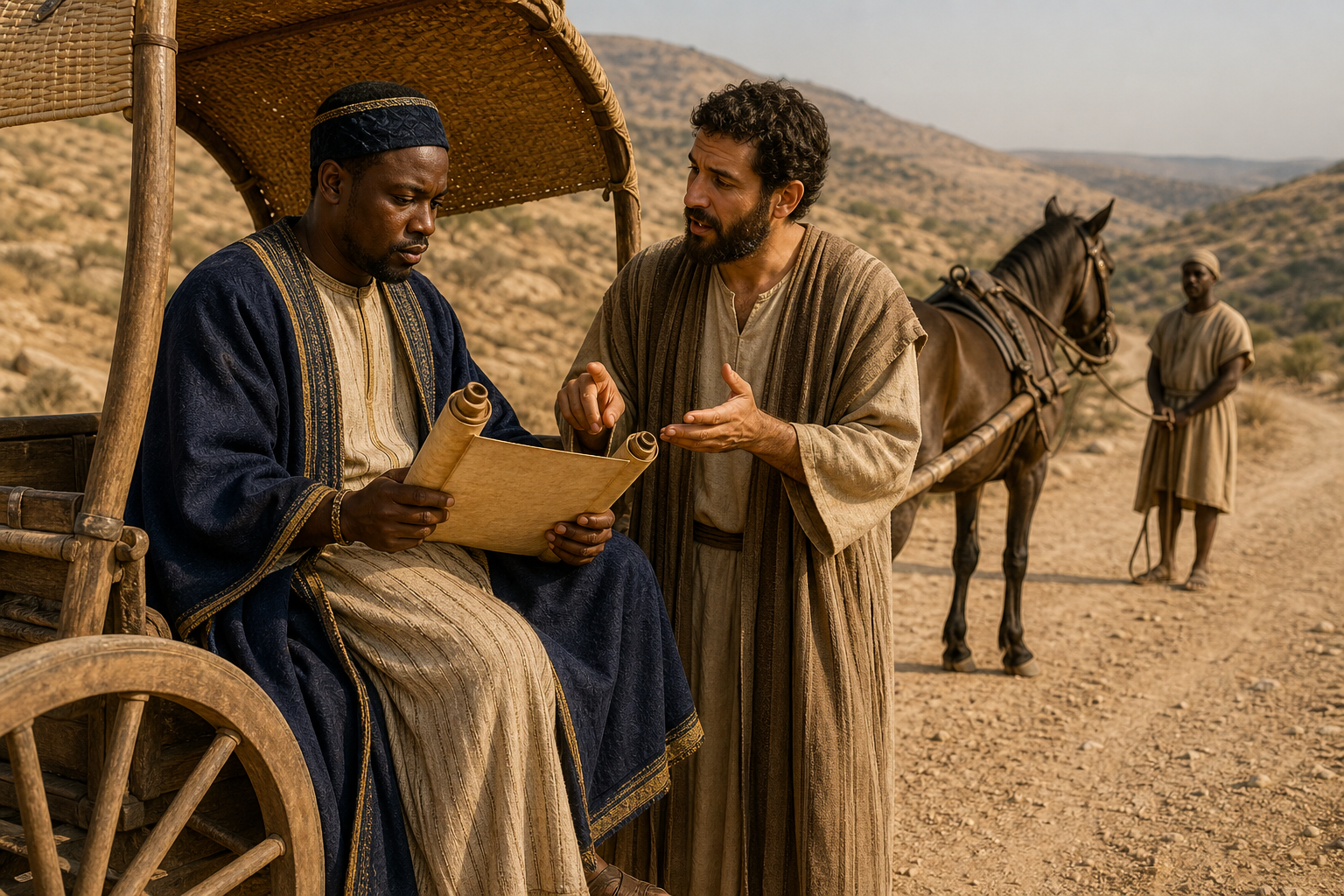
The New Testament repeatedly sees Jesus in this passage. In Acts 8, an Ethiopian official is reading Isaiah 53 and asks whom the prophet means. Philip begins with that Scripture and tells him the good news about Jesus. First Peter 2 uses Isaiah’s language to explain Christ’s innocent suffering and how He bore our sins.
Jesus did not die because His mission failed. He willingly gave His life as the sinless sacrifice. On the cross He carried the judgment sinners deserve. He was buried, and God raised Him from the dead. Isaiah’s servant sees life and is exalted after suffering, a pattern that finds its complete victory in the resurrection and exaltation of Christ.
This is the heart of the Gospel. We are not saved by admiring prophecy or trying harder. We are forgiven and made right with God by trusting in Jesus Christ, Lord and Savior, who died in our place and rose again.
The suffering servant also corrects false ideas about power. God’s victory comes through holy love, willing sacrifice, and resurrection. The cross looked like defeat, but it became the place where sin was judged and mercy was opened to the world.
7. Isaiah 61:1-2: good news for the poor
Isaiah 61 describes an anointed speaker upon whom the Spirit of the Lord rests. He brings good news to the poor, freedom to captives, comfort to the brokenhearted, and the announcement of the Lord’s favor.
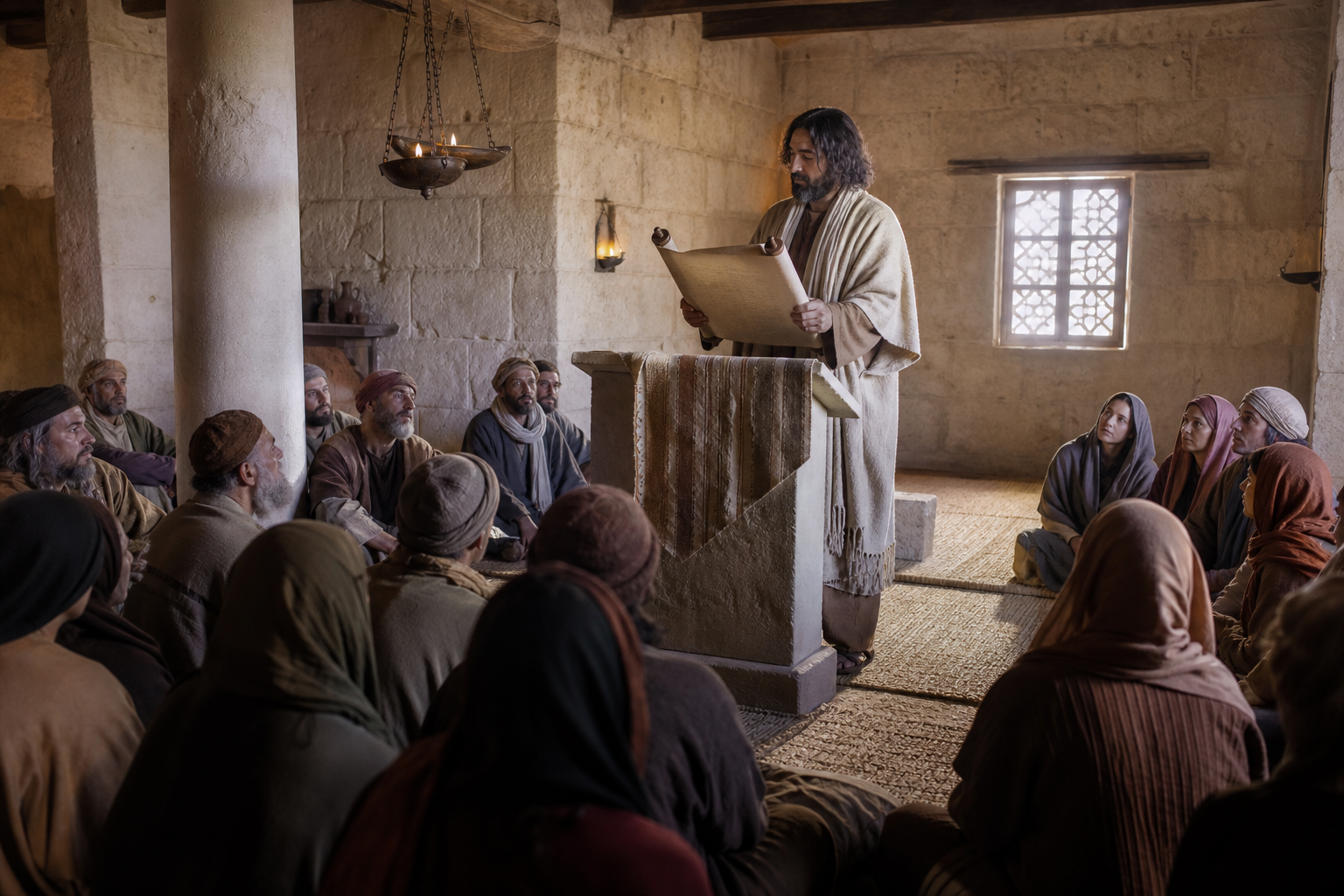
In Luke 4:16-21, Jesus reads this passage in the synagogue at Nazareth. He then says that the Scripture is fulfilled in the hearing of the people. Jesus publicly identifies His mission with Isaiah’s Spirit-filled messenger.
The BibleProject guide to Luke shows how the Nazareth reading introduces Jesus’ ministry of release. The following chapters display that good news as He heals, forgives, welcomes outsiders, calls sinners to repentance, and forms a new community around Himself.
Jesus cares about the whole person. Yet His mission cannot be reduced to social improvement alone. Our deepest captivity is sin. Through His death and resurrection, Christ gives forgiveness, new life, the Holy Spirit, and hope beyond death.
To understand this announcement within Jesus’ wider message, read about what Jesus was preaching. The good news is that God’s saving reign has come near in the King Himself.
What these Isaiah prophecies reveal about Jesus
The seven passages use different pictures, but they do not give seven unrelated answers. Together they form one rich portrait.
- Jesus is God with us. The Immanuel promise reaches its fullest reality in the Son taking on human nature.
- Jesus is David’s promised King. His righteous kingdom brings light, justice, peace, and hope to the nations.
- Jesus shares the identity and work of the Lord. John prepares the Lord’s way by preparing people to meet Jesus.
- Jesus is the Spirit-filled servant. He is gentle with the weak and faithful in establishing justice.
- Jesus is the sin-bearing Savior. His suffering and death were for sinners, and His resurrection is God’s victory.
- Jesus brings good news and freedom. He forgives, restores, gathers outsiders, and gives eternal hope.
No ordinary leader can hold all these hopes together. The promised child is also the mighty King. The mighty King is also the gentle servant. The gentle servant suffers for sinners, rises, and brings God’s salvation to the nations.
How to study messianic prophecy without forcing it
Messianic prophecy deserves confidence and care. A few simple habits help us honor the Bible rather than making it say whatever we want.
Read the whole passage
Begin before the famous verse and keep reading after it. Isaiah 7 includes Ahaz and Assyria. Isaiah 53 belongs to a larger section about God’s servant, salvation, and restoration.
Let the New Testament lead
Give special weight to passages the Gospels and apostles apply to Jesus. Matthew, Mark, Luke, John, Acts, Romans, and First Peter openly connect Isaiah’s words with Christ.
Notice both promise and pattern
Some texts give a direct promise. Others establish a pattern that grows across Scripture. The themes of God’s presence, David’s king, the servant, sacrifice, and good news become clearer as the story moves toward Jesus.
Do not use prophecy as a secret code
Numbers, objects, and names should not be given hidden meanings without biblical support. The goal is not to impress people with clever links. It is to understand Christ as Scripture reveals Him.
Respond with faith and obedience
Prophecy is not only information. Isaiah calls people to trust the Lord. The New Testament calls us to repent, believe in Jesus, and follow Him. For practical help applying biblical truth, explore our Christian wisdom resources.
Frequently asked questions about Isaiah and Jesus
Which Isaiah prophecy most clearly points to Jesus?
Isaiah 52:13-53:12 is one of the clearest because the New Testament directly applies its suffering servant language to the saving death of Jesus. Isaiah 7, 9, 11, 40, 42, and 61 add important parts of the same picture.
Does Isaiah 7:14 only refer to Jesus?
Isaiah 7 speaks into a real crisis in the time of King Ahaz, so its historical setting matters. Matthew 1 shows that the Immanuel sign reaches a greater and final fulfillment in the virgin birth of Jesus.
Why do Christians connect Isaiah 53 with Jesus?
The passage describes an innocent servant who suffers for the sins of others, dies, and is vindicated. Acts 8 and First Peter 2 explicitly use it to explain the Gospel and the saving work of Christ.
Did Jesus say that He fulfilled Isaiah?
Yes. In Luke 4, Jesus read Isaiah 61 in the synagogue at Nazareth and said the Scripture was fulfilled in their hearing. The Gospels also apply several other Isaiah passages to His life and ministry.
What is the main message of Isaiah’s prophecies about Jesus?
God keeps His promises through Jesus. The divine Son came as the righteous King and gentle servant, bore our sins, rose from the dead, brings good news, and will complete His kingdom of justice and peace.
Isaiah’s hope leads us to Jesus
Isaiah’s book moves through judgment into comfort, from a fallen royal tree to a living shoot, and from the servant’s suffering to worldwide hope. The New Testament does not treat these themes as accidents. It shows them meeting in Jesus Christ.
Jesus is Immanuel, David’s promised King, the Lord whose way was prepared, the gentle servant, the sin-bearing Savior, and the anointed giver of good news. He is fully divine and truly human. He died for our sins, rose bodily from the grave, reigns now, and will return.
Read these passages slowly and let them lead to worship, repentance, trust, and hope. They belong among the essential Bible passages every Christian should know because they show both the cost of our salvation and the faithfulness of the God who promised it.