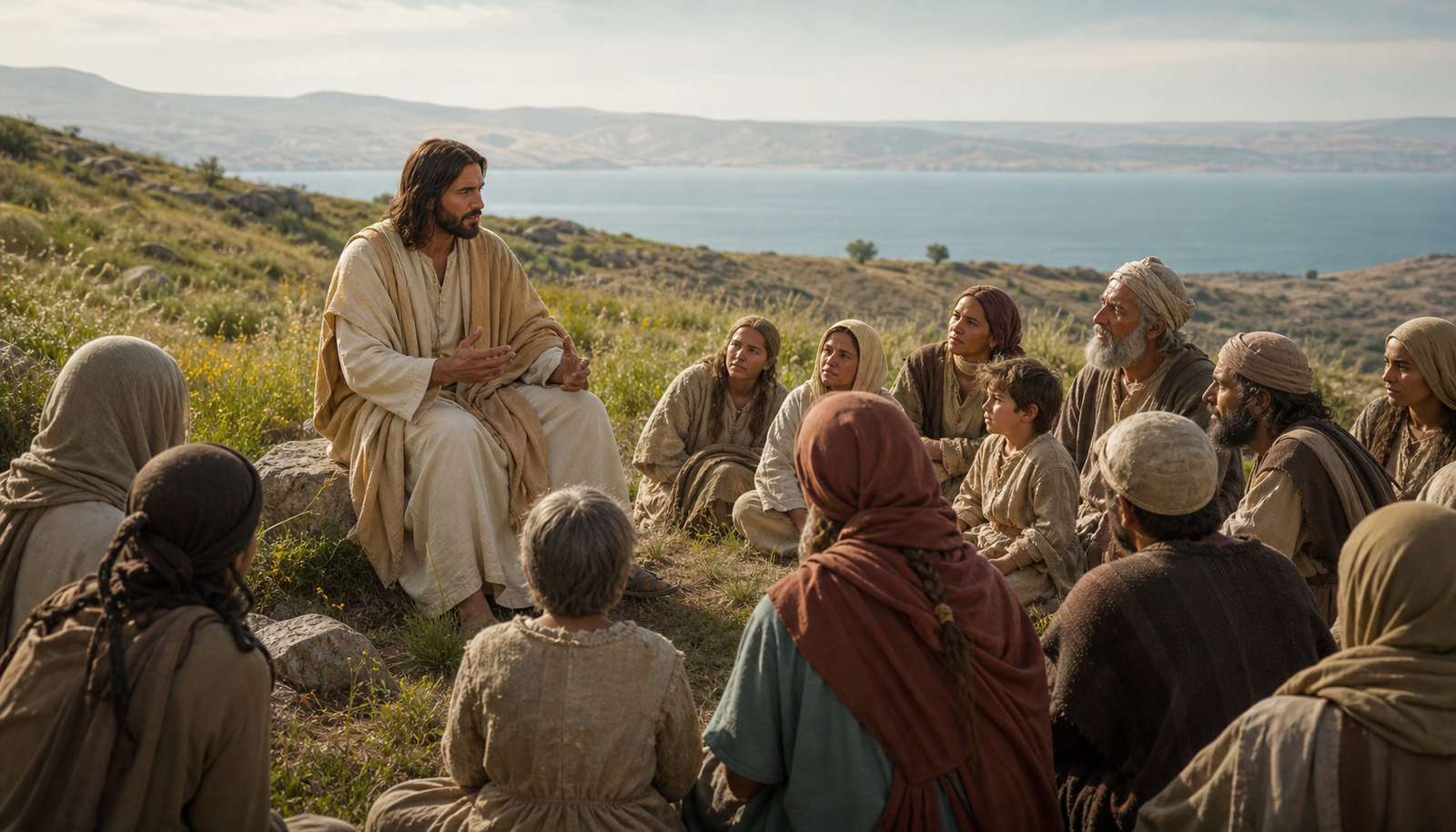
Jesus’ Sermon on the Mount is the teaching recorded in Matthew 5-7. Jesus explains the life of God’s kingdom through the Beatitudes, heart-level obedience, sincere prayer, trust in the Father, love for enemies, wise relationships, and a call to hear and obey His words.
Many people know one line from the Sermon on the Mount. They may remember “turn the other cheek,” the Lord’s Prayer, the Golden Rule, or the house built on rock. Yet Jesus did not give these teachings as separate slogans. Together, they show what life looks like when a person trusts God and follows Christ from the heart.
The Jesus Sermon on the Mount account is found in Matthew 5-7. It begins with blessing for people the world often overlooks. It then reaches into anger, truthfulness, mercy, prayer, money, worry, judgment, and love for enemies. Jesus ends by asking His hearers to choose whether they will obey Him.
This guide follows the whole sermon in order. It explains the main teachings in plain English and shows how they fit within the life and ministry of Jesus. The goal is not only to understand His words, but to let them shape the way we live.
What is Jesus’ Sermon on the Mount?
The Sermon on the Mount is Jesus’ teaching in Matthew chapters 5, 6, and 7. Matthew says that Jesus saw the crowds, went up a mountain, sat down, and began to teach His disciples. The crowds also heard Him, because Matthew later says they were amazed by His authority (Matthew 7:28-29).
The setting comes just after Jesus announced the kingdom of heaven, called His first disciples, taught in synagogues, and healed the sick (Matthew 4:17-25). Large crowds followed Him. The sermon explains the kind of life that belongs to His kingdom.
You can read the complete passage in Matthew 5-7. The sermon moves through three broad parts:
- Matthew 5:3-16: Jesus describes the blessed people of God’s kingdom and calls His followers salt and light.
- Matthew 5:17-7:12: Jesus teaches about true righteousness, prayer, possessions, trust, and relationships.
- Matthew 7:13-27: Jesus gives warnings and calls every hearer to make a real choice.
A Yale Bible Study guide to Matthew 5-7 notes the same movement from the Beatitudes and salt and light into heart-level obedience, sincere devotion, wisdom, and a final call to act. This structure helps us see that the sermon is one connected message.
The big message is life in God’s kingdom
Jesus had already begun preaching the kingdom of God. In the Sermon on the Mount, He shows what that kingdom looks like in ordinary life.
God’s kingdom is not built on pride, revenge, public praise, or fear. It is seen when people depend on God, seek what is right, make peace, forgive, tell the truth, care for others, and trust their Father. These actions do not earn salvation. They show the changed life of a person who belongs to Christ.
The sermon is demanding because Jesus deals with more than outward behaviour. He speaks to motives, desires, words, and hidden choices. A person may avoid murder while feeding anger. A person may pray while secretly wanting applause. A person may call Jesus “Lord” while refusing to do what He says. Jesus brings every part of life into the light.
The BibleProject guide to the Sermon on the Mount describes the sermon as an announcement of God’s kingdom and a call to right relationships with God and other people. That is a helpful summary. Jesus forms a people whose lives reflect the goodness of their King.
The Beatitudes show whom Jesus calls blessed
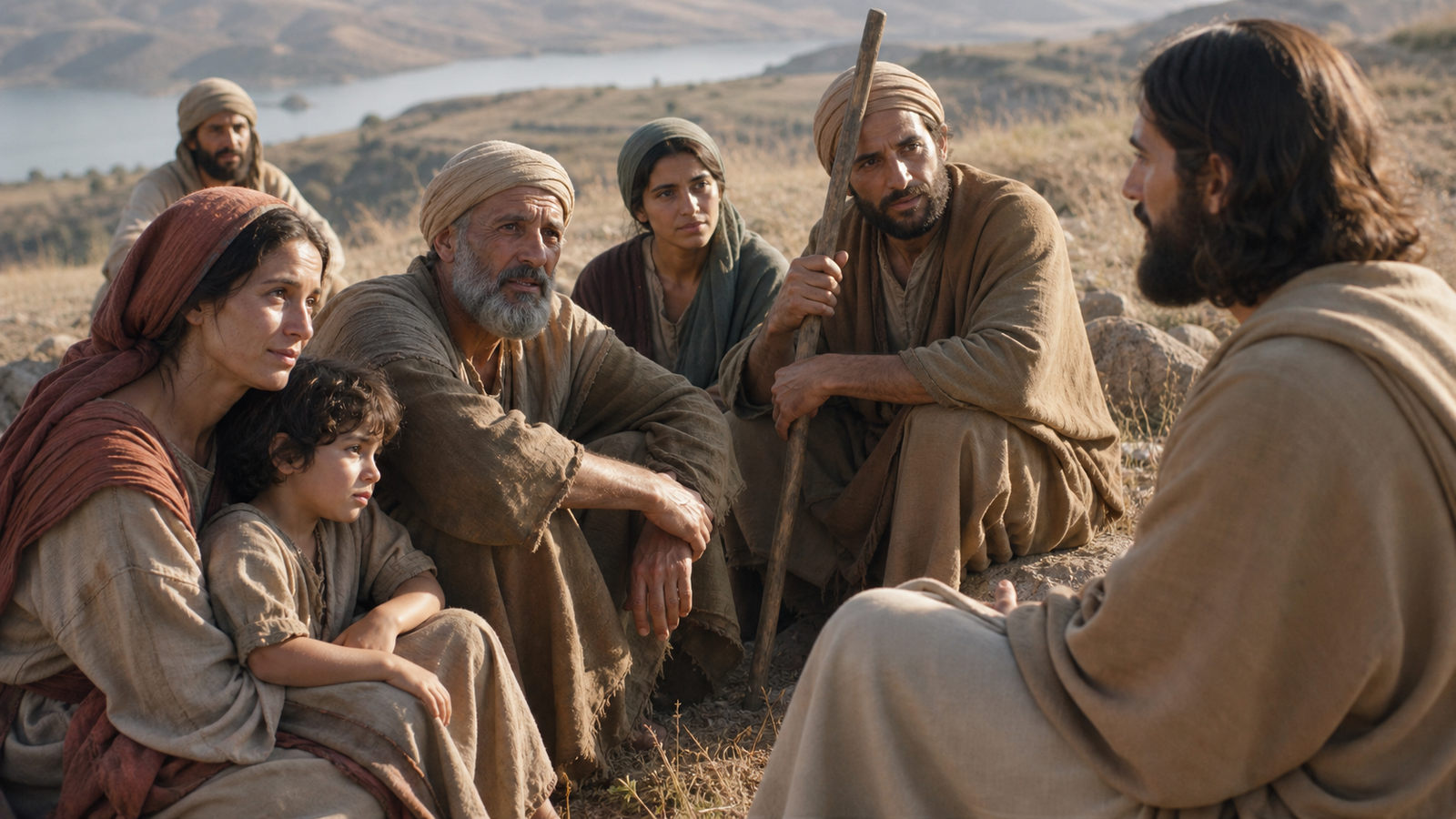
Jesus opens with the Beatitudes (Matthew 5:3-12). He calls the poor in spirit, those who mourn, the meek, those who hunger for righteousness, the merciful, the pure in heart, the peacemakers, and those persecuted for righteousness blessed.
These blessings do not say that pain is pleasant or that weakness saves us. They announce that God’s kingdom is open to people who know their need, long for what is right, and place their hope in Him. The poor in spirit do not arrive boasting. The merciful do not treat grace as something only they deserve. Peacemakers reflect the character of their Father.
The Beatitudes also point to promises. Those who mourn will be comforted. Those who hunger and thirst for righteousness will be filled. The pure in heart will see God. Jesus gives hope that reaches beyond present circumstances.
Matthew’s Beatitudes are closely related to the blessings and warnings in Luke 6. Our guide to the Beatitudes in Luke explains the Sermon on the Plain and its four matching woes. Matthew gives a fuller picture of the inner character of kingdom people.
Jesus then calls His followers the salt of the earth and the light of the world (Matthew 5:13-16). Faith is personal, but it is not meant to stay hidden. Good works should help others see the goodness of the Father, not the greatness of the person doing them.
Jesus calls for righteousness that reaches the heart
In Matthew 5:17-20, Jesus says that He did not come to abolish the Law or the Prophets, but to fulfil them. He then says that His followers need a righteousness deeper than the public religion of the scribes and Pharisees.
Jesus explains this through several examples:
- Anger and reconciliation: The command against murder reaches back to contempt and unresolved anger. Jesus tells His hearers to seek peace with the person they have wronged (Matthew 5:21-26).
- Lust and faithfulness: Adultery begins before the outward act. Jesus treats the heart and the way we look at others as morally serious (Matthew 5:27-30).
- Marriage: Jesus rejects the casual treatment of divorce and protects the seriousness of the marriage covenant (Matthew 5:31-32).
- Truthful speech: A disciple should not need dramatic oaths to make words believable. A simple yes or no should be trustworthy (Matthew 5:33-37).
- Retaliation: Jesus does not let personal injury become an excuse for revenge. His followers should answer evil without copying it (Matthew 5:38-42).
- Love for enemies: Jesus commands His followers to love their enemies and pray for those who persecute them (Matthew 5:43-48).
This is not shallow rule keeping. Jesus wants integrity. The same love, purity, and truth should guide us when no one is watching.
Love for enemies does not mean calling evil good or remaining in an unsafe situation. Christians can seek protection, report abuse, and support just consequences. The command deals with hatred and revenge. We can oppose wrong while still praying for repentance, refusing cruelty, and leaving final judgment with God.
Giving, prayer, and fasting should be sincere
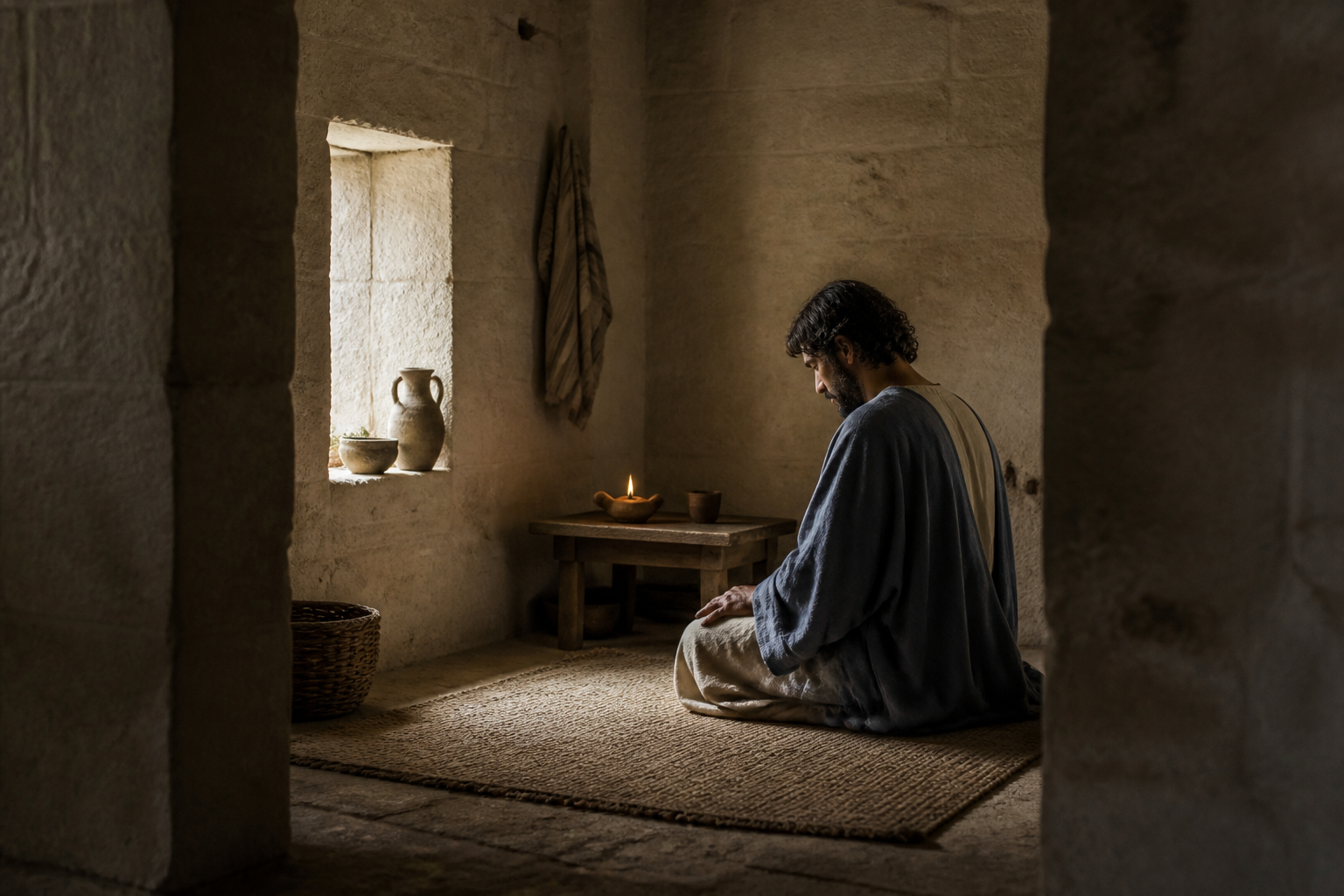
Matthew 6 begins with three religious practices: giving, prayer, and fasting. Jesus does not reject them. He warns against using them as a performance.
A person can do a good act for the wrong reason. Giving can become a way to gain praise. Prayer can become a speech aimed at an audience. Fasting can become a public display of sacrifice. Jesus brings the focus back to the Father who sees what is done in secret.
At the centre of this section is the Lord’s Prayer (Matthew 6:9-13). It begins with God’s name, kingdom, and will. It then asks for daily bread, forgiveness, help in temptation, and rescue from evil. The order matters. Prayer is not a tool for controlling God. It brings our needs under His loving rule.
The prayer also joins receiving forgiveness with forgiving others. Christians forgive because God has shown mercy to us in Christ. Forgiveness may take time, wisdom, and healthy boundaries. It does not erase truth or remove every consequence. It means we refuse to make revenge our master.
A helpful question for every act of devotion is simple: if no one else knew I had done this, would I still want to do it for God?
Jesus teaches us how to face money and worry

In Matthew 6:19-34, Jesus speaks about treasure, loyalty, and worry. These subjects belong together because what we treasure often controls what we fear.
Earthly wealth is temporary. It can be damaged, stolen, lost, or left behind. Jesus tells His followers to store treasure in heaven and warns that no one can serve both God and money. Money is useful, but it is a poor master.
Jesus then points to birds and wildflowers. The Father feeds and clothes His creation. Human life matters even more to Him. Jesus is not teaching carelessness. The Bible values work, planning, and wise care for a household. He is teaching that anxious control cannot add to our lives and should not rule our hearts.
The answer is to seek first God’s kingdom and righteousness (Matthew 6:33). We bring today’s need to the Father, do the faithful work in front of us, and leave tomorrow in His hands.
This teaching can comfort a worried believer without shaming them. Anxiety can involve deep emotional or medical needs. Prayer, support from trusted people, and professional care can work together. Trusting God does not mean pretending that pain is not real.
Wise relationships need humility and discernment
“Do not judge” is one of the most repeated lines in the sermon (Matthew 7:1). Jesus does not forbid every moral judgment. A few verses later He warns about false prophets and bad fruit. He forbids proud, hypocritical judgment.
The picture of a plank in one person’s eye and a speck in another person’s eye is deliberately striking. We should face our own sin before trying to correct someone else. Only then can we help with humility and clearer sight.
Jesus also says, “Ask, seek, knock” (Matthew 7:7-11). The Father is good and gives good gifts to His children. This promise invites steady prayer. It does not mean God must give every request in the form we expect. His wisdom and goodness remain greater than ours.
Matthew 7:12 gives the Golden Rule: treat others as you would want them to treat you. This turns love into action. It asks us to consider the other person’s dignity, needs, and good.
Humility is not the same as silence. Christians may need to name harm, protect someone at risk, or correct serious error. Jesus teaches us to do so without pride, double standards, or delight in another person’s failure.
The sermon ends with a choice to hear and obey

Jesus closes with several pairs: a narrow and wide gate, good and bad fruit, true and false disciples, and houses built on rock or sand (Matthew 7:13-27). Each picture calls for a response.
The most sobering warning is that religious words alone are not enough. Some people say “Lord, Lord” and point to impressive works, yet Jesus says He never knew them. The Christian life is not a public label or a list of spiritual achievements. It begins with knowing Christ and doing the Father’s will.
The final picture is easy to understand. Two builders hear the same words. One acts on them and builds on rock. The other does not act and builds on sand. The storm reveals the foundation.
Jesus does not finish by asking whether the crowd enjoyed the sermon. He asks whether they will trust Him enough to obey. Hearing becomes wisdom when it changes the way we live.
How can a Christian live the Sermon on the Mount today?
The sermon covers three full chapters, so trying to change everything at once may feel overwhelming. Start by reading it slowly with prayer. Ask the Holy Spirit to show you one clear act of obedience.
A simple seven-day practice can help:
- Day 1: Read Matthew 5:1-16. Thank God for His kingdom and choose one quiet good work.
- Day 2: Read Matthew 5:17-32. Confess anger, contempt, or an impure habit. Take one safe step toward change.
- Day 3: Read Matthew 5:33-48. Keep your words simple and pray by name for someone difficult.
- Day 4: Read Matthew 6:1-18. Give, pray, or fast without looking for praise.
- Day 5: Read Matthew 6:19-34. Write down one worry and one faithful action you can take today.
- Day 6: Read Matthew 7:1-12. Examine your own heart before correcting someone else.
- Day 7: Read Matthew 7:13-29. Ask which teaching Jesus wants you to put into practice now.
Do not turn this into a scorecard for earning God’s love. Christians obey because Jesus has loved and saved us. Grace does not make His teaching optional. Grace gives us a new reason and new strength to follow Him.
Keep the whole sermon connected to the Gospel. The One who teaches with authority is also the Son of God whose death and resurrection bring salvation to everyone who trusts Him. We do not merely admire His wisdom. We trust Him as Lord and Savior.
Frequently asked questions about the Sermon on the Mount
Where is the Sermon on the Mount in the Bible?
It is recorded in Matthew chapters 5, 6, and 7. A related collection of Jesus’ teaching, often called the Sermon on the Plain, appears in Luke 6:17-49.
Who was Jesus speaking to?
Jesus sat down and taught His disciples while the crowds listened. His words form His followers, but they also invite every hearer to respond to Him.
What is the main point of the Sermon on the Mount?
The sermon shows what life under God’s rule looks like. Jesus calls for trust in the Father, love for others, heart-level righteousness, sincere devotion, and obedience to His words.
Does the Sermon on the Mount teach that good works save us?
No. The New Testament teaches that salvation is God’s gift received through faith in Jesus Christ. Good works do not buy salvation. They are the fruit of a life changed by God’s grace.
What is the difference between the Sermon on the Mount and the Sermon on the Plain?
Matthew 5-7 gives the Sermon on the Mount. Luke 6:17-49 gives a shorter teaching on a level place. They share several themes, including blessings, love for enemies, judgment, good fruit, and the wise builder.
Build your life on the words of Jesus
The Sermon on the Mount is beautiful, but it is not comfortable advice. Jesus calls us away from pride, hidden hatred, revenge, religious performance, greed, anxious control, and empty words. He calls us toward mercy, purity, truth, prayer, trust, love, and obedience.
Read Matthew 5-7 again. Choose one command you have understood but delayed. Bring it to Jesus in prayer, ask for His help, and take the next faithful step.
A wise life is not built by hearing more teaching while doing nothing. It is built on Jesus Christ, trusting who He is and putting His words into practice. For more plain Bible teaching and reflection, visit our Christian wisdom collection.