
The Jesus optical illusion is a visual image or four-dot effect in which viewers may perceive Jesus’ face after focusing on the picture and then looking away. It can be an interesting feature of human vision, but it is not proof of Jesus’ physical appearance or a revelation equal to Scripture; the Bible identifies Him as the divine Son of God who died for our sins and rose again (John 1:1, 1 Corinthians 15:3–4).
The Jesus optical illusion can be fascinating: after staring at an image with four dots, some viewers may see what appears to be Jesus when they look away or close their eyes. But what does this visual effect actually mean? Is it a sign from God, evidence of what Jesus looked like, or simply the way the brain processes light, shapes, and afterimages?
This article explains how the illusion picture works while comparing visual impressions with the truth of Scripture. The Bible does not give us a detailed portrait of Christ’s physical appearance, but it clearly reveals who He is: the eternal Son of God who became man, died for our sins, and rose again. As Jesus said, “Whoever has seen me has seen the Father” (John 14:9). The truth of Christ’s identity and mission does not depend on any picture.
What Is the Jesus Optical Illusion?
How the four-dot picture works
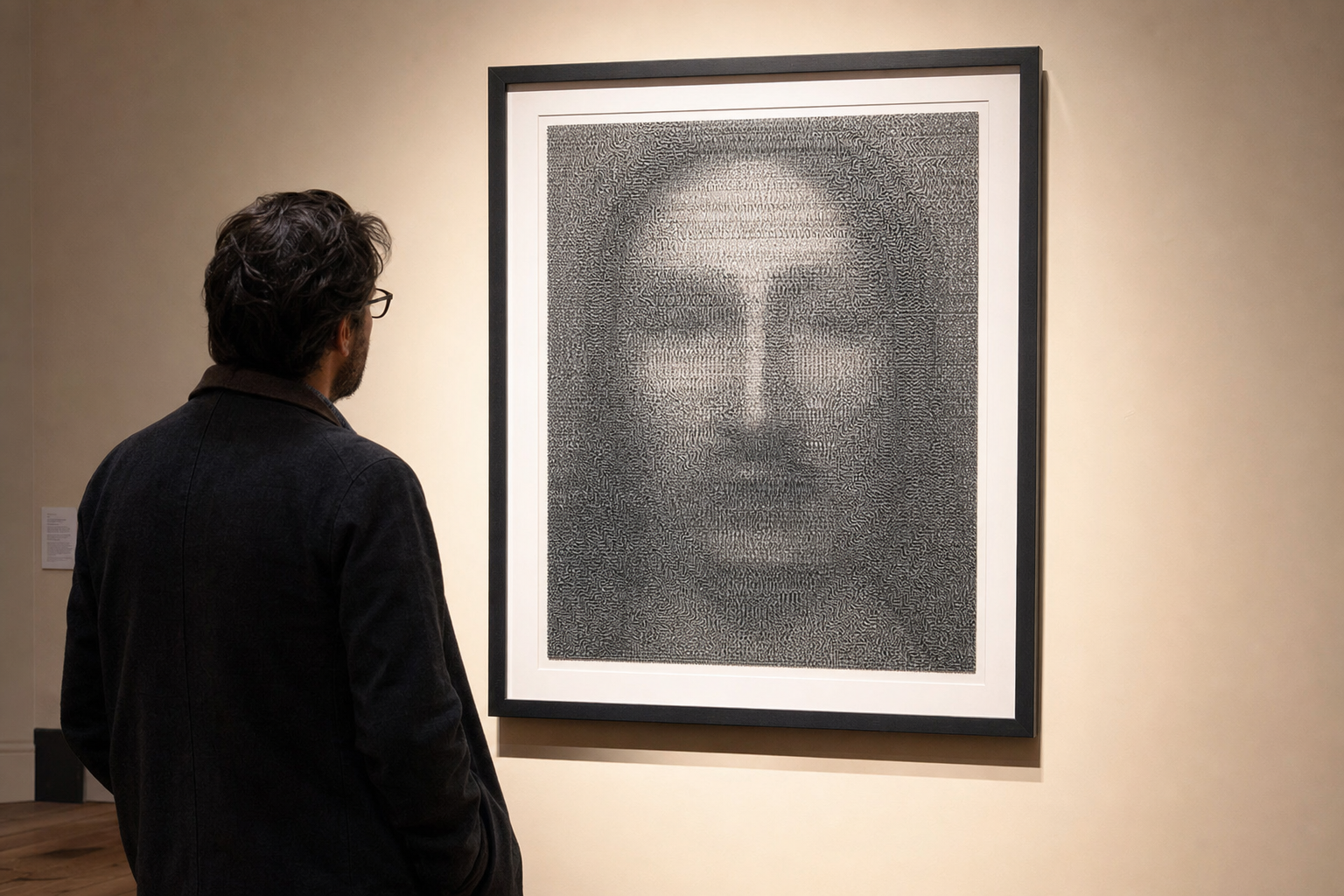
The Jesus optical illusion usually shows a dark or distorted face with four bright dots near the center. After staring at the dots for a short time and then looking at a plain, light-colored surface, some viewers perceive a face resembling Jesus.
This is a visual afterimage, not a literal image, vision, or supernatural revelation of Christ. Strong contrasts temporarily affect the light-sensitive cells in the eyes. When the viewer looks away, the visual system produces a brief impression, and the brain may organize it into a familiar face.
- Focused viewing: Stare at the dots or central area.
- Visual adaptation: The eyes adjust to the image’s contrast.
- Looking away: Shift your gaze to a plain, bright surface.
- Afterimage formation: A temporary impression appears.
- Pattern recognition: The brain may interpret the impression as a face.
Face recognition, expectation, familiar religious imagery, contrast, symmetry, and individual eyesight can all affect what someone perceives. Some people may see a different face or nothing at all. The effect cannot prove what Christ looked like, and it has no authority equal to Scripture.
Is the Jesus Optical Illusion a Sign?
An optical effect is not new revelation
The image may prompt someone to think about Christ, but it is not a supernatural message or proof that He is appearing through a visual pattern. God can use ordinary moments to draw attention toward Him, yet Christians must distinguish a personal reminder from authoritative spiritual truth.
Scripture identifies Christ as the eternal Son of God: “The Word was God,” and “the Word became flesh” (John 1:1, 14). He died for sinners, was buried, and rose again (1 Corinthians 15:3–4). Those truths come from God’s written Word, not an afterimage.
How to test a visual impression
- Compare it with Scripture. The Bible presents Christ as Lord and Savior (Matthew 16:16; Romans 10:9).
- Do not add to God’s Word. An image cannot create new doctrine, commandments, or predictions (2 Timothy 3:16–17).
- Examine its fruit. God’s truth leads toward faith, repentance, love, and humility rather than superstition or confusion (1 John 4:1).
- Keep Christ central. The focus should be faith in Him, not the image (John 3:16).
“Test all things; hold fast what is good” (1 Thessalonians 5:21). The illusion may be a reminder, but it is not a sign with biblical authority.
How Can You View the Jesus Optical Illusion Picture?
Viewing the picture with four dots
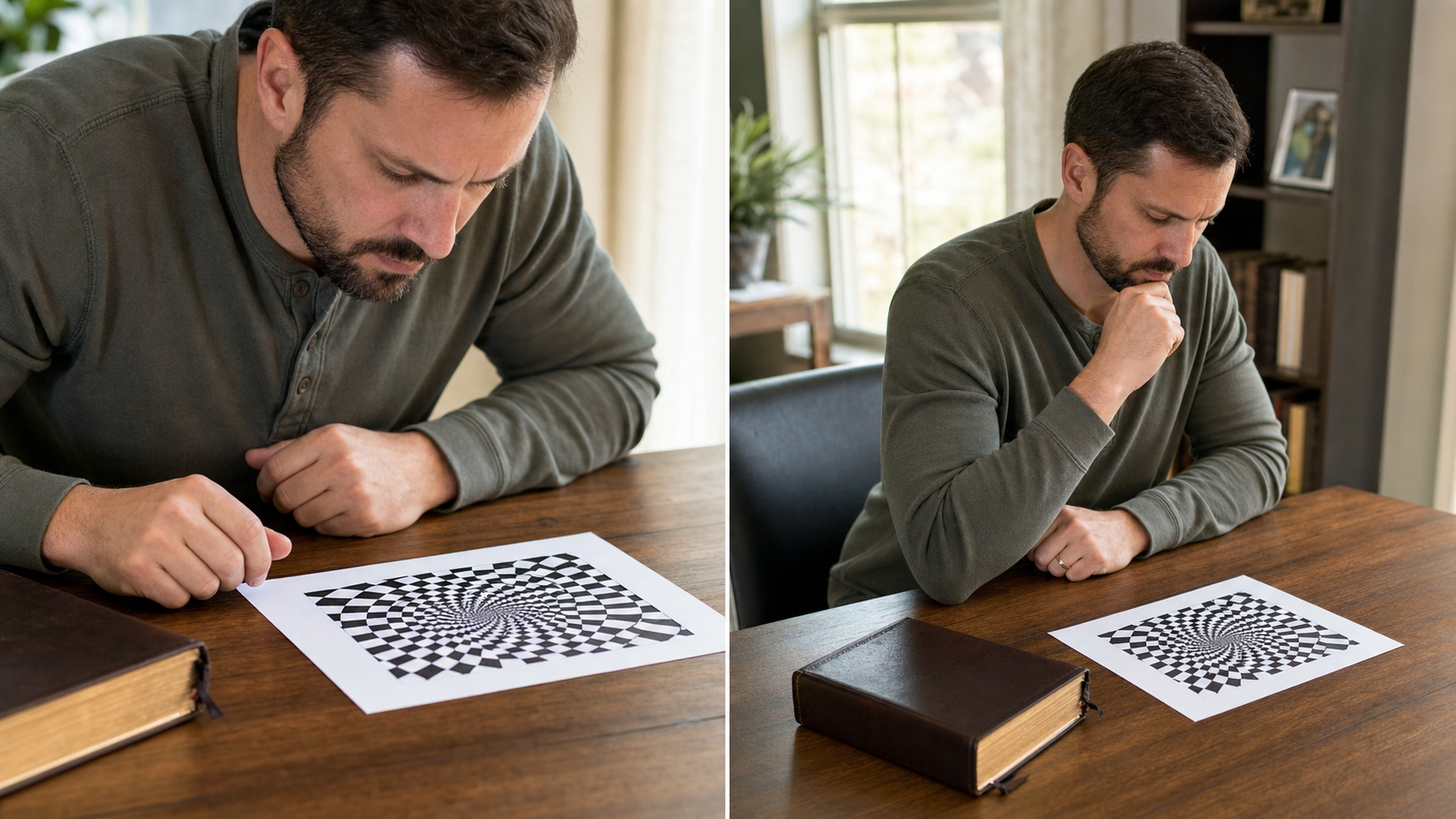
To demonstrate the effect, use a lawfully shared picture containing a dark or unclear face and four bright dots near the center.
- Hold the image at a comfortable distance.
- Focus on the four dots for about 20 to 30 seconds.
- Look at a plain, light-colored wall or blank page.
- Allow your eyes to blink normally and observe any afterimage.
Results vary with lighting, screen brightness, distance, eyesight, and the image itself. Stop if you experience eye strain, dizziness, or discomfort. A printed copy may look different because of paper, ink, lighting, and print quality. Respect copyright and do not redistribute an image without permission.
Whatever appears, it is a visual demonstration rather than a portrait of Christ or a source of revelation. Scripture, prayer, and the Gospel—not an image—are the proper foundations for faith.
What Does Jesus Look Like in Scripture?

Biblical information about His appearance
The Bible gives limited information about Christ’s physical appearance. He was born as a Jewish man in Bethlehem and lived in first-century Israel, but Scripture does not provide enough detail to recreate His face, height, hair, or exact complexion.
- Isaiah 53:2 describes the suffering Servant’s humble appearance, not a complete portrait.
- Matthew 17:1–8 records the transfiguration, when His face shone like the sun and His clothes became bright. This was a revelation of glory, not an ordinary likeness.
- Revelation 1:12–16 describes the risen Christ with symbolic images of white hair, blazing eyes, bronze-like feet, and a shining face. These communicate holiness, judgment, strength, and divine glory.
These passages direct us to His identity and majesty rather than supplying details for a physical portrait. The Bible does affirm that He became truly human: “The Word became flesh and dwelt among us” (John 1:14). Yet no perceived face in an image can establish His earthly likeness.
Why the illusion cannot prove His appearance
- An afterimage is not divine revelation. It is a temporary visual effect.
- A perceived face is not historical evidence. It cannot identify actual features.
- A picture is not the foundation of faith. Faith rests on God’s Word and the Gospel.
“The Christ, the Son of the living God” (Matthew 16:16) is the truth Scripture gives us. That identity matters more than recovering an exact image of His earthly face.
Why Jesus’ Identity Matters More Than a Picture
The central question is not, “What did His face look like?” but, “Who is He, and what has He done?” Scripture declares that Christ is the eternal Son who became man (John 1:1, 14). He willingly died for sinners, rose bodily from the grave, and promises eternal life to everyone who believes in Him (John 3:16; 1 Corinthians 15:3–4).
An optical effect cannot display the cross, explain Christ’s sacrifice, or establish the resurrection. Those saving events rest on the historical testimony of Scripture. Traditional artwork, a perceived face, or an afterimage cannot replace that testimony.
When curiosity about the image leads someone to read the Bible, it may serve a useful reminder. But the proper response is to look beyond the visual effect to the Savior revealed in God’s Word. Jesus Christ is not a vague figure formed by the mind; He is the Son of God, the crucified and risen Savior, and the Lord worthy of worship.
Frequently Asked Questions
What is the four-dot Jesus optical illusion called?
It is commonly called the Jesus optical illusion, the Jesus illusion, or the four-dot Jesus illusion. These names describe its popular appearance, not a special religious symbol or supernatural revelation.
What is it called when people see Jesus in objects?
Seeing a familiar face in an unclear object or pattern is commonly called pareidolia. The brain may organize shadows, shapes, or an afterimage into a face resembling Christ. This does not mean He is physically present in the object or that the impression is a divine vision.
Can this picture prove what Jesus looked like?
No. The Bible provides limited physical description, and an afterimage is neither a photograph nor historical evidence. Scripture gives reliable truth about Christ’s identity and mission: He is the Son of God who became flesh, died for sinners, and rose again.
What the Jesus Optical Illusion Cannot Change
Jesus is the Son of God
The visual effect cannot define Christ or alter His identity. Scripture says, “The Word became flesh and dwelt among us” (John 1:14), and Jesus said, “I and the Father are one” (John 10:30). He is the promised Messiah, the Son of God, Lord over creation, and worthy of worship.
Jesus died and rose again
“Christ died for our sins in accordance with the Scriptures, that he was buried, that he was raised on the third day” (1 Corinthians 15:3–4). At the cross He bore sin’s penalty; in His resurrection He conquered death. Through faith in Him, sinners receive forgiveness and new life.
Scripture is the final authority
“All Scripture is breathed out by God and profitable” (2 Timothy 3:16). Therefore, no visual impression can add to God’s revelation or replace the Gospel. Let the picture remain a visual effect, and let the Bible provide the truth. Jesus Christ is the Son of God, the Savior who died for sins, and the risen Lord. “Jesus Christ is the same yesterday and today and forever” (Hebrews 13:8).